Unknown's avatar

How Trump’s deal with Big Oil is raising your energy bills

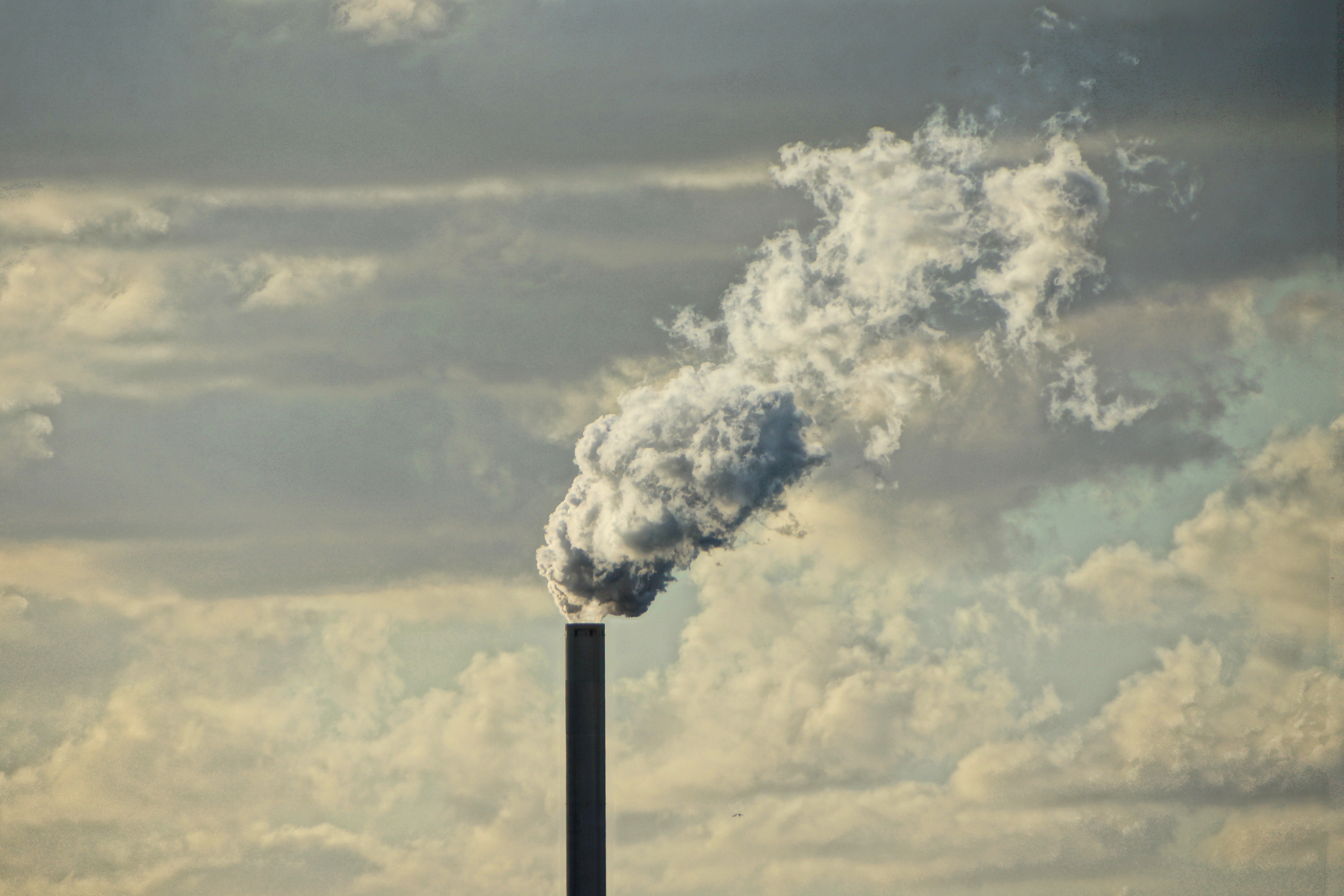
smokestack
Photo credit Stiller Beobachter

There is a principle in law that says someone intends the natural result of their actions. You cannot throw me out a window and say you didn’t mean for me to get hurt. 

By the same principle, if you block new solar and wind generation, you can’t say you didn’t intend to throttle energy production. 

President Trump has made it clear he wants to kill wind and solar, and his appointees have followed through. The Department of Interior is refusing leases and permits to wind and solar projects, even as it moves ahead on lease sales for oil and gas drilling.

Interior even issued a stop-work order on an offshore wind farm that is 80% complete. The project was on track to supply enough energy for 350,000 homes in Rhode Island and Connecticut, until the Trump administration stepped in. A judge later lifted the order, but not before the company building the project saw its share price drop to a record low

Reducing the amount of low-cost, clean electricity developers can add to the grid will have an enormous impact. Clean energy is so much less expensive and faster to build than fossils fuels that renewable energy and batteries made up over 90% of the energy capacity added in the U.S. last year. 

It’s fortunate for consumers that Trump won’t be able to stop all wind and solar projects, because the small number of fossil fuel plants under development won’t fill the gap. It takes years to develop a new gas plant, and gas turbines face an order backlog of up to 7 years.

The shortfall in new generation is happening at a time when the use of electricity is surging, mainly due to demand from data centers. Other customers, including ordinary residents, now have to compete with data centers for increasingly expensive electricity. Rates are going up as a result, and grid operators warn we may soon face power shortages

Trump’s only concession to the power crunch is to order a few fossil fuel plants to stay open that their owners had planned to close for economic reasons. Ordering an uneconomic plant to stay open means someone loses money. Trump hasn’t offered federal dollars to pay the difference. The utilities that own the plants will pass the cost on to consumers.

If throttling energy production and raising energy costs is the natural result of Trump’s actions, it’s reasonable to assume that’s his intent. So many experts have pointed out the damage his policy will do that the alternative explanation – that the president is deluded and foolishly thinks his actions will somehow result in more energy production and lower costs – doesn’t hold up.

But why would the president deliberately hamstring American energy production and raise electricity costs for consumers? 

Because that’s the deal he made with oil and gas industry leaders at a closed-door fundraiser at Mar-a-Lago last year, in exchange for the more than $200 million the industry spent to get him elected. Actually, Trump asked for a billion dollars, and in return promised to dismantle environmental regulations, go after the wind industry and scrap President Biden’s policies promoting electric vehicles. 

At a later fundraiser, he also promised to approve new natural gas exports, in spite of warnings from critics that these exports would drive U.S. prices higher – which is exactly what happened.

Promises made, promises kept, as Trump’s fans like to say. Trump’s appointees have gutted environmental protections and done their best to keep wind and solar off the grid. Most people know the “One Big Beautiful Bill” revoked tax incentives for homes and businesses to install solar; less widely reported is that it included $18 billion in tax incentives for the oil and gas industry and lowered the amounts the industry must pay to lease federal lands for drilling, among other rewards. 

Less renewable energy and higher prices means more market share and higher profits for fossil fuels. The natural result is that the American consumer will have to pay through the nose for energy. 

Too bad, folks, but that was the deal.

This article was originally published in the Richmond Times-Dispatch on September 30, 2025.
Unknown's avatar

Trump’s attack on offshore wind is hurting Virginia. Why aren’t Republican leaders fighting for us?

On May 5, attorneys general from 17 states and the District of Columbia — not including Virginia, regrettably —  sued the Trump administration over its attacks on the wind industry. The lawsuit challenges an executive order, signed by President Donald J. Trump on his first day in office, stopping all approvals, permits and funding for wind projects across the country and offshore. 

Since the order was signed, the administration hasn’t just blocked new projects, it’s issued a stop-work order for one project under construction in New York and revoked a permit for another. The actions inflict enormous damage on the wind industry and on the economies of states that need the energy and jobs this industry could deliver.

One state that will lose big under Trump’s order is Virginia, which has positioned itself to be a national leader in offshore wind deployment, supply chain and manufacturing. On top of that, Virginia badly needs the electricity from offshore wind to help meet the demand from data centers; it can’t afford to have a major new source of energy strangled in its infancy. Yet Attorney General Jason Miyares did not join the lawsuit.

Sure, Miyares wants to be a good soldier in the Trump putsch. And no doubt he wouldn’t feel at home among all those Democratic AGs (there were no Republicans signing the complaint). But he could at least speak up in his state’s interest. Some well-timed advocacy would go a long way in showing the administration that wind energy is not a partisan matter. 

It doesn’t have to be just our attorney general, either. The silence from Gov. Glen Youngkin has been equally deafening. What are they afraid of? Youngkin can’t run for reelection, and Miyares has already secured his party’s nomination in his bid for reelection this fall.

Any politician who styles himself as pro-business ought to be pushing back on the Trump administration’s interference with contracts, destruction of American jobs and infliction of billions of dollars in damage to a growing domestic industry. Especially when it is happening to their own state, the big risk is in not speaking out.

And let’s face it, attacking wind energy is Trump’s own peculiar hobbyhorse, not his party’s. Though Republican support for wind energy has dropped a bit in recent years, it remains above 50%. Onshore wind is the largest source of electricity in Iowa and South Dakota and a major source in several other Republican strongholds. Wind power is responsible for billions of dollars in economic investment while keeping utility rates low in states that rely on it. 

Offshore wind is more expensive, but states have embraced it for its potential to lower electricity bills over time while relieving grid congestion, creating well-paying jobs and providing clean, zero-carbon power to East Coast cities. Thirteen states have established offshore wind development goals, totaling over 112 gigawatts (GW) by 2050. 

In Virginia, Republican leaders have been among the biggest boosters of offshore wind for more than 15 years. Legislators from both parties supported the creation of the Virginia Offshore Wind Development Authority. With a boost from then-Gov. Bob McDonnell, the Virginia Department of Energy partnered with Dominion Energy on a research project that produced the nation’s first offshore wind turbines in federal waters. Republican support also paved the way for Dominion’s development of the 2.6 GW Coastal Virginia Offshore Wind (CVOW) project, now more than halfway to completion and expected to begin delivering electricity next year. 

Nor is CVOW a one-off; the Virginia Clean Economy Act declares twice as much offshore wind power to be “in the public interest.” At the offshore wind International Partnering Forum held in Virginia Beach last month, Dominion displayed a poster of the projects it has in the works. These include a project off Kitty Hawk, North Carolina, which Dominion acquired last October, as well as a huge lease area east of CVOW, which Dominion secured in a lease auction from the federal government last August. All told, Dominion’s projects could deliver a total of 9 GW of clean, renewable power. 

A poster displaying Dominion Energy’s planned offshore wind projects.

As important as the energy itself is, Virginia leaders believe offshore wind can be a driver of economic development and job creation for the Hampton Roads area. The Virginia Economic Development Partnership touts Virginia’s strategic location, strong maritime industry and ready workforce as draws for businesses up and down the offshore wind supply chain.

Some businesses have already set up shop in Virginia to serve the industry. These include most recently a Korean subsea cable manufacturer that is investing almost $700 million for a facility in Chesapeake. Gov. Glen Youngkin was on hand for the groundbreaking last month, calling it “a proud moment for Virginia.” Attracting the company was only possible because of Virginia’s commitment to the wind industry – as well as the availability of federal tax credits that Trump also intends to eliminate. 

CVOW will likely survive Trump’s attacks (albeit at a higher cost due to his tariffs), but Virginia’s ability to develop an offshore wind workforce and supply chain are very much at risk. The Trump administration’s war on wind power already threatens developers with losses in the billions of dollars. With permitting at a halt, companies are headed for the exits instead of creating the project pipeline necessary for offshore wind to become the powerhouse industry that it is in Europe and Asia.

Trump may have planned his economic sabotage to hurt northeastern states with Democratic governors, but the collateral damage to Virginia is considerable. As it is, our economy has taken a hit from Trump’s mass firings of federal workers, thousands of whom live here. We can’t afford to lose four years of offshore wind progress for no better reason than that Trump wills it. 

Silence is not an acceptable response. Miyares and Youngkin must speak up for Virginia.

Originally published in the Virginia Mercury on May 19, 2025.

Update: On May 20 we learned Trump’s Department of the Interior rescinded its order to shut down the $5 billion Empire Wind project in New York, reportedly after Gov. Kathy Hochul agreed to reverse a decision five years ago denying a permit to a natural gas pipeline. This is being billed as a “compromise,” which is apparently what extortion is called when the Trump administration does it.

Unknown's avatar

Remember when ethics in government mattered?

Protesters in front of a Tesla building.
People line up in front of a Tesla Service Center to protest Elon Musk. Rockville, Maryland. Photo by G. Edward Johnson via Wikimedia

It was only a decade ago that a governor of Virginia, Bob McDonnell, was embroiled in a corruption scandal resulting from his acceptance of $177,000 in gifts and loans from a businessman in exchange for promoting the company’s diet supplement. The quid pro quo struck many people at the time as more tacky than corrupt; and indeed, the U.S. Supreme Court eventually overturned his conviction on the grounds that using the governor’s mansion as a promotion venue wasn’t a sufficiently “official” act. 

These days, the kerfuffle raised by the exposure of McDonnell’s little side hustle feels almost quaint. It also feels like foreshadowing, anticipating President Donald Trump’s use of the White House lawn as a Tesla showroom to thank Elon Musk for his hard work in destroying American government. 

In the present-day version, though, it does not appear the carmaker’s $290 million in election spending played a role beyond instilling a warm fuzzy feeling in the bosom of the president. So while ordinary people may be appalled, and Democratic leaders like Rep. Gerry Connolly of Virginia are demanding an investigation, it’s hard to see the Supreme Court batting an eye. Is it so different from Justice Clarence Thomas accepting a luxury RV from a wealthy businessman?

Trading favors among the rich and powerful seems to be how it works in Trump’s America. Anyone who isn’t using his public position for his own gain is a chump. And while the laws prohibiting corruption are still on the books, Trump has ensured there are no federal prosecutors left with the independence to go after his allies. 

Besides which, in the unlikely event your cupidity actually gets you convicted of a crime, the president has a history going back to his first term of handing out pardons to MAGA loyalists regardless of their crimes. Sufficiently demonstrating fealty to the president may be enough to secure your place in his No Grifter Left Behind program. Frankly, the judge who sentences you has more to fear from the president than you do.  

By design, Trump’s attacks on American government, civil society and the world order have been so various and extreme as to leave opponents breathless. The resistance looks like a team of firefighters trying to deal with a large and very determined pack of juvenile arsonists. 

Yet, of all the fires now burning, Trump’s attacks on the rule of law might pose the single greatest threat to the country’s stability and prosperity. Trump’s firing of government watchdogs, blacklisting a law firm that represented his enemies, and defying judges who rule against him are unprecedented in modern U.S. history. Our economy as well as our democracy was built on a system of checks and balances that made corruption the newsworthy exception rather than the dismal norm.

This was brought home to me in a conversation I had recently with a rancher in, of all places, Patagonia, at the far tip of South America. (When the going gets tough, the not-very-tough go hiking.) The owner of an 8,000-acre estancia turned out to have been involved in Chilean politics for 30 years, representing his region in the Chilean Congress. He didn’t know much about what was going on in the U.S., he admitted, but he felt encouraged by the news that Trump was cutting waste and fraud. 

Okay, yes, I guffawed, but I was also struck that, with all the turmoil and crises going on in Washington, the only thing that survived a distance of 6,000 miles was Trump’s spin on his actions. Still, you hardly need to go to Chile to find people who accept Trump’s through-the-looking-glass framing of his dismantling of government institutions. 

A pro-Trump family member, as big-hearted a guy as you will ever meet, told me he was sad that people in developing countries would go without food and medicine as a result of Trump shutting down foreign aid, but it had to be done “because of all the fraud.” Virginia Gov. Glenn Youngkin is also an ardent supporter of Trump’s ever-expanding trims, last week defending the slashing of thousands of federal workers’ jobs as “dislocation” necessary to “gain efficiencies and reduce costs in the federal government.”

That’s the power of language. What Trump calls fraud and corruption turns out to be grants for things he doesn’t like, but his choice of words makes it seem he is fighting for the kind of honest government he is actually working to undermine. 

It’s not wrong for people to worry about corruption, though, whether it is the imaginary kind Trump invokes or the real kind we will face when no watchdogs are left to hold his appointees accountable. Whether conservative or socialist, corruption in government leads to a siphoning off of public dollars, the erosion of social cohesion and trust, economic distortion and lower levels of investment in education and health care. Sure, some businesses are going to prosper when they can evade laws with just a well-placed application of palm grease, but economists find that overall, official corruption is a drag on a country’s economic performance. Not to mention, most of us see it as fundamentally unAmerican.  

But has Trump actually launched the U.S. on a slippery slide down the corruption index? I talked over my concerns with a fellow Mercury contributor, Michael O’Grady. O’Grady is a research economist and Ph.D. candidate at Virginia Commonwealth University who studies public policy and administration, and he thinks the situation is even worse than I suggest. 

Like many scholars, he feels the face-off between Trump and the courts has brought the U.S. to what he calls “the biggest inflection point since at least U.S. v. Nixon, and maybe since Marbury v. Madison in 1803.”  And, he points out, if Musk’s Department of Government Efficiency was really uncovering fraud in government contracts, we should have seen cases being referred to the Department of Justice for prosecution. 

Meanwhile, he says, the firing of government watchdogs and the politicization of the federal government will have real consequences on people’s lives, affecting everything from housing costs to the stock market. When government oversight lapses, corporations tend to engage in market manipulation and tax evasion. To take one example, last summer the DOJ sued a company called RealPage for allowing competing landlords to collude in setting apartment rents. We aren’t likely to see that kind of action from the Trump administration.

O’Grady doesn’t see how this can end well, and neither do I. I’d like to think that in the U.S., our fifty state governments could provide some kind of pushback against malfeasance at the federal level. But I’m aware that’s delusional. For one thing, my own experience is that federal bureaucrats are saints compared to state and local officials, who have much more motivation to swap favors with people and businesses in their communities. And for another, Republican fealty to Trump is so strong that it’s hard to imagine a state attorney general from his own party taking action even if state laws were implicated. Recall that it wasn’t a state prosecutor who indicted Bob McDonnell; it was the U.S. Department of Justice. 

I’d have much less concern over Democrats rallying around a party leader if roles were reversed. Loyalty is a conservative value, not a liberal one. Recall how Democratic governor Ralph Northam was called on to resign by members of his own party over a blackface incident. Democrats eat their own.

For now, at least, one bulwark against Trumpism remains: an independent, non-partisan press committed to reporting the facts and holding government officials accountable. There has never been as great a need for unbiased journalism as there is today, or more need for ordinary Americans to support it. 

O’Grady reminded me of the (probably apocryphal) story of Benjamin Franklin describing the young United States as “a republic, if you can keep it.” Whether we keep it now depends on us.

This article was published in the Virginia Mercury on March 25, 2025.

Unknown's avatar

The clean energy revolution will continue

Photo credit iid.com

Eight years ago last week, I wrote a column titled, “Why Trump won’t stop the clean energy revolution.” Calling global warming a hoax, businessman and reality TV star Donald J. Trump had just been elected with a promise to save coal jobs and pull the U.S. out of the Paris climate accord. 

Climate activists were deeply distraught then, as now. I wrote in 2016, “Reading the news Wednesday morning was like waking up from a nightmare to discover that there really is a guy coming after you with a meat cleaver.”

But as I also wrote, there is only so much damage a president can do when technology, popular opinion and – especially – economics don’t support his agenda. Trump couldn’t save the coal industry (though he tried). Instead, his administration oversaw a 24% decline in coal employment. And where coal supplied 30% of U.S. electricity in 2016, by the time Trump left office it had fallen to 20%. 

In the intervening years, Trump seems to have lost interest in coal mining, even as he continues to embrace fossil gas production. His enthusiasm for gas fracking fits with his drill-baby-drill approach to energy, but it was also intended to win over voters in Pennsylvania, a major producer of shale gas. Ironically, the gas industry insists on calling methane “clean” precisely because burning it emits less CO2 than coal. 

While coal was dying, wind and solar were well on their upswing when Trump took office in 2017, and they continued to advance through his first administration. By 2020, wind and solar had become the cheapest forms of new electric generation. Today, renewable energy supplies more than 21% of the nation’s electricity, while coal’s share has dropped further, to just 16%. Trump or no Trump, technological advances and a thirst for cleaner energy continue to drive new wind and solar generation.

Indeed, the offshore wind industry – famously reviled by Trump – wasted no time last week in congratulating its erstwhile foe on his victory and insisting, hilariously, that his election is a big win for the industry. The first Trump administration, they noted hopefully, “laid out the fundamental framework for our modern offshore wind industry.”

Well, okay. From their lips to Trump’s ears. Trump is hardly known for consistency, and it is not impossible to imagine him softening his position on an industry that is creating well-paying jobs for the blue-collar workers who make up a portion of his base. His Virginia acolyte, Republican Gov. Glenn Youngkin, boasts of overseeing the building of the nation’s largest offshore wind farm. Why shouldn’t Trump pivot? 

Early in the Republican primaries, one candidate opined that all the solar panels and batteries sold in the U.S. are made in China. That wasn’t actually true. For years one U.S. company, First Solar, has ranked among the world’s top ten solar panel manufacturers. Among the domestic manufacturers of both EVs and batteries, one of the largest is Tesla, whose CEO Elon Musk is now a Trump darling. It is going to be fascinating to find out whether Musk uses his influence to benefit the clean energy transition generally, or only himself. 

Yet the notion that China dominates solar and battery production is also not wrong. China is eating our lunch on clean energy. Chinese companies produce 80% of the world’s solar panels and more than half of its electric vehicles. Sadly, perhaps, these are not cheap imitations of superior American products. They are world-leading technology. 

Chinese dominance of the world market was a major reason that President Joe Biden’s signature climate law, the Inflation Reduction Act (IRA), put so much emphasis on supporting domestic manufacturing. Tariffs on Chinese goods, Trump’s preferred approach, help U.S. companies compete for American consumers, but they don’t support an export market when other countries produce better goods for less money. Even at home, critics note, tariffs mostly just raise prices.

Yet Trump has vowed to repeal the IRA, and given that Congress passed it without Republican support, there is certainly a danger that a Republican Congress will comply. On the other hand, observers note that 80% of the manufacturing tax credits have gone to red states, and this August, 18 House Republicans signed a letter to Speaker Mike Johnson asking to keep the credits. 

I don’t want to sound too optimistic. Wait, let me rephrase that: I don’t feel optimistic at all. We are facing headwinds today that weren’t around in 2016. At that time, gains in energy efficiency meant electricity demand was not increasing, in spite of a growing population. With wind and solar displacing coal, there was a clear pathway for CO2 emissions from the electric sector to continue falling. 

Today, however, the skyrocketing demand for electricity from data centers threatens the progress we’ve made on clean energy. It remains to be seen whether artificial intelligence will unleash efficiency gains and novel technologies that can put carbon reductions back on track. Right now, though, tech companies are so desperate for power that they will take it from wherever they can get it, and regardless of carbon content.  (I notice, though, that they still want it to be cheap and are happy to greenwash it to meet their sustainability goals). 

Perhaps the biggest change from eight years ago is simply that we are that much closer to reaching catastrophic climate tipping points. 2023 was the warmest year on record, and 2024 is on track to surpass it. The effects are evident in the number and costliness of severe weather and wildfires made worse by global warming. (Just ask insurance companies.) It is frustrating, to say the least, to contemplate losing the next four years to an administration that thinks climate change wouldn’t be an issue if we would just stop talking about it.  

Yet Americans of all political stripes continue to support renewable energy by wide margins. And apart from a small minority of vocal climate deniers, most Americans want the U.S. to take stronger action on climate. 

This election revealed deep fault lines among the American public, but one thing we all have in common is the faith that our ability to solve intractable problems is stronger even than our tendency to wish the problems away. 

That’s why, even in the face of such serious headwinds, the clean energy revolution will continue. 

This column was originally published in the Virginia Mercury on November 12, 2024.

Unknown's avatar

McAuliffe, on his way out, makes his bold move on climate–and drives Republicans crazy

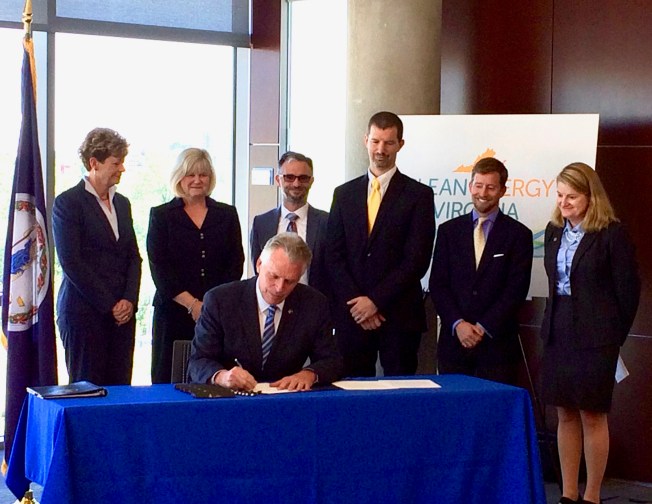
Governor Terry McAuliffe signs an Executive Directive on climate.

Terry McAuliffe dangled climate bait in front of Virginia Republicans, and they swallowed it hook, line and sinker.

Three weeks ago Governor McAuliffe announced he was directing the state’s Department of Environmental Quality (DEQ) to develop a rule capping greenhouse gas emissions from power plants. His Executive Directive gives DEQ until the end of December to put out a draft rule for public comment—meaning McAuliffe will be out of office before any rule takes effect, and its fate really lies with the winner of November’s gubernatorial election.

Democratic contenders Ralph Northam and Tom Perriello praised the initiative, but Republicans were too much in campaign mode to react rationally. Instead they went ballistic, ensuring that climate change will be an election issue in Virginia for the first time. Ed Gillespie, the frontrunner in the Republican primary, denounced the directive as “job killing and cost-increasing,” and used the opportunity to make common cause with coal companies. Corey Stewart called global warming “obviously a hoax” and promised to restore the taxpayer subsidies Virginia once lavished on the coal barons. Frank Wagner used his status as a state senator to convene a committee hearing so he could inveigh against McAuliffe’s directive.

Last week President Trump further elevated climate as an issue when he announced he was pulling the U.S. out of the international climate accord. ExxonMobil and ConocoPhillips criticized the move, but the Republican Party of Virginia celebrated it with a “Pittsburgh, not Paris” rally at the White House.

Only Virginia and New Jersey will elect governors in 2017, so our election is widely regarded as a bellwether for the 2018 federal electons. With almost 60% of Americans backing the Paris accord, Trump’s pullout—and the choice of Virginia Republicans to embrace an unpopular president over a divisive decision—makes McAuliffe’s directive look like a winning move for Democrats.

It is long past time for climate to become an important issue in national discourse. On the other hand, it’s painful to see it used as a political cudgel in partisan fights, and even worse to see Republicans double down on denying that a threat exists or that we have the tools to address it. Climate change is not something that happens only to one party’s target voter demographic. God sendeth the rain on the just and on the unjust. We are all in this together.

To be fair, there are Republicans who take climate change seriously and believe we need to address it. Unfortunately, the ones who hold elected office rarely have the courage to say it. Their party does not have their backs.

Political clickbait or not, the climate rule McAuliffe envisions is conceptually simple and economically efficient. It would have DEQ set greenhouse gas emissions limits from power plants pegged to those of the eleven states that currently regulate emissions, with a goal of enabling our utilities to trade emissions allowances with utilities in other states.

In effect, Virginia utilities would trade with those of the northeastern states that are members of the Regional Greenhouse Gas Initiative (RGGI), but Virginia would not actually join RGGI. That’s too bad; joining RGGI would let the state auction emissions allowances instead of giving them away, bringing in money for climate adaptation and clean energy programs. According to Deputy Natural Resources Director Angela Navarro, however, joining RGGI would require passage of legislation. Republicans in the General Assembly have blocked such legislation for the past three years in a row.

Auction revenue would be welcome, but the carbon reduction plan still makes sense. Navarro told me the RGGI states are currently achieving reductions of 2.5% year over year and driving clean energy investments. Using this approach would enable Virginia to achieve the 30% by 2030 reductions that the environmental community has been urging. It would also put Virginia in a stronger position when the U.S. eventually adopts nationwide carbon limits. Indeed, McAuliffe’s plan looks better than the Clean Power Plan the Trump administration is trying to scuttle, which applies only to existing power plants and might allow unlimited construction of new fracked gas plants.

A market-friendly cap-and-trade approach is the kind of solution that would appeal to Republicans, if they cared to get into the solution business. Unfortunately, Senator Wagner’s response is likely to be typical of what we can expect from Virginia’s Republican General Assembly when it reconvenes in January 2018. The ink was barely dry on McAuliffe’s directive when Wagner called a meeting of the Joint Commission on Administrative Rules to give himself a pre-primary platform to attack the climate initiative.

Wagner expected a member of the Administration to attend the meeting so he’d have someone to lecture—but wouldn’t you know, it turned out that every single Administration official with any connection to the issue was busy that day. That did not stop Wagner and his fellow Republicans from attacking McAuliffe’s directive as expensive and potentially unconstitutional. (Attorney General Mark Herring had released an opinion the previous week supporting its constitutionality.)

Democrats on the committee were unimpressed with Wagner’s grandstanding, and complained of being summoned to review a rule that hadn’t even been drafted yet. Even more to the point was the testimony from Virginia residents who came to speak in favor of climate action, not as a matter not of politics, but of public health. Dr. Janet Eddy of Virginia Clinicians for Climate Action and Dr. Matthew Burke of the Medical Society Consortium on Climate and Health described how a warming climate means more asthma and heat stroke, longer allergy seasons, and the northward spread of malaria and other infectious diseases.

These are serious problems, and they deserve serious attention. The Republican Party line that global warming isn’t happening, it isn’t our fault, and we can’t afford to stop has all the coherence of the thief who tells the judge he didn’t steal anyone’s wallet, and anyway there wasn’t much cash in it (and he can’t mend his ways because he has a gambling addiction).

Virginia voters will go to the polls on Tuesday to choose their party’s nominees for statewide office and the House of Delegates, so citizens are thinking about the issues that matter to them. The good news is that this year, climate may finally be one of them.