Unknown's avatar

Virginia’s General Assembly likes solar energy. Will that be enough?

Emojione_1F31E.svgVirginia’s General Assembly broke new ground in February when it passed legislation declaring up to 500 megawatts of utility solar power “in the public interest.” The language will help projects gain regulatory approval from the State Corporation Commission, which has been hostile to renewable energy. Dominion Virginia Power wants to build up to 400 MW of solar by 2020.* If the utility follows through, Virginia will finally join the solar revolution underway across the U.S.

Emojione_umbrella.svgIt’s important to acknowledge the limitations of the legislation, though. It was written by and for Dominion, not for the solar industry or Virginia residents. The utility does not want its customers installing solar power for themselves or buying it from anyone else, hence the limitation to utility-owned projects of at least 1 MW. So people who want to see more distributed generation, especially customer-owned, rooftop solar, found little to cheer about in this legislation.

Twemoji_exclamation question.svgOthers took a glass-half-full view. For climate activists, all solar is good solar, and big projects produce more than little projects. It would take 4,000 houses, each with an average 5-kW system, to produce as much power as a single 20-MW project like the one Dominion plans for Remington, Virginia. (The Remington facility is the only solar project Dominion has identified so far in the commonwealth.)

But of course, if you can get 4,000 houses with solar in addition to a 20-MW solar farm, then you’ve got twice as much solar altogether. Glass totally full: insert your happy emoji here.

The optimists hope that success with utility-scale solar will demonstrate the value of the resource and lead to better policies for distributed solar as well. A look at the experience of other states shows that is not inevitable. States with policies that promote residential and commercial solar, like New York and New Jersey, see a lot of those projects. States that mainly incentivize utility ownership, like North Carolina and Nevada, haven’t seen much else.

Dominion unquestionably won this round in the General Assembly, getting a seal of approval for its own projects while locking out most of the competition. Only two bills passed this year lowering hurdles to customer-owned renewables, and neither of them help homeowners. One bill raises the project size limit on net-metered facilities from 500 kW to 1 MW, a change sought by Virginia’s universities and by the solar developer Secure Futures LLC, whose business model focuses on large nonprofit institutions. The other enables localities to help finance energy efficiency and renewable energy projects on commercial properties using what are known as property-assessed clean energy, or PACE, loans.

Many more bills sought by renewable energy advocates went down to defeat in the face of utility opposition, including things like a grant program and a community net-metering bill that could have had a transformational impact on the industry.

That leaves just one initiative that advocates will be watching closely to see if it produces any opportunities for customer-owned solar. Legislation establishing the Virginia Solar Development Authority, HB 2267 and others, says it will “support the development of the solar industry and solar energy projects

by developing programs that increase the availability of financing for solar energy projects, facilitate the increase of solar energy generation systems on public and private sector facilities in the Commonwealth, promote the growth of the Virginia solar industry, and provide a hub for collaboration between entities, both public and private, to partner on solar energy projects.”

The bill is a little vague as to just how all this will happen. The Authority has no regulatory power and no budget. Many of its duties involve finding money, as in the paragraph empowering it to help utilities deploy 400 MW of solar projects by “providing for the financing or assisting in the financing of the construction or purchase of such solar energy projects.”

Another provision, however, empowers the Authority to “identify and take steps to mitigate existing state and regulatory or administrative barriers to the development of the solar energy industry.” Of course, one of those barriers is the anti-competitive maneuvering of our utilities to protect their monopoly positions.

The Authority should perhaps take a lesson from the DEQ-facilitated Small Solar Working Group, which I helped form in 2013 with a goal of developing pro-solar legislative proposals. The problem we ran into was that utilities were determined to ensure we did not put forth any legislative proposals, and we had made the mistake of letting them into the group. If utility executives get appointed to the Solar Authority, it could be déjà vu all over again.

Delegate Tim Hugo, for one, thinks the Authority will lead to more distributed generation as well as utility solar. “The intent of the legislation is to create an opportunity to develop a broad range of projects including distributed customer owned generation and to help facilitate a solar industry in Virginia,” he told me.

Hugo, one of the sponsors of the Authority bill, is one of the Commerce and Labor committee members who helped defeat other bills sought by the solar industry. But if distributed solar is to thrive in Virginia, it will require legislators like Hugo to become its champions.

Hugo, a Republican, considers himself a staunch solar advocate, going back many years. “In 2007,” he reminded me, “I sponsored HB2708 dealing with net metering, which would require utilities to purchase excess electricity produced by a customer-generator.” Last year he sponsored bi-partisan legislation exempting from real and personal property taxes solar equipment that generates 20 megawatts or less, a change critical to the economics of commercial solar projects.

But relatively few legislators from either party are willing to oppose Dominion, and therein lies the rub. The company considers monopoly control its right, and it doesn’t yield an inch without getting something for it. On the other hand, this was a bad year in the press for Dominion. Editorial boards across the state lambasted the company over legislation that will let it shield excess profits for the next several years. The public, too, is irritated with the slow pace of solar, and it knows whom to blame. That provides an opening for pro-solar legislators. We’ll see if they take it.


*Dominion was the moving force behind this legislation, but it applies as well to Appalachian Power Company. When I asked an APCo lobbyist whether its passage means more solar in APCo’s future, he merely referred me to the company’s 2014 Integrated Resource Plan, written a year ago. It lays out plans for small additions of utility solar beginning in 2019, scaling up gradually to a cumulative total of 500 MW in 2028—or about half as much as North Carolina already has today.

Unknown's avatar

Surprise endings to a week of bad news on energy and climate bills

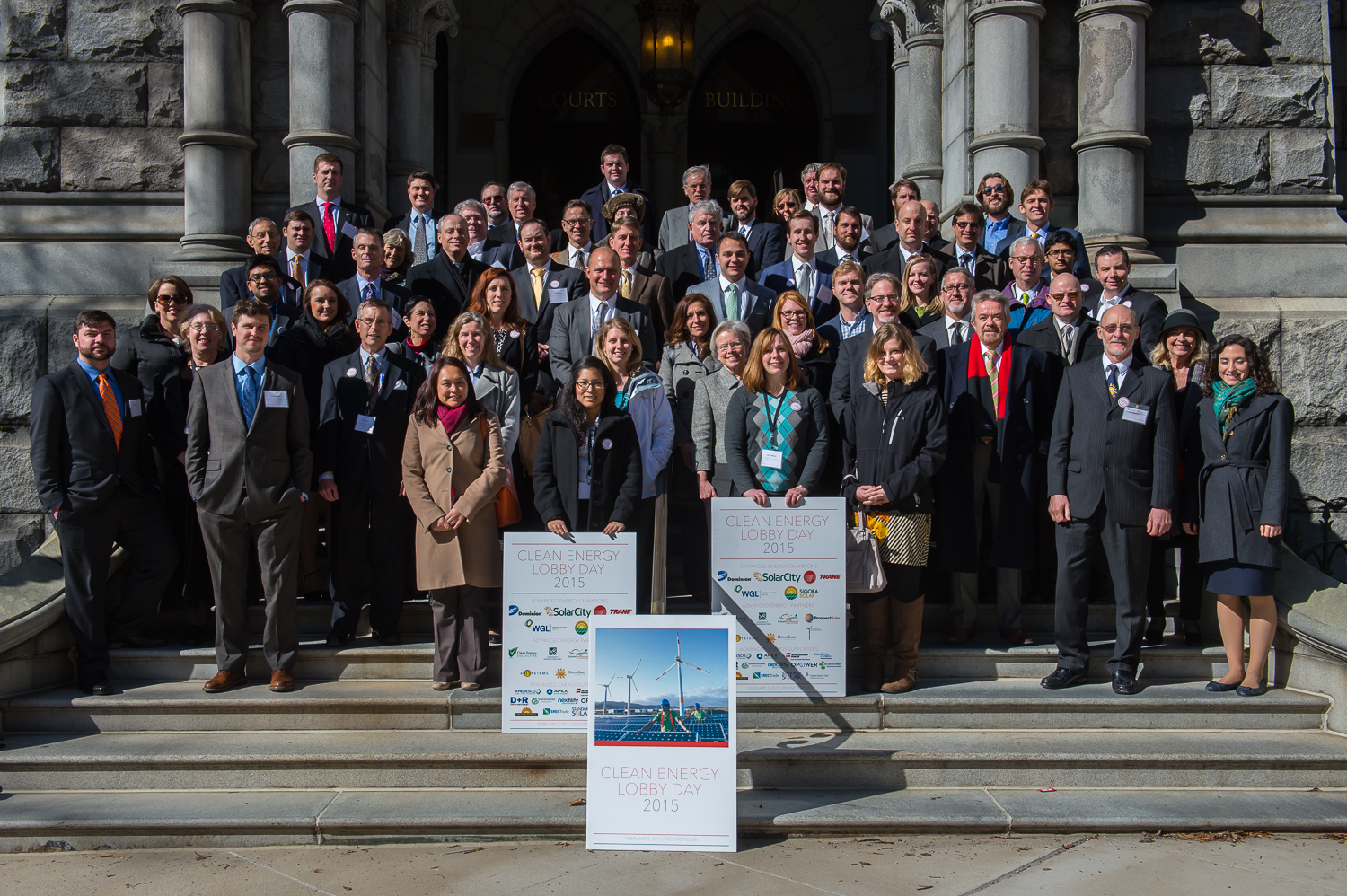
The fourth annual Clean Energy Lobby Day on February 3d brought representatives from businesses across the state to Richmond. Photo courtesy of MDV-SEIA.

The fourth annual Clean Energy Lobby Day on February 3d brought representatives from businesses across the state to Richmond. Photo courtesy of MDV-SEIA.

More than a hundred representatives of energy efficiency and renewable energy businesses descended on Richmond Tuesday for Clean Energy Lobby Day. After meetings with legislators, many of them stayed to attend a critical subcommittee meeting where most of this year’s clean energy bills came up for votes. And they came away with one overpowering impression: the only bills that can make it out of committee are the ones supported by the state’s utilities, especially Dominion Power.

But that wasn’t quite the end of the story. Because by the end of the week, they also found that the groundwork they had laid with their lobbing, and their tenaciousness before the subcommittee, created an opening they would not otherwise have had.

First, the bad news, and plenty of it

Things started bleakly. The House Commerce and Labor Subcommittee on Energy turned back multiple proposals that would have benefited Virginia’s small renewable energy and energy efficiency businesses, as well as their customers. Going down to defeat were bills to improve the renewable portfolio standard (HB 1913), create an energy efficiency resource standard (HB 1730), require a more rigorous study before utilities can impose standby charges (HB 1911), make third-party PPAs legal across the state (HB 1925), and enable an innovative vehicle-to-grid (V2G) project (HB 2073).

Left in limbo for the day was Delegate Minchew’s community solar bill, HB 1636. Minchew wasn’t ready to give up on it, but he had not found a way to get the utilities to back off their opposition. It went without saying that, without Dominion’s buy-in, the subcommittee members wanted nothing to do with it. Out of respect for a fellow Republican, however, they were willing to give him a couple of days’ grace. (On Thursday they killed the bill off.)

One small success was the raising of the cap for individual commercial renewable energy projects from the current 500 kilowatts to 1 megawatt (MW) (HB 1950). Bills to increase it to 2 MW were discarded. The bill was also passed out of the full committee on Thursday.

Also reported out was HB 2267, creating the Virginia Solar Development Authority. It passed in the full committee on Thursday but was then referred to the Committee on Appropriations.

With a few exceptions, the good bills lost on party-line voice votes following testimony from utilities in opposition to the measures. Republican committee members repeatedly expressed their concern about the potential impact on other ratepayers of bills that would make it easier for utility customers to generate their own power, or that would require utilities to buy a smidgeon more renewable energy.

Indeed, anyone who thinks Republicans don’t care about poor people should have been in that room. The outpouring of concern for struggling families was tremendously affecting. These brave souls made it abundantly clear that nothing that could be construed as a subsidy would sneak by on their watch.

Those of us who had seen some of the same delegates vote just last week to continue giving tens of millions of dollars annually in subsidies to coal companies, could not help noting the inconsistency.

Then a funny thing happened on the way to rubber-stamping Dominion’s solar bill

The anti-subsidy rhetoric was further undercut when, a few minutes later, the subcommittee unanimously approved Delegate Yancey’s bill (HB 2237) declaring it in the public interest for the state’s largest utility to install up to 500 MW of solar and offshore wind projects. Chairman Terry Kilgore did ask Dominion Power’s lobbyist if it would raise rates, but he was easily satisfied with the assurance that it would not—even though solar was “marginally more expensive.”

This was all the committee wanted to hear, and a motion had already been made to report the bill when the members were suddenly treated to an earful from the solar industry—not in support of the bill, but in opposition. Francis Hodsoll of Virginia Advances Energy Industries and Jon Hillis of MDV-SIEA, the solar industry trade association, praised the goal but urged that the bill be amended to open up competition for building the solar projects. Utilities might prefer to build the projects themselves to earn their guaranteed return on investment, said Hodsoll, but ratepayers would benefit from lower costs and in-state jobs if independent companies were eligible to bid.

Tony Smith of Secure Futures, LLC, further explained that federal tax incentives strongly favor independent companies developing projects instead of the utilities doing it themselves. He said an independent firm that develops a 20 MW project can sell solar for 5 cents per kilowatt-hour, a far better price than a utility can achieve building the same project itself.

Andy Bidea of Sigora Solar put the case most simply. “This is America. Let’s give capitalism a chance, right?”

Catchy idea. The committee proceeded to report the bill without changes, but Kilgore encouraged the patron to work with the solar industry on possible amendments prior to the full committee meeting on Thursday.

The industry’s stand had an effect. When the bill was taken up on Thursday, it included an amendment allowing utilities to buy power from a third-party developer before purchasing the project itself. This should be significant because the SCC would presumably insist on the lowest-cost approach. In an email, Francis Hodsoll told me the industry now supports the bill, which passed the full committee.

With Dominion’s recent announcements of its plans to move forward with as much as 400 MW of large-scale solar projects in Virginia, this is a hopeful sign for utility solar in the state. Only one project has actually been announced, a 20 MW project in Remington, Virginia. It should also make it easier for Dominion to move forward on offshore wind, a major plus.

Admittedly, the struggle for distributed solar continues. The happy ending on the Yancey bill means little to members of the industry struggling to make a living doing residential and small commercial projects. They had pinned a lot of hope on the grant program that passed with such fanfare a year ago, only to sink like a stone in a House subcommittee this session.

On the other hand, those who take the long view believe that once Virginians get familiar with the benefits of solar, it will become an unstoppable force. The indicators point to success in coming years whether utilities like it or not.

Climate? What climate?

In addition to the clean energy bills, the subcommittee also took action on two climate bills Tuesday. It rejected Delegate Villanueva’s HB 2205, which would have had Virginia join the Regional Greenhouse Gas Initiative as a vehicle to reduce carbon emissions. (The Senate companion bill died on a party-line vote last week.) It was the only legislation this year that would have taken positive action to address climate change and raise some of the enormous sums of money that will be needed to address the consequences of sea level rise.

Instead, it passed HB 2291 (O’Quinn), a bill that would require the Department of Environmental Quality (DEQ) to get approval from the General Assembly before submitting to the U.S. EPA a plan to implement the Clean Power Plan. Since the Republican majority has made its hostility to the Clean Power Plan clear, this is widely seen as a way to keep the state from acting at all. The bill also passed the full committee Thursday on a straight party-line vote, a clear indication that it is about party politics and anti-Obama Administration sentiment, not climate change.

Over in the Senate, however, saner heads prevailed. Senator Watkins amended his companion bill, SB 1365, simply to give DEQ direction on what to consider in developing the plan, and to require it to consult with the SCC and to meet with General Assembly members. The substitute bill passed Senate Agriculture unanimously.

Dominion’s Ratepayer Rip-off Act hits a bump in the road

Meanwhile, Senator Wagner’s bill to protect utility profits and shield Dominion (and now APCo too) from SCC scrutiny through the end of the decade sailed through Senate Commerce and Labor in spite of sparking the kind of outrage and condemnation in the press usually reserved for bills on guns and abortion. Editorial boards excoriated the legislation; Wagner was forced to sell his Dominion stock. Environmental groups, which had first sounded the alarm, staged a protest outside the General Assembly on Thursday morning and spurred thousands of constituents to write letters opposing the ratepayer rip-off.

As a consequence, SB 1349 ran into trouble on the Senate floor Thursday afternoon, and a substitute was introduced consisting of two pages of such dense regulatory detail that I cannot possibly tell you what it means. Anyone with the gumption to try to understand it may be wasting their time anyway, because I hear it remains in flux, with negotiations underway right now. Senator Donald McEachin reportedly is working to make it less objectionable. One thing seems certain: the senators who will be asked to vote on this will have no chance to review the language and reach their own conclusions.

It’s a lousy way to make sausage, but it’s ours.


Unknown's avatar

Tomorrow’s Clean Energy Lobby Day will highlight top legislative initiatives, but many are likely to fail in Dominion-friendly subcommittee

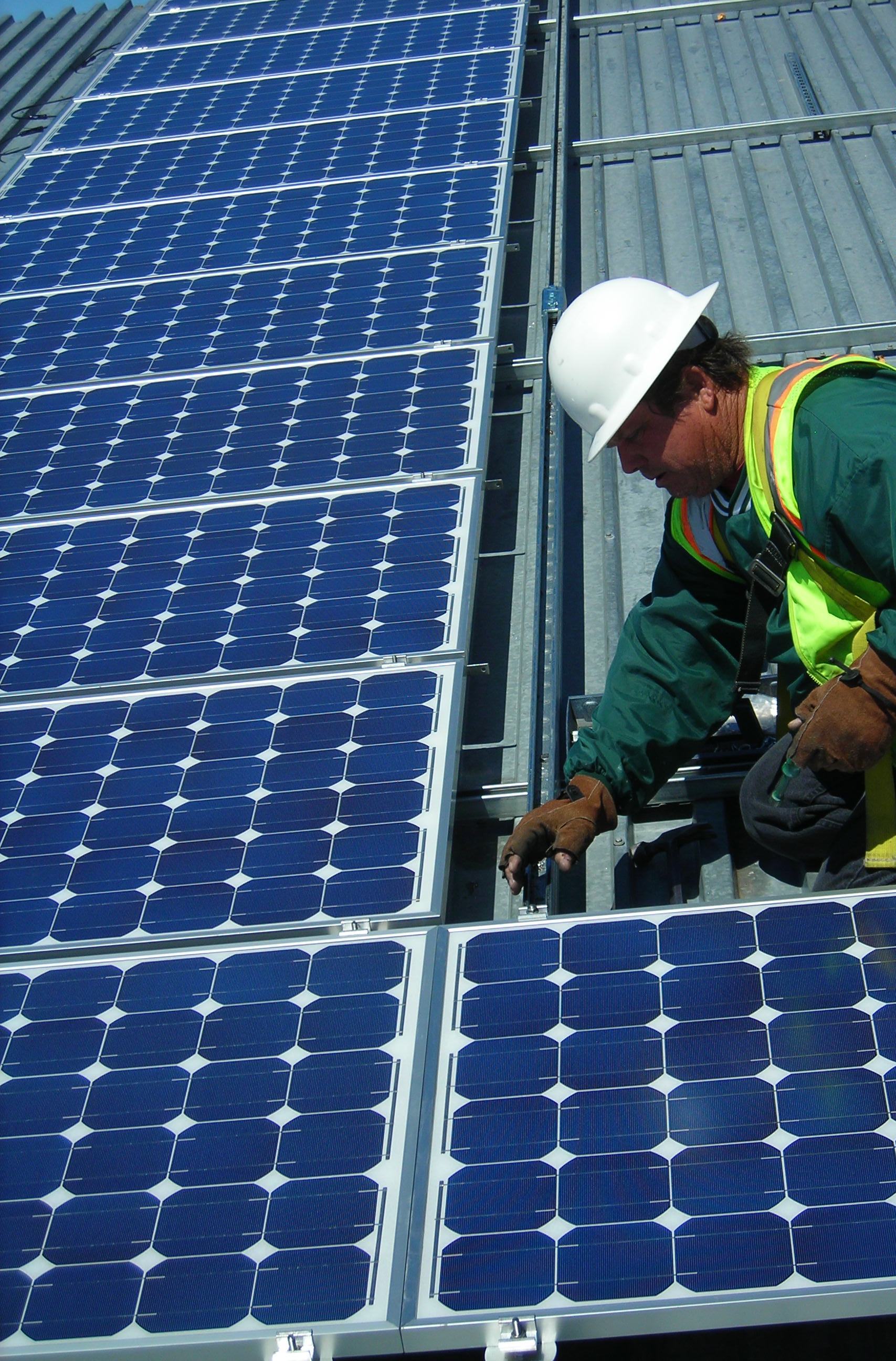
solar installation public domainOver a hundred representatives of renewable energy and energy efficiency businesses will descend on the General Assembly tomorrow, February 3d, for Clean Energy Lobby Day. The annual event gives legislators the chance to hear from small businesses across the state that are set to grow if Virginia gets the policies right.

The tradition of a lobby day for clean energy businesses began four years ago as a way to create a counterweight to the outsized influence of utility and fossil fuel interests in the legislature. The Sierra Club organized the popular, bipartisan event its first three years. For 2015, the businesses themselves have taken over, led by a coalition group called Virginia Advanced Energy Industries, and MDV-SEIA, the solar industry trade association.

Participants will primarily discuss with legislators the bills with the greatest potential to affect their own business interests. I’ve described most of these bills in previous posts, so I’ll just list a few here, with their current status.

  • Legislation to promote Property Assessed Clean Energy (PACE) financing for energy efficiency and renewable energy on commercial properties. SB 801 (Watkins) has already passed the Senate unanimously. Its companion bill, HB 1446 (Danny Marshall), and the somewhat similar HB 1665 (Minchew) have been assigned to a subcommittee of the Counties, Cities and Towns and are on the docket for Wednesday, February 3.
  • Delegate Randy Minchew’s HB 1636, creating a program for community net metering. This is a top priority of the solar industry. Sadly, it has been assigned to the Commerce and Labor Committee’s subcommittee on Energy, typically considered a wholly-owned subsidiary of Dominion Power. Prospects aren’t good unless Delegate Minchew negotiates a deal with Dominion.
  • House bills to increase the size limit for commercial renewable energy projects eligible for net metering will also be heard in the energy subcommittee. These include HB 1950 (McClellan), HB 1912 (Lopez), and HB 1622 (Sullivan). On the Senate side, SB 764 (Edwards) and SB 1395 (Dance) were scheduled to be heard in Commerce and Labor today. I’ll update this when I hear the outcome. [Update: the Senate bills were rolled together and heard as SB 1395, which passed the committee unanimously; however, as amended it increases the project cap to 1 MW, rather than the 2MW that was originaly proposed. In addition, it contains new language limiting the project capacity to the amount of energy used, and requiring the owner to pay for the costs of interconnection equipment and other costs.]
  • The renewable energy grant program, HB 1650 (Villanueva), which passed the GA unanimously last year, has already died in a House subcommittee.
  • HB 1725 (Bulova) and SB 1099 (Stuart) would establish the Virginia Solar Energy Development Authority. Bulova’s bill is before the House Subcommittee on Energy. Stuart’s bill has already passed the Senate, with an (unfortunate) amendment to give the legislature more power over appointments.

Many of the clean energy bills on the House side will be heard in the Commerce and Labor Committee’s subcommittee on energy Tuesday afternoon. The timing is not exact; the meeting will follow the conclusion of the meeting of the full committee, in House Room D of the General Assembly building. The subcommittee’s docket has been posted here.

In addition to legislation mentioned above, the subcommittee docket includes other bills of interest, like Yost’s HB 2219 and Yancey’s HB 2237, which promote utility-owned solar, Lopez’s RPS bill, HB 1913, and Villanueva’s Coastal Protection Act, HB 2205.

Some lobby day participants will also be urging opposition to legislation that would prevent Virginia from moving forward quickly to comply with the EPA’s Clean Power Plan, which favors renewable energy and energy efficiency. One such bill, HB 2291 (O’Quinn), is on the House energy subcommittee docket. The equivalent Senate bills are in Agriculture and Natural Resources, where they have not been heard yet.


Unknown's avatar

Your 2015 Virginia legislative session cheat sheet, part one: Clean energy bills

photo credit: Amadeus

photo credit: Amadeus

I’m starting my review of 2015 energy legislation with a look at bills dealing with renewable energy and energy efficiency. Most of these bills will be heard in the committees on Commerce and Labor, though bills that cost money (tax credits and grants) usually go to Finance.

Bills referred to Senate Commerce and Labor are heard by the full committee, which meets on Monday afternoons. It consists of 14 members: 11 Republicans and 3 Democrats. They form a tough lineup; none of these senators received better than a “C” on the Sierra Club’s Climate and Energy Scorecard.

The House bills are typically assigned to the 13-member Special Subcommittee on Energy (10 Republicans and 3 Democrats, no fixed schedule). Bills that do not meet the approval of Dominion Power can expect a quick death here on an unrecorded voice vote, never to be heard from again. But on the plus side, the meetings are often quite lively, like old-fashioned hangings.

Net metering bills

Net metering is the policy that allows owners of solar (or other renewable) energy systems to be credited for the excess power they feed back into the grid when the systems produce a surplus; the owners use the credits when their systems aren’t supplying power and they need to draw electricity from the grid. Virginia law restricts who can use net metering, and how much. Expanding net metering is a major goal of renewable energy advocates, who argue it offers a free market approach to growth—give customers the freedom to build solar projects, get the utility out of the way, and solar will thrive.

This year’s initiatives include:

  • SB 833 and SB 764 (Edwards—apparently identical bills), HB 1950 (McClellan), and HB 1912 (Lopez) raise the maximum size of a commercial project eligible for net metering, from 500 kilowatts (kW) currently to 2 megawatts (MW). This is a much-needed expansion of the net metering program if Virginia is going to make real headway with solar. We are told Edwards plans to conform his legislation to HB 1622, below.
  • HB 1622 (Sullivan) raises the maximum size of a commercial project to 1 MW, and the maximum size of a residential system from the current 20 kW to a whopping 40 kW. But note that it does nothing to limit the standby charges utilities can charge for residential projects over 10 kW. Given that these charges are so punitive as to kill the projects, raising the cap wouldn’t create new market opportunities unless it is accompanied by a limit on the amount of standby charges that utilities can tack on.
  • HB 1911 (Lopez) amends the language allowing utilities to impose standby charges on residential and agricultural customers with systems over 10 kW to add the requirement that the State Corporation Commission conduct a “value of solar” analysis prior to approving the charges. Most solar advocates would rather see the legislature repeal the standby charge provision altogether, given how the utilities have abused it. Barring that, legislators should set a dollar limit of no more than five or ten bucks a month. But in the absence of any such reforms, it does make sense to at least require the SCC to do this more substantive analysis, ideally building on the framework developed over the summer by the Solar Stakeholder Group.
  • HB 1636 (Minchew) establishes “community net metering” as well as increasing the commercial project cap to 2 MW. This bill is a high priority for the solar industry and the environmental community. It provides the solution for owners with shaded roofs, renters and others who can’t install solar themselves by letting them subscribe to a community generation facility in their own or a neighboring county. Other forms of renewable energy are also allowed, so residents in windy areas could go in on a small wind turbine that wouldn’t make sense for a single household.
  • HB 1729 (Sullivan) creates “solar gardens” consisting of community organizations with 10 or more subscribers. The generation facility can be as large as 2 MW. The bill seems intended to accomplish much the same purpose as Minchew’s bill, although it is limited to solar. However, it allows the utility to impose “a reasonable charge as determined by the [State Corporation Commission] to cover the utility’s costs of delivering to the subscriber’s premises the electricity generated by the community solar garden, integrating the solar generation with the utility’s system, and administering the community solar garden’s contracts and net metering credits.” Boy, we’ve seen that movie before. Given what we’ve seen the SCC do with standby charges, the bill should be amended to put a cap on the amount of that “reasonable charge” so legislators know they aren’t writing a blank check.
  • SB 350 (Edwards) authorizes programs for local governments to use net metering for municipal buildings, using renewable energy projects up to 5 MW. It also allows a form of community net metering targeted to condominiums, apartment buildings, homeowner associations, etc., with a renewable energy facility located on land owned by the association. These customers would be exempt from standby charges.

Third-party power purchase agreements (PPAs)

HB 1925 (Lopez) and SB 1160 (Edwards) replace the current PPA program in Dominion territory with one that applies to both Dominion and APCo territories. It increases the project cap from the current 500 kW to 1 MW, and raises the overall program size to 100 MW from (50 MW). As with the current program, projects under 50 kW aren’t eligible unless the customer is a tax-exempt organization.

Utility-scale solar

HB 2219 (Yost) declares it to be in the public interest for Dominion Virginia Power or Appalachian Power to build up to 500 MW of solar power—a truly welcome objective—and authorizes the utilities to apply to the SCC for a certificate of public convenience and necessity for individual facilities of at least 20 MW in size, regardless of whether the facility is located in the utility’s own service territory.

“In the public interest” are the magic words that push the SCC to approve something it might not otherwise. Both utility giants have shown an interest in building and owning utility-scale solar, even as they have taught the SCC to believe that solar owned by anyone else burdens the grid. The magic words let them escape the corner they backed themselves into. That would be necessary here, given that our SCC wrongly believes the public interest requires the lowest cost energy regardless of the consequences to public health, the environment, national security, and the economy.

The solar industry has two concerns about HB 2219: the effect on ratepayers, since Dominion’s previous solar efforts have cost well above market rates; and the effect on the Virginia solar industry—or rather, the lack of an effect, since Dominion has hired only out-of-state companies. Virginia ratepayers could save money and the state could build more solar if legislation simply required the utilities to buy 500 MW of solar, and let the market decide who builds it. But of course, that’s now how things work in Virginia.

I also think it is unfortunate that the bill allows utilities to build solar plants that are not in the utilities’ own service territories, and that it does not require them to use Virginia contractors. Surely there would be more support for a bill promising projects that support local economies with jobs and tax revenues, and that requires the hiring of local installers. These seem like small enough things to ask.

HB 2237 (Yancey) allows Dominion or APCo to recover the costs of building or buying a solar facility in the state of Virginia of at least 5 MW, plus an enhanced rate of return on equity, through a rate adjustment clause. It also states that construction or purchase of such a facility, and the planning and development activities for solar energy facilities, are in the public interest. (The magic words again.)

This bill doesn’t require anything or make huge changes. It simply treats solar the way the Code currently treats other forms of generation, with the exception that the “in the public interest” language was previously used only to endorse a coal plant (what became the Virginia City Hybrid Energy Plant in Wise County). And note that this bill requires that the facility be in Virginia, and opens up the possibility of our utilities buying the facility rather than constructing it themselves, which could open the door to competition. This seems like a good way to proceed.

Grants and tax credits

HB 1728 (Sullivan) establishes a tax credit for renewable energy. Great idea, but last year the Senate Finance Committee made it clear they would not pass a new tax credit, so I assume this is a non-starter.

Last year’s renewable energy tax credit bill was amended to create a grant program instead. It passed both houses, but without funding and with the requirement that it be passed again this year. It is back this year as HB 1650 (Villanueva). (It has been assigned to House Committee on Agriculture, Chesapeake and Natural Resources and is on the docket for 8:30 a.m. Wednesday, January 21. Odd: it ought to be in Finance.) The grant would equal 35% of the costs of a renewable energy facility, including not just wind and solar, but also things like biomass, waste, landfill gas, and municipal waste incinerators. Facilities paid for by utility ratepayers are not eligible, and the grant total is capped at $10 million per year. Prospects for the program aren’t great given the state’s tight budget situation, but the bill is a high priority for the solar industry.

Another tax-related bill is HB 1297 (Rasoul), which authorizes localities to charge a lower tax on renewable projects than on other kinds of “machinery and tools.” Last year, you may recall, the solar industry was successful in getting passage of a bill that exempted solar equipment entirely from local machinery and tools taxes. Proponents are trying to ensure that Delegate Rasoul’s well-intentioned bill doesn’t reverse last year’s victory on solar.

Bills specific to energy efficiency

HB 1730 (Sullivan) establishes energy efficiency goals for electric and natural gas utilities. The good news: the goals are mandatory. The bad news: the goals are modest to a fault: a total of 2% energy savings by 2030 for electricity and 1% for natural gas.

HB 1345 (Carr) extends the sales tax holiday for Energy Star and WaterSense products to include all Energy Star light bulbs; currently only compact fluorescent light bulbs are eligible.

PACE bills

PACE (Property Assessed Clean Energy) is a way to finance energy efficiency, renewable energy and water conservation upgrades to commercial and non-profit-owned buildings. Local governments sponsor the financing for improvements and collect payments via property tax bills. Since the energy savings more than pay for the increased assessments, PACE programs have been hugely successful in other states.

Last year a bill that would have let localities extend “service districts” to cover clean energy (PACE by another name) failed in the face of opposition from the banking industry. This year’s bills are also not labeled PACE bills, but they achieve the same end. Apparently the parties have worked out the problems, a hopeful sign that a multi-year effort will finally meet with success.

SB 801 (Watkins) and HB 1446 (Danny Marshall) are companion bills that would authorize local governments to work with third parties to offer loans for clean energy and water efficiency improvements, creating “voluntary special assessment liens” against the property getting the improvements. The Department of Mines, Minerals and Energy would develop underwriting guidelines for local loans to finance the work. HB 1665 (Minchew) is similar, and we are told it will be conformed to HB 1446.

Virginia Solar Energy Development Authority

HB 1725 (Bulova) and SB 1099 (Stuart) establish the Virginia Solar Energy Development Authority to “facilitate, coordinate, and support the development of the solar energy industry and solar-powered electric energy facilities in the Commonwealth.” This implements a proposal in the 2014 Virginia Energy Plan and is not expected to be controversial.

Virginia SREC registry

HB 2075 (Toscano) requires the SCC to establish a registry for solar renewable energy certificates (SRECs). It would not suddenly make Virginia SRECs valuable, but it would put the administrative framework in place to support a voluntary SREC market, or even a real one if Virginia were to adopt legislation requiring utilities to buy solar power.

Cross-cutting approaches to clean energy

A few bills would have a more sweeping effect on energy efficiency and renewable energy. HB 2155 (Sickles) is billed as an “Energy Diversity Plan.” It was supposed to be a “grand bargain” between utilities and the clean energy industries, with the McAuliffe administration participating as well, but we understand there are outstanding issues that make the bill’s future uncertain.

The big idea is to put all non-emitting energy sources into one category: primarily wind, solar, hydro and nuclear, but also adding in combined heat and power, demand response and energy efficiency. The bill creates a timeline that requires utilities to ramp up use of new, non-emitting sources gradually, beginning with 0.25% of retail sales in 2016 and ramping up to 35% in 2030.

The bill has the support of clean energy industries, but the idea of treating nuclear as a benign source of power on an even footing with efficiency and renewables concerns the environmental community.

I’ll write more about this bill if it looks like it has legs.

HB 1913 (Lopez) is the only bill of the bunch that directly targets Virginia’s Renewable Portfolio Standard (RPS). Maybe that shouldn’t be a surprise. Our RPS is a poor, sickly thing that most people have left for dead. To his credit, Lopez keeps trying. His bill keeps the RPS voluntary but beefs up the provisions to make the program meaningful, if a utility chooses to participate. Instead of mostly buying renewable energy certificates from things like old, out of state hydro dams, the bill would ensure that actual, real-world renewable projects get built. You know, what an RPS is supposed to do.

In addition, the bill folds into the RPS the state’s existing goal of 10% energy efficiency gains by 2022. Utilities have done very little toward meeting this goal. Putting it into the voluntary RPS might be the prod needed to get more efficiency programs underway.

Or it might cause a utility to drop out. Either way, the result would be better than what we have now, where Virginia pretends to have an RPS, and utilities pretend to care.

Update: Another net metering bill has been filed. SB 1395 (Dance) raises the commercial net metering cap from 500 kW to 2 MW.

Unknown's avatar

Solar industry group tells Virginia HOAs to let the sunshine in

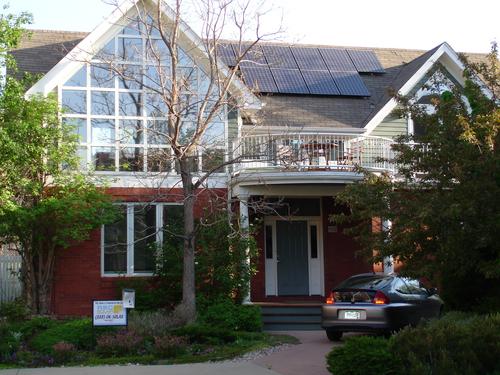
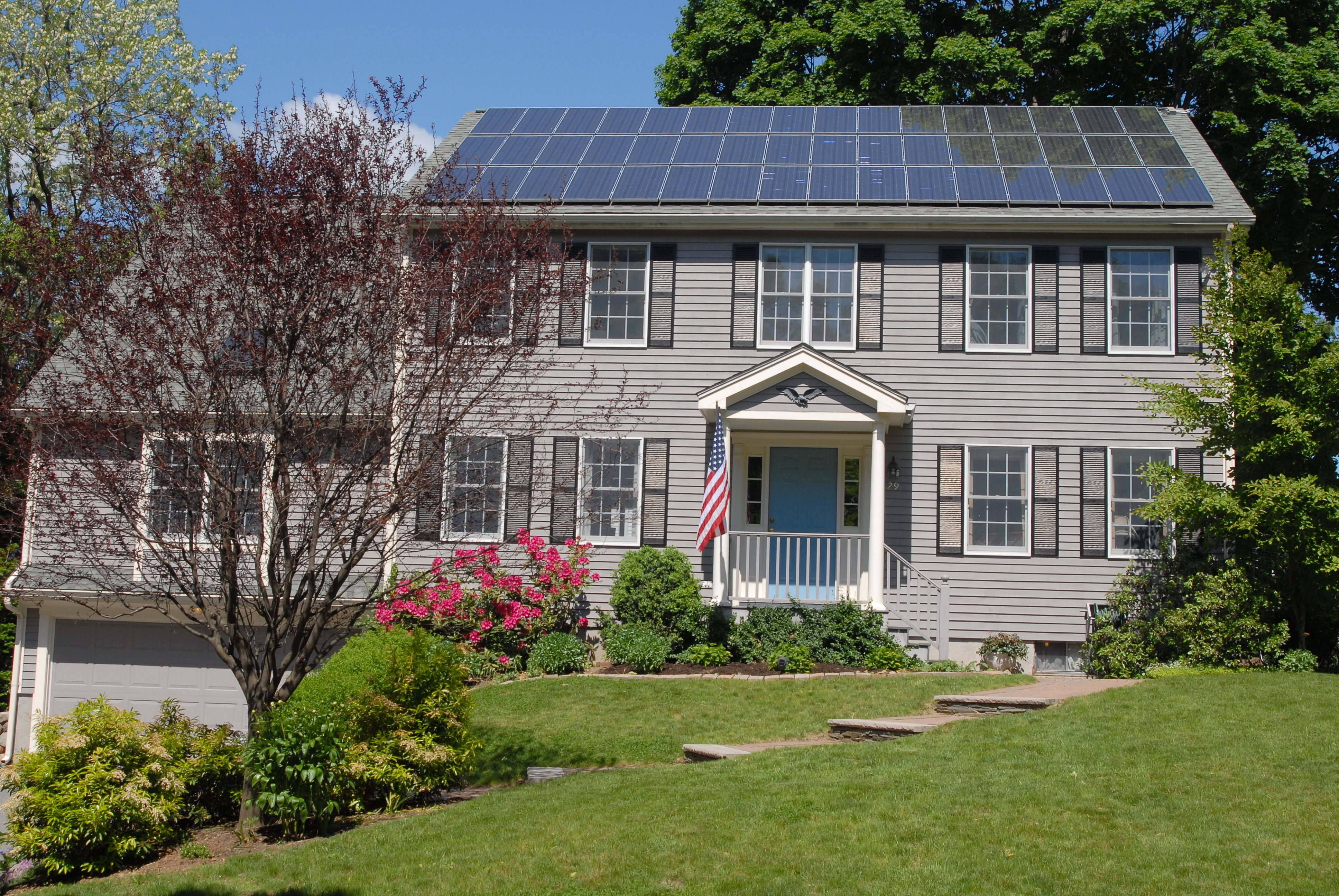
Solar panels on the sunny front roof of a house should be cheered, not banned. Photo credit: NREL

Solar panels on the sunny front roof of a house should be cheered, not banned. Photo credit: NREL

Solarize Blacksburg had barely gotten underway last spring when the first complaints came in: homeowners who wanted to participate in the community bulk purchase of solar panels reported resistance from homeowner associations (HOAs) worried about aesthetics. Some HOAs were willing to work with residents, but others were not. Some HOAs refused to allow solar installations at all, even though most blanket prohibitions now violate state law.

The problem repeated itself around the state as more solarize programs took off. Many HOAs hadn’t heard about the new law, passed during the 2014 session, that nullifies HOA rules banning solar panels, including bans that have been in place for decades. Under the law, the only prohibition still legal would be one written into the HOA’s “recorded declaration”—something pretty much unheard of in Virginia, according to Senator (and lawyer) Chap Petersen, who wrote the bill.

But the law still allows “reasonable restrictions” on the “size, place and manner of placement” of solar panels, and what that means is open to interpretation. The Blacksburg organizers consulted lawyers and industry members to come up with a set of guidelines they hoped their local HOAs would use. But meanwhile, the same problem kept popping up across the state.

Now the Maryland, DC and Virginia Solar Energy Industries Association—or MDV-SEIA, as the trade association is known—has weighed in with its own guide. Not surprisingly, it recommends that HOAs be as accommodating as possible to residents who want to install solar panels. It is, nonetheless, a good starting point for HOA officers coming to the question for the first time. In the absence of any other guidance, it also puts HOAs on notice that restrictions going beyond MDV-SEIA’s recommendations may be challenged.

The industry guide contains a list of restrictions it considers reasonable, and those it does not. In general, restrictions that make a solar energy system either more expensive, or less effective, won’t pass muster. The classic example here is a requirement that solar panels not be visible from the street. If the street side of the house happens to be the only sunny side, then restricting solar panels to the rear is per se unreasonable.

Restrictions the industry group thinks are reasonable include requiring homeowners to get approval from the HOA before installing the system, placing the panels more or less flat on the roof, and concealing the wiring and components as much as possible.

Virginians dealing with this issue will take cold comfort in knowing that the fight over solar panels is playing out among HOAs and homeowners nationwide. Start typing “can HOAs” into Google, and the first phrase that pops up is “ban solar panels.” Moreover, while many states now prohibit solar bans, allowing “reasonable restrictions” is also common, and there is no consensus on what that means.

The nonprofit Solar Foundation, working with the Department of Energy’s Sunshot Solar Outreach Partnership, prepared a guide for community associations that contains a comprehensive discussion of this issue. “A Beautiful Day in the Neighborhood” was published before Virginia’s law was revised last year, but it remains an excellent resource for homeowners who want to educate their neighbors about the value of solar—and with any luck, head off disputes about what kind of restrictions the law allows.

Unknown's avatar

Virginia’s amazing year in energy: gas rises, coal falls, and solar shines (but it’s still not okay to say “climate change”)

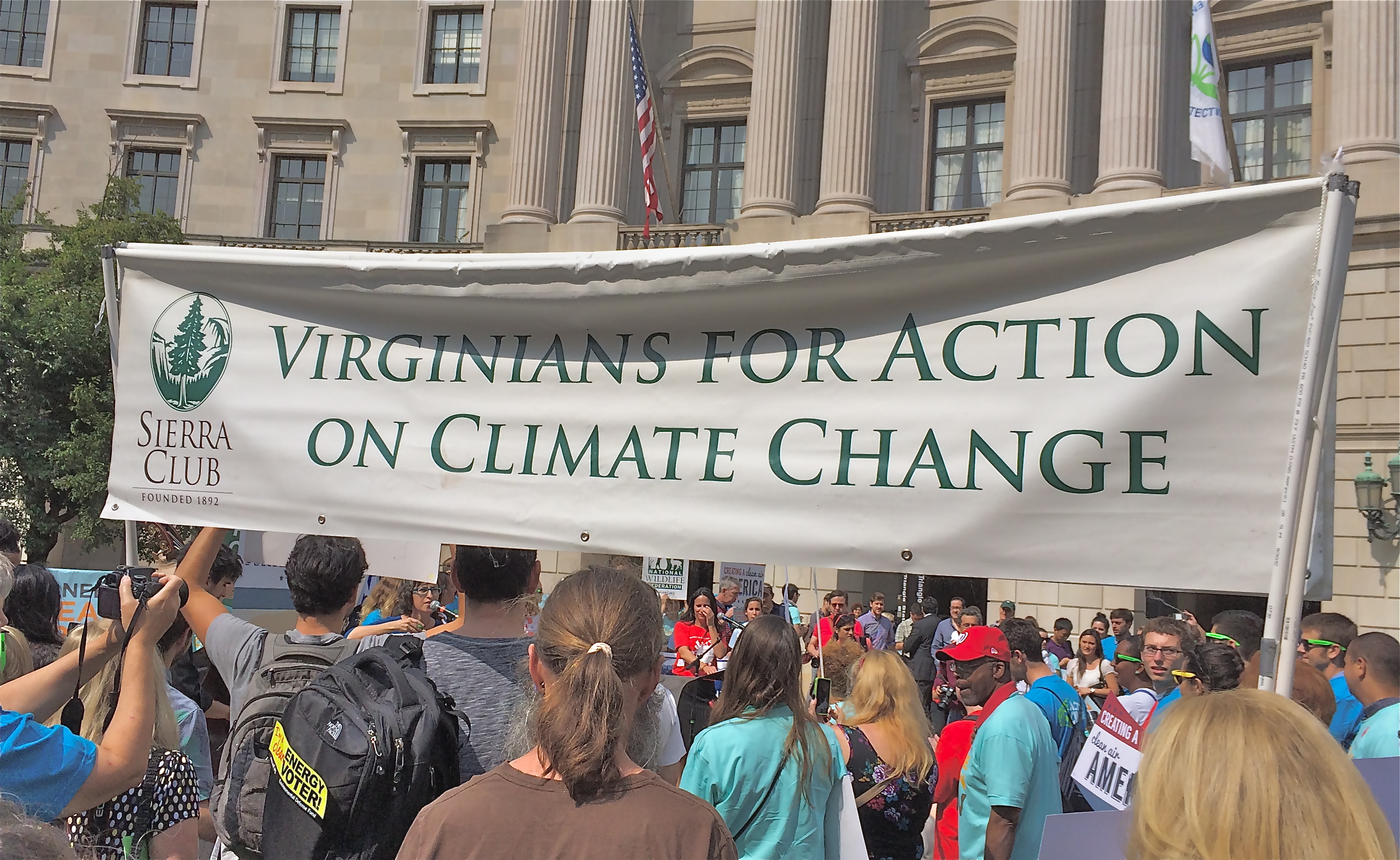
Virginians rally in front of U.S. EPA Headquarters in Washington, DC in support of the Clean Power Plan

Virginians rally in front of U.S. EPA Headquarters in Washington, DC in support of the Clean Power Plan

Nobody laughed a few years ago when former governor Bob McDonnell dubbed Virginia the “Energy Capital of the East Coast”; we were all too astounded by the hyperbole. And today, even “Energy Suburb” still seems like a stretch. Yet, if you measure achievement by the sheer level of activity, Virginia is making a play for importance. The year’s top energy stories show us fully engaged in the worldwide battle between fossil fuels and renewable energy. Of course, while the smart money says renewables will dominate by mid-century, Virginia seems determined to drown rather than give up its fossil fuel addiction.

Coal falls hard; observers disagree on whether it bounces or goes splat. Nationwide, 2014 was a bad year for the coal industry. Coal stocks fell precipitously; mining jobs continued to decline; and the one thing electric utilities and the public found to agree on is that no one likes coal. Even in Virginia, with its long history of mining, coal had to play defense for what may have been the first time ever. So when Governor McAuliffe released the state’s latest energy plan in October, what was otherwise a paean to “All of the Above” omitted the stanza on coal. And this month, the governor proposed a rollback of the subsidies coal companies pocket by mining Virginia coal.

Of course, coal is not going quietly; Senator Charles Carrico (himself heavily subsidized by Alpha Natural Resources) has already responded with a bill to extend the subsidies to 2022.

EPA opens a door to a cleaner future, and Republicans try to brick it up. Speaking of hard times for coal, in June the EPA unveiled its proposal to lower carbon emissions from existing power plants 30% nationwide by 2030. Instead of targeting plants one-by-one, EPA proposed a systemic approach, offering a suite of options for states to reach their individualized targets.

The proposal drew widespread support from the public, but Virginia’s 38% reduction target set off howls of protest from defenders of the status quo. The staff of the State Corporation Commission claimed the rule was illegal and would cost ratepayers $6 billion. Republicans convened a special meeting of the House and Senate Energy and Commerce Committees, where they tried out a number of arguments, not all of which proved ready for prime time. The rule, they said, threatens Virginia with a loss of business to more favored states like—and I am not making this up—West Virginia. Also, Virginia should have received more credit for lowering its carbon emissions by building nuclear plants back in the 1970s when no one was thinking about carbon emissions.

Meanwhile, the Southern Environmental Law Center analyzed the rule and concluded that actually, compliance will not be hard. Virginia is already 80% of the way there, and achieving the rest will produce a burst of clean-energy jobs coupled with savings for consumers through energy efficiency.

Undaunted, Republicans have already introduced a thumb-your-nose-at-EPA bill developed by the fossil fuel champions at the American Legislative Exchange Council.

The “solarize” movement takes Virginia by storm. For the last few years, solar energy has been exploding in popularity across the U.S., but Virginia always seemed to be missing the party. So it surprised even advocates this year when pent-up consumer demand manifested itself in the blossoming of local solar buying cooperatives and other bulk-purchase arrangements. “Solarize Blacksburg” made its debut in March, going on to sign up hundreds of homeowners for solar installations. It was followed in quick succession by the launch of similar programs in Richmond, Charlottesville, Harrisonburg, Northern Virginia, Halifax, Floyd, and Hampton Roads.

The main reason for the solarize programs’ success was the steep decline in the cost of solar energy. 2014 saw the cost of residential installations in Virginia fall to record low prices, making the investment worthwhile to a broad swath of homeowners for the first time.

Utilities say maybe to solar, but only for themselves. Virginia still boasts no utility-scale solar, but utilities elsewhere signed long-term power purchase contracts for solar energy at prices that were sometimes below that of natural gas: under 6.5 cents/kilowatt-hour in Georgia, and under 5 cents in Texas. Compare that to the estimated 9.3 cents/kWh cost of power from Dominion Virginia Power’s newest and most up-to-date coal plant, the Virginia City Hybrid Energy Plant, and you’ll understand why Dominion has suddenly taken an interest in solar projects. Sadly, it’s own foray into rooftop solar so far stands as an example of what not to do, and a testament to why the private market should be allowed to compete.

Yet Virginia utilities continued their hostility to customer-owned solar. Dominion put the kibosh on a bill that would have expanded access to solar energy through community net-metering, while Appalachian Power matched Dominion’s earlier success in imposing punitive standby charges on owners of larger residential systems.

Fracking, pipelines, and gas plants, oh my! Renewable energy may be the future, but the present belongs to cheap natural gas. Yes, the fracking process is dirty, noisy and polluting, and yes, methane leakage around gas wells is exacerbating climate change. But did we mention gas is cheap?

2014 saw proposals to drill gas wells east of I-95, while the Virginia government began updating its regulations to govern fracking. Dominion Power started construction on a second new gas power plant, and talked up its plans for a third. The utility giant, a major player in the gas transmission business, also got approval to turn its liquefied natural gas import terminal in Cove Point, Maryland, into an export terminal. With visions of customers dancing in its head, it also announced plans for a major new pipeline to bring fracked gas from West Virginia through Virginia and into North Carolina—one of three proposed pipelines that would cut through the Virginia countryside and across natural treasures like the Appalachian Trail. The pipeline created an instant protest movement but gained the wholehearted approval of Governor McAuliffe.

Flooding in Hampton Roads becomes the new normal; it’s still not okay to ask what’s causing it. A cooler-than-normal year for the eastern United States gulled many landlubbers into believing that global warming was taking a breather, but meanwhile the ocean continued its inexorable rise along Virginia’s vulnerable coastline. It’s one thing to shrug off the occasional storm, said residents; it’s harder to ignore seawater that cuts off your parking lot at every high tide. 2014 will go down as the year everyone finally agreed we have a problem—even in the General Assembly, which passed legislation to develop a response to the “recurrent flooding.” But while the bill recognized that the problem will just get worse, it avoided noting why.

The public gets it, though. The Richmond Times-Dispatch reports that climate change was the number one topic of interest to writers of letters to the editor in 2014. And loud cheers greeted Governor McAuliffe’s announcement that he would reestablish the state’s commission on climate change, which Bob McDonnell had disbanded. As one environmental leader quipped, “People in Tidewater are tired of driving through tidal water.”

Public corruption: in Virginia, it’s not just for politicians. Everyone can agree that it was a really bad year for the Virginia Way, that gentlemanly notion that persons of good character don’t need no stinkin’ ethics laws. But we also saw plenty to prove the adage that the real scandal is what’s legal. As we learned, Virginia law allows unlimited corporate contributions to campaigns, and puts no limits on what campaigns can spend money on. So if some legislators act more like corporate employees than servants of the public, well, that’s how the system was set up to work.

But the system only works when corporations get their money’s worth from the politicians, and that quid pro quo usually comes at the public’s expense. For example, take Dominion Power’s North Anna 3 shenanigans (please). In an exceptionally bold exploitation of the Virginia Way, Dominion Power secured passage of legislation allowing it to bill customers for hundreds of millions of dollars it had spent towards a new nuclear plant that it is unlikely to build. (And the irony is that ratepayers will still be better off throwing the money down that rathole than they will be if Dominion does manage to build it.)

So as we look ahead to 2015’s energy battles, anyone wondering who the winners and losers will be needs only one piece of guidance: in Virginia, just follow the money.

Unknown's avatar

Virginia regulators approve Appalachian Power’s “solar tax”

Virginia homeowners had better tell their solar installers to keep it under 10 kW. Photo credit Gray Watson

Virginia homeowners had better tell their solar installers to keep it under 10 kW. Photo credit Gray Watson

The State Corporation Commission has granted Appalachian Power Company’s request to be allowed to impose “standby” charges on residential customers with solar systems over 10 kilowatts. The charges can range up to more than $100 per month, regardless of how much electricity the homeowner actually draws from the grid.

In its Final Order in case number PUE-2014-00026, dated November 26, the SCC ruled that APCo’s standby charge complies with § 56-594 F of the Virginia Code, which provides for standby charges for net-metered residential systems between 10 and 20 kW. (The law does not allow for net metering of residential systems over 20 kW.)

Environmental groups intervened in the case and ran a grassroots campaign that generated over 1500 comments to the SCC, opposing what has been dubbed a “tax on the sun.” The result, however, was never in much doubt. The SCC has repeatedly demonstrated a willingness to accept without scrutiny utility assertions that solar customers impose costs on other customers.

Attorneys at the Southern Environmental Law Center, who argued against the standby charges on behalf of the Sierra Club and other groups, say the SCC’s reasoning is flawed. According to Cale Jaffe, Director of the SELC’s Virginia office, “Appalachian Power actually conceded during the hearing that it was ‘not in a position’ to determine whether solar customers had ‘a positive or negative impact to the distribution cost of service.’  In other words, Appalachian Power said that solar customers might be having a positive impact in helping to reduce APCo’s distribution costs, but that the power company didn’t have the data and didn’t know one way or the other.”

Jaffe added, “We saw that piece of evidence as a fatal concession, at least with respect to the distribution portion of the charge.” Yet a reading of the Final Order suggests the Commission never even considered the point.

The SCC allowed APCo, like Dominion before it, to consider only transmission and distribution costs, ignoring generation costs for now. Advocates urge that solar systems produce power at times of peak demand, reducing the need for utilities to buy expensive peak power, and therefore actually saving them money. The utilities dispute this, but it is worth noting that APCo’s most recent Integrated Resource Plan from March of this year projects that solar power will be cheaper than its avoided cost of energy by 2019. But of course, the point of standby charges isn’t about the cost of solar, but about preventing customers from generating their own power.

In spite of all the time and money APCo has spent to get approval for the standby charges, the utility has said that only five existing customers will be affected. The real impact will be to limit the number of homeowners who choose to install large solar systems going forward. The prospect of paying high standby fees will likely discourage APCo customers from buying systems over 10 kW, as has happened in Dominion’s territory after the SCC allowed Dominion Virginia Power to impose similar standby fees a year ago.

Although a 10 kW system is bigger than the average Virginia home needs by itself, people with electric cars can find their demand exceeds that limit. Moreover, Dominion Virginia Power has signaled that it would like to impose standby charges on all of its solar customers, regardless of system size.

The actions of Virginia utilities and the SCC put the commonwealth in the thick of a nationwide battle over customer-owned, “distributed” solar. While most studies analyzing the value of solar have concluded that distributed solar benefits the public and the grid, utilities fear it will eat into their profit margins. They see Virginia as a good place to establish a precedent friendly to the utility viewpoint, due to the commonwealth’s history of allowing its utilities to dictate energy policy. So far, this episode proves them right.

Unknown's avatar

Dominion ditches plans for onshore wind in Virginia, but grows bullish on solar

Not for you, Virginia.

Not for you, Virginia.

Well, now it’s semi-official: in spite of what it has been telling customers for years, Dominion Power is not going to build onshore wind in Virginia. Speaking at an Edison Electric Institute conference in Dallas on November 13, Dominion Resources Executive Vice President and CFO Mark Gettrick spelled it out:

“When the wind business first got started, a decade, a decade and a half ago, we built two wind projects early on [Mt. Storm, in West Virginia, and Fowler Ridge, in Indiana], and we elected not to build any more. We steered away from wind. We do not think wind would ever be a good resource on land, in Virginia anyway, and so we elected not to pursue incremental wind projects.”

Someone should probably let the rest of the company in on the secret. Dominion’s website still insists the company has three Virginia onshore wind projects in development, and it included 247 megawatts’ worth in its latest Integrated Resource Plan (IRP). But the plan reflects the company’s cooling enthusiasm for wind energy, with the projects now slated for 2022-2024.

This is disappointing news, but it certainly isn’t a surprise. Dominion proposed its Virginia wind farms back before fracking caused natural gas prices to nosedive, undercutting the economic case for wind. At that point, Virginia’s lack of a real RPS meant Dominion had no incentive to build higher-priced generation, and every reason to believe the State Corporation Commission would reject a wind project, as it did similar proposals from Appalachian Power.

But though it is abandoning wind, the company is enthusiastic about solar. Gettrick said Dominion sees “gas and solar” as the way to comply with the EPA’s Clean Power Plan, which will require states to lower their carbon emissions from electric generating plants. Gettrick said:

“We see a growing need in Virginia to install solar for native load compliance with carbon. So that’s what we’re doing . . . So watch where we go with solar. We like the technology, the cost continues to drop, and we see it as a cornerstone for future development in Virginia.”

Advocates may wonder, why solar and not wind? Wind would seem to be cheaper, after all, and a single utility-scale turbine provides more power than hundreds of home solar systems.

The IRP offers part of the answer. For a utility, not all power is equal. Dominion has plenty of power for times when demand is low; the challenge is filling in the peaks and valleys of demand above that minimum level. Dominion needs the most power on summer days when solar produces well but wind does not.

The other part of the answer is price. This will surprise people who have seen the rock-bottom prices of wind power in places like Iowa and Texas, where wind outcompetes even natural gas. But it’s cheap to build wind among cornfields or on open rangeland, where access is easy. It’s more expensive to do it in the eastern mountains, where narrow, winding roads pose logistical challenges. The result is that wind power in the Southeast will cost about double what it costs in the Plains, according to the most recent Lazard analysis.

By contrast, Lazard calculates that utility scale solar power costs only about 20% more in the Southeast than it does in the dry, sunny Southwest, where utility-scale solar has reached grid parity. So while the best wind prices are well below the best solar prices nationwide, solar may be cheaper than wind in Virginia.

Lazard’s analyses are based on actual projects, but it also makes some predictions about where prices are headed. It projects unsubsidized utility-scale solar prices of six cents per kilowatt-hour by 2017, confirming predictions of widespread grid parity made by other analysts like Citibank and Deutsche Bank.

If you’re concerned about meeting EPA carbon emissions rules, or just concerned about the environment, period–or you want a reliable and stable-priced resource to hedge gas–solar makes very good sense.

Given these price trends, Dominion’s enthusiasm is entirely understandable. But surely it has some explaining to do, after years of trashing solar to legislators and the SCC. It has gone so far as to slap standby charges on customers who generate their own solar power. And as we’ve seen, its own forays into rooftop solar can’t be counted a success.

But perhaps we could all let bygones be bygones. If Dominion would focus its efforts on utility-scale solar while allowing the removal of barriers constraining the private market for commercial and residential solar, all of us would be winners.

Unknown's avatar

Dominion Virginia Power says its 30 MW Solar Partnership Program likely to top out at “13 or 14” MW

Photo credit Christoffer Reimer

Photo credit Christoffer Reimer

At a stakeholder meeting in Chesterfield, Virginia, on Monday, Dominion Virginia Power revealed that it expects to have installed a total of 6 megawatts (MW) of distributed solar generation by year’s end, out of the 30 MW approved by the General Assembly. But the program, which Dominion calls its Solar Partnership Program, may achieve only a total of “thirteen or fourteen megawatts” before it exhausts the $80 million that the State Corporation Commission authorized the company to spend on it.

Dominion had originally requested $110 million for the program, under which it develops large solar facilities on rooftops it leases from commercial, industrial or institutional customers in selected areas. But many solar industry members and advocates, including yours truly, argued that it should be possible to install 30 MW of solar for much less. It turns out that we were right that the private sector could do it for less, but wrong in thinking Dominion could.

The $80 million price tag works out to a cost of between $5.70 and $6.15 per watt, a number that is at least two and a half times what a commercial customer would expect to pay if it purchased a system directly. It’s vastly higher even than what residential customers are paying under the popular “solarize” programs that have sprung up around the state this year, which are producing contracts for home systems at $2.90-3.55 per watt.

Dominion analyst Nate Frost told me at the meeting that the SCC required the company to include all the related costs of the program, including financing and O&M as well as the cost of leasing rooftops from participants. But this still puts the price far above what similar projects would cost if built and owned by a private sector firm, according to an industry insider I consulted.

I followed up with Mr. Frost by email to ask for a cost breakdown, and to find out whether unique factors might have driven up the cost. Mr. Frost referred me to the company’s August 29 filing with the SCC (which, due to the SCC’s impossibly user-unfriendly website, I cannot link you to, although you can look it up yourself on the website by searching under case PUE-2011-0017).

That filing does not, unfortunately, answer any of the questions I put to Mr. Frost. But reading it does give a strong impression that the company had expected to be able to install the full 30 MW under the cost cap, and was as surprised and dismayed as the rest of us to find they were proceeding with projects way too slowly while blowing through their budget way too fast.

Of course, the point of the Solar Partnership Program is not to show whether Dominion is capable of competing with private companies, but to give the utility a chance to examine how solar integrates with the existing grid. This is important because solar is such a new and untried technology that the utility could not possibly know what might happen if it just scattered twenty or thirty megawatts’ worth of it into a system with tens of thousands of megawatts of fossil fuel generation. Sure, critics might suggest Dominion could get that information from New Jersey, which has over 1,300 MW of solar in a state half the size of Virginia. But what the critics fail to understand is that unlike Virginia, New Jersey actually encourages solar, making its electrons highly suspect. This is why we need our own study.

Monday’s stakeholder meeting revealed more bad news about Dominion’s progress on solar. Also behind schedule is the Solar Purchase Program, under which solar owners who would otherwise be eligible to net meter (using their solar power themselves) are offered 15 cents per kilowatt-hour to sell their green electricity to Dominion for resale to the Green Power Program, while purchasing “brown” power for their own use at the standard rate. Although the program has been open for more than a year and has a capacity of 3 MW, to date it has signed up only 703 kilowatts.

Solar industry members and analysts had criticized the design of the program from the outset. But again, the company’s SCC filing (included with the Solar Partnership Program filing) reveals Dominion’s surprise and chagrin that the great majority of customers who initially signed up for the program changed their minds.

Nor are customers jumping to take advantage of Dominion’s “Schedule RG,” which makes the utility a middleman for sales of renewable energy from producers to large customers, like the consumer-conscious corporations that have driven big solar installations in many other states. Thus far there have been no takers. That’s not a huge surprise to observers; Schedule RG was criticized at the time of its proposal for its cumbersome design. (Yes, we are seeing a pattern here.)

By contrast, reported Mr. Frost, the net metering option that allows customers to install solar on their own property and for their own use has attracted 1,080 customers, who have installed a total of 8 MW to date, with 86% of these customers residential.

These aren’t huge numbers either, but they probably don’t include more than a few of the home systems currently under development through the solarize programs, which will add significantly to our residential total this year. Two projects using third-party power purchase agreements (PPAs) will also add as much as a megawatt.

The lesson seems to be that customers are doing a better job installing solar than Dominion is. If Virginia is serious about increasing renewable energy in the state, it should free the private market to build distributed generation like rooftop solar: serving every kind of customer of every size, everywhere in the state. If the utilities want to compete on a level playing field, let them. Otherwise, they should be encouraged to focus on developing multi-megawatt, utility-scale projects for the grid. There is plenty of room for both, and we need it all.

Unknown's avatar

McAuliffe’s Energy Plan has a little something for (almost) everyone

On October 1, the Virginia Department of Mines, Minerals and Energy released the McAuliffe administration’s rewrite of the Virginia Energy Plan. Tomorrow, on October 14, Governor McAuliffe is scheduled to speak about the plan at an “executive briefing” to be held at the Science Museum of Virginia in Richmond. Will he talk most about fossil fuels, or clean energy? Chances are, we’ll hear a lot about both.

Like the versions written by previous governors, McAuliffe’s plan boasts of an “all of the above” approach. But don’t let that put you off. In spite of major lapses of the drill-baby-drill variety, this plan has more about solar energy, offshore wind, and energy efficiency, and less about coal, than we are used to seeing from a Virginia governor.

Keep in mind that although the Virginia Code requires an energy plan rewrite every four years, the plan does not have the force of law. It is intended to lay out principles, to be the governor’s platform and a basis for action, not the action itself. This is why they tend to look like such a hodge-podge: it’s just so easy to promise every constituency what it wants. The fights come in the General Assembly, when the various interests look for follow-through.

Here’s my take on some of the major recommendations: IMG_3954

Renewable energy. Advocates and energy libertarians will like the barrier-busting approach called for in the Energy Plan, including raising the cap on customer-owned solar and other renewables from the current 1% of a utility’s peak load to 3%; allowing neighborhoods and office parks to develop and share renewable energy projects; allowing third-party power purchase agreements (PPAs) statewide and doubling both the size of projects allowed and the overall program limit; and increasing the size limits on both residential (to 40 kW) and commercial (to 1 MW) net metered projects, with standby charges allowed only for projects over 20 kW (up from the current 10 kW for residential, but seemingly now to be applied to all systems).

It also proposes a program that would allow utilities to build off-site solar facilities on behalf of subscribers and provide on-bill financing to pay for it. This sounds rather like a true green power program, but here the customers would pay to build and own the project instead of simply buying electricity from renewable energy projects.

Elsewhere in the recommendations, the plan calls for “flexible financing mechanisms” that would support both energy projects and energy efficiency.

In case unleashing the power of customers doesn’t do enough for solar, the plan also calls for the establishment of a Virginia Solar Energy Development Authority tasked with the development of 15 megawatts (MW) of solar energy at state and local government facilities by June 30, 2017, and another 15 MW of private sector solar by the same date. Though extremely modest by the standards of Maryland and North Carolina, these goals, if met, would about triple Virginia’s current total. I do like the fact that these are near-term goals designed to boost the industry quickly. But let’s face it: these drops don’t even wet the bucket. We need gigawatts of solar over the next few decades, so let’s set some serious long-term goals for this Authority, and give it the tools to achieve them.

Finally, the plan reiterates the governor’s enthusiasm for building offshore wind, using lots of exciting words (“full,” “swift,” “with vigor”), but neglecting how to make it happen. Offshore wind is this governor’s Big Idea. I’d have expected more of a plan.

And while we’re in “I’d have expected more” territory, you have to wonder whatever happened to the mandatory Renewable Portfolio Standard that McAuliffe championed when running for office. Maybe our RPS is too hopeless even for a hopeless optimist.

Energy Efficiency. Reducing energy consumption and saving money for consumers and government are no-brainer concepts that have led to ratepayers in many other states paying lower electricity bills than we do, even in the face of higher rates. Everyone can get behind energy efficiency, with the exception of utilities that make money selling more electricity. (Oh, wait—those would be our utilities.) The Energy Plan calls for establishing a Virginia Board on Energy Efficiency, tasked with getting us to the state’s goal of 10% savings two years ahead of schedule. But glaringly absent is any mention of the role of building codes. Recall that Governor McDonnell bowed to the home builders and allowed a weakened version of the residential building code to take effect. So far Governor McAuliffe hasn’t reversed that decision. If he is serious about energy efficiency, this is an obvious, easy step. Where is it?

Fracking_Site_in_Warren_Center,_PA_04

Natural Gas. Did I say offshore wind was the governor’s Big Idea? Well, now he’s got a bigger one: that 500-mile long natural gas pipeline Dominion wants to build from West Virginia through the middle of Virginia and down to North Carolina. Governor McAuliffe gets starry-eyed talking about fracked gas powering a new industrial age in Virginia. So it’s not surprising that the Energy Plan includes support for gas pipelines among other infrastructure projects. As for fracking itself, though, the recommendations have nothing to say. A curious omission, surely? And while we are on the subject of natural gas, this plan is a real testament to the lobbying prowess of the folks pushing for natural gas vehicles. Given how little appetite the public has shown for this niche market, it’s remarkable to see more than a page of recommendations for subsidies and mandates. Some of these would apply to electric vehicles as well. But if we really want to reduce energy use in transportation, shouldn’t we give people more alternatives to vehicles? It’s too bad sidewalks, bicycles and mass transit (however fueled) get no mention in the plan.

Photo credit Ed Brown, Wikimedia Commons.

Coal. Coal has fallen on hard times, indeed, when even Virginia’s energy plan makes no recommendations involving it. Oh, there’s a whole section about creating export markets for coal technology, as in, helping people who currently sell equipment to American coal companies find a living in other ways. These might be Chinese coal mining companies; but then again, they might be companies that mine metals in Eastern Europe, or build tunnels, or do something totally different. The Energy Plan seems to be saying that coal may be on its way out, but there’s no reason it should drag the whole supply chain down with it. Good thinking.

Nuclear. If you think the coal industry has taken a beating these past few years, consider nuclear. Nationwide, the few new projects that haven’t been canceled are behind schedule and over budget, going forward at all only thanks to the liberality of Uncle Sam and the gullibility of state lawmakers. But there it is in the Energy Plan: we’re going to be “a national and global leader in nuclear energy.” Watch your wallets, people. Dominion already raided them for $300 million worth of development costs for a third plant at North Anna. That was just a down payment.

Photo: U.S. Coast Guard

Photo: U.S. Coast Guard

Offshore drilling. As with nuclear, favoring offshore oil drilling seems to be some kind of perverse obsession for many Virginia politicians. Sure enough, the energy plan says we should “fully support” it. As for the downside potential for a massive spill of crude oil fouling beaches, ruining fishing grounds, destroying the coastal tourism economy, and killing vast numbers of marine animals, the plan says we must be prepared “to provide a timely and comprehensive response.” I bet Louisiana was at least equally prepared.