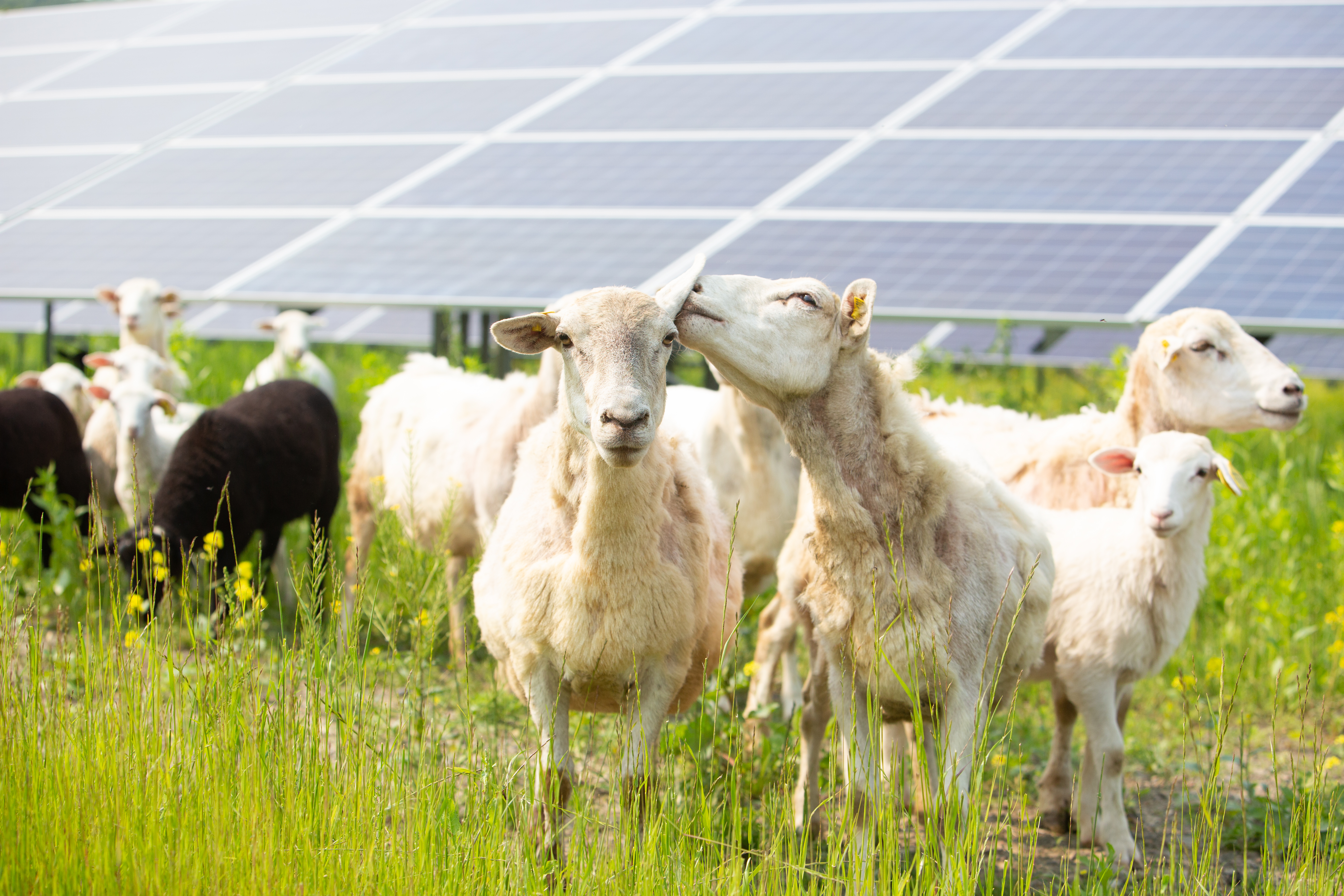
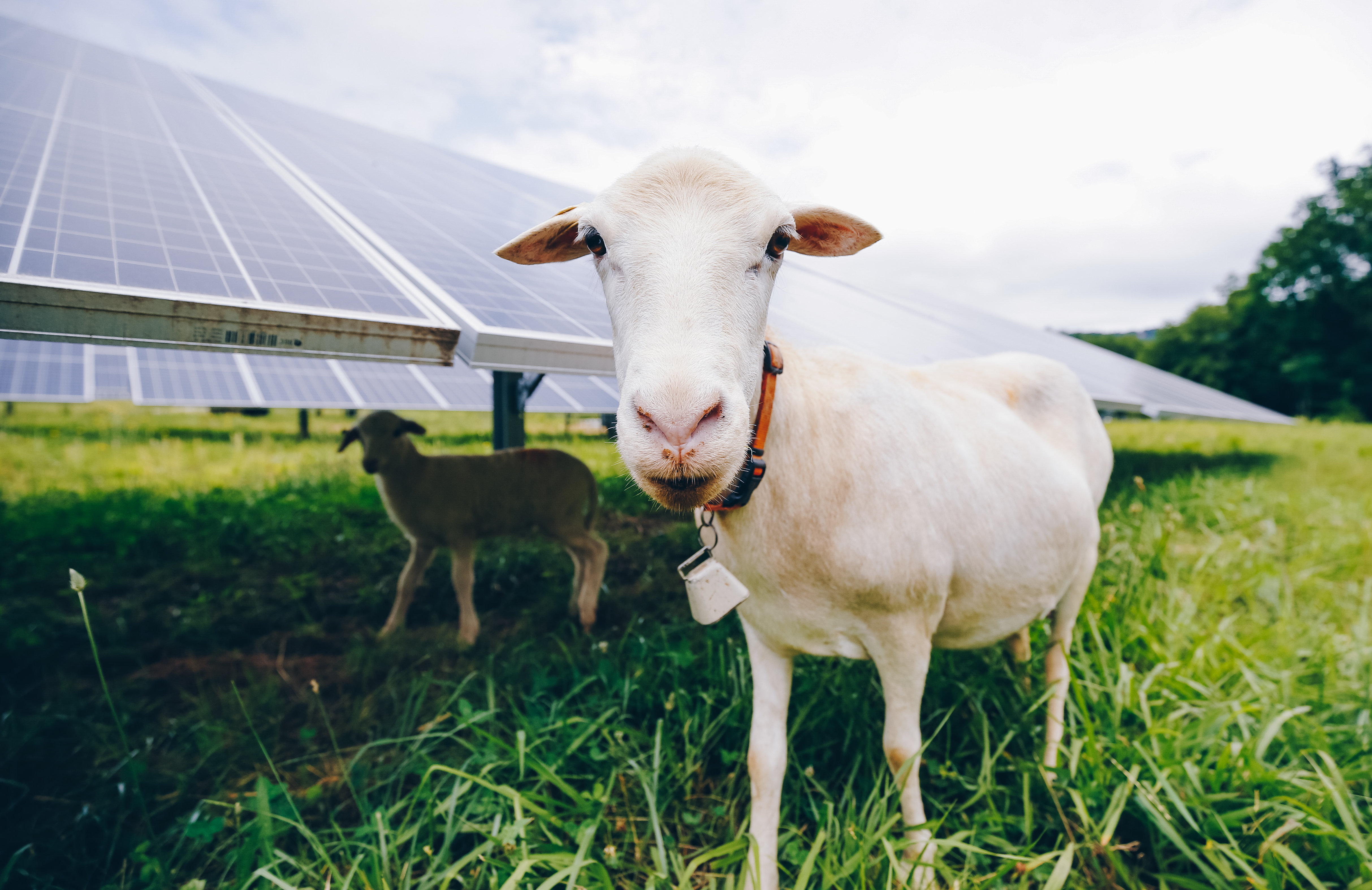
The original plans for April Iocus’ “gravity house.” (Ivy Main/ Virginia Mercury)
One of the most exciting areas of energy technology today is storage. With wind and solar now the leading sources of new energy capacity in the U.S., maximizing their potential in the future depends on the development of storage solutions with different durations and applications.
We tend to think first of batteries, a form of chemical storage, but energy can also be stored thermally (for example, in molten salt at concentrating solar facilities) or using gravity (think of hydroelectric dams and pumped storage). Compressed-air storage, flywheels, and hydrogen fuel cells all offer promise.
Other new technologies are a little more cutting edge, one might even say niche. Take, for example, an interesting gravity-based system designed by Dr. April Iocus, a professor of theoretical engineering and self-described tinkerer. Dr. Iocus turned her entire house itself into an energy storage system.
Solar panels cover the roof of the modest Cape Cod. During the day, energy from the panels powers a hydraulic system to lift the house off its foundation. As the sun sets, the house gradually settles back down, sending enough power through a generator to keep the HVAC, lighting and appliances all humming along without a hitch.
“Gravity is a free resource,” Iocus points out. “Like wind and solar, it’s available everywhere and won’t run out. It’s also really strong, so it’s ideal for holding energy and then releasing it again. It takes a tremendous amount of energy to lift a house even a little way off the ground, so even on cloudy days the system holds a lot of stored energy.”
Home gravity storage has a number of advantages over other storage methods. Energy is stored on site so it requires no transmission lines, and there are no toxic chemicals or fire hazards, as there are with batteries. Batteries also have a limited useful life, whereas a gravity-powered system can be expected to last as long as the house does.
Iocus concedes that the design of GravityHouse™ did pose other challenges. Indoor plumbing was one. Currently the house connects to city water and sewer only at night, when the building comes to rest on its foundation. During the day, holding tanks serve the family’s needs. Although this works perfectly well, Iocus says, “It drives the housing code people crazy. I’m working on a solution involving coiled pipes. Picture giant springs, and you get the idea. I’m ready to install them as soon as I work the kinks out, literally.”
Ingress and egress posed another problem initially. On a clear, sunny day in June, the house may rise as much as 12 feet off the ground by late afternoon. The solution: purpose-built staircases by the front and back doors offer landings every couple of feet. From the right landing it is just a modest step up or down to reach the level of the door.
Iocus also recounts one near-catastrophe. The hydraulic system was not designed with a stop at the top. One June day a solar flare increased the surplus electricity coming out of the solar panels so much that it lifted the house clear off the hoist. The house hovered in the air a full minute while Iocus frantically cranked the air conditioning to maximum output. Gradually, the house settled back onto the hoist—fortunately, without even a millimeter shift in position.
“I was just lucky. If there had been even a breath of wind, or if I had so much as sneezed, well. . . .” Iocus has since installed a stop to make sure the same thing can’t happen again.
Following the success of GravityHouse™, Iocus is turning her attention to other projects. She is particularly excited about potential new uses for the enormous natural gas transmission pipelines that stand to be abandoned as Americans stop using fossil fuels. Iocus says larger-diameter pipelines could be repurposed for human transportation.
“We’ve got pipeline infrastructure and compressor stations already in place all over the country,” she notes. “And a 42-inch pipeline is big enough for a human to sit comfortably in a transport pod. It’s an obvious solution.”
Iocus is currently in talks with Elon Musk to secure financing.
This article originally appeared in the Virginia Mercury on April 1, 2021. Happy April Fool’s Day!
Before the start of the 2021 legislative session, I highlighted three areas where Virginia needed to make significant progress to support its climate agenda: transportation electrification, improving the energy efficiency of buildings and giving consumers greater access to renewable energy.
The General Assembly delivered on one-and-a-half out of three. If we add bonus points for smaller successes, maybe we can call it a total of two. The transportation category truly outperformed expectations, but building efficiency underperformed and renewable energy access didn’t perform at all.
In the transportation sector, the General Assembly passed the Clean Car Standards requiring manufacturers to deliver more electric vehicles to Virginia dealers (HB1965); approved a statewide study of transit equity (HJ542); approved (but so far has not funded) an electric vehicle rebate program (HB1979); directed the SCC to report on ways to electrify transportation (HB2282); and established a school bus electrification fund (also empty for now)(HB2118).
Together these bills address two of the most significant ways we can reduce emissions from the transportation sector: supporting the move away from the internal combustion engine to electric vehicles and improving mass transit options.
The House rejected a second school bus electrification bill that, as originally drafted, would have allowed Dominion Energy Virginia to own, control and profit handsomely from the batteries in as many as 1,250 new electric school buses. Adding non-polluting school buses across Virginia and testing the value of vehicle-to-grid technology would have been exciting, but Dominion couldn’t help taking a good idea and trying to make it into another bloated profit center. Given the odor of Dominion boondoggle, the question isn’t why the House rejected the bill, but why the Senate was willing to swallow it.
Still, it’s clear electric school buses are an idea whose time has come, and vehicle-to-grid technology could have real benefits for ratepayers. Dominion is already testing the technology with school bus batteries in a smaller pilot program, so we can expect to see more on this topic next year. Meanwhile, advocates hope to see funding emerge to implement HB2118, possibly from the federal stimulus bill now under consideration in Congress.
Improving the energy efficiency of new homes should have been an equally popular idea with legislators. Virginia will be spending hundreds of millions of dollars retrofitting existing homes in the years to come, so it makes sense to ensure that new houses don’t immediately join the queue of homes needing upgrades to be climate-ready. Unfortunately, beefing up the energy efficiency provisions of Virginia’s residential building code (HB2227) proved a hard sell in the face of entrenched opposition from the homebuilders’ lobby and surprising resistance from even some Democratic legislators.
The legislation originally would have mandated adoption of the latest national energy efficiency code provisions, but it was amended to leave it up to the discretion of the code-writing board whether to require new homes to achieve this higher level of efficiency. They already had that authority; however, the board will now have to consider factors that favor stricter standards, like the long-term cost of ownership. For that reason I’m counting this bill as half a win. Whether or not the board decides to take the hint, improving efficiency in new homes is a topic we will see a lot more of in the future — and next time it is likely to come with more urgency and added features.
Energy efficiency bills did better when they addressed only government bodies. Legislation that passed now favors energy-efficient and water-efficient products in public procurement, and requires EV charging and energy/carbon tracking capability for new public buildings.
Unfortunately, 2021 was another bad year for my third priority, giving consumers the right to buy renewable energy from competitive suppliers. The House supported the “right to shop” bill (HB2048), but Senate Commerce and Labor once again proved itself a bulwark of defense for the monopoly utility model against the interests of residents and corporate customers alike. Killing the bill does nothing to lessen the demand from consumers. If Dominion does not move soon to offer better renewable energy options itself, we can expect to see this legislation return.
Senate Commerce and Labor further cemented its reputation as Dominion’s best friend by dispatching the full suite of utility reform bills that had won bipartisan support in the House. Only three senators on the 15-member committee consistently voted in favor of the reforms, ensuring that none of them got to the Senate floor.
Various other bills advanced the energy transition in smaller, focused bites. But perhaps the best news is that nothing this year marked a retreat from the commitment the General Assembly and the governor made last year to move Virginia toward a cleaner and more equitable energy supply.
Below is a brief round-up of the climate and energy bills that passed this year, including the ones mentioned above. The governor will still have to sign the bills before they become law, but we are not expecting any surprises.
Renewable energy and storage
• HB1925 (Kilgore) establishes, but does not fund, the Virginia Brownfield and Coal Mine Renewable Energy Grant Fund and Program.
• HB1994 (Murphy) expands the definition of small agriculture generators to include certain small manufacturing businesses such as breweries, distilleries and wineries for the purposes of the law allowing these businesses to aggregate meters and sell renewable energy to a utility.
• HB2006 (Heretick) and SB1201 (Petersen) change the definition of an “electric supplier” to include the operator of a storage facility of at least 25 MW, exempting them from state and local taxation but allowing a revenue share assessment.
• HB2034 (Hurst) clarifies that the program allowing third-party power purchase agreements (PPAs) applies to nonjurisdictional customers (i.e., local government and schools) as well as jurisdictional customers (most other customers) of Appalachian Power and Kentucky Utilities.
• HB2148 (Willett) provides for energy storage facilities below 150 MW to be subject to the DEQ permit by rule process as “small renewable energy projects.” This is a priority bill for renewable energy industry associations.
• HB2201 (Jones) and SB1207 (Barker) expands provisions related to siting agreements for solar projects located in an opportunity zone to include energy storage projects; however, according to existing language, the provision only takes effect if the GA also passes legislation authorizing localities to adopt an ordinance providing for the tax treatment of energy storage projects. This is another renewable energy industry bill.
• HB2269 (Heretick) provides for increases in the revenue share localities can require for solar projects based on changes in the Consumer Price Index.
• SB1258 (Marsden) requires the State Water Control Board to administer a Virginia Erosion and Sediment Control Program (VESCP) on behalf of any locality that notifies the Department of Environmental Quality that it has chosen not to administer a VESCP for any solar photovoltaic (electric energy) project with a rated electrical generation capacity exceeding five megawatts. The provisions become effective only if the program is funded..
• SB1295 (DeSteph) requires utilities to use Virginia-made or U.S.-made products in constructing renewable energy and storage facilities “if available.” As amended, the products must be “reasonably available and competitively priced.”
Energy efficiency and buildings
• HB1811 (Helmer) adds a preference for energy efficient and water-efficient products in public procurement.
• HB1859 (Guy) amends last year’s legislation on Commercial Property Assessed Clean Energy (C-PACE) loans to allow these loans to be extended to projects completed in the previous 2 years; it also expressly excludes residential buildings of less than 5 units and residential condominiums.
• HB2001 (Helmer) requires state and local government buildings to be constructed or renovated to include electric vehicle charging infrastructure and the capability of tracking energy efficiency and carbon emissions. Local governments are authorized to adopt even more stringent requirements. It now has an amendment delaying its effectiveness to 2023 for localities with populations under 100,000.
• HB2227 (Kory) originally required the Board of Housing and Community Development to adopt amendments to the Uniform Statewide Building Code within one year of publication of a new version of the International Code Council’s International Energy Conservation Code (IECC) to address changes related to energy efficiency and conservation. The bill would have required the Board to adopt building code standards that are at least as stringent as those contained in the new version of the IECC.
Financing
• HB1919 (Kory) authorizes a locality to establish a green bank to finance clean energy investments.
Fossil fuels
• HB1834 (Subramanyam) and SB1247 (Deeds) originally required owners of carbon-emitting power plants to conduct a study at least every 18 months to determine whether the facility should be retired; and to give notice of any decision to retire a facility to state and local leaders within 14 days. Both bills were amended so that the retirement analysis is now just a part of the integrated resource planning process of investor-owned utilities, currently every three years, leaving out other plant owners like cooperatives.
• HB1899 (Hudson) and SB1252 (McPike) sunset the coal tax credits as ofJan. 1, 2022.
• SB1265 (Deeds) makes it easier for DEQ to inspect and issue stop-work orders during gas pipeline construction.
• SB1311 (McClellan) requires pipeline applicants to submit detailed erosion and sediment control plans and stormwater management plans to DEQ.
Climate bills
• HB2330 (Kory) is the legislation the SCC asked for to provide guidance on the Percentage of Income Payment Program under the Virginia Clean Economy Act.
• SB1282 (Morrissey) directs DEQ to conduct a statewide greenhouse gas inventory, to be updated and published every four years.
• SB1284 (Favola) changes the name of the Commonwealth Energy Policy to the Commonwealth Clean Energy Policy, and streamlines the language without making major changes to the policies set out last year in Favola’s successful SB94. That bill overhauled the CEP, which until then had been a jumble of competing priorities, and established new targets for Virginia to achieve 100 percent carbon-free electricity by 2040 and net-zero carbon economy-wide by 2045.
• SB1374 (Lewis) sets up a Carbon Sequestration Task Force to consider methods of increasing carbon sequestration in the natural environment, establish benchmarks and identify carbon markets.
EVs and Transportation energy
• HB1850 (Reid) increases the roadway weight limit for electric and natural gas-fueled trucks to accommodate the extra weight of batteries or natural gas fuel systems.
• HB1965 (Bagby) is the Clean Car Standards bill, which would require manufacturers to deliver more electric vehicles to Virginia dealers beginning in 2025.
• HB1979 (Reid) creates a rebate program for new and used electric vehicles; however, the GA provided no funding.
• HB2118 (Keam) establishes an Electric Vehicle Grant Fund and Program to assist school boards in replacing diesel buses with electric, installing charging infrastructure, and developing workforce education to support the electric buses. It currently has no funding.
• HB2282 (Sullivan) directs the SCC to develop and report on policy proposals to accelerate transportation electrification in the Commonwealth. The bill also limits how utilities get reimbursed for investments in transportation electrification: they must recover costs through normal rates for generation and distribution, and not through rate adjustment clauses or customer credit reinvestment offsets.
• HJ542 (McQuinn) requests a statewide study of transit equity and modernization.
• SB1223 (Boysko) adds a requirement to the Virginia Energy Plan to include an analysis of electric vehicle charging infrastructure and other infrastructure needed to support the 2045 net-zero carbon target in the transportation sector.
This article originally appeared in the Virginia Mercury on March 5, 2021.
It is never fun to see our fellow Americans suffer, whether it’s from pandemic diseases or weather disasters. Our hearts go out to the residents of Texas who suffered without electricity and heat for days, some of them also without safe drinking water, and a few of them even dying from exposure, fires or carbon monoxide poisoning as they tried to keep warm.
On the other hand, picking apart the preposterous excuses from Texas leaders seeking to avoid responsibility for the fully preventable power outages and the misery that accompanied them—well, that’s another matter. And it’s made so much easier by those leaders’ insistence on trying to score political points instead of admitting that at least some of the blame rests on their shoulders.
Take Governor Greg Abbott, who went on Fox News to blame liberals for the debacle. Ignoring his state’s failure to plan for climate change and invest in power grid winterization, he told talk show host Sean Hannity the problem was actually the portion of the state’s electricity supply that comes from wind and solar. “This shows how the Green New Deal would be a deadly deal for the United States of America. Our wind and our solar got shut down, and they were collectively more than 10 percent of our power grid, and that thrust Texas into a situation where it was lacking power on a statewide basis.”
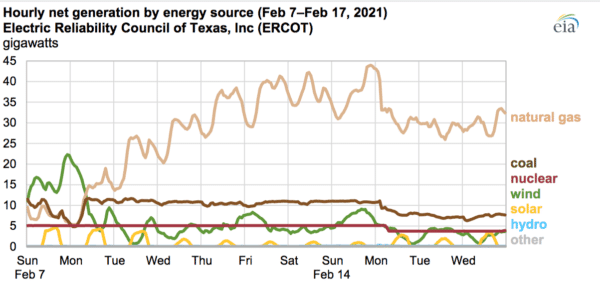
No one in Abbott’s echo chamber pointed out that a) solar actually did just fine, b) states like Iowa and South Dakota, with much worse winter weather, rely much more heavily on wind power than Texas does, yet there are no stories about their turbines seizing up and their grids collapsing, and c) if a shortage of ten percent shuts your grid down, you have way more problems than you can blame on the Green New Deal. In fact, the biggest factor in the grid failure was some 28,000 megawatts of coal, nuclear and gas power that went offline, as the Electric Reliability Council of Texas reported.
For his part, former Governor Rick Perry preferred swaggering to problem-solving, saying in a blog post, “Texans would be without electricity for longer than three days to keep the federal government out of their business.” This seems to have been written at about the same time Governor Abbott was asking the federal government for disaster relief.
And then there was Ted Cruz. I’m not referring to the farce of his skipping out on the post-storm misery to fly to Cancun, then pinning it on his daughters before high-tailing it home to make a show of handing out relief supplies. That incident just reminds us that no matter how deep our divisions, Americans can always find unity in our collective loathing of Ted Cruz.
No, in this case I want to point to a pair of tweets from Cruz, almost exactly two years apart. February 13, 2019: “Success of TX energy is no accident: it was built over many years on principles of free enterprise & low regulation w more jobs & opportunities as the constant goal. We work to export this recipe for success t more & more states so that all Americans enjoy the same prosperity.”
And here he is on February 22 of this year, reacting to news that free enterprise and low regulation had produced $5,000 electric bills for some customers in the aftermath of the storm: “This is WRONG. No power company should get a windfall because of a natural disaster, and Texans shouldn’t get hammered by ridiculous rate increases for last week’s energy debacle. State and local regulators should act swiftly to prevent this injustice.”
Luckily for us, lots of other people have been more interested in understanding what happened and preventing it from happening again than in trying to duck blame and score political points. The real story, it turns out, is simple at its core: “low regulation” meant the Texas grid and power providers did not adequately prepare for winter storms that climate change is making worse than they used to be. And because the Texas grid is cut off from the rest of the country (a feature, not a bug, to cowboy politicians), when the crisis hit there was no way to import power from other states that were better prepared.
Let’s take a closer look at what went wrong, how it could have been avoided, and what lessons it offers for the rest of us.
The setup: an isolated grid with “free enterprise and low regulation”
The grid that serves Texas is uniquely isolated, which also gives it a unique vulnerability. The Electric Reliability Council of Texas serves most of the state, and no other states. Texans are proud of that (or were before this month), because it means there is no role for federal regulators like FERC. It also means that when power ran out, ERCOT couldn’t just import it from parts of the country with a surplus. Of course, states near Texas also suffered in the storm, so there may not have been a lot of surplus power to be had. It is worth noting, though, that the border city of El Paso fared better than the rest of Texas because it is not part of ERCOT but part of a larger regional transmission organization (RTO) serving several southwestern states.
Another feature of ERCOT is the low regulation that Ted Cruz celebrated. ERCOT keeps it simple for power generators. They get paid for the power they produce. Other RTOs have what is called a “capacity market” to reward generating plants just for being available to run when called on, and they penalize participants who fail to perform. ERCOT does neither. With a reserve capacity of only about ten percent and no way to guarantee generators would be available when needed, ERCOT had set itself up for trouble.
If generators had faced penalties for nonperformance, they could have—and almost certainly would have—spent the money needed to prepare their facilities for colder-than-usual weather. Winterization is a normal cost of doing business for a power provider in a northern state, but Texas winters are usually warm enough not to require it. If you won’t be penalized for not winterizing, you have little incentive to do it when you’re competing on cost with other power sellers.
ERCOT was vulnerable for another reason. Demand for power in Texas is usually higher in summer, with air conditioners running, than it is in the state’s typically mild winters, so ERCOT plans for that. But in cold weather, gas-fired power plants face competition for fuel, when some of the gas supply goes for heating buildings. This month, when gas wells and pipelines also froze up, there simply wasn’t enough fuel to go around. ERCOT’s overreliance on gas proved to be a liability much greater than the smaller amount of renewable energy on the grid.
The last important feature of the Texas system is retail competition. Electricity customers in ERCOT can choose among dozens of power providers. Some providers keep rates constant; others offer a variable rate that just passes through the wholesale cost of power, with only a small monthly fee added. When wholesale rates are low, the consumer saves money on a plan like that. But regulators didn’t insist on any safeguard to protect customers against the possibility of wholesale prices spiking to astronomical levels due to a power shortage. That’s exactly what happened in the aftermath of this month’s storm.
That $5,000 power bill Cruz criticized? That’s unfettered free-market supply-and-demand at work. It’s a feature, not a bug. If you don’t like that feature, Senator Cruz, maybe low regulation isn’t for you. Helping consumers avoid power bills in the thousands of dollars would have been easy, but it would have required a little bit of regulation.
The storm; or how nature takes no interest in political posturing
Well before this storm hit, ERCOT was fully aware of the vulnerabilities of its particular brand of laissez-faire operations. Ten years ago, in the wake of another winter storm, Texas operators were warned of the dire consequences that could ensue if they did not require generators to winterize operations.
But, they didn’t, and this chart from the U.S. Energy Information Agency shows what happened to generation as a result. Before the storm, you can see natural gas and coal plants running less when high winds produce plenty of cheaper wind power, then cranking up when wind speeds drop. As the week goes on, power supply from natural gas plants increases to meet higher demand from colder weather, while other generation holds steady. Then suddenly you see every category of energy resource except solar drop in output, as critical components of some generating units freeze up and the units fall offline, while fuel supplies also dwindle. Some wind generation falls off, but so does coal, nuclear, and—especially—natural gas, just as they are all needed most.
The storm was, to be sure, one of the worst winter storms ERCOT had ever faced. And the situation could have been worse. If operators had not proactively cut power to customers, demand in excess of supply would have damaged grid infrastructure so severely that large swaths of the population would have been without power for weeks or months. (Let us now praise faceless bureaucrats, for they just saved Texas.)
So it was bad, and could have been worse. Why didn’t Texas prepare for it, even after being warned? I have one theory. People who cling to simplistic notions that global warming “should” produce only warmer winters have a tiresome habit of pointing to cold weather as evidence that climate change isn’t real, but I think they also take secret comfort in the idea that if the planet is warming, extreme cold weather events will become less common, with less need to prepare for them. If your political philosophy requires you to see regulation as an evil, your own willful misunderstanding of climate science might provide all the excuse you’re looking for not to act.
Could it happen here?
Bad weather can happen anywhere, and it’s always safer not to gloat. That said, several features distinguish ERCOT from PJM, and Texas from Virginia. As noted before, PJM has a capacity market that rewards even otherwise-uneconomic generators for hanging around being ready to produce at short notice, and those generators are penalized if they don’t perform when needed. As a result, we are much less likely to see the kind of power shortage and price spikes that Texans experienced. (Not that PJM is without flaws. Its capacity market unnecessarily discriminates against wind and solar, its policies are making the integration of renewable energy harder than it ought to be, and it has incentivized such an oversupply of gas generation that consumers are paying higher prices for the inefficiency. But that’s another story.)
Virginia also features monopoly power companies rather than retail choice. There is plenty of disagreement as to whether that is good or bad for consumers. The monopoly model requires strong regulation to ensure captive consumers aren’t being overcharged, and are being offered the products they want—like renewable energy. Critics (and I’m among them) have argued that Virginia isn’t doing enough on this front.
On the other hand, the retail choice model depends on consumers being well informed, and also requires regulators to scrutinize the tactics of power providers and punish the ones who take advantage of unwary consumers. So, ironically, a deregulated electricity market requires strong regulation to protect participants. Strong regulation could have prevented Texas providers from offering residential customers a tariff based on wholesale prices, with risks that residents couldn’t easily understand or mitigate against.
Texas was also more vulnerable to disruption because power generators were not required to winterize their plants or penalized for not doing so. Sure, a winterized plant would have turned a hefty profit in this storm, but in a more average winter, the extra cost would not have paid off. The option not to winterize isn’t a good one in PJM. As a result, when the power does go out in PJM, the problem is inevitably in the delivery infrastructure, not the generation.
Virginia’s system of vertically-integrated utilities means our utilities own their electric generation as well as the power lines. They can charge customers for building and maintaining those generating facilities, so they have less incentive to skimp on weatherization. That increases the reliability of those facilities. But even if several power plants in Virginia were to fail all at once, we could still draw power from more than 1,200 facilities across PJM, or even from the larger Eastern Interconnection. By design, Texas does not have that option.
One distinction between ERCOT and PJM that doesn’t make a difference, in spite of Governor Abbott’s claims, is the greater percentage of wind in ERCOT than in PJM. Wind actually makes up 23% of generation in ERCOT, more than perhaps Abbott wanted to admit, given that most of it came online under his watch. In PJM, wind makes up only about 3%. If Abbott were correct that wind turbines can’t handle winter weather, that would be a reason for more northern grids like PJM to avoid wind. But of course, Abbott’s claim is political wishful thinking divorced from reality. Wind turbines operate just fine in the much colder winters of Iowa, the Dakotas, Canada—heck, even in the frigid and stormy North Sea, where offshore wind ramps up production in winter.
As for solar, you could see from the chart that it was not affected by the cold weather. Texas residents who were lucky enough to have both rooftop solar and batteries spent the aftermath of the storm bragging about never losing power. That’s a compelling argument not just for more solar in the generation mix, but for more distributed generation in particular, including solar microgrids and resilience hubs to help communities weather future storms.
In the wake of this month’s storm, the independent Electric Power Research Institute (EPRI) analyzed what went wrong and issued recommendations for Texas grid operators. Among the unsurprising recommendations: ERCOT should do better planning for resource adequacy and increase its interconnections to other power systems so it does not have to go it alone.
I would add one more recommendation: keep your ideology out of it. You can’t deliver reliable power that is also reasonably priced without robust regulation. If leaders refuse to learn from this winter, they’ll simply set up Mother Nature for another opportunity to mess with Texas.
A version of this article appeared in the Virginia Mercury on February 25, 2021.
Don’t let the long list fool you. While the majority of the bills we’ve been following have either passed both chambers or seem well on their way to doing so, some of the most impactful bills are now dead, and others have been amended into meekness.
The entire category of Utility Reform got emptied out into the dumpster in Senate Commerce and Labor, which also killed Jeff Bourne’s “right to shop” bill that would have opened up the renewable energy market. They are all now found under “Dead and Buried” at the end.
Kaye Kory’s building code bill that would have ensured the Virginia residential code meet the minimum requirements of the national energy efficiency model code has been amended to require that the national code merely be considered. An additional sentence saying essentially “we really mean it” only partially redeems the amendment.
On the other hand, the Clean Cars Standard is alive and well, showing that ambitious bills can succeed when a large enough coalition pushes hard enough (and when Dominion will benefit from higher electricity sales). Even a few Republicans voiced support, though they would not go on record to vote for it. But the EV rebate bill may be in some peril, and it was supposed to be the carrot that brought auto dealers on board.
As for school buses, stay tuned.
Renewable energy and storage
HB1925 (Kilgore) establishes, but does not fund, the Virginia Brownfield and Coal Mine Renewable Energy Grant Fund and Program. Passed both the House and Senate unanimously and now goes to the Governor.
HB1994 (Murphy) and HB2215 (Runion) expands the definition of small agriculture generators to include certain small manufacturing businesses such as breweries, distilleries and wineries for the purposes of the law allowing these businesses to aggregate meters and sell renewable energy to a utility. HB2215 was incorporated into HB1994, which passed the House 93-6 (nay votes from Brewer, Campbell, R.R., Gilbert, LaRock, Poindexter, and Wright) and the Senate 39-0. The bills now go to the Governor.
HB2006 (Heretick) and SB1201 (Petersen) change the definition of an “electric supplier” to include the operator of a storage facility of at least 25 MW, exempting them from state and local taxation but allowing a revenue share assessment. This is a priority bill for renewable energy industry associations. HB2006 passed the House 88-11-1 and Senate 37-1-1 (Amanda Chase was the nay vote). SB1201 passed the Senate 38-0-1 (must have slipped by Chase) and House 91-6-1 (nay votes from Batten, Cole, M.L., Freitas, LaRock, Webert, and Wright. The bills now go to the Governor.
HB2034 (Hurst) clarifies that the program allowing third-party power purchase agreements (PPAs) applies to nonjurisdictional customers (i.e., local government and schools) as well as jurisdictional customers (most other customers). Passed the House 99-0 and Senate 39-0. Senate companion billSB1420 (Edwards) also passed Senate and House unanimously, so this is another done deal. It now goes to the Governor.
HB2148 (Willett) provides for energy storage facilities below 150 MW to be subject to the DEQ permit by rule process as “small renewable energy projects.” This is a priority bill for renewable energy industry associations. Passed the House 89-9, reported from Senate Ag. but then referred to Finance for reasons no one can understand.If it doesn’t get hung up there it is likely to pass the full Senate.
HB2201 (Jones) and SB1207 (Barker) expands provisions related to siting agreements for solar projects located in an opportunity zone to include energy storage projects; however, according to existing language, the provision only takes effect if the GA also passes legislation authorizing localities to adopt an ordinance providing for the tax treatment of energy storage projects. (Why doesn’t the bill just go ahead and include that authorization? Don’t ask me.) This is another renewable energy industry bill. HB2201 passed the House 71-29 and Senate 34-3-1 (Chase, DeSteph and Reeves were the only holdouts). SB1207passed the Senate 37-0 and is on its way to the House floor. Another done deal.
HB2269 (Heretick) provides for increases in the revenue share localities can require for solar projects based on changes in the Consumer Price Index. Passed the House 91-8, passed the Senate 37-1-1 (the sole nay vote came from, yes, Amanda Chase). It now goes to the Governor.
SB1258 (Marsden) requires the State Water Control Board to administer a Virginia Erosion and Sediment Control Program (VESCP) on behalf of any locality that notifies the Department of Environmental Quality that it has chosen not to administer a VESCP for any solar photovoltaic (electric energy) project with a rated electrical generation capacity exceeding five megawatts. The provisions become effective only if the program is funded; Marsden has submitted a budget amendment. This is also a priority bill for renewable energy industry associations. Passed the Senate 39-0, still bouncing around House committees but with no opposition.
SB1295 (DeSteph) requires utilities to use Virginia-made or US-made products in constructing renewable energy and storage facilities “if available.” After much criticism it was amended to read that the products must be “reasonably available and competitively priced,” after which the now-happily-pointless bill passed the Senate 37-0-2 and has gone on to be reported from House Commerce and Labor unanimously.
Energy efficiency and buildings
HB1811 (Helmer) adds a preference for energy efficient products in public procurement. Passed the House 55-44 along party lines. Passed the Senate 25-14 but with amendments limiting it to state agencies and softening the language—because, you know, why force localities to save taxpayer money if they would rather waste it? The House then rejected the amendments; the Senate has requested the bill be sent to a conference committee.
HB1859 (Guy) amends last year’s legislation on Commercial Property Assessed Clean Energy (C-PACE) loans to allow these loans to be extended to projects completed in the previous 2 years; it also expressly excludes residential buildings of less than 5 units and residential condominiums. Passed House 61-38; passed Senate 26-12-1. It now goes to the Governor.
HB2001 (Helmer) requires state and local government buildings to be constructed or renovated to include electric vehicle charging infrastructure and the capability of tracking energy efficiency and carbon emissions. Local governments are authorized to adopt even more stringent requirements. Passed the House 53-45; reported from Senate General Laws with an amendment delaying its effectiveness to 2023 for localities with populations under 100,000; referred to Finance.
HB2227 (Kory) and SB1224 (Boysko) originally required the Board of Housing and Community Development to adopt amendments to the Uniform Statewide Building Code within one year of publication of a new version of the International Code Council’s International Energy Conservation Code (IECC) to address changes related to energy efficiency and conservation. The bill would have required the Board to adopt Building Code standards that are at least as stringent as those contained in the new version of the IECC. It turns out the homebuilders who oppose higher efficiency standards have more clout with committee chairs David Bulova in the House and George Barker in the Senate than consumer and environmental advocates do. The Senate bill never even got a hearing in committee. After much negotiation, the amended House bill now merely requires the Housing Board to “consider” adopting amendments “at least as stringent as those contained” in the latest IECC, and must “assess the public health, safety, and welfare benefits” involved, “including potential energy savings and air quality benefits over time compared to the cost of initial construction.” Republicans still wouldn’t vote for it, so it passed the House only on a party-line vote of 55-45. In the Senate, it passed General Laws 8-4 but was then sucked over to Finance on the pretense that it would cost money. Once again, this is either incompetence on someone’s part or a deliberate effort to gum up the process of legislating. I’ll just note that a great many bills incorrectly hauled into Finance are ones opposed by that committee’s senior Republican, Tommy Norment.
Financing
HB1919 (Kory) authorizes a locality to establish a green bank to finance clean energy investments. Fairfax County has requested this authority. Passed the House 55-43 on another party-line vote. Passed the Senate with a substitute 25-13. The substitute does not appear to me to hurt the bill, but the House will have to agree to it, or go to conference.
Fossil fuels
HB1834 (Subramanyam) and SB1247 (Deeds) originally required owners of carbon-emitting power plants to conduct a study at least every 18 months to determine whether the facility should be retired; and to give notice of any decision to retire a facility to state and local leaders within 14 days. Both bills were amended so that the retirement analysis is now just a part of the integrated resource planning process of investor-owned utilities, currently every 3 years, leaving out other plant owners like ODEC. With further amendments, both bills have passed both chambers unanimously and will go to the Governor.
HB1899 (Hudson) and SB1252 (McPike) sunset the coal tax credits, because it is absolutely crazy that Virginia continues to subsidize coal mining while we’ve committed to close coal plants. Amended to give the coal companies one more year of subsidies before the program ends January 1, 2022. HB1899 passed the House 54-45 and the Senate 21-17 (Republican Hanger voting with Democrats); SB1252 passed the Senate 22-17 and House 55-45.It now goes to the Governor.
SB1265 (Deeds) makes it easier for DEQ to inspect and issue stop-work orders during gas pipeline construction. An amendment slightly weakened the bill before it passed the Senate 38-0. It has reported from House Ag. and should now be before the full House.
SB1311 (McClellan) originally required DEQ to revise erosion and sediment control plans or stormwater management plans when a stop work order has been issued for violations related to pipeline construction. The bill has been amended significantly and the stop-work language removed. It does require pipeline applicants to submit detailed erosion and sediment control plans, and expands the applicability of the requirement to areas with slopes with a grade above 10 percent, a number that is currently 15 percent. Passed the Senate 20-17. In House subcommittee it picked up a new substitute and that was reported out of committee. If that passes the full House it will need to go back to the Senate. I’m told negotiations on the language continue.
Climate bills
HB2330 (Kory) is the legislation the SCC asked for to provide guidance on the Percentage of Income Payment Program under the Virginia Clean Economy Act. This turned out to be harder than one would have thought for a bill that was just supposed to help implement a section of a previous year’s bill.With some amendments it passed the House 54-46, the usual party-line split except that Democrat Sam Rasoul joined the Rs. It passed the Senate 20-19 but only with a substitute saying it won’t take effect unless passed again next year. That’s the equivalent of voting it down, except that in this case it gives the bill a chance to go to a conference committee to work out the remaining concerns.
SB1282 (Morrissey) directs DEQ to conduct a statewide greenhouse gas inventory, to be updated and published every four years. Passed the Senate 22-16. (It picked up one Republican vote: Jill Vogel.) It has reported from House Ag. 13-8 on a party-line vote and now goes to the floor.
SB1284 (Favola) changes the name of the Commonwealth Energy Policy to the Commonwealth Clean Energy Policy, and streamlines the language without making major changes to the policies set out last year in Favola’s successful SB94. That bill overhauled the CEP, which until then had been a jumble of competing priorities, and established new targets for Virginia to achieve 100% carbon-free electricity by 2040 and net-zero carbon economy-wide by 2045. This year’s bill shows the Northam Administration is now fully on board, and the result is a policy statement that is more concise and coherent. Amendments make the bill slightly more friendly to biomass and natural gas than the introduced bill had been, but it remains an improvement on existing law. Senator Norment, who opposed last year’s bill as well as this year’s, tried to run out the clock on it by getting it referred to Finance after it was reported from Commerce and Labor, but Finance promptly reported it. It passed the Senate 21-18 (party line) and the House 55-45.
SB1374 (Lewis) would set up a Carbon Sequestration Task Force to consider methods of increasing carbon sequestration in the natural environment, establish benchmarks, and identify carbon markets. Passed the Senate 38-0 and the House 79-20 with a couple of very minor amendments that the Senate agreed to, so this now goes to the Governor.
Utility reform
The reform category was well-populated at halftime, but that was then, and this is two weeks later. In the interim, Senate Commerce and Labor met—first the subcommittee, whose five members expressed great concern about harm to Dominion Energy’s profits and none about ratepayers getting fleeced, then the full committee, which wasn’t much better. All the bills in this committee can now be found in our graveyard section at the end.
EVs and Transportation energy
HB1850 (Reid) increases the roadway weight limit for electric and natural gas-fueled trucks to accommodate the extra weight of batteries or natural gas fuel systems. It picked up minor amendments along the way and easily passed the House and Senate with no dissenting votes (until Delegate Cole voted nay at the end, possibly a recording error). The bill goes now to the Governor.
HB1965 (Bagby) is the Clean Car Standard bill, which would require manufacturers to deliver more electric vehicles to Virginia dealers beginning in 2025. To get agreement from the dealers, this bill was “packaged” with HB1979 (rebates for EVs), which dealers wanted to ensure the customers would be there. Passed the House 55-44. Senator Newman made a last-ditch effort to kill the bill through amendments on the Senate floor, which were rejected. Passed the Senate 21-15, with a few Republicans not voting.
HB1979 (Reid) creates a rebate program for new and used electric vehicles. Passed the House 55-45. Senate Finance amended it to require it to be reenacted next year, and that substitute bill passed the Senate 21-17. The different House and Senate versions will go to conference, where advocates hope to get the reenactment clause stricken; if not, the bill is dead.
HB2118 (Keam) establishes an Electric Vehicle Grant Fund and Program to assist school boards in replacing diesel buses with electric, installing charging infrastructure, and developing workforce education to support the electric buses. It seems to be an empty fund.Passed the House 55-44-1. In the Senate, the bill reported from Finance but ran into trouble on the floor. Reportedly Senator Lucas did away with the bill by “rolling it into” her SB1380 in spite of their dissimilarities. This is not yet reflected in LIS, and the floor vote is being delayed from day to day.
HB2282 (Sullivan) directs the SCC to develop and report on policy proposals to accelerate transportation electrification in the Commonwealth. The bill also limits how utilities get reimbursed for investments in transportation electrification: they must recover costs through normal rates for generation and distribution, and not through rate adjustment clauses or customer credit reinvestment offsets. Passed the House 76-23, passed the Senate 38-1 (yes, that was Chase dissenting again). Now goes to the Governor.
HJ542 (McQuinn) requests a statewide study of transit equity and modernization. Passed the House 77-19. Senate Finance amended it to change who is to do the study, then agreed to it by a voice vote.
SB1223 (Boysko) adds a requirement to the Virginia Energy Plan to include an analysis of electric vehicle charging infrastructure and other infrastructure needed to support the 2045 net-zero carbon target in the transportation sector. Passed the Senate 22-15, passed the House 57-42; now off to the Governor.
SB1380 (Lucas) authorizes electric utilities to partner with school districts on electric school buses. The utility (read: Dominion) can own the batteries and the charging infrastructure, earning its usual rate of return from ratepayers, and use the batteries for grid services and peak shaving. Passed the Senate 33-4. The House amended the bill to make it better but then voted it down anyway by a vote of 34-53. After that, the House agreed to reconsider the vote and pass it by for the day. . . and the next day, too. Lucas seems to expect to change minds by her power move to eliminate competition from the Keam bill.
Code update
SB1453 (Edwards) revises Titles 45.1 and 67 of the Virginia Code. “The bill organizes the laws in a more logical manner, removes obsolete and duplicative provisions, and improves the structure and clarity of statutes pertaining to” mining and energy. The bill is a recommendation of the Virginia Code Commission. Passed the Senate 39-0 and the House 100-0. Goes next to Governor.
DEAD AND BURIED
In numerical order, House bills first
HB1914 (Helmer) changes “shall” to “may” in a number of places, giving the SCC discretion over when to count utility costs against revenues. HB1835 (Subramanyam) was incorporated into this bill. Passed the House 60-39. I had hopes this one might survive in the Senate due to its elegant simplicity, but no. Killed in C&L 8-7, with Saslaw, Lucas, Barker, Lewis and Mason joining Republicans Norment, Newman and Obenshain to PBI (pass by indefinitely). The 7 senators who voted not to kill were Spruill, Edwards, Deeds, Marsden, Ebbin, Surovell and Bell.
HB1934 (Simon) requires local approval for construction of any gas pipeline over 12 inches in diameter in a residential subdivision. Killed in committee.
HB1937 (Rasoul) was this year’s version of the Green New Deal Act. But like last year, it never even got a hearing, in part because it rocked too many boats, and in part because it was a lousy bill.
HB1984 (Hudson) gives the SCC added discretion to determine a utility’s fair rate of return and to order rate increases or decreases accordingly. Passed the House 64-35, killed in Senate C&L 11-4. Only Democrats Edwards, Deeds, Ebbin and Bell voted against the motion to PBI.
HB2048 (Bourne) restores the right of customers to buy renewable energy from any supplier even once their own utility offers a renewable energy purchase option. In addition, third party suppliers of renewable energy are required to offer a discounted renewable energy product to low-income customers, saving them at least 10% off the cost of regular utility service. Passed the House 67-32, killed in Senate Commerce and Labor due to the obsequiousness of the committee members.
HB2049 (Bourne) would prevent utilities from using overearnings for new projects instead of issuing refunds. Passed the House 56-44, killed in Senate Commerce and Labor 11-4. Senator Spruill, ordinarily a secure vote for Dominion, joined Deeds, Ebbin and Bell in dissent.
HB2067 (Webert) lowers from 150 MW to 50 MW the maximum size of a solar facility that can use the Permit by Rule process. Tabled in House committee.
HB2160 (Tran) gives the SCC greater authority to determine when a utility has overearned and gives the Commission greater discretion in determining whether to raise or lower rates and order refunds. It also requires 100% of overearnings to be credited to customers’ bills, instead of 70%, as is the case today. Passed the House 62-38, killed in Senate Commerce and Labor 12-3.
HB2200 (Jones) makes a number of changes to SCC rate review proceedings, including setting a fair rate of return, requiring 100% of overearnings to be credited to customers’ bills, and eliminating the $50 million limit on refunds to Dominion customers in the next rate review proceeding. HB2057 (Ware) was incorporated into this bill, and it passed the House 63-37. Killed in Senate Commerce and Labor. This time Republican Steve Newman joined Deeds, Ebbin and Bell in dissent, though Newman had voted to kill the similar SB1292.
HB2265 (Freitas) would repeal provisions of the VCEA phasing out carbon emissions from power plants, repeal the restrictions on SCC approval of new carbon-emitting facilities, and nix the provisions declaring wind, solar, offshore wind and energy storage to be in the public interest; however it also would declare that planning and development of new nuclear generation is in the public interest. Killed in subcommittee.
HB2281 (Ware) would exempt certain companies that use a lot of energy from paying for their share of the costs of Virginia’s energy transition under the VCEA, driving up costs for all other ratepayers. Killed in subcommittee.
HB2292 (Cole) was labeled the fossil fuel moratorium bill but included many other parts of the Green New Deal as well. It suffered the same fate, and for the same reasons.
SB1292 (McClellan) was the only utility reform bill to begin in the Senate instead of the friendlier House. It would require 100% of utility overearnings to be credited to customers’ bills, instead of 70%, as is the case today. Killed in Senate Commerce and Labor 11-3, with Deeds, Mason and Bell the dissenters.
SB1463 (Cosgrove) would create a loophole to let HOAs to ban solar once again. It turned out even the HOA lobby didn’t like the bill. It was stricken by the patron in committee.
Electric Bluebird school bus. Photo by University Railroad via Wikimedia Commons
Transportation electrification is the focus of several bills moving through the General Assembly this winter. Environmental advocates support legislation providing rebates for purchases of electric vehicles and making EVs more readily available, both of which will help develop a market for electric cars. But buses present an even stronger case for electrification because they serve more people of all income levels, and are mostly diesel now. Switching to electric buses, especially school buses, would save money on fuel and improve air quality, especially for children riding them.
Yet the only electric school bus bill that would have much immediate impact is so deeply flawed and counterproductive that the environmental community is largely united in opposition. SB1380 has passed the Senate and reached the House floor, where it is now encountering headwinds. That opposition contrasts with the broad support offered for HB2118 (Keam), now in Senate Finance, which establishes a public funding mechanism for electric school buses, but unfortunately so far no funds have been appropriated.
I asked Gary Greenwood, the EV Issues Chair for the Sierra Club’s legislative committee, to explain the problems with SB1380 and what amendments it would need to have before Sierra Club could support it. Below is Gary’s response.
Last week, the House Labor and Commerce committee approved a bill that allows Dominion to deploy an unproven technology, electric school bus batteries used to support the electric grid, and collect the costs from ratepayers. The bill, SB1380 (Lucas), specifies that these school buses connected to the grid are in the public interest, and therefore ratepayers must pay for them, including the guaranteed profit for the utility. Also of concern is that the bill does not ensure that the buses will always be available when the schools need them for transporting kids.
While vehicle-to-grid technology is not new, it has never been deployed at this scale to support a utility’s electric grid. SB1380 will allow Dominion to charge ratepayers hundreds of millions of dollars for this unproven technology, without a thorough SCC evaluation.
Yes, the environmental community wants to reduce and ultimately eliminate greenhouse gas emissions. And switching from diesel school buses zero-emission electric school buses is an important part of this effort. We also know that electric school buses will be much healthier for the children that ride them. “Do it for the kids” is a great sentiment, but a poor excuse to declare unproven technology in the public interest. Note that Mothers Out Front, a champion of electric school buses in Virginia, also spoke against this bill.
The environmental community supports battery storage as a key part of the transition to renewable energy, and adding battery storage to the grid is needed for utilities to meet VCEA’s storage targets of 250MW by 2025 and 1200MW by 2030. However, the vehicle-to-grid technology that enables electric buses to support the electrical grid has not been implemented at this scale. Dominion has begun a pilot program, but it is in its infancy.
We don’t believe that the General Assembly should declare the deployment of this technology in the public interest. Rather, an analysis evaluating the benefits and reliability of using school bus batteries to support the grid should be presented in an SCC filing, comparing the costs of bus batteries to dedicated batteries for grid support.
We do need to convert our school bus fleets to electric buses. SB1380 could move us in the right direction if it is amended to guarantee that the buses are always available for transporting students, and to allow for unfettered SCC oversight of costs.
Virginia is, famously, a state that prides itself on being business-friendly. That makes it all the more interesting that a number of bills favoring consumers have made it through the House. Democrats have led the charge, but several of the bills earned bipartisan support even in the face of utility opposition.
This doesn’t guarantee their luck will hold. Democrats aren’t just more numerous in the House, they are also younger and more independent-minded than the old guard Democrats in control of the Senate. The second half of the session is going to be a lot more challenging for pro-consumer legislation.
The action will be especially hot in the coming days around five bills dealing with utility reform and a customer’s “right to shop” for renewable energy (HB2048). All these bills passed the House with at least some Republican support. But they are headed to Senate Commerce and Labor, which, though dominated by Democrats, has a long history of protecting utilities.
The Clean Car Standard (HB1965), which would make electric cars more readily available in Virginia, and the EV rebate bill (HB1979), which would make them more affordable, seem to be on stronger ground as far as Democratic support goes — and they will need all the Democrats because Republicans are united in opposition. But rebates require money, and that is always a challenge.
Below is the status of the bills I’ve been following. Since we have passed “crossover,” House bills will be heard in the Senate and vice-versa. At the end I’ve collected the bills that died along the way.
BILLS ALIVE AT HALFTIME
Bills are arranged by category, and then by number, with House bills first.
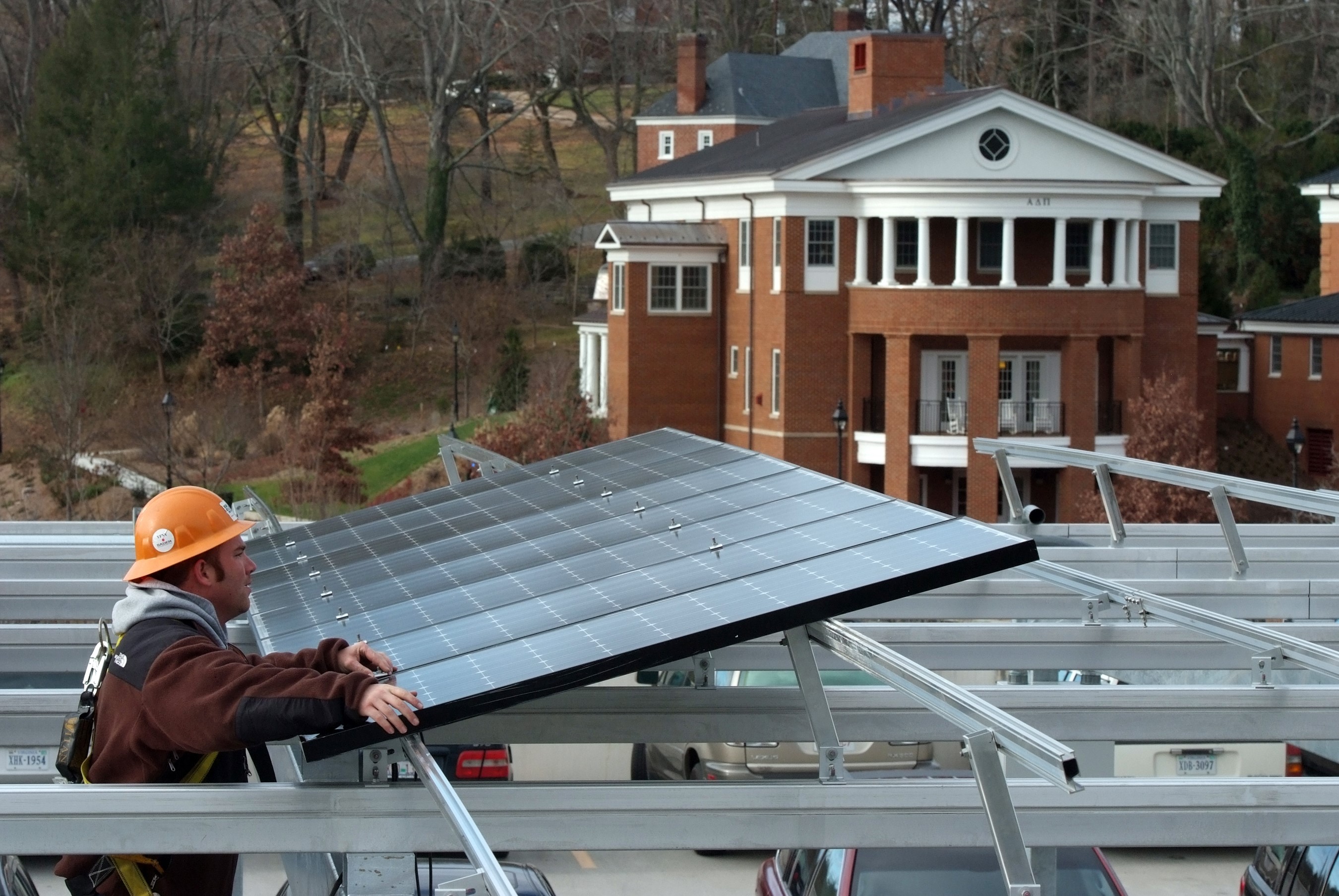
A worker installs solar panels at Washington & Lee University. Photo courtesy of Secure Futures LLC.
Renewable energy and storage
• HB1925 (Kilgore) establishes, but does not fund, the Virginia Brownfield and Coal Mine Renewable Energy Grant Fund and Program. Passed the House unanimously, expected to pass in the Senate.
• HB1994 (Murphy) and HB2215 (Runion) expands the definition of small agriculture generators to include certain small manufacturing businesses such as breweries, distilleries and wineries for the purposes of the law allowing these businesses to aggregate meters and sell renewable energy to a utility. HB2215 was incorporated into HB1994, which passed the House 93-6. I expect it to pass the Senate.
• HB2006 (Heretick) and SB1201 (Petersen) change the definition of an “electric supplier” to include the operator of a storage facility of at least 25 MW, exempting them from state and local taxation but allowing a revenue share assessment. This is a priority bill for renewable energy industry associations. HB2006 passed the House 11-8 with one abstention. SB1201 passed the Senate 38-0-1. Looks like this one is a done deal.
• HB2034 (Hurst) clarifies that the program allowing third-party power purchase agreements (PPAs) applies to nonjurisdictional customers (i.e., local government and schools) as well as jurisdictional customers (most other customers). Passed the House 99-0. Senate companion billSB1420(Edwards) also passed unanimously, so this is another done deal.
• HB2048 (Bourne) restores the right of customers to buy renewable energy from any supplier even once their own utility offers a renewable energy purchase option. In addition, third party suppliers of renewable energy are required to offer a discounted renewable energy product to low-income customers, saving them at least 10% off the cost of regular utility service. Passed the House 67-32, which is darned good for a pro-consumer, pro renewable energy bill. But a similar bill ran into trouble in Senate Commerce and Labor in past years due to utility opposition.
• HB2148 (Willett) provides for energy storage facilities below 150 MW to be subject to the DEQ permit by rule process as “small renewable energy projects.” This is a priority bill for renewable energy industry associations. Passed the House 89-9.
• HB2201 (Jones) and SB1207 (Barker) expands provisions related to siting agreements for solar projects located in an opportunity zone to include energy storage projects; however, according to existing language, the provision only takes effect if the GA also passes legislation authorizing localities to adopt an ordinance providing for the tax treatment of energy storage projects. (Why doesn’t the bill just go ahead and include that authorization? Don’t ask me.) This is another renewable energy industry bill. HB2201 passed the House 71-29. SB1207passed the Senate 37-0. Another done deal.
• HB2269 (Heretick) provides for increases in the revenue share localities can require for solar projects based on changes in the Consumer Price Index. Passed the House 91-8.
• SB1258 (Marsden) requires the State Water Control Board to administer a Virginia Erosion and Sediment Control Program (VESCP) on behalf of any locality that notifies the Department of Environmental Quality that it has chosen not to administer a VESCP for any solar photovoltaic (electric energy) project with a rated electrical generation capacity exceeding five megawatts. The provisions become effective only if the program is funded; Marsden has submitted a budget amendment. This is also a priority bill for renewable energy industry associations. Passed the Senate 39-0.
• SB1295 (DeSteph) requires utilities to use Virginia-made or U.S.-made products in constructing renewable energy and storage facilities “if available.” After much criticism it was amended to read that the products must be “reasonably available and competitively priced,” after which the now-happily-pointless bill passed the Senate 37-0-2.
Energy efficiency and buildings
• HB1811 (Helmer) adds a preference for energy efficient products in public procurement. Passed the House 55-44 along party lines. Someone will have to explain to me why wasting taxpayer dollars on products that cost more to operate is a conservative value.
• HB1859 (Guy) amends last year’s legislation on Commercial Property Assessed Clean Energy (C-PACE) loans to allow these loans to be extended to projects completed in the previous two years; it also expressly excludes residential buildings of less than five units and residential condominiums. Passed House 61-38; passed Senate 26-12-1. A done deal.
• HB2001 (Helmer) requires state and local government buildings to be constructed or renovated to include electric vehicle charging infrastructure and the capability of tracking energy efficiency and carbon emissions. Local governments are authorized to adopt even more stringent requirements. Passed the House 53-45.
• HB2227 (Kory) and SB1224 (Boysko) originally required the Board of Housing and Community Development to adopt amendments to the Uniform Statewide Building Code within one year of publication of a new version of the International Code Council’s International Energy Conservation Code (IECC) to address changes related to energy efficiency and conservation. The bill would have required the Board to adopt Building Code standards that are at least as stringent as those contained in the new version of the IECC. It turns out the homebuilders who oppose higher efficiency standards have more clout with committee chairs David Bulova in the House and George Barker in the Senate than consumer and environmental advocates do. The Senate bill never even got a hearing in committee. After much negotiation, the amended House bill now merely requires the Housing Board to “consider” adopting amendments “at least as stringent as those contained” in the latest IECC, and must “assess the public health, safety, and welfare benefits” involved, “including potential energy savings and air quality benefits over time compared to the cost of initial construction.” Republicans still wouldn’t vote for it, so it passed the House only on a party-line vote of 55-45.
Financing
• HB1919 (Kory) authorizes a locality to establish a green bank to finance clean energy investments. Fairfax County has requested this authority. Passed the House 55-43 on another party-line vote.
Fossil fuels
• HB1834 (Subramanyam) and SB1247 (Deeds) originally required owners of carbon-emitting power plants to conduct a study at least every 18 months to determine whether the facility should be retired; and to give notice of any decision to retire a facility to state and local leaders within 14 days. Both bills were amended so that the retirement analysis is now just a part of the integrated resource planning process of investor-owned utilities, currently every three years, leaving out other plant owners like ODEC. The amended bills both passed their chambers unanimously.
• HB1899 (Hudson) and SB1252 (McPike) sunset the coal tax credits, because it is absolutely crazy that Virginia continues to subsidize coal mining. Amended to give the coal companies one more year of subsidies before the program ends Jan. 1, 2022. Passed the House 54-45 and Senate 22-17.
• SB1265 (Deeds) makes it easier for DEQ to inspect and issue stop-work orders during gas pipeline construction. An amendment slightly weakened the bill before it passed the Senate 38-0.
• SB1311 (McClellan) originally required DEQ to revise erosion and sediment control plans or stormwater management plans when a stop work order has been issued for violations related to pipeline construction. The bill has been amended significantly and the stop-work language removed. It does require pipeline applicants to submit detailed erosion and sediment control plans, and expands the applicability of the requirement to areas with slopes with a grade above 10 percent, a number that is currently 15 percent. Passed the Senate 20-17.
Climate bills
• HB2330 (Kory) is the legislation the SCC asked for to provide guidance on the Percentage of Income Payment Program under the Virginia Clean Economy Act. This turned out to be harder than one would have thought for a bill that was just supposed to help implement a section of a previous year’s bill, and it may still be subject to further changes.Passed the House 54-46, the usual party-line split.
• SB1282 (Morrissey) directs DEQ to conduct a statewide greenhouse gas inventory, to be updated and published every four years. Passed the Senate 22-16. (It picked up one Republican vote: Jill Vogel.)
• SB1284 (Favola) changes the name of the Commonwealth Energy Policy to the Commonwealth Clean Energy Policy, and streamlines the language without making major changes to the policies set out last year in Favola’s successful SB94. That bill overhauled the CEP, which until then had been a jumble of competing priorities, and established new targets for Virginia to achieve 100 percent carbon-free electricity by 2040 and net-zero carbon economy-wide by 2045. This year’s bill shows the Northam administration is now fully on board, and the result is a policy statement that is more concise and coherent. Amendments make the bill slightly more friendly to biomass and natural gas than the introduced bill had been, but it remains an improvement on existing law. Senator Norment, who opposed last year’s bill as well as this year’s, tried to run out the clock on it by getting it referred to Finance after it was reported from Commerce and Labor, but Finance promptly reported it, and it passed the Senate 21-18. It should have no trouble in the House.
• SB1374 (Lewis) would set up a Carbon Sequestration Task Force to consider methods of increasing carbon sequestration in the natural environment, establish benchmarks and identify carbon markets. Passed the Senate 38-0.
Photo credit McKay Savage
Utility reform
The House bills are doing great, but the one Senate bill (SB1292, see “Dead and buried”) went down in flames in Commerce and Labor with only three yea votes from Senators Deeds, Mason and Bell. The five House bills are now headed to that same tough committee. If any survive, it is likely to be the Hudson and/or Helmer bills, which are the least prescriptive. Judging from the comments made during the debate of the one Senate bill, I don’t see how the other three make it through the committee.
• HB1914 (Helmer) changes “shall” to “may” in a number of places, giving the SCC discretion over when to count utility costs against revenues. HB1835 (Subramanyam) was incorporated into this bill. Passed the House 60-39.
• HB1984 (Hudson) gives the SCC added discretion to determine a utility’s fair rate of return and to order rate increases or decreases accordingly. Passed the House 64-35.
• HB2049 (Bourne) would prevent utilities from using overearnings for new projects instead of issuing refunds. Passed the House 56-44.
• HB2160 (Tran) gives the SCC greater authority to determine when a utility has overearned and gives the Commission greater discretion in determining whether to raise or lower rates and order refunds. It also requires 100 percent of overearnings to be credited to customers’ bills, instead of 70 percent, as is the case today. Passed the House 62-38.
• HB2200 (Jones) makes a number of changes to SCC rate review proceedings, including setting a fair rate of return, requiring 100 percent of overearnings to be credited to customers’ bills, and eliminating the $50 million limit on refunds to Dominion customers in the next rate review proceeding. HB2057 (Ware) was incorporated into this bill, and it passed the House 63-37.
EVs and transportation energy
• HB1850 (Reid) increases the roadway weight limit for electric and natural gas-fueled trucks to accommodate the extra weight of batteries or natural gas fuel systems. Passed the House 98-0.
• HB1965 (Bagby) is the Clean Car Standard bill, which would require manufacturers to deliver more electric vehicles to Virginia dealers beginning in 2025. To get agreement from the dealers, this bill has been “packaged” with HB1979 (rebates for EVs), which dealers wanted to ensure the customers would be there. Republicans still don’t like it. Passed the House 55-44.
• HB1979 (Reid) creates a rebate program for new and used electric vehicles. Passed the House 55-45.
• HB2118 (Keam) establishes an Electric Vehicle Grant Fund and Program to assist school boards in replacing diesel buses with electric, installing charging infrastructure, and developing workforce education to support the electric buses. It seems to be an empty fund.Passed the House 55-44-1.
• HB2282 (Sullivan) directs the SCC to develop and report on policy proposals to accelerate transportation electrification in the Commonwealth. The bill also limits how utilities get reimbursed for investments in transportation electrification: they must recover costs through normal rates for generation and distribution, and not through rate adjustment clauses or customer credit reinvestment offsets. Passed the House 76-23.
• HJ542 (McQuinn) requests a statewide study of transit equity and modernization. Passed the House 77-19.
• SB1223 (Boysko) adds a requirement to the Virginia Energy Plan to include an analysis of electric vehicle charging infrastructure and other infrastructure needed to support the 2045 net-zero carbon target in the transportation sector. Passed the Senate 22-15.
• SB1380 (Lucas) authorizes electric utilities to partner with school districts on electric school buses. The utility can own the batteries and the charging infrastructure and use the batteries for grid services and peak shaving. Passed the Senate 33-4.
Code update
• SB1453 (Edwards) revises Titles 45.1 and 67 of the Virginia Code. “The bill organizes the laws in a more logical manner, removes obsolete and duplicative provisions, and improves the structure and clarity of statutes pertaining to” mining and energy. The bill is a recommendation of the Virginia Code Commission. Passed the House 39-0.
DEAD AND BURIED
In numerical order, House bills first
• HB1934 (Simon) requires local approval for construction of any gas pipeline over 12 inches in diameter in a residential subdivision. Killed in committee.
• HB1937 (Rasoul) was this year’s version of the Green New Deal Act. But like last year, it never even got a hearing, in part because it rocked too many boats, and in part because it was a lousy bill.
• HB2067 (Webert) lowers from 150 MW to 50 MW the maximum size of a solar facility that can use the Permit by Rule process. Tabled in committee.
• HB2265 (Freitas) would repeal provisions of the VCEA phasing out carbon emissions from power plants, repeal the restrictions on SCC approval of new carbon-emitting facilities, and nix the provisions declaring wind, solar, offshore wind and energy storage to be in the public interest; however it also would declare that planning and development of new nuclear generation is in the public interest. Killed in subcommittee.
• HB2281 (Ware) would exempt certain companies that use a lot of energy from paying for their share of the costs of Virginia’s energy transition under the VCEA, driving up costs for all other ratepayers. Killed in subcommittee.
• HB2292 (Cole) was labeled the fossil fuel moratorium bill but included many other parts of the Green New Deal as well. It suffered the same fate, and for the same reasons.
• SB1292 (McClellan) was the only utility reform bill to begin in the Senate instead of the friendlier House. It would require 100% of utility overearnings to be credited to customers’ bills, instead of 70 percent, as is the case today. Killed in committee.
• SB1463 (Cosgrove) would create a loophole to let HOAs to ban solar once again. It turned out even the HOA lobby didn’t like the bill. It was stricken by the patron in committee.
This post was originally published in the Virginia Mercury on February 8, 2021.
In another life, I was a middle school teacher. I taught for four years at a public school. It’s a hard age group. But I found the antics of my 7th and 8th grade students more amusing than frustrating. Perhaps I was well-prepared, having worked at a zoo before entering the classroom.
As a teacher, I enjoyed working with students, but was constantly frustrated as we faced shrinking budgets. Administrators were forced to decide between paying for rising energy costs or investing in resources for my students.
It broke my heart to see tight funds diverted from students to cover rising electricity bills. It happened all the time.
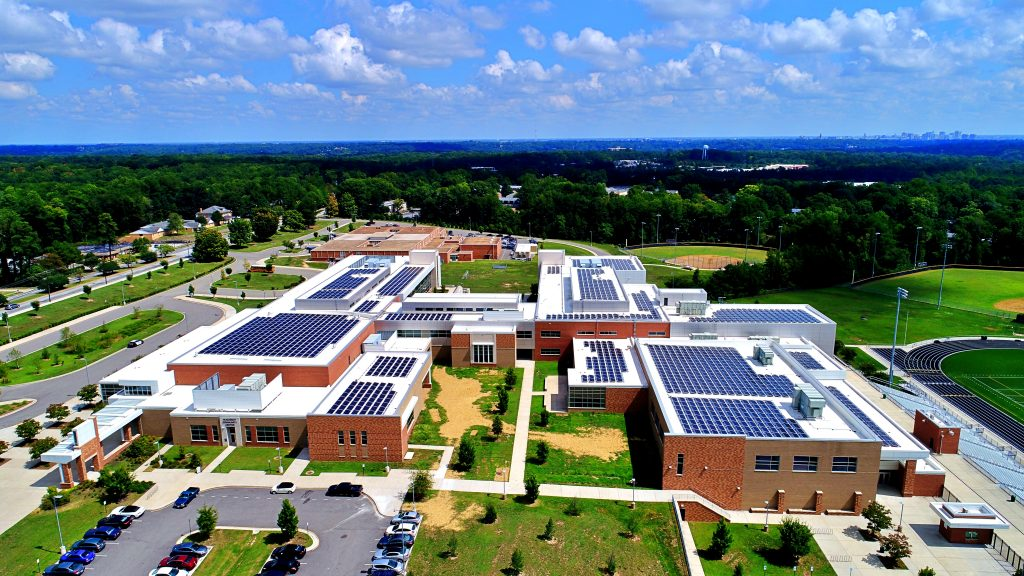
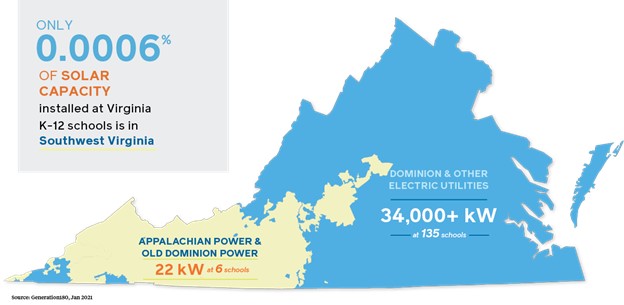
So it’s exciting that Virginia schools are installing solar power to generate electricity and save on energy costs. The Commonwealth now ranks among the top 10 states for solar on K-12 schools with more than 34,000 KW of installed solar capacity. This is enough to power 3,700 Virginia homes.
These installations will free up millions of dollars to hire teachers and create learning opportunities for students. They will create jobs for local community members.
But communities in Southwest Virginia are being left behind. In fact, the region has only installed 22 KW of solar on its schools. More solar capacity could fit on the roof of a single house.
This disparity has one cause, utility Appalachian Power Company (APCo). The West Virginia-based utility is blocking solar installations on schools and local governments in Southwest Virginia.
APCo is blocking approximately 6 MW of solar projects according to some industry estimates.
These are projects like the one on Ridgeview High School in Dickenson County. It would save taxpayers more than a million dollars over its lifespan. It has been on hold since 2018.
APCo could let projects like the one at Ridgeview proceed. But it refuses. Instead, the company clings to the unnecessary provisions in an expired energy contract as justification.
Schools and municipal governments negotiate a special contract with APCo as their electric utility. This is known as the Public Authority Contract. The last one was negotiated in 2016. It forbids schools and governments from entering into solar Power Purchase Agreements (PPA’s), which help schools, governments and other non-profits go solar at little or no up-front cost. The contract also imposes an artificially-low 3 MW total cap on net metering. Net metering ensures solar producers get full credit for the energy they produce.
Without these key enabling mechanisms, solar installations on schools and government buildings have ground to a halt. A new contract, which appears to lift these limits, is close to being finalized. But it has been ‘close to being finalized’ for months with no clear end in sight. Meanwhile APCo continues to drag its feet not letting a single project proceed even though the old contract expired in June of 2020
It’s so bad that legislation is moving forward to address the utility’s obstinacy. The legislation clarifies the legality of PPA’s for schools and governments. APCo doesn’t oppose the legislation but still won’t budge.
Why Does APCo Block Solar on Schools and Local Governments?
The simple answer is that what’s good for customers and for local communities conflicts with APCo’s old fashioned business model.
This is a business model that depends on selling large quantities of energy and power. Utility shareholders receive generous rates of return for capital investments. Utility customers foot the bill.
Solar on schools and government buildings reduces demand for increasingly expensive grid electricity. In greater numbers, it can help avoid costly grid investments paid for by all utility customers.
In spite of these benefits, APCo sees solar panels on a school only as reduced demand for utility-supplied energy and power. Most of this the company generates out of state with fossil fuels. Solar the utility doesn’t own threatens a business model that has changed very little in decades.
But here is the reality:
Our grid will be increasingly powered by clean, local energy. Consumers – whether they are individuals, businesses, schools or municipal governments – now have the technology and desire to save on rising energy costs with on-site solar.
There is no going back.
Other utilities have realized this. Ever so slowly, they have begun adapting and re-thinking their role as a facilitator of the clean, local energy options their customers want. Dominion Energy has expanded PPA’s and net metering caps for schools and governments. It has also begun focusing on vehicle electrification, and piloting rates to reflect the value that on-site solar and energy storage can provide to the grid. This can offer wins for customers and help position utilities to thrive and remain relevant in the transition to a modern grid powered by renewable energy.
But APCo has been very slow to embrace this reality. Instead the company has unwisely gambled that it can block access to rooftop solar — a beneficial, cost-effective technology that its customers want.
This is no accident or misunderstanding. It’s a purposeful strategy to prevent schools and local governments from generating their own electricity with solar.
But this strategy will ultimately fail. It will render the company less relevant. Consumers now demand the same market options and access to technology that they enjoy in other aspects of their lives.
On-site solar is now cost-competitive and often cheaper than grid-supplied electricity. Schools and local governments want it.
Communities want the well-paying jobs associated with one of the fastest-growing industries in the country.
My non-profit organization Solar United Neighbors has facilitated nearly 1,000 solar installations in the Commonwealth. This dates back to helping community members launch Virginia’s first Solarize program in Blacksburg in 2014.
In talking with solar homeowners and businesses across Virginia, the number one question we still receive is “how can I get solar on my child’s school?… How can we put solar on City Hall?”
It’s clear that a majority of people share the desire to build clean, local energy into our communities. This transcends demographics and political leanings. Creating jobs and saving taxpayers money simply makes sense.
It’s also clear that APCo’s shenanigans to block solar for schools and governments rival a classroom of highly caffeinated 13 year-olds.
And this has to stop right now.
The company can choose to serve the customers and communities in which it operates. Or it can gamble that its political power and financial resources can squelch consumer preferences and postpone the inevitable shift in our energy system.
But it can’t do both. As I used to tell my students, decisions have consequences.
Let’s hope that APCo begins to listen to its customers and start positioning itself to thrive in the clean energy revolution. Because the revolution is happening whether the company thinks it can be stopped or not.
Aaron Sutch is the Mid Atlantic Region Director for Solar United Neighbors.
[This post was updated January 22 to include two bills filed just ahead of the deadline. See SB1463 under Renewable Energy, and HB2330 under Climate.]
The 2021 General Session is in full swing, with bills being heard at all hours of the day, every day of the week. We’re now told the session will be extended to 45 days as it normally is in odd years, buying a little time for committees to act before the new “crossover” date of February 6.
Meanwhile, the list of bills I’ve corralled over the past week has grown to nearly 50. I’ve included the updated list here—scroll down.
Unless you’re paid to lobby, you may have only a few minutes at a time to contact legislators about the bills you want to see passed (or in some cases, defeated). So how do you set priorities?
Let me propose three criteria for you to lobby for a bill:
If enacted, the legislation would achieve progress on the issue you care about, in a way you approve of;
The legislation has a shot at passage; and
Your lobbying could make a difference
Do you like the bill? You might think this one is easy, but I recommend reading the whole bill before you decide to support one, and not just the summary. In my experience, the summaries are often misleading or incomplete. And even if you agree with the apparent goal of a bill, you might conclude the specifics are unwise or could lead to unintended consequences. But don’t dismiss a bill because it doesn’t go far enough or have everything you want. They seldom do.
Can it pass? This largely depends on who is against it, and how much influence they have. It used to be that if the utilities opposed a bill, it would die. Last year we saw a rebellion against that norm, but utilities are still formidable foes—and there are plenty of other powerful interests who can sink a bill.
There is a second reason some bills don’t have a chance: they cost money. If legislation requires public spending and the patron hasn’t got that figured out, the committee that hears the bill is likely to send it to the Appropriations Committee to die.
Can you make a difference? It’s a waste of your time to lobby for a bill that can’t pass, unless your game plan is to build momentum for future years. On the other end of the scale, sometimes a bill has been negotiated before it is even introduced, or it makes technical amendments that no one opposes; those bills don’t need your help. Focus on the bills where you believe public support matters. (And then get your friends involved, too.)
Three bills to consider for your priority list. These bills pass all three tests. They would make a difference on climate and they all have a shot, but they need public pressure to win votes.
Right to shop for renewable energy, HB2048. Consumers of all kinds want the right to buy renewable energy from suppliers other than their utility, and the provision for low-income residents to receive a discount is a clear winner. Dominion is fighting this threat to its monopoly, but it’s on the wrong side of history. It has been referred to the House Labor and Commerce committee, subcommittee 3 (members: Sullivan (Chair),Keam,Lopez,Bagby,Heretick,Ayala,Kilgore,Ware,Marshall,O’Quinn,Ward
If you have time to adopt additional bills, you might consider adding one or more of the utility reform measures. I’m also partial to HB1925 to bring renewable energy to the Coalfields, which would pair nicely with HB1899/SB1252, sunsetting the coal tax credits. I could go on, but you’ve heard enough.
Here is the whole list, updated this morning, and hopefully now comprehensive:
Renewable energy and storage
HB1925 (Kilgore) Establishes, but does not fund, the Virginia Brownfield and Coal Mine Renewable Energy Grant Fund and Program. Kilgore put in a similar bill last year, which unfortunately did not pass. With no budget impact, this ought to pass easily. But I said that last year, too.
HB1937 (Rasoul) is this year’s version of the Green New Deal Act. It contains policy initiatives to prioritize jobs and benefits for EJ populations and displaced fossil fuel workers and requires a transition to renewable energy by 2035, though these latter provisions are poorly integrated into the VCEA.
HB1994 (Murphy) and HB2215 (Runion) expands the definition of small agriculture generators to include certain small manufacturing businesses such as breweries, distilleries and wineries for the purposes of the law allowing these businesses to aggregate meters and sell renewable energy to a utility.
HB2006 (Heretick) exempts energy storage systems from state and local taxation but allows a revenue share assessment. This is a priority bill for renewable energy industry associations.
HB2034 (Hurst) clarifies that the program allowing third-party power purchase agreements (PPAs) applies to nonjurisdictional customers (i.e., local government and schools) as well as jurisdictional customers (most other customers). Currently, PPA projects with local governments in APCo territory have been held up due to a contract provision between the localities and APCo, and it is hoped this legislation will break the logjam. [Passed House, now in Senate Commerce & Labor.]
HB2048 (Bourne) restores the right of customers to buy renewable energy from any supplier even once their own utility offers a renewable energy purchase option. In addition, third party suppliers of renewable energy are required to offer a discounted renewable energy product to low-income customers, saving them at least 10% off the cost of regular utility service.
HB2067 (Webert) lowers from 150 MW to 50 MW the maximum size of a solar facility that can use the Permit by Rule process. [Killed in committee.]
HB2148 (Willett) provides for energy storage facilities below 150 MW to be subject to the DEQ permit by rule process as “small renewable energy projects.” Although 150 MW is not “small,” the permit by rule process has worked pretty well, so this should be acceptable. This is a priority bill for renewable energy industry associations.
HB2201 (Jones) expands provisions related to siting agreements for solar projects located in an opportunity zone to include energy storage projects; however, according to existing language, the provision only takes effect if the GA also passes legislation authorizing localities to adopt an ordinance providing for the tax treatment of energy storage projects. (Why doesn’t the bill just go ahead and include that authorization? Don’t ask me.) This is another renewable energy industry bill.
HB2269 (Heretick) provides for increases in the revenue share localities can require for solar projects based on changes in the Consumer Price Index.
SB1201 (Petersen) changes the definition of an “electric supplier” to include the operator of a storage facility of at least 25 MW, and subjects them to the same reporting obligations as other suppliers.
SB1258 (Marsden) requires the State Water Control Board to administer a Virginia Erosion and Sediment Control Program (VESCP) on behalf of any locality that notifies the Department of Environmental Quality that it has chosen not to administer a VESCP for any solar photovoltaic (electric energy) project with a rated electrical generation capacity exceeding five megawatts. The provisions become effective only if the program is funded; Marsden has submitted a budget amendment. This is also a priority bill for renewable energy industry associations.
SB1295 (DeSteph) requires utilities to use Virginia-made or US-made products in constructing renewable energy and storage facilities “if available,” but it does not require any added cost to be reasonable. [Amended to resolve the reasonable cost issue.]
SB1420 (Edwards) is a companion bill to HB2034, clarifying PPA language for Appalachian Power territory.
SB1463 (Cosgrove) would reverse the progress made last year in preventing homeowner associations from unreasonably restricting rooftop solar. It would create a loophole to let HOAs ban solar once again. [Withdrawn by patron.]
Energy efficiency and buildings
HB1811 (Helmer) adds a preference for energy efficient products in public procurement.
HB1859 (Guy) amends last year’s legislation on Commercial Property Assessed Clean Energy (C-PACE) loans to allow these loans to be extended to projects completed in the previous 2 years; it also expressly excludes residential buildings of less than 5 units and residential condominiums. [Passed House with a substitute, now in Senate.]
HB2001 (Helmer) requires state and local government buildings to be constructed or renovated to include electric vehicle charging infrastructure and the capability of tracking energy efficiency and carbon emissions.
SB1224 (Boysko) requires the Board of Housing and Community Development to adopt amendments to the Uniform Statewide Building Code within one year of publication of a new version of the International Code Council’s International Energy Conservation Code (IECC) to address changes related to energy efficiency and conservation. The bill requires the Board to adopt Building Code standards that are at least as stringent as those contained in the new version of the IECC. This is one of the important bills I wrote about last week.
Financing
HB1919 (Kory) authorizes a locality to establish a green bank to finance clean energy investments. Fairfax County has requested this authority.
Fossil fuels
HB1834 (Subramanyam) requires owner of carbon-emitting power plants to conduct a study at least every 18 months to determine whether the facility should be retired. It also requires notice of any decision to retire a facility to be submitted to state and local leaders within 14 days, a step that allows transition planning.
HB1899 (Hudson) sunsets coal tax credits, because it is absolutely crazy that Virginia continues to subsidize coal mining while we’ve committed to close coal plants.
HB1934 (Simon) requires local approval for construction of any gas pipeline over 12 inches in diameter in a residential subdivision. The genesis of this bill is a particular project in Simon’s district, but I was surprised this isn’t a requirement already.
HB2292 (Cole) is similar to the Green New Deal bill but without the speeded-up RPS timeline. It contains a moratorium on permits for new fossil fuel infrastructure and requires programs for transitioning fossil fuel workers that guarantees them jobs at the same income they had before and provides early retirement benefits and pension guarantees. It also requires development of new job training programs; requires that 40% of energy efficiency and clean energy funding go to EJ communities; and mandates that 50 percent of the clean energy workforce come from EJ communities.
SB1265 (Deeds) makes it easier for DEQ to inspect and issue stop-work orders during gas pipeline construction.
SB1311 (McClellan) requires DEQ to revise erosion and sediment control plans or stormwater management plans when a stop work order has been issued for violations related to pipeline construction.
Climate bills
HB2281 (Ware) would exempt certain companies that use a lot of energy from paying for their share of the costs of Virginia’s energy transition under the VCEA, driving up costs for all other ratepayers. And thus the slow chipping away at the VCEA begins. Everybody’s got a reason they’re special. [Killed in subcommittee.]
HB2330 (Kory) is the legislation the SCC asked for to provide guidance on the Percentage of Income Payment Program under the Virginia Clean Economy Act.
SB1282 (Morrissey) directs DEQ to conduct a statewide greenhouse gas inventory, to be updated and published every four years.
SB1284 (Favola) changes the name of the Commonwealth Energy Policy to the Commonwealth Clean Energy Policy, and streamlines the language without making major changes to the policies set out last year in Favola’s successful SB94. That bill overhauled the CEP, which until then had been a jumble of competing priorities, and established new targets for Virginia to achieve 100% carbon-free electricity by 2040 and net-zero carbon economy-wide by 2045. This year’s bill shows the Northam Administration is now fully on board, and the result is a policy statement that is more concise and coherent.
SB1374 (Lewis) would set up a Carbon Sequestration Task Force to consider methods of increasing carbon sequestration in the natural environment, establish benchmarks, and identify carbon markets.
And because this category would not be complete without a bill from a legislator who thinks climate action is a bunch of hooey, we have HB2265 (Freitas), which would repeal provisions of the VCEA phasing out carbon emissions from power plants, repeal the restrictions on SCC approval of new carbon-emitting facilities, and nix the provisions declaring wind, solar, offshore wind and energy storage to be in the public interest. Oh, but in case you thought Freitas was just a free market believer, or cared about cost, the bill provides that planning and development of new nuclear generation is in the public interest.
Utility reform
Clean Virginia developed a full slate of bills, each a little different, that all restore SCC oversight over utilities and/or benefit customers with refunds.
HB1835 (Subramanyam) eliminates provisions that limit rate reductions to $50 million in the next SCC review of Dominion’s rates.
HB1914 (Helmer) changes “shall” to “may” in a number of places, giving the SCC discretion over when to count utility costs against revenues.
HB1984 (Hudson) gives the SCC added discretion to determine a utility’s fair rate of return and to order rate increases or decreases accordingly.
HB2049 (Bourne) would prevent utilities from using overearnings for new projects instead of issuing refunds.
HB2057 (Ware) changes how the SCC determines a fair rate of return for utilities and gives the SCC discretion in the treatment of certain utility generation and distribution costs, as well as in determining when a rate increase is appropriate. It also provides that when a utility has earnings above the authorized level, 100% of the overearnings must be returned to customers, up from 70% today. The SCC is also given authority to determine when a utility’s capital investments should offset overearnings.
HB2160 (Tran) gives the SCC greater authority to determine when a utility has overearned and gives the Commission greater discretion in determining whether to raise or lower rates and order refunds. It also requires 100% of overearnings to be credited to customers’ bills, instead of 70%, as is the case today.
HB2200 (Jones) makes a number of changes to SCC rate review proceedings, including setting a fair rate of return, requiring 100% of overearnings to be credited to customers’ bills, and eliminating the $50 million limit on refunds to Dominion customers in the next rate review proceeding.
SB1292 (McClellan) requires 100% of overearnings to be credited to customers’ bills, instead of 70%, as is the case today.
EVs and Transportation energy
The Virginia Mercury ran a good article this week that covered most of these bills.
HB1850 (Reid) increases the roadway weight limit for electric and natural gas-fueled trucks to accommodate the extra weight of batteries or natural gas fuel systems.
HB1965 (Bagby) is the Clean Car Standard bill, which would require manufacturers to deliver more electric vehicles to Virginia dealers beginning in 2025.
HB1979 (Reid) creates a rebate program for new and used electric vehicles.
HB2118 (Keam) establishes an Electric Vehicle Grant Fund and Program to assist school boards in replacing diesel buses with electric, installing charging infrastructure, and developing workforce education to support the electric buses.
HB2282 (Sullivan) directs the SCC to develop and report on policy proposals to accelerate transportation electrification in the Commonwealth. The bill also limits how utilities get reimbursed for investments in transportation electrification: they must recover costs through normal rates for generation and distribution, and not through rate adjustment clauses or customer credit reinvestment offsets.
HJ542 (McQuinn) requests a statewide study of transit equity and modernization.
SB1223 (Boysko) adds a requirement to the Virginia Energy Plan to include an analysis of electric vehicle charging infrastructure and other infrastructure needed to support the 2045 net-zero carbon target in the transportation sector.
SB1380 (Lucas) authorizes electric utilities to partner with school districts on electric school buses. The utility can own the batteries and the charging infrastructure and use the batteries for grid services and peak shaving.
Code update
SB1453 (Edwards) revises Titles 45.1 and 67 of the Virginia Code. “The bill organizes the laws in a more logical manner, removes obsolete and duplicative provisions, and improves the structure and clarity of statutes pertaining to” mining and energy. The bill is a recommendation of the Virginia Code Commission.
Clean energy advocates expected this legislative session to feature fewer initiatives of interest, in part because of the shorter session and bill limits for legislators. Good news (I guess): the number of bills we are following is growing longer by the hour.
Below are a number of bills of interest, organized by category, and then with House bills first, Senate bills second, in ascending order. I will update this post as I learn of other bills.
If you are interested in supporting or opposing any of these, you will want to act fast, since committees are hearing bills already. In Virginia, if a subcommittee or a committee votes against a bill, it is usually gone for good.
Renewable energy and storage
HB1925 (Kilgore) Establishes, but does not fund, the Virginia Brownfield and Coal Mine Renewable Energy Grant Fund and Program. Kilgore put in a similar bill last year, which unfortunately did not pass. With no budget impact, this ought to pass easily. But I said that last year, too.
HB1937 (Rasoul) is this year’s version of the Green New Deal Act. It contains policy initiatives to prioritize jobs and benefits for EJ populations and displaced fossil fuel workers and requires a transition to renewable energy by 2035, though these latter provisions are poorly integrated into the VCEA.
HB1994 (Murphy) and HB2215 (Runion) expands the definition of small agriculture generators to include certain small manufacturing businesses such as breweries, distilleries and wineries for the purposes of the law allowing these businesses to aggregate meters and sell renewable energy to a utility.
HB2006 (Heretick) exempts energy storage systems from state and local taxation but allows a revenue share assessment. This is a priority bill for renewable energy industry associations.
HB2034 (Hurst) and SB1420 (Edwards) clarifies that the program allowing third-party power purchase agreements (PPAs) applies to nonjurisdictional customers (i.e., local government and schools) as well as jurisdictional customers (most other customers). Currently, PPA projects with local governments in APCo territory have been held up due to a contract provision between the localities and APCo, and it is hoped this legislation will break the logjam.
HB2048 (Bourne) restores the right of customers to buy renewable energy from any supplier even once their own utility offers a renewable energy purchase option. In addition, third party suppliers of renewable energy are required to offer a discounted renewable energy product to low-income customers, saving them at least 10% off the cost of regular utility service.
HB2067 (Webert) lowers from 150 MW to 50 MW the maximum size of a solar facility that can use the Permit by Rule process.
HB2148 (Willett) provides for energy storage facilities below 150 MW to be subject to the DEQ permit by rule process as “small renewable energy projects.” Although 150 MW is not “small,” the permit by rule process has worked pretty well, so this should be acceptable. This is a priority bill for renewable energy industry associations.
HB2201 (Jones) expands provisions related to siting agreements for solar projects located in an opportunity zone to include energy storage projects; however, according to existing language, the provision only takes effect if the GA also passes legislation authorizing localities to adopt an ordinance providing for the tax treatment of energy storage projects. (Why doesn’t the bill just go ahead and include that authorization? Don’t ask me.) This is another renewable energy industry bill.
HB2269 (Heretick) provides for increases in the revenue share localities can require for solar projects based on changes in the Consumer Price Index.
SB1201 (Petersen) changes the definition of an “electric supplier” to include the operator of a storage facility of at least 25 MW, and subjects them to the same reporting obligations as other suppliers.
SB1258 (Marsden) requires the State Water Control Board to administer a Virginia Erosion and Sediment Control Program (VESCP) on behalf of any locality that notifies the Department of Environmental Quality that it has chosen not to administer a VESCP for any solar photovoltaic (electric energy) project with a rated electrical generation capacity exceeding five megawatts. The provisions become effective only if the program is funded; Marsden has submitted a budget amendment. This is also a priority bill for renewable energy industry associations.
SB1295 (DeSteph) requires utilities to use Virginia-made or US-made products in constructing renewable energy and storage facilities “if available,” but it does not require any added cost to be reasonable.
SB1420 (Edwards) is a companion bill to HB2034, clarifying PPA language for Appalachian Power territory.
Energy efficiency and buildings
HB1811 (Helmer) adds a preference for energy efficient products in public procurement.
HB1859 (Guy) amends last year’s legislation on Commercial Property Assessed Clean Energy (C-PACE) loans to allow these loans to be extended to projects completed in the previous 2 years; it also expressly excludes residential buildings of less than 5 units and residential condominiums.
HB2001 (Helmer) requires state and local government buildings to be constructed or renovated to include electric vehicle charging infrastructure and the capability of tracking energy efficiency and carbon emissions.
SB1224 (Boysko) requires the Board of Housing and Community Development to adopt amendments to the Uniform Statewide Building Code within one year of publication of a new version of the International Code Council’s International Energy Conservation Code (IECC) to address changes related to energy efficiency and conservation. The bill requires the Board to adopt Building Code standards that are at least as stringent as those contained in the new version of the IECC. This is one of the important bills I wrote about last week.
Financing
HB1919 (Kory) authorizes a locality to establish a green bank to finance clean energy investments. Fairfax County has requested this authority.
Fossil fuels
HB1834 (Subramanyam) requires owner of carbon-emitting power plants to conduct a study at least every 18 months to determine whether the facility should be retired. It also requires notice of any decision to retire a facility to be submitted to state and local leaders within 14 days, a step that allows transition planning.
HB1899 (Hudson) sunsets coal tax credits, because it is absolutely crazy that Virginia continues to subsidize coal mining while we’ve committed to close coal plants.
HB1934 (Simon) requires local approval for construction of any gas pipeline over 12 inches in diameter in a residential subdivision. The genesis of this bill is a particular project in Simon’s district, but I was surprised this isn’t a requirement already.
HB2292 (Cole) is similar to Rasoul’s Green New Deal bill but without the speeded-up RPS timeline. It contains a moratorium on permits for new fossil fuel infrastructure and requires programs for transitioning fossil fuel workers that guarantees them jobs at the same income they had before, and with early retirement benefits and pension guarantees. It also requires development of new job training programs; requires that 40% of energy efficiency and clean energy funding go to EJ communities; and mandates that 50 percent of the clean energy workforce come from EJ communities.
SB1265 (Deeds) makes it easier for DEQ to inspect and issue stop-work orders during gas pipeline construction.
SB1311 (McClellan) requires DEQ to revise erosion and sediment control plans or stormwater management plans when a stop work order has been issued for violations related to pipeline construction.
Climate bills
HB2281 (Ware) would exempt certain companies that use a lot of energy from paying for their share of the costs of Virginia’s energy transition under the VCEA, driving up costs for all other ratepayers. And thus the slow chipping away at the VCEA begins. Everybody’s got a reason they’re special.
SB1282 (Morrissey) directs DEQ to conduct a statewide greenhouse gas inventory, to be updated and published every four years.
SB1284 (Favola) changes the name of the Commonwealth Energy Policy to the Commonwealth Clean Energy Policy, and streamlines the language without making major changes to the policies set out last year in Favola’s successful SB94. That bill overhauled the CEP, which until then had been a jumble of competing priorities, and established new targets for Virginia to achieve 100% carbon-free electricity by 2040 and net-zero carbon economy-wide by 2045. This year’s bill shows the Northam Administration is now fully on board, and the result is a policy statement that is more concise and coherent.
SB1374 (Lewis) would set up a Carbon Sequestration Task Force to consider methods of increasing carbon sequestration in the natural environment, establish benchmarks, and identify carbon markets.
And because this category would not be complete without a bill from a legislator who thinks climate action is a bunch of hooey, we have HB2265 (Freitas), which would repeal provisions of the VCEA phasing out carbon emissions from power plants, repeal the restrictions on SCC approval of new carbon-emitting facilities, and nix the provisions declaring wind, solar, offshore wind and energy storage to be in the public interest. Oh, but in case you thought Freitas was just a free market believer, or cared about cost, the bill provides that planning and development of new nuclear generation is in the public interest.
Utility reform
Advocacy groups worked with legislators to develop a slate of bills, each a little different, that restore SCC oversight over utilities and/or benefit customers with refunds. More information about these bills is available on the Clean Virginia website.
HB1835 (Subramanyam) eliminates provisions that limit rate reductions to $50 million in the next SCC review of Dominion’s rates.
HB1914 (Helmer) changes “shall” to “may” in a number of places, giving the SCC discretion over when to count utility costs against revenues.
HB1984 (Hudson) gives the SCC added discretion to determine a utility’s fair rate of return and to order rate increases or decreases accordingly.
HB2049 (Bourne) would prevent utilities from using overearnings for new projects instead of issuing refunds.
HB2057 (Ware) changes how the SCC determines a fair rate of return for utilities and gives the SCC discretion in the treatment of certain utility generation and distribution costs, as well as in determining when a rate increase is appropriate. It also provides that when a utility has earnings above the authorized level, 100% of the overearnings must be returned to customers, up from 70% today. The SCC is also given authority to determine when a utility’s capital investments should offset overearnings.
HB2160 (Tran) gives the SCC greater authority to determine when a utility has overearned and gives the Commission greater discretion in determining whether to raise or lower rates and order refunds. It also requires 100% of overearnings to be credited to customers’ bills, instead of 70%, as is the case today.
HB2200 (Jones) makes a number of changes to SCC rate review proceedings, including setting a fair rate of return, requiring 100% of overearnings to be credited to customers’ bills, and eliminating the $50 million limit on refunds to Dominion customers in the next rate review proceeding.
SB1292 (McClellan) requires 100% of overearnings to be credited to customers’ bills, instead of 70%, as is the case today.
EVs and Transportation energy
The Virginia Mercury ran a good article this week that covered most of these bills.
HB1850 (Reid) increases the roadway weight limit for electric and natural gas-fueled trucks to accommodate the extra weight of batteries or natural gas fuel systems.
HB1965 (Bagby) is the Clean Car Standard bill, which would require manufacturers to deliver more electric vehicles to Virginia dealers beginning in 2025.
HB1979 (Reid) creates a rebate program for new and used electric vehicles.
HB2118 (Keam) establishes an Electric Vehicle Grant Fund and Program to assist school boards in replacing diesel buses with electric, installing charging infrastructure, and developing workforce education to support the electric buses.
HB2282 (Sullivan) directs the SCC to develop and report on policy proposals to accelerate transportation electrification in the Commonwealth. The bill also limits how utilities get reimbursed for investments in transportation electrification: they must recover costs through normal rates for generation and distribution, and not through rate adjustment clauses or customer credit reinvestment offsets.
HJ542 (McQuinn) requests a statewide study of transit equity and modernization.
SB1223 (Boysko) adds a requirement to the Virginia Energy Plan to include an analysis of electric vehicle charging infrastructure and other infrastructure needed to support the 2045 net-zero carbon target in the transportation sector.
SB1380 (Lucas) authorizes electric utilities to partner with school districts on electric school buses. The utility can own the batteries and the charging infrastructure and use the batteries for grid services and peak shaving.
Code update
SB1453 (Edwards) revises Titles 45.1 and 67 of the Virginia Code. “The bill organizes the laws in a more logical manner, removes obsolete and duplicative provisions, and improves the structure and clarity of statutes pertaining to” mining and energy. The bill is a recommendation of the Virginia Code Commission.
This post has been updated to add bills and correct a misstatement about the development of the utility reform agenda.
Everybody has a favorite topic to bring up at parties when someone who knows them only vaguely and can’t remember what line of work they’re in seeks clues by asking, “So what have you been up to lately?”
“Advocating for offshore wind!” I used to respond brightly, which is why I wasn’t that popular at parties even before the pandemic.
But I got my longed-for turbines when Virginia Governor Ralph Northam and Dominion Energy committed to developing 2,600 megawatts of offshore wind by the middle of this decade.
So now I’m campaigning for another cutting-edge technology, or rather, for a cutting-edge combination of otherwise familiar technologies. I’m talking about agrivoltaics. For those of you not in the know, agrivoltaics refers to using land for solar panels and farming purposes at the same time. The “construction footprint” of solar—that is, the amount of land at a solar facility that is taken up by infrastructure and can’t be used for anything else—is less than 2%. The rest is up for grabs.
Consider one approach. At most utility-scale solar facilities, the ground under and between the rows of solar panels is planted in grass, which has to be mowed periodically. Instead of paying a maintenance crew to come through with lawn mowers, why not hire sheep to do the lawn care? The sheep do a better job at less cost, the shepherds get fresh pasture for their flock, and the soil gets nicely fertilized.
(Sheep, it turns out, are the grazers of preference. Cattle like to rub up against things that ought not to have 1200-pound animals rubbing against them, and goats—well, they’re goats: they eat the wiring.)
Photo credit Furman University.
I admit I have no personal knowledge of this, since I live in wooded suburbs with neither solar panels nor sheep. The closest I get to country life is owning a dog of the farm collie variety. And she shows no talent for herding, though it’s possible she is just not in her element. Five years after arriving here from rural South Carolina, Ellie has still not gotten over her indignation at having been “rescued” by a family without a farm.
Actually, I recently toyed with the fantasy of moving to a farm, which is such a COVID cliché that I apologize for mentioning it. But if my fellow residents of Northern Virginia haven’t done this yourselves, you will cry in your morning latte to learn that for the price of the average home in the D.C. area, you can buy hundreds of acres of open space elsewhere in Virginia, typically with a house thrown in. Alas, not a single listing mentioned suitability for solar, with or without sheep, and when I caught on that they didn’t mention internet access either, my enthusiasm waned.
So what I know about solar sheep comes mostly from the American Solar Grazing Association, which I urge you to check out because it is by far the cutest professional organization I have ever belonged to. Most of the projects it highlights are small in scale, given that the partnership between solar developers and shepherds is a new one. Still, the partnerships work because they save money for solar project owners and earn money for graziers.
A few Virginia farmers and developers have shown it works. The 3-megawatt Bedford Solar Farm has used sheep as the primary means of vegetation management since beginning operations in January 2018. Sheep are also on the job at the 1.3-megawatt solar facility at Carilion New River Valley Medical Center near Roanoke. The project owner, Secure Futures LLC, argues for the economic and environmental benefits in an enthusiastic blogpost (but beware of the b-a-a-a-d puns).
For others, the bigger benefit comes in community acceptance. The more a solar facility looks and operates like an agricultural use, the easier it will be to integrate it into the rural landscape. If we want Virginia to succeed in its quest to decarbonize our electricity supply, we need more solar. We need much more of it on rooftops and parking lots and closed landfills, but we also need the big projects. The carbon math just doesn’t work otherwise.
Virginia’s solar industry is young, but developers already report difficulty in securing permits for projects that require hundreds or even thousands of acres. The industry sweetened the pot this year by supporting laws that provide extra revenue to counties in exchange for hosting projects. But solar was already a good deal for county government and landowners, producing more revenue for both than farming alone. The people putting up a fuss are the neighbors.
Sheep graze under a solar array. (Photo courtesy Solar Power World and Nexamp)
I’m not terribly sympathetic to these folks. Virginia has lost way more farmland and forests to subdivisions than it ever will to solar projects, including the subdivisions many of those complaining neighbors live in (looking at you, Fawn Lake!). Land that is carved up and paved over never becomes a field or forest again, but solar is a temporary use; when the lease is up, the panels and their supports are taken away, and an open meadow remains.
As for concerns about losing land that was growing food, we need to keep in mind that more than 30 million acres of U.S. farmland is largely wasted today growing the 40 percent of U.S. corn production that gets processed into ethanol for mixing with gasoline. Solar is not competing with food.
But it isn’t me who has to be persuaded, it’s the people who show up at public hearings to oppose what they regard as some kind of industrial eyesore. They don’t care that leasing land for solar may be what lets a family hold onto their farm. They don’t want to look at it.
So developers, and the utilities who buy the projects from them, have to do more to make themselves welcome by offering other benefits. It doesn’t have to be sheep. Some developers offer wildlife-friendly fencing and set aside land for walking trails. Another especially welcome trend is for facility owners to plant native wildflowers in place of grass to support bees and other pollinators.
If sheep don’t move you, pollinators should. We are in a biodiversity crisis as well as a climate crisis, and populations of native bees critical to pollination of many food crops are in steep decline. So why not make use of the space under solar panels to strike a blow for bees? Neighboring farmers also benefit, because studies show that attracting insect pollinators increases yields of food crops grown nearby. A study from Yale University found additional benefits, including the cooling effect of native plantings that increase solar production.
Minnesota and Maryland are leading the way in formalizing programs with guidelines and incentives for pollinator-friendly solar facilities, but Virginia is also out front on this topic. The Departments of Conservation and Recreation (DCR), Mines, Minerals and Energy (DMME), and Environmental Quality (DEQ) created the Virginia Pollinator-Smart Solar Program and developed a scorecard to help local governments and solar developers understand how to achieve pollinator-friendly status. (Check out the terrific webinar from last April.)
Photo credit Center for Pollinators in Energy, fresh-energy.org
Solar developer Sun Tribe announced it achieved the state’s first Gold Certified solar site under the program at Cople Elementary School in Westmoreland County, where the solar array sits on 4.3 acres. Small projects like this should be simple to replicate, but scaling up may be harder.
For one thing, the only large supplier of native plant seeds in our region, Ernst Conservation Seeds in Pennsylvania, projects that it would take up to ten years to build up enough stock to supply a robust utility-scale solar market. (Ernst also has a seed mix designed for those who want both pollinator plants and sheep among their solar panels; of course it’s called “Fuzz and Buzz.”)
The solar companies I’ve spoken with are enthusiastic, but they cite one other challenge: persuading their customers, including utilities, to accept sheep or pollinator plantings on site. So we may have to look to other kinds of customers for leadership: institutional buyers, corporations and government buyers — the kind of customers for whom social and environmental benefits add value beyond the cheap electricity they can get from solar.
I don’t imagine I will ever be able to give my dog a farm, with or without solar sheep, but I take comfort in the certainty that grazing, native plantings and other co-benefits will eventually become standard practice, simply because they’ll have to.
Meeting our energy needs sustainably means solar is going to become a visible part of our landscape. The job of the solar industry, its allies and its customers is to make that not just tolerable, but welcome. And for that, solar projects must offer more than energy.
This article originally appeared in the Virginia Mercury on December 11, 2020.