Unknown's avatar

For minorities and the poor, “cheap” energy comes at a high cost

Utilities and other energy companies often resist clean energy mandates and tighter environmental regulation, but they swear it’s not about their lost profits. No, it is their single-minded devotion to the public good that drives them to defend fossil fuel pollution. Only by fouling the air and water can they keep energy costs low, especially—cue the crocodile tears—for minorities and poor people. Guest blogger Kendyl Crawford weighs in with a closer look at the real effect of fossil fuels on the folks polluters say they care about.
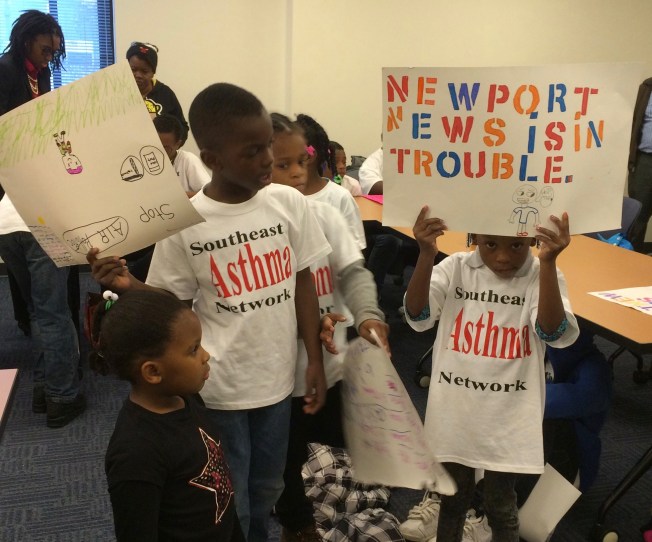
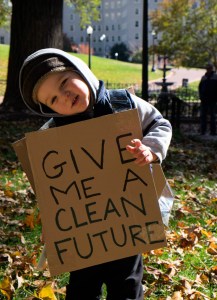
Children from the Southeast Care Coalition make their point about the link between air quality and asthma.

Children from the Southeast Care Coalition make their point about the link between air quality and asthma.

By Kendyl Crawford

There is an old adage that goes, “When White America sneezes, Black America catches pneumonia.” It describes the way problems affecting the economy as a whole are magnified for African-Americans, whose place on the economic ladder is already tenuous. The same can be said for Latinos, recent immigrants, and members of low-income communities. And just as these Americans are the ones hardest hit by economic setbacks, so they are the ones who suffer most from an energy economy based on fossil fuels.

Worse, they are often used as pawns by fossil fuel companies who declare that poor people need cheap energy, without accounting for the true cost of that energy. And that true cost can be very high. Over half a million people in Virginia live within 3 miles of coal-fired power plants. Of this group, 52% are minorities and 34% are members of the low-income community. This doesn’t seem like much of a disparity until you realize that Virginia has a total minority population of 35% and a low-income population of 26%.

The fossil fuel industry has a long history of siting power plants strategically, avoiding upper class, white areas whose residents have the power and influence to be able to cry NIMBY (Not In My Back Yard). Communities with less political and economic power got stuck with the facilities—often along with other unwanted neighbors like highways, heavy industry, and waste dumps. In many cases, the communities were there first and then became the victims of zoning changes that gave the green light to polluting facilities. Residents ended up with higher environmental health burdens and lower home values, often with no compensating economic boost from the presence of the facility. The term for siting highly-polluting facilities in these communities now even has its own acronym: PIMBY, for “Put it In Minorities’ Back Yard.”

The 2014 NAACP Coal Blooded: Putting Profits before People report gave five Virginia power plants an F for their environmental justice performance, a grade based on how much a particular plant impacts both low-income and minority communities. The score takes into account the amount of sulfur dioxide and nitrogen oxides air pollution; total population within a three-mile radius of a facility; median income; and the percentage of minorities that make up the population in the close vicinity.

The NAACP report also gave a failing environmental justice performance score to Virginia’s largest utility, Dominion Resources. Dominion ranked as the 6th worst performing company in the U.S. and a “worst offender” in terms of environmental justice.

It’s not just coal. The Clean Air Task Force report Gasping for Breath highlights the fact that nationwide the oil and gas industry releases 9 million tons of pollution such as methane and benzene annually. Many of these toxic pollutants have been linked to cancer and respiratory disorders as well as increasing smog. Every summer there are 2,000 visits to the emergency room for acute asthma attacks and more than 600 hospital admissions for respiratory diseases that are directly related to the ozone smog that results from oil and gas pollution.

Not surprisingly, asthma takes its greatest toll on minorities. According to the EPA, black children are about four times more likely to die from asthma than white children. They are also twice as likely to be hospitalized for asthma. From 2001 to 2009, the asthma rate for black children increased almost 50%. African Americans, with lower rates of health insurance coverage, have fewer resources to manage these added stressors.

Latino children fare similarly poorly. Higher poverty rates and lower rates of insurance coverage mean Latino children have more severe asthma attacks than non-Hispanic white children and are more likely to end up in emergency rooms.

Of course, it’s not just minorities who suffer the harmful consequences of fossil fuels. Low-income people in general have fewer choices in where to live, have less access to health care, and often have little political power. In Virginia, this includes many residents of coalfields communities, whose families may have worked in coal mines for generations and yet have little to show for it.

Climate change will only increase the burden on minorities and low-income communities. For instance, many African American communities have historically been relegated to the least-valued land in a particular city or county, and this land is often low-lying. A recent article exposed the fact that when public housing is destroyed due to sea level rise, stronger storm surges and more extreme storms, it often doesn’t get rebuilt, forcing folks to relocate permanently.

Atmospheric warming will also lead to more health issues related to air pollution, which tends to increase with higher temperatures. But heat itself will take a toll, too, especially for those in substandard housing or who can’t afford air conditioning.

Most at risk will be those who work outdoors, among them construction workers, landscapers and farmworkers. Again, these are disproportionately minorities. Latinos make up about 48% of farm workers and almost 30% of construction workers in the U.S. As noted in the report Nuestro Futuro: Climate Change and U.S. Latinos, Latinos are already three times more likely to die from heat-related causes on the job than non-Hispanic whites. Climate change is expected to increase temperatures further. Hispanic communities are also generally located in areas of cities that are the hottest due to lack of vegetation and green spaces and the use of heat-trapping building materials.

These health impacts will be compounded by high poverty levels and low rates of health insurance. A Hispanic who is employed has less of a chance of having health insurance than a non-Hispanic person. When conditions like cardiovascular disease or diabetes are not treated and controlled, they can trigger visits to the emergency room after being exposed to extreme heat. Not to mention, language barriers can make it harder to obtain care.

Recent immigrants may also face greater difficulties following severe weather events, which are expected to increase in both frequency and intensity. Depending on their immigration status, disaster assistance may be hard to obtain or even completely unavailable.

So when utilities and fossil fuel companies urge our political leaders to keep energy costs low for the poor folks, we should recognize that what they really want is to keep profits high for themselves. They aren’t doing their customers any favors.

Kendyl Crawford is a Program Conservation Manager with the Virginia Chapter of the Sierra Club.
 

Unknown's avatar

Virginia legislative session wraps up with action on solar, coal ash, and pumped storage

Next year I'm bringing him to lobby with me. Photo credit: Sierra Club

Next year I’m bringing him to lobby with me. Photo credit: Sierra Club

The Virginia General Assembly wraps up its 2017 session on Saturday, February 25. As usual, the results are a mixed bag for energy. On the plus side is the promise of a new solar purchase option for customers. On the downside, utility opposition to energy efficiency and distributed generation meant a lot of worthwhile initiatives never made it out of subcommittee.

Putting it into perspective, it could have been worse. For clean energy advocates in Virginia, that’s what we call a success!

Governor Terry McAuliffe has already acted on some of the bills that passed and will have until March 27 to act on the remaining bills. Under Virginia law, the governor can sign, veto, or amend the bills for legislators’ consideration.

“Rubin Group” bills move renewable energy forward—and back.

Negotiations between utilities, the solar industry trade association MDV-SEIA, and the group Powered by Facts produced three pieces of legislation that appear likely to become law (and all of which I’ve discussed previously). The most significant of these “Rubin Group” bills (named for facilitator Mark Rubin) is SB 1393 (Wagner), the so-called “community solar” bill, which is designed to launch a utility-controlled and administered solar option for customers. The utilities will contract for the output of solar facilities to be built in Virginia and will sell the electricity to subscribers under programs to be approved by the State Corporation Commission. Critical details such as the price of the offering will be determined during a proceeding before the State Corporation Commission.

This was the only one of the Rubin Group bills that had participation from members of the environmental community (Southern Environmental Law Center and Virginia League of Conservation Voters), and it received widespread (though not unanimous) support from advocates.

Broader legislation that would have enabled true community solar programs did not move forward. SB 1208 (Wexton) and HB 2112 (Keam and Villanueva), modeled on programs in other states, had the backing of the Distributed Solar Collaborative, a stakeholder group composed of everyone but utilities. In the Senate, Wexton’s bill was “rolled into” Wagner’s bill, but only her name, not the provisions of her bill, carried over.

SB 1395 (Wagner), a second Rubin Group bill, increases from 100 MW to 150 MW the size of solar or wind projects eligible to use the state’s Permit by Rule process, which is overseen by the Department of Environmental Quality. The legislation also allows utilities to use the PBR process for their projects instead of seeking a permit from the SCC, if the projects are not being built to serve their regulated ratepayers.

The third Rubin Group bill establishes a buy-all, sell-all program for agricultural generators of renewable energy. Although supported by MDV-SEIA as part of the package deal, passage of SB 1394 (Wagner) and HB 2303 (Minchew) should be considered a loss for solar. The program replaces existing agricultural net metering rules for members of rural cooperatives and could lead these coops to reach their 1% net metering cap prematurely, blocking other customers from being able to use net metering. And while negotiators say the program should be economically beneficial to participants, it appears to offer generators no options they don’t already have under existing federal PURPA law.

The governor has until March 27 to act on these bills.

Appalachian Power PPAs for private colleges only

Under HB 2390 (Kilgore), the existing pilot program that allows some third-party power purchase agreements (PPAs) in Dominion Power territory will be extended to Appalachian Power territory, but only for the private colleges and universities who could afford to hire a lobbyist to negotiate the special favor, and only up to a 7 MW program cap. APCo is expected to use passage of the bill to assert that PPAs for all other customers are now illegal. The governor has not indicated whether he will sign the bill.

Intellectual property

SB 1226 (Edwards, D-Roanoke) allows solar developers to keep confidential certain proprietary information that would otherwise be subject to disclosure under the state’s Freedom of Information Act (FOIA). It resolves a problem that has held up a solar project on the Berglund Center, a public building in Roanoke.

Storage, pumped or otherwise

HB 1760 (Kilgore) and SB 1418 (Chafin) allow Dominion Power to seek rate recovery for a scheme to use abandoned coal mines for pumped storage facilities. If you think this sounds weird and possibly dangerous, you are not alone. Usually the idea is to keep water out of coal mines to avoid the leaching of toxic chemicals into groundwater. Apparently no one has ever used coal mines for pumped storage before, and neither the company that would construct the project, nor the sites under consideration, nor the technology to be used, have been revealed.

SB 1258 (Ebbin) adds storage to the mandate of the Virginia Solar Energy Development Authority.

Dominion’s nuclear costs, and the politics of the “rate freeze”

HB 2291 (Kilgore) allows Dominion to charge ratepayers for the costs of upgrading its nuclear facilities. Because the charges will appear as a rider on top of base rates, consumers would not be protected by the “rate freeze” Dominion pushed through in 2015’s SB 1349.

That 2015 legislation, of course, was supposedly designed to shield customers from the impact of the EPA’s Clean Power Plan, a ruse that has been since laid bare. Instead, it will allow Dominion to keep an estimated billion dollars of customers’ money it would otherwise have had to refund or forego. This year, with the CPP on death row under Trump, Senator Chap Petersen introduced SB 1095, which would repeal the rate freeze. His bill was promptly killed in committee, but continues to gain support everywhere outside the General Assembly. Governor McAuliffe belatedly announced his support for Petersen’s bill, but did not use his authority to resurrect it.

Petersen is encouraging the Governor to offer an amendment to Kilgore’s HB 2291 that would repeal the rate freeze, an option allowed by Virginia’s legislative procedure since both provisions affect the same provision of the Code.

Dominion, of course, says the CPP isn’t actually dead and buried just yet, and Republicans seem to fear its resurrection. HB 1974 (O’Quinn) requires the Department of Environmental Quality to submit any Clean Power Plan implementation plan to the General Assembly for approval, so they can stab it with their steely knives.  The governor is expected to veto the bill.

State’s failures on energy efficiency will now be tracked

SB 990 (Dance) requires the Department of Mines, Minerals and Energy to track and report on the state’s progress towards meeting its energy efficiency goals. Or in Virginia’s case, its lack of progress.

HB 1712 (Minchew) expands the provisions of state law that allow public entities to use energy performance-based contracting.

That’s it for energy efficiency legislation this year. Several good bills were offered but killed off in the House Energy Subcommittee, notably HB 1703 (Sullivan), which would have required electric utilities to meet efficiency goals, and HB 1636 (Sullivan again), which would have changed how the SCC evaluates energy efficiency programs. Delegate Sullivan, by the way, introduced a companion bill to SB 990, but his was killed in that same House subcommittee, all on the same day.

Coal ash legislation watered down but passes

SB1398 (Surovell) will require Dominion Power to monitor pollution and study options for the closure of its coal ash impoundments, including removal of the ash to secure, lined landfills. Unfortunately amendments in the House will allow Dominion to proceed with capping the waste in unlined pits while it completes the study. As one editorial put it, “Why not do it right the first time?” The editorial—along with a lot of people who have to live near the coal ash dumps—would like to see the governor offer amendments to the bill, but we’ve heard nothing from the governor’s office on that yet.

Republicans keep trying to throw taxpayer money down a rathole; Governor vetoes

Governor McAuliffe has already vetoed HB 2198 (Kilgore), which would reinstate the coal employment and production incentive tax credit and extend the allowance of the coalfield employment enhancement tax credit. SB 1470 (Chafin) is identical to HB 2198 and so likely faces a veto as well.

Unknown's avatar

While U.S. leaders were worrying about coal jobs, clean energy snatched the lead: even Virginia now has more people working in solar than coal.


va-electric-sector-jobs

Jobs in electric generation do not include fuel jobs, so for example, the coal jobs in the two charts have to be added together to get total employment. Wind and solar, of course, have no fuel costs. Charts come from DOE.

Jobs in electric generation do not include fuel jobs, so for example, the coal jobs in the two charts have to be added together to get total employment. Wind and solar, of course, don’t need employees to produce their “fuel.” Charts come from DOE.

A new report from the U.S. Department of Energy takes stock of energy employment in the U.S. and comes up with fresh evidence of the rapid transformation of our nation’s electricity supply: more people today work in the solar and wind industries than in natural gas extraction and coal mining.

According to the January 2017 U.S. Energy and Employment Report, 373,807 Americans now work in solar electric power generation, while 101,738 people work in wind. By comparison, a total of 362,118 people work in the natural gas sector, including both fuel supply and generating plants.

Total coal employment stands at 160,119. And while renewable power employment grew by double digits last year—25% for solar, 32% for wind—total job numbers actually declined across the fossil fuel sectors, where machines now do most of the work.

If generating electricity employs a lot of people, not generating it employs even more. The number of Americans working in energy efficiency rose to almost 2.2 million, an increase of 133,000 jobs over the year before.

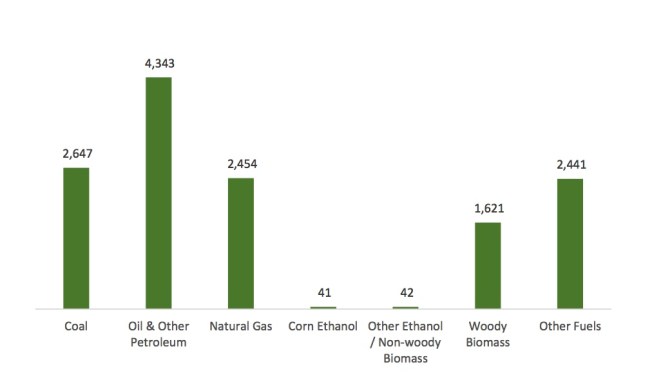
Those are nationwide figures, but the report helpfully breaks down the numbers by state. For Virginia, 2016 was a watershed year. In spite of the fact that our solar industry is still in its infancy and we have no operating wind farms yet, more Virginians now work in renewable energy than in the state’s storied coal industry. A mere 2,647 Virginians continue to work in coal mining, compared to 4,338 in solar energy and 1,260 in wind.

Dwarfing all of these numbers is the statistic for employment in energy efficiency in Virginia: 75,552.

Unknown's avatar

Battles over climate and coal go unresolved, but Virginians still paying more

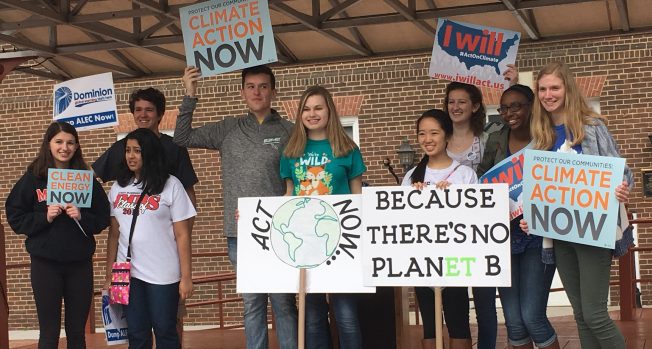
Students rally for climate action in Alexandria, Virginia. Photo courtesy of Sierra Club.

Students rally for climate action in Alexandria, Virginia. Photo courtesy of Sierra Club.

Virginia’s 2016 legislative session ended last week with a one-day veto session, an ideological battleground where both sides fought lustily but nobody won.

Republicans could not muster the votes to overcome McAuliffe’s veto of legislation extending taxpayer handouts for coal mining companies. Nor could they overcome vetoes of HB 2 and SB 21, bills requiring that any state plan implementing the EPA’s Clean Power Plan be submitted to the General Assembly for approval.

They did, however, succeed in defending a budget item prohibiting the Department of Environmental Quality (DEQ) from developing a state implementation plan while a federal stay of the Clean Power Plan remains in effect. (For that they needed only a majority; overriding a veto requires a two-thirds super-majority.)

These votes won’t end the skirmishing. The tax credit for companies that mine Virginia coal doesn’t expire until the end of 2016, and Terry Kilgore, Chairman of the House Commerce and Labor Committee and a reliable ally of the coal lobby, has already promised another effort next session to extend the handouts.

As for the Clean Power Plan, the budget maneuver will cause headaches, as intended, but it’s merely a stall tactic. Virginia may end up submitting a clumsier plan than it otherwise would, if it has to scramble to meet the deadline once the stay is lifted. Even that isn’t certain. DEQ has already completed much of the fact-gathering portion of its work, including issuance of a report from the stakeholder group it convened to consider options. And the new fiscal year, when the prohibition kicks in, doesn’t begin until July 1. A lot of work could get done in two months.

Moreover, Republicans seem to have a losing hand here, even if they block DEQ from completing its work. If the Clean Power Plan survives attack in the courts and Virginia doesn’t submit a plan, EPA will write one for us. On the other hand, if the Clean Power Plan fails judicial scrutiny, EPA will have to rewrite it in a way that might be even worse for coal.[1]

But the Republican attacks on the Clean Power Plan have never been about protecting our ability to plan our own energy future—or for that matter, about protecting ratepayers. Recall that a year ago the General Assembly passed Dominion Power’s SB 1349, with its so-called “rate freeze,” on the theory that the Clean Power Plan will cost so much money that electric rates needed to be frozen between now and the time the plan actually kicks in, and regulators forbidden from scrutinizing utilities’ books in the meantime.

I know: that makes no sense. But don’t ask me for a better explanation; the rationale never stood up to scrutiny. And Republicans weren’t the only ones supporting this peculiar legislation. Once the original anti-Clean Power Plan elements were stripped out, plenty of Democrats got on board to prove their fealty to Dominion.

We have since learned two things about SB 1349 and one thing about the Clean Power Plan:

  • According to one State Corporation Commission judge, SB 1349 will cost Virginia ratepayers a billion dollars in overpayments to Dominion.
  • Dominion Power customers are about to see their rates go up regardless of the “freeze,” as a result of Dominion getting approval to build a new gas-fired power plant;
  • The final Clean Power Plan requires almost nothing from Virginia, and compliance might even save us money.

Now that we know all this, wouldn’t you expect to hear legislators clamoring for the repeal of the faux rate freeze?

Cock an ear. What do you hear?

Crickets.

To be sure, many Republicans who pushed for SB 1349 were more interested in the threat the Clean Power Plan posed to the coal industry. Their support for the coal tax subsidies shows Republicans have no qualms about charging taxpayers tens of millions of dollars annually to help coal companies. Perhaps when you’re in the business of giving away other people’s money, another billion dollars doesn’t seem like a stretch.

Still, if concern for the people of coal country were really at work, we might have expected success for McAuliffe’s budget amendment that put one million dollars into funding for solar projects, with priority for those in Southwest Virginia. Compared to the coal subsidies, admittedly, this isn’t much. In NoVa, a million dollars is one high-end home, green features extra. Spread around the coalfields, though, it could have powered up to a hundred homes with solar. Maybe the symbolism was too hard to take. In any case, Republicans scuttled the funding.

Rhetoric triumphed over substance in other ways this session, too. The General Assembly voted to establish a Shoreline Resiliency Fund, but failed to fund it. Clean energy bills from both sides of the aisle fizzled; with few exceptions, those that weren’t killed outright were sent to a newly-announced subcommittee conceived as a dumping ground for solar bills. No meeting schedule has yet been announced for this subcommittee.

Given the urgency of the climate crisis and the pressing need to develop our clean energy sector, this year’s stalemate feels particularly frustrating. We should all ask for our money back.


[1] Sure, there’s a third possibility: the EPA plan could be withdrawn under a President Trump. But if that’s our future, then defending the Clean Power Plan could be the least of our worries. Hoo-boy. Best not to think about it.


Unknown's avatar

Only the good die young: A mid-way review of Virginia climate and energy bills

Photo credit: Corrina Beall

Photo credit: Corrina Beall

Virginia’s 2016 legislative session is only half over, but it’s already clear that the General Assembly is no more capable of dealing with climate change and a rapidly-evolving energy sector than it ever was. Republicans are stuck in denial, Democrats are divided between those who get it and those who don’t, and for most legislators in both parties, the default vote is whatever Dominion Power wants.

Republican attacks on EPA climate regulations sail through both houses, while popular RGGI legislation dies in committee.

Practically the first bills filed this session call for Virginia’s Department of Environmental Quality to submit for legislative approval any plan to comply with the EPA’s Clean Power Plan. Anxious to safeguard Virginia’s heritage of carbon pollution against the twin threats of clean energy and a more stable climate, the Republican leadership rammed through HB 2 and SB 21 on party-line votes. Governor McAuliffe has promised vetoes.

Eager as it was to defeat Obama’s approach to climate disruption, the Party of No supported no solutions of its own, even when proposed by one of its own. Virginia Beach Republican Ron Villanueva couldn’t even get a vote in subcommittee for his Virginia Alternative Energy and Coastal Protection Act, which would have had Virginia join the Regional Greenhouse Gas Initiative (RGGI). It was the only legislation introduced this year that would have lowered greenhouse gas emissions and raised money to deal with climate change. The Democratic-led Senate version also failed to move out of committee, on a party-line vote.

Republicans scoff at climate change, but they are beginning to worry about its effects. Bills have moved forward to work on coastal “resiliency” efforts and to continue studying sea level rise (referred to as “recurrent flooding,” as though it were a phenomenon unto itself and suggesting no particular reason it might get worse). The Senate passed SB 282, creating the Virginia Shoreline Resiliency Fund, and SJ 58, extending the work of the Joint Subcommittee to study recurrent flooding. The House passed HJ 84, a companion to SJ 58, and HB 903, establishing a Commonwealth Center for Recurrent Flooding Resiliency.

Bold energy efficiency measures die. Not-so-bold measures don’t do well either.

Virginia appears set to continue its woeful record on energy efficiency. Between the opposition of electric utilities and their regulators at the State Corporation Commission, bills that would have set the stage for cost-effective reductions in energy use got killed off early or watered down to nothing.

Among the latter were the fairly modest bills pushed by the Governor. They passed only when reduced to a provision for the SCC to evaluate how to measure the subject. Weirdly, even that found opposition from conservative members of the Senate and House.

The only bill to move forward more or less intact was Delegate Sullivan’s HB 1174, which requires state agencies to report on how badly the state is doing in meeting its efficiency goal. So we may not make progress, but at least we’ll have to acknowledge our failures. (Roughly the same group of conservatives didn’t think we should even go that far.)

Renewable energy bills won’t move forward this year, except the one Dominion wants.

As previously reported, the Republican chairmen of the House and Senate Commerce and Labor committees decided not to decide when it came to much-needed renewable energy reforms. Every bill to create new market opportunities for wind and solar was “carried over to 2017,” i.e., referred to a not-yet-existent subcommittee composed of unnamed people tasked with meeting at a not-yet-scheduled time, in order to do “something.”

“We do need to get moving on these solar bills faster than we have been going,” said House C&L Chairman Terry Kilgore, in explaining why his committee was not getting moving on any solar bills.

On the other hand, over in House Finance, Dominion Virginia Power’s bill to lower the taxes it pays for renewable energy property fared better. In exchange for an 80% tax exclusion for its own utility projects, Dominion offered up reductions in the tax savings currently afforded to the smaller projects being developed by independent solar companies. In an amusing sideshow, Republican leaders tried to use their support for this legislation to strong-arm liberal Democrats into supporting a bill extending coal subsidies, on the theory that passing one bill that benefits Dominion warrants passing another bill that benefits Dominion.

Given the lack of progress in opening the wind and solar markets, there is more than a little irony in the fact that legislation moved forward in both the House and Senate requiring utilities to direct customers to an SCC website with information about options for purchasing renewable energy. (Which leads to the question: if visitors to such a site encounter an error message, is it still an error?)

Coal subsidies remain everyone’s favorite waste of money.

Once again, the House and Senate passed bills extending corporate welfare for companies whose business model involves blowing up mountains and poisoning streams. Over the years legislators have spent more than half a billion dollars of taxpayer money on these giveaways, knowing full well it was money down a rat-hole. Community activists have pleaded with lawmakers to put the cash towards diversifying the coalfields economy instead, but there has never been a serious effort to redirect the subsidies to help mine workers instead of corporate executives and the utilities that buy coal.

This year the corporate handout went forward in the face of reports that one of the biggest recipients plans to pay multi-million-dollar bonuses to its executives while laying off miners and looking for ways to dodge its obligations to workers. Add to this the news that the same company owes two coalfields counties $2.4 million in unpaid taxes for last year, and you have to wonder what fairy tales legislators are hearing from lobbyists that makes them put aside common sense.

It’s not just Republicans who voted for these subsidies (though there is no excuse for them, either). Some Democrats did so, too. Governor McAuliffe has said he would veto these bills, which means senators like David Marsden, Jennifer Wexton, John Edwards and Chap Petersen will have a chance to redeem themselves by voting against an override.

Many thanks to Senators Howell, Ebbin, Favola, Locke, McEachin, McPike and Surovell for seeing through the propaganda of the coal lobby and voting no.

Dominion defeats legislation protecting the public from coal ash contamination

Senator Scott Surovell’s SB 537 would have required toxic coal ash to be disposed of in lined landfills rather than left in leaking, unlined pits and simply covered over. The bill failed in committee in spite of support from one Republican (Stanley), after Democratic Senator Roslyn Dance caved to pressure from Dominion and abstained. One might have expected more backbone from a legislator with coal ash contamination in her own district. (Nothing excuses the Republicans who voted against the public health on this, either. Last I heard, Republican babies are as vulnerable to water pollution as Democratic babies.)


Unknown's avatar

2016 Virginia bills show King Coal still calling the shots

Virginia rorschach test: some see a destroyed landscape, others see campaign contributions.

Virginia rorschach test: some see a destroyed landscape, others see campaign contributions.

Legislation introduced in the General Assembly would keep Virginia’s gravy train rolling for coal companies. SB 44 (Charles Carrico, R-Alpha Natural Resources) and HB 298 (Terry Kilgore, R-Alpha Natural Resources) are framed as “limits” because the taxpayer-financed subsidies for coal mining would top out at $7.5 million per year. But watch your wallets: the primary objective of the legislation is to extend the coal subsidies an extra three and a half years, through 2019. So these bills should more accurately be seen as $25 million giveaways. The bills have been referred to the committees on Finance.

It appears the coal companies need the money to pay bonuses to their executives. Alpha Natural Resources, which filed for bankruptcy in August to avoid paying creditors, plans to pay its top executives bonuses worth up to $11.9 million. Meanwhile, Alpha laid off more than 160 coal miners a week before Christmas.

According to the Virginia Public Access Project, Alpha Natural Resources gave almost $500,000 in campaign contributions to Virginia legislators during the 2014-2015 election cycle. Carrico was the top recipient, raking in $24,267 from Alpha; Kilgore snagged fifth place with $20,000.

Consol Energy gave over $236,000 to legislators over the same time period. Kilgore was their top recipient, at $12,500, while Carrico received $10,000. Note that both Carrico and Kilgore ran unopposed.

In a separate attempt to give back to the coal industry, Ben Chafin has introduced SB 365 (referred to Transportation), a bill that would remove the Coalfields Expressway from the transportation prioritization process. If it were to pass, this strip mine disguised as a highway wouldn’t have to meet the normal standards required of real roads to be eligible for state funding. The disastrous Route 460 would also be excused, in case any future administration is dumb enough to revive it. Chafin is another Coalfields Republican who ran unopposed while hauling in more than $100,000 from donors in the energy and mining industries, including $15,000 from Alpha Natural Resources and $9,500 from Consol.

The bankruptcy of Alpha, like that of dozens of other coal companies in recent years, threatens more than the campaign coffers of Virginia legislators. Coal mining has declined steadily in Virginia, leaving displaced workers who could make much better use that $7.5 million annually if it were redirected for job retraining and education. Right now, in contrast to the Republican rhetoric, only the Obama Administration seems to care about out-of-work coal miners.

While ignoring workers, legislators are at least waking up to the threat posed to taxpayers when bankrupt coal companies walk away from their obligations to clean up and reclaim the land they’ve mined. HB 1169 (Todd Pillon, R-Abingdon, referred to Agriculture) would increase the amount of the reclamation bonds that mine operators must post, and give the Commonwealth a lien against the land.

Coal ash pollution prompts legislation on proper closure of storage ponds

Meanwhile, Virginia’s coal legacy continues to have repercussions for communities across the state, wherever waste from burning coal has piled up in toxic ponds next to rivers and streams. For years utilities have taken an out-of-sight, out-of-mind approach to coal ash, quietly ignoring the potential for devastating spills like the one that contaminated the Dan River.

In Prince William County, Dominion Virginia Power proposes to close one of these leaky coal ash ponds by draining the water out of it and slapping on a cover. A compliant Department of Environmental Quality just issued Dominion a permit to discharge the partially-treated wastewater into Quantico Creek, which flows directly into the Potomac River.

In response, Democratic Senator Scott Surovell, whose district includes this section of Prince William County, has filed SB 537 (referred to Agriculture, Conservation and Natural Resources) to require the removal of all waste from closed coal ash ponds for proper disposal in permitted landfills that meet federal standards.


UPDATE: A January 21 news report informs us that Alpha Natural Resources owes Wise County, Virginia, nearly $1.46 million in unpaid taxes for 2015, with another $1 million owed to Dickenson County. Please feel free to make the appropriate snarky comments; I’m still stuck in a “you gotta be kidding” loop.

UPDATE 2: Not content to let Senator Carrico get all the glory giving away Virginia taxpayer money to pay multi-million dollar bonuses to tax-evading coal bosses, Ben Chafin has filed his own bill to do the same thing.  SB 718 appears to be the same as SB 44 and has also been referred to Finance.


Unknown's avatar

McAuliffe vetoes coal subsidy bills, but Republicans vow to keep the corporate welfare flowing

Your taxpayer dollars at work!

Your taxpayer dollars at work!

Governor Terry McAuliffe has vetoed the two bills that would have extended Virginia’s coal subsidies through 2019. It’s a laudable act of fiscal responsibility, and surely no more than Virginia taxpayers had a right to expect in a time of tight state budgets. And yet it was also an act of courage in a coal state where mining companies have had far too much political power for far too long.

You’d like to think legislators would now focus on working with the Administration to help southwest Virginia communities shift away from their unhealthy dependence on coal mining and instead develop new, cleaner industries. The tens of millions of dollars that have been spent annually on coal subsidies could be much better directed to job diversification efforts. Unfortunately, legislators representing coal companies—I mean, coal countieshave already vowed to reintroduce bills next year to keep the taxpayer largesse flowing. They have time; the subsidies won’t actually expire until January 1, 2017.

It’s been 20 years since Virginia began subsidizing coal mining via these two tax credits, bleeding the state treasury of more than $500 million in all. And it’s been three years since the Joint Legislative Audit and Review Committee (JLARC) issued a critique of the various Virginia tax credits that included an especially harsh assessment of the handouts to coal companies. Yet instead of canceling the credits in light of the report, the General Assembly promptly extended them. Even Governor McAuliffe didn’t actually try to end them completely this year. Legislators rejected his efforts simply to scale them back, leading to this veto.

So if we didn’t get jobs for our $500 million, what did we get? Most of the money has gone to enrich coal companies, but a portion went to fund the Virginia Coalfields Economic Development Authority (VACEDA). VACEDA’s board includes coal executives, a fact which has served to intensify rather than lessen coal’s hold on the area.

Perhaps VACEDA’s economic diversification mission would prove more successful if the state were to fund it directly, with money not tied to coal, and were to insist on reforms to VACEDA to ensure board members don’t have a conflict of interest.

In addition to propping up the coal industry, the tax credits also serve to lower the price of Virginia coal purchased by our utilities. This shifts energy costs from ratepayers to taxpayers, but it also makes it easier for coal to compete against other forms of energy, including renewable energy like wind and solar. And since making taxpayers subsidize electricity rates artificially cheapens electricity, it also lessens the incentive to conserve energy. In an age of climate change, this is simply bad energy policy.

Most economists agree that energy policy should seek to make electricity rates reflect the true cost of producing energy. This should include costs imposed on the public in the form of higher health care costs for asthma and heart disease as a result of power plant pollution—costs known as “externalities.” The coal subsidies do the exact opposite; instead of making utilities and coal companies internalize pollution costs, they actually shift more costs onto the public.

All this was done in the name of supporting employment in the Coalfields areas. However, the coal subsidies aren’t linked to jobs; they are based on coal tonnage, so mining companies that increase mechanization while cutting jobs don’t lose anything. And cutting jobs is exactly what has happened in Virginia. As the Governor’s veto statement noted, coal mining jobs declined steadily from their highs in the early 1990s to about 3,600 today, notwithstanding the subsidies.

A reading of the JLARC report also shows that most of the drop occurred before President Obama took office and the EPA imposed tighter pollution standards. The fact is, coal is in decline, and Virginians will be better off not throwing good money after bad.

Indeed, the coal jobs number is barely twice the number of people working in Virginia’s tiny solar industry, which gets no state subsidies. Just this year a House subcommittee killed a bill that would have provided $10 million a year in support for renewable energy projects.

Solar is growing by leaps and bounds across the country, while coal fades. Governor McAuliffe has taken the right lesson from that. It’s too bad so many Virginia legislators have not.

Unknown's avatar

Your 2015 Virginia legislative session cheat sheet, part 2: Fossil Fuels

Photo credit: Corrina Beall

Photo credit: Corrina Beall

My last post covered clean energy bills introduced into the 2015 legislative session, which began last week and ends at the end of February. Time to hustle on to the oil, gas, and coal bills.

Coal subsidies

Coal companies claim to be victims of a “war on coal,” but for nearly two decades they’ve been conducting a war on Virginia taxpayers. Virginia’s tax code offers so many preferences that a 2012 study concluded the coal industry costs Virginia more than it gives back. Among other preferences, two different subsidies in the Code have allowed coal companies to siphon off tens of millions of dollars annually from the General Fund since 1996.

The subsidies come with nominal sunset dates, currently January 1, 2017. Over nearly twenty years, no matter how fat or lean the state’s financial condition, the legislature has repeatedly passed extensions, and they are being asked to do so again this year. HB 1879 (Kilgore) and SB 741 (Carrico) would extend the giveaway out to 2022.

(According to VPAP.org, Delegate Kilgore, chairman of the Commerce and Labor Committee, gets a check for $10,000 every year from coal giant Alpha Natural Resources. Alpha also gives ten grand a year to Senator Carrico, who just happens to sit on Senate Finance, which will hear the bill. I mention these facts only in passing. It would be cynical to suggest a connection.)

Supporters of the subsidies seem to believe coal companies need the inducement to blow up our mountains and dump waste into stream valleys. And they maintain this is a good thing for the people of Southwest Virginia, who can enjoy gainful employment by participating in the destruction of their communities.

The coal companies certainly do benefit from this arrangement, but coal jobs have declined to less than 5,000 total in Virginia today, and it’s clear to everyone that Southwest Virginia needs to diversify its economy or face a future of poverty and high unemployment. The coal subsidies suck up money that could be spent on new jobs and a better-educated workforce.

The McAuliffe administration, facing a budget shortfall, has suggested cutting the subsidies way back, and has no plans to extend them. HB 2181 (Toscano) reduces the amount of the subsidies for 2015 and 2016 but does not eliminate them. It also limits the amount that can be claimed on any one tax return to $500,000 under each Code provision.

HB 1877 (Krupicka) would end the subsidies altogether a year early. His bill goes further: it would redirect the savings into a fund to provide grants to students enrolled in Virginia public colleges and universities. Half the money would be required to go to students from the Coalfields region.

Natural gas

SB 1338 (Hanger) repeals a provision of the Code known as the Wagner Act (after Senator Frank Wagner, who introduced the legislation ten years ago). That provision allows interstate natural gas companies to enter private property without the consent of the owner in order to make “examinations, tests, hand auger borings, appraisals, and surveys.”

The Wagner Act gained notoriety last year when Dominion Power sued landowners who resisted efforts to survey their land. We think of Dominion as an electric utility, but Dominion Resources also owns a gas transmission company, and it plans to build a huge new pipeline to bring fracked gas from Ohio and West Virginia and deliver it to industrial customers and export facilities on the coast. Turns out, a lot of people don’t like strangers coming on their land without permission, especially when the point is to let the strangers decide whether they might want to seize the land for a pipeline. Well, who could have expected that?

But in case the GA doesn’t have an appetite for repealing the Wagner Act, how about making it harder to use? SB 1169 (Hanger again) amends it to add a pre-condition. Before any natural gas company can enter someone’s property without permission, the governing board of the locality must have adopted a resolution in support of the pipeline or gas works. Moreover, the resolution “shall not be adopted unless the governing body has found that locating the line or works within the city or county is consistent with its comprehensive plan, master plan, or any general development plan and that there exists a demonstrated public need for the line or works.”

HB 1475 (Ware) and SB 1163 (Saslaw) allow natural gas utilities to expand their systems to reach more retail customers. This legislation is not related to the interstate gas pipelines sought by Dominion and others. It deals with pipelines within the state that would connect customers who currently don’t have access to natural gas for heating and cooking (a more efficient use of energy than burning gas for electricity to perform the same functions).

But the gas utilities have taken a page from the Dominion playbook and overreached with their legislative language, including by declaring its plans and business goals to be “in the public interest” (the magic words that limit SCC review). We hear the bill is likely to be amended to take out the offending language.

Really a bill about energy efficiency, SB 1331 (Petersen) changes how the SCC evaluates natural gas conservation programs proposed by utilities. It instructs the SCC to determine the cost-effectiveness of a program by looking at the utility’s whole portfolio of conservation programs and not each judged separately. This should make it easier to get conservation programs approved, and it’s to the credit of the retail gas companies that they want it passed. Senator Petersen’s office informed me the bill originated with the governor’s office, which supports it.

Offshore oil drilling

Virginia doesn’t control the deep waters off our coast where oil may be lurking, and drilling is still years away, if it happens at all. But that has never stopped state lawmakers from making plans to spend the money we might earn from oil drilling, if Congress were to share some of the revenue with us. Most of us will recognize this game as, “Imagine if you won the lottery.”

Back in 2010, Governor McDonnell pushed through a bill to fund transportation projects with the imaginary money. In 2014, the law was amended to put $50 million into an emergency response fund to combat what would have to be a pretty small imaginary oil spill, with all the extra imaginary money going to the General Fund.

HB 1702 (Davis) proposes to amend the law again to take half of the imaginary General Fund money and put it into public schools. Well, who could object to that? Except for the imaginary part, of course.

Unknown's avatar

Virginia’s amazing year in energy: gas rises, coal falls, and solar shines (but it’s still not okay to say “climate change”)

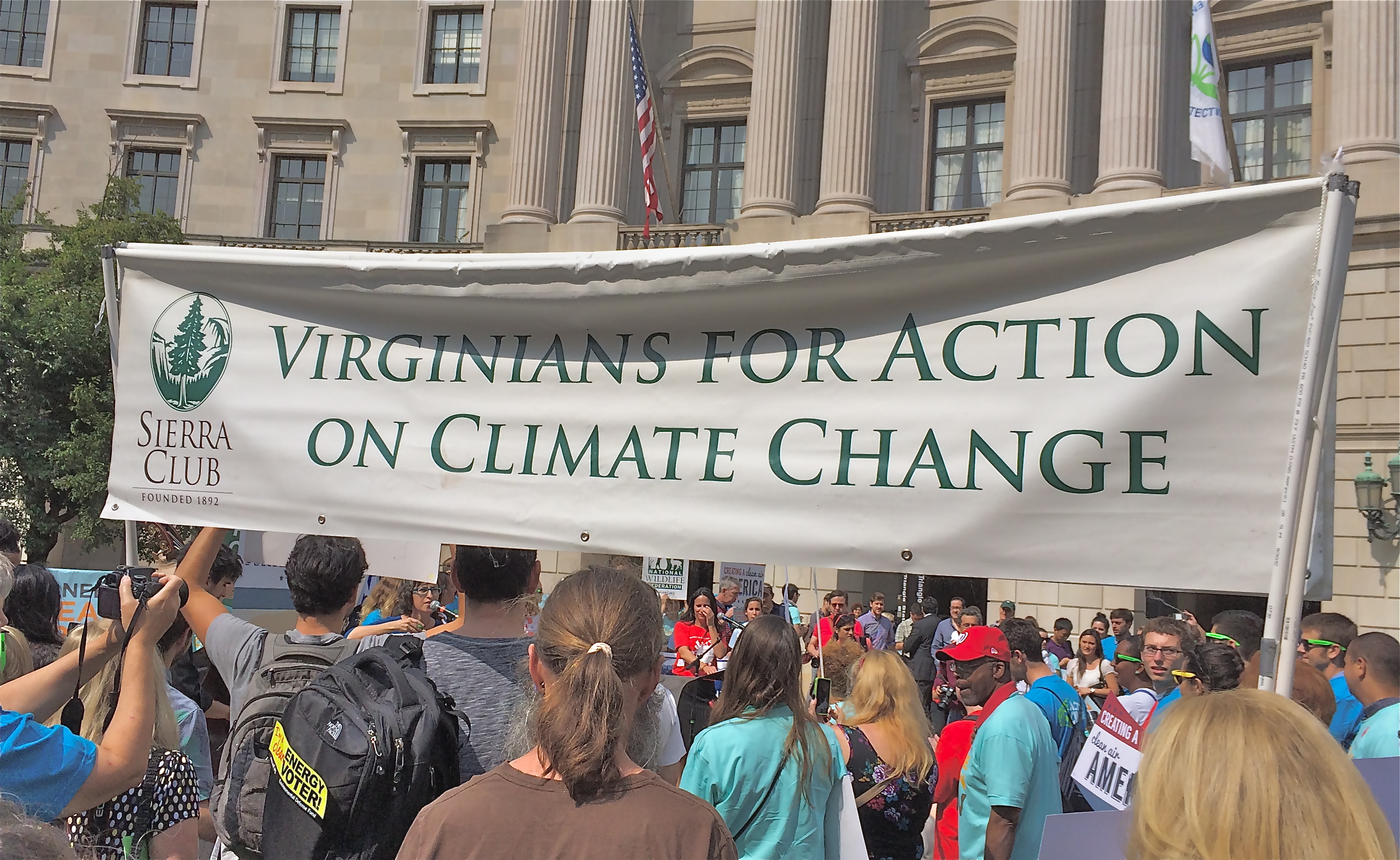
Virginians rally in front of U.S. EPA Headquarters in Washington, DC in support of the Clean Power Plan

Virginians rally in front of U.S. EPA Headquarters in Washington, DC in support of the Clean Power Plan

Nobody laughed a few years ago when former governor Bob McDonnell dubbed Virginia the “Energy Capital of the East Coast”; we were all too astounded by the hyperbole. And today, even “Energy Suburb” still seems like a stretch. Yet, if you measure achievement by the sheer level of activity, Virginia is making a play for importance. The year’s top energy stories show us fully engaged in the worldwide battle between fossil fuels and renewable energy. Of course, while the smart money says renewables will dominate by mid-century, Virginia seems determined to drown rather than give up its fossil fuel addiction.

Coal falls hard; observers disagree on whether it bounces or goes splat. Nationwide, 2014 was a bad year for the coal industry. Coal stocks fell precipitously; mining jobs continued to decline; and the one thing electric utilities and the public found to agree on is that no one likes coal. Even in Virginia, with its long history of mining, coal had to play defense for what may have been the first time ever. So when Governor McAuliffe released the state’s latest energy plan in October, what was otherwise a paean to “All of the Above” omitted the stanza on coal. And this month, the governor proposed a rollback of the subsidies coal companies pocket by mining Virginia coal.

Of course, coal is not going quietly; Senator Charles Carrico (himself heavily subsidized by Alpha Natural Resources) has already responded with a bill to extend the subsidies to 2022.

EPA opens a door to a cleaner future, and Republicans try to brick it up. Speaking of hard times for coal, in June the EPA unveiled its proposal to lower carbon emissions from existing power plants 30% nationwide by 2030. Instead of targeting plants one-by-one, EPA proposed a systemic approach, offering a suite of options for states to reach their individualized targets.

The proposal drew widespread support from the public, but Virginia’s 38% reduction target set off howls of protest from defenders of the status quo. The staff of the State Corporation Commission claimed the rule was illegal and would cost ratepayers $6 billion. Republicans convened a special meeting of the House and Senate Energy and Commerce Committees, where they tried out a number of arguments, not all of which proved ready for prime time. The rule, they said, threatens Virginia with a loss of business to more favored states like—and I am not making this up—West Virginia. Also, Virginia should have received more credit for lowering its carbon emissions by building nuclear plants back in the 1970s when no one was thinking about carbon emissions.

Meanwhile, the Southern Environmental Law Center analyzed the rule and concluded that actually, compliance will not be hard. Virginia is already 80% of the way there, and achieving the rest will produce a burst of clean-energy jobs coupled with savings for consumers through energy efficiency.

Undaunted, Republicans have already introduced a thumb-your-nose-at-EPA bill developed by the fossil fuel champions at the American Legislative Exchange Council.

The “solarize” movement takes Virginia by storm. For the last few years, solar energy has been exploding in popularity across the U.S., but Virginia always seemed to be missing the party. So it surprised even advocates this year when pent-up consumer demand manifested itself in the blossoming of local solar buying cooperatives and other bulk-purchase arrangements. “Solarize Blacksburg” made its debut in March, going on to sign up hundreds of homeowners for solar installations. It was followed in quick succession by the launch of similar programs in Richmond, Charlottesville, Harrisonburg, Northern Virginia, Halifax, Floyd, and Hampton Roads.

The main reason for the solarize programs’ success was the steep decline in the cost of solar energy. 2014 saw the cost of residential installations in Virginia fall to record low prices, making the investment worthwhile to a broad swath of homeowners for the first time.

Utilities say maybe to solar, but only for themselves. Virginia still boasts no utility-scale solar, but utilities elsewhere signed long-term power purchase contracts for solar energy at prices that were sometimes below that of natural gas: under 6.5 cents/kilowatt-hour in Georgia, and under 5 cents in Texas. Compare that to the estimated 9.3 cents/kWh cost of power from Dominion Virginia Power’s newest and most up-to-date coal plant, the Virginia City Hybrid Energy Plant, and you’ll understand why Dominion has suddenly taken an interest in solar projects. Sadly, it’s own foray into rooftop solar so far stands as an example of what not to do, and a testament to why the private market should be allowed to compete.

Yet Virginia utilities continued their hostility to customer-owned solar. Dominion put the kibosh on a bill that would have expanded access to solar energy through community net-metering, while Appalachian Power matched Dominion’s earlier success in imposing punitive standby charges on owners of larger residential systems.

Fracking, pipelines, and gas plants, oh my! Renewable energy may be the future, but the present belongs to cheap natural gas. Yes, the fracking process is dirty, noisy and polluting, and yes, methane leakage around gas wells is exacerbating climate change. But did we mention gas is cheap?

2014 saw proposals to drill gas wells east of I-95, while the Virginia government began updating its regulations to govern fracking. Dominion Power started construction on a second new gas power plant, and talked up its plans for a third. The utility giant, a major player in the gas transmission business, also got approval to turn its liquefied natural gas import terminal in Cove Point, Maryland, into an export terminal. With visions of customers dancing in its head, it also announced plans for a major new pipeline to bring fracked gas from West Virginia through Virginia and into North Carolina—one of three proposed pipelines that would cut through the Virginia countryside and across natural treasures like the Appalachian Trail. The pipeline created an instant protest movement but gained the wholehearted approval of Governor McAuliffe.

Flooding in Hampton Roads becomes the new normal; it’s still not okay to ask what’s causing it. A cooler-than-normal year for the eastern United States gulled many landlubbers into believing that global warming was taking a breather, but meanwhile the ocean continued its inexorable rise along Virginia’s vulnerable coastline. It’s one thing to shrug off the occasional storm, said residents; it’s harder to ignore seawater that cuts off your parking lot at every high tide. 2014 will go down as the year everyone finally agreed we have a problem—even in the General Assembly, which passed legislation to develop a response to the “recurrent flooding.” But while the bill recognized that the problem will just get worse, it avoided noting why.

The public gets it, though. The Richmond Times-Dispatch reports that climate change was the number one topic of interest to writers of letters to the editor in 2014. And loud cheers greeted Governor McAuliffe’s announcement that he would reestablish the state’s commission on climate change, which Bob McDonnell had disbanded. As one environmental leader quipped, “People in Tidewater are tired of driving through tidal water.”

Public corruption: in Virginia, it’s not just for politicians. Everyone can agree that it was a really bad year for the Virginia Way, that gentlemanly notion that persons of good character don’t need no stinkin’ ethics laws. But we also saw plenty to prove the adage that the real scandal is what’s legal. As we learned, Virginia law allows unlimited corporate contributions to campaigns, and puts no limits on what campaigns can spend money on. So if some legislators act more like corporate employees than servants of the public, well, that’s how the system was set up to work.

But the system only works when corporations get their money’s worth from the politicians, and that quid pro quo usually comes at the public’s expense. For example, take Dominion Power’s North Anna 3 shenanigans (please). In an exceptionally bold exploitation of the Virginia Way, Dominion Power secured passage of legislation allowing it to bill customers for hundreds of millions of dollars it had spent towards a new nuclear plant that it is unlikely to build. (And the irony is that ratepayers will still be better off throwing the money down that rathole than they will be if Dominion does manage to build it.)

So as we look ahead to 2015’s energy battles, anyone wondering who the winners and losers will be needs only one piece of guidance: in Virginia, just follow the money.

Unknown's avatar

Fiscal and environmental sanity get a boost as McAuliffe proposes to roll back coal subsidies

Your taxpayer dollars at work!

Your taxpayer dollars at work!

Thanks to the state’s budget deficit, Virginia may finally scale way back a notorious fossil fuel subsidy that currently transfers tens of millions of dollars annually from taxpayers to the pockets of corporations that mine Virginia coal. The Richmond Times Dispatch reports that if Governor McAuliffe has his way, the Virginia Coal Employment and Production Incentive Tax Credit and the Coalfield Employment Enhancement Tax Credit will be limited to $500,000 per year, saving the government $20 million per year.

The refundable tax credits were intended to make Virginia coal cheaper for utilities to buy, and thus more competitive with coal mined in other states. In theory, that was supposed to mean more coal mining jobs in southwest Virginia. In practice, the subsidies meant some coal companies paid no state taxes, and actually received significant cash handouts, even as coal jobs declined. And because the subsidies are based on tons of coal mined and not on the number of people employed, mining companies suffered no penalty from capital investments that maximized production while cutting jobs.

Critics of the subsidies thought they had won their point three years ago when the Joint Legislative Audit and Review Committee (JLARC) issued a critique of the various Virginia tax credits that was especially critical of the handouts to coal companies. As it describes beginning on page 67, the subsidies did not stop coal employment from falling 54% since 1990, or slow the steady decline in production:

“The precursor to one of the current coal credits was in place before the decline began, while the other was enacted shortly thereafter. It is important to note that with or without the credits, the decline in Virginia coal production was predicted by numerous analysts because over two-thirds of recoverable coal reserves in Virginia have already been mined.”

Indeed, the report continued, coal employment and production was actually worse with the credits in place:

“In the process of developing and refining the credit, analysts projected that coal employment and production would decline by 28 percent between 1996 and 2005 without the credit. However, actual mining employment was substantially lower than expected during this period, declining 36 percent.”

In spite of this damning analysis, in 2012 the General Assembly actually extended the expiration date of the coal subsidies until 2017. Insiders say Senate Democrats were persuaded to vote for the extension as a favor to coalfields senator Phil Puckett, who needed the backing of coal companies to hold his seat in 2013 and keep Democrats in control of the Senate. (Some might say he failed to return the favor.)

The coal subsidies have long infuriated environmentalists and community activists in the Coalfields region. In their view, Virginia taxpayers should not be forced to reward mining companies for blowing off the tops of our mountains, filling ancient stream valleys with rubble, poisoning wells and rivers, and destroying homes to get at the last, thin seams of Virginia coal.

So Coalfields activists welcomed the Governor’s proposal as a “good first step” in planning a future where coal is no longer the economic engine it once was. “We need to take our heads out of the sand and invest heavily in diversifying our economy in Southwest Virginia,” said Wise County resident Jane Branham, Vice President of Southern Appalachian Mountain Stewards. “Supporting outdoor recreation, tourism, sustainable agriculture, reforestation and a new generation of entrepreneurs is the path forward in the mountains, not subsidizing bad actor coal companies that continue to poison the natural resources our future depends on.”

Renewable energy advocates have also complained that by making coal cheaper, the subsidies make it harder for other forms of energy to compete. One would expect this argument to resonate with free market advocates, a category that supposedly includes all Virginia Republicans and a lot of the Democrats. Yet in spite of criticism from some Democrats, the subsidies have not faced serious opposition before now.

Acquiescence in such an expensive and counter-productive corporate welfare program mostly reflects the influence of the Virginia coal industry. (See last week’s post for a sampling of how coal companies work to buy votes with campaign cash.) But the drafters sweetened the deal with a provision that siphons off a portion of the excess cash to fund the Virginia Coalfield Economic Development Authority (VACEDA), which is supposed to help the region diversify beyond coal. (It might work better if coal executives didn’t sit on the board.)

Under McAuliffe’s proposal, VACEDA would get a direct appropriation of $1.2 million to replace the money it would lose by the scaling back of the tax credits. That should satisfy those legislators whose primary concern is helping residents of southwest Virginia.

Those whose primary concern is helping coal companies, however, aren’t likely to be happy. Congressman Morgan Griffith has already been quoted as suggesting Governor McAuliffe’s proposal to scale back the coal subsidies amounts to a “war on coal.”

He expressed no concern about coal’s war on the people of southwest Virginia. For those who care about that, Governor McAuliffe’s move feels like a breath of clean air.

——————–

Addendum: Senator Bill Carrico (R-Alpha Natural Resources) has now filed a bill, S741, to extend the coal subsidies until 2022.