Unknown's avatar

Virginia climate advocates find progress requires more than a Democratic majority

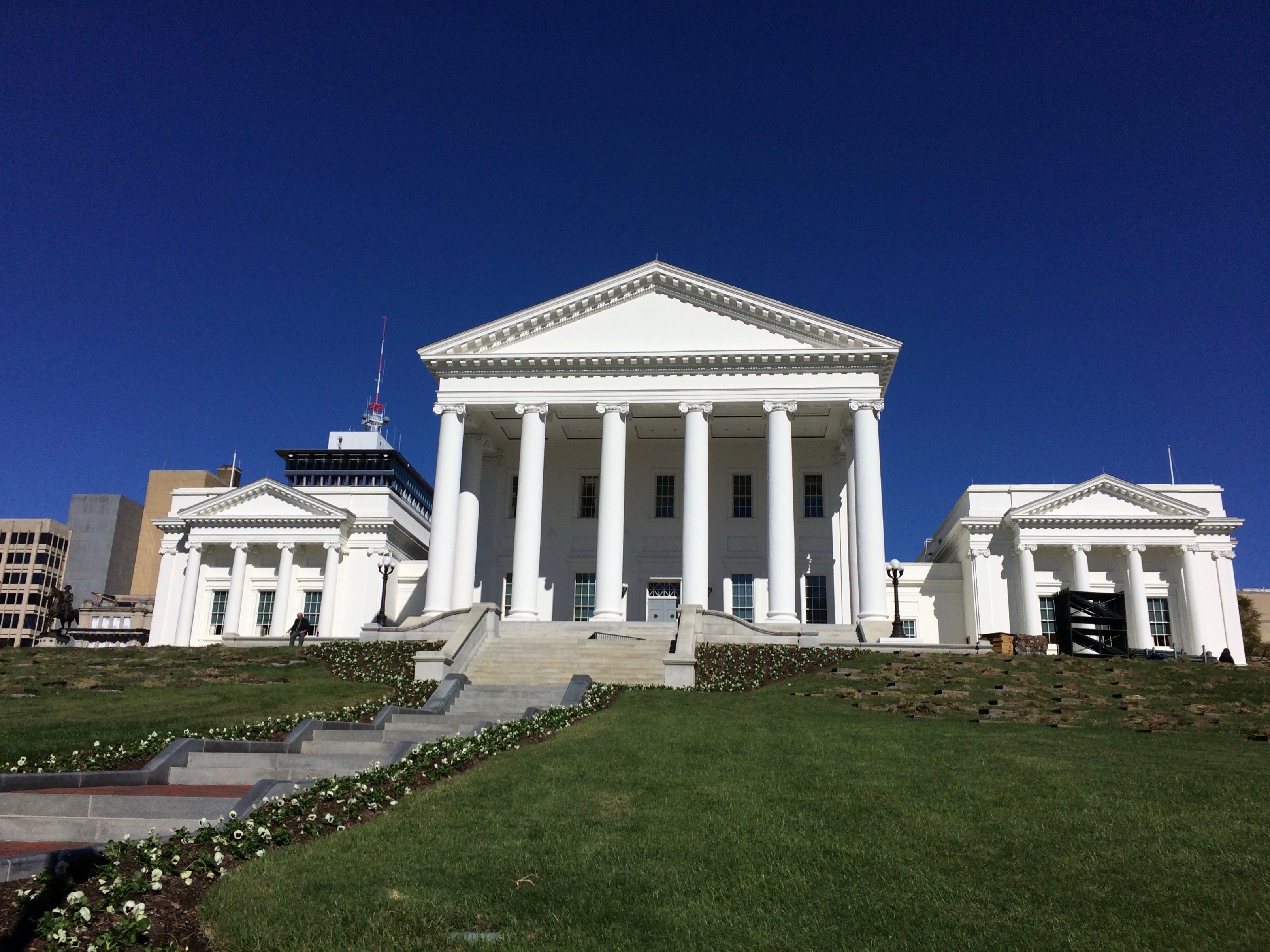
Virginia's capitol building in Richmond.

Climate advocates felt hopeful last fall when Democrats won control of both the Senate and House with promises to protect the commonwealth’s climate laws, including the Virginia Clean Economy Act (VCEA) and the Clean Car Standard. It seemed possible the General Assembly might pass much-needed initiatives modest enough to avoid a veto from a Republican governor.   

Apparently not. Democrats did fend off attacks on the VCEA and Clean Cars, and killed a lot of terrible bills. Through the budget process, they’re trying to require Virginia’s renewed participation in the carbon-cutting Regional Greenhouse Gas Initiative. But Gov. Youngkin won’t even get his shot at most of the priority bills from the environmental community. Of the bills that did pass, most were so watered down as to make their usefulness questionable. A few bills died even when they went unopposed. Some successful bills seem likely to add to Virginia’s energy problems rather than help solve them.

A lot of the blame can be laid at the feet of Dominion Energy, which took a bipartisan drubbing in the 2023 session, but was back this year stronger than ever like a plague that surges when we let our guard down.

But that’s only half the story. As a party, Democrats seemed to have simply lost interest in the fight. Climate change may be an urgent issue in the rest of the world, but in Virginia, a lot of lawmakers seem to think they already checked that box. 

Two steps forward

In the spirit of optimism, let’s start with the positive highlights of the session, though admittedly they were more like flashlight beams than floodlights.

Most consequential for the energy transition is legislation establishing a statewide green bank, a requirement for accepting hundreds of millions of dollars in federal funding for clean energy projects. The House and Senate versions are different and will go to a conference committee. A show of opposition from Republicans in both chambers could attract a veto, but most governors welcome free money.

Similarly, new legislation directs the Department of Energy to identify federal funding available to further the commonwealth’s energy efficiency goals. 

Another encouraging piece of legislation updates and expands on existing energy efficiency requirements for new and renovated public buildings, a category that would now include schools. Provisions for EV charging capabilities, resilience measures, and onsite renewable energy and storage are included. The measure attracted only a couple of Republican votes, so it may be at risk of a veto.

Another change will bring sales of residential rooftop solar within the consumer protections that apply to other contractors. Virginia’s Board for Contractors will be required to issue regulations requiring relevant disclosures.

The net metering law that supports customer-sited solar will now include provisions for the leasing of solar panels and the use of batteries under a measure that is not expected to draw a veto. A solar facility paired with a battery of equal capacity will be exempt from standby charges, and the customer may use the batteries in demand-response and peak-shaving programs. Though none of the bill’s provisions were controversial, Dominion exacted a price in the form of a line directing the SCC to “make all reasonable efforts to ensure that the net energy metering program does not result in unreasonable cost-shifting to nonparticipating electric utility customers.” Our utilities hope this will undermine the current full retail value for net metered solar when the SCC considers the future of net metering in proceedings later this year and next year. 

bill to require the Board of Education to develop materials for teaching students about climate change passed mainly along party lines. 

Another bill allows, but does not require, local governments to create their own “local environmental impact funds,” to assist residents and businesses with the purchase of energy efficient lawn care and landscaping equipment, home appliances, HVAC equipment, or micro mobility devices (like electric scooters). Almost all Republicans voted against it, so modest as it is, it may draw a veto.

Both chambers have agreed to request the SCC form a work group to consider a program of on-bill financing for customer energy projects such as renewable energy, storage and energy efficiency improvements. The SCC will also be asked to study performance-based regulation and the impact of competitive service providers. Dominion will now also have to assess the usefulness of various grid enhancing technologies in its Integrated Resource Planning at the SCC.

Efficiency advocates had high hopes for a bipartisan measure they dubbed the SAVE Act to strengthen requirements for Dominion and APCo to achieve energy efficiency savings and to make it easier for efficiency programs to pass SCC scrutiny. Unfortunately, the final legislation does almost nothing, with most improvements pushed off to 2029.  

bill passed that designates each October 4 as Energy Efficiency Day. (I said these were small victories.)

https://virginiamercury.com/2024/01/25/as-youngkin-takes-an-axe-to-the-deep-state-what-could-possibly-go-wrong/embed/#?secret=WWoGYRV68g#?secret=u72DtPLbbq

Finally, in a rejection of one of the more inane initiatives of the governor’s regulation-gutting agenda, both Houses overwhelmingly passed legislation preventing changes to the building code before the next regular code review cycle. I imagine the governor will have to veto the bill, and Republican legislators will then be caught between party loyalty and a duty to govern intelligently, but any way you look at it, eggs are meeting faces.

Two steps back 

Failure to pass a bill might seem to leave matters where they are, with no winners or losers. Inaction in the face of climate change, however, means we lose time we can’t afford to waste.

Inaction can also have devastating consequences in the here and now. Solar projects on public schools and other commercial properties in Dominion Energy’s territory have been delayed or outright canceled for more than a year due to new rules imposed by Dominion in December of 2022 that raised the cost of connecting these projects to the grid exponentially. Legislation promoted by the solar industry and its customers would have divided responsibility for grid upgrades between the customer and the utility, while giving Dominion the ability to recover costs it incurred. Through its lobbyists’ influence on legislators, Dominion killed the bills not for any compelling reason, but because it could. 

Dominion’s obfuscations and half-truths often work magic when the subject is technical. But of all the votes taken this year on energy bills, this one actually shocks me. No one listening to the committee testimony could have misunderstood the significance of the legislation, affecting dozens of school districts and local governments. In desperation, the solar industry offered amendments that (in my opinion) would have given away the store, to no avail.  

A cross-check of votes and campaign contributions shows the legislation failed due to the votes of committee members who happen to accept large campaign contributions from Dominion. This dynamic tanked a number of other climate and energy bills as well, and underlines why utilities must be barred from making campaign contributions.  

Dominion’s influence also killed a priority bill for the environmental community that would have required the SCC to implement the Commonwealth Energy Policy, slimmed down SCC review of efficiency programs to a single test, increased the percentage of RPS program requirements that Dominion must meet from projects of less than 1 megawatt, and increased the percentage of renewable energy projects reserved for third-party developers. Two other bills that were limited to the Commonwealth Energy Policy provision also failed.

Dominion’s opposition was also enough to kill a bill designed to expand EV charging infrastructure statewide, especially in rural areas, in part by protecting gas station owners who install electric vehicle charging from competition by public utilities. Sheetz and other fuel retailers testified that they want to invest in charging infrastructure but won’t take the risk as long as Dominion can install its own chargers nearby. The reason is that using ratepayer money allows a public utility to undercut private business. Other states have dealt with this by prohibiting utilities from getting into the EV charging business. Here, the retailers asked for 12 miles between themselves and any utility-owned chargers. Dominion opposed the bill, and the fuel retailers lost in subcommittee. A second bill that would have created an EV rural infrastructure fund passed the House but could not get funding in the Senate. 

Bills in both the House and Senate would have required most new local government buildings to include renewable energy infrastructure, especially solar. The House bill, though unopposed, was killed by Democrats in Appropriations because a fiscal impact statement erroneously said it might cost something, in spite of bill language exempting situations where the improvements would not be cost-effective. Then the same committee felt tradition-bound to kill the Senate bill when it came over, although that bill carried no fiscal impact concerns and it was by then clear that killing the House bill had been a mistake. A foolish consistency is the hobgoblin of little minds, but also of mindless rules.  

Moving along: all of the bills that would have put limits on the ability of localities to bar solar projects in their jurisdictions failed, as did legislation that would have given solar developers essentially a right to appeal an adverse decision to the SCC.

None of the many bills supporting customer choice in electricity purchasing passed. Legislation to allow localities to regulate or ban gas-powered leaf blowers also failed, as did a bill that would have required Dominion and APCo to reveal how they voted in working groups advising grid operator PJM. This bill passed the House but, like so many others, it died in the heavily pro-utility Senate Commerce and Labor committee.

Two steps sideways?

Community solar, known as shared solar in Virginia, staggered a few steps forward, or maybe just sideways. Readers will recall that the Dominion program authorized in 2020 has proven a success only for low-income customers who don’t have to pay the high minimum bill Dominion secured in the SCC proceeding that followed enactment.  

Trying to make the program work for the general public was the goal of legislation that advanced this year but may or may not help. As passed, the compromise language offers an opportunity to expand the program a little bit and to take the argument about the minimum bill back to the SCC with a different set of parameters.  

In addition to modifying the program in Dominion territory, shared solar now has a modest opening in Appalachian Power territory under a similar bill. Again, the final bill offers far less than advocates hoped, and it lacks even the special provisions for low-income subscribers that make the original Dominion program work at all. Like Dominion, APCo fought the bill, though unlike Dominion, APCo’s rate base has been shrinking, so losing customers to alternative suppliers is a more legitimate concern. 

(At least for now. All APCo needs to do to reverse the decline is to lure a couple of data centers from up north. Data centers are such energy hogs that they would swamp any losses from shared solar, and residents of NoVa would be glad to forgo a few. Or for that matter, a few dozen.) 

Other new measures garnered support from many in the environmental community, but don’t really move the needle. One allows geothermal heat pumps, which reduce a building’s energy demand but don’t generate electricity, to qualify under Virginia’s renewable portfolio standard (RPS). Another allows an old hydroelectric plant to qualify for the RPS, a move that adds no new renewable energy to the grid but means the electric cooperative that gets the electricity from the plant can now sell the renewable energy certificates to Dominion and APCo.

Lying down and rolling over

In the face of the single greatest threat to Virginia’s — and the nation’s — energy security and climate goals, the General Assembly’s leaders chose to do nothing. In fact, doing nothing was their actual game plan for data centers. A quick death was decreed for legislation requiring data centers to meet energy efficiency and renewable energy procurement requirements as a condition of receiving state tax subsidies. Also killed were a bill that sought to protect other ratepayers from bearing the costs of serving data centers, and more than a dozen bills dealing with siting impacts, water resources, noise abatement, undergrounding of transmission lines and other location-specific issues. 

The excuse for inaction is that the Joint Legislative Audit and Review Committee is undertaking a study to examine the energy and environmental effects of data centers. However, legislators did not impose a concomitant pause in data center development while the study is ongoing. Instead, for at least another year, Virginia’s leaders decreed that there will be no restraints or conditions on the growth of the industry, even as ever more new data center developments are announced and community opposition increases. 

And falling for the boondoggle

Nuclear energy has always had its true believers at the General Assembly, and the prospect of small modular reactors (SMRs) has excited them again. Many of the same legislators who busied themselves killing climate and energy bills this year insist Virginia needs SMRs to address climate change. They are more than happy to let utilities charge ratepayers today for a nuclear plant tomorrow — or rather, ten years from now, or maybe never if things go as badly here as they did in South CarolinaGeorgia and Idaho.

More cautious lawmakers say if Dominion or APCo wants to go all in on an unproven and risky technology like small modular reactors, they should shoulder the expense themselves and only then make the case for selling the power to customers. 

Dominion has achieved a terrific success rate with boondoggles over the years. (See, e.g. its coal plant in Wise County, spending on a North Anna 3 reactor that was never built, and the so-called rate freeze, followed by the also-lucrative legislation undoing the rate freeze.) By now you’d think more legislators would have joined Team Skeptic. But as always, utility donations and lobbyists’ promises are the great memory erasers. So once again, the General Assembly voted to allow ratepayer money to be spent on projects that may never come to fruition. 

This year APCo is in on the act as well. Two bills, one for APCo and the other for Dominion, will allow the utilities to charge ratepayers for initial work on nuclear plants of up to 500 MW. The final language of both bills requires SCC oversight and imposes limits on spending. That is, for now.

Will the real climate champions please step forward?

This round-up might leave readers thinking there aren’t many lawmakers in Richmond who take climate change seriously. Fortunately, this is not the case. Close to two dozen legislators introduced bills targeting stronger measures on energy efficiency, renewable energy, electric vehicles and utility reform. Del. Rip Sullivan, D-Fairfax, led the pack both in the sheer number of initiatives he introduced and the tenacity with which he pursued them, but he was not alone. 

A few Republicans also supported good energy legislation, and even, in the case of Del. Michael Webert, R-Fauquier, sponsored priority bills like the SAVE Act. With groups like Energy Right and Conservatives for Clean Energy making the case from a conservative perspective, maybe we will see progress towards a bipartisan climate caucus to build on Virginia’s energy transition. 

If that sounds too optimistic, consider that the alternative right now is the near-total inaction that marked this year’s session; we just don’t have time for that.

Unknown's avatar

In this arms race, the public loses

The more things change, the more they stay the same.

A year after Dominion Energy suffered its biggest legislative loss in decades, Virginia’s largest utility is back as the most powerful political force in Richmond. Its influence appears to be greater than ever, powered by campaign donations so large that they warp what it means for legislators to serve the public.

As recently as 2017 I could argue that Dominion did not buy legislators. The amount of money changing hands just wasn’t enough. Former Senate Majority Leader and famous friend-of-Dominion Dick Saslaw received $57,500 over the two-year period 2015-2016. Most rank-and-file legislators got $5,000 or less. It was a lot for those days, but if a politician were going to sell their soul to a utility, you’d expect them to demand a higher price.  

What Dominion’s campaign contributions did buy was access for its many lobbyists, which led to relationships of trust, which in turn produced friendly votes. But if a legislator decided to vote against Dominion’s interest, the threat of losing a few thousand dollars in campaign cash would not have been a serious consideration.

It’s harder to make this case today. The amount of money Dominion contributes to its favored politicians has reached staggering heights. According to the Virginia Public Access Project (VPAP), Dominion has given out more than $11 million in campaign contributions so far in the 2023-2024 cycle, with the top five recipients of its largesse — three Democrats, two Republicans — each receiving at least $400,000. (As in the past, Dominion gives almost equally to Democrats and Republicans.) 

VPAP shows the top recipient is House Majority Leader Don Scott, D-Portsmouth, whose campaign has accepted $720,000 from Dominion in this election cycle. Of this, $125,000 came in on January 5, 2024, five days before the start of the current legislative session. Legislators are not permitted to accept donations during session, presumably to avoid (or at any rate, slightly lessen) the odor of undue influence. 

Scott received a total of 12 donations from Dominion between the end of the 2023 legislative session and the opening of the 2024 session, some of them to his campaign, others to the PAC he controls, from which he doles out donations to other Democrats.

I don’t mean to pick on Majority Leader Scott. Or rather, yes, I do, too, but it’s not just him. House Minority Leader Todd Gilbert, R-Shenandoah, reports receiving over $590,000 from Dominion since last April. Del. Terry Kilgore, R-Scott, has accepted $465,000 this election cycle. 

In the Senate, the top recipient of Dominion dollars is Mamie Locke, D-Hampton, at $515,000 in 2023. Sen. Louise Lucas, D-Portsmouth, reports $400,000 from the utility in 2023. Senate Majority Leader Scott Surovell, D-Fairfax, received “only” $280,000 from Dominion, which almost makes one question the strength of the relationship.  

The reason for the skyrocketing inflation in Dominion campaign contributions can be traced to a single source: the formation of the public interest group Clean Virginia in 2018. Wealthy businessman Michael Bills formed Clean Virginia specifically to counter Dominion’s influence. The deal was that Clean Virginia would donate to campaigns only if candidates agreed not to accept money from Dominion or Appalachian Power.

In its first couple of years, this meant Clean Virginia donated $2,500-$5,000 to most qualifying campaigns, which was more than ordinary rank-and-file members would have gotten from Dominion in the old days. Contributions in 2018 topped out at $12,659 for then-Sen. Chap Petersen, a well-known champion of campaign finance reform. Most, but not all, of those agreeing to eschew utility donations were Democrats, though the offer was nonpartisan. Clean Virginia’s contributions to all campaigns in 2018-2019 totaled $373,119. 

Bills probably had no idea he was setting off a campaign finance arms race. Dominion fought back by increasing its donations to legislators who still accepted its money, causing Clean Virginia to do likewise. The nonprofit’s total contributions skyrocketed to more than $7 million over the 2021-22 cycle — but Dominion doled out over $7.6 million. In just the first year of the 2023-24 cycle, Clean Virginia’s donations totaled over $8.5 million, while Dominion’s exceeded $10.6 million.

Clean Virginia has also matched Dominion in the generosity of its donations. Seven Democrats received $400,000 or more in 2023, with freshman Sen. Russet Perry, D-Loudoun, leading the pack at $593,149. Four Republicans also received Clean Virginia backing, in amounts ranging from $5,000 to $155,000.

Where does this end? So far, at least, Dominion seems to be doubling down. In addition to increasing campaign contributions tenfold, Dominion has nearly doubled the ranks of its lobbyists, from 16 in 2017 to 31 today, at a cost of millions of dollars more. Add in the gifts its charitable arm makes to pet charities of legislators it wants to curry favor with, and all this political influence gets very expensive. Clearly, Dominion believes it makes a return on its investment in the form of favorable legislative outcomes, or it wouldn’t be doing this. (And this legislative session seems to be proving it right, as I’ll discuss in my next column.) But how long will Dominion’s shareholders be willing to keep this up?

For his part, Michael Bills seems to have dug in for the long haul. No longer content to serve as just a counterweight to utility money, Clean Virginia has expanded its own team of lobbyists and become an advocate for ratepayer interests at the General Assembly. Its donations swamp those of all other public interest groups, including the environmental groups that have traditionally battled Dominion. But almost all of Clean Virginia’s funding comes from Bills. How long will he keep this up?

Ironically, the more money gets spent by both sides, the harder it may be to get campaign finance reform passed. The arms race may be just too lucrative for all legislators. 

Take what happened this year with Clean Virginia’s priority bill from Sen. Danica Roem, D-Prince William, which would bar campaign contributions from public utilities. Dominion opposed the legislation, as it always does. Nonetheless, the bill passed out of the Privileges and Elections committee on an 8-6 vote. The vote fell along party lines, but more telling was the fact that none of those supporting the bill accept money from Dominion; all those who voted against it do. 

The vote should have meant clear sailing to the Senate floor, but Louise Lucas, the powerful Chair of Senate Finance (and a Democrat), insisted on the bill being re-referred to Finance, where she never put it on the docket. As a result, the rest of the Senate never voted on it. 

Lucas, as noted before, accepted $400,000 from Dominion in 2023, four times as much as she received from the next largest donor, a homebuilder executive. Whether Dominion gave her so much money because of her long history of supporting the utility’s interests, or whether she supports the utility because they give her so much money, ultimately doesn’t matter. 

Almost all of the campaign reform bills introduced this year are now dead, most from the same kind of machinations that killed Roem’s bill. Sadly, it’s not just Dominion allies doing the killing. As the Mercury reported, the House counterpart to Roem’s bill died when not a single one of the 22-member House Privileges and Elections Committee made a motion for or against it, including those on Clean Virginia’s good-guy list. Their inaction may well have been on orders from their leadership, but the result is that the arms race continues.

However our senators and delegates justify their votes, this is bad for democracy. If a legislator can count on an easy $200,000 by taking Dominion money, or a just-as-easy $200,000 by not taking Dominion money, there’s a growing danger of small donors – of small voices  – becoming irrelevant.

And with the failure of election reform legislation this year, I’m afraid it will just get worse.

This post was first published in the Virginia Mercury on February 27, 2024.

Update: A colleague (not associated with Clean Virginia) wrote to complain that I had unfairly equated Dominion, a profit-seeking business entity, with Clean Virginia, a non-profit public interest group, making donations from both equally problematic. I would have said it is obvious that the public interest is not a special interest, but I have now made a memo to myself: if it goes without saying, say it anyway.

Unknown's avatar

To be or not to be a clean energy state, that is the question

For the third year in a row, a tug-of-war is going on in the General Assembly over whether Virginia stays the course of the energy transition laid out in 2020 and 2021, or rolls it back hard.

Democrats remain committed to a renewable energy future to address pollution, high electricity costs and the causes of catastrophic climate change. Gov. Glenn Youngkin and most Republican legislators cling to the familiar (dis)comfort of fossil fuels. Republicans are still lobbing grenades at the Virginia Clean Economy Act (VCEA) and the Clean Car Standard; Democrats are holding the line on those advances.

Last year House Republicans used small subcommittees to kill Democrats’ energy bills, even those that passed the Senate on a bipartisan basis. This year the Democrats’ slim majority in both chambers will let more bills get to the governor’s desk. But with the threat of a veto tempering expectations, the party of clean energy is not running big, ambitious bills, but is instead focused on solving problems that have popped up along the march to zero carbon.

Committees have already begun work on the hundreds of energy bills filed in past days. That’s too many for even the Mercury’s dedicated readers to review without more caffeine than is good for you, so let’s focus on just some that would have the most consequence for the clean energy transition.

To be: Democrats work to further the clean economy

Many of the Democratic bills contain small fixes to existing law that add up to big gains for clean energy. One of these is HB 638, from Del. Rip Sullivan, D-Fairfax, and SB 230, from Sen. Ghazala Hashmi, D-Richmond. Most of its provisions are tweaks to the VCEA. Among them are increasing from 1% to 5% the percentage of Dominion Energy Virginia and Appalachian Power’s renewable energy purchasing that must come from small projects like rooftop solar; streamlining the State Corporation Commission’s review of energy efficiency programs by creating a single cost-effectiveness test; and supporting competition in the development of renewable energy and energy storage facilities by specifying that “at least”35% of projects must come from third-party developers, instead of the simple 35% number currently in the law. 

The bill also contains a provision that goes beyond the VCEA. It states that the SCC has an “affirmative duty” to implement the Commonwealth Energy Policy at “lowest reasonable cost.” (Two other bills, one from Sen. Jennifer Carroll Foy, D-Fairfax, and the other from Del. Phil Hernandez, D-Norfolk, contain only this provision.) The energy policy is separate from the VCEA, and it sets ambitious goals for the decarbonization of Virginia’s whole economy, including a faster timeline for achieving net zero in the electricity sector. The catch is that the policy does not have teeth, and for that reason it is routinely ignored. Requiring the SCC not just to take account of it, but also to implement it, is a step towards broader decarbonization, though it is not clear how it would actually play out at the SCC. 

Legislation from Sen. Scott Surovell, D-Fairfax and Sullivan would resolve problems with the shared solar program in Dominion territory (including putting restraints on the minimum bill that the utility can charge) and expand it to Appalachian Power territory

SB 79, from Sen. Barbara Favola, D-Arlington, would save taxpayers money by requiring new or substantially renovated (over 50%) public buildings to have solar-ready roofs or, if solar is deemed impractical, to meet one of two high-efficiency alternatives. New or substantially renovated schools would have to be designed and built to net-zero energy standards, unless the locality determines that to be impractical or the school is a historic building. 

Sullivan and Sen. Suhas Subramanyam, D-Loudoun, have introduced legislation to resolve the interconnection problem that has stalled commercial solar projects across Dominion territory. The House and Senate bills specify that customers are responsible for costs on their side of the meter, while the utility pays for costs on its side, including upgrades to the distribution grid. 

A few bills seek to break through the local-level gridlock that has bedeviled utility-scale solar and wind projects. The most significant of these is HB 636from Sullivan and SB 567 from Sen. Creigh Deeds, D-Charlottesville, which provides an alternative permitting process for larger utility solar (50 MW or more), wind (100 MW or more) and renewable energy storage projects (at least 50 MW nameplate and discharge capacity of 200 MWh or more) that go through the local permitting process but end up without permits. Developers get a second chance at the SCC if they meet a list of requirements. These include safeguards for farmland protection, stormwater, setbacks, wetlands, wildlife corridors, etc. Applicants are also charged $75,000 to cover the locality’s cost of participating in the SCC proceeding. (There is some irony here that small projects, which have less impact, are left at the mercy of local whims, while the most impactful projects have what amounts to a right of appeal.) 

Vehicle electrification would also get support from Democratic legislation. One bill of particular interest is Sullivan’s HB 118, which requires Dominion and Appalachian Power to take charge of upgrades to the distribution grid needed to support EV charging by non-residential customers. The utilities are also tasked with filing detailed plans to “accelerate widespread transportation electrification across the Commonwealth in a manner designed to lower total ratepayer costs.” 

Regardless of the fate of these bills, Virginia’s efforts to transition to a zero-carbon economy will be swamped by new demand from the fast-growing data center industry, unless the industry itself can be made part of the solution. A dozen or so bills seek to put conditions on the industry in one way or another, but one takes on the energy demand directly. HB116, from Sullivan, and SB192, from Subramanyam, condition data center operators’ receipt of tax credits on demonstrating compliance with minimum standards for energy efficiency and renewable energy procurement, as well as not using diesel generators for backup power. 

Not to be: Republicans try out arguments against the energy transition 

Many of the Republican anti-clean energy transition bills are blunt instruments that are more about campaigning in Trump country than low-cost energy. For example, HB 397, from freshman Del. Tim Griffin, R-Bedford, would repeal most of the important provisions of the VCEA, while declaring that development of new nuclear is “in the public interest” (a phrase that pretty much means “watch your wallet”). 

Similarly, five bills seek to repeal outright the Advanced Clean Cars law passed in 2021, which effectively put Virginia among the states that follow California’s path to vehicle electrification. The law does not kick in until 2025, but trying to repeal it has become a Republican standby. A more subtle bill from Del. Lee Ware, R-Powhatan, would condition repeal on the Virginia Automobile Dealers certifying that Virginia is not meeting its annual EV sales targets. 

Some anti-EV bills are merely performative. One non-starter, from Griffin again, would provide a tax credit for purchases of vehicles with internal combustion engines. A bill from Sen. William Stanley, R-Franklin, would require any business selling an EV or any EV component to a public body to provide a sworn declaration that there was no child labor involved not just in the manufacturing but at any point anywhere along the supply chain, starting with mining minerals abroad. 

If Stanley were truly concerned about child labor violations, of course, he would seek to apply this sworn declaration requirement to all industries. He could start with the domestic meatpacking industry, where child labor violations are rife, including in Virginia. Ah, if only that were the point. 

It’s not just state-level decarbonization that comes in for a brute-force attack. A bill from another new delegate, Eric Zehr, R-Lynchburg, makes its target any federal regulations that “may threaten the production or supply of affordable, reliable, and secure energy within the Commonwealth.” If alerted to such a threat by a utility or the SCC, the Attorney General’s office would be required to intervene. This sort of bill is not intended to survive its first committee hearing, if it even gets a hearing. Its only purpose is to show off the patron’s hard right bona-fides.

To be fair, there are Republicans who are actually trying to solve real problems in the energy sector. As one example, take SB562 from Sen. Travis Hackworth, R-Tazewell. His bill would create a ratepayer-funded pilot program for utilities to figure out a way to use coalbed methane for electricity without burning it (perhaps with fuel cells?). The problem is, he proposes to make this electricity eligible for Virginia’s renewable portfolio standard (RPS). It’s a creative, if expensive-sounding, response to the real climate problem of methane leaking from old and often abandoned coal mines, part of the true cost of coal. But calling fossil methane renewable is, shall we say, counterfactual. Some problems are more effectively tackled head-on, using tax dollars or tax credits, rather than being used to undermine the integrity of the RPS.

To be: somewhere else entirely

The reality of renewable energy is that we have to build a great many wind, solar and storage projects, each one taking months or years of design, permitting and construction work and requiring acreage we would rather use for something else. Yes, it means economic activity, investment and jobs, but it’s also something of a slog. Wouldn’t it be nice if we had a magic solution that could just provide carbon-free electricity without all that bother?

That’s the dream that continues to attract both Democrats and Republicans to nuclear energy. Opinion is divided on whether small modular reactors (SMRs) could hold the answer to all our energy woes, or are just the latest con from an industry looking to attract a new set of deep-pocketed suckers. 

 Three things are clear at this point. One, SMRs are still many years away from commercialization, coming too late to solve the climate problem that is here and now. Second, SMRs are going to cost a lot. Not only is there no free nuclear lunch, there isn’t even a low-priced breakfast. And third, Dominion is frothing at the bit to build an SMR – but only if customers have to pay for it. 

Some legislators are happy to oblige, even with all these drawbacks. The most concerning of the bills are HB 1323 from Del. Danny Marshall, R-Danville, and SB 454 from Sen. David Marsden, D-Fairfax. The legislation would allow Dominion or Appalachian Power to charge ratepayers “at any time” to recover development costs of a small modular nuclear reactor, defined as a nuclear reactor not larger than 500 MW. Not only is that not small, but by the language of the bill it need not even be modular or use advanced technology. Heck, it doesn’t even have to be in Virginia. Dominion could build any kind of nuclear plant, anywhere it chooses, and satisfy the terms of the bill. 

But it’s that “at any time” language that should be a red flag for lawmakers. Charging customers for a nuclear plant before and during construction, including cost overruns and with no guarantee of completion, is precisely how residents of South Carolina got stuck paying billions of dollars for a hole in the ground

That amount of money buys a lot of low-cost renewable energy and storage, right in the here and now. Virginia needs to be a clean energy state for the sake of ratepayers, the economy and the climate, and there is no time to waste.

This article was first published on January 21, 2024 in the VIrginia Mercury.

Unknown's avatar

Commercial solar has stalled out in Virginia. Fortunately, there’s a simple fix.

 A ribbon-cutting ceremony marked Norfolk Solar’s array installation at the historic Wesley Union AME Zion church in Norfolk in September 2022. (Wesley Union AME Zion Church)

In 2019, Ruth Amundsen and Alden Cleanthes formed a company with a mission to bring the benefits of rooftop solar to low-income communities. Targeting development in Qualified Opportunity Zones, Norfolk Solar installed solar at the historic Wesley Union AME Zion church in Norfolk, the Southside Boys and Girls Club, a Habitat for Humanity ReStore, and other nonprofits. To increase the local benefits, Amundsen and Cleanthes required installers to hire local, low-income and typically minority workers. All told, the company did $2 million in business between 2019 and 2022, while creating jobs for local residents in the clean energy economy.

And then, it all came to a screeching halt. Last December, Dominion Energy Virginia unilaterally imposed new – and prohibitively expensive – interconnection requirements for most commercial solar. A solar array seeking interconnection approval this year faces total project costs that are 20 to 40%  higher than they were last year under the old rules.  

Though Norfolk Solar had hundreds of thousands of dollars of investor money committed to new projects, Cleanthes told me they were forced to break contracts and turn away funders. The company has not done a single project in 2023. 

Nonprofits are not the only victims of Dominion’s move. Plans to put solar on schools and municipal buildings have ground to a halt all across Dominion territory. A community solar project that would have served low-income residents had to be scuttled last December when Dominion demanded the developer install a high-speed fiber optic line that would have increased project costs by 50%.

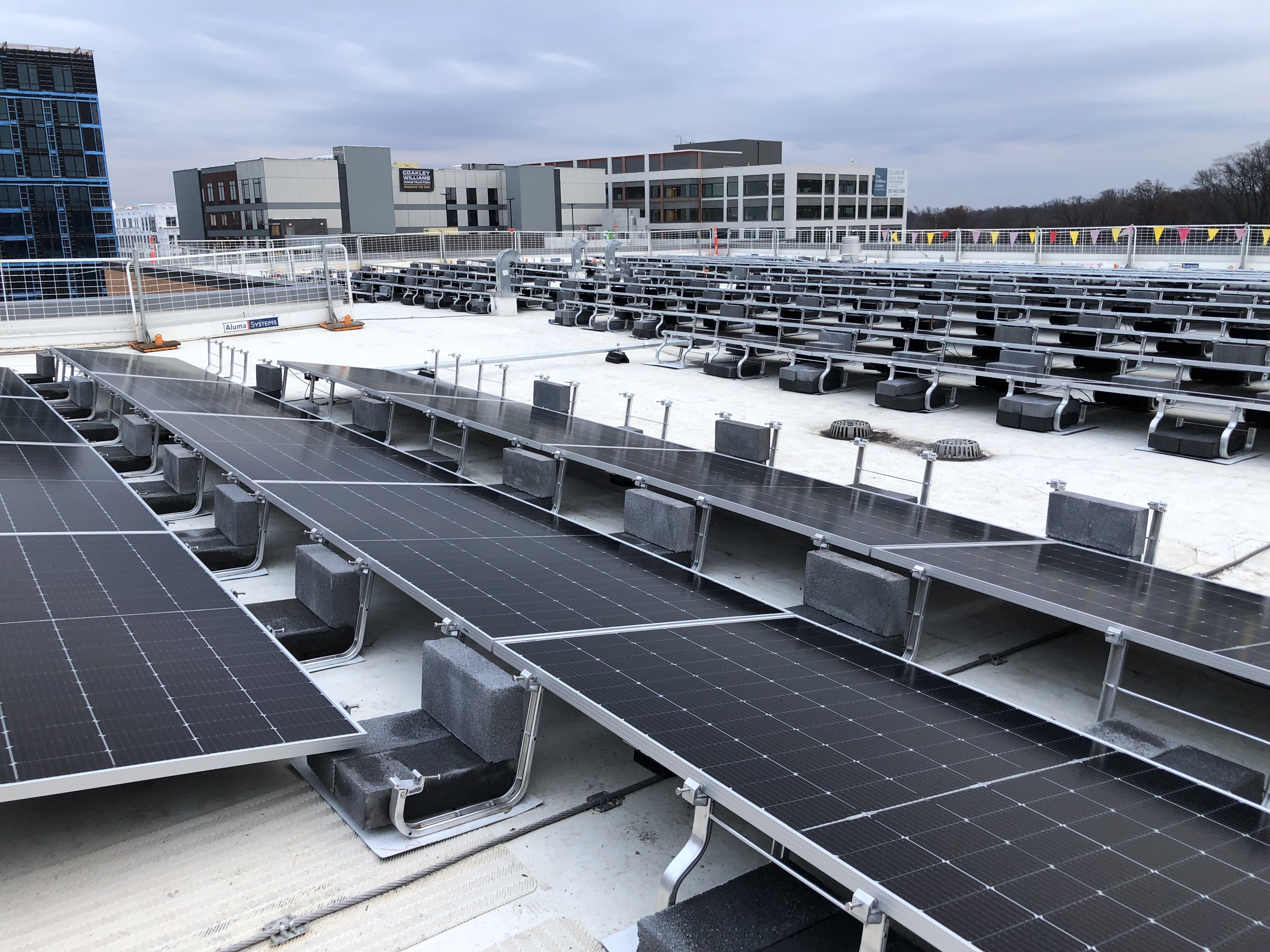
Solar array on high school roof
A new solar array atop Meridien High School in Falls Church received interconnection approval before Dominion imposed onerous new requirements for net-metered solar. Now, advocates fear it may be one of the last projects of its kind built in Dominion’s territory. Photo: Ivy Main

Dominion says its requirements are about safety and reliability. Solar developers challenge that, noting that the equipment they install already meets industry standards, and that other utilities don’t demand the upgrades Dominion wants. They suspect Dominion is trying to offload onto solar customers the cost of grid improvements that Dominion will use for other purposes, and in so doing to crush the small competitors it has battled with for years.  

The details of the dispute are, to put it mildly, highly technical, but the impacts are readily discernible in the near-collapse of Virginia’s commercial solar market. Most noticeably, solar school projects have stalled out across Dominion’s service territory. Schools that were counting on using solar panels to lower their energy costs have been forced to cancel plans.

Cathy Lin, energy manager for Arlington Public Schools, told me she was shocked when the county’s solar developer told her about the increased costs, which she considers exorbitant. “We want to put on more solar,” she said. “We can’t afford to. The extra interconnection fees make solar unaffordable for us.” 

The Distributed Solar Alliance (of which I am a co-founder as a solar advocate) has spent much of this year fighting Dominion at the State Corporation Commission. The SCC ruled in the DSA’s favor on all points in August, but in November an SCC hearing examiner unexpectedly authorized Dominion to impose many of the same requirements on an “interim” basis – with no end in sight. 

Taking off my advocacy hat for a moment, I actually have some sympathy for the hearing examiner. If a utility tells you it has to have the latest in fiber-optic technology and fancy-pants equipment as a matter of safety and reliability, you’d better have a pretty deep understanding of grid technology before you say no. This guy had no expertise. How surprised can we be that he basically punted?

But the results are terrible for an entire sector of Virginia’s economy. The ruling is bad for developers like Norfolk Solar, which will not be able to continue its mission to bring solar and job training to low-income areas. It’s bad for schools, universities and other customers, who can’t afford to complete long-planned projects that were supposed to bring energy savings. 

And though the fight at the SCC is specific to net-metered solar projects between 250 kilowatts and 3 megawatts, allowing Dominion to impose requirements without demonstrating that they’re actually needed has dire implications for all distributed generation up and down the scale – and, logically, even for distributed battery storage and EV charging. 

Really, this result is not even great for Dominion, because relying on a single customer to fund an expensive substation or line upgrade will usually result in no upgrade happening. That’s no way to run a grid.

Fortunately, there is a way to resolve this matter without risking safety and reliability, while at the same time reinvigorating the distributed generation market and allowing stalled solar projects to move forward. 

The General Assembly could simply clarify that solar developers are responsible for safety equipment and other costs of interconnection on the premises. For off site improvements – including new fiber-optic lines, substation upgrades, and other investments that enhance the distribution system for all customers – Dominion should be specifically empowered to undertake this work and recover the costs from ratepayers, subject to SCC approval, as it does for the rest of its grid modernization program.

This approach would tamp down suspicion that Dominion is gold-plating its interconnection requirements as a way of stifling third-party solar. More importantly, it would support the kind of distribution grid upgrades needed to support all the elements of a resilient 21st century grid.

Unknown's avatar

A 5-point plan for Virginia’s data centers

Data center between housing community and a bike path
Data centers increasingly dot the landscape of Northern Virginia, like this one sandwiched between a housing community and the W&OD bike path in Ashburn. Photo by Hugh Kenny, Piedmont Environmental Council.

None of the sessions at last month’s Virginia Clean Energy Summit(VACES) in Richmond were devoted to data centers, but data centers were what everyone was talking about. Explosive growth in that energy-hungry industry has everyone — utilities, the grid operator, and the industry itself — scrambling to figure out how Virginia will provide enough new power generation and transmission. And, worryingly, no one seems to have an answer. 

Or rather, lots of people have answers, but none of them achieve the trifecta of providing data centers the energy they need while continuing the explosive growth trajectory that state leaders seem to want, and at the same time keeping Virginia’s transition to zero-carbon energy on track. Something has to give. Which will it be?

With no action, the “give” comes from the people of Virginia. Residents will see growth they don’t want, pay for infrastructure that doesn’t serve them, suffer from pollution that is not of their making, and see their tax dollars subsidize an industry that employs almost no one.

The no-action option isn’t a solution

But first, a quick recap. Northern Virginia already has the largest concentration of data centers in the world. As of late 2022, data center electricity demand had grown to 21% of Dominion Energy Virginia’s entire load, and likely an even larger percentage of the load of Northern Virginia Electric Cooperative (NOVEC), which serves much of Data Center Alley.

Worse, the industry is just getting started. Grid operator PJM’s grid forecast projects Dominion’s data center load will quadruple over the next 15 years, while NOVEC’s will rise to ten times what it is today. Other rural electric cooperatives in Virginia told PJM they also expect a huge demand from data centers, a prediction confirmed by news that Amazon Web Services expects to spend $11 billion on data centers in Louisa County, in the territory of Rappahannock Electric Cooperative. 

In its Integrated Resource Plan (IRP) filing in May of this year, Dominion told the State Corporation Commission (SCC) that due to data center demand, it plans to ignore Virginia’s commitment to achieving a zero-carbon economy. Instead of increasing the pace of renewable energy and storage construction, it wants to keep coal plants running past their mandatory retirement dates and even build new gas combustion turbines as well as billions of dollars’ worth of new transmission infrastructure. The result will be higher costs for consumers and massive increases in carbon emissions, violating the carbon-cutting mandate of the Virginia Clean Economy Act. 

Bill Murray, Dominion senior vice president for corporate affairs and communications, seems to have tried for a more conciliatory tone in talking to Senate Finance Committee members last week about the challenge of meeting data center load. Murray is quoted in the Richmond Times-Dispatch telling members, “We have worked through these challenges before.” Isn’t that reassuring? If only it were true. 

If Dominion’s response has been less than adequate, others have not done better. PJM, already woefully behind on approving new renewable energy generation interconnection requests, blames states for wanting clean energy rather than doing its own job to help the market provide it. A PJM representative told the VACES audience utilities should just keep their fossil fuel plants running until it can work its way through the backlog, hopefully by 2026.

Virginia’s Data Center Coalition doesn’t see energy as its problem to solve, and its members seem strangely content to run on fossil fuels. Others in the industry are trying to do better, though. Whole conferences are devoted to the subject of lowering the carbon footprint of data centers. In addition to a pledge to use renewable energy 24/7, Google has achieved remarkable levels of energy efficiency (for you nerds, they claim an average PUE of 1.1). Google, however, has only a small footprint in Virginia. 

Amazon Web Services, the biggest data center company in Virginia, buys renewable energy but is not striving for the 24/7 standard. AWS’ senior manager for energy and environment public policy, Craig Sundstrom, told a panel at VACES that by 2025, AWS will have offset its use of grid power with purchases of renewable energy on the PJM grid, and he pointed to 16 solar projects the company has in operation or under development in Virginia. That’s a great start, but it’s only a start. With no battery storage in the mix, AWS will still be using grid power from fossil fuels most of the time.

Wishful thinking will not solve this 

So what should data centers do? Or, since most of the industry doesn’t want to do anything, what should Virginia utilities and policymakers do? 

VACES conference attendees had a few suggestions. The nuclear energy true believers were there, touting small modular reactors (SMRs). Gov. Youngkin and many Virginia legislators are fans of nuclear, but the timing was unfortunate. A few weeks after VACES, the first SMR in development — the one that’s supposed to prove how great the technology is — lost its customers due to increasing cost projections. The chances of SMRs ever outcompeting solar paired with storage seems more remote than ever.

Green hydrogen, a vital part of our energy future, has cost and availability problems right now, too. Microgrids powered by hydrogen fuel cells would be a fantastic solution. I’ll set my alarm for 2030 to check on how that’s going. 

Meanwhile, representatives of Washington Gas and Roanoke Gas earnestly tried to sell the VACES audience on the virtues of methane captured from wastewater treatment plants and hog waste cesspools like those at Smithfield Farms’ concentrated animal feeding operations (CAFOs). 

Some of this so-called renewable natural gas (RNG) may be available now, but it is exceedingly hard to imagine there would ever be enough to supply even the back-up generators at Virginia data centers, to say nothing of meeting 21% (and growing!) of Dominion’s total load. North Carolina has incentivized pig waste biogas for many years, but it still makes up only a fraction of a percentage point of that state’s energy supply.

To hear the gas folks tell it, though, RNG is not just carbon-neutral but carbon-negative, achieving this Holy Grail status by capturing and burning methane that would otherwise escape into the air. They assert that mixing a mere 5% of this biogas into ordinary fossil methane will effectively decarbonize the entire pipeline. In other words, we should be glad CAFOs are such an environmental disaster. 

That dog won’t hunt. If gas companies get to claim the virtues of pig waste biogas, they also have to account for its vices, including the greenhouse gas emissions and other pollution associated with methane capture and leakage throughout collection and delivery.

Also, if factory farming is the answer to the needs of data centers, God help us. Maybe the tech industry should move to Iowa. 

A better approach

One of the better ideas coming out of VACES was a simple one: if clean energy can’t come to the load, the load should go to clean energy. Iowa, in fact, is just one of several states that get more than half their electricity from wind and solar. And indeed, some large tech companies are looking at separating their operations between those that are time-critical and need to be next to load centers and those that don’t, with the latter able to take advantage of better climates and greener energy.  

Tech companies don’t necessarily have to look beyond Virginia to take their operations to clean energy. Nothing prevents them from locating in rural counties where they can surround their data centers with fields of solar panels and banks of batteries. For that matter, a large operator like AWS could buy offshore wind, starting with the Kitty Hawk project that is still seeking a customer

Many Virginia data center operators, though, will still need to access the PJM market. They should be expected to follow Google and buy renewable energy and storage to meet at least most of their electricity needs on a 24/7, hourly matching basis. Given the PJM bottleneck, they will need a grace period of two or three years. After that: no renewable energy, no tax subsidy.

That’s point one of our data center strategy. Point two: data centers that have to source their own renewable energy will be motivated to use less energy, but Virginia can also set an energy efficiency minimum they should meet to qualify for Virginia’s tax subsidies. They need not match Google’s success, but they should come close.  

Point three: Dominion claimed in its IRP that it could not build enough solar itself to meet the soaring data center demand; this was its excuse for keeping expensive coal plants running beyond their planned retirement dates. If Dominion can’t build it, let others do it. The General Assembly should remove the 35% limit on the amount of solar and storage capacity that third-party developers can provide. A little free-market competition never hurt anyone.  

Point four: If the growth of data centers requires utilities to invest more for energy generation and power lines, the data centers should be the ones paying the extra cost, not residential customers. 

Point five: Leaders should not separate the joy they feel in attracting data centers from the pain their constituents feel in living with data centers and transmission lines, breathing pollution from diesel back-up generators and having the quality and quantity of their freshwater resources threatened. Data center developers and revenue-hungry local governments are not the appropriate decision makers for development at this scale. The administration should convene a task force with the job and power to do comprehensive planning for data center siting, development and resource use. 

Adopting these five points will not stop data centers from locating in Virginia, and that isn’t the goal. What it will ensure is that the development is well planned out, fair and equitable to everyone.

This article appeared in the Virginia Mercury on November 21, 2023.

Unknown's avatar

Up for a vote in this election: clean energy, data centers and utility influence

Virginia voters will decide next month who will represent them at the State Capitol in January.

How much do Virginia’s elections matter in an off year? Measured by the turnout in past elections, you’d think the answer is “not much.” The percentage of registered voters who show up at the polls in Virginia typically drops well below 50% when no federal or statewide candidates are on the ballot. 

But measured by how much the outcome of this year’s election could affect the lives of regular people, the battle for control of the Virginia Senate and House of Delegates matters enormously. With a Republican in the governor’s mansion, a Democratic edge in either or both chambers would continue the status quo of divided government and (mostly) consensus-based lawmaking. A Republican takeover of both chambers, on the other hand, would lead to a wave of new legislation imposing the conservative social agenda on abortion, gay rights, transgender issues, education and welfare.

It would also put an end to Virginia’s leadership on climate and clean energy and lead to costly initiatives protecting fossil fuels, at the expense of consumers and the environment.

Some of the divisions between the two parties are well-known, and the consequences of one party edging out the other are clear. For some issues, however, the party positions are not as obvious, and it takes a look under the hood to understand where elections matter. 

Virginia’s clean energy transition is at risk

Let’s start with the obvious: the broad framework of Virginia’s energy transition to clean energy is a signature achievement of Democrats that Republicans have in the crosshairs. 

Three and a half years ago, Virginia made history as the first Southern state to commit to zero-carbon electricity by 2050 with detailed and specific guidance. The next year, the General Assembly followed up with legislation to begin the transition to electric vehicles. 

Clean energy investments soared after passage of the Virginia Clean Economy Act (VCEA). Solar installations in 2020 and 2021 dwarfed previous numbers, and the state solar market is now a $5.1 billion industry employing over 4,700 workers. Private investment dollars have poured into small-scale renewable energy as well, funding solar on schools, churches and government buildings. 

The VCEA’s support for offshore wind gave that industry the certainty it needed to move beyond the pilot project stage. Foundations for the first of 176 turbines of the Coastal Virginia Offshore Wind project are currently on their way to the Portsmouth Marine Terminal. By the end of 2026, the turbines are expected to provide enough electricity to power more than 600,000 homes. 

Communities benefited from Virginia’s entry into the carbon-cutting Regional Greenhouse Gas Initiative (RGGI), as $730 million in new revenue flowed to the Commonwealth for flood mitigation and low-income home weatherization. 

And after passage of the Clean Cars law, sales of electric vehicles in Virginia are set to double by the end of next year, and to double again by 2026.

In 2021, however, the election of Gov. Glenn Youngkin and a narrow Republican majority in the House of Delegates put these gains at risk. Early on, Youngkin declared his intent to repeal the VCEA and the Clean Cars law and pull Virginia out of RGGI. Only a Democratic majority in the Senate stopped legislative rollbacks passed by House Republicans in 2022 and 2023. Loss of that majority would ensure repeal of Clean Cars and the evisceration of VCEA.

As for RGGI, the failure to repeal the law led Youngkin to attempt to pull Virginia out through an administrative rulemaking that will be contested in court. He could sidestep a court battle and do it legally through legislation if his party takes control of the General Assembly. 

“No-brainer” bills killed in small committees

While a clear divide separates the two parties on signature Democratic initiatives like VCEA and RGGI, party membership is the determining factor on other energy and climate bills in less obvious ways. House rules allow a subcommittee consisting of as few as 5 members to vote down a bill by majority vote, keeping it from being heard by the full committee. With Republicans in control of the House, every subcommittee has a Republican majority, and Democratic bills routinely die on 3-2 votes. This can be true even if a bill has already passed the Senate, and even if the Senate vote was bipartisan – or for that matter, unanimous.

The Senate operates very differently. There, a subcommittee can only make recommendations. It takes a vote of the full committee to kill a bill in the Senate. 

You might wonder: if a bill is such a no-brainer that it passes the Senate unanimously or by a wide bipartisan majority, why would it get voted down in the House at all? Wouldn’t the bipartisan endorsement suggest this is actually a good bill that even the party in charge of the House would want to support, or at least have heard in full committee?

Indeed, when a no-brainer bill is killed in a tiny House subcommittee along party lines, it is rarely because the bill’s patron just happened to find the only few people in the General Assembly who don’t like the bill. More typically, it’s because the governor or the caucus itself has taken a position against the bill, but doesn’t want to draw attention to that fact. The subcommittee members tasked with doing the killing let everyone else in the party keep their hands clean. 

This explains the fate of Fairfax Democrat Sen. Chap Petersen’s bill to study the effect of data centers on Virginia’s environment, economy, energy resources and ability to meet carbon-reduction goals. The bill passed unanimously by voice vote in the Senate before dying at the hands of three Republicans in a five-person subcommittee of the House Rules committee. 

The data center study was the very definition of a no-brainer bill. The unbridled growth of data centers has ignited protests in communities across Virginia, and the industry’s voracious appetite for energy is blowing up Virginia’s climate goals, according to Dominion Energy. How can it be that House Republicans don’t even want to study the issue?

The answer lies in the fact that the Youngkin administration testified against the three data center bills that were heard in the Senate. One of Youngkin’s proudest achievements in office was the deal with Amazon to bring another $35 billion worth of data centers to Virginia. He does not want a study that would bring negative realities to light, so the bill had to die. The Republican members of the subcommittee were merely the executioners.

Another no-brainer bill that never made it to a full committee vote is one that gets introduced year after year: a prohibition on using campaign funds for personal purposes. This year’s legislation passed the Senate unanimously before just five Republicans voted to scuttle the bill in a House Privileges and Elections subcommittee.

My guess is you could not find a voter anywhere in Virginia who thinks legislators should be able to take money donated to their election campaigns and spend it on themselves. Justifying it requires legislators to turn themselves into logical pretzels. 

The combination of unlimited campaign giving by donors and unrestricted spending by the recipients makes it easy for powerful corporations like Dominion Energy to buy influence. Dominion has long been the largest corporate donor to legislators of both parties. The company’s influence has cost consumers billions of dollars and kept its fossil fuel plants burning.

Dominion’s influence was clearly at work this year when a House subcommittee killed a bill from Fairfax Senator Scott Surovell that would have made shared solar available to more Virginians, over Dominion’s opposition. The bill passed the Senate with bipartisan support before losing 4-2 on a party-line vote in a House Commerce and Energy subcommittee. 

It is less clear whether Dominion had a hand in the death of a bill that would help localities put solar on schools. The legislation passed the Senate unanimously before being killed in House Appropriations, again on a straight party-line vote. 

Certainly, there have been plenty of Democrats over the years who have voted for Dominion’s interest time and again. Conversely, not all the no-brainer bills killed by House Republicans reflect a hostility to the energy transition; sometimes the problem seems to be a hostility to environmental protections in general. Thus a bill to require customer notification when water tests show contamination from PFAS – known commonly as “forever chemicals” – passed the Senate unanimously and then was killed in a House subcommittee on, yet again, a party-line vote. 

It would be hard to identify a consistent line of reasoning behind all the anti-environment votes across all the various subcommittees, but the pattern is clear enough. It reflects not just the positions of individual legislators, but a firm party line. 

Whether voters care about these votes now is not clear, mainly because the news media rarely look at the role of the environment, climate and energy in elections. Regardless, these issues will be very much at stake at the polls next month. 

This article originally appeared in the Virginia Mercury on October 4, 2023.

Unknown's avatar

If Dominion’s plan is so bad, is there a better one? (Spoiler alert: yes, there is.)

Courtesy of Lowell Feld, Blue Virginia

In my last column I took Dominion’s Integrated Resource Plan (semi-) seriously, giving the utility the benefit of the doubt in its projections for data center growth and the alleged need for more fossil fuels to keep up with the power demands of that ravenous industry. But as I also noted, Dominion doesn’t deserve to be taken seriously with this document.

Under Virginia law, an Integrated Resource Plan (IRP) is supposed to explain how the utility expects to meet demand reliably and at low cost within the constraints of the law. In this IRP, however, Dominion asked a different question: how to make Gov. Glenn Youngkin happy by keeping fossil fuels dominant regardless of both law and cost. 

Coming up with a favorable answer required Dominion to ignore the Virginia Clean Economy Act (VCEA), create arbitrary limits on solar deployment, use wishful thinking instead of facts and, for good measure, do basic math wrong. They also assume the Youngkin administration will succeed in pulling Virginia out of the carbon-cutting Regional Greenhouse Gas Initiative (RGGI), a move that is being challenged in court. This makes Dominion’s IRP, with its plan to double carbon emissions, a sort of evil twin to a plan from any RGGI state. 

Sure enough, the governor loves it. Elsewhere, however, this evil twin found a cold reception. Experts retained by environmental, consumer and industry groups all agree that this IRP should be chucked in the trash bin and Dominion told to start over.

It’s worth taking a look at the testimony from these groups to understand where Dominion went so badly wrong, and what a better plan might look like. 

It’s all about the data centers

Northern Virginia data centers are the driving force behind Dominion’s plans to burn more coal and gas, but there is some disagreement whether their growth will be absolutely off-the-charts crazy, or merely eye-poppingly huge. Dominion’s IRP projects the data center industry’s power use in its territory will quadruple over the next 15 years, rising from 2,767 megawatts (MW) in 2022 to more than 11,000 MW in 2038. At that point it would represent close to 40% of Dominion’s load. 

Experts testifying in the IRP case believe data center demand won’t reach the dizzying heights Dominion projects. They question whether Virginia communities will accept so much new data center development, given the pushback already evident in localities like Prince William and Fauquier Counties. Their thinking is essentially that if things can’t go on this way, they probably won’t.

They also suggest that some of the demand Dominion expects may also be reflected in the plans of other utilities serving Northern Virginia’s Data Center Alley, leading to double-counting. A load forecast published by grid operator PJM shows that Northern Virginia Electric Cooperative (NOVEC) projects its data center demand to rise from about 400 MW in 2022 to 4,000 by 2028 and 8,000 by 2034. Two other cooperatives project a combined 3,000 MW of data center development in the same time period. 

Aside from data centers, demand for electricity in Dominion territory is flat or declining over the next fifteen years; presumably this is due to the increased efficiency of homes and businesses offsetting the increased demand from electric vehicles and building electrification. 

If you were already experiencing vertigo over Dominion’s data center numbers, and you are now hearing for the first time that Dominion’s numbers represent only half of the total projected data center load coming to Virginia, maybe you won’t find it all that cheering that some of that added demand could be illusory. Still, it is a reasonable point. If you reduce demand by a few thousand megawatts here and there, pretty soon you might not “need” a new gas plant.

As an aside, one Virginia utility stands out for apparently not expecting much in the way of new data centers in its territory. Appalachian Power, which serves customers in Southwest Virginia, West Virginia and Tennessee, has experienced declining demand for years, and rural Virginia leaders would dearly love to see data centers come there. Yet the PJM forecast shows Appalachian Power’s parent company, American Electric Power (AEP), told grid operators it expected only about another 200 MW on top of the 500 MW of data center load it serves across its entire 11-state territory. AEP seems to regard this as quite a lot, which, when compared with what is happening in Northern Virginia, seems rather sweet.

I can’t help but wonder how Gov. Youngkin managed to make a deal with Amazon to bring $35 billion worth of new data centers to Virginia without securing a guarantee that many of the facilities would be located in a part of the state that actually has surplus energy capacity and desperately needs new economic development. Southwest Virginia voters may have put Youngkin in office; you’d think he’d be looking out for them.

Instead of real investment today, Youngkin promises the area a little nuclear plant a decade from now, when and if small modular reactors (SMRs) prove viable. Local leaders must be muttering, “Gee, thanks.”

And this leads to another point raised by several of the experts in the IRP case: All of the load growth Dominion projects is due to a single industry in Northern Virginia; elsewhere, demand is decreasing. Yet, instead of crafting a solution specific to the industry and region experiencing runaway growth, Dominion proposes to build a fossil fuel plant 140 miles away in Chesterfield and a nuclear plant 300 miles away in another utility’s territory.

Gregory Abbott, a former SCC Deputy Director, offers a particularly withering assessment of the IRP in his testimony on behalf of environmental advocacy group Appalachian Voices. Dominion’s computer model, he says, “is proposing supply-side solutions that are not focused on solving the actual problem, are likely unnecessary, and driving costs higher than they should be.”

Although Dominion insists this IRP represents just a “snapshot in time,” Abbott says that’s misleading: The IRP “sets the stage for multi-billion-dollar investments that Dominion’s customers will pay for decades to come. If a future snapshot in time changes, based on new public policy goals or market dynamics, ratepayers are stuck with paying for these sunk costs.” 

Garbage in, garbage out

Abbott and others also note that unlike factories or other high consumers of energy, data center operators can shift some functions to other data centers elsewhere for short periods of time. Dominion could save money and reduce the need for new investments by capitalizing on this capability to develop demand-response programs tailored specifically to this industry. 

Instead, Dominion treated the surge in demand as if it were statewide and spread across all its customers; then it used a computer model to figure out how to meet the soaring demand. 

An expert for the Sierra Club, Devi Glick of Synapse Energy Economics, noted several problems with Dominion’s approach. Among them: the company told its computer model that it couldn’t select energy efficiency as a resource; it had to include gas combustion turbines in 2028; it had to adhere to artificial limits on solar, wind and battery storage; and it had to assume prices for solar that were “substantially higher than industry projections.” Dominion also did not instruct the model to account for proposed (and since finalized) new federal pollution limits that will raise the cost of burning fossil fuels, and miscalculated — by a billion dollars — the penalties associated with failure to meet the VCEA’s renewable energy requirements. 

As they say, garbage in, garbage out. The model did what it was told, and produced plans that limited solar and battery storage, called for new gas combustion turbines and/or SMRs, and kept uneconomic coal plants running past their previously-planned retirement dates. Accordingly, none of the modeled scenarios complied with Virginia law and all would be unnecessarily expensive for customers.

Synapse ran its own computer model that kept most of Dominion’s load and cost assumptions but corrected for the company’s errors and artificial constraints. The results, not surprisingly, show that building more solar and storage and retiring coal plants earlier than Dominion wants to will lower carbon emissions and “reduce costs for Dominion’s ratepayers by between $4.1 and $9.0 billion over the 25-year study period.”  

When Synapse then tweaked the model to reflect the new federal pollution rules and prices for solar and battery storage in line with industry projections, the results saw solar and battery investments soaring, while the “need” for firm capacity such as a new gas plant disappeared altogether during the planning period.  

Clean energy, vindicated

So finally, we begin to see a path forward founded on real data and not constrained by political expediency. With none of its plans meeting the basic requirements of Virginia law, Dominion should be ordered to go back to the drawing board. The company should reexamine its data center load projections and design a demand-response program tailored to that industry. Then it should re-run its computer model with energy efficiency allowed as a resource, with no artificial constraints on battery storage and renewable energy,with federal and state compliance costs associated with fossil fuels fully included and with cost estimates for solar and storage consistent with industry norms.   

The General Assembly has a role to play, too, in ensuring the data center industry does not shift costs onto other customers and cause Virginia to fall short of its carbon reduction goals. Data centers should be required to meet energy efficiency targets and to secure an increasing percentage of renewable energy on their own as a condition of obtaining generous state tax subsidies. Likewise, the State Corporation Commission should be required to ensure that data centers pay for the transmission upgrades they need. Finally, the General Assembly should pass the data center study bill adopted by the Senate this year before being killed in the House.

Finally, it’s clear that the computer models will select as much low-cost solar as they are allowed to, so the General Assembly should make it easier to build solar projects at competitive rates. They can do this by further opening the market to third-party developers, who are currently constrained by an interpretation of the VCEA that caps their share of the solar Dominion procures at 35%.

The SCC will hold a hearing on the IRP beginning September 18.

An earlier version of this article appeared in the Virginia Mercury on September 5, 2023.

Unknown's avatar

Why are Dominion Energy’s customers footing the bill for Virginia’s data center buildout?

Dominion Energy headquarters, Richmond, VA


Virginia’s embrace of the data center industry produced new fallout this spring when Dominion Energy Virginia released its latest Integrated Resource Plan (IRP). With data center growth the “key driver,” Dominion projects a massive increase in the demand for electricity. As a result, the utility claims the state-mandated transition to clean energy is now impossible to achieve. 

Jettisoning its commitment to the Virginia Clean Economy Act (VCEA), Dominion proposes to keep running uneconomic coal and biomass plants that were previously slated for closure, build a new fossil gas plant and pay penalties instead of meeting state renewable energy targets, all of which mean higher costs for customers.

As I said at the time, this IRP is primarily a political document aimed at currying favor with a gas-loving governor. It is not a serious plan. For example, a Sierra Club filing with the State Corporation Commission describes how Dominion put artificial constraints into its computer modeling (including limits on new solar) to ensure the plan came out fossil-friendly. Moreover, Dominion’s demand projections are inflated, according to the clean energy industry group Advanced Energy United.

But for the sake of discussion, let’s take the IRP at face value. And in that case, I have some questions. How did Dominion let itself get blindsided by the data center growth spurt? Why are the rest of us expected to pay for infrastructure that’s only needed for data centers? Does the Governor understand that his deal to bring another $35 billion worth of new Amazon data centers to Virginia  is driving up energy rates for everyone else? 

Oh, and while I’m at it, are tech company commitments to sourcing renewable energy just a pack of lies?

Virginia’s data center problem is well known. Northern Virginia has the largest concentration of data centers in the world, by far. Data centers are Dominion’s single largest category of commercial power users, already consuming more than 21% of total electricity supply and slated to hit 50% by 2038. In addition to the new generation that will be required, data centers need grid upgrades including new transmission lines, transformers and breakers, with the costs spread to all ratepayers. 

Residents are not happy. Controversy around data centers’ diesel generators, their water use, noise and visual impacts have spread outward from Loudoun County into Prince William, Fauquier, and even other parts of Virginia as massive new developments are proposed. 

Data center developers don’t build without assurance they will have access to the huge amount of electricity they need for their operations, so they have to start discussions with their utility early. Yet in July of 2022, Dominion stunned the data center industry by warning it would not be able to meet new demand in Loudoun County until 2025 or 2026. The utility said, however, that the problem was not generating capacity, but transmission. So, what gives?

Not that it would be better if Dominion anticipated the oncoming tsunami but kept it secret until this spring. You have to wonder whether the General Assembly would have approved hundreds of millions of dollars in grants and tax subsidies for new Amazon data centers in February if legislators understood the effect would be to upend the VCEA and drive up energy costs for residents. 

Some Republicans are no doubt pleased that Dominion’s IRP undermines the VCEA, but they shouldn’t be. Dominion proposes keeping coal plants open not for economic reasons, but in spite of them. These plants were slated for closure in previous IRPs because they were costing ratepayers too much money. Now Dominion says it needs more generating capacity and can’t (or rather, won’t) build enough low-cost solar to keep up with new data center demand.

Dominion also proposes to build a new methane gas combustion “peaker” plant that wasn’t in its last IRP, and again the company points to data center growth as the reason. Peaker plants are an expensive way to generate power; on average, the cost of energy from gas combustion is about double that of a solar/storage combination, or even triple once you factor in federal clean energy incentives.

Keeping the fossil fuel party going instead of embracing more solar isn’t the only way this IRP drives rates higher for customers. Limiting its solar investments means Dominion expects to miss the VCEA’s renewable energy percentage targets by a mile. The shortfall would subject Dominion to significant penalties. The kicker is, Dominion can pass the cost of those penalties  on to ratepayers, too. 

Regardless of your political persuasion, then, this IRP is bad news for Virginia consumers. 

It’s also concerning that the driver of all these higher costs and carbon emissions is the high-tech industry that is so eager to be seen as a leader in sustainability. If these tech companies were meeting their power needs with renewable energy, Dominion wouldn’t be able to claim a “need” to keep its old coal plants belching away.  

Amazon, the number one beneficiary of state data center largesse, says it is the leading corporate purchaser of renewable energy globally. Its website claims the company is “on a path to powering our operations with 100% renewable energy by 2025.” A map shows it has developed around 16 solar projects in Virginia, adding up to over 1,100 megawatts. That’s great, but the company’s Virginia data centers are such energy hogs that they would need many times as much solar, plus a huge amount of battery storage to meet their 24/7 demand. And of course, Amazon’s demand will skyrocket with that next $35 billion in new data centers.

That same map, by the way, shows that Amazon has on-site solar at warehouses and Whole Foods stores all over the Northeast, but none in Virginia. Northeastern states have higher commercial power rates than Virginia does, so on-site solar means bigger bill savings in those states. One cannot help but suspect that Amazon’s commitment to renewable energy is really just a commitment to cheap energy.  

The Data Center Coalition’s filing in the IRP case does nothing to reassure us otherwise. Instead of chiding Dominion for reneging on its clean energy commitments, the Coalition’s Josh Levi essentially argues data centers are so important it doesn’t matter. 

I have no beef with data centers as a general proposition. They are an integral component of today’s economy, and the developments that now drive their explosive growth — machine learning and artificial intelligence — will also help us achieve a zero-carbon future.  

I just think data centers should try a little harder to be part of the solution instead of part of the problem.  

This article was first published in the Virginia Mercury on August 16, 2023.

Unknown's avatar

Law? What law? Pandering to the governor, Dominion’s new plan ignores Virginia’s climate law

Dominion Energy headquarters, Richmond, VA

Last December, Dominion Energy produced a remarkable document: a climate report predicting that by 2040 its electricity supply will be dominated by renewable energy. Coal will be gone by 2030, and methane gas will hang around in ever-smaller amounts, just to fill in the energy gaps. Small modular nuclear reactors (SMRs) probably won’t play a role for at least 15 years, during which time solar will become the mainstay of the electricity supply. According to the report, this strategy will allow Dominion to meet its goal of becoming carbon-neutral by 2050.  

Fast forward a few months, and the same company, using the same information, projects a future full of new methane-burning plants and SMRs. Dominion Energy Virginia’s 2023 Integrated Resource Plan (IRP), released May 1, now insists that the phenomenal growth of the data center industry and, to a lesser degree, the adoption of electric vehicles require so much energy that it can’t possibly meet legally-mandated climate goals. Accordingly, the plan doesn’t even try.

Instead of decarbonizing in accordance with Virginia’s role in the Regional Greenhouse Gas Initiative (RGGI) and the requirements of the Virginia Clean Economy Act (VCEA), Dominion now says it must build new methane-burning plants and keep old, expensive coal plants running “beyond statutory retirement deadlines established in the VCEA.”  All the alternatives examined in the IRP “assume that Virginia exits the Regional Greenhouse Gas Initiative (‘RGGI’) before January 1, 2024,” in violation of Virginia law. Most of the alternatives include the same SMRs its Climate Report recognized as unready. Compared to Dominion’s 2022 IRP update (filed just last September!), now costs have ballooned and CO2 emissions will skyrocket. 

What could possibly have happened in the course of a few months to produce this about-face? The astounding growth projections for the data center industry may be news to many Virginians, but not to the utility that provides their power. Vehicle electrification is hardly a surprise either. SMRs did not achieve any breakthroughs in technology or economics this winter, nor did anyone suddenly discover a way for new gas plants to make sense for the climate or ratepayers. Dominion makes a big deal out of the Christmas cold snap, but you have to try pretty hard to believe that requires upending all previous planning.

What did happen was the 2023 General Assembly session, in which Gov. Glenn Youngkin played a decisive role in handing Dominion a major – and unaccustomed – defeat. With Dominion Energy holding its shareholder meeting today, the company badly needs to show it is back in the governor’s good graces. And the governor, as we know, is not a fan of the energy transition. 

In other words, the IRP is a political document, not a serious approach to meeting Virginia’s electricity needs, at a time when climate change is accelerating and fossil fuels are giving way to superior renewable energy technologies.  

Market watchers will recall that Dominion’s stock price tanked in the fall of 2022, losing more than 30% of its value from August to November. So the company came up with a bill that would have increased the profit margin for its Virginia utility from 9.35% to 10.77%. This number was calculated to improve Dominion’s standing on Wall Street but would cost consumers an extra $4 billion, according to the State Corporation Commission’s estimate. The company also expected to be able to defeat pro-consumer legislation that would return more authority over rates to the SCC.

Dominion’s bill was widely panned, but that hardly made it a non-starter. In past years, the company has gotten what it wanted more often than not, thanks to powerful friends like Senate Majority Leader Dick Saslaw, D-Fairfax, and House Majority Leader Terry Kilgore, R-Scott. This is the beauty of doing business in a state that allows corporations, even public utilities, to supply unlimited campaign donations to elected officials. Over the years, Dominion’s contributions to Republican Kilgore nearly match its contributions to Democrat Saslaw. Most other General Assembly members get contributions from Dominion, too, helping to cement bipartisan support for the company’s priorities.

As the patrons of this year’s money bill, Saslaw and Kilgore should have been able to deliver enough votes from members of both parties to ensure a profitable outcome for their biggest campaign donor. They were not counting on the governor poking holes in the plan. 

Dominion’s beating this year grew from seeds it sowed in 2021. That year, Dominion made a bad bet on Democrat Terry MacAuliffe to win the governorship, secretly funding a dark money group to run ads attacking Youngkin. 

This year, Youngkin took his revenge. As a Wall Street guy himself, he knows how to hit a corporation where it hurts. 

Youngkin forced Dominion to accept changes to the bill that increase the company’s return on equity modestly (and only temporarily), but take away other avenues of profit. Adding insult to injury, the General Assembly also adopted the pro-consumer legislation that allows the SCC to set “fair and reasonable” rates in the future. 

Dominion declared itself satisfied with the result, but Wall Street judged otherwise. The company’s stock, which had started to rally in January, reached a ten-year low this spring. 

Aside from punishing Dominion, the governor achieved none of his energy goals in the legislative session. Rolling back the VCEA, exiting RGGI through legislation, reversing the Clean Car Standard — none of that happened. And as long as the Democrats keep control of at least one chamber in the General Assembly in this fall’s election, none of that is likely to happen. 

So Dominion’s IRP violates Virginia’s laws and the public’s trust (such as it is), makes a mockery of its own climate plan and proposes “solutions” that will drive up both costs and carbon emissions. As a plan, it can’t be taken seriously.  

All that, however, is beside the point. It makes the governor happy. And what makes the governor happy, Dominion hopes, will make its shareholders happy. 

That assumes the shareholders don’t care about climate change, or that they hold values that are as malleable as those of Dominion CEO Bob Blue and the rest of the company’s leadership. 

Climate change? What climate change?

An earlier version of this article was published in the Virginia Mercury on May 10, 2023.

Unknown's avatar

It’s time for Virginia to plan its next offshore wind farm

offshore wind turbines

Virginia’s first commercial offshore wind farm is on track to start construction next year and to be fully operational in 2026.  The Coastal Virginia Offshore Wind (CVOW) project being developed by Dominion Energy will be the single largest offshore wind farm in the U.S. and among the first full-scale commercial wind projects built in U.S. waters. 

Yet it has taken us 10 years to get this far. Future projects will have shorter timelines now that the industry is gaining its footing and government bodies have figured out how to regulate it. Even so, the complexity of planning, permitting and building giant wind turbines 25 miles out in the ocean means Virginia needs to start planning the next project now to ensure that the supply chain businesses that have located here, and the workers we are training to build CVOW, still have reason to remain in Virginia come 2027. 

For most Virginians, offshore wind may still feel experimental because it has produced only two small projects in the U.S.: a 5-turbine wind farm off of Rhode Island’s Block Island built in 2016 and a two-turbine pilot project 27 miles out from Virginia Beach that started generating power in 2020. But at least 30 other projects are underway up and down the East Coast, including one currently under construction off Massachusetts and another off of New York that will begin construction this year. Plans are also underway for wind farms in the Great Lakes, off the West Coast and in the Gulf of Mexico. 

Together these projects add up to more than 53,000 megawatts (MW), exceeding the Biden Administration’s 30,000 MW by 2030 goal – enough to power 10 million homes with clean, renewable energy. According to the U.S. Department of Energy, independent forecasts show that goal to be solidly realistic. The U.S. offshore wind industry itself recently announced a longer-term target of 110,000 MW, reflecting the business community’s expectations for growth. 

The industry is also far more mature in other parts of the world. Global capacity passed the 50,000 MW milestone last year, and the global pipeline stands at more than 368,000 MW. (Surprise, surprise: China is eating our lunch, installing 13,790 MW in 2021 alone.)

Perhaps the most compelling evidence for the promise of the offshore wind industry in the U.S. is the size of industry events. In the course of a dozen years, U.S. offshore wind conferences have gone from gatherings of a few hundred academics, environmentalists and entrepreneurs in a hotel ballroom to the nearly 4,000 business people and hundreds of exhibitors who packed the Baltimore convention center at the end of March for the Business Network for Offshore Wind’s International Offshore Wind Partnering Forum (IPF).

Often the governor of a state hosting one of these annual conferences uses the occasion to unveil new goals or infrastructure investments; Maryland Gov. Wes Moore did not miss his chance this year. He announced that Maryland plans to develop 8,500 MW once the federal Bureau of Ocean Energy Management makes new lease areas available, a goal behind only New Jersey’s 11,000 MW target and New York’s 9,000 MW. Virginia’s goal begins to look cautious by comparison.

The industry does face challenges. Inflation and supply chain issues have disrupted timelines and threatened profitability. There aren’t enough workers. Transmission constraints hinder the ability to get power to customers. Permitting is a pain in the neck. Here in the mid-Atlantic, it’s hard to identify new areas of the ocean suitable for wind farms, in large part because the Department of Defense wants it all for itself. 

Other challenges are more of the good kind, such as the fact that wind turbine sizes are increasing faster than ships capable of transporting and installing them can be built. Larger turbines mean more power at less cost, and no one is quite sure what the upper size limit might be. On land, the difficulty of transporting blades that can be the length of a football field means turbines are limited to about 3 MW. Fabricating parts at coastal facilities allows turbines to scale up as far as physics and advanced material manufacturing allow.

Dominion installed 6-MW turbines for its pilot project, which was seen as the new standard a few years ago. Today the company plans to use 15-MW turbines. Each one of these massive turbines is said to produce enough energy to power 20,000 European households. I have not seen that figure translated into U.S. suburban McMansions, but it is still an eye-popping amount of emissions-free power from a single structure.  

Oh, and Dominion handled the installation ship issue by building its own vessel, which it will rent out for the Massachusetts and New York projects until it is needed for Virginia’s and others in the queue. Problem solved, at least for Virginia, though the industry needs many more ships.  

Will the cost of energy come down? 

Virginia’s CVOW project has been criticized for its high overall cost, largely the result of our immature domestic industry. The Biden Administration has set a goal to lower costs by one-third by 2030. If history is any indication, this should be readily achievable. A National Renewable Energy Laboratory (NREL) analysis shows costs have fallen by more than half since 2016, and projects that by 2030, the levelized cost of energy from offshore wind turbines will fall by another third.  

Scaling up turbines to capture more wind energy is one approach to bringing the per-kilowatt-hour price down. Economies of scale, a U.S. supply chain, and a range of innovative technologies are all expected to contribute. And of course, the Inflation Reduction Act, with its tax credits for domestic manufacturing and renewable energy, is creating a gold rush of sorts, as companies compete to get a piece of the action. 

Another significant factor in reducing costs is automation and machine learning. Some of the gains are incremental, such as optimizing turbine operation and improving turbine siting through improved wind and wake modeling. Other advances seem like windows into a future where robots take charge. Multiple exhibitor booths at IPF displayed crewless, self-piloting survey and depth-monitoring vessels and underwater robots capable of doing more tasks than humans can. Biologists and geologists stay comfortably ashore while on-board computers collect information at sea around the clock and send the data back. 

Today’s innovation will inform the next great leap forward for the industry: floating wind turbines that open deep water to energy production. Right now, floating turbines must be tethered to the seafloor  and connected to cables to bring power to shore. For various reasons this technology is more expensive than fixed-foundation turbines, but here, too, the industry expects to become competitive in the future. 

Some people are thinking much bigger. Walt Musial, a principal engineer at NREL who is one of the top researchers in the field, gave an IPF audience a look into the future. There, automation and AI could make it possible for unmoored, cableless turbines to pilot themselves around the oceans, chasing the best winds, avoiding hurricanes and turning electricity into liquid fuels like ammonia to drop off at ports of call or offshore “energy islands.”  Musial even referred to these turbines as “vessels,” evoking a whole new kind of wind-powered transportation.

 A display at the Business Network for Offshore Wind’s IPF conference exhibits an autonomous wind turbine that could contribute to the nation’s future wind energy capacity. (Ivy Main/The Virginia Mercury)

It’s a great time for workers entering the industry — if you can find them 

Though un-crewed, AI-directed traveling wind turbines may be the future, the present still requires foundations, cables, service vessels and, especially, a large workforce. Attracting and training an offshore wind workforce has become such an urgent issue that the topic earned its own track at IPF. 

To its credit, this heavily male, heavily white-dominated industry says it is committed to recruiting a diverse workforce and ensuring equitable development of offshore wind, also a goal of the Biden Administration. It will have to; right now, no one has enough workers, so finding them means recruiting from overlooked communities and addressing the social and economic barriers that have kept many people out of the skilled labor force. 

While not new to other large infrastructure projects, Community Benefit Agreements with detailed commitments covering local job creation and other investments, are new for offshore wind. Dominion has not entered any such agreement in Virginia, but as part of its case before the State Corporation Commission last fall in which it received permission to proceed with CVOW, the company signed a stipulation agreeing to an extensive and diverse community outreach program. Eileen Woll, Offshore Energy Program Director for the Sierra Club’s Virginia Chapter, told me Dominion is following through on this pledge.

Woll is also part of a task force made up of academic and community groups from the Hampton Roads area that has developed a plan for community engagement and outreach to identify potential workers from harder-to-reach demographic groups. She told me the “Breaking Barriers” project team has applied for a $500,000 grant from the U.S. Department of Energy to fund their work.  

The Virginia booth at IPF. (Ivy Main)

Halting steps towards Virginia’s next project 

The Virginia Clean Economy Act made special provision for Dominion’s CVOW project as part of an overall target of 5,200 MW. If CVOW makes up 2,600 MW, where will the rest come from? A project under development off Kitty Hawk, North Carolina, would connect to the grid in Virginia Beach, but Dominion has shown no interest in buying the power; nor has Duke Energy. Dominion makes more money acting as its own developer. Huge energy users like the data centers operated by Amazon Web Services in Virginia could absorb all the energy from several Kitty Hawks, but Amazon hasn’t stepped up either.

Meanwhile, the federal Bureau of Ocean Energy Management (BOEM) has identified 1.7 million acres offshore North Carolina, Virginia, Maryland and Delaware with potential for new leasing. The challenge is to make space for wind in an area already claimed by fishing interests, the Coast Guard, and the Department of Defense. If Virginia leaders are serious about building an enduring offshore wind industry here, they will have to engage in some tough negotiations.

For his part, Gov. Glenn Youngkin seems to be trying to ensure that the next Virginia project will be subject to competitive bidding to avoid a repeat of the process that made Dominion Energy the sole developer and holder of the only Virginia lease area. The governor amended an offshore wind bill from Sen. Mamie Locke, D-Hampton, that was something of a nothingburger as passed by the General Assembly. Youngkin’s amendment turns the legislation into a plan requiring Dominion to work with the State Corporation Commission and other government agencies on a competitive solicitation process for the next offshore wind project. 

There is no guarantee that this will work, given that BOEM awards leases to high bidders. But if BOEM offers multiple wind energy areas for lease near Virginia, and awards the leases to multiple developers, then an SCC-led competitive process seems feasible, with a better result for consumers.

The governor’s language may have been inspired by a House bill from Del. Suhas Subramanyam, D-Loudoun, that would have had the SCC study the ownership structure of offshore wind projects and report on how to achieve the best outcome for consumers. Republicans killed that bill, but presumably they will be more open to promoting competition when the idea comes from their own party. 

The General Assembly will consider the governor’s amendment when it reconvenes on April 12. Let’s hope his amendment indicates that Youngkin is ready and willing to start the next phase of Virginia’s offshore wind industry.

This article was originally published in the Virginia Mercury on April 10, 2023.