Unknown's avatar

Facing utility opposition, Virginia legislators punt on renewable energy bills

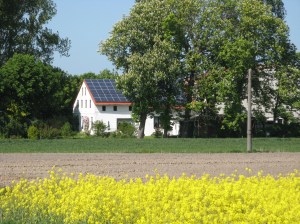
Expanding solar financing to include third-party ownership would allow more houses and farms to host solar arrays. Photo credit Dirk Franke via Wikimedia Commons.

Expanding solar financing to include third-party ownership would allow more houses and farms to host solar arrays. Photo credit Dirk Franke via Wikimedia Commons.

Most Virginia legislators say they want more renewable energy. They listen to their constituents, they understand the economic opportunities, they support consumer choice, and they think it’s important to diversify our energy supply, even if they aren’t against fossil fuels. But when it comes to voting, only one voice counts with them, and that’s Dominion’s.

And so Dominion Virginia Power once again succeeded in blocking legislation that would have opened the market for wind and solar to greater private investment through third-party power purchase agreements (PPAs), community solar programs, removal of standby charges and the lifting of size caps. (I described most of these bills in a previous post.)

Rather than capitulate publicly, however, the chairs of the Senate and House Commerce and Labor Committees, Senator Frank Wagner and Delegate Terry Kilgore, determined to “carry over” to next year the bulk of the renewable energy bills, assigning them to a new subcommittee to be named later, and which will consider the bills sometime later in the year.

If you are a pessimist, you will notice this means that none of the bills even got a hearing in committee, and all are effectively dead for the year, with no legislators you can hold accountable. You will also have doubts about the likelihood of this subcommittee delivering results favorable to solar and wind advocates, given that Mssrs. Wagner and Kilgore are not known for standing tall against utility interests.

If you are an optimist, however (and what choice do you have?), you will respond with hope that this subcommittee will browbeat the utilities into accepting at least some legislative reforms in the service of the public good. You will point out that legislators’ unwillingness to simply kill bills at the utilities’ behest is progress in itself, driven by an outpouring of constituent support for renewable energy and backed by new lobbying firepower.

In past years, Dominion never gave more than it got, and routinely killed off legislation. And this year, Dominion’s approach to the most important piece of legislation—Delegate Randy Minchew’s HB 1286—followed the utility’s standard operating procedure. Over many weeks Dominion lobbyists met with members of the industry coalition and persuaded them to strip away parts of the legislation—first one provision, then another, all in the name of “compromise.” Eventually the bill was reduced to a single paragraph recognizing the legality of third-party PPAs, with all sides in agreement.

Then two days before the subcommittee hearing on the bill, Dominion reneged and produced substitute language that eliminated authority for all but a narrow subset of PPAs, while suddenly slapping new standby charges on small commercial customers who install renewable energy systems, a provision entirely separate from the PPA issue.

The standby charges were a known poison pill. In 2012 Dominion convinced the solar industry to accept the idea of standby charges in exchange for raising the size limit on residential solar systems from 10 to 20 kW. The industry assumed the charges would be modest at worst, given the value of distributed solar to the grid. But Dominion then persuaded the State Corporation Commission to approve charges so high as to kill the market for the larger systems. Appalachian Power followed suit.

Dominion would dearly love to institute standby charges on more customers, so this year the company is ransacking renewable energy bills looking for opportunities. I’m told that after Delegate Minchew elected to have HB 1286 carried over rather than accede to the standby charge language, Dominion lobbyists went to Senator Richard Stuart and tried to use another pro-renewables bill as the vehicle for standby charges.*

This obnoxious tactic smacks of desperation, and must be as irritating to legislators as it is to renewable energy advocates. We should not be surprised to see it a point of contention later this year when the subcommittee meets. Standby charges may be bogus, but utilities see them as their best tool to prevent the spread of customer-owned generation that threatens utility profits.


*That bill is SB 779, a latecomer filed at the request of Loudoun County farmer and philanthropist Karen Schaufeld. Her new group, Powered by Facts, initiated several pro-solar bills separate from those of the solar industry. Although Stuart’s bill as written includes sweeping reforms for farmers who want to sell excess renewable energy, we hear it was suffering the same death-by-a-thousand-amendments even before the standby charge issue came up. For now, however, the legislative information website continues to show the bill with its original language. It will likely be heard on Monday if it is heard at all; we expect to see it bounced to the new subcommittee.


Unknown's avatar

Virginia legislators look to tax breaks and barrier-busting to boost renewable energy

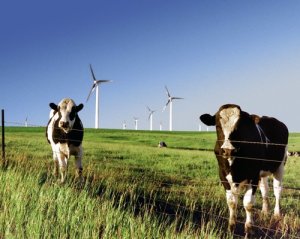
Let's get these projects moo-ving. Photo credit NREL

Let’s get these projects moo-ving. Photo credit NREL

The orchestrated mayhem of the Virginia General Assembly session is well underway. Thirteen days are gone and only twenty-one days remain until what’s known as “Crossover,” after which any bill that hasn’t passed its own chamber is effectively dead. This year Crossover falls on February 16. After that, each chamber considers only bills already passed by the other.

By that measure, yours truly is one lazy blogger, because I’m only just getting to the renewable energy bills. On the other hand, bills were still being filed until Friday, and some bills are undergoing revisions before they are heard in committee. These are moving targets; advocates beware.

Removing barriers to investment 

Readers of this blog know that Virginia law is riddled with barriers that restrain the market for wind and solar in Virginia. This year several bills take aim at the policies holding us back.

HB 1286 (Randy Minchew, R-Leesburg, in Commerce and Labor) is barrier-busting legislation developed by the solar industry in consultation with the wind industry and solar advocates. It clarifies that renewable energy companies that sell to retail customers under power purchase agreements (PPAs) are not public utilities and don’t have to meet the statutory requirements for public utilities and suppliers. Customers can use third-party PPAs to purchase renewable energy electricity generated by facilities located on the customer’s property, everywhere in the state. The bill also lifts the one percent cap on net metering programs relative to total utility sales, and authorizes community net metering programs. It also expands the concept of “agricultural net metering” to cover other customers who want to attribute electricity from one facility to multiple meters on the customer’s property.

In addition, the bill amends the Commonwealth’s energy policy by adding the goals of encouraging private sector distributed renewable energy, increasing security of the electricity grid by supporting distributed renewable energy projects, and augmenting the exercise of private property rights by landowners desiring to generate their own energy from renewable energy sources on their lands. None of this language by itself forces action, but the State Corporation Commission takes note of energy policy in its decision-making.

SB 140 (John Edwards, D-Roanoke, in Commerce and Labor) attacks the standby charges that have been so controversial. It increases the size of electrical generating facilities operated by residential or agricultural net energy metering customers that are subject to a monthly standby charge from those with a capacity of 10 kilowatts to those with a capacity of 20 kilowatts. Since residential solar facilities that are net-metered are already limited to 20 kW, this would effectively repeal standby charges for residential net metering.

SB 139 (John Edwards, D-Roanoke, in Commerce and Labor) makes a small change to the existing agricultural net metering option.

SB 148 (John Edwards, D-Roanoke, in Commerce and Labor) replaces the pilot program enacted in 2013 that authorized a limited pilot program for third-party PPAs. generation facilities. The bill requires the State Corporation Commission to establish third-party power purchase agreement programs for each electric utility. The existing pilot program applies only to Dominion Virginia Power and sets the maximum size of a renewable generation facility at one megawatt; the programs authorized by SB 148 apply to all electric utilities and do not set limits on the size of facilities.

Although SB 148 is similar to HB 1286 in attempting to ensure the legality of third-party PPAs, solar advocates prefer HB 1286. Giving the State Corporation Commission authority here should not be necessary and might lead to higher costs and more regulations.

Community energy/solar gardens

It’s darned hard to buy renewable energy in Virginia if you are among the approximately 75% of residents who can’t put solar panels on your own roof or build a wind turbine out on the back forty. That’s an enormous untapped market.

SB 1286, above, contains a provision authorizing community energy programs In addition, HB 1285 (Randy Minchew, R-Leesburg, in Commerce and Labor) is a stand-alone bill that authorizes (but does not require) investor-owned utilities and coops to establish community energy programs.

HB 618 (Paul Krizek, D-Alexandria, referred to Commerce and Labor) would require the State Corporation Commission to adopt rules for “community solar gardens” that would let customers subscribe to a portion of the output of a solar facility located elsewhere in their area. The solar electricity and the renewable energy credits (RECs) would be sold to the local utility, which would then credit the subscribers on their utility bills.

But whereas customers who have solar panels one their own roof get credited at full retail value and own the associated renewable energy credits, HB 618 allows the SCC to devise rules that could result in a much worse deal for solar garden subscribers, including allowing the utility to impose a “reasonable charge” to cover ill-defined costs.

That’s an unfortunate invitation to the utilities to pile on fees. Unless the utilities involved really want to make the program work for their customers, it’s hard to imagine this turning out well. We would not expect to see viable programs in Dominion or APCo territory if this passes. On the other hand, some municipal utilities have been more responsive to the interests of their customers, so it could work for them.

Tax credits and exemptions

An important tax bill to watch this year is HB 1305 (Jackson Miller, R-Manassas, referred to Finance), which changes the state and local tax treatment of solar and wind energy facilities. It exempts utility solar and wind from taxation, but lowers from 20 MW to 1 MW the size of other solar projects that are exempt from local machinery and tools tax (a kind of personal property tax; securing that exemption was a major win for the solar industry in 2014). The bill replaces the hard-won 100% exemption with an 80% exemption. The change is very nice for utilities (Virginia is always very nice to utilities), but it makes the economics worse for third-party owned facilities in the 1 MW to 20 MW range—exactly the ones the state should be trying to attract.

SB 743 (Frank Wagner, R-Virginia Beach, referred to Agriculture, Conservation and Natural Resources) helps solar projects below 5 MW qualify for the above-mentioned tax exemption passed in 2014. The bill makes the Department of Mines, Minerals and Energy the agency that certifies solar projects as “pollution control equipment and facilities,” eligible for exemption from state and local taxation. This exemption from state sales tax and local machinery and tools taxes is one of the few perks Virginia can offer commercial-scale solar developers here, where margins on projects are very thin compared with projects in North Carolina or Maryland with stronger incentives.

Tax credits are also on the agenda this year. Tax credits fell into disfavor in Virginia following an audit that revealed that many tax credits aren’t achieving their objectives (see: tax subsidies for coal mining). Senate Finance Committee members resolved to end them just about the same time the solar industry came asking for one themselves two years ago, with unhappy results for solar. But tax credits are legislative candy, and there’s no telling how long the diet will last. Hopeful persons may as well put out their own plate of chocolates. If the diet is off, then the main problem with this year’s bills, from the point of view of the Republicans who make up the majority of our legislature, is simply that they come from Democrats.

HB 480 (Rip Sullivan, D-Arlington, referred to Finance) establishes a 35% tax credit for renewable energy property, to be claimed over 5 years, with a $5 million program cap. The credit would apply not just to wind and solar but also some biomass, combined heat and power, geothermal and hydro systems.

SB 142 (John Edwards, D-Roanoke, referred to Finance) and HB 1050 (Sam Rasoul, D-Roanoke, referred to Finance) establish a tax credit of up to 30% for solar thermal systems used for water heating or space heating and cooling. Solar PV systems are not included in the bill.

State funding through carbon cap and trade

SB 571 (Donald McEachin, D-Richmond, referred to Agriculture, Conservation and Natuaral Resources) and HB 351 (Villanueva, R-Virginia Beach, referred to Commerce and Labor) would require the Governor to join the Regional Greenhouse Gas Initiative (RGGI), the cap-and-trade program that has successfully ratcheted down carbon emissions in the northeastern states. Funds generated by auction allowances would fund sea level rise adaptation in coastal areas, economic transition efforts for southwest Virginia, energy efficiency for low-income families, and distributed renewable energy programs.

Financing

HB 941 (David Toscano, D-Charlottesville, referred to Counties, Cities and Towns) expands the authorization for Property Assessed Clean Energy (PACE) programs to include residential and condominium projects. This would allow localities to offer low-interest financing to homeowners for both energy efficiency and renewable energy investments.

Utility cost recovery

HB 1220 (David Yancey, R-Newport News, referred to Commerce and Labor) is billed as a technical fix for language added to the Code last year that encourages utilities to invest in solar. The bill clarifies that a utility that purchases a solar facility is allowed cost recovery on the same favorable terms it would get by building the facility itself.

Energy storage

Energy storage is emerging as the hot new energy technology area, about where solar was five years ago. Interest in it has been driven by recent price declines as well as the success of wind and solar and the growing awareness that these carbon-free sources are likely to make up a significant portion of our electricity supply in coming years. So while the use of storage is by no means limited to renewable energy applications, I include it here because it will interest those who follow wind and solar policy.

HB 452 (Patrick Hope, D-Arlington, in Commerce and Labor) and SB 403 (Ebbin, D-Alexandria, in Commerce and Labor) create the Virginia Energy Storage Consortium to promote research, development, commercialization, manufacturing and deployment of energy storage. It’s a great idea.

HB 1137 (David Toscano, D-Charlottesville, in Commerce and Labor) directs the State Corporation Commission to develop a program to enable commercial and industrial customers to sell battery storage services to the grid. If you’ve heard of the concept known as “vehicle-to-grid” (using electric cars to put power back on the grid as well as drawing from it), you’ll understand what this is about. It would allow these and other “energy balancing devices” to provide value to the grid in the form of spinning reserves, frequency regulation, distribution system support, reactive power, demand response, or other electric grid services. It’s an idea whose time has come.

Biomass

Wind and solar have several less popular relatives with more tenuous claims on the renewable energy family name. Virginia’s definition of “renewable” embraces them all, regardless of merit. It treats biomass to a special place of honor, including even the burning of trees that haven’t been harvested sustainably, and regardless of how much pollution gets spewed into the atmosphere.

SB 647 (Barbara Favola, D-Arlington, in Commerce and Labor) and HB 973 (Alfonso Lopez, D-Arlington, in Commerce and Labor) would change that to require that electricity from new biomass plants, to qualify as renewable energy, would have to meet a minimum efficiency level. Burning wood from trees would generally meet that standard only when it produces both electricity and heat (or, through the magic of science, cooling).

Consumer choice

HB 444 (Manoli Loupassi, R-Richmond, in Commerce and Labor) and SB 745 (Frank Wagner, R-Virginia Beach, in Commerce and Labor) would expand the current requirement that utilities inform ratepayers about their options for purchasing renewable energy.

Which might lead you to ask, “what options?” since for most of us here in Virginia they are sadly lacking. But maybe this year’s session will start to change that.

A note about House Commerce and Labor: Bills noted above that have been assigned to the House Committee on Commerce and Labor have all been assigned to its Subcommittee on Energy. This powerful subcommittee typically meets only once or twice before Crossover. I’m told it will meet on the afternoon of Tuesday, February 9, likely continuing well into the evening due to the number of bills assigned.

February 9 is also Clean Energy Lobby Day, when members of the renewable energy and energy efficiency industries descend on Richmond to educate legislators about the need for sound reforms. This year the solar industry trade association MDV-SEIA is organizing the lobby day, which is free to participants. The organization has also created a petition to support third-party financing of solar in Virginia.


UPDATE:

Senator McEachin files bill for mandatory RPS. SB 761 Donald McEachin (D-Richmond) would make Virginia’s pathetic, voluntary RPS into a mandatory RPS that would rank as one of the best in the country. It would require utilities to meet an increasing percentage of electricity sales from solar, onshore wind, offshore wind, and energy efficiency, reaching 25% of base year sales by 2025 (and deleting the current, obnoxious slight-of-hand that leaves nuclear out of the equation, but keeping a base year of 2007). By 2017, half of it would have to come from sources located within Virginia.

Unknown's avatar

2016 Virginia legislative session opens with stark choices for dealing with climate change

Setting an example for Virginia leaders. But will they follow? Photo courtesy of Glen Besa.

Setting an example for Virginia leaders. But will they follow? Photo courtesy of Glen Besa.

One of the first bills filed in Virginia’s 2016 legislative session—and already passed through committee—would require the McAuliffe Administration to write a report about how awful the EPA’s Clean Power Plan is for Virginia, and then to develop a state implementation plan that won’t comply.

That’s not exactly how HB 2 (Israel O’Quinn, R-Bristol) puts it, but it’s hard to read the language any other way. The bill instructs the Department of Environmental Quality to write a report critiquing the Clean Power Plan’s terrible effects (stranded costs! price increases! coal plant retirements! shoeless children!). It neglects any mention of the Plan’s benefits—like less pollution, better public health, and bill savings from energy efficiency. DEQ is then directed to write a plan that details all the bad stuff (but not the good stuff) and submit that to the General Assembly for approval before it can go to EPA. Does anyone think the General Assembly will approve a plan that makes compliance sound as awful as Republicans want DEQ to describe it?

The irony here is that the bill assumes the Clean Power Plan is the huge game-changer for Virginia that environmentalists had hoped it would be. Sadly, the Clean Power Plan doesn’t demand much of Virginia; if we simply meet new electricity demand with energy efficiency and renewable energy, we would be at or near to full compliance.

But recognizing that Virginia got a pass would be inconvenient for the bill’s drafters over at the American Legislative Exchange Council (ALEC). ALEC has an agenda to promote, and the agenda demands that Republicans be outraged, regardless of the reality on the ground.

We hear outrage was in full display Tuesday as Republicans pushed the bill through Commerce and Labor on a party-line vote. Democrats patiently explained that if Virginia doesn’t submit a plan that complies with the Clean Power Plan, EPA will write one for us. Republicans responded with shoeless children.

SB 482 (Mark Obenshain, R-Harrisonburg, referred to Agriculture, Conservation and Natural Resources) and SB 21 (Ben Chafin, R-Lebanon, also in Agriculture) are Senate companion bills.

The flip side

If the Clean Power Plan doesn’t actually demand much of Virginia, nothing prevents the state from using the federal requirements to its own advantage. HB 351 (Ron Villanueva, R-Virginia Beach, referred to Commerce and Labor) and SB 571 (Donald McEachin, D-Richmond, referred to Agriculture) take this lemon-to-lemonade approach with the Virginia Alternative Energy and Coastal Protection Act. The bill would direct the Governor to join the Regional Greenhouse Gas Initiative (RGGI), the cap-and-trade plan that the northeastern states have used successfully to reduce carbon emissions and raise funds to further the RGGI goals.

The legislation is similar to last year’s Virginia Coastal Protection Act, which was unable to get out of committee due to Republican opposition. But as warming ocean water expands and lifts sea levels along our coast, even Republicans must wonder how they are going to deal with the costs. Right now, the only answer out there belongs to Villanueva and McEachin.

Other legislators, meanwhile, offer small steps in the right direction. HB 739 (Christopher Stolle, R-Virginia Beach, referred to General Laws) would establish the Virginia Flooding Adaptation Office. A Chief Resiliency Officer would oversee its operations, pursue funding opportunities, and recommend initiatives to help with adaptation efforts. (Maybe she will recommend joining RGGI!)

A similar but more limited bill, HB 1048 (Keith Hodges, R-Urbana, also referred to Agriculture) would create a position of Chief Resiliency Officer to coordinate “issues related to resilience and recurrent flooding,” recommend actions to increase resilience, and pursue funding.

HB 903 (also Stolle, referred to Agriculture, Chesapeake and Natural Resources) resolves to designate a Commonwealth Center for Recurrent Flooding Resiliency to study “recurrent flooding and resilience.” HJ 84 (Stolle again, referred to Rules) and SJ 58 (Mamie Locke, D-Hampton, referred to Rules) would continue the ongoing study of “recurrent flooding” and rename it as “coastal flooding.” (Yes, legislators are moving towards calling it “sea level rise” at about the same rate the sea is rising.)

SB 282 (Lynwood Lewis, D-Accomack, referred to Agriculture) would establish the Virginia Shoreline Resiliency Fund as a low-interest loan program to help residents and businesses that are subject to “recurrent flooding.” Funding, for the most part, would require appropriations from the General Assembly.

Unknown's avatar

Virginia’s General Assembly likes solar energy. Will that be enough?

Emojione_1F31E.svgVirginia’s General Assembly broke new ground in February when it passed legislation declaring up to 500 megawatts of utility solar power “in the public interest.” The language will help projects gain regulatory approval from the State Corporation Commission, which has been hostile to renewable energy. Dominion Virginia Power wants to build up to 400 MW of solar by 2020.* If the utility follows through, Virginia will finally join the solar revolution underway across the U.S.

Emojione_umbrella.svgIt’s important to acknowledge the limitations of the legislation, though. It was written by and for Dominion, not for the solar industry or Virginia residents. The utility does not want its customers installing solar power for themselves or buying it from anyone else, hence the limitation to utility-owned projects of at least 1 MW. So people who want to see more distributed generation, especially customer-owned, rooftop solar, found little to cheer about in this legislation.

Twemoji_exclamation question.svgOthers took a glass-half-full view. For climate activists, all solar is good solar, and big projects produce more than little projects. It would take 4,000 houses, each with an average 5-kW system, to produce as much power as a single 20-MW project like the one Dominion plans for Remington, Virginia. (The Remington facility is the only solar project Dominion has identified so far in the commonwealth.)

But of course, if you can get 4,000 houses with solar in addition to a 20-MW solar farm, then you’ve got twice as much solar altogether. Glass totally full: insert your happy emoji here.

The optimists hope that success with utility-scale solar will demonstrate the value of the resource and lead to better policies for distributed solar as well. A look at the experience of other states shows that is not inevitable. States with policies that promote residential and commercial solar, like New York and New Jersey, see a lot of those projects. States that mainly incentivize utility ownership, like North Carolina and Nevada, haven’t seen much else.

Dominion unquestionably won this round in the General Assembly, getting a seal of approval for its own projects while locking out most of the competition. Only two bills passed this year lowering hurdles to customer-owned renewables, and neither of them help homeowners. One bill raises the project size limit on net-metered facilities from 500 kW to 1 MW, a change sought by Virginia’s universities and by the solar developer Secure Futures LLC, whose business model focuses on large nonprofit institutions. The other enables localities to help finance energy efficiency and renewable energy projects on commercial properties using what are known as property-assessed clean energy, or PACE, loans.

Many more bills sought by renewable energy advocates went down to defeat in the face of utility opposition, including things like a grant program and a community net-metering bill that could have had a transformational impact on the industry.

That leaves just one initiative that advocates will be watching closely to see if it produces any opportunities for customer-owned solar. Legislation establishing the Virginia Solar Development Authority, HB 2267 and others, says it will “support the development of the solar industry and solar energy projects

by developing programs that increase the availability of financing for solar energy projects, facilitate the increase of solar energy generation systems on public and private sector facilities in the Commonwealth, promote the growth of the Virginia solar industry, and provide a hub for collaboration between entities, both public and private, to partner on solar energy projects.”

The bill is a little vague as to just how all this will happen. The Authority has no regulatory power and no budget. Many of its duties involve finding money, as in the paragraph empowering it to help utilities deploy 400 MW of solar projects by “providing for the financing or assisting in the financing of the construction or purchase of such solar energy projects.”

Another provision, however, empowers the Authority to “identify and take steps to mitigate existing state and regulatory or administrative barriers to the development of the solar energy industry.” Of course, one of those barriers is the anti-competitive maneuvering of our utilities to protect their monopoly positions.

The Authority should perhaps take a lesson from the DEQ-facilitated Small Solar Working Group, which I helped form in 2013 with a goal of developing pro-solar legislative proposals. The problem we ran into was that utilities were determined to ensure we did not put forth any legislative proposals, and we had made the mistake of letting them into the group. If utility executives get appointed to the Solar Authority, it could be déjà vu all over again.

Delegate Tim Hugo, for one, thinks the Authority will lead to more distributed generation as well as utility solar. “The intent of the legislation is to create an opportunity to develop a broad range of projects including distributed customer owned generation and to help facilitate a solar industry in Virginia,” he told me.

Hugo, one of the sponsors of the Authority bill, is one of the Commerce and Labor committee members who helped defeat other bills sought by the solar industry. But if distributed solar is to thrive in Virginia, it will require legislators like Hugo to become its champions.

Hugo, a Republican, considers himself a staunch solar advocate, going back many years. “In 2007,” he reminded me, “I sponsored HB2708 dealing with net metering, which would require utilities to purchase excess electricity produced by a customer-generator.” Last year he sponsored bi-partisan legislation exempting from real and personal property taxes solar equipment that generates 20 megawatts or less, a change critical to the economics of commercial solar projects.

But relatively few legislators from either party are willing to oppose Dominion, and therein lies the rub. The company considers monopoly control its right, and it doesn’t yield an inch without getting something for it. On the other hand, this was a bad year in the press for Dominion. Editorial boards across the state lambasted the company over legislation that will let it shield excess profits for the next several years. The public, too, is irritated with the slow pace of solar, and it knows whom to blame. That provides an opening for pro-solar legislators. We’ll see if they take it.


*Dominion was the moving force behind this legislation, but it applies as well to Appalachian Power Company. When I asked an APCo lobbyist whether its passage means more solar in APCo’s future, he merely referred me to the company’s 2014 Integrated Resource Plan, written a year ago. It lays out plans for small additions of utility solar beginning in 2019, scaling up gradually to a cumulative total of 500 MW in 2028—or about half as much as North Carolina already has today.

Unknown's avatar

Tiny Virginia subcommittee tasked with deciding future of bills related to EPA’s Clean Power Plan; meeting set for December 17

Photo credit: Sierra Club

Photo credit: Sierra Club

The EPA’s proposed Clean Power Plan could reshape Virginia’s energy future for the next fifteen years, and possibly permanently. If the state takes advantage of this opportunity, it will reduce carbon pollution, improve human health, save money for consumers, drive job creation in the fast-growing technology sector, and make our grid stronger and more secure.

If the state doesn’t act, EPA will design its own plan for Virginia, ensuring reduced carbon emissions but without the flexibility the state would have by doing it for itself.

This presents a conundrum for Virginia’s General Assembly, which is not known for embracing federal environmental regulations. The usual skepticism was on display on November 19, when the Senate and House Commerce and Labor Committees met in a joint session to take up the Clean Power Plan—or more precisely, to give utilities and the State Corporation Commission staff the chance to attack it.

At the conclusion of that meeting, the two Republican committee chairs, Senator John Watkins and Delegate Terry Kilgore, named three members of each committee—two Republicans and one Democrat from each chamber—to a special subcommittee tasked with deciding what kind of legislative action the General Assembly should take in response to the Clean Power Plan. Kilgore also put himself on the subcommittee, which will now take up any bills that Virginia legislators introduce related to the Plan.

This subcommittee has scheduled its first meeting for December 17 at 1:00 p.m. in Senate Room A of the General Assembly building in Richmond. By law, all committee meetings are open to the public.

According to General Assembly procedure, before anyone else in the entire legislature can consider a bill, it will have to pass muster with these seven men. So who are these hugely important people, and what is the likelihood that they will seize this historic opportunity to make Virginia a leader in clean energy?

The Senate members consist of Republicans Frank Wagner and Benton Chafin and Democrat Dick Saslaw. Wagner and Saslaw were obvious choices given their seniority on the committee and active role on energy issues. Chafin—well, we’ll get to him in a moment.

Frank Wagner is from Virginia Beach and is known for his interest in energy generally, and especially in promoting new projects. He sponsored the legislation that led to the Virginia Energy Plan in 2006 and has been an important supporter of offshore wind development, perhaps reflecting his undergraduate degree in Ocean Engineering and his Tidewater residence.

The General Assembly website says Wagner is the president of Davis Boatworks, a vessel repair facility whose principal customer is the Defense Department. Living in the Hampton Roads area, Wagner is aware of how real sea level rise is; presumably he understands the connection to climate change.

In spite of his interest in offshore wind, coal rules when it comes to funding Wagner’s political campaigns. The Virginia Public Access Project shows coal giant Alpha Natural Resources was Wagner’s second-best donor over the years, with a total of $43,643 in campaign money since 2003, ahead of Dominion Power’s $37,350. Energy and mining interests combined gave gifts totaling $188,152. Of this, $350 came from Highland New Wind Development LLC back in 2008 and $250 came from the offshore wind company Seawind in 2010.

Of course, who gives money to an elected official does not necessarily dictate how that official votes. But it probably should be mentioned that for the 2014 session, Wagner earned an F on the Sierra Club’s Climate and Energy Scorecard, disappointing clean energy advocates who have sometimes had reason to see him as an ally.

Also a low performer on the energy scorecard is Dick Saslaw, scraping by with a D. Saslaw is a career politician who was first elected to the GA in 1976, when he was 36. (He is now 74.) His biography lists his background as an owner and operator of gas stations.

Saslaw is the Senate Democratic Leader and used to be Chair of the Senate Commerce and Labor Committee, until his party lost the Senate. In theory, his leadership position in the Democratic Party should make him a defender of President Obama’s climate initiative. In practice, not so much.

Although he is a Fairfax County Democrat, Saslaw does not share his constituents’ enthusiasm for wind and solar, nor in general, their concern for the environment. Somebody once told him that renewable energy costs a lot; that’s been his story ever since, and he’s sticking with it, facts be damned.

Saslaw is proud of his close ties to Dominion Virginia Power, whose interests reliably predict his votes on any given bill. The Virginia Public Access Project reports that Dominion has given more money to Saslaw than to any other legislator. In 2014 alone, Dominion gave Saslaw $25,000. Over the years, Dominion’s contributions to Saslaw have totaled $240,508, making the utility Saslaw’s top donor.

Saslaw has also received more money from Appalachian Power than any other Democrat–$44,000–even though that utility does not provide service anywhere in his district. In addition, coal interests gave him $90,250, natural gas companies ponied up $50,250, and the nuclear industry chipped in $28,000.

A single contribution of $250 makes up the only entry under “alternative energy.”

This brings us to new Senator Ben Chafin, the Republican delegate from Southwest Virginia who replaced Democratic Senator Phil Puckett (he of the Tobacco Commission scandal). Chafin is a lawyer and farmer, and as his website informs us, “Ben Chafin has a proven record fighting for the coal industry. Ben sponsored successful legislation (House Bill 1261) to fight against Obama EPA’s effort to kill the industry through over-regulation. Ben will continue to work in Richmond to protect coal and grow other Southwest industries like natural gas.”

Not surprisingly, coal interests led all other industry donors to Chafin’s 2013 campaign for Delegate and his 2014 campaign for Senate ($59,000 altogether), though he did pretty well by natural gas, too ($14,150). As a delegate, Chafin earned a gentleman’s C on the Sierra Club scorecard, but it would probably be a mistake to pin our hopes on his becoming a clean energy champion. His role on the subcommittee is surely to give Coal a voice.

On the other hand, Chafin must recognize that the economics of fracked gas and ever-more competitive wind and solar means Virginia coal has no chance of ever regaining its former glory. Southwest Virginia now needs to craft a strategic retreat from mining and work on economic diversification. That’s not inconsistent with the Clean Power Plan.

On the House side—but here I have to digress for a moment to comment on the seemingly random composition of the House Commerce and Labor Committee. The Senate side is bad enough; any Democrat who has evinced environmental sympathies over the years has been dumped from the Senate Commerce and Labor, and when he was in power, Saslaw did a lot of the dumping.

But it’s worse over at the House. The leadership keeps reshuffling its energy committee, as if in a frantic effort to make sure nobody learns anything, while the delegates who actually came to the job with an interest and knowledge of energy never seem to get a turn. Energy law is a hard area to learn. It’s complicated, and if you don’t have time to master it, you are even more likely to accept guidance from either the party leader who tells you how he wants you to vote, or the glib industry lobbyists who assure you they have the public’s welfare at heart just as much as you do. (Plus they give you money!)

So Chairman Terry Kilgore had little enough to work with on his committee. The three delegates he named to this incredibly important subcommittee, though they are undoubtedly smart and hardworking people, bring no discernable expertise on either climate or energy to the General Assembly’s review of the Clean Power Plan.

Well, digression over.

Terry Kilgore himself is a lawyer and a 20-year member of the House from the coalfields region of southwest Virginia. Dominion is his top individual donor, at $122,000, but coal interests together make up the single biggest category of givers to his campaigns, at $243,188, with electric utilities at $218,680, natural gas at $97,830, the oil industry at $16,400, and nuclear energy at $8,500. Just since 2013, he’s taken in over $136,000 from energy and mining interests.

That’s awfully good money for a safe seat, and his votes have reflected it. His energy votes earned him a D on the Sierra Club scorecard. It’s unlikely that he will abandon his coal friends, but like Senator Chafin, he will serve his constituents best if he works to attract new business to his struggling region. Home weatherization and energy efficiency programs would be popular there, and solar energy is one of the fastest-growing industries in America.

The other House subcommittee members Kilgore appointed are Republicans Jackson Miller and Ron Villanueva and Democrat Mathew James. Jackson Miller is a Manassas Realtor and former police officer who has been in the House since 2006. The bills he has introduced primarily reflect his interests in real estate and criminal law, although he also introduced legislation supporting uranium mining. He has received a total of $79,252 from energy and mining companies since 2010, primarily electric utilities, natural gas, coal, nuclear, and uranium. He earned a D on the Climate and Energy Scorecard. Why he is on this subcommittee is anyone’s guess, but certainly Northern Virginia stands to gain a lot of technology jobs if the state develops its clean energy industries as it should.

Virginia Beach Republican Ron Villanueva has not been as popular with the energy and mining companies, whose donations to his campaigns have totaled $20,550. Villanueva’s website says he was the first Filipino-American elected to state office in Virginia when he became a delegate in 2009. Villanueva has been friendly to the solar industry, and while he received a D on the scorecard, he also received an award from the Sierra Club for his work on a bill to provide a tax credit for renewable energy projects. (The bill was converted to a grant in the Senate but not funded.)

Like Delegate James and Senator Wagner, Villanueva lives in an area that is feeling the effects of climate change sooner than any other part of Virginia, so his constituents know how much the Clean Power Plan matters. For that matter, his day job as a partner with SEK Solutions, a military contractor, should mean he’s aware of the Pentagon’s focus on climate change as a national security issue, as well as a threat to its coastal assets.

Portsmouth Democrat Matthew James also hasn’t been especially popular in the energy industry. Since 2009, when he first ran for delegate, he has accepted a mere $5,000 from Dominion, $3,500 from coal interests, and $3,350 from the natural gas companies—token amounts by Virginia standards, but they may be due for a sudden increase.

James does not seem to have introduced any energy-related bills. However, his votes earned him an A on the Sierra Club scorecard. James is listed as the President and CEO of the Peninsula Council for Workforce Development. Maybe he will see an opportunity in the Clean Power Plan to develop jobs in the solar, wind, and energy efficiency industries, which have outperformed the economy generally.

So there you have the five Republicans and two Democrats who get first crack at any bill either facilitating Virginia’s compliance with the Clean Power Plan, or hostile to it. If they like a bill, it moves to the full Commerce and Labor committees. If they scuttle a bill, no one else in the entire legislature will get to vote on it.

That’s how it works, or doesn’t, in the Old Dominion.

Unknown's avatar

McAuliffe’s Energy Plan has a little something for (almost) everyone

On October 1, the Virginia Department of Mines, Minerals and Energy released the McAuliffe administration’s rewrite of the Virginia Energy Plan. Tomorrow, on October 14, Governor McAuliffe is scheduled to speak about the plan at an “executive briefing” to be held at the Science Museum of Virginia in Richmond. Will he talk most about fossil fuels, or clean energy? Chances are, we’ll hear a lot about both.

Like the versions written by previous governors, McAuliffe’s plan boasts of an “all of the above” approach. But don’t let that put you off. In spite of major lapses of the drill-baby-drill variety, this plan has more about solar energy, offshore wind, and energy efficiency, and less about coal, than we are used to seeing from a Virginia governor.

Keep in mind that although the Virginia Code requires an energy plan rewrite every four years, the plan does not have the force of law. It is intended to lay out principles, to be the governor’s platform and a basis for action, not the action itself. This is why they tend to look like such a hodge-podge: it’s just so easy to promise every constituency what it wants. The fights come in the General Assembly, when the various interests look for follow-through.

Here’s my take on some of the major recommendations: IMG_3954

Renewable energy. Advocates and energy libertarians will like the barrier-busting approach called for in the Energy Plan, including raising the cap on customer-owned solar and other renewables from the current 1% of a utility’s peak load to 3%; allowing neighborhoods and office parks to develop and share renewable energy projects; allowing third-party power purchase agreements (PPAs) statewide and doubling both the size of projects allowed and the overall program limit; and increasing the size limits on both residential (to 40 kW) and commercial (to 1 MW) net metered projects, with standby charges allowed only for projects over 20 kW (up from the current 10 kW for residential, but seemingly now to be applied to all systems).

It also proposes a program that would allow utilities to build off-site solar facilities on behalf of subscribers and provide on-bill financing to pay for it. This sounds rather like a true green power program, but here the customers would pay to build and own the project instead of simply buying electricity from renewable energy projects.

Elsewhere in the recommendations, the plan calls for “flexible financing mechanisms” that would support both energy projects and energy efficiency.

In case unleashing the power of customers doesn’t do enough for solar, the plan also calls for the establishment of a Virginia Solar Energy Development Authority tasked with the development of 15 megawatts (MW) of solar energy at state and local government facilities by June 30, 2017, and another 15 MW of private sector solar by the same date. Though extremely modest by the standards of Maryland and North Carolina, these goals, if met, would about triple Virginia’s current total. I do like the fact that these are near-term goals designed to boost the industry quickly. But let’s face it: these drops don’t even wet the bucket. We need gigawatts of solar over the next few decades, so let’s set some serious long-term goals for this Authority, and give it the tools to achieve them.

Finally, the plan reiterates the governor’s enthusiasm for building offshore wind, using lots of exciting words (“full,” “swift,” “with vigor”), but neglecting how to make it happen. Offshore wind is this governor’s Big Idea. I’d have expected more of a plan.

And while we’re in “I’d have expected more” territory, you have to wonder whatever happened to the mandatory Renewable Portfolio Standard that McAuliffe championed when running for office. Maybe our RPS is too hopeless even for a hopeless optimist.

Energy Efficiency. Reducing energy consumption and saving money for consumers and government are no-brainer concepts that have led to ratepayers in many other states paying lower electricity bills than we do, even in the face of higher rates. Everyone can get behind energy efficiency, with the exception of utilities that make money selling more electricity. (Oh, wait—those would be our utilities.) The Energy Plan calls for establishing a Virginia Board on Energy Efficiency, tasked with getting us to the state’s goal of 10% savings two years ahead of schedule. But glaringly absent is any mention of the role of building codes. Recall that Governor McDonnell bowed to the home builders and allowed a weakened version of the residential building code to take effect. So far Governor McAuliffe hasn’t reversed that decision. If he is serious about energy efficiency, this is an obvious, easy step. Where is it?

Fracking_Site_in_Warren_Center,_PA_04

Natural Gas. Did I say offshore wind was the governor’s Big Idea? Well, now he’s got a bigger one: that 500-mile long natural gas pipeline Dominion wants to build from West Virginia through the middle of Virginia and down to North Carolina. Governor McAuliffe gets starry-eyed talking about fracked gas powering a new industrial age in Virginia. So it’s not surprising that the Energy Plan includes support for gas pipelines among other infrastructure projects. As for fracking itself, though, the recommendations have nothing to say. A curious omission, surely? And while we are on the subject of natural gas, this plan is a real testament to the lobbying prowess of the folks pushing for natural gas vehicles. Given how little appetite the public has shown for this niche market, it’s remarkable to see more than a page of recommendations for subsidies and mandates. Some of these would apply to electric vehicles as well. But if we really want to reduce energy use in transportation, shouldn’t we give people more alternatives to vehicles? It’s too bad sidewalks, bicycles and mass transit (however fueled) get no mention in the plan.

Photo credit Ed Brown, Wikimedia Commons.

Coal. Coal has fallen on hard times, indeed, when even Virginia’s energy plan makes no recommendations involving it. Oh, there’s a whole section about creating export markets for coal technology, as in, helping people who currently sell equipment to American coal companies find a living in other ways. These might be Chinese coal mining companies; but then again, they might be companies that mine metals in Eastern Europe, or build tunnels, or do something totally different. The Energy Plan seems to be saying that coal may be on its way out, but there’s no reason it should drag the whole supply chain down with it. Good thinking.

Nuclear. If you think the coal industry has taken a beating these past few years, consider nuclear. Nationwide, the few new projects that haven’t been canceled are behind schedule and over budget, going forward at all only thanks to the liberality of Uncle Sam and the gullibility of state lawmakers. But there it is in the Energy Plan: we’re going to be “a national and global leader in nuclear energy.” Watch your wallets, people. Dominion already raided them for $300 million worth of development costs for a third plant at North Anna. That was just a down payment.

Photo: U.S. Coast Guard

Photo: U.S. Coast Guard

Offshore drilling. As with nuclear, favoring offshore oil drilling seems to be some kind of perverse obsession for many Virginia politicians. Sure enough, the energy plan says we should “fully support” it. As for the downside potential for a massive spill of crude oil fouling beaches, ruining fishing grounds, destroying the coastal tourism economy, and killing vast numbers of marine animals, the plan says we must be prepared “to provide a timely and comprehensive response.” I bet Louisiana was at least equally prepared.

Unknown's avatar

Dominion’s ties to ALEC, McDonnell’s conviction, all part of one corrupt package

Group Dominion quit ALEc image 2

Protesters gather outside the Crystal City headquarters of ALEC

A crowd of protesters gathered at the Arlington headquarters of the American Legislative Exchange Council (ALEC) on September 4 to demand that Dominion Resources, the parent of public utility monopoly Dominion Virginia Power, drop its membership in the right wing “bill mill.”

On the very same day, a jury convicted ex-Governor Bob McDonnell and his wife on federal corruption charges, setting off a new round of debate about Virginia’s lax ethics laws.

The two news items sound like different topics, but in fact they are both about the corruption undermining our democratic system. The McDonnell trial, with its focus on swank vacations, golf clubs, designer clothes and other neat stuff, actually missed the bigger breach of public trust that goes on every day. This takes the form of unlimited corporate campaign contributions and gifts to members of both parties, and the influence over legislation purchased by this largesse.

Dominion Power has spent decades and many millions of dollars building its influence in Richmond this way, to the point where most legislators don’t bother pursuing a bill if the utility signals its opposition. That’s why Virginia has not followed so many other states in requiring its utilities to invest in energy efficiency, wind and solar. Economic arguments, jobs, electricity rates—all these are talked about in committee, and all are irrelevant to the fate of a bill. The only relevant question for legislators is, “What does Dominion think?”

What Dominion thinks, though, is not about what’s good for its customers, but what’s good for its own bottom line. And this is where ALEC comes in. Dominion Virginia Power’s president, Bob Blue, sits on an ALEC committee with representatives from the climate-denial group Heartland Institute, the Koch-funded anti-environment group Americans for Prosperity, and that most oxymoronic of lobby shops, the American Coalition for Clean Coal Electricity. Their purpose is to craft model state bills that protect fossil fuel profits and attack all efforts to regulate carbon emissions.

Dominion provides a straight shot from ALEC’s back-room bill-brokering to Virginia’s statute books, trampling environmental protections along the way and giving the lie to Dominion’s façade of environmental responsibility. No wonder so many of last week’s protesters were Dominion customers who objected to the utility using the money it charges them for electricity to pay its ALEC dues.

We see the result every year in the General Assembly, as bills drafted by ALEC pop up all over the place without attribution. In addition to attacking clean energy, ALEC bills oppose worker protections and minimum wage initiatives, promote stand-your-ground bills like the one at issue in the Trayvon Martin case, and of course, undermine the kinds of clean-government efforts that would reduce the influence of corporations—like campaign finance reform.

And because the voters are the only people who could prove more powerful than corporations—and the only ones who might ultimately cut off the corporate cash flow—ALEC works to undermine voting rights as well.

In the wake of the McDonnells’ convictions, Virginia legislators are once again mumbling about tightening up the rules on gifts. The discussion is half-hearted; the pay for their work is paltry and the hours are long, so they aren’t anxious to give up the perks.

But it’s too late for half-measures. Elected officials are going to have to subject themselves to a ban on gifts, and the prohibition should extend to ballgame tickets, golf getaways and sit-down dinners. The loophole that currently allows campaign funds to be used for personal use must also be closed to avoid an end-run around the gift ban.

But until we turn off the corporate cash spigot, our democracy will still have special interests, not voters, calling too many shots.

Unknown's avatar

Children need the EPA’s carbon pollution standard

This post, from guest blogger Samantha Ahdoot, originally appeared in the August 21 edition of the Fairfax County Times. I’ve written about the threat that increasing summer temperatures poses for people who have to work outdoors in ; here, Dr. Ahdoot tells us what carbon pollution means for children.

The end of summer fun? Higher temperatures resulting from carbon pollution could limit children's outdoor time.

The end of summer fun? Higher temperatures resulting from carbon pollution could limit children’s outdoor time.

Every day, parents protect their children from a myriad of risks. By strapping them in car seats, placing them on their backs to sleep and cutting their grapes into quarters, parents do everything in their power to insure their children against harm. President Obama’s Clean Power Plan will be called many things in the upcoming months, but it is ultimately an insurance plan. It is insurance for our children against the dangers of carbon pollution and resulting climate change.

Carbon pollution presents a major risk to the health, safety and security of current and future children. Rising atmospheric carbon is making our planet hotter. While skeptics may say this remains uncertain, our major scientific organizations (NASA, NOAA, IPCC) tell us it is at least very, very likely. With this increased heat, many other climactic changes are already occurring, including melting glaciers, rising sea levels and worsening storms. These fundamental changes ultimately impact human health, and children are amongst the most vulnerable to these changes. Some impacts are already affecting children today and are being seen by pediatricians like myself.

Allergic rhinitis, for example, affects about 10 percent of American children. With later first frost and earlier spring thaw due to rising global temperature, the allergy season has become longer. In the Northern Virginia region, where I practice, it has lengthened by about two weeks. More northern regions of the country have experienced greater lengthening. Higher carbon dioxide in the atmosphere also causes ragweed plants today to produce more pollen than in preindustrial times. Allergy season is therefore both longer and more severe.

Some infectious disease patterns have already been impacted by climactic changes. As global temperatures rise, many plants and animals are migrating poleward. They are bringing diseases, like Lyme disease, with them. There is now Lyme disease in Canada, and large increases in reported cases of Lyme have occurred in the northern U.S. Maine had 175 cases in 2003 and 1300 cases in 2013, while New Hampshire had 262 cases in 2002 and greater than 1300 cases in 2013. Children under five years old, who spend the most time outside playing in high-risk areas, have the highest incidence of Lyme disease.

Increasingly long and severe heat waves also place children at risk of heat-related illness. While the elderly are at highest risk from extreme heat, some groups of children also appear to be vulnerable. Infants less than one year, for example, have immature thermoregulation, and infant mortality has been found to increase due to extreme heat. A study from MIT found that by the end of the 21st century, under a “business as usual” scenario, infant mortality rates would increase by 5.5 percent in females and 7.8 percent in males due to heat-related deaths. U.S. student athletes are a high-risk group for heat injury. Teenage boys, most commonly football players, made up 35 percent of the roughly 5,900 people treated yearly in emergency rooms for exertional heat illness between 2001 and 2009. According to the CDC, heat illness is a leading cause of disability in high school athletes, with a national estimate of 9,237 illnesses annually.

Health impacts on individuals and communities will grow significantly if we allow carbon emissions, and global temperatures, to rise unchecked. Power plants contribute approximately one-third of U.S. greenhouse gas pollution. Reducing emissions from existing fossil fuel-fired power plants represents a major step towards altering our emissions, and climate, trajectory. Obama’s Clean Power Plan is, ultimately, like a car seat- an insurance plan for our children against a significant risk of harm. The road of climate change will be long and hazardous. Our children deserve to be strapped in.

Dr. Samantha Ahdoot is pediatrician in Alexandria. She is a Fellow of the American Academy of Pediatrics (AAP), and a member of the Executive Committee of the AAP’s Council on Environmental Health.

Unknown's avatar

Finally, utility-scale solar for Virginia?

111022-N-OH262-322After a solar buying spree in other states, Dominion Power is at last taking a look at the possibility of building utility-scale solar in Virginia.

As reported in the Richmond Times-Dispatch, Dominion Resources, the parent company of Dominion Virginia Power, is considering building 220 megawatts of solar projects in Virginia, starting in 2017. The plan would involve five 40-megawatt “greenfield” projects, plus 20 megawatts located at existing power stations. (A greenfield is an area that is not already developed. So the large projects would be on former farmland, say, not closed landfills or old industrial sites.)

The company’s recent solar buys in California, Connecticut, Indiana, Georgia and Tennessee have all involved the unregulated, merchant side of Dominion Resources. But in this case, the plan is for Dominion Virginia Power to own the Virginia projects and sell the electricity to its customers here in the Commonwealth. This would require approval of the State Corporation Commission—which, as we know, is no friend to renewable energy.

A little more digging confirmed that Dominion plans to sell the solar energy to the whole rate base, rather than, say, to participants in the voluntary Green Power Program. How would they get that past the SCC? That remains unclear, but they know keeping the cost down will be key. Right now they’re looking at all the options to make it work. The company is still at the conceptual stage, is still looking for good sites of 100 acres and up, and hasn’t even made a decision to proceed.

So we should probably hold our excitement in check for now. After all, Dominion has had wind farms in Virginia “under development” for the past several years, with nary a turbine in sight.

Solar does have a few advantages over wind, though, from a utility perspective. For one, it produces power during the day, when demand is higher, while onshore wind tends to blow more at night. (Offshore wind, on the other hand, picks up in the late afternoon and evening, right at peak demand time.) And unlike wind farms in the Midwest and Great Plains, where turbines coexist peacefully with cows and cornfields, turbines in the mountains of the east have generated opposition from people concerned about impacts on forests and viewsheds. You find some curmudgeons who think solar panels are ugly, but they aren’t trying to block them wholesale at the county level.

With the sharp drop in solar costs over the last few years, large-scale solar has been looking increasingly attractive to utilities that want to beef up their renewable energy portfolios. As we learned recently, Dominion’s got a long way to go before it competes with even an average utility elsewhere. That puts it in a poor position to respond to the rapid changes heading our way. These include not just growing public demand for wind and solar and new regulatory constraints on carbon emissions, but also the much-discussed upending of the traditional utility model that depends on a captive customer base and large centralized generating plants running baseload power. Distributed generation and batteries increasingly offer customers a way to untether themselves from the grid, while wind and solar together are pushing grid operators towards a more nimble approach to meeting demand—one in which baseload is no longer a virtue.

Dominion and its fossil fuel and nuclear allies are fighting hard against the tide, but in the end, Dominion will do whatever it takes to keep making money. And right now, the smart money is on solar.

None of this means we should expect Dominion to become more friendly to pro-solar legislation that will “let our customers compete with us,” as one Dominion Vice President put it. But it does suggest an opening for legislation that would promote utility-owned solar, perhaps through the RPS or stand-alone bills.

Legislators shouldn’t view utility-owned solar as an alternative to customer-owned solar; we need both. And if being grid-tied means being denied the right to affordable solar energy, we will see customers begin to abandon the grid. But those aren’t arguments against utility-scale solar, either. Big projects like the ones Dominion proposes are critical to helping us catch up to other states and reduce our carbon emissions.

So full speed ahead, Dominion! We’re all waiting.


Unknown's avatar

Now’s your chance: Virginia seeks public input on carbon rules

Photo by Josh Lopez, courtesy of the Sierra Club.

Photo by Josh Lopez, courtesy of the Sierra Club.

On June 2 the U.S. EPA proposed a Clean Power Plan for the states, and now the Virginia Department of Environmental Quality wants to know what Virginians think about it. Starting July 22, DEQ is holding four “listening sessions” to get the public’s views:

  • Tues, July 22 in Wytheville, VA, Snyder Auditorium, Wytheville Community College, 1000 East Main Street, 5 PM to 8 PM.
  • Thurs, July 24 in Alexandria, VA, Meeting Room, John Marshall Library, 6209 Rose Hill Drive, 5 PM to 8 PM.
  • Mon, July 28 in Virginia Beach, VA, Auditorium, Virginia Beach Public Library, 4100 Virginia Beach Blvd., 5 PM to 8 PM.
  • Thurs, Aug 7 in Henrico, VA, Administration Board Room, Henrico County Govt. Center, 4301 East Parham Rd., 5 PM to 8 PM.

Depending on turnout, speakers may be limited to 3-5 minutes, though written testimony can be any length. Written comments can also be submitted to ghg@deq.virginia.gov.

The purpose of the listening sessions, according to DEQ, is to help the agency determine what comments it will file on the EPA plan, and how Virginia can implement the rules as they have been proposed.

The first question is one for the public—do we support EPA’s plan to cut carbon emissions? The answer, of course, is an emphatic yes. In fact, EPA’s proposal is too modest, and we can do better.

Carbon pollution affects everyone in Virginia: residents of coastal areas experiencing recurrent flooding and beach erosion due to sea level rise; farmers whose crops will suffer from higher summer temperatures and drought; people who have asthma or heart disease; the elderly, who suffer most during heat waves; and parents who want to leave a healthier planet for our children and grandchildren. DEQ needs to hear from all these residents.

DEQ’s second question is how we should go about cutting carbon. The EPA plan proposes a carbon budget for Virginia that would reduce our emissions by 38.5% over 2005 levels by 2030. It wouldn’t tell us how to do it, but outlines four broad categories of options:

  • Increasing the efficiency of existing coal plants to reduce carbon emissions;
  • Increasing utilization of existing natural gas-fired power plants;
  • Expanding the use of wind, solar, or other low- or zero-emitting alternatives; and
  • Reducing consumption through energy efficiency.

We may be able to do all of these, but the third and fourth categories offer the big opportunities. Virginia lags behind other states on energy efficiency, has so little solar that the industry trade groups haven’t bothered to track it, and has no wind power at all. As a result, we have a lot of low-hanging fruit to go after. So EPA’s 38.5% is readily achievable if we refocus our energy policies to support energy efficiency and zero-emission energy sources like solar and wind.

This is hardly a new theme, though the EPA plan gives it new impetus. For years environmental groups have argued to the State Corporation Commission, utilities and the legislature (and anyone else who will listen), that a sound energy policy for Virginia should include substantial investments in energy efficiency, solar and wind. That combination offers the most bang for the buck and provides the most benefit to Virginians in the way of clean air, jobs and business opportunities.

It’s been a hard sell; Virginia utilities make more money when they sell more power, so they don’t like efficiency measures that lower demand, and the SCC has always favored “cheap” energy, no matter what it costs us. EPA’s plan can help us overcome these barriers if Virginia adopts the right policies. These could take the form of an energy efficiency resource standard (EERS) and a law giving teeth to our renewable portfolio standard (RPS). Alternatively or in addition, we could join a regional cap-and-trade system that effectively puts a price on carbon, such as the northeast’s very successful Regional Greenhouse Gas Initiative.

If any of these are to become a reality, it will take public demand to make it happen. Even with carbon taking center stage now, there is room for utilities to carry us in the wrong direction. Dominion Virginia Power sees carbon regulation as an opportunity to develop nuclear power at ratepayer expense, in spite of the costs, the risks, the shortage of cooling water, and the lack of any long-term plan for radioactive waste. Expensive central power stations, heavily subsidized by the public but comfortably familiar to executives and lucrative for shareholders, remain Dominion’s top choice.

With Dominion using its cash and clout liberally in Richmond, its preference for more gas and more nuclear will carry greater weight with decision-makers than such an approach deserves. So if the public wants anything else, it had better speak up—and now’s the time to do it.