Unknown's avatar

Your 2016 guide to Virginia wind and solar policy

[NOTE: The 2017 Guide is now available. You can find it here.]

I could make short work of this year’s update by saying that not much has changed in the way of Virginia renewable energy policy in the past year. The General Assembly punted on almost all of the relevant bills that were presented this winter, and a subcommittee that was formed to review those bills has taken no action to date.

But if the policies haven’t changed, the landscape has. While our legislators sat on their hands, everyone else embarked on what, for Virginia, amounts to a solar binge. Dominion Virginia Power began making good on a pledge to install 400 megawatts (MW) of solar in state by the end of the decade. The Governor has taken the first steps to fulfill a pledge to have state agencies meet 8% of their electric demand with solar. Large corporations suddenly want to take advantage of low solar prices and favorable tax policies to do deals in Virginia. Residents are flocking to bulk purchasing cooperatives for rooftop solar. A few universities and schools are using third-party power purchase agreements (PPAs) to install solar under the limited provisions of Dominion Power’s pilot program.

Very little of this is reflected in the statistics—yet. According to the Solar Energy Industries Association, Virginia increased its total renewable energy capacity from 14 MW at the end of 2014 to 22 MW at the end of 2015. A few years ago, an increase of more than 50% would have been amazing. Today we just have to point out that 22 MW is how much solar capacity North Carolina installs on average every single week.

  1. The further we go, the behinder we get
Maryland North Carolina W. Virginia Tennessee Virginia
Solar* 465 2,294 3.4 132 22
Wind** 190 0 583 29 0
Total 655 2,294 586 161 22

Installed capacity measured in megawatts (MW) at the end of 2015. One megawatt is equal to 1,000 kilowatts (kW).

*Source: Solar Energy Industries Association **Source: American Wind Energy Association 

This year we will show real progress. Based on the projects announced to date, Virginia will likely have more than 200 MW of solar online by the end of 2016, with more projects in the queue for 2017. So we are headed in the right direction, but these numbers still represent only a tiny fraction of what we could see if we removed the barriers currently holding back private investment in the solar industry and pushed our utilities to make renewables central to their planning.

Moreover, we still have no wind farms in the state, and neither of our investor-owned utilities included Virginia wind in their latest Integrated Resource Plans (with the exception of Dominion Power’s two pilot offshore wind turbines, which probably won’t get built). The one bright spot on wind energy is that Apex Clean Energy continues to move forward with its Rocky Forge wind farm, scheduled for completion next year.

We also have to view Virginia’s progress on solar in the broader context of energy development. Dominion Virginia Power will have built 4,300 MW of new natural gas generation by the end of the decade and has indicated its interest in building far more. The company will add this to a portfolio that’s already 96% fossil fuel and nuclear. This summer two more companies announced plans to build natural gas plants in Virginia, aiming to burn some of the fracked gas that Dominion plans to bring through the Atlantic Coast Pipeline. When the state’s dominant utility is all-in on natural gas, it’s hard for a different energy model to find elbow room.

But we do have good solar and wind resources, and plenty of demand. What we need are policies that welcome participants to the market.

  1. Virginia utilities won’t sell wind or solar to customers*

(*except those with billions of dollars and famous CEOs—see section 14)

Currently, the average Virginia resident can’t pick up the phone and call their utility to buy electricity generated by wind and solar farms. Worse, they can’t buy renewable energy elsewhere, either.

This wasn’t supposed to happen. Section 56-577(A)(6) of the Virginia code allows utilities to offer “green power” tariffs, and if they don’t, customers are supposed to be able to go elsewhere for it. Ideally, a utility would use money from voluntary green power programs to build or buy renewable energy for these customers. However, Virginia utilities have not done this, except in very tiny amounts. Instead, utilities pay brokers to buy renewable energy certificates (RECs) on behalf of the participants. Participation by consumers is voluntary. Participants sign up and agree to be billed extra on their power bills for the service. Meanwhile, they still run their homes and businesses on regular “brown” power, which is not what they want.

In Dominion’s case, these RECs meet a recognized national standard, and some of them originate with wind turbines, but they primarily represent power produced and consumed out of state, and thus have no effect on the power mix in Virginia. For a fuller discussion of the Dominion Green Power Program, see What’s wrong with Dominion’s Green Power Program.

Appalachian Power’s “green pricing” program is even worse, offering RECs from an 80 MW hydroelectric dam in West Virginia. No wind, and no solar.

Other REC programs are available to Virginia consumers. If you’re considering this route, read this post first.

The State Corporation Commission has ruled that REC-based programs do not qualify as selling renewable energy, so under the terms of §56-577(A)(6), customers are currently permitted to turn to other licensed suppliers of electric energy “to purchase electric energy provided 100 percent from renewable energy.”

So you should be able to go elsewhere to buy wind and solar—say, from a solar facility on someone else’s land, or even from a facility on your own rooftop that someone else owns and operates for you. (For more on that, see section 10 on third-party power purchase agreements.) But Virginia utilities claim that the statute’s words mean that not only must another licensed supplier provide 100% renewable energy, it must also supply 100% of the customer’s demand, all the time. Obviously, the owner of a wind farm or solar facility cannot do that. Ergo, say the utilities, a customer cannot go elsewhere.

On August 31, however, a hearing examiner for the SCC rejected this reading. If the SCC agrees, Virginia residents might have new options.

Anticipating the possibility of an adverse ruling from the SCC, this spring APCo filed a proposal with the SCC for a new tariff under of §56-577(A)(6). Instead of RECs, APCo now proposes to offer real green power, combining wind, solar and hydro. None of the power will come from new projects; partly as a result, the tariff will cost more. The SCC will hold a hearing on the proposal this fall. If approved, APCo customers would finally be able to order renewable energy from their utility. But it would also likely close off customers’ ability under the statute to turn to other suppliers of renewable energy.

Dominion has not yet followed APCo’s lead on this one. If the SCC rules that the statute means what it says, we would expect Dominion to offer a green power program consisting of true renewable energy. Indeed, Dominion seems to be working on a green tariff this fall that it is calling “community solar” (see next session). Its real interest may well be the same as APCo’s.

We hope the SCC will require both APCo and Dominion to follow best practices recommended by groups like Advanced Energy Economy Institute: “Utility renewable energy tariff programs must require that utilities build, purchase or contract for a portfolio of renewable energy through a competitive process, and charge customers according to the actual cost of the portfolio, whether that be a net premium or net savings for customers.”

  1. Community solar? Not hardly

Last year Dominion received SCC approval for a program it billed as an offer to sell electricity from solar panels. Notwithstanding its name, however, the “Dominion Community Solar” program is not an offer to sell electricity generated from solar energy, and reading the details, one can only conclude it would attract customers only to the extent they were deceived about it. Perhaps someone within Dominion pointed out to the brass how close this looks to consumer fraud; at any rate, a year has passed and the company still hasn’t launched it.

As for true community solar, only one Virginia utility offers it: a member-owned rural electric cooperative in southwestern Virginia called BARC. The rest of you are out of luck at the moment. Every year for the past several years, legislation has been introduced to support community solar, and every year it has died in the face of utility opposition.

A few bills this year would have enabled community solar, but they were “carried over to 2017”—i.e., killed. A small working group put together by the solar industry association and the utilities is currently trying to come up with a program that utilities will find acceptable. The group has issued a “Request for Information,” available online, and is holding public meetings this fall to get input on a proposal that looks much more like a green tariff than like community solar. (Clearly Dominion likes the name “community solar”–just not, you know, actual community solar.) Another group, the Distributed Solar Collaborative, which includes all stakeholders except utilities, is also evaluating models from other states and plans to put forward a true community solar alternative.

  1. Virginia’s Renewable Portfolio Standard (RPS) is a miserable sham

Many advocates focus on an RPS as a vehicle for inducing demand. In Virginia, that’s a mistake. Virginia has only a voluntary RPS, which means utilities have the option of participating but don’t have to. Any costs they incur in meeting the goals can be charged to ratepayers. Until a few years ago, utilities even got to collect bonus money as a reward for virtue, until it became clear that there was nothing very virtuous going on.

Making our RPS mandatory rather than voluntary would do nothing for wind and solar in Virginia without a complete overhaul. The statute takes a kitchen-sink approach to what counts as renewable energy, so meeting it requires no new investment and no wind or solar.

The targets are also modest to a fault. Although nominally promising 15% renewables by 2025, the statute sets a 2007 baseline and contains a sleight-of-hand in the definitions section by which the target is applied only to the amount of energy not produced by nuclear plants. The combined result is an effective 2025 target of about 7%.

The RPS is as impotent in practice as it is in theory. In the case of Dominion Virginia Power, the RPS has been met largely with old hydro projects built prior to World War II, trash incinerators, and wood burning, plus a small amount of landfill gas and—a Virginia peculiarity—RECs representing R&D rather than electric generation.

There appears to be no appetite in the General Assembly for making the RPS mandatory, and efforts to improve the voluntary goals have repeatedly failed in the face of utility or industry opposition. The utilities have offered no arguments why the goals should not be limited to new, high-value, in-state renewable projects, other than that it would cost more to meet them than to buy junk RECs.

But with the GA hostile to a mandatory RPS and too many parties with vested interests in keeping the kitchen-sink approach going, it is hard to imagine our RPS becoming transformed into a useful tool to incentivize wind and solar.

That doesn’t mean there is no role for legislatively-mandated wind and solar. But it would be easier to pass a bill with a simple, straightforward mandate for buying or building a certain number of megawatts than it would be to repair a hopelessly broken RPS.

  1. Customer-owned generation: for most, the only game in town

Given the lack of wind or solar options from utilities, people who want renewable energy generally have to build it themselves. A federal 30% tax credit makes it cost-effective for those with cash or access to low-cost financing, and bulk purchasing through nonprofits VA-SUN and LEAP makes the process easier and reduces costs.

Last year the GA passed legislation enabling Property Assessed Clean Energy (PACE) loans for commercial customers. Localities now have an option to offer low-cost financing for energy efficiency and renewable energy projects at the commercial level. A bill to extend PACE authorization to residential customers did not get out of committee this year.

Virginia offers no cash incentives or tax credits for wind or solar. The Virginia legislature passed a bill in 2014 that would offer an incentive, initially as a tax credit and then as a grant program, but it did not receive funding. The same bill, reintroduced in 2015, died in a subcommittee.

The lack of a true RPS in Virginia means Virginia utilities generally will not buy solar renewable energy certificates (SRECs) from customers. SRECs generated here can sometimes be sold to utilities in other states (as of now only Pennsylvania) or to brokers who sell to voluntary purchasers.

  1. Limits to net metering hamper growth

Section 56-594 of the Virginia code allows utility customers with wind and solar projects to net energy meter. System owners get credit from their utility for surplus electricity that’s fed into the grid at times of high output. That offsets the grid power they draw on when their systems are producing less than they need. Their monthly bills reflect only the net energy they draw from the grid.

If a system produces more than the customer uses in a month, the credits roll over to the next month. However, at the end of the year, the customer will be paid for any excess credits only by entering a power purchase agreement with the utility. This will likely be for a price that represents the utility’s “avoided cost” of about 4.5 cents, rather than the retail rate, which for homeowners is closer to 12 cents. This effectively stops most people from installing larger systems than they can use themselves.

Legislation passed in 2015 makes it less likely that new solar owners will have any surplus. At Dominion’s insistence, the definition of “eligible customer-generator” was amended to limit system sizes to no larger than needed to meet the customers demand, based on the previous 12 months of billing history. The SCC wrote implementing regulations (see 20VAC5-315-10 et seq.) but failed to address what happens with new construction. The solar trade association MDV-SEIA continues to work towards a solution to that problem.

The new limitation is a problem for other reasons as well. Some solar customers want to install larger systems than they previously needed because their business is expanding or they plan to buy an electric car. But the limitation is also stupid. If customers want to install more clean, renewable energy than they need and are willing to sell the surplus electricity into the grid at the wholesale power price, why would you stop them from performing this service to society? I can understand that the paperwork isn’t worth the hassle for very small amounts of excess electricity, but if there isn’t an app for that yet, I bet some Virginia Tech students could make one.

  1. Aggregated net metering allowed for farms only

Under a bill introduced by Delegate Randy Minchew (R-Leesburg) and passed in 2013, owners of Virginia farms with more than one electric meter are permitted to attribute the electricity produced by a system that serves one meter (say, on a barn) to other meters on the property (the farmhouse and other outbuildings). This is referred to as “agricultural net metering.” Efforts to expand aggregated net metering beyond farms have not succeeded.

  1. Standby charges hobble the market for larger home systems and electric cars

Dominion Power and Appalachian Power are at the forefront of a national pushback against policies like net metering that facilitate customer-owned generation.

The current system capacity limit for net-metered solar installations is 1 MW for commercial, 20 kW for residential. However, for residential systems between 10 kW and 20 kW, a utility is allowed to apply to the State Corporation Commission to impose a “standby” charge on those customers.

Seizing the opportunity, Dominion won the right to impose a standby charge of up to about $60 per month on these larger systems, eviscerating the market for them just as electric cars were increasing interest in larger systems. (SCC case PUE- 2011-00088.) Legislative efforts to roll back the standby charges were unsuccessful, and more recently, Appalachian Power instituted even more extreme standby charges. (PUE-2014-00026.)

The standby charges supposedly represent the extra costs to the grid for transmission and distribution, though there is a great deal of disagreement on that score, and a lot of suspicion that utilities’ real concern is that they will make less money as demand for their dirty energy product falls.

In the summer of 2013, in a filing with the SCC (PUE-2012-00064, Virginia Electric and Power Company’s Net Metering Generation Impacts Report), Dominion claimed it could also justify standby charges for its generation costs, and indicated it expected to seek them after a year of operating its Solar Purchase Program (see discussion below). As far as I can tell, it hasn’t carried out this threat yet, and it would likely need legislation to do so.

  1. Good news for residential solar: homeowner association bans are largely a thing of the past

Homeowner association (HOA) bans and restrictions on solar systems have been a problem for residential solar. In the 2014 session, the legislature nullified bans as contrary to public policy. The law contains an exception for bans that are recorded in the land deeds, but this is said to be highly unusual; most bans are simply written into HOA covenants. In April of 2015 the Virginia Attorney issued an opinion letter confirming that unrecorded HOA bans on solar are no longer legal.

Even where HOAs cannot ban solar installations, they can impose “reasonable restrictions concerning the size, place and manner of placement.” This language is undefined. The Maryland-DC-Virginia Solar Energy Industries Association has published a guide for HOAs on this topic.

  1. Virginia utilities continue their fight against PPAs; now a losing battle?

One of the primary drivers of solar installations in other states has been third-party ownership of the systems, including third-party power purchase agreements (PPAs), under which the customer pays only for the power produced by the system. For customers that pay no taxes, including non-profit entities like churches and colleges, this is especially important because they can’t use the 30% federal tax credit to reduce the cost of the system if they purchase it directly. Under a PPA, the system owner can take the tax credit (as well as accelerated depreciation) and pass along the savings in the form of a lower electricity price.

The Virginia Code seems to sanction this approach to financing solar facilities in its net metering provisions, specifically §56-594, which authorizes a “customer generator” to net meter, and defines an eligible customer generator as “a customer that owns and operates, or contracts with other persons to own or operate, or both, an electrical generating facility that . . . uses as its total source of fuel renewable energy. . . “

Notwithstanding this provision, in 2011, when Washington & Lee University attempted to use a PPA to finance a solar array on its campus, Dominion Virginia Power issued cease and desist letters to the university and its Staunton-based solar provider, Secure Futures LLC. Dominion claimed the arrangement violated its monopoly on power sales within its territory. Secure Futures and the university thought that even if what was really just a financing arrangement somehow fell afoul of Dominion’s monopoly, surely they were covered by the exception in §56-577(A)(6) available to customers whose own utilities do not offer 100% renewable energy. (See Section 2, above.)

Yet the threat of prolonged and costly litigation was too much. The parties turned the PPA contract into a lease, allowing the solar installation to proceed but without the advantages of a PPA.

After a long and very public fight in the legislature and the press, in 2013 Dominion and the solar industry negotiated a compromise that specifically allows customers in Dominion territory to use third-party PPAs to install solar or wind projects under a pilot program capped at 50 MW. Projects must have a minimum size of 50 kW, unless the customer is a tax-exempt entity, in which case there is no minimum. Projects can be as large as 1 MW. The SCC is supposed to review the program every two years beginning in 2015 and has authority to make changes to it. I’m not aware the SCC has reviewed the program to date.

Appalachian Power and the electric cooperatives declined to participate in the PPA deal-making, so the legal uncertainty about PPAs continues in their territories. In June of 2015, Appalachian Power proposed an alternative to PPAs. An evidentiary hearing was held September 29, 2015. A veritable parade of witnesses testified that APCo”s program was expensive, unworkable and unnecessary, given the plain language of the statute allowing PPAs.

Almost a year later, on August 31, 2016, the hearing examiner finally issued her report, recommending that APCo’s application be rejected, both because it is a lousy program and because she, too, reads the Code to allow PPAs currently, making a utility alternative unnecessary. If the commissioners agree with her, this would be a victory for the solar industry and customers. How useful it will be depends on the scope of the final order, however, and on how they view APCo’s effort to close off the opening afforded by §56-577(A)(6) by offering its own renewable energy product.

The problem cries out for a legislative fix. Advocates pushed hard for legislation this year that would open the Virginia market to private investment through third-party PPAs; but as previously noted, the Commerce and Labor committees ducked their responsibilities and failed to act on the bills.

Meanwhile, Secure Futures has developed a third-party-ownership business model that it says works like a PPA for tax purposes but does not include the sale of electricity, and therefore should not trigger a challenge from Appalachian Power or other utilities. Currently Secure Futures is the only solar provider offering this option, which it calls a Customer Self-Generation Agreement.

  1. Tax exemption for third-party owned solar proves a market driver

In 2014 the General Assembly passed a law exempting solar generating equipment “owned or operated by a business” from state and local taxation for installations up to 20 MW. It did this by classifying solar equipment as “pollution abatement equipment.” Note that this applies only to the equipment, not to the buildings or land underlying the installation, so real estate taxes aren’t affected.

The law was a response to a problem that local “machinery and tools” taxes were mostly so high as to make third-party PPAs uneconomic in Virginia. In a state where solar was already on the margin, the tax could be a deal-breaker.

The 20 MW cap was included at the request of the Virginia Municipal League and the Virginia Association of Counties, and it seemed at the time like such a high cap as to be irrelevant. However, with solar increasingly attractive economically, Virginia’s tax exemption rapidly became a draw for solar developers, including Virginia utilities.

In 2016 Dominion proposed changing the exemption to benefit its own projects at the expense of those of independent developers. In the end, the statute was amended in a way that benefits utility-scale projects without unduly harming smaller projects. Many new projects will now be only 80% exempt, rather than entirely exempt. However, the details are complex, with different timelines and different size classes, and anyone looking to use this provision should study it carefully.

  1. Dominion “Solar Partnership” Program encounters limited success

In 2011, the General Assembly passed a law allowing Dominion to build up to 30 MW of solar energy on leased property, such as roof space on a college or commercial establishment. The SCC approved $80 million of spending, to be partially offset by selling the RECs (meaning the solar energy would not be used to meet Virginia’s RPS goals). The program has resulted in several commercial-scale projects on university campuses and corporate buildings. Unfortunately, it has also been plagued by delays and over-spending.

The program was supposed to proceed in two phases, with 10 MW in place by the end of 2013, and another 20 MW by December 31, 2015. However, the program got off to a very slow start. In August of 2014 the company acknowledged it was behind schedule and would likely not achieve more than 13 or 14 MW of the 30 MW authorized before it ran out of money. On May 7, 2015 Dominion filed a notice with the SCC that it needed to extend the phase 2 end date to December 31, 2016, and confirmed that it would install less than 20 MW altogether.

Although Dominion’s web page suggests that it is still taking applications, I’m doubtful.

  1. Dominion’s Solar Purchase Program: bad for sellers, bad for buyers, and not popular with anyone

The same legislation that enabled the “Solar Partnership” initiative also authorized Dominion to establish “an alternative to net metering” as part of the demonstration program. The alternative turned out to be a buy-all, sell-all deal for up to 3 MW of customer-owned solar. As approved by the SCC, the program allows owners of small solar systems on homes and businesses to sell the power and the associated RECs to Dominion at 15 cents/kWh, while buying regular grid power at retail for their own use. Dominion then sells the power to the Green Power Program at an enormous markup.

I ripped this program from the perspective of the Green Power Program buyers, but the program is also a bad deal for most sellers. Some installers who have looked at it say it’s not worth the hassle given the costs involved and the likelihood that the payments represent taxable income to the homeowner. There is also a possibility that selling the electricity may make homeowners ineligible for the 30% federal tax credit on the purchase of their system. Sellers beware.

And then there’s the problem that selling the solar power means you aren’t powering your home or business with solar—which is the whole point of installing it, right?

  1. Dominion’s Renewable Generation tariff for large users of energy finds no takers; Amazon forces a change, with a new tariff in the works that will be available to others

Currently non-utility renewable energy facilities are subject to a size limit of 1 MW for net-metered projects. These limitations constrain universities, corporations, data centers, and other large users of energy that might want to run on wind or solar. On top of this, the utilities’ interpretation of Virginia law prohibits a developer from building a wind farm or a solar array and selling the power directly to users under a power purchase agreement.

In 2013, Dominion Power rolled out a Renewable Generation Tariff (PUE-2012-00142) to allow customers to buy larger amounts of renewable power from providers, with the utility acting as a go-between and collecting a monthly administrative fee.

From the start the program appeared cumbersome and bureaucratic, and Dominion confirmed to me this summer that they have never had any takers. Then suddenly last year, Amazon Web Services made Dominion’s tariff irrelevant. Amazon contracted directly with a developer for an 80 MW solar farm, avoiding Dominion’s monopoly restrictions with a plan to sell the electricity directly into the PJM (wholesale) market. Dominion Energy (an affiliate of Dominion Virginia Power) then bought the project, and Dominion Virginia Power negotiated a special rate with Amazon for the power. This contract became the basis for an “experimental” tariff that Dominion proposes to offer to customers with a peak demand of 5 MW or more, with a program cap of 200 MW. A hearing examiner at the SCC has recommended approval of the special rate.

Dominion used a different model for its deal this year with Microsoft. After the SCC turned down Dominion’s application to charge ratepayers for a 20-MW solar farm in Remington, Virginia, Dominion reached an agreement with Microsoft and the Commonwealth of Virginia under which the state will buy the output of the project, while Microsoft buys the RECs.

Dominion has a strong incentive to make deals with large corporations that want a lot of renewable energy: if they don’t like what Dominion is offering, they can do an end run around the utility. Amazon has shown other companies how to use PJM rules that let anyone develop projects for the wholesale market regardless of utility monopolies, and then “attribute” the solar or wind energy to their operations in any state. With the tax exemption discussed in section 11, Virginia projects apparently now pencil out pretty well.

  1. Dominion moves into utility-scale solar

Well before Amazon and Microsoft showed an interest in large-scale solar projects here, Dominion had announced it wanted to develop 400 MW of solar in Virginia. In 2015, at the utility’s behest, two bills promoted the construction of utility-scale solar by declaring it in the public interest for utilities to build solar energy projects of at least 1 MW, and up to an aggregate of 500 MW. The bill was amended at the solar industry’s behest to allow utilities the alternative of entering into PPAs for solar power prior to purchasing the generation facilities at a later date, an option with significant tax advantages.

Dominion’s first solar project will be a 20 MW solar farm in Remington, Virginia; however, the SCC rejected the company’s plan to charge ratepayers for the project because the company had not considered cheaper third-party alternatives. Governor McAuliffe helped save the project by working out a deal with Microsoft, as discussed above. Meanwhile, Dominion had also solicited bids for additional projects. To date, three have been announced, totaling 56 MW.

Although Dominion will be able to charge ratepayers for these projects, the SCC insists that the RECs be sold—whether to utilities in other states that have RPS obligations, or to customers who want them for their own sustainability goals, or perhaps even to voluntary green power customers. The result is that Dominion still won’t have any solar in its fuel mix. That’s the weird world of RECs for you.

  1. Governor McAuliffe promises the state will purchase 110 MW of solar

Following a recommendation by the Governor’s Climate Change and Resiliency Commission, on December 21, 2015, Governor McAuliffe announced that the Commonwealth would commit to procuring 8% of its electricity from solar, with 75% of that built by Dominion and 25% by private developers.

The first deal that will count towards this goal is an 18 MW project at Naval Station Oceana, announced on August 2, 2016. The Commonwealth will buy the power and the RECs. (The Remington Project did not count, because as the buyer of the RECs, only Microsoft can claim the right to be buying solar power.)

  1. Will a Solar Development Authority help?

One of the MacAuliffe Administration’s initiatives last year was a bill to establish the Virginia Solar Development Authority. The Authority is explicitly tasked with helping utilities find financing for solar projects; there is no similar language about supporting customer-owned solar. So far, nothing seems to have come of it.

  1. Any wind energy yet? Nope, still waiting

No Virginia utility is actively moving forward with a wind farm on land. Dominion Power’s website used to list 248 MW of land-based wind in Virginia as “under development,” without any noticeable progress. Now it just says 247 MW are “being evaluated.” That’s closer to reality, but they probably should put it in the past tense. There has been a lot of press about the standoff in Tazewell County, where supervisors blocked Dominion’s proposed wind farm. Today, Dominion’s advocacy for its project feels perfunctory. The company has signaled it prefers solar, and its 2016 IRP dismisses wind as too costly.

On the other hand, Appalachian Power’s IRP suggests an interest in wind as a low-cost renewable resource. The bad news is that it isn’t proposing to build any new wind in Virginia.

With no utility buyers, Virginia has not been a friendly place for independent wind developers. In previous years a few wind farm proposals made it to the permitting stage before being abandoned, including in Highland County and on Poor Mountain near Roanoke.

Nonetheless, Apex Clean Energy is in the development stages for the 75-MW Rocky Forge wind farm in Botetourt County. No customer has been announced, but the company believes the project can produce electricity at a competitive price, given its good location and improved turbine technology. Construction is planned for 2017.

As for Virginia’s great offshore wind resource, little progress has been made towards harnessing it, even as the nation’s first offshore wind project will begin generating electricity this fall in the waters off Rhode Island. In 2013 Dominion won the federal auction for the right to develop about 2,000 MW of wind power off Virginia Beach, and the company completed a Site Assessment Plan (SAP) this spring.

We had originally been told the federal government’s timeline would lead to wind turbines being built off Virginia Beach around 2020. Now, however, the Bureau of Ocean Energy Management says Dominion has five years from approval of the SAP to submit its construction and operations plan, after which we’ll have to wait for review and approval. Presumably the project will also require an environmental impact statement. So the whole process would be quite slow even if Dominion were committed to moving forward expeditiously. But in fact, it seems increasingly clear that Dominion is just going through the motions and has no interest in seeing the project through. Its 2016 Integrated Resource Plan (IRP) does not even include offshore wind in any of its scenarios for the next 15 years, except for the 12 MW that would be produced by the two test turbines of its VOWTAP project.

Yes, so what about VOWTAP? Dominion had been part of a Department of Energy-funded team to try out new technology, with the pilot turbines due to be installed in 2017. After a second round of bids to build the project still came in higher than expected, Dominion told DOE this spring it could not commit to construction even by 2020, upon which DOE pulled funding. Dominion executives swear the project isn’t necessarily dead, but that puts me in mind of the “ex-parrot” in the Monty Python skit, still on its perch only because it’s been nailed there.

  1. The Clean Power Plan tries to make it better to switch than fight

On August 3, 2015, EPA issued the final rule known as the Clean Power Plan. Under the rule, states with existing fossil-fuel generating plants must develop plans to reduce total carbon pollution from power plants, which could include using renewable energy as an offset to fossil fuel. In Virginia, the task of developing a state implementation plan (SIP) falls to the Department of Environmental Quality. Earlier this year the Supreme Court stayed implementation of the EPA rule while a Circuit Court considers a challenge, following which Virginia Republicans pushed through a budget provision prohibiting DEQ from developing a SIP while the federal rule is stayed.

Assuming the Clean Power Plan survives challenge, it could help incentivize construction of wind and solar facilities. While Virginia’s goals under the plan are modest, the rule means the state, utilities and the SCC must for the first time take carbon emissions into account in their planning. The EPA has signaled a strong interest in seeing wind and solar deployed as solutions.
Unknown's avatar

Virginia hearing examiner says renewable energy PPAs are legal, but will the ruling stick?

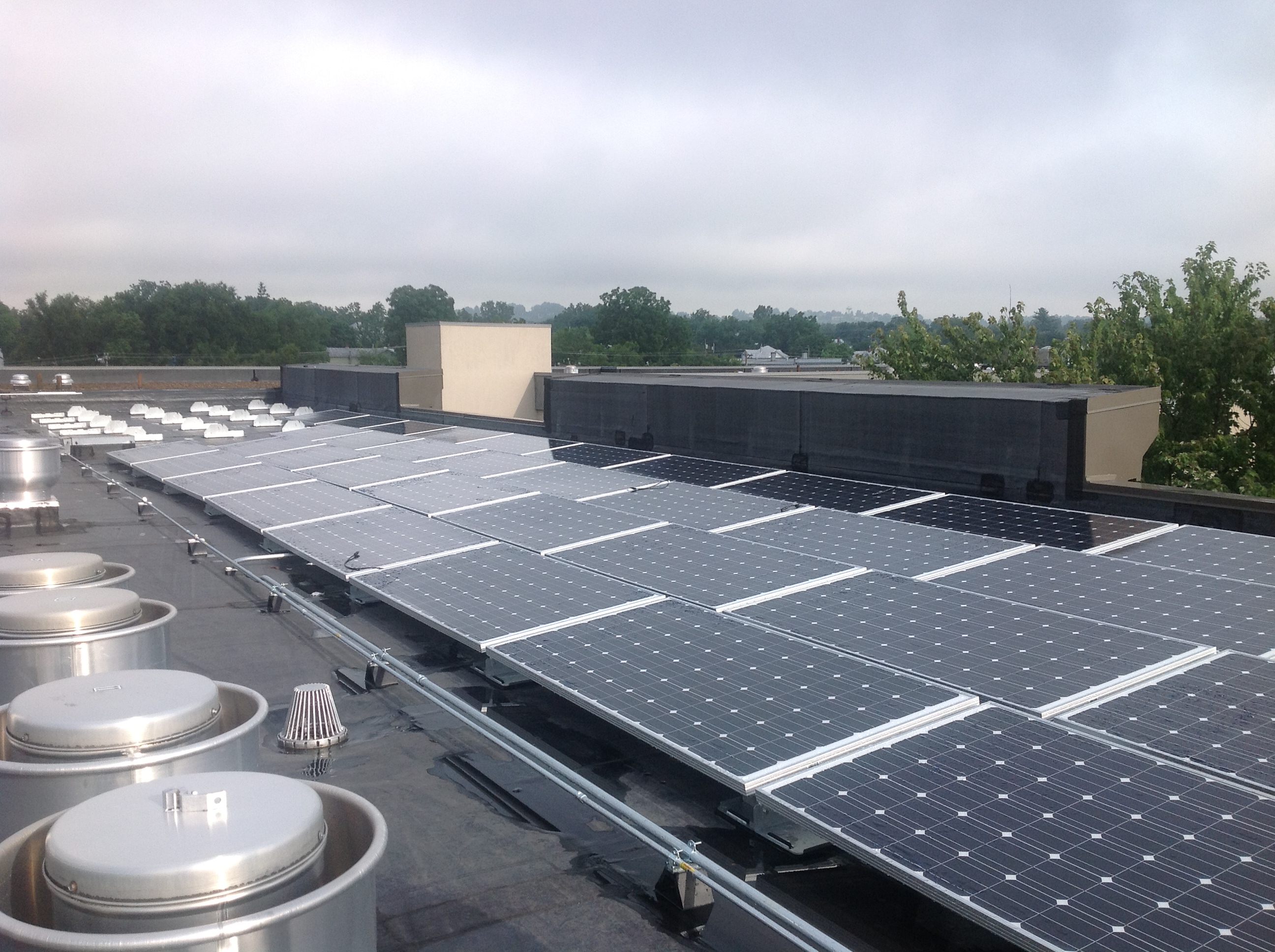
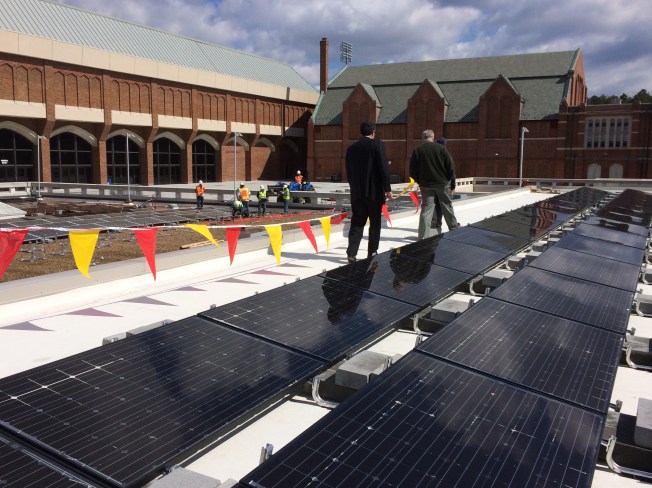
A third-party PPA made it possible to build this solar facility at the University of Richmond. Appalachian Power Company contends that a project like this would be illegal in its territory.

A third-party PPA made it possible to build this solar facility at the University of Richmond. Appalachian Power Company contends that a project like this would be illegal in its territory.

A hearing examiner for the Virginia State Corporation Commission recommended on August 31 that the SCC reject Appalachian Power Company’s proposed alternative to third-party power purchase agreements (PPAs) for renewable energy, concluding the program is not in the public interest. The parties will have three weeks to comment before the recommendation goes to the Commissioners for a final decision. The case is PUE-2015-00040.

The ruling against APCo’s proposed Rider RGP is less important to customers than the reasoning behind it. In addition to finding a myriad of faults with the proposal, the Hearing Examiner concluded it isn’t needed because PPAs are already legal under the Virginia Code. This is an outcome long sought by the solar industry and environmental groups, and one supported by the Attorney General’s Office of Consumer Counsel.

However, the Hearing Examiner’s report is merely a recommendation. Nothing is final until the Commissioners rule, and they could make a decision about Rider RGP without addressing the current legality of PPAs. Moreover, earlier this year, APCo proposed another program that it clearly hopes will nip in the bud any surge of PPA activity that might result from a decision in the present case. (I’ll get to that in a moment.)

The rejection of Rider RGP won’t disappoint any would-be customers. A long line of witnesses testified at the hearing on September 29, 2015 that APCo’s expensive and convoluted program would find no takers. As the Solar Research Institute summarized it, the proposed Rider RGP “would require a customer interested in a solar PPA to first pay for 100% of their service under the standard tariff, pay for 100% of the solar energy generated, pay a $30 program fee, and receive excess payments back through a Renewable Output Credit.” Oh, and they still wouldn’t be using renewable energy. (Note that although solar energy was the focus of the discussion for participants, the decision applies to other forms of renewable energy as well.)

The SCC staff made some suggestions to improve the program, but the hearing examiner, Deborah Ellenberg, concluded it was really beyond saving. Not only that, but the plain language of the Virginia Code makes third-party PPAs legal in the state already. Thus, there is no need for a utility-sponsored alternative.

Ellenberg pointed to two statutory provisions that support the legality of third-party PPAs. First, Virginia Code §56-577 A 5 provides that customers may purchase renewable energy from third-party sellers if their own utility does not offer a tariff for renewable energy. Specifically, customers may:

[P]urchase electric energy provided 100 percent from renewable energy from any supplier of electric energy licensed to sell retail electric energy within the Commonwealth . . . if the incumbent electric utility serving the exclusive service territory does not offer an approved tariff for electric energy provided 100 percent from renewable energy. . . .

Until now, APCo has offered only a green power program that sells RECs, which the SCC says doesn’t count.

The language of §56-577 sounds clear enough, but APCo and Dominion Power have maintained that this section only allows customers to go elsewhere if the other supplier can provide 100% of their electricity from renewable energy, something that can’t be done with a solar facility or a wind turbine.

This flimsy reading of the statute was the basis on which Dominion challenged a PPA at Washington and Lee University back in 2011. The issue was temporarily resolved two years later when Dominion and the solar industry agreed to a pilot program that now allows a limited number of PPAs in Dominion territory, under tight parameters that exclude residential customers. The program never applied in APCo territory, however—a sore point to customers there. APCo has clung to its reading of §56-577, regardless of the growing clamor for renewable energy in southwestern Virginia.

Ellenberg’s report flatly rejects the utility interpretation. If the SCC adopts her reading, any customer in APCo territory would be free to buy renewable energy from third-party suppliers, until APCo offers a qualifying program.

Ellenberg also cited Virginia’s net metering statute. Virginia Code §56-594 authorizes “customer generators” to enter into behind-the-meter PPAs with third parties that own and operate a renewable facility for the customer. Code §56-594 B defines an eligible customer generator for net metering purposes as “a customer that owns and operates, or contracts with other persons to own or operate, or both, an electrical generating facility that . . . uses as its total source of fuel renewable energy . . .” (emphasis added).

Interpreting this provision takes no special legal talent, surely. It would seem to cover residential and commercial facilities installed and owned by third-party developers, including the familiar no-money-down contract offered to residential customers by Solar City. But again, APCo and Dominion Virginia Power claim the Code doesn’t mean what it says. For more than five years they’ve backed up their position with threats of lawsuits, creating the kind of uncertainty that is toxic to development deals.

If the SCC’s final order endorses the hearing examiner’s finding that PPAs are currently legal, the result could be to open up the Virginia solar (and wind) market to large amounts of private investment statewide.

However, Ellenberg’s finding that PPAs are currently legal appears in her discussion but not in her recommendations to the commissioners; her recommendations are limited to the actions she proposes (rejecting or modifying the tariff). The SCC does not have to rule on the question of PPA legality in order to decide this case. Surely, though, it would be strange if it were to duck the opportunity now that the issue has been fully briefed. With solar a hot commodity across the state, the current legal limbo has become a significant economic drag that the SCC ought not to ignore.

As I mentioned, though, APCo still has one card up its sleeve. This spring it proposed a new tariff to offer its customers 100% renewable energy derived from existing wind, solar and hydro projects. The product appears to meet the condition of §56-577. If approved, it would slam shut the door that the Hearing Examiner just opened (or rather, that she said was open all along, if you had dared to go through it into the toxic miasma where gray-suited lawyers lay in wait). APCo’s request for approval of the tariff (PUE-2016-00051) is scheduled to be heard by the SCC on November 15, with comments due by November 8.

Solar advocates take a dim view of APCo’s move. The new tariff won’t build any new facilities; it simply shifts the burden of paying for existing renewable energy projects onto volunteers, at a significant premium. In today’s market, third-party developers can offer electricity generated by new solar projects at competitive prices. So APCo’s tariff looks less like an accommodation to its eco-conscious customers, and more like a maneuver to prevent anyone from building solar on its turf.

It’s high time the SCC put a stop to this anti-competitive behavior and let Virginians build solar projects with their own money. The Commissioners can follow the Hearing Examiner’s advice, or they can take a pragmatic approach and recognize that PPAs are really just a way to finance projects. They don’t turn solar developers into utilities, and APCo should stop wasting everyone’s time and money blocking private investment in a part of the Commonwealth that desperately needs it.

Unknown's avatar

Charging green customers more without doing more: Appalachian Power discovers the beauty of market segmentation, and moves to block competition

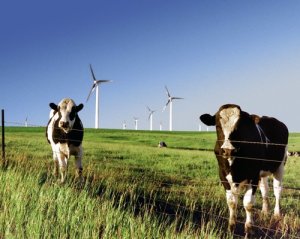
This wind farm isn't in Virginia, and APCo's proposal doesn't include building any new wind. But the cows are cute. Photo credit: NREL

This wind farm isn’t in Virginia, and APCo’s proposal doesn’t include building any new wind. But the cows are cute. Photo credit: NREL

Appalachian Power Company has asked the State Corporation Commission to approve a 100% renewable energy product it wants to offer its environmentally-conscious electricity customers. These customers would pay about 18% more for a combination of wind and hydro than they currently do for “brown” power. But APCo doesn’t plan to build new facilities. It will simply segregate out some of its existing wind and hydro (none of it in Virginia) to package as a new, higher-priced product.[i] The case is PUE-2016-00051.

Since APCo currently sells the renewable energy certificates (RECs) associated with these wind and hydro projects to buyers elsewhere, the change means it would terminate those contracts and provide the RECs to its green energy customers along with the electricity. RECs represent the “renewable attributes” of the power (the bragging rights, if you will), so the electricity by itself doesn’t count as renewable if it doesn’t come with the RECs.

The price of RECs represents only a part of the 18% premium. RECs are really cheap nationally, because supply exceeds demand.[ii] Another driver of the premium is that wind energy was more expensive back in 2007-2010, when these projects were built. Falling wind prices and a natural gas glut have pushed overall energy prices down since then. APCo customers are still paying off the cost of its wind farms (or in the case of two of them, are still paying on power purchase contracts). APCo proposes to shift the burden of paying for those wind farms onto the customers it believes are willing to pay more. At least theoretically, this means it will also reduce the price it charges the rest of its customers, who (it assumes) don’t care where their power comes from.

APCo says if demand is high enough, it will invest in new renewable energy facilities to add supply, which might decrease the cost of the tariff in the future. Cost declines have made new wind competitive with fossil fuels, so a tariff based on new facilities would have lower pricing.

Page 37 of APCo’s filing shows the effect of the accounting change on a customer’s bill for a residential customer using 120 kWh/month:

100% RE: $160,  non-RE customers: $135

or an extra $25/month, $300/year

By my math that comes out to:

100% RE: 13.3 cents/kWh,   non-RE customers: 11.3 cents/kWh

No doubt APCo is responding to consumer demand in proposing this renewable energy tariff. Virginians have become much more vocal, and much less patient, about wanting their utilities to invest in clean energy. But APCo has less virtuous motives as well. Offering electricity generated by 100% renewable energy closes off one avenue under which solar developers currently argue that third-party power purchase agreements (PPAs) are legal. PPAs are a common tool for financing solar projects, and are the only way some customers can afford to buy renewable energy. They are not being used today in APCo territory because of the risk that the utility will sue, claiming a violation of its monopoly on electricity sales.

The Virginia Code contains an exception to utilities’ exclusive monopoly in their territory: if a utility doesn’t sell 100% renewable energy to its customers, anyone else can. The SCC previously ruled that selling RECs doesn’t count, so APCo and Dominion’s own green power programs (consisting mostly of overpriced RECs) do not close the loophole. I have always wondered why they didn’t just do what APCo now proposes, if for no other reason than to close the loophole. The Code says nothing about the green power having to be reasonably priced.

Recall that we are still waiting for the SCC to rule on APCo’s terrible PPA-alternative proposal. The solar industry and environmental groups opposed the proposal not just because it was expensive, convoluted and certain to fail, but also because the Code’s renewable energy exception appears to allow PPAs already, making the APCo program unnecessary.[iii]

APCo and Dominion argue that the Code exception applies only where the seller supplies 100% of the customer’s demand, 100% of the time, with 100% renewable energy. A single wind farm can’t guarantee around-the-clock output, so APCo has combined wind energy with some hydro. That’s something a wind or solar developer can’t do, especially when the developer is merely putting solar panels on a customer’s roof.

These are nice legal arguments guaranteed to keep lawyers employed and the market in limbo. From the public policy point of view, though, there is nothing to be gained by suppressing the renewable energy market. Why squelch private investment and deny customers the right to use a popular financing tool to install wind and solar? For customers willing to pay a premium, why limit them to APCo’s product? If a company wants only wind power or solar power, why not let them contract with any willing provider?

The SCC should definitively declare in favor of PPAs, open the market to competition, and let the free market get to work. If the SCC won’t do it, the legislature should. If customers want APCo’s renewable energy product, terrific. If they can do better elsewhere, let them. We all win by creating new clean energy jobs, having carbon-free electricity displace fossil fuels, and giving customers the products they want.


[i] Page 6 of APCo’s Petition states: “Initially, the Company will assign to Rider REO the output of its renewable generators that are currently under long-term Purchased Power Agreements (the ‘Renewable PPAs’): the Summerville hydro-electric facility, and the Camp Grove, Fowler Ridge, Beech Ridge, and Grand Ridge wind facilities.” The Summersville dam, in West Virginia, was built in 2001. The Camp Grove Wind farm is in Illinois and began operation in 2007. Fowler Ridge, in Indiana, was commissioned in 2008. Beech Ridge, in West Virginia, became operational in 2010. Grand Ridge, in Illinois, was built in 2009.

[ii] It appears from APCo’s filing that its wind RECs sell for $18/MWh, or 1.8 cents/kWh. I don’t see a price stated for hydro RECs in APCO’s filing, but they typically have little value.

[iii] A second basis for believing that PPAs are legal does not rely on the Code exception. Rulings from Iowa and New Hampshire have recognized that PPAs involving rooftop solar are not the kind of electricity sales covered by public utility regulations. APCo’s new offering does not undercut that argument.


Update: on June 21, 2017, a Hearing Examiner recommended that the SCC reject APCo’s application, finding it not in the public interest. See my discussion of that ruling here. The SCC commissioners will have the final say, however.

Unknown's avatar

Virginia wind and solar companies say tax credit extensions cue up a happy new year

Photo by Dennis Schroeder / NREL

Photo by Dennis Schroeder / NREL

Congress included a welcome gift to the wind and solar industries in last week’s package of goodies that made up the year-end spending bill. For the wind industry, the renewal of the expired production tax credit (PTC) with a five-year phase-out finally ends the guessing game that has driven repeated boom-and-bust cycles—and will help Virginia’s first-ever wind farm move forward.

For solar, the extension of the investment tax credit (ITC) beyond the end of next year ensures that one of the fastest-growing industries in the U.S. won’t face a major disruption that would have driven many small companies out of business. That’s critical in Virginia, where the lack of incentives has left the market mostly to small players able to get by on small profit margins. As the economics of solar continuously improve, these small companies see a bright future in the Commonwealth.

I asked several Virginia industry members how they were feeling after Congress’ year-end gift.

“The certainty the tax credit extension gives our business is critical,” answered Jeff Nicholson, Director of Development for Waynesboro-based Sigora Solar. “While there won’t be as much of a crunch to get systems installed next year, we can hire without being concerned that the market for solar will plummet in a year.”

Sigora has been one of Virginia’s most remarkable small business success stories, growing from 11 employees at the beginning of 2015 to 44 today. With the ITC extension, the company now foresees a “long-term, steady stream of business” through the rest of the decade, said Nicholson.

The 30% ITC had been set to expire at the end of 2016 for residential customers, while dropping to 10% for commercial and utility-scale projects. Under the bill passed by Congress and signed by President Obama on December 18, the tax credit will remain at 30% for all systems through 2018, and then taper off gradually until it reaches 10% in 2022. If current price trends continue, the extra few years may be enough to make solar competitive with other fuels without subsidies.

“We know solar is a solid energy production fuel, every bit as viable as coal, oil, nuclear and wind, and it is clear that the more we build, the more cost effective it becomes,” said Paul Risberg, President of Charlottesville-based Altenergy Incorporated. Altenergy grew by 40% in 2015, and Risberg told me he now expects that trend to continue in 2016.

Another Virginia success story is Staunton-based Secure Futures LLC, which has carved out a niche supplying solar energy to tax-exempt entities like universities and local government entities in Virginia, using third-party power purchase agreements. CEO Tony Smith told me, “The ITC extension means that our business can continue to offer at or below grid-parity solar electricity to our commercial scale customers beyond 2016.”

But, he added, “It still remains challenging to attract investment in Virginia due to the disparity in incentives to solar in our state as compared with our neighboring states, especially for behind-the-meter third party owned solar.  We remain hopeful that our industry will continue to build support in Richmond to reduce the barriers to solar investment in Virginia.”

The Virginia solar industry got an extra year-end gift on Monday when Governor Terry MacAuliffe announced plans for the state government to buy 110 megawatts of solar over the next three years, accounting for 8% of its electricity usage. While 75% of that will be utility-scale solar to be built by Virginia Dominion Power, 25% will consist of on-site projects of less than 2 megawatts in size, to be built by third-party developers using power purchase agreements.* The state will follow a competitive procurement process, but in response to a question at the press conference, MacAuliffe said it will not limit participation to Virginia-based companies.

Still, the Virginia industry members were optimistic the announcement would help boost the profile of solar energy in the Commonwealth. The industry trade group, MDV-SEIA, says it participated in the discussions leading to the announcement.

Virginia has a lot of catching-up to do, of course; neighboring states are so far ahead and have so much momentum that, as the Virginia Sierra Club’s Glen Besa observed, “If Dominion sticks to its commitment (of 400 megawatts of solar by 2020), we’ll be further behind on solar than we are now.”

Photo credit NREL

Photo credit NREL

Like the ITC for solar, the 2.3 cents per kilowatt-hour PTC has been a crucial support for the wind industry, making it the second-biggest source of new electric generation in the U.S. for many years now. But until last week, Congress had been reluctant to extend the PTC for more than a year at a time, sometimes retroactively, causing havoc for planners and developers and leading to boom-and-bust cycles deeply damaging to growth.

Now the PTC will be extended through 2016 before tapering off and expiring altogether at the end of 2019. Projects that “commence construction” by the end of a given year will qualify at that year’s level. (“Commence construction” language was also added to the solar ITC.) The predictability that comes with the five-year tapering-off period is expected to finally bring stability to project planning.

And like the solar industry, the wind industry now predicts bright days ahead. Bruce Burcat, Executive Director of the Mid-Atlantic Renewable Energy Coalition, told me, “Sound policies like the PTC have driven innovation which has helped reduce the cost of wind energy down by about 66 percent over the past six years, making it highly price competitive with traditional forms of energy resources. This trend bodes well for the opportunity for wind to take hold in Virginia.”

Burcat is undeterred by Virginia’s lack of success with wind farms to date. “While no wind farms have been developed in Virginia, we believe that with the right signals from the Commonwealth, Virginia could see its first wind farms developed sometime in the next few years,” he said. “Wind farms would bring investment and jobs and other economic development opportunities to Virginia.  Wind farms would also be a very important tool for cleanly and cost-effectively helping Virginia meet the requirements of the EPA’s Clean Power Plan.”

Virginia’s first wind farm is expected to be Apex Clean Energy’s 75-MW Rocky Forge project in Botetourt County, which the company projects to have operational in 2017. Tyson Utt, Apex’s Director of Development for the Mid-Atlantic, told me, “The extension of the PTC will enable the facility to charge less for the energy it produces, saving electricity consumers money.” And, he added, “The project will be built on private land with private investment and will help diversify Virginia’s energy mix while injecting millions into the local economy.”

Apex also has a second wind farm of up to 180 MW under development in Pulaski County, scheduled for completion in 2017 or 2018.

Utt agrees the wind industry won’t need incentives for long to compete with fossil fuels. “The PTC exists to help level the playing field for renewable energy, relative to legacy generation sources that have benefited from permanent subsidies for decades. That said, renewable energy is becoming so economically competitive on its own that the industry now feels comfortable accepting a phase out of the PTC over the next five years, and the tax extenders package that just passed through congress does exactly this. Of course, wind energy offers additional benefits that are not currently reflected in our incentive structure, including the ability to generate electricity without producing carbon dioxide or consuming water. We expect that as our nation moves towards the recognition that there should be a price placed on carbon, wind energy will become even more competitive with conventional generation sources.”

[UPDATE: on January 6, the Associated Press reported that Appalachian Power is seeking to buy up to 150 MW of wind power through direct ownership or long-term power purchase agreements.]

In addition to the tax credit extensions for wind and solar, Congress passed other clean energy incentives that have gotten less attention. Scott Sklar, President of the Arlington-based Stella Group, Ltd. and an adjunct professor at George Washington University, noted that other renewable technologies also qualified for tax credits, and a tax deduction for energy efficiency improvements in commercial buildings was renewed. He also pointed to provisions in the Highway Authorization Act passed into law this month that favor renewable energy. As a result, he told me, “The end-of-year passage by Congress of extensions for the entire portfolio of energy efficiency and renewable energy, coupled with the infrastructure incentives for renewable energy in the highway bill, will more than double private investment into these sectors over the next six years.”

Sklar is bullish on clean energy. “With expanding markets, allowing these technologies to-scale even further, will insure electric grid and fuel parity before 2020, and also insure that renewable energy and energy efficiency will become the dominant energy provider both in the US and the world.”

I should note, though, that not everyone was entirely happy with Congress last week. Though they lauded the tax credit extensions, environmental groups including the Sierra Club opposed the lifting of the oil export ban that Republicans demanded in return. Exporting American crude oil, they fear, will lead to more drilling in the U.S. and higher oil consumption worldwide, further driving climate change. And while wind and solar compete head-to-head with the biggest climate culprit, coal, currently they offer little competition for oil in the transportation sector.

But with a world-wide oil glut that shows no signs of easing, observers including Sklar think lifting the export ban won’t have much effect in the near term. The extension of the renewable energy tax credits, on the other hand, will help push clean energy pricing to a point where wind and solar dominate the market for new electricity generation. According to an analysis by the Council on Foreign Relations, “Extension of the tax credits will do far more to reduce carbon dioxide emissions over the next five years than lifting the export ban will do to increase them.”

So it’s easy to see coal as the biggest loser here, but Big Oil shouldn’t feel too smug. As battery storage becomes more affordable and electric cars gain market share, wind and solar will begin to displace oil, too. The future, my friends, belongs to clean energy.

Here’s to 2016!

________________________

*The astute reader may wonder how the Governor persuaded Dominion to allow it to buy electricity from third-party providers in spite of Dominion’s tireless defense of its monopoly on electricity sales and its reluctance to allow other customers to use PPAs outside the narrow confines of a pilot program. Unlike most of us, the state purchases power from Dominion under a contract, rather than under a tariff overseen by the State Corporation Commission. So allowing the state to use PPAs required negotiating a change to the contract but does not have immediate ramifications for lesser folk. But still: at some point, doesn’t it become obvious that restrictions on PPAs are simply holding the market back?

And even all you astute readers may not have thought to ask: when the state buys solar electricity from Dominion or third parties, who will own the RECs? After all, it is not the guy with the solar system on his roof who can legally claim to be using solar energy, but the guy holding the renewable energy certificates (RECs) associated with that energy. If the state wants to brag about meeting its new goal of 8% of its electricity from solar, it had better hold the RECs to prove it—and not, for example, allow Dominion to sell the RECs to a Pennsylvania utility or to the voluntary participants of its Green Power Program. When I asked Deputy Secretary of Commerce Hayes Framme about this, however, he said the question of who will own the RECs “has yet to be determined.”

Unknown's avatar

APCo tries to quell criticism on solar policies, and just makes matters worse

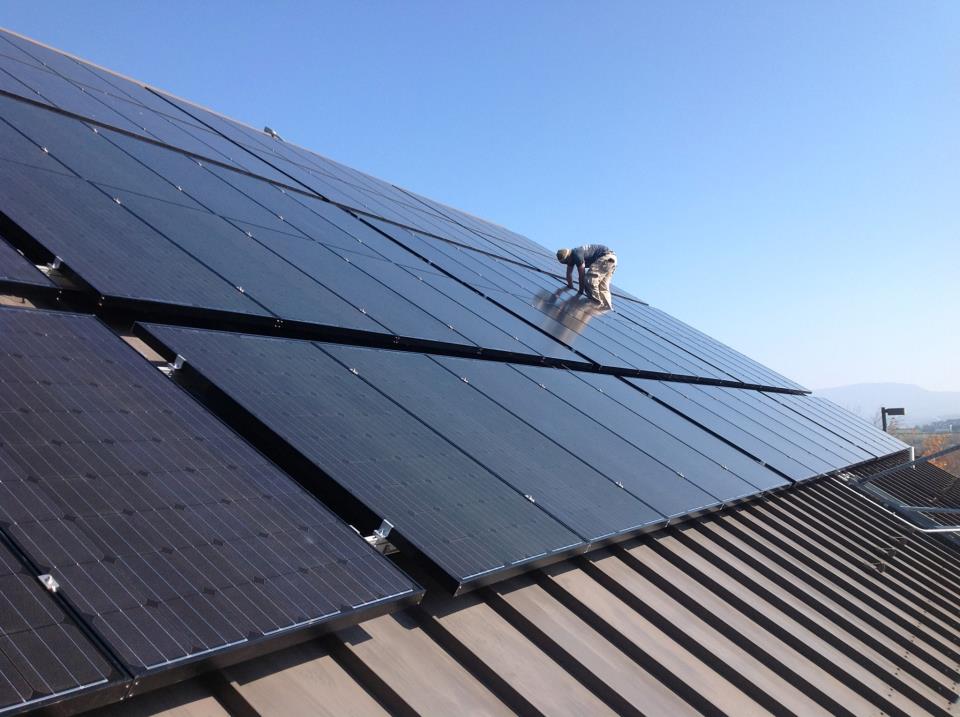
Photo credit Matt Ruscio, Secure Futures LLC

Photo credit Matt Ruscio, Secure Futures LLC

Appalachian Power Company (APCo) has spent the past two years ducking its Virginia customers who want the ability to buy solar power from third-party providers. This spring it finally unveiled what it claims will be the answer to their prayers: a bizarre, convoluted “Experimental Rider R.G.P.,” available only to certain larger customers like colleges and universities.

Under this proposal, a customer can arrange to have solar panels installed and owned by a third party developer but won’t be allowed to use the electricity or take advantage of net metering, as it would if it owned the system itself. The customer will have to continue buying dirty electricity from APCo, while the solar electricity the customer is also paying for is sold onto the grid, and the customer credited for its value according to a complicated and unfriendly formula. Instead of breaking even or saving money on electricity bills by going solar, the customer will pay substantially more.

By contrast, normally a customer who installs solar uses the solar electricity “behind the meter,” reducing the use of dirty electricity from the grid and saving money, especially if it had been paying high demand charges to its utility, as many institutions do.*

The limitations and poor economics of APCo’s proposal has would-be customers and solar advocates crying foul. According to an analysis by Professor Mark “Buzz” Belleville of the Appalachian School of Law in Grundy, VA, the program is so expensive that it’s not likely to get any takers. Worse, he concludes, “The [State Corporation Commission’s] approval of the proposal would actually be counterproductive to solar deployment in Virginia.”

That’s because “APCo will be able to claim that they made a [Power Purchase Agreement] program available, and the fact no one signed up shows that there is simply not a demand for PPAs in SW Virginia. Moreover, the SCC’s approval may strengthen APCo’s argument that PPAs are not legally permissible in APCo territory unless they are entered into pursuant to its SCC-approved program, and it will lay the groundwork for utilities to argue that a customer who has a PPA is not eligible for net metering under Va. Code §56-594.”

Understanding what’s at stake here requires a short history lesson. Back in 2011, a solar developer out of Staunton, Virginia, called Secure Futures LLC installed a solar array on a rooftop at Washington & Lee University. The parties used a popular financing approach known as a third-party power purchase agreement (PPA), which can let a customer go solar with no money down by having the developer keep ownership of the solar panels and sell the electricity they produce to the customer.

Federal tax rules make PPAs especially important for tax-exempt entities like colleges that can’t use the 30% federal tax credit for renewable energy facilities. When a for-profit solar developer owns a facility, however, it can take the tax credit and pass on the savings to the customer.

PPAs appeared to be explicitly authorized under Virginia law, but when Dominion Virginia Power got wind of the arrangement at Washington & Lee it moved quickly to block it, claiming a violation of its monopoly on the sale of electricity within its territory. Dominion’s weak legal position didn’t matter; the mere threat that the utility giant would unleash its army of lawyers was enough to stop the PPA in its tracks. The university completed its solar installation using an alternative, non-PPA approach.

Dominion had won the skirmish, but at a price. The utility took such a drubbing in the court of public opinion that it eventually acceded to legislation in 2013 establishing a limited “pilot program” under which not-for-profit entities and some commercial businesses can use PPAs, at least through the end of 2015. Secure Futures has gone on to develop additional solar projects in Virginia under the legislation, including at the University of Richmond and, under a just-announced deal, at six Albermarle County schools.

APCo, however, didn’t participate in the pilot program, and it has steadfastly resisted efforts to bring it into the fold, even in the face of mounting criticism. As Belleville pointed out in a Roanoke Times op-ed in March of 2014, the failure to extend the PPA law to residents of APCo territory put southwest Virginia at an economic disadvantage, closing it off to business opportunities that are available elsewhere in the state. Yet utility lobbying successfully defeated legislation this year that would have made PPAs explicitly legal statewide.

So southwest Virginia’s state of limbo persists, with many legal experts advising that PPAs are legal there under Virginia law, but most developers and customers unwilling to expose themselves to prolonged and expensive litigation to find out for sure. This state of affairs suits APCo very well. No doubt it calculates that the worst that can happen now is that the SCC rejects its rider and prolongs the state of limbo. Then the utility’s lobbyists will tell legislators it did its best to help customers but was prevented from doing so by that darned SCC.

APCo’s actions are those of a rational monopolist facing the threat of competition; it is easier to keep a competitor out of your market than it is to improve your product. But its efforts to throw roadblocks in the way of solar also reflect the suspicion, shared by many American utilities, that distributed solar generation benefits only the customer who installs it, at the expense of the utility and other customers. They believe this justifies them in making solar more expensive, even if it means preventing projects from being developed altogether.

This is a textbook example of cutting off your nose to spite your face, given the need for a rapid build-out of distributed solar generation to fight climate change and strengthen grid security. These are not considerations that hold much sway with Virginia’s SCC, however, so let’s confine ourselves to the cost argument.

The problem for APCo is that the notion that distributed solar increases costs for other ratepayers is mere conjecture, and neither APCo nor Dominion has offered any hard data to support it. Indeed, the only evidence from Virginia points the other way, according to Secure Futures CEO Tony Smith.

Since his company’s skirmish with Dominion, Smith has worked with a municipal utility, Harrisonburg Electric Commission (HEC), to study the financial impacts to the utility of Secure Futures’ first Virginia PPA project, a 104-kilowatt array installed in 2010 at Eastern Mennonite University in Harrisonburg (outside of Dominion territory).

The case study measured only the energy and capacity-related impacts of the solar array on the utility, ignoring the wide range of other benefits often considered in “value of solar” analyses. Analyzing three years’ worth of data, Smith found that the EMU array provided an average net benefit to the utility of $22.78 per kilowatt per year. The full technical analysis is available here. In an article soon to be published in the May/June issue of Solar Today, Smith writes:

Using a net benefit model developed in consultation with HEC management, we find that in the case of the EMU solar installation, the benefits to HEC outweigh the costs . . . Our net benefit results suggest that within HEC territory, solar installed for a commercial customer with demand exceeding 1,000 kW benefits all municipal utility stakeholders, including non-participants.

Certainly it would be interesting to repeat the analysis with data from more Virginia projects, including ones in APCo’s territory. But first, those projects have to get built. Right now that isn’t happening due to the PPA limbo. If APCo’s Experimental Rider gets approved—well, the projects still won’t get built, because no one will sign up.

Flip a coin: heads APCo wins, tails customers lose.

The SCC case is No. PUE-2015-00040. An evidentiary hearing is scheduled for September 29 at the SCC offices in Richmond, Virginia.

___________________________________

*Residential customers don’t pay demand charges, making this an unfamiliar concept to many people. Demand charges (KW) are fees over and above the cost of energy usage (kWh) that are assessed according to a customer’s peak power requirements, measured as the highest peak demand in a given 30-minute period during the month. For many institutions, demand charges can exceed the cost of energy usage, and using solar electricity to reduce peak demand is often a compelling reason to look at solar in the first place.

Unknown's avatar

McAuliffe’s Energy Plan has a little something for (almost) everyone

On October 1, the Virginia Department of Mines, Minerals and Energy released the McAuliffe administration’s rewrite of the Virginia Energy Plan. Tomorrow, on October 14, Governor McAuliffe is scheduled to speak about the plan at an “executive briefing” to be held at the Science Museum of Virginia in Richmond. Will he talk most about fossil fuels, or clean energy? Chances are, we’ll hear a lot about both.

Like the versions written by previous governors, McAuliffe’s plan boasts of an “all of the above” approach. But don’t let that put you off. In spite of major lapses of the drill-baby-drill variety, this plan has more about solar energy, offshore wind, and energy efficiency, and less about coal, than we are used to seeing from a Virginia governor.

Keep in mind that although the Virginia Code requires an energy plan rewrite every four years, the plan does not have the force of law. It is intended to lay out principles, to be the governor’s platform and a basis for action, not the action itself. This is why they tend to look like such a hodge-podge: it’s just so easy to promise every constituency what it wants. The fights come in the General Assembly, when the various interests look for follow-through.

Here’s my take on some of the major recommendations: IMG_3954

Renewable energy. Advocates and energy libertarians will like the barrier-busting approach called for in the Energy Plan, including raising the cap on customer-owned solar and other renewables from the current 1% of a utility’s peak load to 3%; allowing neighborhoods and office parks to develop and share renewable energy projects; allowing third-party power purchase agreements (PPAs) statewide and doubling both the size of projects allowed and the overall program limit; and increasing the size limits on both residential (to 40 kW) and commercial (to 1 MW) net metered projects, with standby charges allowed only for projects over 20 kW (up from the current 10 kW for residential, but seemingly now to be applied to all systems).

It also proposes a program that would allow utilities to build off-site solar facilities on behalf of subscribers and provide on-bill financing to pay for it. This sounds rather like a true green power program, but here the customers would pay to build and own the project instead of simply buying electricity from renewable energy projects.

Elsewhere in the recommendations, the plan calls for “flexible financing mechanisms” that would support both energy projects and energy efficiency.

In case unleashing the power of customers doesn’t do enough for solar, the plan also calls for the establishment of a Virginia Solar Energy Development Authority tasked with the development of 15 megawatts (MW) of solar energy at state and local government facilities by June 30, 2017, and another 15 MW of private sector solar by the same date. Though extremely modest by the standards of Maryland and North Carolina, these goals, if met, would about triple Virginia’s current total. I do like the fact that these are near-term goals designed to boost the industry quickly. But let’s face it: these drops don’t even wet the bucket. We need gigawatts of solar over the next few decades, so let’s set some serious long-term goals for this Authority, and give it the tools to achieve them.

Finally, the plan reiterates the governor’s enthusiasm for building offshore wind, using lots of exciting words (“full,” “swift,” “with vigor”), but neglecting how to make it happen. Offshore wind is this governor’s Big Idea. I’d have expected more of a plan.

And while we’re in “I’d have expected more” territory, you have to wonder whatever happened to the mandatory Renewable Portfolio Standard that McAuliffe championed when running for office. Maybe our RPS is too hopeless even for a hopeless optimist.

Energy Efficiency. Reducing energy consumption and saving money for consumers and government are no-brainer concepts that have led to ratepayers in many other states paying lower electricity bills than we do, even in the face of higher rates. Everyone can get behind energy efficiency, with the exception of utilities that make money selling more electricity. (Oh, wait—those would be our utilities.) The Energy Plan calls for establishing a Virginia Board on Energy Efficiency, tasked with getting us to the state’s goal of 10% savings two years ahead of schedule. But glaringly absent is any mention of the role of building codes. Recall that Governor McDonnell bowed to the home builders and allowed a weakened version of the residential building code to take effect. So far Governor McAuliffe hasn’t reversed that decision. If he is serious about energy efficiency, this is an obvious, easy step. Where is it?

Fracking_Site_in_Warren_Center,_PA_04

Natural Gas. Did I say offshore wind was the governor’s Big Idea? Well, now he’s got a bigger one: that 500-mile long natural gas pipeline Dominion wants to build from West Virginia through the middle of Virginia and down to North Carolina. Governor McAuliffe gets starry-eyed talking about fracked gas powering a new industrial age in Virginia. So it’s not surprising that the Energy Plan includes support for gas pipelines among other infrastructure projects. As for fracking itself, though, the recommendations have nothing to say. A curious omission, surely? And while we are on the subject of natural gas, this plan is a real testament to the lobbying prowess of the folks pushing for natural gas vehicles. Given how little appetite the public has shown for this niche market, it’s remarkable to see more than a page of recommendations for subsidies and mandates. Some of these would apply to electric vehicles as well. But if we really want to reduce energy use in transportation, shouldn’t we give people more alternatives to vehicles? It’s too bad sidewalks, bicycles and mass transit (however fueled) get no mention in the plan.

Photo credit Ed Brown, Wikimedia Commons.

Coal. Coal has fallen on hard times, indeed, when even Virginia’s energy plan makes no recommendations involving it. Oh, there’s a whole section about creating export markets for coal technology, as in, helping people who currently sell equipment to American coal companies find a living in other ways. These might be Chinese coal mining companies; but then again, they might be companies that mine metals in Eastern Europe, or build tunnels, or do something totally different. The Energy Plan seems to be saying that coal may be on its way out, but there’s no reason it should drag the whole supply chain down with it. Good thinking.

Nuclear. If you think the coal industry has taken a beating these past few years, consider nuclear. Nationwide, the few new projects that haven’t been canceled are behind schedule and over budget, going forward at all only thanks to the liberality of Uncle Sam and the gullibility of state lawmakers. But there it is in the Energy Plan: we’re going to be “a national and global leader in nuclear energy.” Watch your wallets, people. Dominion already raided them for $300 million worth of development costs for a third plant at North Anna. That was just a down payment.

Photo: U.S. Coast Guard

Photo: U.S. Coast Guard

Offshore drilling. As with nuclear, favoring offshore oil drilling seems to be some kind of perverse obsession for many Virginia politicians. Sure enough, the energy plan says we should “fully support” it. As for the downside potential for a massive spill of crude oil fouling beaches, ruining fishing grounds, destroying the coastal tourism economy, and killing vast numbers of marine animals, the plan says we must be prepared “to provide a timely and comprehensive response.” I bet Louisiana was at least equally prepared.

Unknown's avatar

A new business model for non-profits brings solar into hostile territory


Solar panels over the entrance to the First Congregational Christian United Church of Christ. Photo credit: Matt Ruscio

Solar panels over the entrance to the First Congregational Christian United Church of Christ. Photo credit: Matt Ruscio

Fourteen solar panels crown the entrance to the First Congregational Christian United Church of Christ in Chesterfield, Virginia. The small array generates 10% or so of the church’s electricity, but the project is notable for a different reason: it was the first solar system installed anywhere under a new kind of contract called a Customer Self-Generation Agreement. The agreement allowed the church go solar with no money down, and without increasing its electricity costs.

The Customer Self-Generation Agreement (CSGA) is the brainchild of Tony Smith, founder and CEO of Secure Futures LLC, a solar developer based in Staunton, Virginia. Under its agreement with the church, Secure Futures owns the solar panels and reaps the federal tax benefits that make solar affordable. The church gets the electrical output of the system over the twenty-year life of the contract. Neither a lease (which would bar the church from getting the tax benefits) nor a third-party power purchase agreement (which the incumbent utility would have opposed), the CSGA occupies a financing niche all of its own.

For Secure Futures, the CSGA was born of necessity. In 2011, the company was blocked from completing a solar array at Washington and Lee University when Dominion Virginia Power sent “cease and desist” letters claiming the parties’ use of a third-party power purchase agreement (PPA) violated the utility’s monopoly on the sale of electricity. Although convinced it had the law on its side, Secure Futures backed down in the face of expensive litigation. The solar installation was only completed by turning the PPA into a lease and losing some of the tax benefits.

Tony Smith. Courtesy of Secure Futures.

Tony Smith. Courtesy of Secure Futures.

Secure Futures had been building a place for itself in the nonprofit world, appealing especially to colleges and universities that want solar power as part of their sustainability goals. The company’s 104-kW solar array at Eastern Mennonite University in Harrisonburg, Virginia, completed in 2010, was the first PPA in Virginia and, at the time, the largest solar array in the state. But that project was not in Dominion’s territory.

For a state like Virginia with few policies to support solar, accessing the federal tax credits is critical to financing a solar project. Tax-exempt entities like municipalities, schools and churches are a natural customer base for solar, but because they cannot use the federal tax credits themselves, they must partner with a tax-paying company that can own the project. Third-party PPAs have been the answer in states that allow them. PPAs also frequently offer a no-money-down option, which has proven a huge market driver in recent years for homes and businesses as well as non-profits.

Solar array installed by Secure Futures for the Harrisonburg Redevelopment and Housing Authority using a CSGA. Photo courtesy of Secure Futures.

Solar array installed by Secure Futures for the Harrisonburg Redevelopment and Housing Authority using a CSGA. Photo courtesy of Secure Futures.

But after the Washington and Lee experience demonstrated both Dominion’s hostility to PPAs and its willingness to use its legal firepower, Tony Smith decided to seek another way through the legal thicket. Working with regulatory lawyer Eric Hurlocker and tax specialists at Hunton and Williams, Secure Futures developed an innovative contract model that could provide the tax benefits of a PPA without running afoul of utility monopoly claims. CSGAs are contracts for solar services but, crucially, don’t involve the sale of electricity.

Although Dominion Power eventually relented enough to cooperate on a bill passed in 2013 that allows a small number of PPAs within its territory on a “pilot project” basis, Secure Futures has continued to use the CSGA model in subsequent projects because it offers features that a standard PPA does not.

Perhaps more importantly, neither Dominion nor any other utility has signaled opposition to CSGAs. Suddenly, Secure Futures’ niche looks huge. The ability to use CSGAs wherever PPAs would make financial sense opens up new opportunities among non-profits not just in Virginia, but in all of the 28 states where PPAs are currently either illegal or of uncertain status. As Smith notes, no state bars customers from generating electricity for their own use.

While Smith is eager to see his company grow, he says his larger goal has always been to open the floodgates for solar projects across the country where they are held back now only by outdated laws and flawed policies. He hopes to license the CSGA approach, ideally to a non-profit that could work with developers across the South to make this contract model widely available.

Virginia has always been a hard place to do business for solar companies, so much so that Smith refers to it as a ”dark state.” Knocking down the PPA barrier won’t bring the sunshine in all by itself, but it does create an opening.


Unknown's avatar

Workshops on renewable energy for Virginia non-profits draw large crowds

Photo credit: Corrina Beall

Photo credit: Corrina Beall

Over 90 people packed the fellowship hall of the Mount Vernon Unitarian Church in Alexandria on the evening of June 23d for a presentation on solar power opportunities for houses of worship and other non-profits. Later in the week, more than 50 people attended a similar workshop at Virginia Union University in Richmond, designed primarily for colleges and universities.

In both places, the audience was there to learn about an opportunity provided by a new law that took effect in Virginia July 1. The law allows non-profits to use what are known as “third-party power purchase agreements,” or PPAs, to finance solar and wind installations. The PPAs let customers use clean, renewable energy for the same price—or even less-–as grid-delivered power produced from dirty fossil fuels. PPAs have been the driving force behind most small solar installations nationwide in recent years, and advocates hope they will now do the same in Virginia.

For-profit entities will also be able to use the new law, but only if they install a project of at least 50 kilowatts in size. Residential systems, which are typically in the 4-8 kilowatt range, are excluded. The law applies only within the territory of Dominion Virginia Power, and projects must be installed within the next two years, unless the program is extended.

The groups that organized the workshops—the Sierra Club, Interfaith Power & Light, National Wildlife Federation and the Virginia Conservation Network—view the new law as an opportunity for Virginia to begin ramping up its tiny solar and wind industries.

The Sierra Club has worked closely with the solar industry nationwide as a way to increase the use of renewable energy in the U.S., largely as a way to combat climate disruption. The club’s Beyond Coal Campaign seeks to ensure that as the dirtiest coal plants are retired, America’s energy needs can be met with clean energy rather than fossil fuels.

For the church workshop, Sierra Club partnered with Interfaith Power & Light (MD.DC.NoVa) because of its experience with congregations in Maryland and DC, helping them to go solar. Interfaith Power & Light has been a vigorous advocate for clean energy within area faith communities. Similarly, Sierra Club chose to partner with National Wildlife Federation for the college workshop because of its ongoing “green campuses” initiative nationwide.

Photo credit: Corrina Beall

Photo credit: Corrina Beall

Getting solar projects done in Virginia poses a challenge. Many states have encouraged the growth of solar and wind power through aggressive targets for renewable energy backed up by incentives and utility mandates, but Virginia offers neither. The state’s wind industry is essentially nonexistent, and with less than 10 megawatts (10,000 kilowatts) of solar installed statewide to date, Virginia produces less than one percent of the solar energy that New Jersey does. It also remains far behind neighboring states like Maryland and North Carolina, which both have solar policies and incentives that Virginia lacks.

Yet the price of solar has declined so steeply in recent years that it can now make economic sense in Virginia, especially for nonprofits. Nonprofits often can access low-interest loans or bring in investors from the community to help them prepay some of the PPA, allowing them to achieve greater overall savings. And churches, colleges, schools and other nonprofits typically own their buildings for many decades, so they are able to view energy savings over a longer time horizon than do many residential and commercial building owners.

For communities of faith, payback may not even be the top consideration. More and more congregations see addressing climate change and being better stewards of the earth as part of their core mission.

Educational institutions similarly see benefits beyond energy savings. Putting solar panels in a prominent location can be a symbol of an institution’s commitment to sustainability. When Eastern Mennonite University installed its solar array, enrollment increased ten percent, according to Tony Smith of Secure Futures LLC, the company that financed the system.

Smith, who also represents the solar industry trade group MDV-SEIA in Virginia, spoke at both the Alexandria and Richmond workshops. In Richmond he was joined by Jeff Ryan of Abakus Solar and Dave Stets of Richmond BySolar for a panel discussion about how PPAs can benefit nonprofits. A number of other solar and wind providers, as well as leaders from government and academia, also attended and contributed to the discussion.

Attendance at both workshops far exceeded organizers’ expectations. The audiences included a broad cross-section of faiths as well as representatives from eight universities and community colleges. Some attendees have already begun discussions with solar providers as a result of the workshops, leading many to hope that Virginia’s solar industry is at last poised to take off.

Additional workshops will likely be held in September; contact Corrina Beall at Corrina.Beall@sierraclub.org for more information.

Unknown's avatar

Non-profits can go solar, save money under new Virginia law

photo credit Dietrich Krieger

A church in Germany displays both its faith and its solar panels. Photo credit Dietrich Krieger.

Faith communities, colleges, schools, local governments and non-profits will find it easier to “go solar” under a law that takes effect in Virginia on July 1. Eligible customers will be able to install solar panels or wind turbines with little or no upfront cost, paying only for the electricity the systems provide. This arrangement, known as a third-party power purchase agreement (PPA), has been the driver for most of the solar projects in the U.S. in recent years, but prior to this year utilities had blocked its use in most of Virginia.

The new law creates a two-year pilot program allowing customers of Dominion Virginia Power to install projects as large as 1 megawatt (1,000 kilowatts) using PPAs financed by private companies. Projects must have a minimum size of 50 kilowatts, so the program can be used by many commercial customers but excludes homeowners, whose solar PV systems more typically fall in the 4-to-8 kilowatt size.

Importantly, however, the 50-kilowatt minimum does not apply to tax-exempt entities. PPAs are one of the only ways available for tax-exempt entities to benefit from the federal 30% tax credit for renewable energy systems; a tax-paying investor actually owns the system and uses the credits, passing along the savings to the customer. Thus the program could open up a new solar market in Virginia focused on what might be considered a natural vanguard for renewable energy: houses of worship, colleges, schools and nonprofits.

PPAs also offer an advantage over buying solar panels outright: even though the solar system is on the customer’s roof, someone else actually installs, owns and maintains it. That means less hassle for the customer and no upfront capital cost. The customer only has to pay for the solar power that’s produced. With prices for solar systems having fallen dramatically in recent years, customers will generally be able to buy solar energy under a PPA for no more than they now pay for power from non-renewable sources.

In states with incentive programs, including Maryland and DC, customers actually save money on their utility bills with solar PPAs. Virginia customers may not save money at first. Depending on the contract terms, however, customers may save money in future years, and can end up owning the solar system outright eventually, which will allow them to save quite a bit of money on electricity in the long run.

PPAs are the most common financing method for rooftop solar systems across the country. Companies like Solar City and Sungevity have created a profitable business model around financing and owning solar systems on customers’ property. Given the lack of state incentives in Virginia, Solar City isn’t expected to enter the market here. Financing PPAs in Virginia can still be profitable, but it presents challenges. Still, for people with cash sitting in CDs and bank accounts earning less than 1% interest, financing a solar project at their neighborhood church or school can be rewarding financially as well as spiritually.

One of the few companies with experience in Virginia PPAs is Secure Futures, LLC of Staunton, Virginia. CEO Tony Smith says his company’s business model is to “work with tax exempt entities to met their environmental, educational and thought leadership goals through solar installations that we own and operate in ways that deliver immediate operational savings and solid long term returns.”

The new law will involve rulemaking by Virginia’s regulatory body, the State Corporation Commission, to settle the details–including how the pilot program is tracked and how a qualifying customer applies for the limited kilowatts available over the two-year period. The SCC should be issuing a docket for a public hearing in the near future.  Since many customers need months of lead-time, it’s not too soon to start the planning process.

Free workshops will offer information about solar PPAs beginning in June

On June 23 at 7 p.m., Greater Washington Interfaith Power and Light (GWIPL) and the Sierra Club will hold a free workshop for faith congregations at Mount Vernon Unitarian Church in Alexandria, one of the first Virginia churches to install solar panels. Representatives of solar companies including Secure Futures and Abakus Solar of Richmond, Virginia will be on hand to answer questions.

GWIPL has worked extensively with DC and Maryland congregations on similar solar projects and has compiled an informative booklet that can be downloaded from the gwipl.org website.

The Virginia Chapter of the Sierra Club supported the solar industry in its quest to open up the Virginia market for solar PPAs and believes churches and other faith communities can play a big role in making the benefits of renewable energy available to everyone.

Sierra Club and Virginia Interfaith Power and Light are also planning a June workshop for Richmond-area congregations. Similarly, Sierra Club and National Wildlife Federation, which has been working with community colleges on “green campus” projects, are planning a workshop designed especially for colleges and universities.

In addition to their target audiences, all workshops will be open to anyone who wants to learn more about the solar opportunity. For information, contact corrinabeall@sierraclub.org.

New law an imperfect compromise

The PPA legislation was a compromise between the solar industry and Dominion Power, which had sparred over the question of whether PPAs are legal in Virginia. When Secure Futures tried to install a system at Washington & Lee University in 2011 under a PPA, Dominion sent cease and desist letters claiming the arrangement was illegal. Eventually Secure Futures and the university used a different financing approach so the project could move forward.

Dominion also blocked a 2012 bill in the General Assembly that would have expressly allowed PPAs; that bill would have included private homes and smaller commercial systems. The issue was popular with legislators and the public and became a priority for many local governments during the 2013 legislative session.

Eventually this year Dominion agreed to a narrower bill as a temporary pilot project. In exchange, the bill gives Dominion legal certainty by prohibiting PPAs in its territory that fall outside the pilot project.

Other Virginia utilities refused to participate in the pilot program. As a result, the program and its rules apply only in Dominion Virginia Power’s service territory.

The pilot project will run for two years, after which Virginia regulators will evaluate it to determine whether it should be continued and expanded. The total size of all the systems installed under the legislation is capped at 50 megawatts. Although this is a tiny amount compared to states like New Jersey, which already has more than 1,000 megawatts of solar installed, it would mark a significant step forward for Virginia, which to date has installed less than 10 megawatts.

In addition to the 50 megawatts that can be installed under PPAs, another 30 megawatts of solar will be installed by Dominion itself under a program it refers to, somewhat confusingly, as “community solar.” Under that program, the utility plans to install and own solar systems on leased rooftops in select locations. The program includes no provision for selling the solar output to the building owners.

Wind systems also covered

The pilot project includes wind turbines as well as solar systems. Dominion’s service territory includes relatively few areas with wind resources good enough to make wind power economically attractive, but the Virginia Wind Center at James Madison University has been evaluating the possibilities under the pilot program and believes it may be useful for some customers interested in installing wind turbines.

Unknown's avatar

Renewable energy makes small gains in Virginia’s 2013 legislative session

The Virginia General Assembly will soon wrap up its work on the 2013 legislative session. Renewable energy advocates began the session with high hopes for a series of bills that promised to reform our renewable energy law, expand net-metering, and open up new opportunities for financing solar systems and small wind turbines.

So how did we do? Well, this is Virginia. Progress is slow, the utilities are powerful, and half the legislature doesn’t believe in climate change. On the other hand, they do believe in business. Under the circumstances, we did okay.

Renewable Portfolio Standards: bye-bye, bonuses

Readers of this blog already know the long, miserable tale of Virginia’s weak and ineffective, voluntary renewable portfolio standard (RPS), which has enriched utilities with tens of millions of dollars in incentives without bringing any new renewable energy projects to Virginia. This year the legislature went halfway to fixing the problem. Legislation negotiated between the office of the Attorney General and the utilities will deprive utilities of future ill-gotten gains for meeting the RPS law, but won’t change the pathetic nature of the law itself.

Stripping out the RPS incentives was only part of a bigger, more complex bill that sweetens the deal for utilities in other ways, so it’s hard to judge whether the legislation as a whole marks a victory for consumers. Skeptics will note that Dominion’s stock price has actually gone up several percentage points since the deal was announced, which you wouldn’t expect if the AG were correct that the bill will save consumers close to a billion dollars over time.

What is clear is that the RPS remains as voluntary and as crummy as it ever was, but the utilities can no longer use it to rip off ratepayers while pretending to be good citizens. Some environmental groups consider stripping out the incentives a bad thing, on the theory that only by giving utilities a bonus can we expect them to meet the goals. Other groups (including the Sierra Club) believe Dominion, at least, will want to maintain its greenwashed public image by continuing to meet the RPS goals, and that ending the consumer rip-off is worth celebrating.

Sure, if the goals had brought wind and solar to Virginia, the Sierra Club would have considered the incentives a tolerable price to pay. As it happened, Dominion and the other utilities continuously rebuffed efforts over the years to improve the RPS. Had Dominion approached the RPS as an opportunity to bring real renewable energy to Virginia rather than as a cash cow to be milked for its own advantage, the company would have saved itself a public relations fiasco and likely kept its bonuses, too. Surely, someone at HQ should be out of a job right now.

Taking the long view, it is also worth noting that getting rid of the free money is a necessary first step towards a mandatory RPS in Virginia, which would unleash market forces for renewable energy that don’t emerge with a voluntary law. Utilities would oppose such a move more vigorously if they still had incentives to protect that were available only under the voluntary program.

. . . but reform efforts fail again

These views all assume the legislature will someday pass a bill to improve the goals and bring wind and solar projects to Virginia, without which the RPS is meaningless anyway. Surely legislators must recognize how pointless it is to have an RPS that can be met with out-of-state, pre-World War II hydro, plus some trash and wood-burning and a few assorted projects that put no power on the grid. (Even without the performance incentives, utilities remain entitled to pass along to customers the cost of meeting the RPS goals.)

Bills to improve the goals should have passed the legislature this year as part of the reform package. HB 1946 (Lopez) and SB 1269  (McEachin) even received the support of Dominion Power for provisions that would limit most future purchases for the RPS to high-quality projects like wind and solar. What killed the bills seems to have been a combination of opposition from vested interests and sheer cussedness on the part of some Republicans, who were engaged in partisan maneuvers that had nothing at all to do with renewable energy.

As usual, we are left hoping for better luck next year.  Meanwhile, however, a couple of other RPS bills made incremental progress. Most notably, HB 1917 (Surovell) adds solar thermal energy to the definition of renewable energy; as of this writing it has passed the House and is on the Senate floor.

A loss for more honest competition among fuels

There are more ways to support renewable energy than through an RPS, of course. One of my favorite bills would have required utilities and the State Corporation Commission to consider the long-term price stability of fuels used in electric power generation. HB 1943 (Lopez) would have helped price-stable wind and solar compete against notoriously price-volatile natural gas. It’s an idea that should appeal to fair-minded conservatives, so it’s a shame it hasn’t gained traction since first being introduced in 2012. However, it died in committee in the face of opposition from Dominion Power, which doesn’t want any interference with its plans for new natural gas plants.

Power Purchase Agreements get a “pilot”

Two bills passed the legislature to allow some third-party power purchase agreements (PPAs) for wind and solar within Dominion’s territory. Under a PPA, an installer retains ownership of the solar equipment, with the customer buying the electricity that is generated. This arrangement has two primary advantages: the customer can “go solar” with no money down and no responsibility for the equipment; and in the case of a tax-exempt entity like a church or a university, it provides a way to access federal tax credits worth 30% of the system cost.

The bills were designed to prevent a recurrence of a dispute that erupted in 2011 when a Staunton-based solar company, Secure Futures, installed a large solar system at Washington & Lee University under a PPA. Dominion issued “cease and desist” letters insisting that only it could sell electricity in its assigned territory. Although Virginia law is unclear on this point, the university and the solar company capitulated in the face of massive litigation costs. Since then Dominion’s army of lawyers has proven as effective as any statute in stopping further efforts to use PPAs in Virginia.

This year’s bills, SB 1023 (Edwards) and HB 2334 (Yancey), were originally written to allow third-party PPAs wherever customers can currently install renewable energy systems that they own themselves. They were significantly scaled back to win acceptance from Dominion Power. (AEP and the coops wouldn’t play at all, so legal ambiguity remains the rule in their territories.)

The bills allow up to 50 megawatts’ worth of solar and wind installations using PPAs, in Dominion territory only, as a pilot program.  Whether net-metered or not, they will be counted against the current net-metering cap of 1% of the utility’s generation. Tax-exempt entities can have a facility of any size up to 1 megawatt (500 kW if they net meter); taxable entities must have a minimum size of at least 50 kW (so no homeowner need apply). PPAs that do not meet the requirements are expressly prohibited in Dominion territory.

Agricultural net metering, yes; community net metering, no

A bill to allow agricultural net metering also passed this year. HB 1695 (Minchew) allows the electricity from a single solar, wind, or digester gas facility to be attributed to two or more electricity meters as long as they are all on the same property and have the same owner. Thus, for example, a farmhouse, barn and other out-buildings can all share in the benefits of solar panels on one of the buildings, even if each building is separately metered.

Originally the bill would also have enabled community net metering, sometimes known as solar gardens, but the utilities opposed it. Bowing to political reality, Delegate Minchew scaled it back. The bill is notable, however, for making progress without including any provisions that seem capable of doing mischief.

A note about all the bills: In Virginia, the governor can sign a bill, veto it, or send it back to the legislature with amendments of his own, so none of these bills are final as of this writing.