Unknown's avatar

Amid the carnage, some energy bills make progress

This week marks “Crossover” at the General Assembly. Both chambers have to finish up action on their own bills by midnight Tuesday; starting on Wednesday, they can consider only bills passed by the other chamber. If you’re a legislator and your bill doesn’t get acted on by COB Tuesday, you are out of luck for the year.

photo credit: Amadeus

photo credit: Amadeus

Most of the energy and climate bills we’ve been following now lie dead on committee floors, but some have made it through to passage by the whole House or Senate. Now they need to get through the other chamber’s committees and floor votes by March 8, the end of Session. This date is known as Sine Die, Latin for “thank God that’s over with.”

Here’s where we stand at press time:

Investment tax credit-now-grant passes Senate but not House; advocates looking for help to get it through this year. HB 910 (Villanueva) was “continued to 2015” by voice vote in House Finance, essentially killing it for the year due to a failure to find funds in the budget to cover the cost. However, SB 653 (Norment) has passed the Senate, giving proponents a second shot in House Finance and more time to identify funds. Supporters are running a campaign to generate emails to members of the House Finance committee. Follow the link to send an email.

Just for the record, I don’t recall any similar difficulty approving the tens of millions of dollars we throw at coal every year.

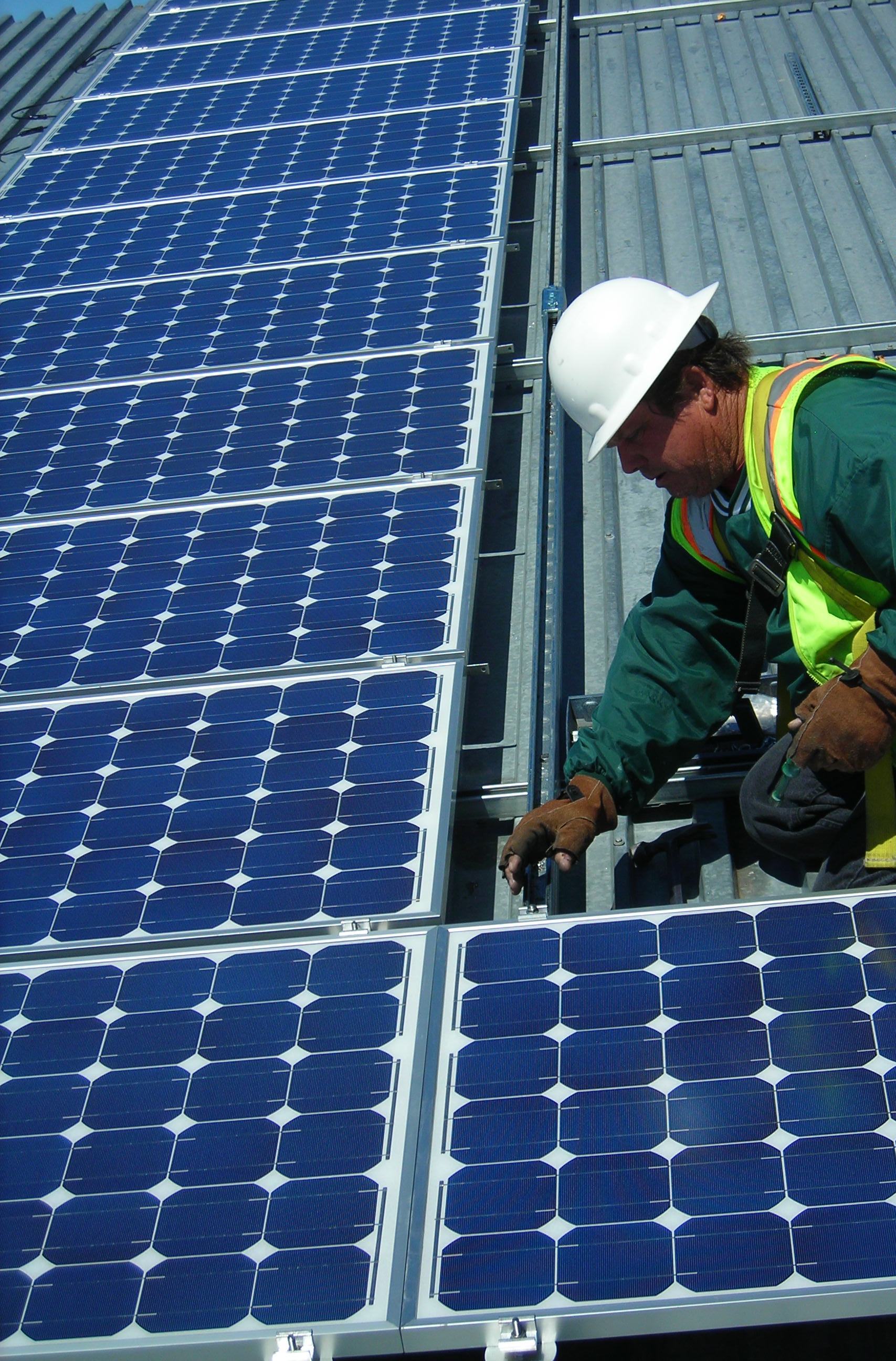
Redefining solar panels as pollution control equipment looks to be a done deal. SB 418 (Hanger) and HB 1239 (Hugo) have passed their respective houses. The amendment to the House bill limiting projects to 20 megawatts will likely be added to the Senate bill. The legislation is primarily designed to help third-party owners of solar systems who currently face prohibitive local taxes on “machinery and tools.”

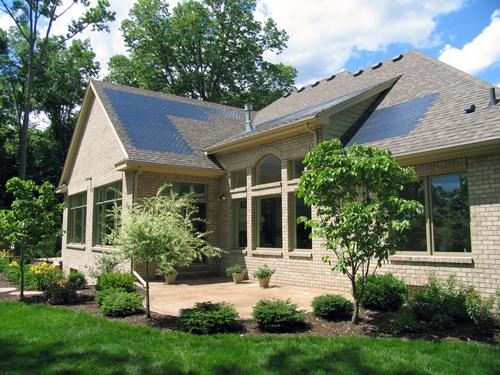
No more HOA bans on solar. SB 222 (Petersen) is expected to pass easily in the House, where it has been referred to Commerce and Labor. The legislation nullifies homeowner bans on solar systems, while retaining associations’ ability to enact “reasonable” restrictions on their placement. Next year perhaps someone will take on the task of explaining to HOAs that restricting solar panels to north-facing roofs is not what we mean by “reasonable.”

5-year banking limits on REC purchases for the RPS expected to become law. SB 498 (McEachin) and HB 822 (Lopez) both passed their houses, so voting in the other house is just a formality before they go to the governor for his signature.

Municipal and multi-family net metering dead for the year. Last week I reported that the House energy subcommittee had killed all the House bills that would expand net metering opportunities for municipalities and multifamily housing communities. Now we have to add the Senate bill, SB 350 (Edwards), to the death toll. Condolences go out to those intrepid industry members and advocates who keep fighting to give Virginians more access to solar, knowing they have about as much chance against Dominion Power as democracy advocates have in North Korea.

Hampton Roads set to get a study of “recurrent flooding”; just don’t call it climate change. SJ3 and HJ16 have passed the Senate and House.

Fracking restrictions for Tidewater Virginia pass Senate. SB 48 (Stuart) will now go to House Commerce and Labor.

HB 207 “science education” bill may die of (press) exposure. Delegate Bell’s bill has been tossed from one House committee to the next like a hot potato, with no one wanting to go on the record voting either for it or against it. The news media have been all over this one, quoting science educators who say it promotes creationism and climate denial. Truth be told, many delegates support it for precisely that reason, but they don’t want to be exposed as troglodytes in the press. The bill is now back in Courts of Justice with pretty much no chance of getting to the floor tomorrow.

Dominion’s rate increase for nuclear clears both House and Senate. You can call it what you want, but in the absence of SB 459 (Stosch) and HB 1059 (Kilgore), we’re told regulators would require Dominion to refund to ratepayers the money it has reportedly been overcharging them, and to decrease rates going forward. These bills let Dominion keep the overage as a way of paying for a nuclear plant that will probably never get built. SB 459 sailed through the Senate. HB 1059 passed through committee and awaits action tomorrow by the full House. Stay tuned to find out if Dominion succeeds in sticking us with half a billion dollars to support Tom Farrell’s nuclear fantasy.

Unknown's avatar

Energy and climate bills get hearings in Richmond

photo credit: Amadeus

photo credit: Amadeus

This week Virginia’s General Assembly took action on a good many of the bills we are following. For a fuller description of the bills and information on how to access the bill language, refer to my previous posts. At the end I’ve also added comments on a few additional bills you may have read about.

Solar panels on their way to being redefined as pollution control equipment. SB 418 (Hanger) passed the Senate. HB 1239 (Hugo) passed a House Finance Subcommittee Thursday and is expected to pass the full committee next week. Following the subcommittee hearing, proponents agreed to add a 20-megawatt limitation on the size of projects that can qualify for the tax-free treatment. Obviously, this project size won’t stop any projects in Virginia, but the amendment satisfied the only opposition the bill had encountered, from the Virginia Municipal League.

HOA bans on solar may soon be a thing of the past. SB 222 (Petersen) passed the Senate unanimously and now moves the House. Petersen added an amendment sought by HOA interests that would preserve solar bans if they were included in the underlying deeds, as opposed to in HOA contracts. As no one knows of any deeds prohibiting solar, this seems to have removed the only opposition to the bill without actually limiting its effectiveness.

Investment tax credit/grant facing headwinds. HB 910 (Villanueva) was heard Friday morning in a 5-member subcommittee of House Finance, which voted to table the bill.  Usually this is fatal to a bill, but advocates who were there say in this case they do expect the bill to come before the full committee on Wednesday, and the tabling is a temporary measure while $10 million is found in the budget to cover the cost. The Senate companion bill, SB 653 (Norment) remains in Senate Finance and has not been heard yet. It has been converted to a $10 million grant in accordance with the committee’s policy to reject most new tax credits but consider grants instead.

Two RPS bills rendered almost meaningless (but they pass!), one killed unceremoniously. Both SB 498 (McEachin) and HB 822 (Lopez) originally would have made modest improvements to Virginia’s sad, toothless, voluntary, RPS. Facing utility opposition, the bills were made even more modest, amended down to consist of nothing more than 5-year “banking” limits on the length of time utilities can hold onto RECs. States with real RPS laws generally have 2-year limits. Virginia currently has no limit at all, which not-just-theoretically allows utilities to stock up on enough pre-world-war II, out-of-state hydro RECs to last through 2025. So any limit at all is an improvement. And the bills seem set to pass both chambers, so you should thank Dominion for its generosity in allowing this to happen.

Meanwhile, HB 1061, Delegate Surovell’s “Made in Virginia” bill, was killed in Thursday’s House energy subcommittee.

Efforts to expand net metering fail in the House, will be heard in Senate Monday. Solar advocates and industry members successfully beat back Dominion Power’s bid to hijack the multi-family net metering provisions of HB 879 (Yost) and HB 906 (Krupicka). Alas, Dominion got its revenge Thursday in the House Commerce & Labor energy subcommittee, where the Republican majority had clearly come prepared to kill the bills. The two bills, plus Delegate Surovell’s solar gardens bill, HB 1158, were tabled with little debate, though with dissenting votes from the subcommittee’s three Democrats.

(We interrupt this blogpost for an observation about the workings of the General Assembly, which you can skip if your interest extends only to the sausage and not the sausage-making. Sitting in the audience of the House energy subcommittee on Thursday, I couldn’t help noticing the three Democrats appeared to be entirely irrelevant. They were seated way off to one side by themselves, and took no part in any of the discussions during the three hours that I was there. Even their dissenting votes were cast by silent little waves of their hands. It is tough to be a Democrat in the House.)

Meanwhile over in the Senate, SB 350 (Edwards) is scheduled to be heard in Commerce & Labor on Monday afternoon. Like the House bills, the Senate bill as drafted addresses both multi-family and municipal net metering.

House energy subcommittee kills effort to add price stability to factors to be considered in new generation. HB 808 (Lopez) was tabled Thursday in the House energy subcommittee.

And don’t go considering the environment, either. HB 363 (Kory) was also killed in the House energy subcommittee Thursday.

On-bill financing effort fails for the year. HB 1001 (Yancey) was continued to 2015 at the request of the patron, a face-saving way to withdraw your bill when you find it really isn’t ready for prime time. The bill faced utility opposition, but also had flaws that the delegate wants to work on. “Continuing” it rather than withdrawing it signals that we can expect another effort next year.

Adding energy and water conservation projects to the powers of local service districts fails. HB 766 (Bulova) was tabled in a subcommittee of the House Counties, Cities and Towns committee.

Crowdfunding bills fail. Both HB 880 and SB 351 failed in committee.

All right, time for some good news.

Bill to impose a new gas plant on AEP fails. My understanding of HB 1224 turned out to be mistaken; AEP did not seek this legislation. Instead the proponent of a new gas plant in AEP territory is the would-be developer, which resorted to legislation when its efforts to sell the utility on its proposal failed. Following a far more spirited and extensive debate than was afforded to far better bills, HB 1224 failed to get a vote to move it out of the House energy subcommittee.

Hampton Roads “recurrent flooding” study passes Senate, moving through House. SJ3 passed the Senate, while HJ16 was reported from House Rules subcommittee with an amendment shrinking the size of the commission doing the study. Still no mention of why recurrent flooding is happening.

Some protections from fracking pass Senate Ag. SB 48 (Stuart) passed the Senate Agriculture committee unanimously. The bill provides some protections for drinking water from impacts related to oil or gas operations proposed in Tidewater Virginia. I haven’t analyzed this bill; for more information, contact the Southern Environmental Law Center, which supports the bill.

Attempts to nullify federal law (said to) fail. I’m told Bob Marshall’s HB 140 and HB 155 both died in a subcommittee of House Privileges and Elections, although the website still shows them in committee. Possibly they simply failed to gain a vote, which is one way bills die.

Saner heads prevail (mostly) on anti-EPA bills. SB 615 (Carrico), the “Carbon Dioxide Emission Control Plan” designed to ensure the continuation of carbon dioxide emissions, was in trouble even before Democrats took control of the Senate. The senator changed the bill to conform it to HB 1261 (Chafin), which called for a study with the same purpose. Under pressure from the governor’s office, the bill was amended to study not just the costs to industry and ratepayers of complying with EPA regulations, but also the benefits. In Senate Ag Thursday, still facing heavy opposition to the bill from the environmental community, Carrico accepted an amendment from Chap Petersen that took out the worst remaining provision, one that would have restricted the state from proposing any standards more stringent than the EPA required. The bill then passed unanimously. Later in the afternoon, HB 1261 was conformed to the amended language of SB 615 and passed handily. The bill remains weighted towards findings favorable to the fossil fuel industry, but it is hugely better than it was.

But lest we feel progress is being made in Virginia . . .

Dominion’s rate boondoggle shows excellent prospects. Really, you have to admire the way Dominion Power pushes through bills it wants and kills the ones it doesn’t. Dominion is the single biggest contributor to Virginia’s politicians, after the Republican and Democratic parties, and the company gets its money’s worth. But it’s not just the way it kills smart energy policies that impresses.

Take HB 1059 (Kilgore), which would allow—nay, require!—Dominion to begin charging customers for $570 million it has spent towards a new nuclear plant, plus a couple million towards offshore wind, money it would ordinarily recover only when the projects are built.

Stephen Haner, a lobbyist for Newport News Shipbuilding, delivered a valiant and spirited defense of ratepayers in opposing the bill during the meeting of Thursday’s House subcommittee on energy. The real reason for the bill, he explained, is to prevent Dominion from having to give its customers hundreds of millions of dollars in rebates as a result of having earned too much money these past two years. Two years of over-earning would also lead to a reduction in rates for consumers going forward, threatening the bottom line still further. Dominion has figured out it can avoid that result by adding the money spent on nuclear to the balance sheet, thereby canceling out that pesky excess revenue and avoiding a rate decrease. For more on this, see the article in the Richmond Times-Dispatch.

Separate bills in the Senate–one for nuclear, one for wind—also empower the boondoggle. SB 643, the offshore wind bill, remains in Senate Commerce and Labor and is not on the docket yet. But the nuclear bill, SB 459, has already passed the Senate unanimously, a testament to Dominion’s charm if there ever was one. In addition to requiring our utility monopoly to charge us for its costs in planning and developing a new nuclear facility, it states as a matter of law that this development is in the public interest. Really, guys? How do you think the public would vote?

Science “education.” Last, I bring you a dispatch from guest blogger Seth Heald, who has been following Delegate Dickie Bell’s anti-science bill. Seth attended the House education subcommittee on Thursday. He reports:

HB 207 science education bill referred to Courts Committee. The bill purports to encourage open discussion and “critical thinking” as to purported “scientific controversies.” Last week the Hampton Daily Press and Washington Post nicely described the anti-science creationist and climate-denial history of the bill’s statutory language here and here. More detail is on the National Center for Science Education website. The bill came before the House Subcommittee on Elementary and Secondary Education on January 30, where Rita Dunaway of the Virginia Christian Alliance was the sole member of the public speaking in favor of it. Ten or so people spoke in opposition to the bill, including representatives of teacher and education groups, the Sierra Club, and the Jewish Community Relations Council. At week’s end WRIC TV in Richmond reported that the bill’s sponsor, Delegate Dickie Bell, said he introduced HB 207 after being “approached by” the Virginia Christian Alliance. The subcommittee approved Delegate Peter Farrell’s motion to refer the bill to the Courts of Justice Committee to consider its constitutionality.  Delegate Bell’s hometown newspaper, The Staunton News Leader, opined in a Feb 1 editorial titled “Bell introduces an unnecessary bill” that HB 207 is “unworthy of legislative attention.” The paper noted that Bell “has been down this road before, sponsoring other controversial bills drafted by ultraconservatives.”

Unknown's avatar

More bills to watch

photo credit: Amadeus

photo credit: Amadeus

The bills keep coming. Again, this is hardly a comprehensive list, just the ones I’ve had a chance to think about. By the way, renewable energy fans may want to head to Richmond on January 30, when many of the House bills will be taken up in a long afternoon session of the House subcommittee on energy. Members of the public are usually permitted to testify.

Another renewable energy tax credit bill. Senator Norment has now filed SB 653, a companion bill to HB 910. This caps the overall total of tax credits that can be claimed at $10 million annually. As previously noted, it’s encouraging to have powerful Republicans supporting this bill. One complication, however, is that Senate Finance, which will hear Norment’s bill, has adopted a policy that makes it very difficult to pass new tax credit legislation, preferring grants instead. Tax breaks for renewable energy have proven extremely effective in other states and at the federal level in building the industry and creating jobs, but I wouldn’t object to grants. With Norment one of the leading senators on the Finance committee, we will hope he navigates this wisely.

Crowdfunding. Currently securities laws prevent private companies from accepting investments from people who are not “accredited” investors, otherwise known as rich folks. The purpose is to protect unsophisticated investors from hucksters, but it has the effect of preventing companies from engaging in creative crowdsourced financing for things like solar projects. An “invest in Virginia” bill, HB 880 (Yost) and SB 351 (Edwards), would loosen the rules for Virginia citizens investing in Virginia companies.

Ending HOA bans on solar. Since 2008, homeowner associations haven’t been able to impose new bans on solar panels, though they can impose restrictions on size and placement. However, HOA rules that were adopted prior to 2008 can still include total bans. SB 222 (Petersen) would nullify these bans. A similar bill passed the General Assembly two years ago, only to be vetoed by Governor McDonnell in the belief that it interfered with existing contracts. But many other states have overridden HOA solar bans as a matter of public policy; Virginia should do likewise. So far, Senate Commerce and Labor agrees, as the bill was passed out of committee today on a unanimous vote. (One caveat: what passed was a substitute, and I haven’t seen the changed language.)

Solar gardens. HB 1158 (Surovell) would allow “virtual” net metering of solar energy, making it possible for someone to subscribe to part of the output of a solar project and get credit on their utility bill for that amount. This approach would support huge growth in the solar market and has tremendous grassroots appeal; not surprisingly, the utilities are completely opposed to it.

Advantaging natural gas. Appalachian Power seems to want to build a new natural gas plant in Virginia at customer expense, and doesn’t want the State Corporation Commission to scrutinize the plan too carefully. HB 1224 (O’Quinn) makes an end run around the SCC’s standard operating procedures by declaring such a plant in the public interest and telling the SCC to “liberally construe” the provisions of the law to approve it. You have to wonder: if a natural gas plant is such a great idea, why does the SCC have to be coerced into approving it? And why shouldn’t a wind farm get the same treatment?

Fracking public lands. HB 915 provides that no permit or lease for oil and gas exploration or drilling on public lands can prohibit the use of fracturing. Really? Why would you prevent a state agency and the Governor from determining the scope of a permit? If the agencies are doing their job protecting public lands (I know, a big if), surely this prohibition ought to make it less likely, not more likely, that permits would be issued. That makes this bill a bad idea no matter whose side you’re on.

Attempts to nullify federal law. Two bills from Bob Marshall, HB 140 (multi-state coal compact) and HB 155 (interstate offshore energy compact) would replace existing federal laws and regulations with state control. Only the first bill is blatantly unconstitutional. The second, an attempt to supplant federal authority over waters beyond three miles out from shore, wouldn’t take effect without “consent” of Congress, so it might be merely a total waste of everyone’s time and an affront to our good sense. Delegate Marshall evidently regards the Constitution as a mistake. The rest of us can only be embarrassed for his constituents.

Unknown's avatar

Why standby charges are bogus

Utilities want solar owners to pay for grid access.  Photo credit: NREL.

Utilities want solar owners to pay for grid access. Photo credit: NREL.

Rooftop solar energy makes up a tiny fraction of the total electricity produced in America, but already utilities worry about a day when large numbers of their customers won’t need them any more. As renewable energy costs continue to tumble and the technology of battery storage improves, many residents and businesses may abandon their power utility to go it alone or form microgrids within their communities to control their own power.

Some utilities understand that this is the future and are looking for ways to turn these trends to their advantage. Others are doing everything they can to protect their turf, and progress (and the environment) be damned. They figure they can’t wind up on the wrong side of history if they stop history from happening.

Hence the attempt to throttle solar while it’s still little. Caps on system sizes, caps on total amounts of distributed generation, prohibitions against third-party power purchase agreements, restrictions on net metering: all of these are efforts to keep solar too small to matter, and too small to achieve the economies of scale that could lead to an upending of the central utility model.

The latest effort to squelch solar is through standby charges: fees imposed on net metering customers that compensate the utility for “standing by,” ready to sell grid-produced energy at night and on cloudy days. In 2012 in Virginia, Dominion Virginia Power won the right to charge customers with large residential systems (10-20 kilowatts) up to $60 per month—a charge that destroyed this market segment. This summer Dominion pressed its advantage, indicating in a submission to regulators that it will likely seek more standby charges on a broader class of solar customers.

Note that Virginia has less than 15 megawatts (MW) of solar installed across the state. Dominion Power alone has around 19,000 MW of coal, gas and nuclear. So the notion that net metering by solar customers has any perceptible effect on the grid or other customers is silly. The point of Dominion’s stand-by charges is to stifle the solar market, not cover costs.

This same debate played out this year in Arizona, which saw its solar industry install 719 MW in 2012—still a tiny percentage of that state’s total energy supply, but one that is growing fast enough to warrant the discussion. Last week the public utilities commission agreed to allow Arizona Public Service Company (APS) to charge its residential solar customers an average of $5 per month. The utility treated the ruling as a win, and indeed the charges might eventually add up to enough to cover APS’s attorney fees in the case. That’s more than can be said about Dominion’s standby charges.

Meanwhile the conservative American Legislative Exchange Council (ALEC) has gotten into the act, drafting a model resolution insisting that net metering customers should have to pay their “fair share” of utility costs through measures like standby charges. Not incidentally, Dominion Power is a member of ALEC and sits on the energy and environment task force next to the fossil fuel shills from Heartland Institute.

But the “fair share” argument is bogus. Utilities weren’t set up to ensure Americans all paid their “fair share” of the costs of the electric grid. If they were, there would still be mountain communities without power today. Residents of cities and towns subsidized the cost of running power lines to far-flung rural homes inhabited by people who could never have afforded their “fair share” of this infrastructure.

Even today, city dwellers pay more than their “fair share” of transmission costs to subsidize people like me who live in leafy, sprawling suburbs and less-populated parts of the state. Anybody voting for an ALEC-style resolution about “fair shares” had better be willing to stick it to suburban and rural consumers.

There are other ways electricity rates aren’t “fair.” Dominion’s residential rates are structured so people who use less electricity pay more per kilowatt hour than those who use more—again, making it roughly a transfer of wealth from urban apartment dwellers to those with larger or less efficient homes elsewhere. The utility’s goal is to encourage the use of electricity, and compete more effectively with the gas company for heating. People paying their “fair share” just doesn’t enter into it.

And while we’re at it, if we were serious about subsidies we’d slap a tax on electricity made from fossil fuels to reflect the costs they impose on society. Asthma, heart disease, mercury poisoning, groundwater contamination, and of course, the dumping of carbon into the atmosphere—these are all costs of fossil fuel that ought to be included in power bills to make sure everyone is paying their “fair share.” People who install solar panels deserve a thank-you for their service to society, not standby charges based on bogus “fair share” claims.

The argument for standby charges is, pure and simple, an attempt by entrenched monopolies to block competition. The “fair share” argument is a red herring from utilities that don’t want a fair fight. And with good reason: they’re going to lose.

Unknown's avatar

From Massachusetts to New York, offshore wind energy now ready to deliver

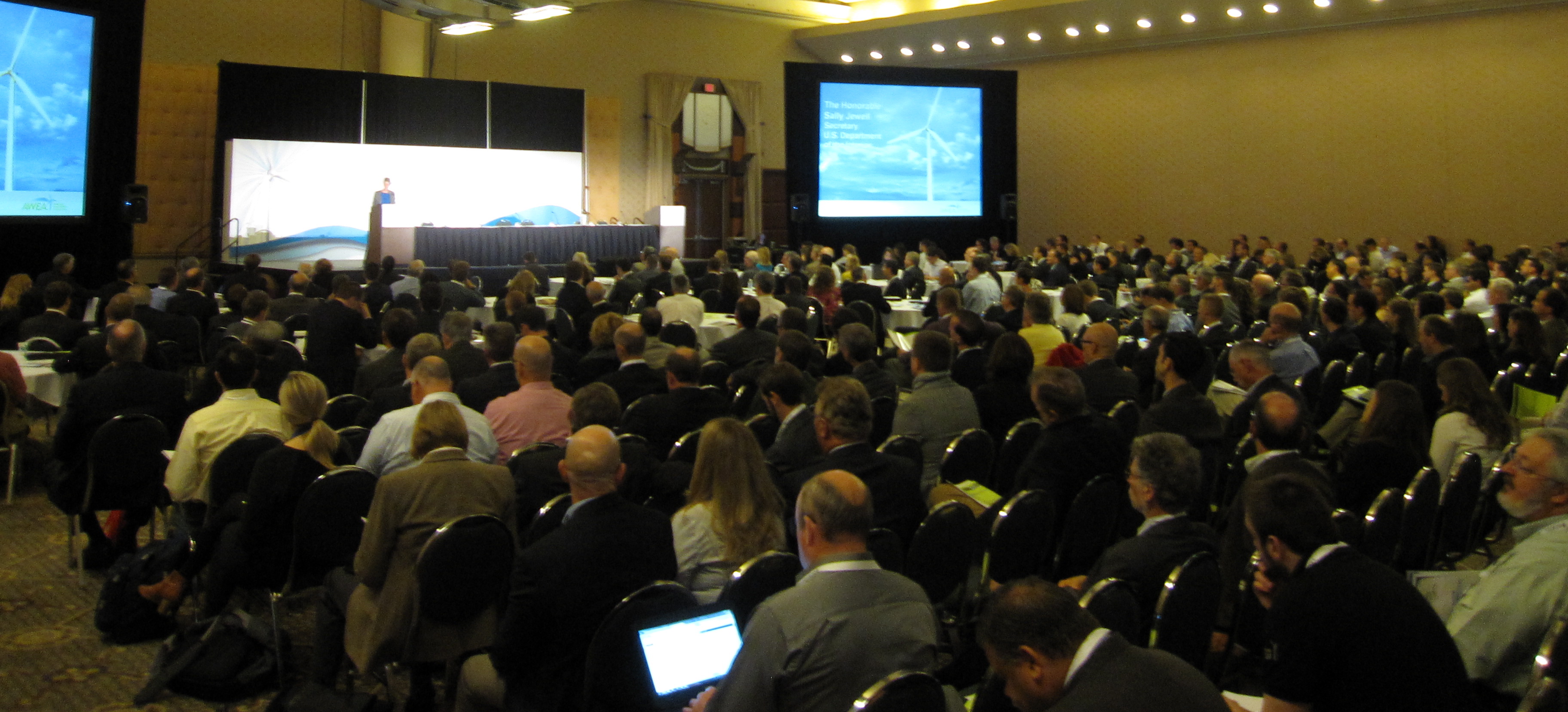
Interior Secretary Sally Jewell addresses a packed ballroom

Interior Secretary Sally Jewell addresses a packed ballroom at the American Wind Energy Association offshore wind conference

The long-awaited Cape Wind offshore wind farm will finally begin construction off the coast of Massachusetts in 2014. So, too, will the much smaller Block Island Wind Farm off Rhode Island. When completed, Cape Wind’s 130 wind turbines will supply almost 75% of the power needs of Cape Cod, Martha’s Vineyard and Nantucket, while the 5-turbine Block Island Farm will supply enough clean energy to power over 17,000 homes.

2014 also seems likely to see a power purchase agreement for some of the energy to be generated by a 900 MW wind farm off the tip of Long Island that would feed power to a growing and hungry New York market, at a cost that’s economic now.

And with a second round of grants from the Department of Energy expected next spring, demonstration projects of 12-25 MW will also go forward in three more locations, producing power in 2017 and helping set the stage for rapid growth in the industry. The first-round grants went to projects in Oregon, Texas, Ohio, Maine, New Jersey and Virginia.

These were a few of the highlights from the American Wind Energy Association 2013 offshore wind conference, held October 22 and 23 in Providence, Rhode Island. More than 700 attendees packed a ballroom to hear Secretary of Interior Sally Jewell, Rhode Island Governor Lincoln Chafee, U.S. Senator Sheldon Whitehouse and others make the case for why offshore wind energy will play a growing role in the U.S., starting in the Northeast.

Five years have passed since the American Wind Energy Association, the University of Delaware and the Sierra Club brought together researchers and wind developers for America’s first-ever conference on offshore wind energy, in Dover, Delaware. Since then, the conference has grown in scope and attendance, but the only wind turbine to make it to U.S. waters is a one-eighth-scale test model off the coast of Maine.

While Europe surged ahead and now has more than fifty offshore wind farms, the U.S. has been hampered by a slow federal leasing process, uncertainty about tax credits, and a political process ill-suited to the long-range planning and regional cooperation needed to realize the potential of this industry.

But as this year’s conference showed, the industry is moving ahead. The Obama Administration and several states identify offshore wind as a critical part of the response to climate change, as well as an opportunity to develop jobs. As many speakers explained, there is also a strong business case to be made for it. Given the price spikes that have plagued natural gas in New England and elsewhere, it makes sense to diversify power sources. In addition to providing price stability, wind energy has been shown to suppress wholesale energy prices, saving consumers money.

Perhaps most significantly, offshore wind power is likely to be the least-cost option in locations where demand is high, energy is expensive, and alternatives are few. This describes much of the Northeast, especially the densely populated area from northern New Jersey up to Massachusetts.

An analysis from AWS Truepower showed several factors that make offshore wind energy a good option in these areas:

  • A growing demand for power, driven in part by new data centers;
  • An already-congested transmission grid, coupled with the difficulty of either building new generation close to the load center or adding new transmission lines to bring in power from outside the area;
  • The proximity of offshore wind energy areas to these load centers along the coast;
  • High localized marginal prices for electricity, making offshore wind competitively priced; and
  • The ability of offshore wind to provide power when demand is greatest.

This last element is especially compelling for utilities, which have to meet a demand for power that changes throughout the day. Unlike onshore wind, which blows most strongly at night, and solar energy, which peaks in the middle of the day, offshore wind picks up in the late morning and continues through the evening hours, matching times of highest demand. According to Bruce Bailey, CEO of AWS Truepower, this fact means that in the New York market, the revenues from offshore wind energy will be about two and a half times that of onshore wind energy.

Whitney Wilson, the engineer who conducted the analysis for AWS Truepower, told me that when they looked at all the factors and then at the potential locations for offshore wind farms, one location stood out: a tract of ocean thirty miles off the coast of Montauk Point on Long Island, within the southern section of the Massachusetts/Rhode Island Wind Energy Area. Building wind farms there, her analysis showed, would provide the biggest bang for the buck.

Developer Deepwater Wind, LLC, won the right to develop the lease area last summer in the U.S.’s first-ever offshore wind lease auction. One likely customer may be the Long Island Power Authority, which put out an RFP for 280 MW of renewable energy, specifically mentioning offshore wind.

Lisa Dix, a Senior Campaign Representative with the Sierra Club’s Beyond Coal Campaign in New York who was also at the conference, says offshore wind makes perfect sense for Long Island, and complements the Long Island utility’s recent approval of a feed-in tariff for solar energy.

Other utilities seem likely to follow suit as they assess the benefits of offshore wind for their own customers. A greater understanding of these benefits will lead to the full buildout of the RI/MA area and the soon-to-be-leased New Jersey area.

The experience of Deepwater, Cape Wind, and the developers of the DOE-funded demonstration projects will help build the industry supply chain and workforce, and will produce the kind of learning that leads to lower prices for future projects. One such project involves the 2000 MW of the Virginia Wind Energy Area, which Dominion Power now holds the right to develop. While the economics are not currently as compelling in the cheap-energy South, this would change if the early movers achieve the cost reductions they are aiming for.

If states work together, these cost reductions and the development of a robust, domestic supply chain and workforce will happen better, sooner and smarter. Coordinated regional planning will support rapid growth in the industry while driving down costs in a virtuous cycle.

Given the urgency of climate change and the need to move the electric grid beyond fossil fuels as quickly as possible, Congress also has to make the growth of the offshore wind industry a national priority. Passing a long-term extension of the investment tax credit is a critical first step to support the tremendous renewable resource just off our coast.

Unknown's avatar

What’s wrong with Dominion’s Green Power Program

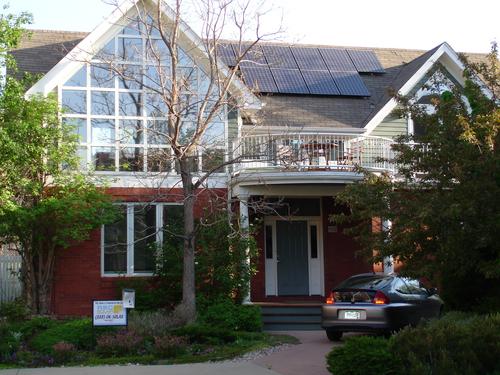
Better than Green Power: installing a solar system yourself. Photo credit: NREL

Better than Green Power: installing a solar system yourself. Photo credit: NREL

Renewable energy advocates in Virginia were astonished to learn a few weeks ago that the U.S. Environmental Protection Agency has given Dominion Virginia Power an award for its Green Power Program.

Dominion’s program is not, to put it mildly, a good one. Half of the money its customers contribute is siphoned off for overhead and “education.” The rest goes to buy renewable energy certificates from out of state. Over the years Dominion has collected millions of dollars in these voluntary contributions without building a single wind or solar facility to supply the program. Surely the only green award this merits is one for greenwashing.

So I called the EPA to find out what criteria they use in determining who gets an award. It turns out the agency only measures the growth of a green power program, and Dominion has signed up more customers than other utility programs have.

I had to laugh. Customers of utilities in most other states have real options to buy wind and solar. If you can buy wind energy from an alternative supplier or participate in a community solar project, or if your utility is aggressively incorporating renewables into its power supply, you don’t need a green power program.

But Dominion has never built more than token amounts of renewable energy, and it continues to use its monopoly position to erect barriers to competition from others. The utility has signed up 19,000 Green Power participants only because it has effectively denied its Virginia customers any meaningful way of participating in the renewable energy market.

News of this award will surely lure more people in. Yet even if every one of Dominion’s customers signed up for the program, it wouldn’t shrink Virginia’s carbon footprint. Instead, Dominion’s latest integrated resource plan reveals plans for more fossil fuel generation and increasing greenhouse gas emissions over the next fifteen years.

And it’s worse than that. As of this year, Dominion is actually using the Green Power Program to bankroll an attack on renewable energy—one the State Corporation Commission shamefully endorsed when it approved the company’s 3-megawatt “solar purchase program.”

In this charade, Dominion buys solar power from homeowners and businesses to resell to the Green Power Program. The deal nets sellers a few cents over the retail price of electricity, but costs the Green Power Program almost three times as much. This overcharging of the Green Power Program would be bad enough. But the more insidious problem lies in Dominion’s justification for the high charge. It claims that rooftop solar energy is no more valuable than power from fossil fuels that it can buy at wholesale.

Dominion’s position flies in the face of recent studies demonstrating the benefits of solar energy to the grid, including generating power where demand is, providing power during peak hours when energy is most expensive, avoiding the need for transmission upgrades, eliminating line losses, and reducing the need for new generation.

It also runs counter to trends in states like Georgia, where Georgia Power has put a higher–than-retail value on the solar distributed generation it plans to buy, and says that paying the extra won’t put upward pressure on rates.

This makes it especially difficult to understand why Virginia’s State Corporation Commission approved Dominion’s Green Power rip-off. And predictably, Dominion has followed up its win with a deeply flawed study it plans to use as a basis for a new round of standby charges on customers who net meter. (The case is PUE-2012-00064, available on the SCC web site.)

So what is a dedicated renewable energy advocate to do?

There are options. If you are determined to buy RECs, you don’t have to go through Dominion. Buy from another source. But better yet, install solar yourself if you can. The price of solar panels has dropped so precipitously over the past few years (down 60% since the start of 2011) that you may find it worth taking out a home equity loan.

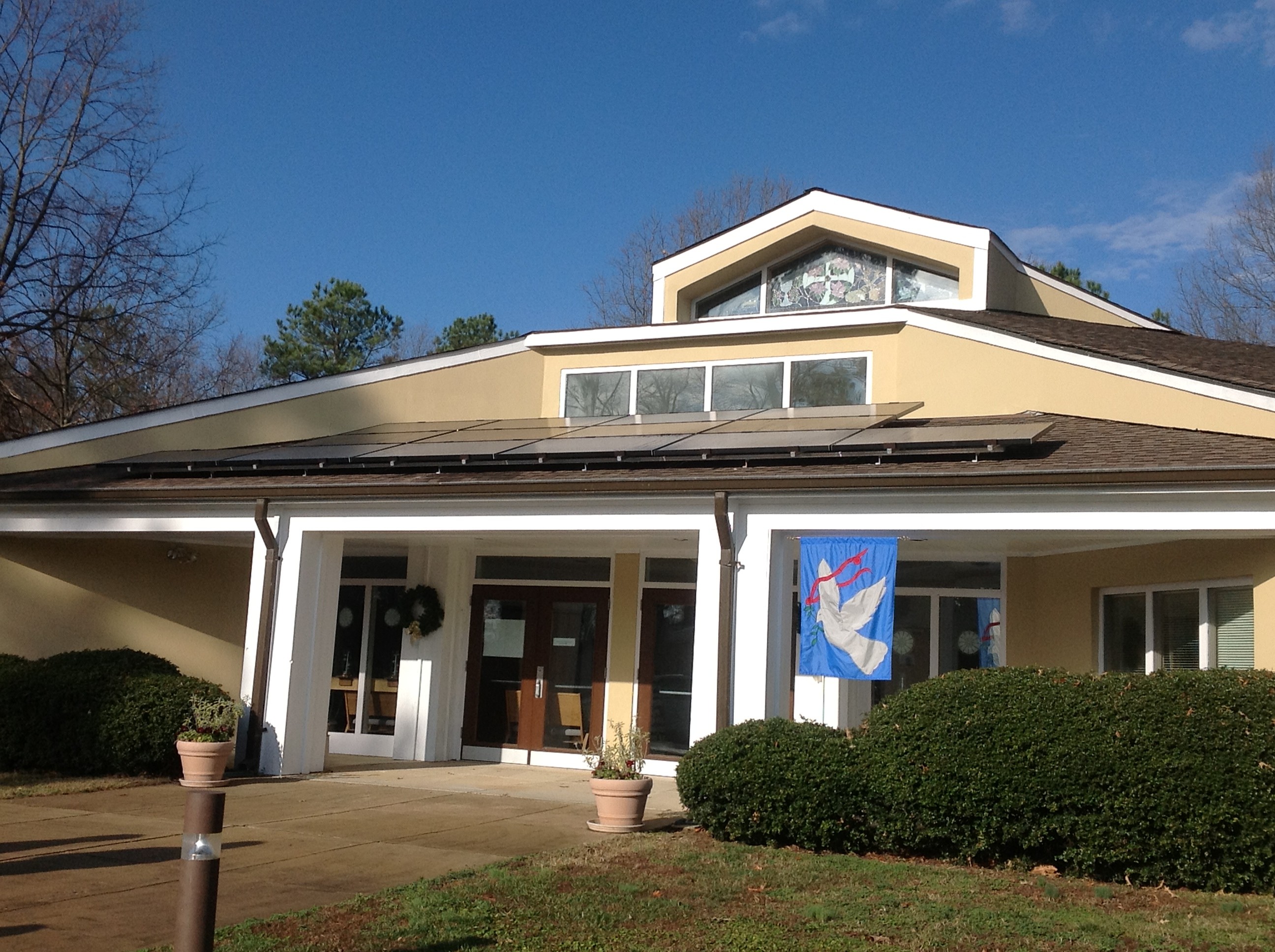
If you don’t have a sunny roof yourself or can’t afford the whole upfront cost, you can work with your school, community center or place of worship to install solar panels in your neighborhood. Interest in solar is very high among Virginia faith congregations, driving large turnouts for presentations on the topic given by Sierra Club and others in cooperation with the solar industry.

Or you can take the money you were spending on Dominion’s program and give it to a charity that will use it to install renewable energy here in Virginia; this may even get you a tax deduction. Low-income housing providers like Richmond’s Better Housing Coalition now put solar panels on many of their facilities, and will accept donations specifically for that purpose.

The Virginia Center for Wind Energy at James Madison University accepts donations to its Wind for Schools program, which helps public schools across the commonwealth install wind turbines for educational purposes.

A new non-profit, Three Birds Foundation, is working to put solar on public schools that serve low-income children in Virginia and elsewhere.

All these charities are committed to doing what Dominion, apparently, doesn’t want to do: install solar and wind energy in Virginia.

Unknown's avatar

Dominion wins Virginia offshore wind lease: well, duh

And the winner is . . . Dominion Power!

Okay, you knew that. Dominion had the deck so stacked in its favor for Wednesday’s Virginia offshore wind lease auction that the question everyone was asking at the end wasn’t “who won?” but “who bid against Dominion, and why did they bother?”

The answer to the first question proved to be Charlottesville-based Apex Energy, a far more experienced player in the wind industry—but one without Dominion’s lock on the Virginia power market.

There was much to criticize about the auction format and the process that led inevitably to Dominion’s win, but this historic step is still hugely exciting for offshore wind advocates. If Dominion follows through on the commitment it just made to develop offshore wind, Virginia will be a winner, too.

That “if” has a lot of people worried, given that Dominion is both a participant in the offshore wind industry and one of its loudest detractors. Company executives talk about their desire to develop the lease area, and also their opinion that offshore wind energy is way too expensive to succeed. Often they make both points in the same conversation.

Observers can’t help wondering why a company would pour money into a venture if it doesn’t believe it can sell its own product. Two possible reasons come to mind: one, because it is willing to gamble on political and market changes that will make its venture successful after all; or two, because by spending the money to win the lease, the company prevents any competitor from occupying the space. One is gutsy, the other is evil. It is possible for both to be true.

So what did Dominion win? The lease area, a 112,800-acre swath of ocean beginning more than 23 miles off Virginia Beach, is expected to support at least 2,000 megawatts of wind turbines—enough to power about 700,000 homes. It’s the second Wind Energy Area to be auctioned off in the U.S.; the first lies off Rhode Island and Massachusetts, and was auctioned off in August.

Under rules set by the Bureau of Ocean Energy Management (BOEM), the entire Virginia area was treated as one tract (a bad idea, in the view of advocates and industry members who aren’t Dominion, because it further reduced competition). Dominion won with a high bid of $1.6 million.

A formal announcement of the winning bid is expected in October, following federal antitrust review. As the winning bidder, Dominion will have five years to conduct the studies required for development of the area, with interim deadlines including submission of a Site Assessment Plan next summer.

After the five years is up, Dominion could decide not to proceed, releasing the area for BOEM to offer in a new auction. That result would be an unqualified disaster for Virginia’s ability to develop an offshore wind industry here. With states to the north proceeding, we would lose not just construction jobs, but the entire supply chain, and likely the marine services as well. Many thousands of jobs now ride on Dominion following through.

If Dominion decides to proceed, it will have to submit a Construction and Operations Plan at least six months before the expiration of the five-year site assessment period—that is, by the summer of 2018. BOEM will then evaluate the plan in accordance with the National Environmental Policy Act, producing an Environmental Impact Statement in 18-24 months, before construction can begin. That timeline puts construction underway no later than 2020, with electricity from the first turbines flowing by 2022.

The process doesn’t have to take as long as this; Deepwater Wind, which won the two leases in the Rhode Island/Massachusetts area last month, says construction there “could begin as early as 2017, with commercial operations by 2018.”

But Dominion had previously indicated its preference for the slowest possible approach. The company’s original idea was to build some wind turbines, think about it for a while, and five years later start all over again. Then five years later, round three. Another five years, round four. So 20 years on, if Dominion liked what it saw each time, Virginia would finally have its 2,000 megawatts.

In accordance with this plan, Dominion’s surrogate, the Virginia government, asked BOEM to make the lease term for Virginia’s Wind Energy Area 45 years instead of 25.

Other developers and the environmental community cried foul, pointing out that such an approach would mean a generation would be born, grow up and go off to college before we had all our wind turbines—hardly the way to build an industry or stave off climate change.

BOEM conceded half a loaf and agreed to a 33-year term that allows time for a phased approach, but a faster one. The agency expects the construction plan will consist of four, two-year phases, ensuring completion of the build-out in 8 years—or by 2028, to be followed by 25 years of operation.

We can only hope that BOEM’s confidence is not misplaced. Dominion employees have said candidly that right now, under current market conditions, the company has no intention of actually building offshore wind turbines.

What will it take to change its mind? The company talks about costs and the difficulty of getting approval from Virginia regulators. It seems likely that the company will follow through with construction only if some combination of events happens in the next few years:

  • Continuing advancements in technology bring the cost of offshore wind energy down. Already the latest cost estimates put offshore wind power well below the sky-high figures Dominion cites.
  • Congress or the EPA tackles climate change through incentives for renewable energy (or disincentives for fossil fuels);
  • The Virginia government passes legislation to create a market in Virginia for offshore wind power;
  • Virginia’s State Corporation Commission (SCC), which regulates utilities, alters the way it views renewable energy.

Of these contingencies, the last might be the hardest. The SCC seems to believe the public interest is served only by providing the cheapest possible electricity available today. It shows no interest in climate change, or the pollution costs of fossil fuels, or long-term price stability, or job creation, or asthma rates. Ignoring the actual language of the Virginia Code, it declared this summer that Virginia law doesn’t require it to consider the environment in evaluating a new electric generation facility.

But the offshore wind industry is now off and running in the U.S., and the only question is whether Virginia wants to be part of it. On that answer depend thousands of jobs for our residents, an abundant source of stably-priced energy, and Virginia’s ability to move beyond fossil fuels in the face of climate change.

Virginians overwhelmingly want to move forward on offshore wind; now our challenge will be to make it happen.

Unknown's avatar

Dominion’s giant concrete paperweight

Fracking_Site_in_Warren_Center,_PA_04

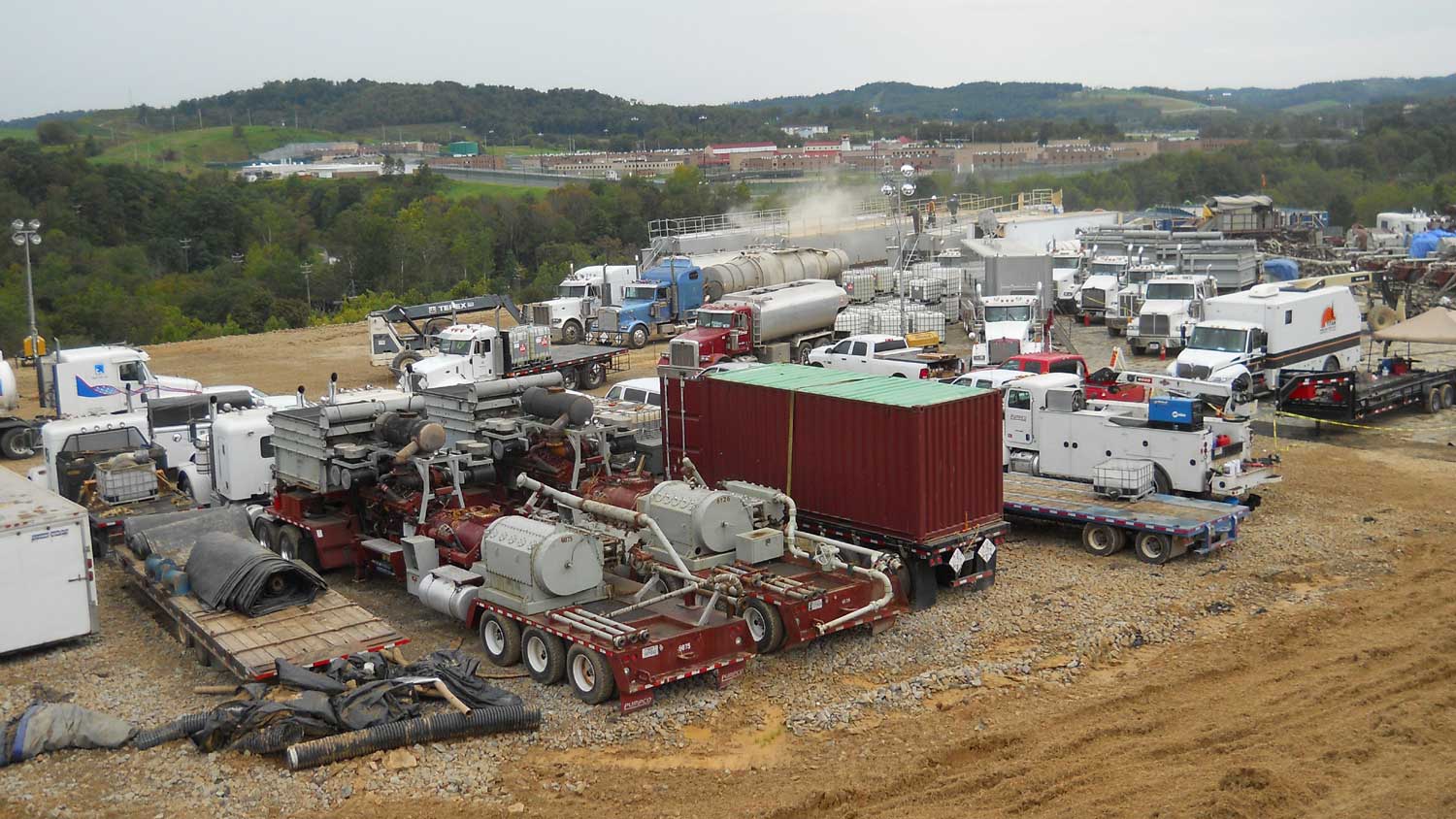
A natural gas fracking site in Warren Center, PA. Photo credit: Ostroff Law

The State Corporation Commission has approved Dominion Virginia Power’s proposal for a new gas-fired power plant in Brunswick County, rejecting arguments from the Sierra Club and others that ratepayers would be better served by a combination of low-cost energy efficiency and price-stable renewable energy.

The decision in the case (PUE-2012-00128) reflects the same discouraging themes we have seen from our regulators before: a tendency to believe everything Dominion tells them, coupled with an absolute refusal to acknowledge the climate crisis bearing down upon us and the changes in the energy market that make fossil fuels increasingly risky.

As the SCC put it in its order, “The relevant statutes… do not require the Commission to find any particular level of environmental benefit, or an absence of environmental harm, as a precondition to approval.” (Note to legislators: How about fixing that?)

The SCC’s state of denial is not just about the future. Since at least the 1980s, Dominion has consistently overestimated future demand growth.

A little skepticism might be in order when Dominion projects the same level of demand growth that keeps not materializing.

But the SCC is not skeptical. Its order declares Dominion’s load forecasts “reasonable.”

Evidently one can be both reasonable and wrong. Demonstrating this in real time, only a few days after the SCC issued its order in early August, Dominion CEO Tom Farrell had to explain to shareholders why electricity demand has not grown this year in line with company predictions.

Amnesia was also in evidence at the public hearing on the case, where proponents of the gas plant – everyone from Dominion employees to the SCC staff – kept insisting on the environmental advantages of natural gas.

But congratulating each other that at least it wasn’t a coal plant seemed odd to those of us who recall the fanfare surrounding the opening of Dominion’s newest Virginia coal plant, all of one year ago.

My, how quickly things change. No one is proposing to build coal plants any more. Now that natural gas costs half what coal does, people have suddenly noticed that burning dirty black rocks to make electricity is a terrible idea. “Look at all that pollution!” they say in wonderment. “How last century!”

Hydraulic_Fracturing_Marcellus_Shale USGS

A natural gas fracking operation in the Marcellus Shale. Photo credit: U.S. Geologic Survey

But in this century, natural gas is already wearing out its welcome – and not just among unhappy landowners who say fracking has spoiled their drinking water. Scientists measuring methane escaping from extraction wells warn that high levels of “fugitive emissions” may make natural gas a major contributor to climate change.

The SCC takes no notice of climate change, but it ought to consider that others do, presenting a financial risk for any fossil fuel plant. A national plan to reduce carbon emissions could make gas very expensive.

Yet building the Brunswick plant commits Dominion ratepayers to paying whatever the market price is for natural gas for the next three decades. Worse, it’s effectively a baseload plant, designed to burn gas 24/7; it can’t ramp up and down quickly to supply power when needed on a short-term basis, such as to fill in around the power supplied by wind and solar.

Analysts predict wind and solar will increasingly become the first choice for new generation, as these renewables get steadily cheaper and offer long-term price stability as well as environmental benefits.

Indeed, wind turbines beat out natural gas plants as the largest source of new generating capacity nationwide last year. Companies are designing natural gas turbines now that integrate with renewable energy, allowing utilities to hedge their bets on gas.

Well before the end of its 36-year life, a 24/7 baseload plant like Brunswick may be reduced to a giant concrete paperweight.

It would seem wise to hold off on building this gas plant, and we could. Investments in energy efficiency would more than meet the demand the Brunswick plant is supposed to serve, at a lower cost.

The SCC brushed aside this argument, pointing out that it consistently swats down good energy efficiency proposals – and intends to continue doing it.

So Virginia ratepayers, prepare yourselves: You’ve already been stuck with one of the last coal plants to be built in America. Now get ready for 30 years of paying for a natural gas plant. As for your dreams of wind and solar, keep dreaming.

Originally published in the Hampton Roads Virginian-Pilot on August 29, 2013. 

Unknown's avatar

Workshops on renewable energy for Virginia non-profits draw large crowds

Photo credit: Corrina Beall

Photo credit: Corrina Beall

Over 90 people packed the fellowship hall of the Mount Vernon Unitarian Church in Alexandria on the evening of June 23d for a presentation on solar power opportunities for houses of worship and other non-profits. Later in the week, more than 50 people attended a similar workshop at Virginia Union University in Richmond, designed primarily for colleges and universities.

In both places, the audience was there to learn about an opportunity provided by a new law that took effect in Virginia July 1. The law allows non-profits to use what are known as “third-party power purchase agreements,” or PPAs, to finance solar and wind installations. The PPAs let customers use clean, renewable energy for the same price—or even less-–as grid-delivered power produced from dirty fossil fuels. PPAs have been the driving force behind most small solar installations nationwide in recent years, and advocates hope they will now do the same in Virginia.

For-profit entities will also be able to use the new law, but only if they install a project of at least 50 kilowatts in size. Residential systems, which are typically in the 4-8 kilowatt range, are excluded. The law applies only within the territory of Dominion Virginia Power, and projects must be installed within the next two years, unless the program is extended.

The groups that organized the workshops—the Sierra Club, Interfaith Power & Light, National Wildlife Federation and the Virginia Conservation Network—view the new law as an opportunity for Virginia to begin ramping up its tiny solar and wind industries.

The Sierra Club has worked closely with the solar industry nationwide as a way to increase the use of renewable energy in the U.S., largely as a way to combat climate disruption. The club’s Beyond Coal Campaign seeks to ensure that as the dirtiest coal plants are retired, America’s energy needs can be met with clean energy rather than fossil fuels.

For the church workshop, Sierra Club partnered with Interfaith Power & Light (MD.DC.NoVa) because of its experience with congregations in Maryland and DC, helping them to go solar. Interfaith Power & Light has been a vigorous advocate for clean energy within area faith communities. Similarly, Sierra Club chose to partner with National Wildlife Federation for the college workshop because of its ongoing “green campuses” initiative nationwide.

Photo credit: Corrina Beall

Photo credit: Corrina Beall

Getting solar projects done in Virginia poses a challenge. Many states have encouraged the growth of solar and wind power through aggressive targets for renewable energy backed up by incentives and utility mandates, but Virginia offers neither. The state’s wind industry is essentially nonexistent, and with less than 10 megawatts (10,000 kilowatts) of solar installed statewide to date, Virginia produces less than one percent of the solar energy that New Jersey does. It also remains far behind neighboring states like Maryland and North Carolina, which both have solar policies and incentives that Virginia lacks.

Yet the price of solar has declined so steeply in recent years that it can now make economic sense in Virginia, especially for nonprofits. Nonprofits often can access low-interest loans or bring in investors from the community to help them prepay some of the PPA, allowing them to achieve greater overall savings. And churches, colleges, schools and other nonprofits typically own their buildings for many decades, so they are able to view energy savings over a longer time horizon than do many residential and commercial building owners.

For communities of faith, payback may not even be the top consideration. More and more congregations see addressing climate change and being better stewards of the earth as part of their core mission.

Educational institutions similarly see benefits beyond energy savings. Putting solar panels in a prominent location can be a symbol of an institution’s commitment to sustainability. When Eastern Mennonite University installed its solar array, enrollment increased ten percent, according to Tony Smith of Secure Futures LLC, the company that financed the system.

Smith, who also represents the solar industry trade group MDV-SEIA in Virginia, spoke at both the Alexandria and Richmond workshops. In Richmond he was joined by Jeff Ryan of Abakus Solar and Dave Stets of Richmond BySolar for a panel discussion about how PPAs can benefit nonprofits. A number of other solar and wind providers, as well as leaders from government and academia, also attended and contributed to the discussion.

Attendance at both workshops far exceeded organizers’ expectations. The audiences included a broad cross-section of faiths as well as representatives from eight universities and community colleges. Some attendees have already begun discussions with solar providers as a result of the workshops, leading many to hope that Virginia’s solar industry is at last poised to take off.

Additional workshops will likely be held in September; contact Corrina Beall at Corrina.Beall@sierraclub.org for more information.

Unknown's avatar

Tom Farrell’s nuclear fantasy

Tom Farrell doesn’t get it. Dominion Power, the utility of which he is CEO, has been all about building natural gas plants for the past couple of years, as it rushes to take advantage of cheap fracked gas. Out with the aging coal plants that had been its first love, in with the next cheap thing, and never mind the pollution! Then suddenly two weeks ago, faced with a question about climate change, Farrell told reporters the answer is more nuclear plants.

Mother Earth to Tom Farrell: The correct answer is “renewable energy.”

Most of the rest of the country gets this. Wind supplied more new electric generation than natural gas did in 2012. More people work in solar energy than in coal mining. Renewable energy has overtaken nuclear worldwide. Almost no one is building nuclear plants, partly because—here’s an inconvenient truth for you, Tom—they cost too much. Almost three years ago a Duke University study found that power from new nuclear plants is more expensive than solar energy, and the cost of solar has only gone down since then.

But Farrell is convinced wind and solar can’t provide reliable electricity to power the whole grid. You’d think he’d been reading propaganda from the Koch Brothers and had come to believe that if there are solar panels somewhere and a cloud crosses the sun, the whole grid crashes.

Can I just point out here that Dominion’s own North Anna nuclear reactors shut down suddenly in 2011 following an earthquake in Virginia, and the grid did not crash? Even though nuclear is one-third of Dominion’s Virginia portfolio, and North Anna represents more than half of that? And even though, while weather forecasters are pretty good at predicting regional cloud cover, no one can yet predict an earthquake?

The reason the grid didn’t crash is that grid operators make sure there is enough surplus generation available to keep supplying power even at times of catastrophic failure. And note that the nuclear plants didn’t come back online when the clouds cleared off, either. They were down for four months.

If nuclear power is more expensive than renewables, and it has to be backed up 100% with other forms of energy, for much longer time periods, where is the place for new nuclear?

As the CEO of a utility, Tom Farrell should know better. He should also know about the new study demonstrating that renewable energy alone—onshore wind, offshore wind, and solar energy—can power the entire grid 99.9% of the time. The study authors show that doing this would actually cost less than conventional sources of electricity, assuming you include in the price the “external” cost society pays for the use of fossil fuels. That is, if you factor in the cost of climate change, it’s cheaper to build renewable energy than new fossil fuel plants.

Climate aside, there’s other evidence for the superior value of renewable energy in providing price stability for customers and a whole range of benefits for the grid. And of course, for meeting demand at the cheapest possible cost, you can’t beat energy efficiency.

It’s time to face reality, Tom Farrell. If all you care about is making money for Dominion today, your natural gas strategy probably makes sense. But if you care about tomorrow—or even about the big picture today—it doesn’t. Either way, there’s no room in the picture for expensive new nuclear plants.

And if you’re sincerely concerned about climate change, now would be a good time for Dominion to invest in energy efficiency, wind and solar.

*    *    *

Note to readers: Willett Kempton, one of the authors of the study cited above on powering the grid with renewable energy, will be speaking at a townhall meeting sponsored by Sierra Club and Environment America this Wednesday, March 13, at the MetroStage Theatre, 1201 North Royal St., Alexandria, VA. The meeting is open to the public (Tom Farrell is especially invited). To RSVP, contact Phillip Ellis at phillip.ellis@sierraclub.org or 571-970-0275.