Unknown's avatar

Why we can’t just shut up and eat our cookies (or embrace natural gas)

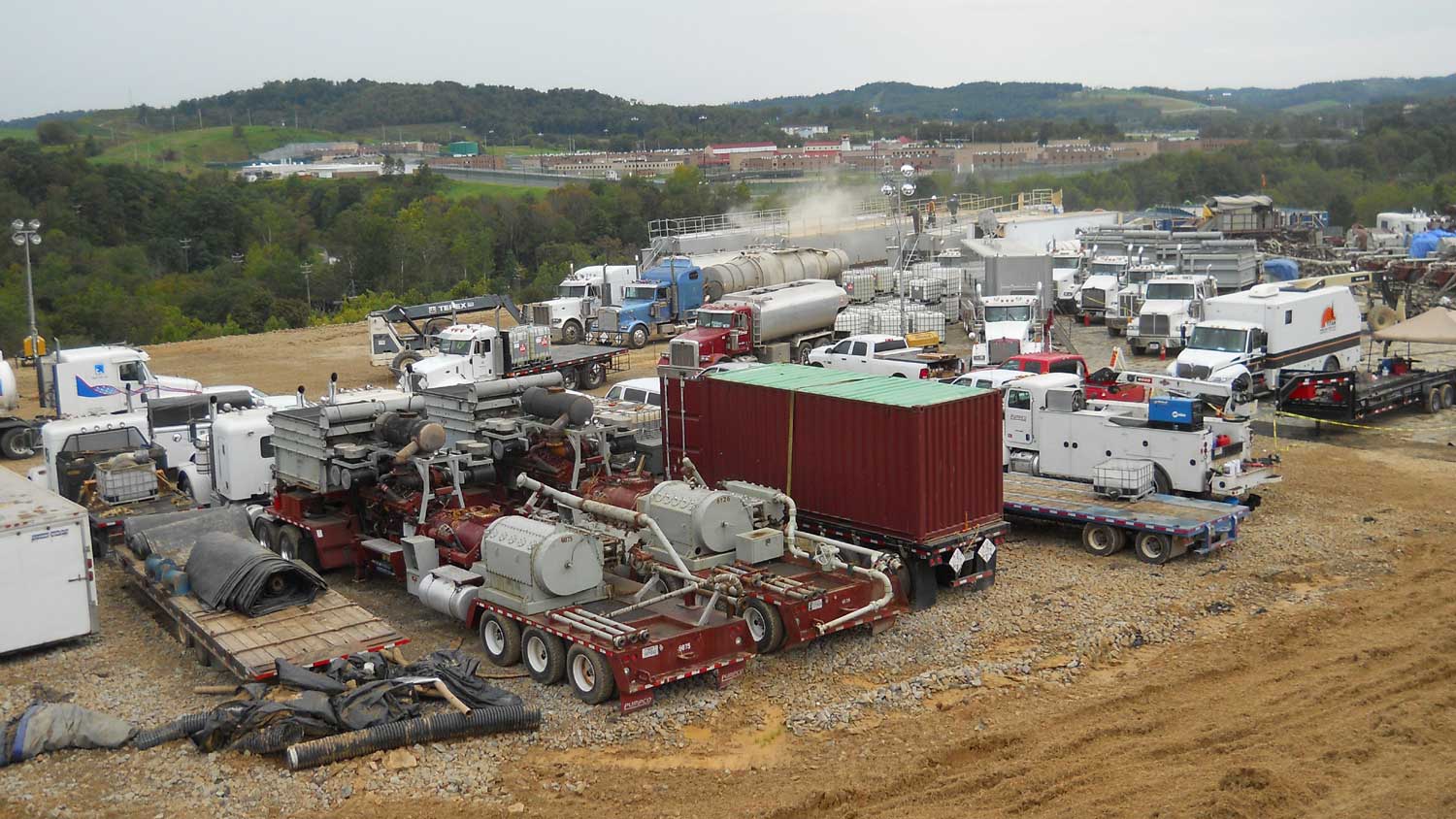
Fracking site, Marcellus Shale. Photo courtesy of U.S. Geologic Survey.

Fracking site, Marcellus Shale. Photo courtesy of U.S. Geologic Survey.

I grew up with brothers, so I knew from an early age that the easiest way to make friends with guys was to feed them chocolate chip cookies. I took this strategy with me to college, commandeering the tiny kitchen in our coed dorm. The aroma wafting down the hallways reliably drew a crowd.

One fan was so enthusiastic that he wanted to learn to make cookies himself. So the next time, he showed up at the start of the process. He watched me combine sugar and butter, eggs and white flour.

Instead of being enthusiastic, he was appalled. It had never occurred to him that anything as terrific as a cookie could be made of stuff so unhealthy. It’s not that he thought they were created from sunshine and elf magic; he just hadn’t thought about it at all. He left before the cookies even came out of the oven.

I felt so bad about it, I ate the whole batch.

But I can empathize with that guy when I’m told that as an environmentalist, I should love natural gas. Natural gas is the chocolate chip cookie of fossil fuels. At the point of consumption, everybody loves it. It’s cheap, there’s gobs of it, and it burns cleaner than coal, with only half the carbon dioxide emissions. Disillusionment sets in only when you look at the recipe. (“First, frack one well. . .”)

I realize we have only ourselves to blame. For years, environmentalists talked about gas as a “bridge fuel” that could carry us from a fossil fuel past to a future powered by renewable energy. No one would tarry on that bridge, we figured, because gas was expensive. We’d hurry along to the promised land of wind and solar.

But that was before hydrofracking and horizontal drilling hit the scene. Fracking opened up vast swaths of once-quiet forest and farmland to the constant grinding of truck traffic heading to drilling rigs that operate all day and night, poisoning the air with diesel fumes and sometimes spilling toxic drilling fluids onto fields and into streams. It was before studies documented well failures that let toxic chemicals and methane seep back up along the well borings and into aquifers, contaminating drinking water.

And it was before scientists sounded the alarm on “fugitive” methane emissions from wellheads: gas that escapes into the air unintentionally, sometimes at levels so high as to cancel out the climate advantage of burning natural gas instead of coal.

But just as environmentalists were thinking, “Whoa, natural gas turns out to be a bridge to nowhere,” electric utilities were embracing fracked gas in a big way. Fracking has made gas so cheap that giving up coal is no sacrifice. It’s so cheap they see no reason to get off the bridge and embrace renewable energy. At one conference I attended, a gas company executive gushed, “Natural gas is no longer a bridge fuel. It’s a destination fuel!”

All I could think was, “In that case, the destination must be Cleveland.” Which was surely unfair to Cleveland.

Just to be clear: environmentalists are not opposed to gas because we are spoil-sports, or purists, or hold stock in solar companies. The problem with natural gas is that it isn’t made by Keebler elves, but extracted through a nasty process that is harming the planet in ways both local and global.

If the best anyone can say about natural gas is that it’s not as bad as coal, then lingering on the bridge makes no sense. And anything we do that keeps us here—opening up Virginia to fracking, or building a huge new pipeline to bring fracked gas from other states—is both foolish and dangerous. Foolish, because embracing cheap gas distracts us from the serious business of building wind and solar and using energy more efficiently; and dangerous, because the planet will not stop warming while we play shell games with carbon.


Unknown's avatar

Finally, utility-scale solar for Virginia?

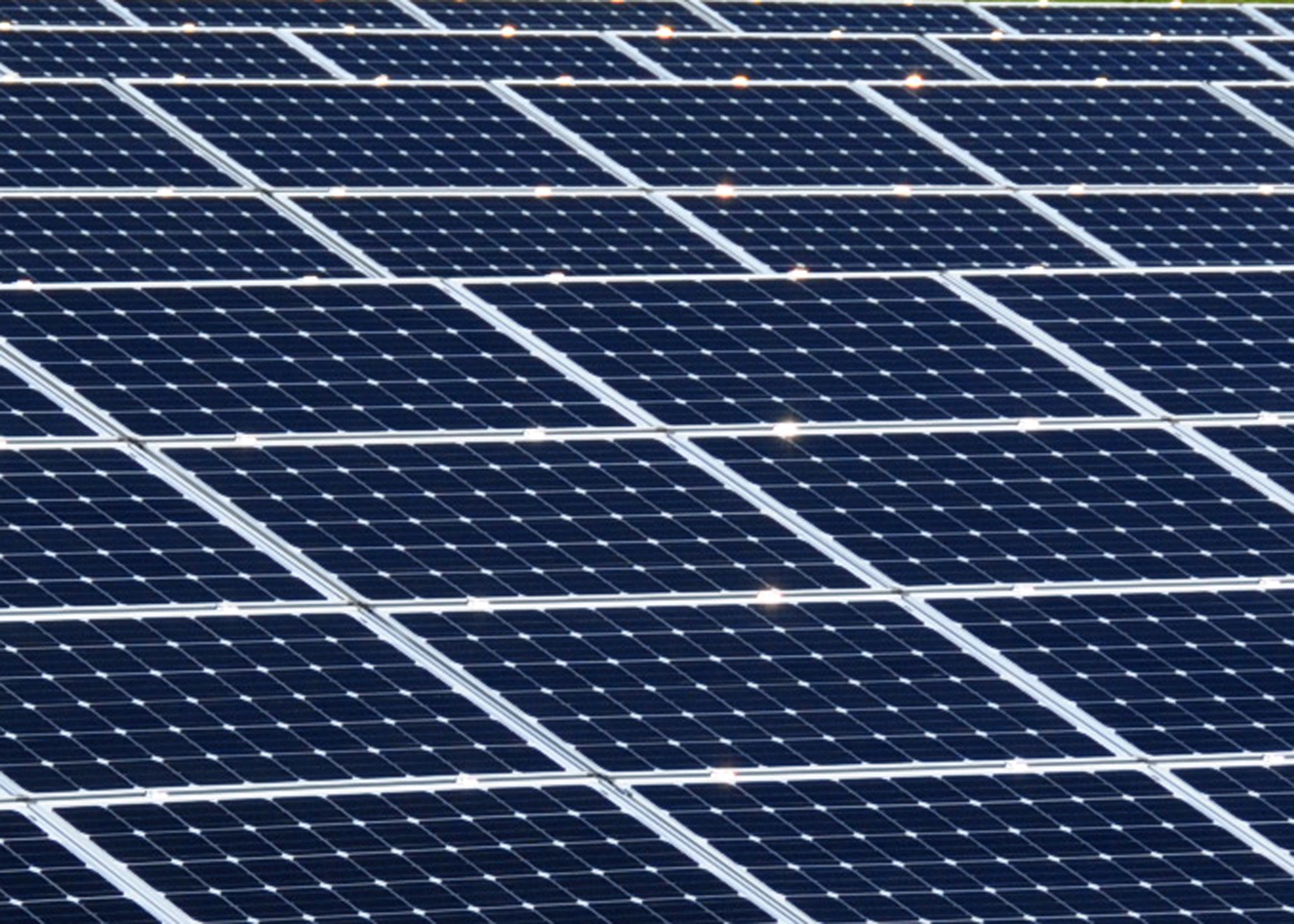
111022-N-OH262-322After a solar buying spree in other states, Dominion Power is at last taking a look at the possibility of building utility-scale solar in Virginia.

As reported in the Richmond Times-Dispatch, Dominion Resources, the parent company of Dominion Virginia Power, is considering building 220 megawatts of solar projects in Virginia, starting in 2017. The plan would involve five 40-megawatt “greenfield” projects, plus 20 megawatts located at existing power stations. (A greenfield is an area that is not already developed. So the large projects would be on former farmland, say, not closed landfills or old industrial sites.)

The company’s recent solar buys in California, Connecticut, Indiana, Georgia and Tennessee have all involved the unregulated, merchant side of Dominion Resources. But in this case, the plan is for Dominion Virginia Power to own the Virginia projects and sell the electricity to its customers here in the Commonwealth. This would require approval of the State Corporation Commission—which, as we know, is no friend to renewable energy.

A little more digging confirmed that Dominion plans to sell the solar energy to the whole rate base, rather than, say, to participants in the voluntary Green Power Program. How would they get that past the SCC? That remains unclear, but they know keeping the cost down will be key. Right now they’re looking at all the options to make it work. The company is still at the conceptual stage, is still looking for good sites of 100 acres and up, and hasn’t even made a decision to proceed.

So we should probably hold our excitement in check for now. After all, Dominion has had wind farms in Virginia “under development” for the past several years, with nary a turbine in sight.

Solar does have a few advantages over wind, though, from a utility perspective. For one, it produces power during the day, when demand is higher, while onshore wind tends to blow more at night. (Offshore wind, on the other hand, picks up in the late afternoon and evening, right at peak demand time.) And unlike wind farms in the Midwest and Great Plains, where turbines coexist peacefully with cows and cornfields, turbines in the mountains of the east have generated opposition from people concerned about impacts on forests and viewsheds. You find some curmudgeons who think solar panels are ugly, but they aren’t trying to block them wholesale at the county level.

With the sharp drop in solar costs over the last few years, large-scale solar has been looking increasingly attractive to utilities that want to beef up their renewable energy portfolios. As we learned recently, Dominion’s got a long way to go before it competes with even an average utility elsewhere. That puts it in a poor position to respond to the rapid changes heading our way. These include not just growing public demand for wind and solar and new regulatory constraints on carbon emissions, but also the much-discussed upending of the traditional utility model that depends on a captive customer base and large centralized generating plants running baseload power. Distributed generation and batteries increasingly offer customers a way to untether themselves from the grid, while wind and solar together are pushing grid operators towards a more nimble approach to meeting demand—one in which baseload is no longer a virtue.

Dominion and its fossil fuel and nuclear allies are fighting hard against the tide, but in the end, Dominion will do whatever it takes to keep making money. And right now, the smart money is on solar.

None of this means we should expect Dominion to become more friendly to pro-solar legislation that will “let our customers compete with us,” as one Dominion Vice President put it. But it does suggest an opening for legislation that would promote utility-owned solar, perhaps through the RPS or stand-alone bills.

Legislators shouldn’t view utility-owned solar as an alternative to customer-owned solar; we need both. And if being grid-tied means being denied the right to affordable solar energy, we will see customers begin to abandon the grid. But those aren’t arguments against utility-scale solar, either. Big projects like the ones Dominion proposes are critical to helping us catch up to other states and reduce our carbon emissions.

So full speed ahead, Dominion! We’re all waiting.


Unknown's avatar

Report confirms Dominion’s worst-place standing on clean energy

photo courtesy of the Sierra Club

photo courtesy of the Sierra Club

A new report from the non-profit group Ceres shows Dominion Resources, the parent of Dominion Virginia Power, winning last place among investor-owned utilities on a nationwide ranking of renewable energy sales and energy efficiency savings.

That’s left Virginians wondering how a company that talks so big succeeds in doing so little. And more importantly, what would it take for Dominion to rank even among the average?

Dominion came in 30th out of 32 in renewable energy sales, at 0.52%. On energy efficiency, it achieved 31st out of 32 on savings measured cumulatively (0.41%), and 32nd out of 32 measured on an incremental annual level (at 0.03%). Together these put our team in last place overall—a notable achievement for a utility that trumpets its solar investments and carbon-cutting progress.

To show just how awful Dominion’s performance is, the top five finishers achieved between 16.67% and 21.08% on renewable energy sales, 10.62-17.18% on cumulative annual energy efficiency, and 1.46-1.77% on incremental annual energy efficiency. National averages were 5.29% for renewable energy sales, 4.96% for cumulative efficiency savings, and 0.73% for incremental annual efficiency savings. Rankings were based on 2012 numbers, the latest year for which data were available.

In case you’re wondering, American Electric Power, the parent company of Appalachian Power Co., earned 24th place for renewable energy, with 2.65% of sales from renewables—a number only half the national average and one we might have called pathetic if it weren’t five times higher than Dominion’s. AEP’s efficiency rankings also placed it firmly in the bottom half of utilities, running 23d and 20th for cumulative and incremental efficiency savings, respectively. However, AEP earned its own laurels recently as the nation’s largest emitter of carbon pollution from power plants due to its coal-centric portfolio.

A study of the rankings reveals that Dominion’s major competition for the title of absolute worst came from other utilities based in the South. The critic’s favorite, Southern Company, nabbed 31st place on the renewable energy sales measure, but failed to make the bottom five on one of the efficiency rankings. Another southeastern utility, SCANA, achieved rock bottom on renewable energy; but like Southern, its marginally better performance on efficiency disqualified it from an overall last-place ranking.

Why do utilities in the South do so poorly? Probably because they can. Most of the poor performers have monopoly control over their territories and are powerful players in their state legislatures. Lacking in competition, they do what’s best for themselves. Possessing political power, they are able to keep it that way.

Of course, they still have to contend with public opinion and the occasional legislator who gets out of line. For that it helps to have a well-worn narrative handy, like the one about how expensive clean energy is. Dominion has found that Virginia’s leaders fall for that one readily, even though it’s false.

And so, when asked about the Ceres report, Dominion responded that Virginia wouldn’t want to be like the states that have high-performing utilities. Dominion spokesman Dan Genest told the Daily Press, “The three states — California, Connecticut and Massachusetts — the report mentions as being leaders in those categories also have among the highest electric rates in the nation. Typical residential customer monthly bills are $228.85, $206.07 and $191.04, respectively. Dominion Virginia Power customers pay $112.45.”

This would be an excellent point, if it were true. Alas, Genest’s numbers appear to be a product of a fevered imagination. According to recent data reported in the Washington Post, California’s average monthly electric bill is only $87.91, Connecticut’s comes in at $126.75, and Massachusetts’ at $93.53, while Virginia’s is $123.72. (Virginia’s numbers presumably reflect an average of bills paid by customers statewide, probably accounting for the higher figure than Genest cites for Dominion’s “typical” customer.)

That’s right: in spite of higher rates, Californians pay way less for electricity than Virginians do, in part because they have achieved high levels of energy efficiency. If you do that, you can afford to invest in more renewable energy without people’s bills going up.

This is such a great idea that it seems like it would be worth trying it here. Remarkably, this is precisely the strategy that environmental groups have been urging for years in their conversations with legislators and their filings at the State Corporation Commission. With the pressure on from global warming and the EPA’s Clean Power Plan, this would seem to be a great opportunity to save money, cut carbon, and move us into the 21st century.

So go for it, Dominion. Aspire to lead! Or failing that, at least shoot for average.


Unknown's avatar

Governor McAuliffe gets his chance on energy and climate


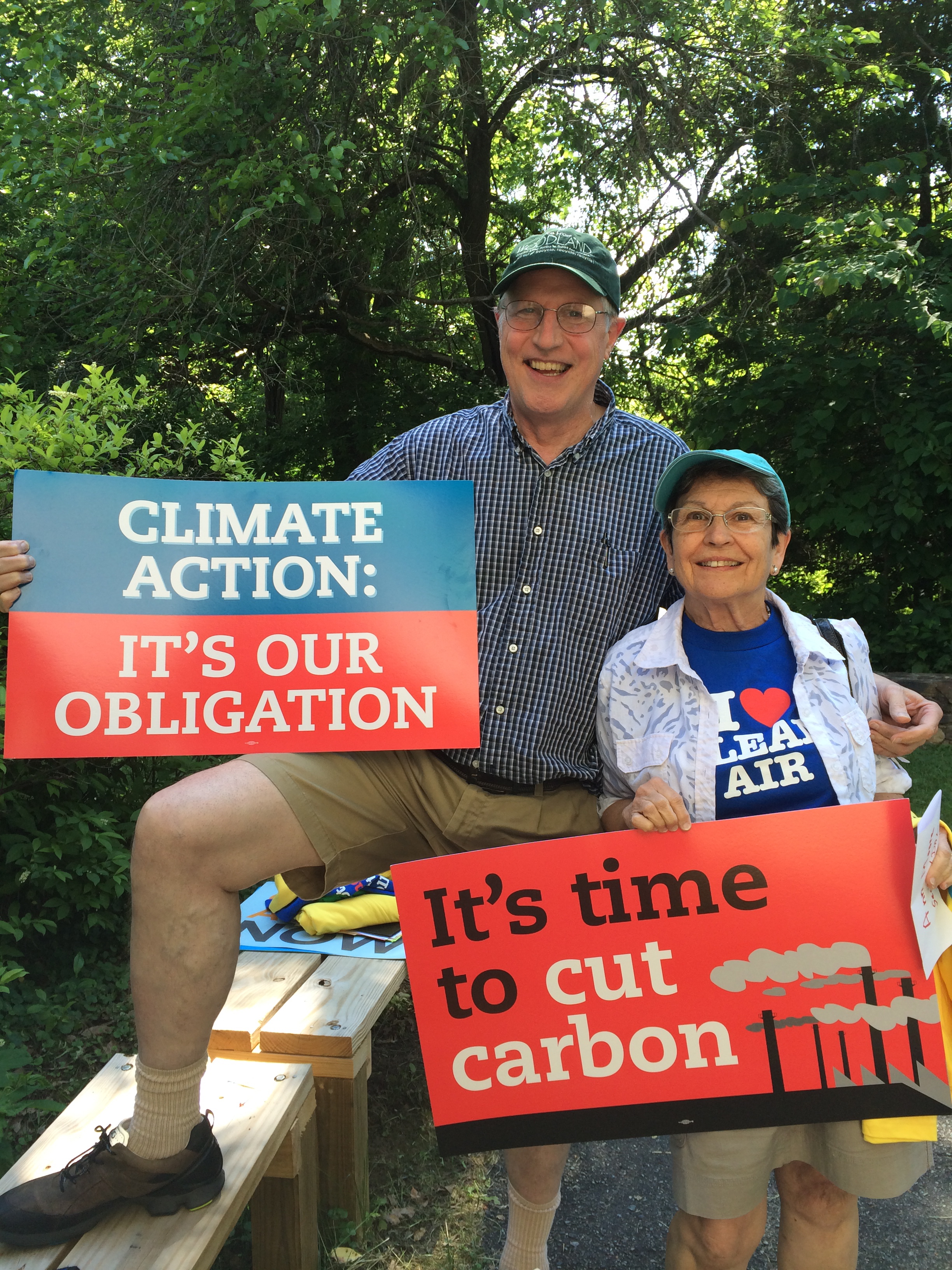
Virginia Sierra Club activists Tom Ellis and Ann Moore. Photo by Ivy Main

Virginia Sierra Club activists Tom Ellis and Ann Moore. Photo by Ivy Main

2014 is shaping up to be an exceedingly interesting year for energy policy in Virginia. The rewrite of the Virginia Energy Plan, the re-establishment of the Governor’s Climate Commission, and EPA’s just-proposed carbon rule create three separate pathways that will either intersect to form a coherent and coordinated state policy, or will take us into a chaotic tangle of competing agendas.

Add in the myopia of the State Corporation Commission and the control of the General Assembly by utility and coal interests, and we’ve got an unpredictable plotline here. All you energy watchers are going to want to stock up on popcorn for this show. Or better yet, become a player—read on to find out how.

First there’s the energy plan. Virginia law requires a new iteration every four years, with this year’s due October 1. To help with the work, Governor McAuliffe appointed the Virginia Energy Council two weeks ago. The Council consists primarily of energy industry members, with only one environmental representative and no consumer advocates. (Although come to think of it, that might be because Virginia doesn’t have any consumer advocates. But still.)

The Council will be working with the staff of the Department of Mines, Minerals and Energy, which has already begun holding “listening sessions” and accepting comments to get input from the public. The next one will be held tonight, June 17, in Annandale, Virginia. Get there early and sign up for a speaking slot. Other locations include South Boston on June 19, Abingdon on June 24, Norfolk on June 26, and Harrisonburg on July 1.

The existing energy plan, created under Governor McDonnell, is the sort of “all of the above” hodgepodge that you’d expect from a process where you bring in a bunch of energy company executives and say, “Have at it!” I’d be concerned that the same fate awaits the new one, but for a couple of new factors: the reboot of the Governor’s Commission on Climate Change and the looming threat of EPA’s carbon rule. (Making this the first time ever that I’ve welcomed anything I called a looming threat.)

The Climate Commission was supposed to have launched by now, and if it had, I might have been able to say something definite about how it will interact with the Energy Council. Unfortunately, Governor McAuliffe got a little sidetracked by something you may have heard about: the political chaos that ensued when a certain Democratic senator resigned his seat and threw the Senate into Republican hands under suspect circumstances in the middle of a battle over the Governor’s signature initiative.

(In fairness. the senator’s backers insist he acted only out of the purest self-interest and not because he’d been bribed, there being a legal difference. Still, from now on anyone who screws over a large number of friends at once will be said to have “Pucketted” them.)

As you may remember, Governor Kaine established the first Governor’s Commission on Climate Change back in 2007 to study the effects of global warming on Virginia and to make recommendations on what to do about it. The commission issued a well-thought-out report replete with excellent suggestions. The report was put on a shelf and admired for a while, until Governor McDonnell found out about it. He acted swiftly, taking down the Commission’s web page lest anyone think he believed in rising sea levels and flooding and predictions about the dire consequences of global warming—you know, the sort of thing you can actually see going on now in Hampton Roads, the second-largest metropolitan area in Virginia.

Governor McAuliffe, on the other hand, not only “believes in” climate change and the risks it poses to Virginia, but also believes there are huge job and growth opportunities to be had by taking action in response. He has made it clear he does not want his commission to start from scratch, but rather to pick up where the Kaine commission left off.

McAuliffe’s Energy Plan must also take account of carbon emissions in a way the McDonnell plan never tried to. On June 2, EPA issued a proposed rule to address carbon pollution from existing electric generating plants, intended to reduce overall emissions nationwide by 30% by 2030. Although the rule won’t be final for a year, and states will then have as long as two years to implement it, and there will be lawsuits trying to block it from ever being implemented—still it means no one can ignore carbon now.

If you want to weigh in on the carbon rule, EPA will be holding hearings around the country, including in Washington, DC on July 30, or you can email your comments.

The proposed rule is not simple. Each state has been given a carbon budget for all its electric generating plants combined, expressed in pounds per megawatt-hour, and arrived at by some still-rather-opaque notion of what a given state is capable of. The cleanest states are thought to have policies in place to get even cleaner, so their targets are more ambitious than those of the dirtiest states. The dirty, coal-intensive states, having done so little to clean up in the past, are thought incapable of making a whole lot of progress now, and so are rewarded by being graded on a curve. Interestingly, it is not the clean states crying foul, but the dirty ones.

Virginia’s carbon target falls in the middle, but achieving it will require improvements of 37.5% over 2012 levels. This sounds harder than it is, given that we have several natural gas plants under construction that will presumably count towards lowered emissions as they dilute the coal in the state’s power mix. EPA also assumes that existing plants can operate at higher efficiencies that will reduce emissions per unit of energy produced.

The carbon rule also contains what seems to be a freebie of 6% of existing nuclear power, a provision intended to encourage the continued operation of nuclear plants that still have time remaining on their licenses but are no longer economic. In Virginia’s regulated market, our nuclear plants don’t have to compete on the open market and so aren’t in danger of being shut down for economic reasons, but apparently we get the freebie anyway.

Beyond that, however, the carbon rule will clearly put a thumb on the scale in favor of energy efficiency and carbon-free power sources. The EPA is right to think we have plenty of those to call on. A few years ago, ACEEE released a study showing Virginia could readily achieve energy efficiency savings of almost 20% cost-effectively, and much more if we really rolled up our sleeves. Since then, the few utility programs that have addressed energy efficiency have barely moved the needle. This means the low-hanging fruit still clings there, only now it’s really, really ripe.

Add in offshore wind (which can provide about 10% of state energy needs just from the initial lease area that Dominion Power bought rights to), some land-based wind (a few more percentage points) and solar energy (estimated to be able to produce 18-25% of our demand), and we know we can blow right through the EPA target.

As we also know, though, Dominion CEO Tom Farrell has his heart set on a new nuclear plant, which would suck up all the money that might otherwise go to renewables and dampen the utility’s interest in efficiency. Given nuclear’s high cost, the need for taxpayer and ratepayer subsidies, and the public safety risks involved, the free market isn’t on his side. But with captive ratepayers and the legislature on the company payroll, Farrell’s dream remains a possibility in Virginia.

As I say, it’s going to be an interesting year.


Unknown's avatar

Who’s afraid of a Carbon Rule?

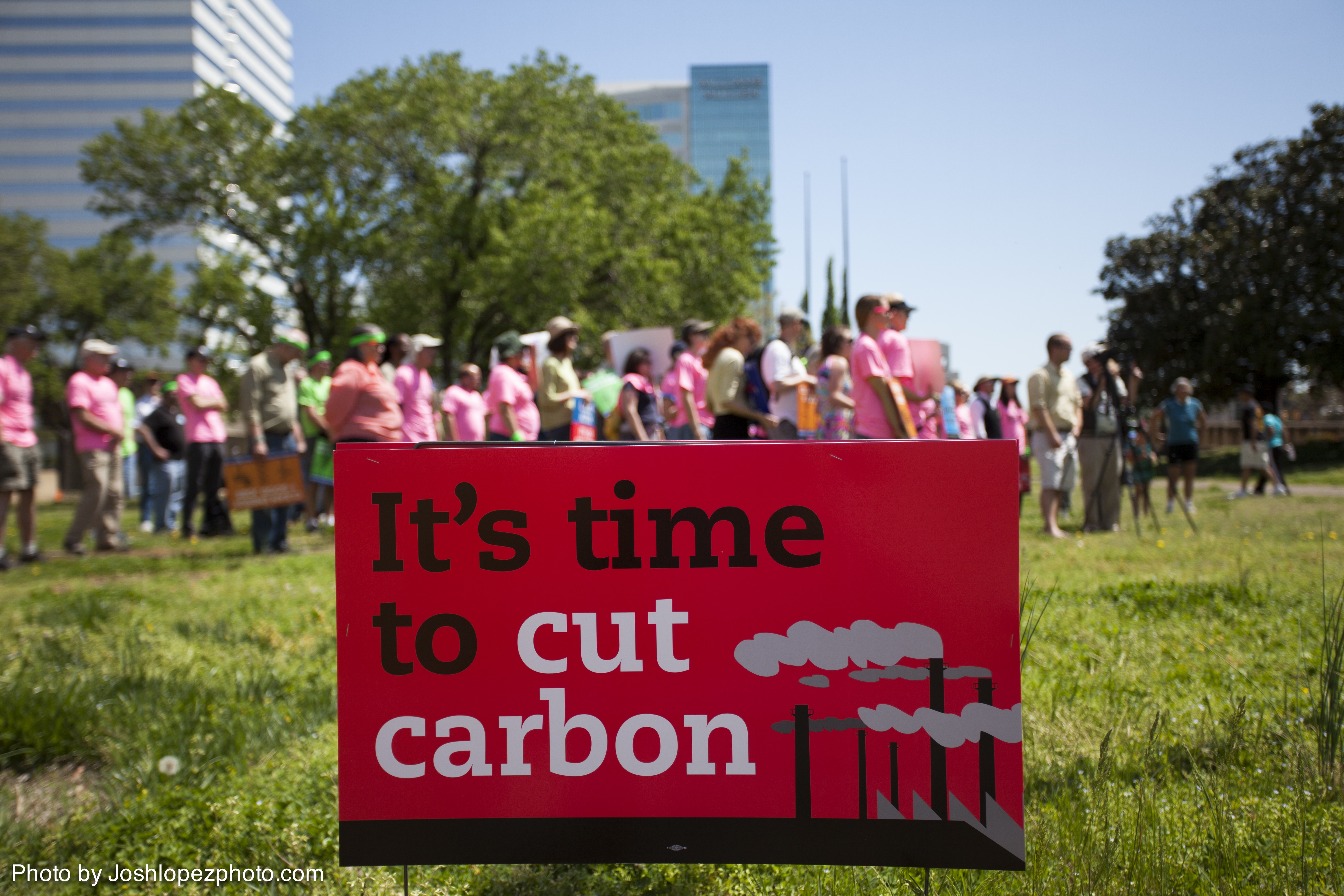
Climate activists urge action to curb carbon emissions at a demonstration in Richmond, Virginia. Photo by Josh Lopez, courtesy of the Sierra Club.

Climate activists urge action to curb carbon emissions at a demonstration in Richmond, Virginia. Photo by Josh Lopez, courtesy of the Sierra Club.

When I was a law student working at the U.S. EPA in the ‘80s, we sued a company that had been polluting a Maine river for years. Back then, EPA calculated penalties based on the amount of money a polluter saved by ignoring the requirements of the Clean Water Act. The idea was to take away the economic benefit of pollution so that companies would make out better by installing treatment systems than by imposing their toxic waste on the community.

Not surprisingly, the company’s lawyers tried to prevent their client from having to pay a penalty for all those years it had been dumping pollution into the river. But their reasoning was interesting. Faced with the lawsuit, the company overhauled its industrial process and eliminated most of its waste products, which turned out to be a money-saving move. Thus, said the lawyers, the company hadn’t gained any competitive advantage by polluting the river; it had actually lost money doing so. Really, they’d have made a lot more money if we’d forced them to clean up their act sooner.

Needless to say, the argument didn’t fly, and the company paid a fine. But its experience turns out to have been a common one. When it comes to environmental regulation, industry screams that the sky is falling, but then it gets to work to solve the problem, and frequently ends up stronger than ever.

This is one reason to be skeptical of ad campaigns from the U.S. Chamber of Commerce and the National Mining Association trying to convince the public that the EPA’s new regulations on carbon pollution from power plants, to be announced on June 2, will destroy the American economy. They’ve cried wolf so many times they have lost all credibility.

And in case you are of a generous nature and inclined to forgive previous false alarms, it’s worth noting that the National Mining Association campaign earned the maximum four Pinocchios from the Washington Post fact-checker—meaning, it’s a pack of lies. The EPA has been scarcely kinder in its analysis of the Chamber’s campaign, and the economist Paul Krugman says the Chamber’s own numbers actually prove compliance with the carbon rule will be cheap.

At least we can understand the American Mining Association’s fabricating facts. These are coal mining companies, after all; of course they are opposed to limits on carbon! They’re like the tobacco companies fighting limits on smoking. In fact, they’re in a worse position, because a good many smokers say they like tobacco, whereas nobody who isn’t making money from it likes coal.

But we can’t cut the Chamber the same kind of slack. There is little reason to fear the economy will suffer by continuing the gradual phase-out of coal that is already underway. No one was building new coal plants anyway; they are too expensive compared to natural gas plants and wind farms. The old, dirty, but fully amortized coal plants will gradually be retired, and good riddance. We have paid dearly for that “cheap” power in health care for asthma and heart disease, in premature deaths, and in babies born with neurological damage from mercury in their mothers’ bodies.

Nor does the Chamber’s anti-carbon rule stance accurately reflect the opinions of the energy sector as a whole. Even those electric utilities that once relied heavily on coal have proven to be fickle friends. Many of them have already said they can live with a carbon rule that lets them swap fuel sources.

And while coal declines, other energy industries are growing and flourishing. The breathtaking pace of advances in wind, solar and battery technologies make it clear that the age of fossil fuels will end in this century. There will be winners and losers, as there always are in a free market, but the new energy economy offers so many opportunities for American companies and workers that one wishes the fear-mongers at the Chamber would stretch their necks out of their bunker far enough to see the horizon.

As for society in general, we have seldom seen a limit on pollution that didn’t make us collectively better off, and carbon will be no exception. It is always easier and cheaper to stop pollution at its source than to clean it up later or pay for the damage. That will be true here in spades, where the damage includes hotter summers, more crop losses, more disease, more destructive storms, and whole communities swamped by rising sea levels. These are already happening, and they affect both our health and our wallets. Failing to limit carbon condemns us all to economic decline and slow self-destruction.

Surely, all we have to fear about the EPA’s upcoming carbon rule is that it might not be strong enough.


Unknown's avatar

News on renewables makes Virginians green, but not in a good way

Virginians want wind and solar. Bummer, y'all.

Virginians want wind and solar. Bummer, y’all.

On May 20, the Georgia Public Service Commission signed off on two power purchase agreements that will add 250 megawatts (MW) of wind energy to the state’s electricity mix. This comes on top of earlier commitments to solar energy that, combined with the wind power, will give Georgia more than 1,000 megawatts of renewable energy capacity by 2016.

While we certainly want to congratulate Georgia on its commitment to clean energy, the news has turned Virginia advocates a little green–and not in a good way. We can only wish this were us. Virginia has no wind energy to boast about, and about 15-18 megawatts of solar, according to estimates from the Department of Mines, Minerals and Energy.

This comes on top of other recent announcements about the great strides being made in renewable energy nationwide. If you can stomach it, here are the numbers: the U.S. installed over 1,000 MW of wind in 2013, and another 485 MW of wind just in the first quarter of 2014, bringing the total installed capacity to date to over 61,000 MW. More than 7,000 MW are in development

In Virginia, we have a few backyard turbines.

Solar, for its part, keeps breaking records, with over 4,700 MW installed in 2013, a 41% increase over the previous year, and another 680 MW in the first quarter of 2014.

Virginia solar broke into the double digits—bring out your horns and whistles!—thanks to the efforts of homeowners, colleges, the military, a few progressive towns and a handful of consumer-conscious businesses. As for our utilities, they have developed less than 1 MW of wind and solar in the Commonwealth.

Oh, but Dominion Resources, the parent of Dominion Virginia Power, just bought a 7.7 MW solar project. In, um, Georgia.

Changing to a local focus won’t help our case of envy. West Virginia doesn’t have much solar, but it has 583 MW of wind energy. North Carolina doesn’t have much wind, but it installed 335 MW of solar energy in the last year alone. Maryland is up to 142 MW of solar and 120 MW of wind.

Tennessee—Tennessee!—has 29 MW of wind and 74 MW of solar.

If we were shooting for last place among east coast states in the race to develop renewable energy, we might be able to congratulate ourselves. We are doing a great job of falling further and further behind.

Sadly, Virginia, there is no consolation prize.

Unknown's avatar

Dominion won’t explain ties to anti-clean energy “bill mill” ALEC

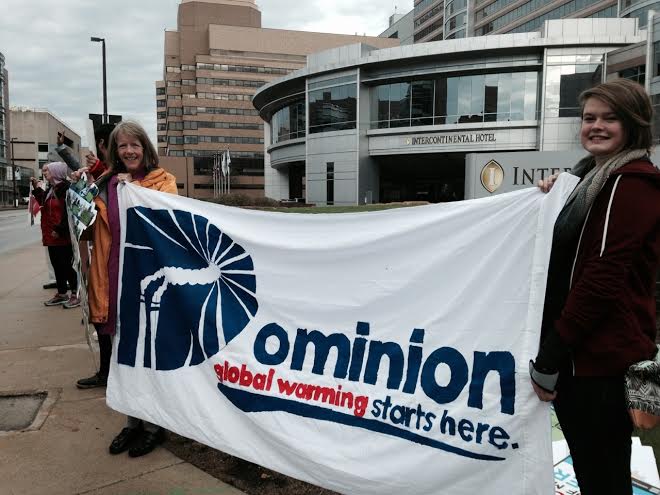
Dominion Resources, the parent of Dominion Virginia Power, held its shareholder meeting today in Cleveland, Ohio. Unhappy Dominion shareholders have introduced many resolutions over the years seeking to reform aspects of the company’s business practices, from buying mountaintop-removal-mined coal to exposing investors to risks from climate disruption. Although Dominion routinely challenges the resolutions, seeking to keep them off the ballot, this year half a dozen resolutions made it through the legal obstacle course to be voted on. One of the resolutions, submitted by the New York State Common Retirement Fund, called on Dominion to disclose its financial support for the secretive American Legislative Exchange Council, which works to defeat and roll back renewable energy and climate initiatives across the country. The resolution prompted guest blogger Seth Heald, in Cleveland today for the shareholder meeting, to offer this commentary.  

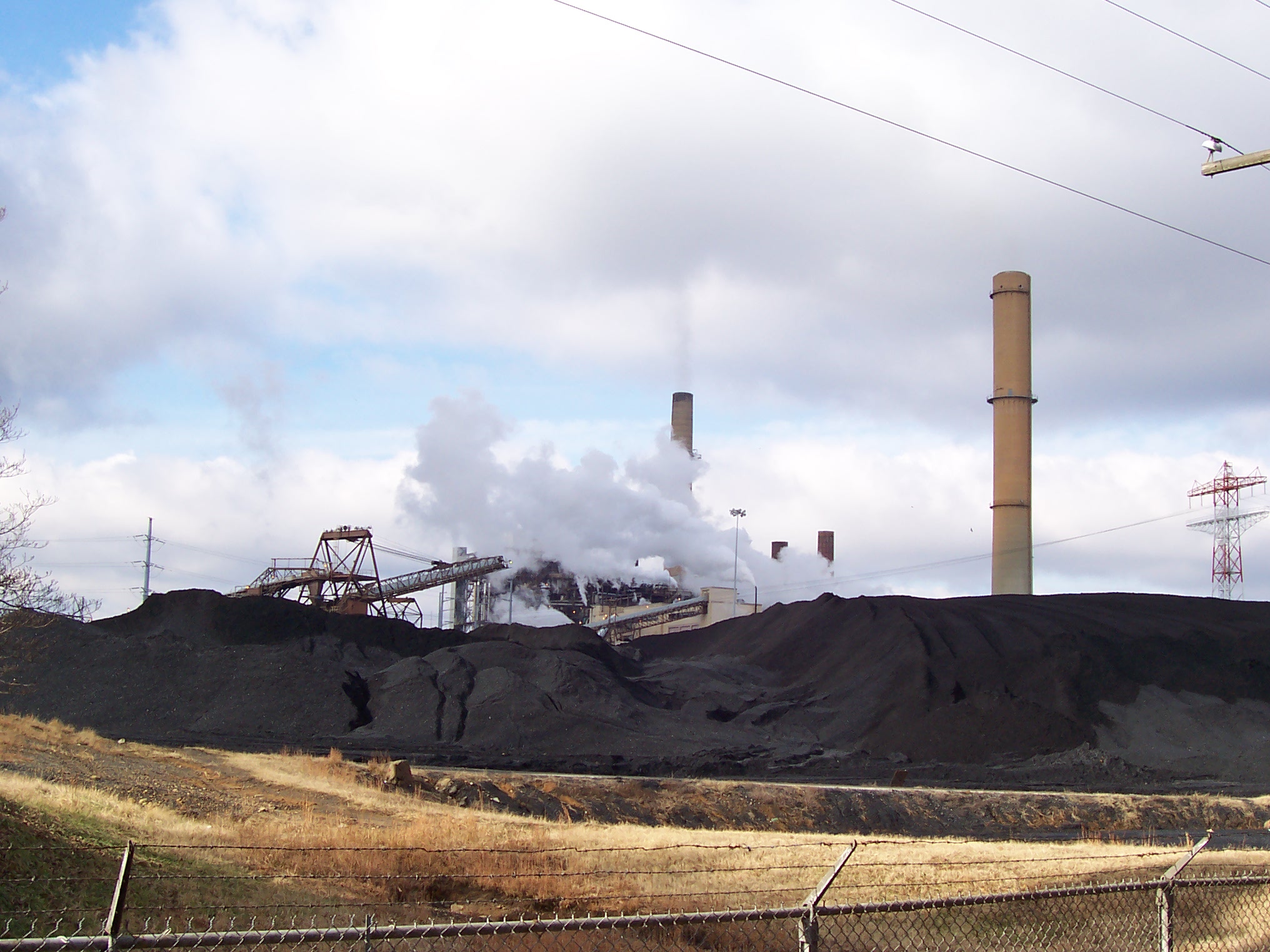
Dominion's coal-fired Chesterfield Power Station, on the James River, has been driving climate change since 1952. Photo credit Ed Brown, Wikimedia Commons.

Dominion’s coal-fired Chesterfield Power Station, on the James River, has been driving climate change since 1952. Photo credit Ed Brown, Wikimedia Commons.

In the past week or so communities across Virginia staged Earth Day festivals and other events to raise environmental awareness and support environmental protection. Virginia’s largest electric utility, Dominion Virginia Power, had tables or booths at a number of these events, touting the company’s environmental record.

The utility’s parent corporation—Dominion Resources, Inc.—attempts to defend the company’s environmental practices on its website. Chief environmental officer Pamela F. Faggert explains “[e]nvironmental awareness is the responsibility of each Dominion employee. It is woven into the fabric of our culture ….”

What you won’t find on Dominion’s website or in its Earth Day handouts is any mention of its work to undermine environmental protections through its financial contributions to the American Legislative Exchange Council, widely known as “ALEC.” ALEC has been described as “a corporate bill mill.” It brings together corporations and state legislators and comes up with “model legislation” for the legislators to introduce back home. Sometimes state legislatures pitch in with their own additional financial support. A report on ALEC’s influence in Virginia, issued by the group Progress VA, states that between 2001 and 2010, Virginia spent over $230,000 of taxpayers’ money to send legislators to ALEC conferences “to meet with corporate lobbyists behind closed doors.” The report notes that more than 50 bills drawn from ALEC sources have been introduced in the Virginia General Assembly in recent years.

ALEC gained notoriety recently because of its sponsorship of “stand your ground” laws, such as the one in Florida connected to the Trayvon Martin shooting death. According to The Guardian, more than 60 corporations withdrew from ALEC after that connection was publicized.

ALEC’s proposed energy and environmental legislation reliably favors corporate polluters’ interests over the environment. An ALEC model resolution intended to stymie efforts to address climate change expressed the goal of “prohibiting EPA by any means necessary from regulating greenhouse gas emissions, including if necessary defunding EPA greenhouse gas regulatory activities.” As reported in the Virginian-Pilot, a Virginia delegate introduced this resolution in the House of Delegates after it was presented to him by the coal industry. A different ALEC resolution called for opposition to “all Federal and state efforts to establish a carbon tax on fuels for electricity and transportation.” A list of ALEC model legislation is available at http://www.alecexposed.org/.

The nonprofit watchdog Center for Media and Democracy reports that Dominion Resources has participated on ALEC’s energy, environment and agriculture task force. A 2010 “roster” of people on that task force (obtained by the group Common Cause and posted online) includes Dominion executive Robert Blue, who currently is Dominion Virginia Power’s president. Blue and other Dominion executives served alongside Joseph Bast, president of the Heartland Institute—an extremist group notorious for its support of climate-science denial and comparing those who “still believe” in climate science to mass murderers.

Also on ALEC’s environment task force roster serving alongside Dominion executives were representatives of the American Petroleum Institute, Koch Companies Public Sector LLC (affiliated with Koch Industries and the Koch brothers), the American Coalition for Clean Coal Electricity (a coal-industry group that lobbies against carbon-emission restrictions), and the Koch-backed right-wing, anti-environment group Americans for Prosperity.

ALEC has been linked to sponsorship of recent efforts to block or roll back state legislation that promotes renewable energy. ALEC has also backed efforts to water down laws requiring disclosure of fracking chemicals, and efforts to block federal regulation of toxic coal-ash storage sites. (Federal regulation, had there been any, might have served to prevent the recent Duke Energy coal-ash spill in North Carolina, which flowed downstream into Danville, Virginia.)

You simply can’t square these anti-environment positions with Dominion’s professed corporate culture of environmental awareness, supposedly woven into the company’s very fabric. No wonder Dominion keeps quiet about its ALEC involvement.

At Dominion’s May 7 shareholder meeting I asked the company’s chairman and CEO, Thomas Farrell, II, why Dominion participates in ALEC and what the company gets from that participation. Farrell clearly didn’t want to say much. His entire answer was “We see value in it and that’s why we participate.”

EPA records reveal that Dominion is the largest emitter of carbon-dioxide pollution in Virginia. Meanwhile Virginia’s Hampton Roads area, where many Dominion customers live, is one of the most vulnerable places in the nation to harm from climate change caused by carbon emissions. Virginia continues to suffer from the recent Duke Energy spill of toxic coal ash into the Dan River.

ALEC’s efforts to block environmental protections harm all Virginians, indeed all Americans. The people of Virginia—Dominion’s customers—should press Dominion to work to reduce its carbon emissions sharply rather than waxing poetic about its environmental “culture” while quietly supporting groups like ALEC that seek to block efforts to address climate change.

Seth Heald is vice chair of the Sierra Club Virginia Chapter, and is also a Dominion Resources shareholder. He is a graduate student in the Master of Science in Energy Policy and Climate program at Johns Hopkins University.


Unknown's avatar

Green buildings help the poor (and could help the rest of us, too)

This post originally appeared as an OpEd in the Richmond Times-Dispatch on April 25, 2014.

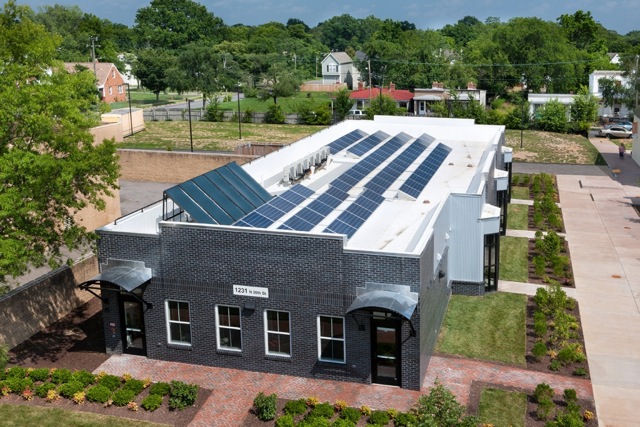
Better Housing Coalition’s Somanath Senior Apartments in Richmond, VA. Photo credit: BHC

Better Housing Coalition’s Somanath Senior Apartments in Richmond, VA. Photo credit: BHC

If you think of “green” homes and solar panels as luxury amenities for high-end housing, you might be surprised to learn that these are becoming standard features in low-income housing—even here in Virginia.

Buildings with added insulation, better windows, energy-saving light fixtures and Energy Star appliances translate into big savings on utility bills. This should matter to all of us, but it’s especially important for low-income households. For them, lower energy bills can mean not having to choose between keeping the lights on and putting food on the table.

Reducing energy costs is equally important for low-income housing owned by the government or nonprofits. Using energy efficiency and renewable energy to lower utility bills saves the public money and makes it possible to keep rents stable.

Recognizing these benefits, ten years ago the Virginia Housing Development Authority (VHDA) began to incentivize green building techniques. As a result, when government agencies and nonprofits build low-income housing in Virginia today, they make green building a priority.

Today there are over 11,000 units of affordable housing in Virginia that are certified to EarthCraft standards, one of the strictest measures of home energy efficiency. According to Philip Agee, Green Building Technical Manager for EarthCraft Virginia, these new affordable housing units are 28% more efficient than homes that are built to the 2004 model housing code. Units renovated to EarthCraft standards average a 43% improvement in efficiency.

Richmond-based Better Housing Coalition now builds all its low-income housing to exceed EarthCraft standards. As its website explains, “Installing energy-efficient heating and cooling systems, energy efficient windows and lighting, and blown cellulose insulation are standard practice for BHC homes. So, too, is the use of durable cement-board siding and tankless water heaters. Reduced energy usage means reduced utility bills for our owners and residents.”

Even more striking is the inclusion of solar energy in recent projects. Many of the Better Housing Coalition’s buildings include solar PV panels for electricity and solar thermal systems for hot water. Last year the Better Housing Coalition built the first net-zero-energy apartments for low-income residents, combining super-efficient construction with solar to produce as much energy as residents consume.

Another leader in the solar movement is Community Housing Partners, a non-profit that designs and builds low-income housing throughout the Southeast. It has worked with Virginia Supportive Housing to include solar panels on at least four of its recent projects, each system sized to provide 20% of the building’s electricity.

The Heron’s Landing apartments, in Chesapeake, include both 61 kilowatts of solar PV and a 13-kilowatt solar thermal array to supply hot water to the 60-unit complex designed for formerly homeless residents. Across the state in Charlottesville, The Crossings includes 33 kilowatts of solar PV and a 76-kilowattt solar thermal system for 62 units serving homeless and low-income residents. Both projects used Charlottesville-based AltEnergy as the solar contractor, supporting solar jobs in state. Paul Risberg, AltEnergy’s CEO, says his firm is currently working on two more Virginia projects.

Solar systems are also part of the Community Housing Partners’ developments in Richmond (Studios at South Richmond) and Portsmouth (the attractive South Bay Apartments). Now, like the Better Housing Coalition, the organization plans to take the next step, making its latest housing development for low-income seniors in Christiansburg, Virginia net-zero

Municipalities, too, are working solar into their plans for low-income housing.  Last year the Harrisonburg Redevelopment and Housing Authority worked with Staunton-based Secure Futures LLC to install solar on its Polly Lineweaver apartment building, which serves elderly and disabled residents. According to a local television report, the contract will save the Authority money over time and help keep rents stable.

Building “green” is proving such a money-saver for low-income housing that it’s a shame Virginia isn’t applying this lesson more widely. The state’s failure last year to adopt the 2012 model building code standards means that even buyers of brand-new homes won’t be guaranteed the level of quality built into these low-income apartments. Let’s hope the McAuliffe administration takes note and changes course.


Unknown's avatar

Dominion Power buys California solar, and Virginians wonder, “Why not us?”


solar installation public domainThe news broke on April Fools’ Day, making Virginians feel we were the victims of a bad joke: Dominion Power announced it had bought six California solar projects, for a total capacity of 139 megawatts (MW). “This investment is another important step forward for Dominion as we expand our renewable energy portfolio,” said Dominion Chairman, President and Chief Executive Officer Thomas F. Farrell II. “These projects fit well within our portfolio of regulated and long-term contracted assets,” which also include 41 MW of solar in Georgia, Connecticut and Indiana.

Don’t get excited, Virginia: this solar investor is not Dominion Virginia Power but Dominion Resources, the parent company. You can be sure executives will take every opportunity to brag about the company’s stake in the national solar market, but none of this power will reach us here in the Commonwealth.

Here, Dominion owns a grand total of one solar array at a university, all of 132 kilowatts. That’s about 14 houses’ worth, out of a customer base of 2.4 million. A 500-kilowatt array on an industrial building is set to deploy soon. That will bring the grand total to maybe 70 houses’ worth, if the owners don’t leave the lights on too much. Dominion is supposed to be developing a total of 30 MW of solar under a law passed in 2012, but the glacial pace of deployment is discouraging. Oh, and neither of its first two projects employed Virginia solar companies, further minimizing their impact in the state.

Why isn’t Dominion investing in Virginia? “The cost of large solar projects such as this are still too high for a regulated market in Virginia,” Dominion spokesman Dan Genest told the Richmond Times-Dispatch.

You might ask, if the costs of solar power are too high for a regulated market, perhaps it is time to deregulate the market? Somehow I don’t think that’s what Genest meant. More likely he meant that Virginia’s regulatory scheme is so skewed in favor of fossil fuels that there’s no space for utility-scale solar. Not that he would put it quite so bluntly—or admit to his employer’s role in creating this problem.

But let’s review the facts: Dominion has lavished $6.6 million over the last ten years on Virginia lawmakers, ensuring the company’s dominance in our political process. Dominion writes our energy laws and shepherds them through the legislative committees it controls. It has molded both the rules of the game and the way Virginia regulators apply them: favoring fossil fuel generation such as the expensive Wise County coal plant, ignoring costs to the public from air and water pollution, and blocking all attempts at reform.

Dominion has so shaped Virginia’s energy policy that it wouldn’t get permission from the State Corporation Commission to add a utility-scale solar project to its generation mix today. The company now finds itself a captive within the very walls it built to protect its profit and defend itself from competition, and just at a time when the world outside its walls is offering all kinds of interesting opportunities.

But there are ways out. Dominion could support a solar mandate in the General Assembly, on grounds that range from energy security to fuel diversity to preparing for a major natural disaster. Solar on gas station roofs can keep the pumps working when the electric grid fails; solar on hospitals and police stations can power essential services even when supply disruptions idle fossil-fueled generators. The more legislators understand the unique potential of solar, the easier it will be for Dominion to overcome the bias against renewable energy that it helped instill in the first place.

Or Dominion could support the value-of-solar methodology recently adopted in Minnesota that rewards solar development instead of penalizing it. Minnesota is not much known for sunshine, but its analysis of the costs and benefits of solar energy demonstrated a value for solar that exceeds even the full retail price of fossil-fired electricity. Adopting this analysis would be an about-face for Dominion; the company only recently won the right to levy punitive standby charges on some solar customers, and it has signalled a desire to impose them on the rest of the solar market as well, all on the theory that solar is of no more value than dirty power bought wholesale off the grid.

So okay, my suggestion has Tom Farrell spitting out his coffee, but bear with me. There is money to be made here.

Solar energy is no longer a marginal energy source for niche markets. Its price is going down; its market share is going up. Dominion’s own forays into solar show the company knows it has to play in this market or get left behind. So it makes more sense for Dominion to support a market in Virginia, where its influence will ensure the company profits handsomely, than to try to hold back the tide, as it is doing now. Sure, success would also mean independent rooftop solar installers would flourish in Virginia, but that’s a small price to pay for creating a whole new market in utility-scale solar that Dominion would own.

And then there’s the attraction of a carbon-free energy source in a climate-change world. A major foray into the Virginia solar market will help Dominion comply with the federal carbon rule the EPA is expected to announce in June. After all, no matter how you feel about federal rules, there are only two ways to deal with them: comply, or throw a tantrum and then comply.

It’s a fact that Dominion’s initial forays into developing solar have not inspired confidence. Dominion spends too much and takes too long to do something the private sector does better and cheaper. But Virginia has a solar industry that is champing at the bit to develop these projects and put Virginians to work in the process. Dominion may as well take advantage of other companies’ expertise here, the way it has in California.

As the saying goes: Lead, follow or get out of the way. I would settle for any one of the three. And any of them are better than what we have now in Virginia, with Dominion standing in the middle of the road, going nowhere, and blocking progress.

.   .   .   .   .

UPDATE: Installation of Dominion’s second solar array is now complete, reports the Associated Press. The story says that the more than 2,000 panels on the Canon Environmental Technology plant in Gloucester, VA make this the biggest rooftop array in Virginia. However, that honor would seem to remain with the Ikea store in Woodbridge, which has 2,100 panels providing 504 kW. The Ikea array, dedicated in 2012, is outside of Dominion’s territory, so the Dominion array may be the largest in its own territory.

Alert readers will notice that Ikea uses a government calculator to compute that its 504 kW is enough to power 55 homes, while Dominion claims its 500 kW could power 125 homes. Ikea’s calculation fits with normal industry assumptions. But perhaps Dominion is predicting 120% more sunshine?


Unknown's avatar

A new business model for non-profits brings solar into hostile territory


Solar panels over the entrance to the First Congregational Christian United Church of Christ. Photo credit: Matt Ruscio

Solar panels over the entrance to the First Congregational Christian United Church of Christ. Photo credit: Matt Ruscio

Fourteen solar panels crown the entrance to the First Congregational Christian United Church of Christ in Chesterfield, Virginia. The small array generates 10% or so of the church’s electricity, but the project is notable for a different reason: it was the first solar system installed anywhere under a new kind of contract called a Customer Self-Generation Agreement. The agreement allowed the church go solar with no money down, and without increasing its electricity costs.

The Customer Self-Generation Agreement (CSGA) is the brainchild of Tony Smith, founder and CEO of Secure Futures LLC, a solar developer based in Staunton, Virginia. Under its agreement with the church, Secure Futures owns the solar panels and reaps the federal tax benefits that make solar affordable. The church gets the electrical output of the system over the twenty-year life of the contract. Neither a lease (which would bar the church from getting the tax benefits) nor a third-party power purchase agreement (which the incumbent utility would have opposed), the CSGA occupies a financing niche all of its own.

For Secure Futures, the CSGA was born of necessity. In 2011, the company was blocked from completing a solar array at Washington and Lee University when Dominion Virginia Power sent “cease and desist” letters claiming the parties’ use of a third-party power purchase agreement (PPA) violated the utility’s monopoly on the sale of electricity. Although convinced it had the law on its side, Secure Futures backed down in the face of expensive litigation. The solar installation was only completed by turning the PPA into a lease and losing some of the tax benefits.

Tony Smith. Courtesy of Secure Futures.

Tony Smith. Courtesy of Secure Futures.

Secure Futures had been building a place for itself in the nonprofit world, appealing especially to colleges and universities that want solar power as part of their sustainability goals. The company’s 104-kW solar array at Eastern Mennonite University in Harrisonburg, Virginia, completed in 2010, was the first PPA in Virginia and, at the time, the largest solar array in the state. But that project was not in Dominion’s territory.

For a state like Virginia with few policies to support solar, accessing the federal tax credits is critical to financing a solar project. Tax-exempt entities like municipalities, schools and churches are a natural customer base for solar, but because they cannot use the federal tax credits themselves, they must partner with a tax-paying company that can own the project. Third-party PPAs have been the answer in states that allow them. PPAs also frequently offer a no-money-down option, which has proven a huge market driver in recent years for homes and businesses as well as non-profits.

Solar array installed by Secure Futures for the Harrisonburg Redevelopment and Housing Authority using a CSGA. Photo courtesy of Secure Futures.

Solar array installed by Secure Futures for the Harrisonburg Redevelopment and Housing Authority using a CSGA. Photo courtesy of Secure Futures.

But after the Washington and Lee experience demonstrated both Dominion’s hostility to PPAs and its willingness to use its legal firepower, Tony Smith decided to seek another way through the legal thicket. Working with regulatory lawyer Eric Hurlocker and tax specialists at Hunton and Williams, Secure Futures developed an innovative contract model that could provide the tax benefits of a PPA without running afoul of utility monopoly claims. CSGAs are contracts for solar services but, crucially, don’t involve the sale of electricity.

Although Dominion Power eventually relented enough to cooperate on a bill passed in 2013 that allows a small number of PPAs within its territory on a “pilot project” basis, Secure Futures has continued to use the CSGA model in subsequent projects because it offers features that a standard PPA does not.

Perhaps more importantly, neither Dominion nor any other utility has signaled opposition to CSGAs. Suddenly, Secure Futures’ niche looks huge. The ability to use CSGAs wherever PPAs would make financial sense opens up new opportunities among non-profits not just in Virginia, but in all of the 28 states where PPAs are currently either illegal or of uncertain status. As Smith notes, no state bars customers from generating electricity for their own use.

While Smith is eager to see his company grow, he says his larger goal has always been to open the floodgates for solar projects across the country where they are held back now only by outdated laws and flawed policies. He hopes to license the CSGA approach, ideally to a non-profit that could work with developers across the South to make this contract model widely available.

Virginia has always been a hard place to do business for solar companies, so much so that Smith refers to it as a ”dark state.” Knocking down the PPA barrier won’t bring the sunshine in all by itself, but it does create an opening.