Unknown's avatar

There’s a lot to like in Northam’s energy plan, but missed opportunities abound

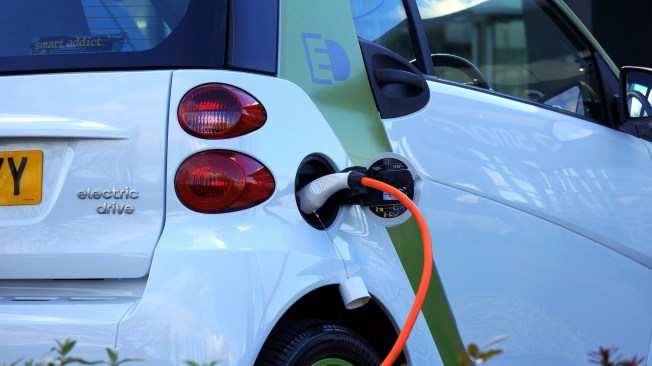
electric vehicle plugged in

Vehicle electrification gets a boost under the energy plan.

There is a lot to like in the Northam Administration’s new Virginia Energy Plan, starting with what is not in it. The plan doesn’t throw so much as a bone to the coal industry, and the only plug for fracked gas comes in the discussion of alternatives to petroleum in transportation.

The 2018 Energy Plan is all about energy efficiency, solar, onshore wind, offshore wind, clean transportation, and reducing carbon emissions. That’s a refreshing break from the “all of the above” trope that got us into the climate pickle we’re in today. Welcome to the 21stcentury, Virginia.

But speaking of climate, the Intergovernmental Panel on Climate Change (IPCC) just released a special report that makes it clear we need “rapid, far-reaching and unprecedented changes in all aspects of society” to keep warming below 1.5 degrees Celsius. That’s only half again the amount of warming that has already brought us melting glaciers, a navigable Arctic Ocean, larger and more destructive hurricanes, and here in Virginia, the swampiest summer in memory. The fact that things are guaranteed to get worse before they get better (if they get better) is not a happy thought.

Perhaps no Virginia politician today has the courage to rise to the challenge the IPCC describes. Certainly, Governor Northam shows no signs of transforming into a rapid-change kind of leader. But as we celebrate the proposals in his Energy Plan that would begin moving us away from our fossil fuel past, we also have to recognize that none of them go nearly far enough, and missed opportunities abound.

Let’s start with the high points, though. One of the plan’s strongest sections champions offshore wind energy. It calls for 2,000 megawatts (MW) of offshore wind by 2028, fulfilling the potential of the area of ocean 27 miles off Virginia Beach that the federal government leased to Dominion Energy. In the short term, the Plan pledges support for Dominion’s 12-MW pilot project slated for completion in 2020.

Other East Coast states like Massachusetts and New York have adopted more ambitious timelines for commercial-scale projects, but the economics of offshore wind favor the Northeast over the Southeast, and they aren’t saddled with a powerful gas-bloated monopoly utility.  For Virginia, a full build-out by 2028 would be a strong showing, and better by far than Dominion has actually committed to.

Another strong point is the Administration’s commitment to electric vehicles. The transportation sector is responsible for more carbon emissions even than the electric sector, and vehicle electrification is one key response.

Even better would have been a commitment to smart growth strategies to help Virginians get out of their cars. Overlooking this opportunity is a costly mistake, and not just from a climate standpoint. Today’s popular neighborhoods are the ones that are walkable and bikeable, not the ones centered on automobiles. If we want to create thriving communities that attract young workers, we need to put smart growth front and center in urban planning—and stop making suburban sprawl the cheap option for developers.

Speaking of developers, how about beefing up our substandard residential building code? Lowering energy costs and preparing for hotter summers requires better construction standards. Houses can be built today that produce as much energy as they consume, saving money over the life of a mortgage and making homes more comfortable. The only reason Virginia and other states don’t require all new homes to be built this way is that the powerful home builders’ lobby sees higher standards as a threat to profits.

The Energy Plan mentions that updated building codes were among the recommendations in the Virginia Energy Efficiency Roadmap that was developed with funding from the U.S. Department of Energy and published last spring. I hope the only reason the Energy Plan doesn’t include them among its recommendations is that the Administration is already quietly taking action.

Meanwhile, it is not reassuring to see that the section of the plan devoted to attaining Virginia’s ten percent energy efficiency goal simply describes how our utilities will be proposing more efficiency programs as a result of this year’s SB 966 (the “grid mod” bill).

States that are serious about energy efficiency don’t leave it up to companies whose profits depend on a lack of efficiency. They take the job away from the sellers of electricity and give it to people more motivated. So if the Governor’s plan is merely to leave it up to Dominion and APCo without changing their incentives, we should abandon all hope right now.

Indeed, it is strange how often the Energy Plan finishes an in-depth discussion of an issue with a shallow recommendation, and frequently one that has the distinct odor of having been vetted by Dominion.

That observation leads us straight to grid modernization. The plan opens with a very fine discussion of grid modernization, one that shows the Administration understands both the problem and the solution. It opens by declaring, “Virginia needs a coordinated distribution system planning process.” And it notes, “One important rationale for a focus on grid modernization is that the transitions in our electricity system include a shift away from large, centralized power stations to more distributed energy resources.”

Well, exactly! Moreover: “The grid transformation improvements that the Commonwealth is contemplating include a significant focus on the distribution system, but our current resource planning process (Integrated Resource Plan or IRP) does not fully evaluate the integration of these resources. One overarching focus of this Energy Plan is the development of a comprehensive analysis of distributed energy resources.”

But just when you feel sure that the plan is about to announce the administration is setting up an independent process for comprehensive grid modernization, the discussion comes to a screeching halt. The plan offers just one recommendation, which starts out well but then takes a sudden turn down a dead-end road:

To ensure that utility investments align with long-term policy objectives and market shifts, Virginia should reform its regulatory process to include distribution system level planning in Virginia’s ongoing Integrated Resource Planning requirement.

Seriously? We need regulatory reform, but we will let the utilities handle it through their IRPs? Sorry, who let Dominion write that into the plan?

It’s possible the Administration is punting here because it doesn’t want to antagonize the State Corporation Commission (SCC). The SCC pretty much hated the grid mod bill and resented the legislation’s attack on the Commission’s oversight authority. And rightly so, but let’s face it, the SCC hasn’t shown any interest in “reforming the regulatory process.”

The Energy Plan’s failure to take up this challenge is all the more discouraging in light of a just-released report from the non-profit Grid Lab that evaluates Dominion’s spending proposal under SB 966 and finds it sorely lacking. The report clearly lays out how to do grid modernization right. It’s disheartening to see the Administration on board with doing it wrong.

Dominion’s influence also hobbles the recommendations on rooftop solar and net metering. This section begins by recognizing that “Net metering is one of the primary policy drivers for the installation of distributed solar resources from residential, small business, and agricultural stakeholders.” Then it describes some of the barriers that currently restrain the market: standby charges, system size caps, the rule that prevents customers from installing more solar than necessary to meet past (but not future) demand.

But its recommendations are limited to raising the 1% aggregate cap on net metering to 5% and making third-party power purchase agreements legal statewide. These are necessary reforms, and if the Administration can achieve them, Virginia will see a lot more solar development. But why not recommend doing away with all the unnecessary policy barriers and really open up the market? The answer, surely, is that Dominion wouldn’t stand for it.

Refusing to challenge these barriers (and others—the list is a long one) is especially regrettable given that the plan goes on to recommend Dominion develop distributed generation on customer property. Dominion has tried this before through its Solar Partnership Program, and mostly proved it can’t compete with private developers. If it wants to try again, that’s great. We love competition! But you have to suspect that competition is not what this particular monopoly has in mind.

The need to expand opportunities for private investment in solar is all the more pressing in light of the slow pace of utility investment. Legislators have been congratulating themselves on declaring 5,000 megawatts (MW) of solar and wind in the public interest, and the Energy Plan calls for Dominion to develop 500 MW of solar annually. I suspect our leaders don’t realize how little that is. After ten years, 5,000 MW of solar, at a projected capacity factor of 25%, would produce less electricity than the 1,588-MW gas plant Dominion is currently building in Greensville, operating at a projected 80% capacity.

Offshore wind capacities are in the range of 40-45%, so 2,000 MW of offshore wind will produce the amount of electricity equivalent to one of Dominion’s other gas plants. It won’t quite match the 1,358-MW Brunswick Power Station, or even the 1,329-MW Warren County Power Station, but Dominion also has several smaller gas plants.

But at this point you get the picture. If all the solar and wind Virginia plans to build over ten years adds up to two gas plants, Virginia is not building enough solar and wind.

That gets us back to climate. The Administration can claim credit for following through on developing regulations to reduce carbon emissions from power plants by 30% by 2030, using the cap-and-trade program of the Regional Greenhouse Gas Initiative (RGGI) of the northeastern states. If successful, that still leaves us with 70% of the carbon emissions in 2030, when we need to be well on our way to zero. And for that, we don’t have a plan.

Of course, Ralph Northam has been Governor for only nine months. He has some solid people in place, but right now he has to work with a legislature controlled by Republicans and dominated by Dominion allies in both parties, not to mention an SCC that’s still way too fond of fossil fuels. Another blue wave in the 2019 election could sweep in enough new people to change the calculus on what is possible. In that case, we may yet see the kind of leadership we need.


This article first appeared in the Virginia Mercury on October 15, 2018.
Unknown's avatar

Solar tours this weekend will showcase much more than solar panels

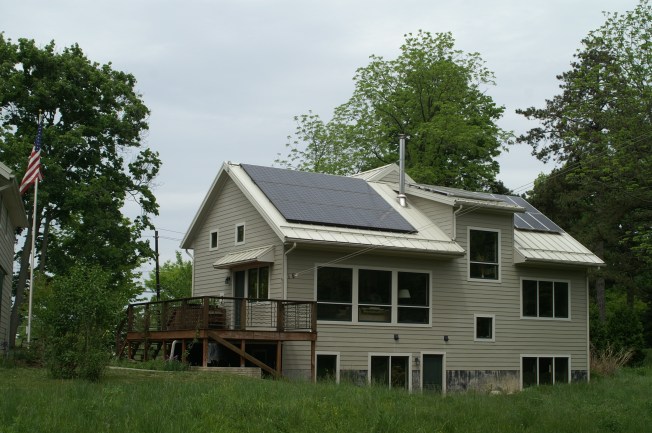
solar panels on a house

This house looks ordinary, but it boasts a superpower: its solar panels produce all the energy the homeowners use.

Innovative lighting, rain gardens, mini-split heat pumps, electric vehicles, and high-tech appliances—what do these have to do with solar panels? They will all be featured at homes and businesses opening their doors to the public on Saturday and Sunday, October 6 and 7, as part of the National Solar Tour.

You can find open houses and tours near you using this map or the listing on this site. For those in Northern Virginia, a downloadable booklet describes more than 40 solar and green homes participating in the Metro DC tour. The website also tells you where you can buy a hard copy if you prefer. Some homes didn’t make it into the booklet, which went to press over the summer.

The American Solar Energy Society (ASES) started the National tour more than two decades ago, but the Washington metro area tour is now in its 28thyear. This is pretty astonishing if you think about where solar technology was in 1990.

As a “tourist” during the early days, I remember the gee-whiz feeling I got exploring the handiwork of early solar adopters. It is the tragedy of my life that I live in the woods and can’t have my own solar panels. Fortunately, the tours have always been about more than just generating electricity. Back then, they had to be, because not many people could afford solar PV. Good design and energy efficiency took center stage.

Through the tours I learned about passive solar houses, solar hot water, insulation made from old blue jeans, natural light via “daylighting,” the incorporation of recycled materials into beautiful tile and countertops, eco-friendly siding materials, and how to live with nature using native plants and rain gardens. More recently the tours have branched out to include electric vehicles and green roofs.

This year’s Metro DC tour booklet includes new homes built to Passive House standards and loaded with cool features, but to my mind the more interesting entries are ordinary homes that have undergone a thoughtful retrofit. Here is a description of one of the latter:

This 1950s ranch house has solar PV, solar hot water, solar space heating, a cupola/solar chimney, solar daylight tubes, solar attic fan, solar sidewalk lights, south facing energy efficient windows, 2 highly efficient energy star minisplit heat pumps (26-SEER), a fireplace insert wood stove, exterior insulation finishing system (EIFS), CFL/LED lighting, kitchen counter tops made from recycled glass, and recycled floor tiles in the foyer and basement. The yard has a 1000-gallon cistern, food forest, 2 rain gardens, permeable walkways, 2 rain barrels, and 2 compost piles. There is also an aquaponics system, a Chevy Volt and a plug-in Prius. Installation by Greenspring Energy.

These renovations suggest an important point: reducing energy use doesn’t require us to tear down our homes and start over. And thank heavens for that, since most of us aren’t going to do that anyway.

Besides which, existing homes make up so much of our housing stock that making big efficiency gains depends on how well we retrofit and weatherize old homes. So if a house built in the 50s can be turned into a solar energy showcase, the rest of us should be taking notes.

Unknown's avatar

After the grid mod bill, the SCC wants to know how much authority it still has over utility spending

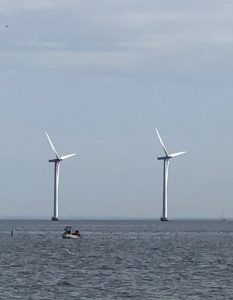
offshore wind turbines

Offshore wind turbines, Copenhagen, Denmark. Dominion Energy has asked the SCC for permission to proceed with building two wind turbines off the Virginia coast as a test project. Photo by Ivy Main.

It’s no secret the State Corporation Commission didn’t like this year’s big energy bill, the Grid Transformation and Security Act. SCC staff testified against SB 966 in committee, and their objections played a major role in amendments removing the “double dip” provision that would have let Dominion Energy Virginia double its earnings on infrastructure projects. Since passage of the bill, the SCC has raised questions about the constitutionality of the law’s provisions favoring in-state renewable energy, and its staff has issued broadsides about the costs of the legislation.

Now the SCC is mulling the question of how much authority it still has to reject Dominion’s proposals for spending under the bill. Dominion has filed for approval of a solar power purchase agreement (case number PUR-2018-00135) and two offshore wind test turbines it plans to erect in federal waters 24 nautical miles out from Virginia Beach (PUR-2018-00121). The utility has also requested permission to spend a billion dollars on grid upgrades and smart meters (PUR-2018-00100).

In an order issued September 12, the SCC asked participants in the solar and offshore wind cases to brief them on legal issues arising from the legislation. The SCC has focused in on two new sections of the Virginia Code. One is the language making it “in the public interest” for a utility to buy, build, or purchase the output of up to 5,000 megawatts (MW) of Virginia-based wind or solar by January 1, 2024. The SCC noted that subsection A of the provision says such a facility “is in the public interest, and the Commission shall so find if required to make a finding regarding whether such construction or purchase is in the public interest.”

The other new Code section gives a utility the right to petition the SCC at any time for a “prudency determination” for construction or purchase of a solar or wind project located in Virginia or off its coast, or for the purchase of the output of such a project if developed by someone else.

Together these sections give Dominion a good deal of latitude, but they don’t actually force the SCC to approve a project it thinks is a bad deal for ratepayers. In other words, wind and solar may be in the public interest, but that doesn’t mean every wind and solar project has to be approved.

The SCC asked for briefs on seven questions:

  • What are the specific elements that the utility must prove for the Commission to determine that the project is prudent under Subsection F?
  • Is the “prudency determination” in Subsection F different from the “public interest” findings mandated by Subsections A or E?
  • Do the public interest findings mandated by either Subsections A or E supersede a determination under Subsection F that a project is not prudent? If not, then what is the legal effect of either of the mandated public interest findings?
  • If the construction (or purchase or leasing) is statutorily deemed in the public interest, is there any basis upon which the Commission could determine that such action is not prudent? If so, identify such basis or bases.
  • In determining whether the project is prudent, can the Commission consider whether the project’s: (a) capacity or energy are needed; and (b) costs to customers are unreasonable or excessive in relation to capacity or energy available from other sources?
  • Do the statutorily-mandated public interest findings under either Subsections A or E override a factual finding that the project’s: (a) capacity or energy are not needed for the utility to serve its customers; and/or (b) costs to customers are unreasonable or excessive in relation to capacity or energy available from other sources, including but not limited to sources of a type similar to the proposed project?
  • Does the utility need a certificate of public convenience and necessity, or any other statutory approval from the Commission, before constructing the proposed projects?

Even if the Commission decides it has latitude in deciding which wind and solar projects to approve, that doesn’t necessarily spell disaster for the two projects at issue. The SCC could still decide they meet the standard for prudency and approve them.

Oral argument on the issues is scheduled for October 4.

Should approval of smart meters depend on how the meters will be used?

The SCC is also mulling over its authority in the grid modernization docket. One day after it asked lawyers in the solar and offshore wind cases to weigh in on the meaning of prudency, it issued a similar order asking for input on what the new law means by “reasonable and prudent” in judging spending under the grid modernization provisions. (Yes, the grid mod section of the law insists that spending be “reasonable” in addition to “prudent,” begging the question of whether spending can be prudent but not reasonable. Perhaps thankfully, the SCC order does not pursue it.)

The SCC’s questions to the lawyers show an interest in one especially important point: Dominion wants to spend hundreds of millions of dollars of customer money on smart meters, without using them smartly. Smart meters enable time-of-use rates and customer control over energy use, and make it easier to incorporate distributed generation like rooftop solar. None of these are in Dominion’s plan. Is it reasonable and prudent for Dominion to install the meters anyway, just because they are one of the categories of spending that the law allows?

Or as the SCC put it:

If the evidence demonstrates that advanced metering infrastructure enables time-of- use (also known as real-time) rates and that such (and potentially other) rate designs advance the stated purposes of the statute, i.e., they accommodate or facilitate the integration of customer-owned renewable electric generation resources and/or promote energy efficiency and conservation, may the Commission consider the inclusion or absence of such rate designs in determining whether a plan and its projected costs are reasonable and prudent?

Reading the tea leaves at the SCC: Staff comments on Dominion’s IRP

The SCC’s question about smart meters surely indicates how the commissioners feel about the matter: they’d like to reject spending on smart meters, at least until Dominion is ready to use them smartly. If the SCC concludes it has the authority to reject this part of Dominion’s proposal as not “reasonable and prudent,” it seems likely to do so.

It is harder to know where the SCC might land on the solar and offshore wind spending. The SCC’s staff, at least, are skeptical of Dominion’s plans to build lots of new solar generation. In response to Dominion’s 2018 Integrated Resource Plan (IRP), Commission staff questioned whether Dominion was going to need any new electric generation at all, given the flattening out of demand. But if it does, according to the testimony of Associate Deputy Director Gregory Abbott, Dominion ought to consider a new combined-cycle (baseload) gas plant, not solar. (Combined-cycle gas was the one generating source Dominion almost completely ruled out.)

Abbott criticized Dominion’s presentation of the case for solar, though he took note of the technology’s dramatic cost declines. Instead of seeing that as a reason to invest, however, he suggested it would be better to wait for further cost declines, or at least leave the construction of solar to third-party developers who can provide solar power more cheaply than the utility can. Remarkably, he also suggested Dominion offer rebates to customers who install solar, urging that Dominion’s spending under the grid transformation law “is designed specifically to handle these [distributed energy resources].”

Abbott also seemed supportive of Dominion’s venture into offshore wind. The only offshore wind energy in the IRP is the 12 MW demonstration project known as CVOW, but as Abbott noted, “the Company indicated that it will pursue a much larger roll-out of utility-scale offshore wind, beginning in 2024, if the demonstration project shows it to be economic.”

This suggests staff are inclined to support Dominion’s spending on the CVOW project, but for Abbott, it was one more reason Dominion should not invest in solar. He concluded, “If the demonstration project proves that utility-scale offshore wind is economic compared to solar, then it may make sense to get the results of the CVOW demonstration project before deploying a large amount of solar.”

This post originally appeared in the Virginia Mercury on September 24.

Unknown's avatar

Does the SCC finally see the light on customer-owned solar?

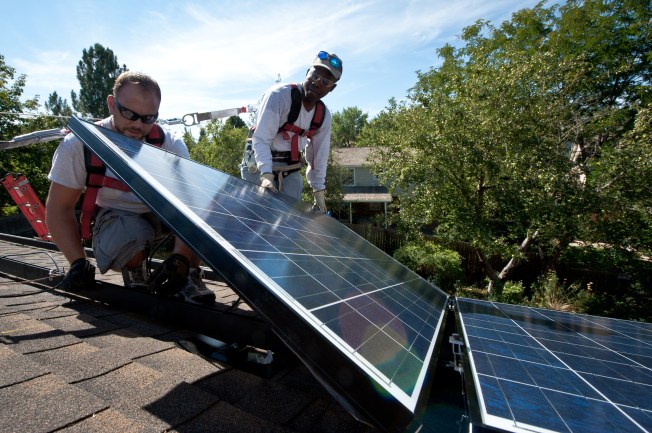
two men installing solar panels on a roof

Photo credit NREL.

Almost four years ago, Virginia’s State Corporation Commission (SCC) approved a request from Appalachian Power to impose “standby charges” on grid-connected homeowners who installed solar arrays between 10 and 20 kilowatts (kW). The approval came not long after the SCC had given the same authority to Dominion Power (now Dominion Energy Virginia).

The standby charges, dubbed a “tax on the sun,” effectively shut down the market for these larger home systems. Since then, Virginia utilities have made no bones about their desire to dismantle the rest of the Virginia law that has enabled the growth of the private solar market.

The law permits solar owners to “net meter,” giving them credit at the retail rate for the electricity they feed onto the grid on sunny days, and letting them use that credit when they draw electricity from the grid at other times.

Utilities say net metering customers don’t pay their fair share of grid costs. Solar advocates say the subsidy runs the other way: both the utility and society at large benefit when more customers install solar. Independent studies find the “value of solar” to be above the retail rate; utility-funded studies find much lower values. In Virginia, the debate continues to rage, but in 2014, at least, the SCC came down squarely on the utility’s side.

Fast forward to 2018. This year the General Assembly passed a law called the Grid Transformation and Security Act that, among other things, envisions an electric grid of the future that incorporates distributed generation like rooftop solar. And suddenly the staff of the SCC sees customer-owned solar in a new light.

Members of the Commission staff filed testimony last month in response to Dominion’s 2018 Integrated Resource Plan, which proposes large amounts of utility-built and owned solar. Associate Deputy Director Gregory Abbott devoted much of his testimony to bashing Dominion’s solar plans.

But just when a reader might have concluded that Abbott hates solar, he pivoted to the suggestion that Dominion should consider offering rebates for customers who install their own rooftop solar:

Given that the Company is developing a Grid Transformation Plan that is designed specifically to integrate customer-level DERs [distributed energy resources], and given the Company’s peak load forecast, Staff believes the Company should explore developing a rebate program to incent customer-owned rooftop solar systems. Staff believes that it is logical to incent these DERs particularly since the Company’s Grid Transformation Plan pursuant to the GTSA is designed specifically to handle these DERs. Staff also notes that such a program could be considered to be a peak shaving program and eligible for cost recovery through Rider CIA. To the extent that the program passed the economic tests, it may obviate the need for some of the more expensive capacity resources as described in the Company’s proposed build plan. Such a program would be more environmentally benign as it would take advantage of
existing brownfield sites rather than the greenfield sites required for utility-scale
 solar.

These are, of course, precisely the arguments made by advocates for distributed solar.

The support from SCC staff comes at an opportune moment, as the Northam Administration considers making distributed solar a centerpiece of its new Energy Plan. It could also complicate Dominion’s efforts to limit and penalize customer investments in solar. Last year Dominion’s opposition doomed a raft of bills intended to make it easier for customers to use Virginia’s net metering law. When solar advocates try again in the 2019 session, having the support of the SCC could change the minds of legislators who, until now, have been happy to accept Dominion’s arguments.

All this assumes the SCC commissioners agree with their staff on the value of customer-owned solar to the grid. If they do, it could signal a new day in Virginia for customer-owned solar.

This article originally appeared in the Virginia Mercury, the new, non-profit on-line news source founded by Robert Zullo, formerly a reporter for the Richmond Times-Dispatch. 

Unknown's avatar

Dominion gets the nod to sell solar energy to us regular folks

alternative energy building clouds energy

Photo by Pixabay on Pexels.com

The State Corporation Commission (SCC) has approved Dominion Energy Virginia’s so-called Community Solar pilot program, under which the utility will offer its residential and commercial customers the output of solar farms to be built by independent solar developers here in Virginia.

Customers will have the option to meet either all or part of their electric demand with solar. The added cost of the program, at least initially, will be 2.01 cents per kilowatt-hour (kWh). For a customer who uses an average of 1,000 kWh monthly and wants to use only solar, that would add up to a premium of $20.10 per month.

Customers who want to meet just a portion of their total demand with solar will have the option of subscribing to “blocks” consisting of 100 kWh, up to a maximum of 5 blocks for residential customers or 10 blocks for non-residential customers.

The premium cost of the program may surprise customers who have heard that large-scale solar is now one of the cheapest sources of energy in Virginia. But according to Will Cleveland, a staff attorney at the Southern Environmental Law Center who helped to develop the program, cost was not the only consideration in choosing which solar facilities to include in the program.

Facilities were selected to be smaller and distributed around the state, in keeping with the “community” concept, which meant they sometimes came with higher prices. Program costs also include Dominion’s costs of administration and marketing. Cleveland says he consulted experts who advised him these numbers were reasonable.

In addition to selling the electrical output of the solar facilities to customers, Dominion will retire the associated renewable energy certificates (RECs). The RECs represent the legal proof that the energy comes from solar, an important factor for commercial customers that wish to represent they use renewable energy in their business. “Retiring” the RECs guarantees that Dominion isn’t also selling them elsewhere.

The program is a result of legislation passed by the General Assembly in 2017 that authorized a three-year pilot program in Dominion’s territory for up to 40 megawatts (MW) of solar capacity. The legislation also authorized Appalachian Power to develop up to 10 MW for a similar program. To date, Appalachian Power has not submitted a proposal.

Although the program is called “community solar,” customers will not own shares in the solar facilities, and the facilities do not have to be located in the same communities as the customers. Virginia law does not permit the kind of community solar in which customers share in the ownership and output of solar facilities.

Calling Dominion’s program “community solar” is bound to confuse people, and it’s hard not to believe that was a calculated move on the utility’s part. Yet Dominion’s solar offering is a major step forward for the company, and for customers who aren’t able to put solar panels on their own rooftops.

And while it is somewhat more expensive than the company’s Green Power Program, it should prove much more attractive with people who understand the difference between the programs.

Subscribers to the Green Power Program don’t get electricity from renewable energy; Dominion sells them regular “brown” power, then tacks on an added charge to match the dirty energy with renewable energy certificates (RECs). Most of the RECs come from existing wind projects in other states, where wind is already the cheapest power source. By contrast, the solar program provides solar energy (and the RECs) from new Virginia solar farms, ones that would not get built otherwise.

Dominion is expected to begin signing up subscribers for its solar program later this fall, with the program getting underway once the solar projects come online next year. For those of us without the sunny roofs needed to put up our own solar panels, this promises to be—for now—the next best option.

A version of this article first appeared in the Virginia Mercury, a new (and if I do say so, quite excellent) independent online news source dedicated to covering Virginia issues that matter. 

Unknown's avatar

If anyone will stand up to Dominion for its conflicts of interest on the Atlantic Coast Pipeline, it won’t be Virginia’s high court


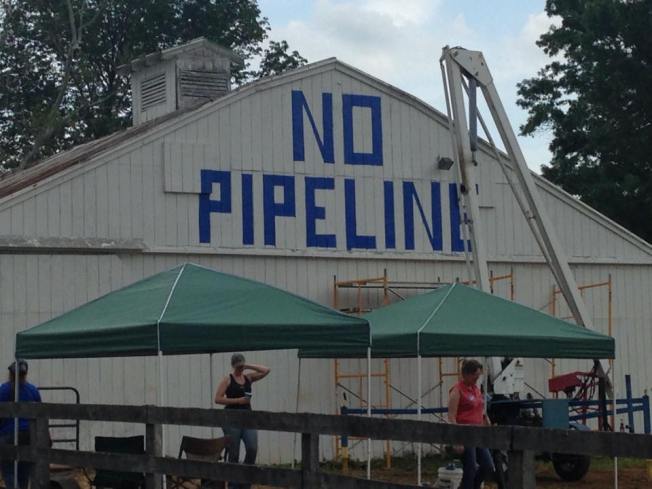
Residents of areas being impacted by gas pipelines make their feelings clear. But is anyone in Virginia government listening?

This post originally appeared as commentary in the Virginia Mercury, Virginia’s new non-profit, online news source. 

Many Virginia leaders seem to have the notion that if our environment is being polluted and ordinary people are having their land destroyed, that must be good for business. And as a corollary, if a business wants to pollute the environment and destroy private land, that must be good for Virginia.

So maybe it shouldn’t surprise anyone that on August 9 the Virginia Supreme Court joined the Governor, the State Corporation Commission (SCC), the Department of Environmental Quality and most of the General Assembly in refusing to question the sweetheart deal under which Dominion Energy Virginia committed its captive ratepayers to purchasing billions of dollars of fracked gas shipping capacity on the Atlantic Coast Pipeline, of which Dominion itself is the largest shareholder.

The Supreme Court had the opportunity to hold Dominion accountable courtesy of Section 56-77(A) of the Virginia Code, known as the Affiliates Act. The section requires public utilities to get prior approval from the SCC for any “contract or arrangement” with an affiliated company. The SCC had refused the Sierra Club’s petition to enforce the provision, saying it could review the deal when the pipeline is operational and Dominion tries to charge its customers for the use of it—i.e., afterthe damage is done. The Sierra Club took the SCC to court, arguing that the statute requires the SCC to examine whether the deal is in the public interest beforethe contract for pipeline capacity could be considered valid.

On its face, the Affiliates Act is clear. It requires public utilities to submit “contracts or arrangements” with affiliated companies to the SCC for approval before they take effect. You would think this would include any arrangement under which Dominion Energy Virginia buys capacity in its parent company’s pipeline. The Affiliates Act says the SCC should have held a hearing to examine whether the contract was in the public interest. Indeed, the SCC’s own staff of lawyers have taken this very position.

But the Court allowed a dodge. You see, Dominion Energy Virginia didn’t contract directly with the ACP. It has a very general ongoing contract with another Dominion affiliate called Virginia Power Services Energy Corporation (VPSE) that buys natural gas and pipeline capacity for the utility, acting as its purchasing agent. It was VPSE, not the utility itself, that signed the contract with the ACP.

The fact that a third affiliate acts an intermediary shouldn’t matter, logically or legally—affiliated companies are members of one big happy family—but the Court seized on this arrangement to create a clever loophole. It concluded that the SCC had approved the general inter-affiliate agreement between the utility and its sister company VPSE years ago—before the pipeline was proposed, before VPSE had signed purchasing contracts with the ACP, and before the Sierra Club or any other members of the public would have had a reason to object. No matter, said the Court; having approved the contract between the utility and its purchasing agent years ago, the SCC retained continuing oversight authority over any and all deals the purchasing agent might make on behalf of the utility in the future.

Let that sink in for a minute. According to the Court, the SCC effectively approved the contract with ACP before it even existed. What that means is,

the public, including all of us who buy electricity from Dominion and will be handed the bill for the pipeline capacity, have no ability to challenge the deal before the pipeline is up and running.

Recall that the only reason Dominion Energy and its partners got permission from the Federal Energy Regulatory Commission (FERC) to build the pipeline was the fact that the companies showed they had contracts for almost all the pipeline capacity. According to FERC, this proved that there was public need for the ACP. The fact that the contracts happened to be with the partners’ own corporate affiliates didn’t faze FERC any more than it fazed the SCC.

Earlier this month FERC denied a request that it reconsider its approval. Ironically this was a favor to the ACP’s challengers because it finally allowed them to appeal the matter to federal court. One of the issues that will likely be raised in that appeal is the wrongheadedness of approving a pipeline when the need for it relies heavily on inter-affiliate contracts that may or may not demonstrate actual demand from customers.

This is a question not just for Virginia and Dominion, but for the many gas pipelines under development in the U.S. Affiliate contracts can make it appear there is more demand for pipelines than there really is. Approving unneeded pipelines, in turn, means unnecessary environmental destruction, wasted resources, and (what our leaders rarely appreciate) higher energy prices.

In the year since the Sierra Club first petitioned the SCC to take action under the Affiliates Act, the case for regulatory scrutiny has only grown stronger. Dominion Energy says it has abandoned plans to build new combined-cycle gas plants, recognizing the growing dominance of wind and solar. That throws into question the economic case for sinking billions of dollars into new gas transmission, even as construction on the Atlantic Coast Pipeline is underway.

As I’ve discussed before, there is a strange disconnect when a gas pipeline developer like Dominion recognizes the end of the road for baseload gas plants. Yet its subsidiary utility, Dominion Energy Virginia, just filed an Integrated Resource Plan (IRP) that calls for a string of new gas combustion turbines, sometimes referred to as “peaker plants.”

This begs the question: Does the utility have a good reason to build more gas plants instead of joining the national trend towards using renewables-plus-battery storage to address peak demand? Or is it proposing the new gas plants because its parent company needs the utility to burn as much gas as possible to support an otherwise unneeded pipeline?

Even apart from its authority under the Affiliates Act, the SCC could investigate this question in the IRP proceeding this fall. At some point the commissioners will have to confront the fact that more natural gas, and more pipeline infrastructure, are a bad deal for Virginia consumers.

Unknown's avatar

On the heels of its big legislative win, what kind of grid does Dominion want to build for us?

white electric tower

Photo by Pixabay on Pexels.com

Note: This post originally appeared in the Virginia Mercury on July 23. Virginia Mercury is a nonprofit, independent online news organization that launched just this summer. Subscribe to its free daily newsletter here.

Imagine that you have hired a builder to design and build a three-story house for you. He brings you the plans for the first floor and proposes to start work right away. “These look okay,” you say, “but I need to see the plans for the whole house.”

“Don’t you worry about that,” says the builder. “I have it all figured out. I’ll show you the second floor when the first is done, and the third floor after that.”

You argue with the builder, pointing out that as it is your money, you have the right to assure yourself the result will be what you want. If you haven’t even seen the blueprint for the whole house, how can you approve the ground floor? Heck, you can’t even judge if all the stuff he wants to put in is actually needed. (It looks awfully expensive.)

“Please,” says the builder, now deeply offended. “I’m an expert. You should trust me.”

If this scenario sounds far-fetched, that’s because you don’t live in the world of Virginia utility regulation. In that world, Dominion Energy Virginia, the state’s largest utility, has just filed a plan with the State Corporation Commission (SCC) to spend almost $1 billion of its customers’ money for the first phase of what it says will be three phases of grid modernization, amounting to $3.5 billion. The company maintains that all the things it plans to do now are necessary to the overall strategy, but it isn’t saying what that strategy is.

“During Phase 1 of the Plan,” writes Dominion Energy Senior Vice President Edward Baine, “the Company will focus on installing the foundational infrastructure that will enable all other components of the Grid Transformation Plan.” That sounds like it ought to lead into a discussion of what the grid of the future will look like, but sadly, the other “components” turn out to be just more spending.

That might in fact be the whole plan: spend money, lots of it. Baine explains the “drivers” of the plan, like recognizing threats to the grid, and he describes how it will “enable” things like new rate structures and integrating renewable energy. But new rate structures and renewable energy integration aren’t actually part of the plan Dominion wants the SCC to approve.

This will make it very hard for the SCC to judge whether the investments are “reasonable and prudent,” as Virginia law requires. Knowing this, Baine argues the SCC shouldn’t impose a cost-benefit test on its plans. Already that position has drawn sharp criticism even from supporters of the legislation that authorized the spending.

Take smart meters, also known as “advanced metering infrastructure” (AMI). Smart meters don’t just measure electricity use, but do so on an hourly or more frequent basis, and they provide two-way communication instead of just one-way reporting to the utility.

Properly designed and deployed, smart meters are central to the grid of the future. Dominion proposes to spend over $500 million to provide all its customers with this advanced technology during Phase 1. Unfortunately, that doesn’t include making full use of their potential.

Where ordinary electric meters mostly just tell the utility how much electricity a customer has used, smart meters provide detailed information that can be used to help pinpoint power outages and spikes in demand. That’s helpful for the utility, but just using them that way, as Dominion proposes, leaves most of the benefits of smart meters untapped.

Justifying the expense of smart meters requires using them to allow customers to control how and when they use electricity, as well as to make the most efficient rate designs and determine how to get the most benefit from solar panels, batteries and electric vehicle charging. That only happens where a utility offers time-of-use rates and other incentives to change behavior and prompt investments by consumers.

Using smart meters this way would result in lower energy use, more customer-investments in solar and batteries, and savings for everyone. But time-of-use rates and similar incentives aren’t in Phase 1, and they don’t look to be part of Phases 2 or 3 either.

Dominion seems to think it can get approval to spend money on smart meters based on how they could be used, rather than on how the company actually plans to use them. Baine notes that smart meters can tell customers how much electricity they’re using in any 30-minute period. “Customers will be able to choose their preferred mode of communication,” writes Baine, “and then receive high usage alerts when their energy usage exceeds a certain level.”

Yes, and then what? Baine doesn’t say.

It’s not just a matter of wanting to take it slow. Since 2009, 400,000 of its customers have received smart meters, Dominion tells us, giving it ample time to try out all these features. It hasn’t.

Merely installing another 1.4 million smart meters isn’t going to lead to grid nirvana.

Grid “hardening” is another example. Physical upgrades in the name of security and resilience make up more than $1.5 billion of Dominion’s proposed spending. This is not grid transformation, it’s the opposite: beefing up the old grid. Most of the proposed investments are the same kind of capital investments Dominion makes routinely, with nothing modernized about it. Unfortunately, Dominion wrote the law to give itself permission to use customer money for grid hardening, so all the SCC can do is ask whether the specific spending proposals are reasonable and prudent.

Again, since Dominion isn’t telling us what kind of grid it is building for us, there is no way to know whether any given project will contribute to it, or even be necessary at all. If the grid of the future will be based on distributed energy, microgrids, and consumer control, we might not need the substation Dominion wants to make into an impregnable fortress. Modern solutions like solar-plus-storage, demand response, and energy efficiency could provide greater resiliency and security at a lower cost.

Of course, we have every reason to suspect Dominion is not interested in building a grid that empowers consumers, lowers energy use and spurs private investment in solar and storage. Its business model depends on keeping control over the grid and getting people to use more energy rather than less. If it can’t do that, it figures, the next best thing is to find ways to spend our money.

The amount of customer money at stake makes the SCC’s oversight role very important. It can insist Dominion lay out its full vision for the grid, demonstrate how each spending item fits that vision, and prove it meets a consumer cost-benefit test. With a little dose of courage, it could even go further, and insist on seeing a plan that makes full use of smart meters, including time-of-use rates and other incentives for efficiency, solar and storage.

The General Assembly, too, has a role to play, by filling a vacancy on the SCC this summer. If legislators are unhappy with Dominion’s cavalier approach to spending, they have one last chance to appoint a commissioner who will side with consumers, and send Dominion back to the drawing board.

Unknown's avatar

Northam’s energy plan: A blueprint for action or destined for dusty shelf?

Virginia Governor Ralph Northam standing in front of a new solar farm.

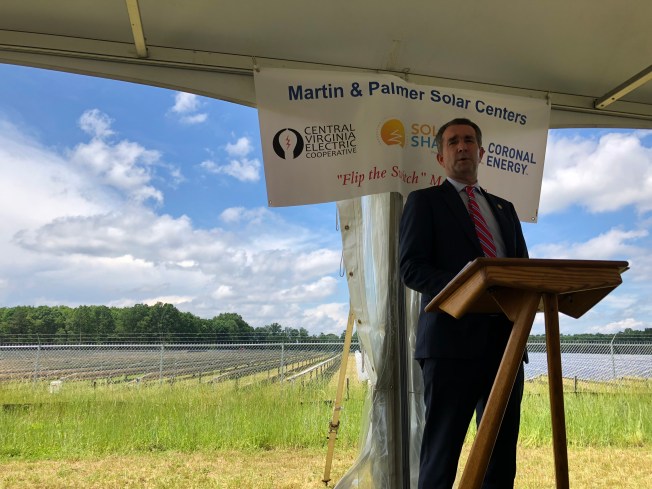
Governor Northam speaks at the opening of the Palmer Solar Center on May 23.

[Note: A version of this post originally appeared in Virginia Mercury on July 23. Virginia Mercury is a nonprofit, independent online news organization that launched this summer. Subscribe to its free daily newsletter here.]

Forget “all of the above.” Under Governor Ralph Northam, Virginia’s next Energy Plan will emphasize the features of a clean energy future: solar and wind, energy efficiency, electric vehicles, energy storage, and offshore wind. This marks a welcome departure from previous state energy plans, though whether the end result serves as a blueprint for action or just stuffing for a filing cabinet remains to be seen.

Since 2007, Virginia law has required the Department of Mines, Minerals and Energy (DMME) to write a ten-year Energy Plan in the first year of every new administration. The statute lists vague requirements for the plan, including that it be consistent with the Commonwealth Energy Policy, itself a toothless statute. That means each new governor can pretty much tell DMME what to focus on.

Previous governors’ plans have read more like campaign rhetoric than like meaningful indicators of an administration’s direction. Tim Kaine’s plan supported carbon reductions, but by the next spring Kaine was promoting construction of a coal plant in Wise County that would become one of the last coal plants ever built in America.

Bob McDonnell used his energy plan to announce Virginia as the Energy Capital of the East Coast, perhaps the strongest indication that Energy Plans need not be tethered to reality.

Terry McAuliffe pushed an “all of the above” agenda, heavy on offshore drilling, natural gas, and offshore wind. He later backpedaled on offshore drilling, went all in on gas pipelines, and forgot about offshore wind.

Northam surely feels the pressure to write a pro-clean energy plan, and not merely because economic trends have swung decisively in favor of wind and solar. In his short time in office, Governor Northam has deeply undermined his standing as an environmentalist. Even before his inauguration, his public silence about gas pipeline projects fed rumors of private support. Once in office, he caved early on negotiations with Dominion Energy over this year’s energy legislation; reappointed David Paylor, the controversial director of the Department of Environmental Quality (DEQ), whom he had promised to replace; and passed up a rare opportunity to appoint a progressive to the State Corporation Commission.

One bright spot remains DEQ’s work towards completion of rules to lower carbon emissions from power plants by trading carbon allowances with states to the north of us. But the plan is not yet finalized, and the devil (or Dominion’s fingerprints) may prove to be in the details.

The Energy Plan gives Northam an opportunity to change the subject, and possibly even to change course. DMME’s presentation at its initial public meeting on June 25 addressed only clean energy topics—no coal, no natural gas, no nuclear, no oil. For some topics, the agency has already proposed recommendations for policy changes and scheduled public meetings to discuss them.

In the solar and wind “stakeholder track,” DMME proposes to “increase the residential cap on net metering from 20 kW to 40 kW; increase the overall net metering program from 1% of the utility’s peak load to 3% of peak load; make third-party Power Purchase Agreements (PPAs) available throughout all utility service territories; increase the total PPA installation cap from 50 MW to 100 MW and increase the installation-specific cap from 1 MW to 2 MW.” These recommendations are guaranteed to be popular with solar advocates and industry members, but won’t get past the utility blockade without a fight.

Recommendations for other tracks run the gamut from practical to aspirational. A recommendation to track energy consumption by state agencies through an energy data registry and dashboard is specific and achievable. Less so is the recommendation for Virginia to “reach the voluntary goal of reducing energy consumption by 10 percent by 2020.” Yes, that would be nice, but getting there would require a level of utility cooperation we have never seen in Virginia, and that neither the General Assembly nor any previous governor has had the tenacity to fight for.

The fact that our utilities are so often barriers to positive change underscores a need for the Energy Plan to address one subject missing from DMME’s list: a comprehensive study of grid transformation. Within the next ten years covered by the Energy Plan, our electric grid will need to incorporate vastly more wind and solar generation (much of it consumer-sited), plus electric vehicle charging, battery storage, and new metering technology that gives consumers greater control over their energy use.

Left to their own devices, the utilities will create the energy generation and delivery system most profitable for themselves, not the one most efficient and beneficial for the public. If Governor Northam is serious about a clean energy future, his Energy Plan should kick off a comprehensive study of grid transformation, managed by an independent expert who can help DMME and stakeholders develop a specific, actionable roadmap for the future of Virginia’s energy economy.

Without such a roadmap, we are likely to make progress only in fits and starts and at greater expense than necessary. Utility bills are rising and will keep going up as a result of the legislation Northam supported. Now the Governor needs to make sure Virginians have something to show for it.

Unknown's avatar

Solar map locates Northern Virginia on the dark side of the metro region

people standing by solar panels on a high school.

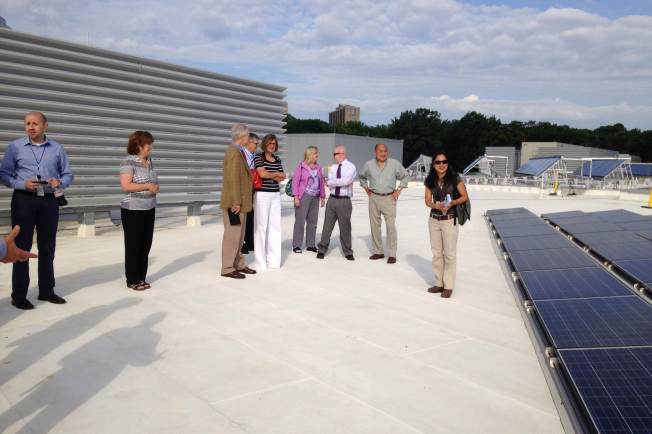
The 90 kW of solar panels on the roof of Wakefield High School represent almost 5% of Arlington’s solar total. Arlington schools have been a bright spot in Northern Virginia’s otherwise lackluster solar performance. Photo credit Phil Duncan.

Those of us who’ve lately become bullish on Virginia solar got a rude wake-up call this week when the Northern Virginia Regional Commission (NVRC) updated its map showing the amount of solar installed in every locality in Northern Virginia and the greater Washington region. Stunningly, every single suburban Maryland jurisdiction did better than every single Virginia jurisdiction. So did Washington, DC.

The map reveals that as of the end of 2017, Fairfax County had the most solar of any Virginia locality measured, reflecting its status as Virginia’s most populous county. Fairfax boasted a cumulative capacity of 2,104 kilowatts (kW) of solar, edging out Virginia’s richest county, Loudoun, which came in with 1,878 kW, as well as much smaller but more liberal Arlington with 1,785 kW.

All the Northern Virginia jurisdictions together (which also included Prince William, Manassas, Alexandria, and Falls Church) boasted a total of 8,443 kW, spread across 1,112 systems. That’s an average of about 7.5 kW per system, meaning these are overwhelmingly rooftop solar installations on homes and businesses. (An average home solar system is about 5 or 6 kW. Using solar for all of a home’s electricity needs might require 8-10 kW or more, especially if the home is heated with electricity or includes an electric vehicle.)

NoVa’s 8,443 kW is about as much as Prince George’s County, Maryland alone had five years ago. Today, PG County leads the region with 136,507 kW. Added together, the Maryland suburban localities finished the year with 272,688 kW of solar, over 32 times the suburban Virginia total. Washington, with 40,954 kW, beat all of suburban Virginia almost five times over.

So what do Maryland and DC have that Virginia doesn’t have? One answer is incentives. Maryland and DC have mandatory renewable portfolio standards (RPS) that require utilities to buy a certain percentage of their electricity from solar generated in state, including from their own customers. As the percentage requirement increases year after year, the forces of supply and demand set prices for solar renewable energy certificates (SRECs) that make solar a profitable investment for consumers. In DC, the value of SRECs is currently so high that a home solar installation can pay for itself in less than four years. In Virginia, with the federal 30% tax credit but no RPS or SREC market, payback may take ten years.

Ten years is still not a bad payoff for solar panels that can produce free electricity for 40 years or more. That points to the other advantage Maryland and DC have over Virginia: pro-solar policies. Virginia law does provide for net metering, the policy that lets a solar customer put surplus power onto the grid during the day and receive a credit for it that is used against the same amount of power drawn from the grid at night. Without net metering, we would have very little rooftop solar at all.

But a whole host of restrictions apply to net metering in Virginia. Homeowners are limited to a 20 kW system, and utilities can (and do) apply punitive fees known as “standby charges” to residential systems over 10 kW. Commercial customers are limited to 1,000 kW, no matter how much space they have or how much electricity they use. Sharing solar arrays among customers is prohibited. A building owner cannot install solar and sell the electricity to tenants. A local government cannot install solar on a vacant lot and use it to power a building across the street. Only certain customers can use third-party ownership financing.

And if the market flourishes anyway, Virginia law puts a ceiling on the total capacity of net-metered systems. Once the total reaches 1% of a utility’s sales, the program will come to a screeching halt. Think of it as an anti-RPS.

This year the Virginia General Assembly passed legislation that encourages Virginia utilities to develop solar, but the bill failed to address the barriers holding back private investments in solar. Other bills that would have opened up the market failed in the Republican-controlled (and utility-friendly) Commerce and Labor committees.

Barrier-busting bills will certainly be back again next year, and local governments that want more solar in their communities should make sure these reforms are part of their legislative wish list. Meanwhile, there is room under current law for local governments and schools to install a lot more solar than they have to date. Leading by example is a powerful tool to capture the attention of the public, educate residents on the benefits of solar, and instill pride in the community.

Localities can also help residents and businesses go solar by promoting solar coops like Solarize NoVa, offering low-cost financing via commercial PACE loans(as Arlington is doing), and setting expectations for developers.

Maryland and DC may still beat Virginia on solar over the next few years, but it shouldn’t happen without a fight.

Unknown's avatar

What will it take for Virginia’s largest jurisdiction to raise the bar on energy policy?

cars on a flooded roadway

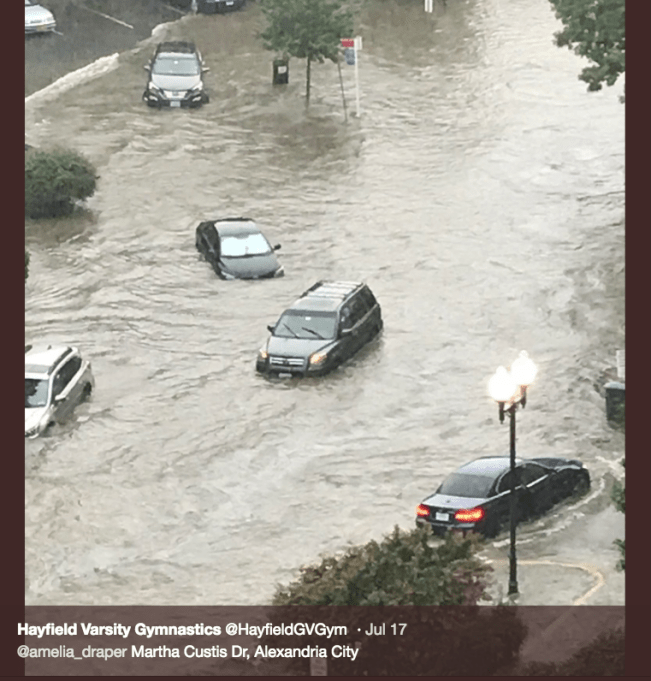
Cars caught in a flash flood during Northern Virginia’s intense rainstorm on July 17. Photo courtesy of Hayfield Varsity Gymnastics, https://twitter.com/hayfieldgvgym?lang=en.

Last week, 40 drivers traveling on the George Washington Parkway had to be rescued near National Airport when a flash flood brought water up to their car doors. This week, Northern Virginia experienced a tornado, more flash flooding and road closures, more rescues and more power outages.

Extreme weather events like these are among the effects climate scientists were warning about in 2007, when Fairfax County adopted the Cool Counties Climate Stabilization Declaration. The County committed to reduce greenhouse gas (GHG) emissions by 20% below its 2005 baseline by 2020 and by 80% by 2050.

So how is the County doing with that? Not so good.

Last week, more than 10 years after its Cool Counties Declaration, the Fairfax County Board of Supervisors finally adopted what it called an Operational Energy Strategy for its own facilities, vehicles, and other operations with specific—but astonishingly weak—targets and deadlines for action. Supervisors who voted for the plan called it  “a step forward” or “a baseline.” (Watch the video here; discussion begins at 1:29:22.)

Local activists were less kind. “It may not be fiddling while Rome burns, but it comes close,” wrote the co-founder of Faith Alliance for Climate Solutions (FACS) Scott Peterson in a Washington Post op-ed.

To their credit, Supervisors John Foust (Dranesville District) and Dan Storck (Mt. Vernon District) urged their colleagues to adopt stronger measures. “We are out of the mainstream on renewable energy,” Foust told his colleagues.

“Do we really believe this effort is proportional to the challenges or the opportunities?” asked Storck. “The waters are rising, and they are rising in the Mt. Vernon District.”

The Board’s action is yet another disappointment for Fairfax residents interested in aggressive action to combat climate change and to reduce the county’s long-term energy costs. The Sierra Club, FACS and others have tried for years to get Fairfax County to live up to the commitment it made in 2007. (In those days I was part of a citizen’s group that offered advice to the County on ways to implement energy savings. Our suggestions were ignored, and in 2009 the County disbanded our group.)

The County Board is dominated by Democrats who say they care about climate change, but even meeting the County’s obligations as a member of the Metropolitan Washington Council of Governments (MWCOG) seems to lie beyond their ambitions. A chart prepared by the Sierra Club comparing Fairfax County’s climate and energy goals for its local operations to those of MWCOG and other local jurisdictions makes the County’s shortcomings clear. The most striking example: MWCOG says its members should meet 20% of their electricity needs with renewable energy by 2020. Fairfax County’s plan for renewable energy begins and ends with a single solar facility on one warehouse in Springfield.

Moreover, in sharp contrast to D.C., Arlington, and Montgomery County, Fairfax County has not implemented a community energy and climate action plan to address the 97% of GHG emissions contributed by the private sector.  In fact, the county has not even begun to develop such an action plan. The recommendations of a 2012 Private Sector Energy Task Force, initiated by the Board Chair, have languished.

Fairfax County’s inaction is as puzzling as it is disappointing. With a population of over 1.1 million, Fairfax is Virginia’s largest county as well as the second-richest county in the nation, after neighboring Loudoun. One in seven Virginians lives in Fairfax. We’ve got 414,000 homes and 116,000 businesses, including a strong tech sector that increasingly demands renewable energy—not least of all because it can save them money.

Nor is Fairfax held back by politics. The county has steadily grown more Democratic in elections. In 2017, Democrat Ralph Northam beat his Republican challenger by a whopping 36 points.

So what would it take to move Fairfax County from left-behind to leader? Advocates agree the County needs to make three big changes: commit to serious targets for renewable energy and energy efficiency in county operations; actively assist residents and businesses to save energy and go solar; and become an advocate for stronger state policies, including removing barriers to customer-sited solar.

A ten-point action plan might look like this:

1).  Ensure that County staff provides a thorough one-year review of the approach, cost savings, and GHG reductions under the County Operations Energy Strategy, including the consideration of options necessary to meet the goals of the MWCOG Climate and Energy Action Plan for 2017 to 2020.

2). Expedite the proposed Request for Proposals for Solar Purchase Power Agreements (PPA) announced on July 11th(but curiously not included in the Energy Strategy).  By late 2018, the County should finalize a PPA contract to facilitate the installation of on-site solar on county buildings.  By drafting the RFP and contract to allow the Fairfax County Public Schools and other localities to ride the contract, Fairfax County government could jumpstart solar development and jobs in Northern Virginia.

3).  Participate in a September 7 workshop at the County Government Center on budget-neutral clean energy funding alternatives (e.g., Energy Savings Performance Contracts, Solar Power Purchase Agreements, public-private partnerships).  This workshop will provide an improved understanding of the opportunities provided by these funding alternatives to support more aggressive energy and climate goals while limiting impacts on county real estate taxes. FCPS has achieved several million dollars in energy savings using ESPCs to obtain GHG reductions and can serve as a model of success.

4).  Complete its ongoing Commercial Property Assessed Clean Energy (C-PACE) initiative by enacting an ordinance necessary to support a C-PACE Program and by implementing the program by late 2019.  This action will provide critical financing to supercharge the inclusion of energy efficiency and renewable energy measures in eligible buildings, thereby supporting the County’s goals to repurpose and revitalize underutilized buildings.

5).  Develop and implement a County-wide Energy and Climate Action Plan to address GHG emissions from residents and businesses.

6).  Develop and implement an action plan to increase county resiliency in order to prepare for the impacts of climate change and help reduce the impact and costs of extreme weather events.

7).  Meet all obligations under Cool Counties and the Metropolitan Washington Council of Governments Climate Plan.

8). Support county staff by increasing staffing levels for energy and climate functions and by establishing a dedicated Energy Office reporting directly to the County Executive. Without an effective organizational structure and adequate resources, implementation of key recommendations is highly uncertain and the county is unlikely to maximize energy cost savings or meet its own climate goals.

9).  Engage in strong advocacy with the General Assembly and the Governor to promote the enactment of legislation removing barriers to customer-sited solar.  This legislation has already been endorsed by the county’s Environmental Quality Advisory Committee.  Removing these barriers would allow the County to pursue the installation of a major solar array on the Lorton Landfill.

10).  Work with the Virginia Association of Counties to enlist its support for legislation to remove barriers to on-site solar.

Given its size and resources, Fairfax County can’t continue to sit back and wait for others to do the hard work. Climate change has reached us. To paraphrase Supervisor Storck, the waters are rising, and they are rising here.