Unknown's avatar

Dominion makes a play for utility-scale solar, but Amazon steals the show

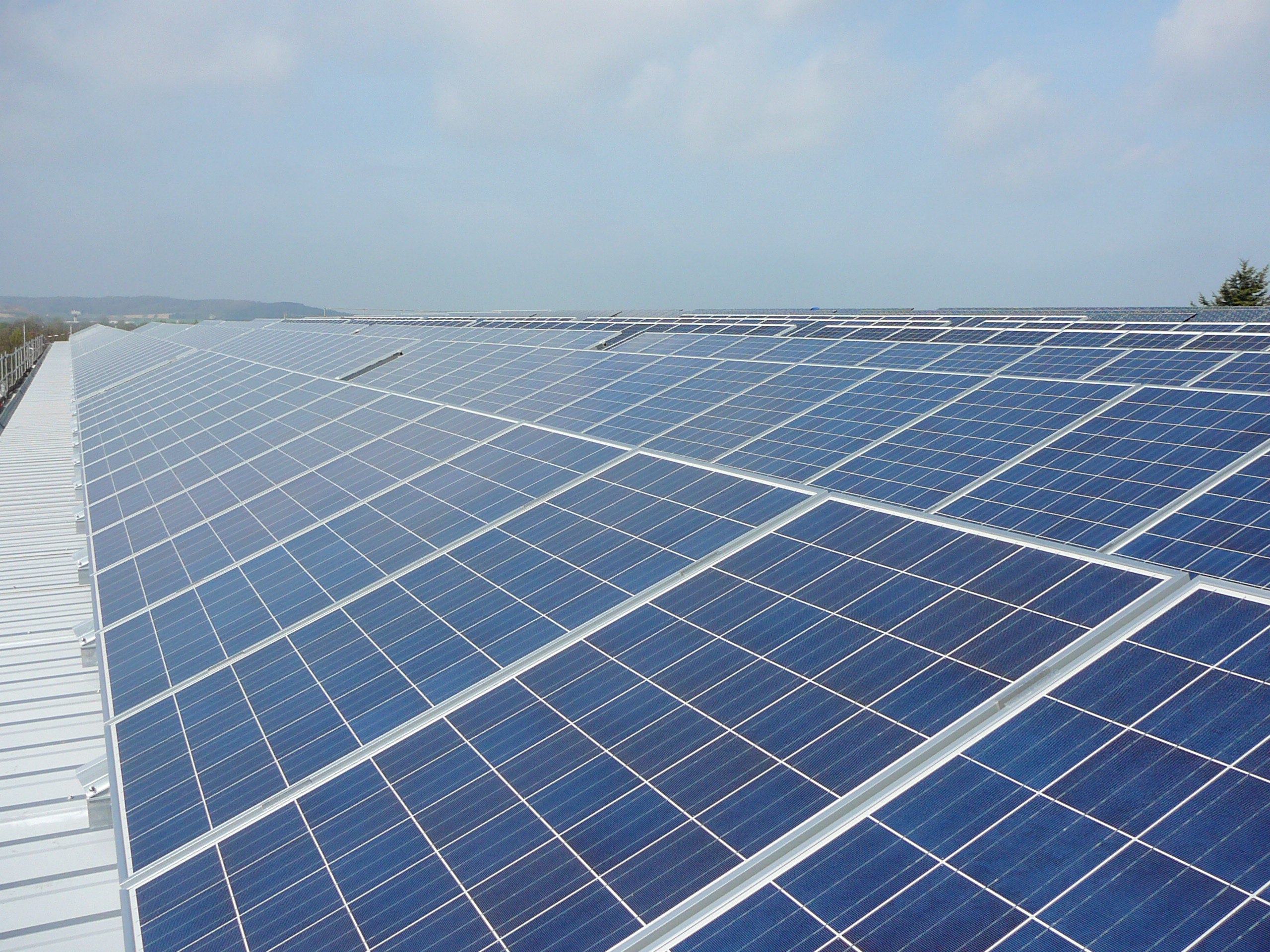
As_solar_firmengebaude.Christoffer.ReimerThis winter Dominion Virginia Power promised Governor Terry McAuliffe it would build 400-500 megawatts (MW) of utility-scale solar power in Virginia by 2020, part of the deal it cut to gain the governor’s support for a bill shielding it from rate reviews through the end of the decade. The company also took a welcome first step by announcing a proposed 20-MW solar farm near Remington, Virginia.

The applause had hardly died down, though, when Amazon Web Services announced it would be building a solar project in Accomack County, Virginia, that will be four times the size of Dominion’s, at a per-megawatt cost that’s 25% less.

Why such a big difference in cost? The way Dominion chose to structure the Remington project, building and owning it directly, makes it cost more than it would if a third party developed the project, as will be he case for the Accomack project. That means Dominion is leaving money on the table—ratepayers’ money.

There is nothing wrong with the Remington project otherwise. The site seems to be good, local leaders are happy, and solar as a technology has now reached the point where it makes sense both economically and as a complement to Dominion’s other generation. But by insisting on building the project itself, and incurring unnecessary costs, Dominion risks having the State Corporation Commission (SCC) reject what would otherwise be a great first step into solar.

And that’s a crying shame, because solar really is a great deal for consumers these days. Utilities now regularly sign contracts to buy solar for between 4.5 and 7.5 cents per kilowatt-hour. Compare that to the 9.3 cents/kWh cost of electricity produced by Dominion’s newest coal plant in Virginia City, and it’s no wonder that solar is the fastest growing energy source in the country.

Utilities get those rates by buying solar energy from solar developers, not by playing developer themselves. From the ratepayer’s point of view, developers have three advantages over utilities: they are experts at what they’re doing, they work on slimmer profit margins, and they get better tax treatment. Dominion loses all three advantages if it builds the Remington solar farm itself.

Dominion has already demonstrated its lack of solar knowhow. In a May 7, 2015 filing with the SCC (case PUE-2011-0017), it admitted its “Solar Partnership Program,” which puts solar on commercial rooftops, is a year behind schedule and will total less than 20 MW of the 30 MW legislators wanted. Previously the company had told stakeholders it would likely hit its $80 million budget limit with only 13-14 MW installed.

As for profit margins, Dominion gets a guaranteed 10% return on its investments. This explains its desire to build solar itself, but it’s hard to justify charging ratepayers a 10% premium when there are cheaper alternatives courtesy of the free market. Unlike Dominion, solar developers have to compete against each other, so they accept much slimmer profit margins.

And then there are the tax implications. A third-party developer can claim the federal 30% tax credit immediately, and can take accelerated depreciation on the cost of the facility over five years. A utility has to take both the tax credit and the depreciation over the expected life of the facility, 20 years or more.

These three factors—knowhow, free-market cost competition, and tax implications—add up to huge savings for consumers when a project is put out to bid by third-party developers.

Just how big the savings could be is clear from a comparison of Dominion’s solar farm with Amazon’s project, to be built by a third-party developer. Dominion says Remington will cost $47 million for 20 MW, or $2.35 million/MW. Amazon’s project is reported to cost $150 million for 80 MW, or $1.875 million/MW. That is a difference of about 25%.

Obviously, then, the better way to finance Remington is for Dominion to put the project out for competitive bid among solar developers. Dominion won’t make as much money for its shareholders, but it will save money for ratepayers. And really, as a member of the American Legislative Exchange Council (ALEC), Dominion ought to jump at the chance to live up to ALEC’s “free markets” mantra.

More to the point, keeping costs down this way will make it possible for the project to get SCC approval, opening the way to many more like it. With hundreds of megawatts still to go, Dominion needs to show it can do solar right.

In fact, Dominion should put out a request for proposals for the full 400 MW it says it plans to build. This could include revisiting its refusal to buy power from another proposed solar farm that went nowhere. That solar facility in Clarke County, proposed by OCI Solar Power six months ago, would have added another 20 MW to the grid. With only a year and a half to go before the 30% federal tax credit drops to 10%, Virginia ratepayers have a right to expect many more solar farms, and soon.

Frustration over Dominion’s slow pace is widespread among solar advocates. Cale Jaffe, Director of the Southern Environmental Law Center’s Virginia office, noted, “Last General Assembly session, Dominion committed to building 400 megawatts of utility-scale solar projects in Virginia by 2020.  The General Assembly then passed, at Dominion’s urging, legislation declaring up to 500 megawatts of new solar projects to be in the public interest. But, unfortunately, Dominion appears to be getting out of the blocks very slowly when it comes to solar power.  I’m concerned that the company is not currently on pace to live up to its pledge.” SELC has intervened in the Remington case on behalf of environmental groups Appalachian Voices and Chesapeake Climate Action Network.

Of course, we also need solar from all sources, not just our utilities. Homeowners, small businesses, nonprofits, and big industrial customers—all should be encouraged to build solar as a matter of the public interest. Solar diversifies our energy base, creates local jobs, strengthens the electricity grid, and will help Virginia meet the EPA’s Clean Power Plan.

Even 500 MW of solar pales compared to the 4,300 MW of new natural gas plants Dominion expects to have built by 2020. When you adjust for capacity factors, in 2020 solar will make up less than five percent of Dominion’s power generation from new projects, and barely a blip on the radar screen of total generation.

While sad, this is hardly news. Virginia famously lags behind neighboring states in developing solar resources. Maryland had 242 MW of solar installed at the end of 2014 and expects to meet its goal of 1,250 MW by the end of 2015. North Carolina has over 1,000 MW and counting. The same source puts Virginia at a grand total of 14 MW.

(In fairness I think our total has to be a little better than that, but when your state’s total looks like some other state’s rounding error, who really stops to crunch the numbers?)

Getting serious about solar means opening our market to competition. Attracting more projects like Amazon’s will require the General Assembly to pass legislation removing all barriers to third-party power purchase agreements. Amazon’s solar farm has the advantage of being located on the Maryland border. It will feed into power lines owned by Delmarva Power, and then into the PJM transmission grid serving the multistate region that includes Virginia. It will not serve Amazon’s data centers in Virginia directly, but will simply offset their power demand. If Amazon or anyone else wanted to put in a similar solar farm elsewhere in Virginia, they would run into restrictions on third-party power purchase agreements and the absurd terms and conditions imposed by our utilities even on large corporate customers.

Tearing down the barriers that prevent the private market from building solar is critical to closing this gap. Dominion made a half-hearted effort to serve big customers, in the form of its cumbersome “RG tariff.” The fact that no one has used it, and Amazon has done an end-run around it, proves how worthless it is. Virginia should put an end to utility red tape, open the market to competition, and let the sunshine in.

The State Corporation Commission will hear arguments on the Remington proposal starting at 10 a.m. on July 16, 2015 at its offices in Richmond. The case is PUE-2015-00006.

Unknown's avatar

Governor McAuliffe considers changes to Virginia fracking regulations, currently among worst in nation

Over the past year, guest blogger John Bloom has been studying Virginia’s regulations governing hydraulic fracturing with horizontal drilling–fracking–and assessing the commonwealth’s readiness to welcome natural gas drilling companies into communities where they have never operated before. With the McAuliffe Administration preparing to address the issue for the first time with new regulations, I asked Bloom to take over the blog this week and tell us how things look. –I.M.

IMG_0634Proposed changes to Virginia’s gas drilling regulations are on their way to Virginia Governor Terry McAuliffe for review. If he approves, the revisions will go out for public comment. Public safety and environmental advocates generally welcome the changes, as far as they go. There’s just one problem: the changes fail to address many of the serious risks posed by fracking.

The dismal state of Virginia’s regulatory regime has become a pressing issue because, if the fossil fuel industry has its way, unconventional shale gas drilling – fracking[1] — will soon be a part of Virginia’s landscape. The gas industry sees opportunities to drill into the Marcellus Shale in western Virginia and the Taylorsville Basin in Tidewater Virginia, where 80,000 acres are under lease already.

Is Virginia ready for this kind of fracking? The fracking industry seems to think so, and Virginia’s Division of Mines, Minerals and Energy (DMME), the agency in charge of regulating gas drilling, seems to think its regulations just need a few tweaks to make fracking safe in Virginia.

Before deciding whether or not a few tweaks is all we need, let’s consider the views of a drilling industry insider. According to Louis Allstadt, Mobil Oil Corporation’s former head of oil and gas drilling in the Western Hemisphere, “making fracking safe is simply not possible, not with the current technology, or with the inadequate regulations being proposed.”[2] He warns that “the industry will tell you that fracking has been around a long time. While that is true, the magnitude of the modern technique is very new.” Fracking now requires 50 to 100 times more chemicals and water than older wells, according to Allstadt. “This requires thousands of trucks coming and going. It is much more a heavy industrial activity.” Further, he warns that methane, which is 86 times more potent as a greenhouse gas than carbon dioxide over a 20-year period, “is leaking from wells at far greater rates than were previously estimated.”

The health and environmental risks of fracking include a litany of short-term and long-term threats to air, water, land, and human and animal health. The risks come from many directions, including the drilling process, the fracking process, the chemicals used, which typically include potent carcinogens and endocrine disruptors, the handling and disposal of large quantities of toxic wastewater, potential earthquakes, the pipelines and compressor stations needed to transport the gas, and disruption of local communities with lights, noise, heavy truck traffic, and the constant prospect of disastrous explosions and other industrial accidents. For an excellent review of recent findings, check out A Compendium of Scientific, Medical, and Media Findings Demonstrating Risks and Harms of Fracking (Unconventional Gas and Oil Extraction), published by Concerned Health Professionals of New York in December 2014.

After carefully studying the risks, Maryland and New York recently declared statewide moratoriums on fracking. Like Allstadt, they found that the risks outweighed the benefits. Other states, such as Pennsylvania, Ohio and West Virginia, have embraced drilling and are learning the hard way that modern fracking – if it’s going to happen at all – requires much more careful regulatory oversight than traditional drilling.

Proposed Revisions to Virginia’s Drilling Regulations Are Grossly Inadequate

Virginia’s regulations start off in an embarrassing place. According to a 2013 survey of shale gas regulations across the country, using two different methodologies, Virginia had the least stringent regulations of all 31 states with actual or potential shale gas production.[3] Given that, and given the rapid pace at which other states are learning from mistakes and tightening regulations, you might expect Virginia to study the potential risks of modern fracking techniques carefully, as Maryland and New York did, before deciding whether to allow them. At the very least, you might expect Virginia to conduct a rigorous review and update of its regulations. Unfortunately, you would be wrong.

Instead of a thorough review, Virginia’s DMME conducted a controlled review intended to update only a few aspects of the regulations. A driving force behind the review seemed to be a request by the drilling industry for Virginia to join an industry-endorsed approach to disclosing fracking fluid ingredients while continuing to protect alleged trade secrets.

DMME convened a review panel that notably lacked anyone from the Virginia Department of Health (VDH) or anyone else with public health expertise, despite the major public health issues involved in fracking. DMME staff led the panel through a handful of issues. The panel came up with exactly what was intended: piecemeal updates when a broader effort was badly needed. When environmental groups proposed a more thorough regulatory review, they were told their proposals were simply beyond the scope of what DMME would consider.

So what are the shortcomings of the proposed revisions? There are many, and the devil is in the details. Here are just a few examples:

  • The regulations would continue to allow drilling wastewater to be disposed of by spreading it on roadways, agricultural and forest land. Other states have correctly concluded that this is simply not a safe way to dispose of fracking waste.
  • The regulations would continue to allow the industry to use open pits to store toxic wastewater, while other states such as Pennsylvania now require closed tanks to avoid leaks, spills, and harm to wildlife.
  • The regulations authorize disposing of wastewater at an “offsite facility,” yet water treatment plants in Virginia cannot effectively process fracking waste. This would result in toxins passing through untreated, damaging Virginia’s waterways. How toxic wastewater will be tracked and disposed of needs to be more clearly spelled out and regulated, as it is in other states.
  • In western Virginia, drilling companies would still be allowed to bury drilling muds and cuttings (drilling waste products) at the well-site instead of hauling them offsite for safe disposal. This practice can result in heavy metals, radioactive materials, and other toxins leaching into the groundwater and contaminating soils. That practice is now forbidden in Tidewater Virginia, reflecting a growing double-standard between protections offered to eastern versus western parts of the state. Is western Virginia somehow less worthy of protection?
  • Virginia’s regulations contain no testing requirements or limits on hazardous air pollution and methane emissions from gas drilling operations, despite the recognition of methane as a potent greenhouse gas. Federal regulations may provide a floor in this area, but Virginia should enact higher standards.
  • Virginia regulations contain only a single setback requirement that wells be at least 200 feet from an occupied building – literally a stone’s throw. Other states have developed much more protective siting requirements taking into account floodplains, public water supply watersheds, fisheries, special lands, schools, hospitals and other important considerations. Virginians should have similar protections spelled out in regulations.

Correcting these deficiencies, and many other suggestions made by the Sierra Club and other environmental groups, were rejected as beyond the scope of DMME’s review.

Now It’s Up to Governor McAuliffe

Three actions are needed at this point, and all of them fall squarely within the authority of Governor McAuliffe. The Governor should:

  1. Direct his Administration to conduct a broad study of the health, environmental, economic and other risks and benefits of unconventional shale fracking in Virginia, so that a considered decision can be made about whether these new forms of fracking should be allowed, and if so, what regulations are needed.
  2. Direct DMME to conduct a thorough regulatory review that takes into account the findings of the Administration’s study and the extensive lessons learned from other states.
  3. Direct that no permits for unconventional shale drilling be approved until the first two steps have been completed.

As long as he takes the steps outlined above, it doesn’t matter much what the Governor does with the weak piecemeal regulatory revisions currently under his review. They could be folded into the broader regulatory review or enacted separately. The important thing is that the Governor isn’t fooled into thinking that these revisions are an adequate response to the threat fracking poses to Virginia’s health, safety and environment.

Taking these three steps should not be difficult for Governor McAuliffe. It would put into practice precisely the position on fracking that he took as a candidate in 2011:

“We should not do any of these techniques here in Virginia until everyone is 100 percent – 100 percent – sure of safety as it relates not only to the watershed but everything that comes off of that, as it relates to uranium, natural gas fracking… Let’s look at all the alternatives. Wind is clean, wind is safe. Solar is clean, solar is safe. So let’s get everything moving forward (while) studying these other things.”[4]

*  *  *  *

John Bloom, a public interest consultant, is chair of public health issues for the Virginia Chapter of the Sierra Club and serves on the Executive Committee of the Sierra Club’s Mount Vernon Group.

_____________________________________________________________________

[1] As used here, “fracking” and “unconventional drilling” refer to newer forms of high volume hydraulic fracturing, or similar forms of well stimulation using liquid nitrogen or other materials, combined with horizontal drilling.

[2] Allstadt was referring to draft regulations in New York, which were much more stringent than Virginia’s. See Brian Neering, Albany Times-Union, April 22, 2014, “Former Mobil Oil exec urges brakes on gas fracking,” available online at http://www.timesunion.com/business/article/Former-Mobil-Oil-exec-urges-brakes-on-gas-fracking-5422292.php.

[3] Nathan Richardson et al, The State of State Shale Gas Regulation, at pages 18, 20 (June 2013), available at http://www.rff.org/rff/documents/RFF-Rpt-StateofStateRegs_Report.pdf.

[4] Terry McAuliffe, in an interview with Jan Paynter, Host, Politics Matters, September 2011. Available online at https://www.youtube.com/watch?v=EFvDrh92xpM.


Unknown's avatar

Virginia schools taking giant steps into solar, and saving money for taxpayers

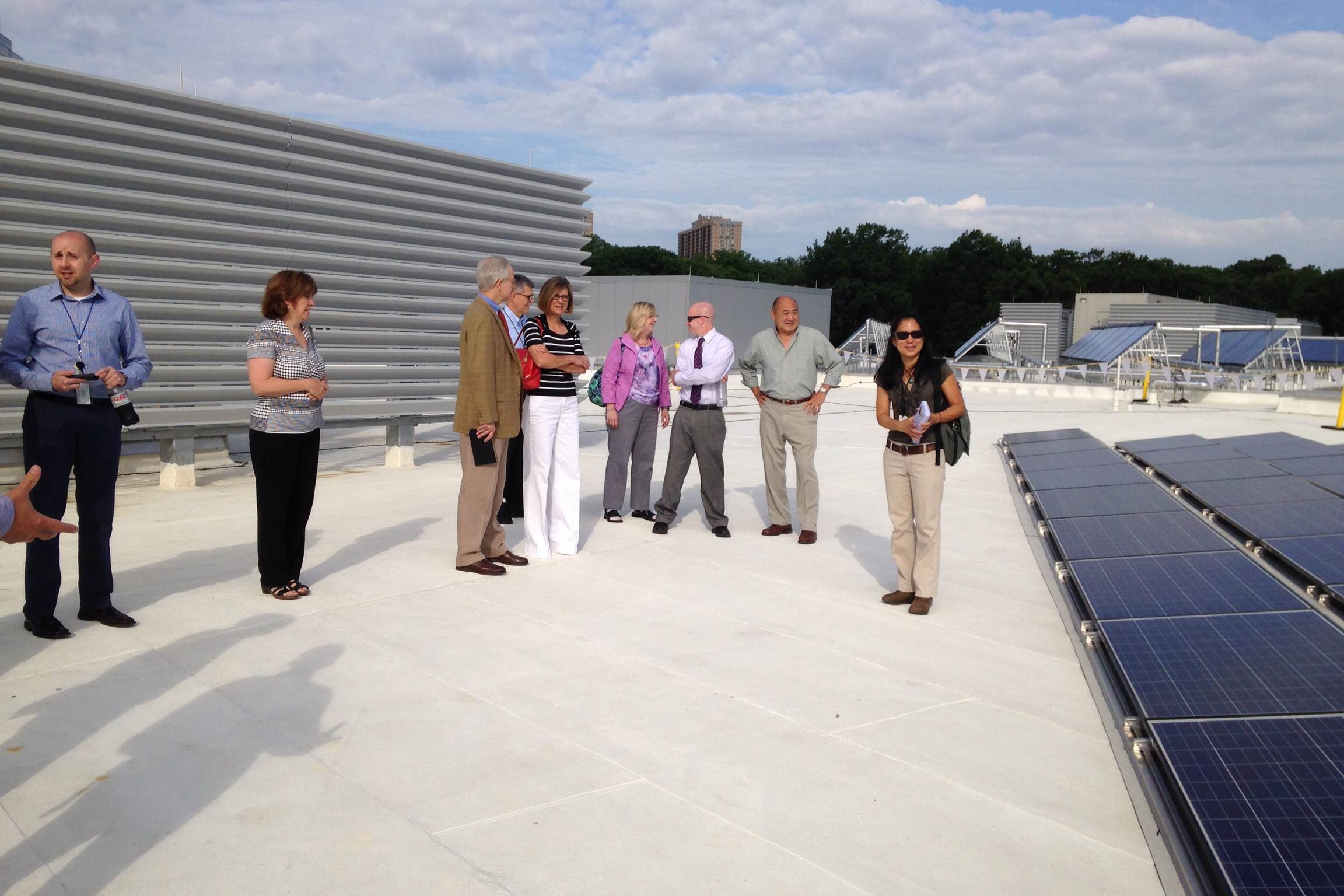
Visitors tour the solar installation on the roof of Wakefield HS in Arlington. Photo credit Phil Duncan

Visitors tour the solar installation on the roof of Wakefield HS in Arlington. Photo credit Phil Duncan

Amory Fischer was a high school sophomore in Albermarle County in central Virginia four years ago when he got interested in the idea of using solar panels to provide some of the power used by the local schools. He found a lot of people shared his enthusiasm, but economic and policy hurdles stood in the way.

In 2012, a local middle school used federal stimulus money to install solar PV and solar hot water. Unfortunately, schools without grant funding couldn’t afford to follow suit. Although the cost of solar panels had fallen to record low levels, buying and installing them still required a significant upfront capital investment. And as tax-exempt entities, public schools couldn’t take advantage of the 30% federal tax credit available to residents and businesses.

Then, in 2013, the Virginia General Assembly passed a law allowing nonprofits and local governments, among others, to buy solar power using a tax-advantaged financing method known as a third party power purchase agreement (PPA).* PPAs can be structured to require no upfront capital from the customer, just payment for the electricity the solar panels produce. Suddenly, for the first time, the economics favored solar for Virginia schools.

Amory and fellow students collaborated with Lindsay Snoddy, the school division’s Environmental Compliance Manager, and spent the next year educating teachers, staff, parents and the community about the benefits of solar and the opportunities presented by the new law. Partnering with environmental groups 350 Central Virginia and the Piedmont Group of the Sierra Club, they formed the Solar Schools Initiative and circulated a petition that garnered nearly a thousand signatures in support of putting solar on Albermarle schools.

It worked. Once school board members understood that a PPA would let the schools install solar panels at no additional cost premium over regular “brown” power—and indeed, would even save them money—their support was unanimous. The school board issued a Request for Proposals and chose Staunton-based solar developer Secure Futures, LLC to develop the projects.

Students and community members gather at Sutherland Middle School in Albemarle County on May 28 to celebrate the student engagement that led to the signing of a contract to put solar on Sutherland and five other schools.

Students and community members gather at Sutherland Middle School in Albemarle County on May 28 to celebrate the student engagement that led to the signing of a contract to put solar on Sutherland and five other schools.

Six area schools will have solar panels installed by the end of this year: two high schools, a middle school, and three elementary schools. Together, the installations will total 3,000 solar panels for a combined 1 megawatt (1,000 kW) of capacity, producing about 14% of the electricity used by the schools.

Amory Fischer is now a junior at Virginia Tech, where he studies Environmental Policy and Planning. This summer he will be working for Secure Futures and trying to encourage more schools across the Commonwealth to go solar.

He will find a promising market, so far largely untapped. A small number of schools elsewhere in Virginia already boast solar panels, but most of them are small systems designed more for their educational value than to make a significant contribution to the school’s power demand. One significant exception is the Center for Energy Efficient Design, an educationally-focused building in Franklin County that “enables students and community members to explore various energy devices and techniques to make intelligent decisions about energy and housing.” It was completed in 2010 and designed to PassivHaus and LEED Platinum standards. In addition to solar panels, two wind turbines help meet the electric demand, and the building includes other energy and water-saving features like a geothermal system, solar hot water and a green roof. The project reflects an impressive commitment from the Franklin County School Board going back to 2004.

More recently, Arlington County has made a commitment to sustainable design in its schools as well as other county-owned buildings. Its LEED Gold-certified Wakefield High School, completed in 2013, includes a 90-kW solar PV installation. The county’s next school building will be even more ambitious. Discovery Elementary School, under construction on the grounds of Williamsburg Middle School, will include 496 kW of solar to allow the super-efficient building to produce as much electricity as it consumes. Buildings that achieve that feat are referred to as “net zero energy.”

Net zero is also the goal of advocates in Harrisonburg, who are pushing the city to include solar and other green features on a school building that is currently in the design phase. Bishop Dansby, a member of the Harrisonburg-Rockingham Green Network, says residents collected more than 800 signatures in support of a net zero energy school, but the school board has not told them yet whether it will adopt the recommendation. One encouraging sign: the board has hired Charlottesville-based VMDO Architects, the firm behind Arlington’s Discovery school.

Other Virginia localities are decidedly lagging, including ones you’d expect to see in the lead. Affluent, tech-savvy Fairfax County is missing in action on solar schools; advocates point to an insular and uninterested school bureaucracy as the primary barrier. A group of students at Thomas Jefferson High School for Science and Technology hopes to change that with a petition drive aimed at getting the county to act.

_____________________

*Unfortunately, the 2013 PPA law applies only to customers of Dominion Virginia Power as part of a two year “pilot program.” The legality of PPAs elsewhere in Virginia is unclear. However, Secure Futures offers a PPA alternative called a Customer Self-Generation Agreement that offers similar benefits. The company believes is legal in all parts of Virginia.

Unknown's avatar

Sierra Club’s 2015 Legislative Scorecard Reflects Partisan Divide on Climate Change

Photo credit: Corrina Beall

Photo credit: Corrina Beall

The Virginia Chapter of the Sierra Club just published its second annual Virginia General Assembly Climate and Energy Scorecard. The Scorecard grades Virginia’s state elected officials on the votes they took during the 2015 General Assembly Session on legislation that will have a direct impact on Virginia’s energy policy and strategy to mitigate and adapt to climate change.

This was the General Assembly’s first opportunity to weigh in on the Environmental Protection Agency’s Clean Power Plan, the nation’s first effort to deal with carbon pollution. The plan gives new momentum to the transition underway in the electric sector away from dirty coal and towards clean energy like efficiency, wind and solar. The plan won’t be finalized this summer, but a lot of Republicans have already decided they’d rather fight than switch.

So although two-thirds of Virginians support government action to reduce climate pollution, Republican legislators in the Commonwealth mostly toed the party line when it came to voting on climate bills. This brought down their GPAs on the Scorecard.

Another problem—affecting members of both parties—was a tendency to toe the Dominion Virginia Power line. As we have seen, bills Dominion liked got passed, and ones it didn’t like were killed. Virginia Sierra Club Director Glen Besa put it this way: “Too many legislators from both parties defer to Dominion Virginia Power on energy policy matters, and that is why Virginia continues to lag in energy efficiency, and solar and wind investments compared to our neighboring states.”

Yet a number of legislators received perfect scores, and some received extra credit for introducing important bills, even when they did not pass or even make it out of small-but-hostile subcommittees.

Looking at the scorecard, you might wonder about all the clean energy bills we tracked this year, but which don’t show up as scorecard votes. The reason is that most of those good bills were killed in House subcommittees, where votes aren’t recorded. If the House leadership would kindly change that practice and ensure that all bills get recorded votes, we would have a lot more to work with.

Even with these limitations, people who have lobbied in the General Assembly will find the Scorecard a reasonably accurate reflection of members’ positions on energy and climate. Yes, we would have expected better scores for a handful of Republicans who have been real leaders on clean energy; it is unfortunate that their climate votes dragged down their grades.

But that’s what happens when climate change is treated as a political zero-sum game and party members are forced to choose whose side they’re on. Perhaps next year, with the Clean Power Plan finalized, legislators will find themselves able to move past the political posturing and turn their attention to the pressing need for solutions. Certainly, we’d like to see more “A” students.

Thirteen Senators scored a perfect 100%, including Sen. Barker (D-39), Sen. Colgan (D-29), Sen. Dance (D-16), Sen. Ebbin (D-30), Sen. Favola (D-31), Sen. Howell (D-32), Sen. Lewis (D-6), Sen. Lucas (D-18), Sen. Marsden (D-37), Sen. McEachin (D-9), Sen. Miller (D-1), Sen. Petersen (D-34) and Sen. Wexton (D-33).

Twenty-five Delegates scored a perfect 100%, including Del. Bulova (D-37), Del. Carr (D-69), Del. Filler-Corn (D-41), Del. Futrell (D-2), Del. Herring (D-46), Del. Hester (D-89), Del. Hope (D-47), Del. Keam (D-35), Del. Krupicka (D-45), Del. Lopez (D-49), Del. Mason (D-93), Del. McClellan (D-71), Del. McQuinn (D-70), Del. Morrissey (I-74), Del. Murphy (D-34), Del. Plum (D-36), Del. Preston (D-63), Del. Sickles (D-43), Del. Simon (D-53), Del. Spruill (D-77), Del. Sullivan (D-48), Del. Surovell (D-44), Del. Toscano (D-57), Del. Ward (D-92) and Del. Watts (D-39).

To view the Scorecard online, visit the Virginia Sierra Club’s website at vasierraclub.org or on Facebook.

Unknown's avatar

If the power grid goes down, blame the war on solar

More, please. Photo credit Christoffer Reimer/Wikimedia

More, please.
Photo credit Christoffer Reimer/Wikimedia

A large number of electric utilities across the country are famously engaged in a war against customer-owned solar. Using policy barriers, “standby” charges and other tactics, utilities from Arizona to Virginia are doing everything possible to short-circuit a revolution that threatens their control of the electric sector. It won’t work. Trying to keep electric generation out of the hands of the rabble is a stop-gap solution, doomed to fail within a few years when battery storage allows customers with solar arrays (or wind turbines) to defect en masse.

But utilities won’t be the only ones hurt in the process. Stifling distributed generation and forcing grid defection is the worst possible outcome for the economy, the climate, and the security of the electric grid. The more utilities succeed, the more everyone loses.

With all its problems—and they are growing—the modern electric grid remains an efficient way of delivering competitively-priced power to American homes and businesses. Utilities, generators, and grid operators engage in a complicated dance that delivers power economically where it is needed, when it is needed, with no shortfalls and nothing left over, better than 99.9% of the time. If one generating plant suddenly breaks down, others are swiftly brought online. When demand for electricity peaks, grid operators call up “peaker” plants or pay some customers to curtail use. The balance is maintained.

But the sheer size and interdependence of the grid, and its reliance on large, centralized generating plants, makes it vulnerable to massive power disruptions resulting from weather events, electromagnetic pulses, solar storms or physical attack. Aging infrastructure, climate change-driven mega-storms, more intense heatwaves, drought, and potential cyberattacks are growing threats to the reliability of our power supply.

Distributed generation using renewable energy offers the simplest and most efficient way to reduce many of these threats. A power grid that includes thousands of solar and wind installations scattered across a service territory is inherently more secure than one reliant on a handful of huge generating plants and transformer stations. And when the fuel is wind or solar, supply lines can’t be disrupted.

Distributed solar is especially useful when the grid is under stress. Researchers found that just 500 megawatts of widely dispersed solar energy could have prevented the massive blackout of the Northeast in August of 2003.

Add in battery storage, and some small systems can be combined to form microgrids. Microgrids can be “islanded” when the larger grid fails, producing power continuously to ensure that critical needs are met—and decreasing the incentive for hackers and terrorists to target the grid in the first place.

The businesses and residents who are installing solar arrays today aren’t just saving money on energy bills and reducing their carbon footprint. They are buying the building blocks of a more resilient power grid that will serve all of us in the future. Some utilities like NRG and Vermont’s Green Mountain Power recognize the value of distributed solar to the grid and work to encourage customers to stay connected. Others, like Dominion Virginia Power and Appalachian Power in Virginia, NV Energy in Nevada, and the Arizona Public Service Company, are energetically working to impose barriers and punish solar owners with higher costs. If they succeed, the result will be less distributed generation and greater grid vulnerability.

Worse, customers who face these utility barriers and cost penalties will have an incentive to cut themselves off from the grid. Affordable battery storage is beginning to make that an option. Within a few years, disaffected customers could be leaving in droves. Rather than pay a punitive “fair share” of the wires that cross their property, they could opt to pay no share at all.

Then, instead of a stronger grid, we’d have a weaker one. Instead of increasing the security of our power supply, we would increase our vulnerability to attack. In place of a highly efficient, low-cost, interconnected grid, we’d move towards an inefficient, high-cost, Balkanized grid.

This is the worst possible direction for our grid—and it’s the logical conclusion to the war on solar that utilities are waging today. That makes it critical that regulators, customers and state legislatures push back hard in support of customer-owned solar. Protecting the grid is too important to let utilities win this war.

Unknown's avatar

Dominion shareholder votes reflect growing concerns on methane, climate

Protesters lined the road leading to the Dominion shareholder meeting in Richmond. Photo credit Corrina Beall.

Protesters lined the road leading to the Dominion shareholder meeting in Richmond. Photo credit Corrina Beall.


Shareholders attending Dominion’s shareholder meeting last week once again raised questions about the utility giant’s dependence on fossil fuels in a carbon-constrained world. Guest blogger Seth Heald brings us this view from inside the meeting.

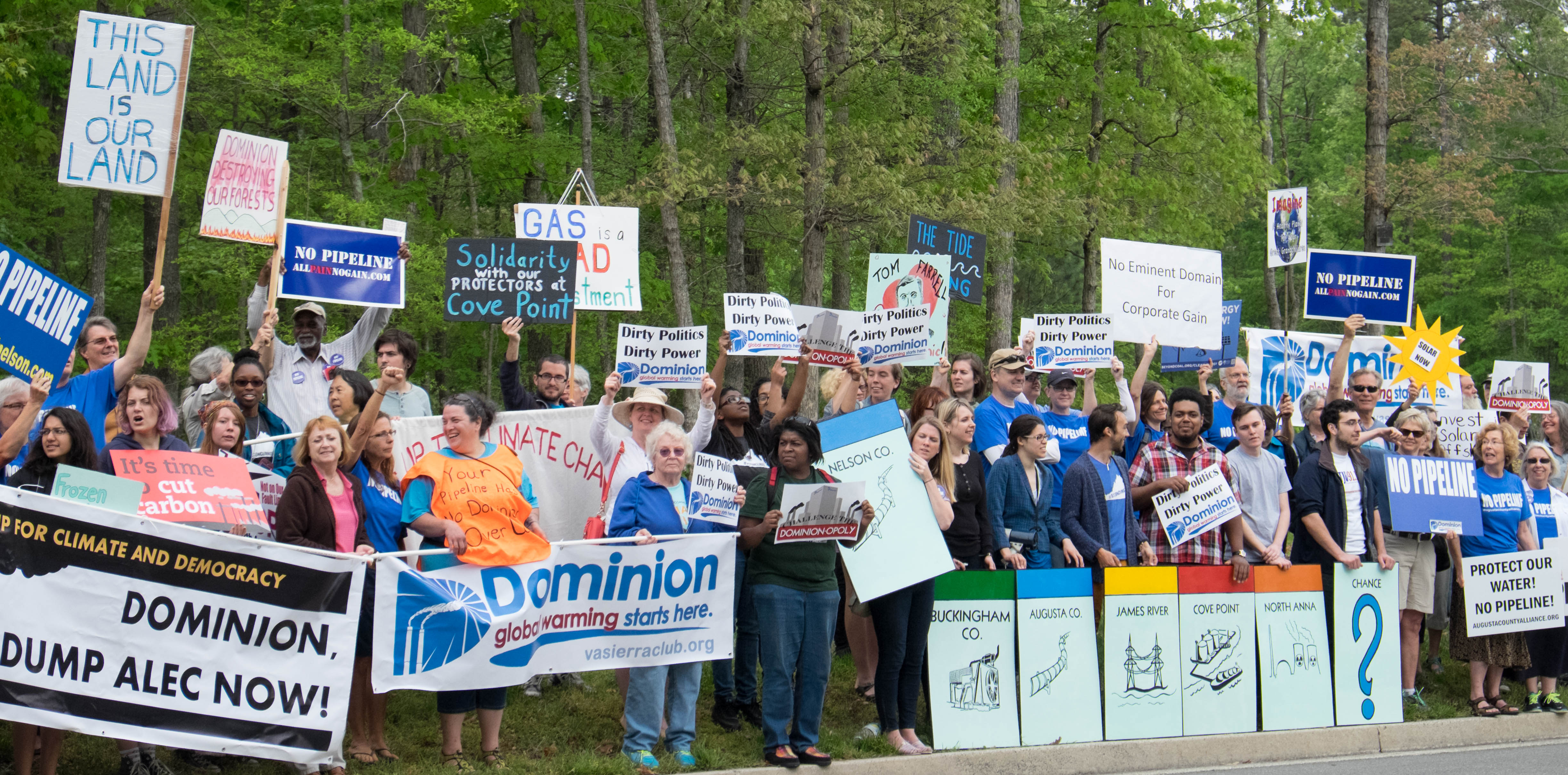
News coverage of Dominion Resources Inc.’s May 6 annual shareholders meeting focused on the demonstration held outside the company’s suburban Richmond training facility. More than 150 people had traveled from all over Virginia and beyond to wave signs and banners protesting Dominion’s planned Atlantic Coast Pipeline for fracked natural gas and its unhealthy dominance over Virginia politicians (on full display during this year’s General Assembly session). Other signs condemned Dominion’s role as a major carbon polluter and its membership in the American Legislative Exchange Council (ALEC).

But developments inside the meeting, which I attended, were newsworthy too.

Like all publicly traded corporations, Dominion holds an annual meeting where shareholders vote on significant issues and have a chance to hear from and question corporate management. Most shares are voted online or by mail, but some shareholders choose to come to the meeting in person. Over the years Dominion has encouraged its electricity customers to buy stock, so many company shareholders live in Virginia.

Only shareholders or their proxies may attend the meeting, and this year security was exceptionally tight. Attendees had to show their admission ticket and driver’s license at three separate places and then go through a metal detector before getting to the meeting. No cameras, cell phones, or recording devices were permitted.

This was my third straight Dominion shareholder meeting. Perhaps most notable this time was the large number of people who lined up to address Dominion CEO and board chairman Thomas F. Farrell II, who told shareholders the company had allotted 30 minutes for their comments and questions. In previous years half an hour was more than enough time for all shareholder comments. But this time it was immediately clear that Farrell would have to allow more time or else those at the back of the line wouldn’t be able to speak. To his credit he allowed all waiting in line a chance to speak. The whole comment process took about an hour, causing the meeting to run significantly longer than in previous years.

Under Dominion’s standard meeting procedure, Farrell stands on the stage facing the audience, and people with comments or questions must deliver them from a microphone at the back of the large room, perhaps 50 feet away from Farrell. Members of the company’s board of directors all sit together in the front row, with their backs to the audience. Several of the shareholders this year spoke against the proposed Atlantic Coast Pipeline, describing how it would harm their land or their region or the planet. One woman movingly described how the pipeline would ruin land that had been in her family for hundreds of years. Many shareholders in the audience turned in their seats to look at the speakers, but not the board members. They sat in the front row and looked straight ahead.

Shareholders voted on a number of resolutions that asked the board or the company to take various actions. The ballot indicated that the board opposed all resolutions that had been submitted by shareholders. Nevertheless, three climate-related shareholder resolutions improved their vote count this year over last. For the first time ever one of them—seeking a report on emissions of the potent greenhouse gas methane—got 25 percent of voting (i.e., non-abstaining) shares, up from 21 percent a year ago.

Doing almost as well were shareholder votes seeking reports on climate-change business risk (23.5% this year versus 21 percent last year) and burning wood to generate electricity (22 percent this year versus 21 percent last year).

These are far from a majority of voting shares, it’s true, but these percentages represent close to $6 billion worth of shareholder value, and the totals are impressive when one considers that many large mutual funds routinely vote against resolutions that are opposed by a company’s board.

In opening comments to the board and shareholders Farrell spoke about efforts to reduce “carbon intensity” in electric power generation. That’s a measure comparing quantity of carbon-dioxide emissions to quantity of electricity produced. Dominion representatives always like to talk about how they’re reducing carbon intensity. They rarely if ever talk about reducing the company’s total carbon emissions.

Reducing carbon intensity is a fine thing, but the trouble is that you can reduce carbon intensity modestly just about forever while still increasing total carbon-dioxide emissions. That’s particularly true if, like Dominion, you resist meaningful efforts to make energy efficiency a significant part of your generation mix. As the Washington Post’s Chris Mooney has noted, doing something about climate, even doing a lot, isn’t the same as doing enough. Dominion and its ALEC partners who reflexively attack the EPA’s climate efforts are still resisting doing much of anything significant on climate, much less doing a lot, or enough.

What affects the climate is the total amount of carbon dioxide (and other greenhouse gases, like methane) in the atmosphere. At some point—and climate science tells us we’re well past that point—you can’t claim to be serious about climate change unless you’re willing to talk about (and commit to) reducing total carbon emissions, not just carbon intensity.

That was the subject of a shareholder question from Lindsay Mendoza of Mercy Investment Services, Inc., which manages assets of The Sisters of Mercy, the 180-year-old Catholic order renowned for its work in social justice, health care, and education. Mendoza asked Farrell when Dominion would begin to reduce total carbon-dioxide emissions, as opposed to carbon intensity. Farrell quickly responded: “That’s a good question.” (An overused cliché, no doubt, but Farrell seemed sincere in saying it, and he did not give that response to any other shareholder.) He went on at some length to discuss the company’s activities, but he didn’t specify a year, or decade, or even a century in which Dominion’s total carbon-dioxide emissions might actually begin to decline. That’s particularly disappointing in light of Dominion’s ranking, based on emissions reported to the EPA, as Virginia’s top carbon polluter.

Shareholders can try to press Farrell for a more specific answer at next May’s annual meeting. But in the meantime, asking Dominion and its board when the company will begin to reduce the company’s total carbon-dioxide emissions is a “good question” that Virginia’s governor, legislators, and the State Corporation Commission (Dominion Power’s state regulator) ought to be asking.

Besides being a Dominion shareholder, Seth Heald is Vice Chair of the Virginia Chapter of the Sierra Club and a student in the MS in Energy Policy and Climate program at Johns Hopkins University.

Unknown's avatar

In reversal, Virginia AG says localities may ban fracking

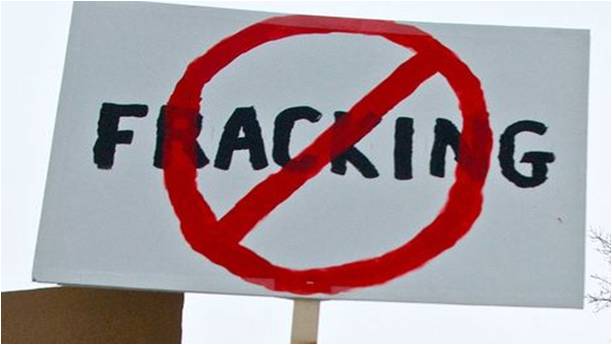
fracking signVirginia Attorney General Mark Herring issued an official advisory opinion on May 5 holding that Virginia localities have the right to prohibit hydraulic fracturing (or “fracking”) as part of their power to regulate land use within their boundaries. The letter reverses a two-year-old opinion by former Attorney General Ken Cuccinelli.

Herring’s opinion cites §15.2-2280 of the Virginia Code, which grants broad zoning powers to localities. These include the power to “regulate, restrict, permit, prohibit, and determine” land uses, such as “the excavation or mining of soil or other natural resources.” Thus, writes Herring, “I conclude that the General Assembly has authorized localities to pass zoning ordinances prohibiting fracking. The plain language of the stature also authorizes localities to regulate fracking in instances where it is permitted.”

Herring’s opinion comes in a letter to Senator Richard Stuart, who had asked whether Virginia law allows localities to prohibit “unconventional gas and oil drilling,” commonly known as fracking, and whether they may use their zoning authority “to regulate aspects of fracking, such as the timing of drilling operations, traffic, or noise.”

The letter overrules a January 11, 2013 opinion by then-Attorney General Ken Cuccinelli, which held that the General Assembly had preempted localities’ right to regulate or ban drilling when it passed the Virginia Gas and Oil Act. Under §45.1-361.5, localities may not “impose any condition, or require any other local license, permit, fee, or bond to perform any gas, oil or geophysical operations which varies from or is in addition to the requirements of this chapter.”

But, Herring notes, the statute “also includes a savings clause stating that the Act does not ‘limit or supersede the jurisdiction and requirements of . . . local land-use ordinances.’” Thus, it explicitly preserves local zoning authority to prohibit or limit fracking.

Herring concludes, “To the extent that the 2013 Opinion conflicts with this conclusion, it is overruled.”

Interestingly, if localities choose to restrict fracking but not prohibit it, they may actually leave themselves more open to challenge. Herring’s opinion reaffirms that portion of Cuccinelli’s opinion that upheld the right of localities to impose some restrictions on fracking, short of outright prohibition. However, the restriction must be “reasonable in scope” and “not inconsistent with the Act or regulations properly enacted pursuant to the Act.” As a result, a fracking company might have a better shot at challenging a restriction than it would an outright ban.

Herring adds, “Determining the extent to which particular zoning restrictions on fracking may possibly be preempted by state law will be governed by the particular facts, restrictions, and regulations at issue. Consequently, I can express no opinion on whether any particular zoning restriction has been preempted.”

Unknown's avatar

McAuliffe vetoes coal subsidy bills, but Republicans vow to keep the corporate welfare flowing

Your taxpayer dollars at work!

Your taxpayer dollars at work!

Governor Terry McAuliffe has vetoed the two bills that would have extended Virginia’s coal subsidies through 2019. It’s a laudable act of fiscal responsibility, and surely no more than Virginia taxpayers had a right to expect in a time of tight state budgets. And yet it was also an act of courage in a coal state where mining companies have had far too much political power for far too long.

You’d like to think legislators would now focus on working with the Administration to help southwest Virginia communities shift away from their unhealthy dependence on coal mining and instead develop new, cleaner industries. The tens of millions of dollars that have been spent annually on coal subsidies could be much better directed to job diversification efforts. Unfortunately, legislators representing coal companies—I mean, coal countieshave already vowed to reintroduce bills next year to keep the taxpayer largesse flowing. They have time; the subsidies won’t actually expire until January 1, 2017.

It’s been 20 years since Virginia began subsidizing coal mining via these two tax credits, bleeding the state treasury of more than $500 million in all. And it’s been three years since the Joint Legislative Audit and Review Committee (JLARC) issued a critique of the various Virginia tax credits that included an especially harsh assessment of the handouts to coal companies. Yet instead of canceling the credits in light of the report, the General Assembly promptly extended them. Even Governor McAuliffe didn’t actually try to end them completely this year. Legislators rejected his efforts simply to scale them back, leading to this veto.

So if we didn’t get jobs for our $500 million, what did we get? Most of the money has gone to enrich coal companies, but a portion went to fund the Virginia Coalfields Economic Development Authority (VACEDA). VACEDA’s board includes coal executives, a fact which has served to intensify rather than lessen coal’s hold on the area.

Perhaps VACEDA’s economic diversification mission would prove more successful if the state were to fund it directly, with money not tied to coal, and were to insist on reforms to VACEDA to ensure board members don’t have a conflict of interest.

In addition to propping up the coal industry, the tax credits also serve to lower the price of Virginia coal purchased by our utilities. This shifts energy costs from ratepayers to taxpayers, but it also makes it easier for coal to compete against other forms of energy, including renewable energy like wind and solar. And since making taxpayers subsidize electricity rates artificially cheapens electricity, it also lessens the incentive to conserve energy. In an age of climate change, this is simply bad energy policy.

Most economists agree that energy policy should seek to make electricity rates reflect the true cost of producing energy. This should include costs imposed on the public in the form of higher health care costs for asthma and heart disease as a result of power plant pollution—costs known as “externalities.” The coal subsidies do the exact opposite; instead of making utilities and coal companies internalize pollution costs, they actually shift more costs onto the public.

All this was done in the name of supporting employment in the Coalfields areas. However, the coal subsidies aren’t linked to jobs; they are based on coal tonnage, so mining companies that increase mechanization while cutting jobs don’t lose anything. And cutting jobs is exactly what has happened in Virginia. As the Governor’s veto statement noted, coal mining jobs declined steadily from their highs in the early 1990s to about 3,600 today, notwithstanding the subsidies.

A reading of the JLARC report also shows that most of the drop occurred before President Obama took office and the EPA imposed tighter pollution standards. The fact is, coal is in decline, and Virginians will be better off not throwing good money after bad.

Indeed, the coal jobs number is barely twice the number of people working in Virginia’s tiny solar industry, which gets no state subsidies. Just this year a House subcommittee killed a bill that would have provided $10 million a year in support for renewable energy projects.

Solar is growing by leaps and bounds across the country, while coal fades. Governor McAuliffe has taken the right lesson from that. It’s too bad so many Virginia legislators have not.

Unknown's avatar

McAuliffe touts gas and nuclear, says it’s not his job to worry about risks

And he'll have to, given the hash we adults are making of it.  Photo courtesy of Glen Besa.

And he’ll have to, given the hash we adults are making of it. Photo courtesy of Glen Besa.

A forum on climate change held last Wednesday in Richmond was supposed to be about moving to clean energy, but it sometimes seemed to be more of a platform for Governor Terry McAuliffe to tout plans for more natural gas and nuclear energy in the Commonwealth. It wasn’t that he neglected energy efficiency, wind and solar—he had plenty of good things to say about these, and even a few initiatives to boast of. It was just that they paled against the backdrop of massive new natural gas and nuclear projects, to which he seems even more firmly committed.

The event was a conference called “The Next Frontier of Climate Change,” organized by The New Republic magazine and the College of William and Mary. Moderator Jeffrey Ball of Stanford University shaped the conference as a series of interviews, beginning with Governor McAuliffe. You can see video of the interview here.

Ball started out asking about the politics of climate change, which gave McAuliffe a chance to reiterate his convictions that climate change is real, that we can see it happening today in Hampton Roads, and that part of meeting the challenge involves supporting the kind of 21st century technologies that will also make Virginia an exciting and attractive place to live. That includes offshore wind and solar.

But McAuliffe also made it clear he sees everything through the lens of economic growth, and his top priority is attracting new business to fill the gap left by shrinking federal spending in the state. “When I ran for governor,” he explained, “I tried to put everything in an economic issue: what is good for the Commonwealth, how do you grow and diversify. I preside over a commonwealth that, we are the number one recipient of Department of Defense dollars, number one. Now, that’s great when they’re spending, but when they’re cutting like they’re cutting today, it has a dramatic impact.”

He is also persuaded that renewable energy, even with all its job benefits, won’t get him as much economic growth as cheaper fossil energy can, and his friends at Dominion Resources and its subsidiary, Dominion Virginia Power, have convinced him that means backing their plans for natural gas and nuclear.

McAuliffe said he supports EPA’s Clean Power Plan, and said in the course of the interview that he thought it would result in lower electricity rates for Virginians over the long run; but he’d still like it to demand less of our utilities. He echoed assertions from legislators and utilities that the draft plan’s treatment of existing nuclear plants makes it “unfair” to Virginia. Repeating a line that is now standard among Virginia politicians, he claimed the Clean Power Plan doesn’t give us “full credit” for reducing our carbon emissions by building nuclear reactors back in the 70’s. He has been raising the issue with the Obama Administration, and feels confident EPA will make the changes he requested.

Neither McAuliffe nor anyone else has explained why we should get credit for doing something 40 years ago for entirely different reasons, at a time when very few people had climate change on their radar screens. But never mind that; according to this theory, which he asserted again at the conference, the Clean Power Plan’s failure to credit us for our nukes puts us at a disadvantage compared to coal-heavy states like West Virginia and Kentucky that haven’t done diddley-squat.

(You know, I hope someone is passing all this along to the folks in West Virginia and Kentucky, who have been screaming bloody murder about how tough it will be for them to comply with the Clean Power Plan. I don’t get the sense they are aware they have this terrific advantage over Virginia and can expect shortly to begin luring away our businesses. Mitch McConnell, for one, seems entirely oblivious of the favor the EPA is doing his state. What a shame it would be if all of McConnell’s anti-EPA rhetoric were based on a simple misunderstanding!)

Maybe our governor needs to put a few items on his reading list, like the PJM analysis that shows the Clean Power Plan puts Virginia at an advantage over neighboring states, especially if it joins a regional compliance program. He should also check out a new report from Virginia Advanced Energy Industries Coalition and the Advanced Energy Economy Institute that describes the tremendous job growth in renewable energy and energy efficiency that will flow from compliance with the Clean Power Plan. Given the opportunities presented, the Governor should embrace more stringent goals, and should look to clean energy rather than nuclear as the money-saving, job-creating approach to compliance.

However, McAuliffe’s enthusiasm for nuclear goes beyond using it to wangle a softer carbon reduction target out of the EPA. He told Ball repeatedly that he is a “huge fan” of nuclear energy, thinks a new nuclear plant should be part of Virginia’s compliance with the Clean Power Plan, and expressed delight over Dominion’s plans for a third reactor at North Anna.

And yet, when confronted with a question from the audience about the wisdom of building another nuclear plant on an earthquake fault line, he said cheerfully that the Nuclear Regulatory Commission won’t approve a plant that isn’t safe. Worrying about it isn’t his job.

We’d better hope his confidence in the NRC is well placed—and hope too that the NRC successfully resists the political pressure to approve the plant that it will no doubt receive from Governor McAuliffe.

Ball suggested that what was behind the question on nuclear was a contention that if the state ramped up its investments in efficiency and renewable energy it would not need to build a new nuclear plant. McAuliffe assured Ball that wind, solar and efficiency couldn’t do that yet. He knew that because—ahem—he’d heard it from Dominion.

I guess no one has told the Governor that asking Dominion for its take on efficiency is like asking Exxon about electric cars.

McAuliffe’s enthusiasm for big projects that promise more business for Virginia (and Dominion) has also caused ongoing friction between the Governor and members of the public over natural gas pipelines. This led to the incident at the conference that grabbed headlines, with an angry protester trying to shout down the Governor.

At issue was McAuliffe’s support for Dominion’s controversial Atlantic Coast Pipeline. The proposed 550-mile natural gas transmission project will require the seizure and clear-cutting of a 125-foot wide right-of-way across Virginia from West Virginia to the coast in North Carolina, through national forests and private land. And of course, it will increase Virginia’s carbon footprint by enabling the burning of more fossil fuel here.

Pipeline opponents had brought into the New Republic event a banner reading “McAuliffe: Pipeline will be Climate Chaos.” During the Q&A period the protester reminded McAuliffe that he had once opposed natural gas fracking in Virginia.

But McAuliffe remained unruffled even as the protester hurled insults at him, until she was escorted from the room. “We’re not doing the fracking here,” he said, by way of explaining his support for the pipeline. “The fracking is done elsewhere. I’m not, as the governor of Virginia, going to stop fracking in America today.” Therefore, he concluded, we might as well take advantage of the fracking going on elsewhere to “bring cheap gas to parts of Virginia that can open up and build the economy.”

It seemed no one had alerted him to research indicating the gas boom will start to go bust just five years from now. If that happens, of course, higher gas prices will make the Governor’s manufacturing renaissance go bust, too, leaving Virginia worse off than before. Coupled with Dominion’s plans to bring online a staggering 4,300 MWs of new natural gas generating plants by 2019, Virginia is putting itself at the mercy of a natural gas market that is entirely outside our control.

But when I asked the Governor if he wasn’t worried about the risks of over-investing in natural gas, he shrugged off the concern. It’s not his job to review Dominion’s plans, he said.

Well, sure. But there’s a problem with cheerleading for every big energy project that comes along and taking no responsibility for their downsides. This is the “all of the above” strategy that brought us the climate crisis. From a governor who knows climate change is happening before our eyes in Virginia, we’re still hoping for better.

Unknown's avatar

Virginia Attorney General weighs in on HOA efforts to ban solar

Photo courtesy of Solarize Blacksburg

Photo courtesy of Solarize Blacksburg

Virginia Attorney General Mark Herring has issued an opinion letter in response to concerns of some residents that their homeowner associations (HOAs) won’t let them install solar panels, in spite of recent state legislation nullifying most solar bans. Herring’s letter confirms the plain language of the 2014 law that HOA bans on solar installations are valid only if they appear in the association’s “recorded declaration.” Otherwise the association is prohibited from banning solar panels, although they can impose “reasonable restrictions” on their “size, place, and manner of placement.”

The letter, dated April 14, 2015, is in response to a request for an official advisory opinion from Delegate Joseph Yost, a Republican who had supported last year’s launch of Solarize Blacksburg. Some homeowners who sought to join the cooperative buying program ran into resistance from HOAs (more broadly called property owner associations, or POAs) unfamiliar with the new law.

Two parts of the AG’s opinion are worth quoting here:

What is noteworthy about the current language of this statute is that it permits only one procedure by which solar panels may be prohibited by community associations: by inclusion in the recorded declaration. The maxim ‘expressio unius est exclusio alterius’ “provides that mention of a specific item in a statute implies that omitted items were not intended to be included within the scope of the statute.” Applying this maxim, the current language of the statute must be viewed as meaning that any attempt by a POA to prohibit solar panels on private property by means other than a recorded declaration—such as rules, regulations, bylaws, policies, or other unrecorded instruments—is unenforceable.

(Footnote omitted.) The letter then adds:

When read as a whole, the statute also means that, with the sole exception of recorded declarations, existing prohibitions against solar panels on private property are no longer enforceable.

The opinion goes on to consider the constitutionality of the law and finds that it “does not violate the constitutional prohibition against legislation impairing the obligations of contract.”

Notably, the AG did not address the question of what kinds of HOA restrictions short of a ban meet the law’s “reasonableness” criterion. To date, the only guidance I know about on that question is a guide put together by the Maryland, DC and Virginia Solar Energy Industries Association—or MDV-SEIA, as the trade association is known.

As for Solarize Blacksburg, it proved a huge success in spite of isolated HOA issues, with a total of 55 solar installations. Since then, 20 other communities across the state have followed its lead to launch their own solarize efforts. The Blacksburg team is now helping to launch Solarize Montgomery with a party to be held at 5:30 today, April 22, at the Montgomery County Government Center in Christiansburg.


Update: After I put up this post I learned about a nice little segment that WVTF Radio did yesterday on the HOA dispute and the AG’s opinion. You can check it out here.