Unknown's avatar

2016 Virginia bills show King Coal still calling the shots

Virginia rorschach test: some see a destroyed landscape, others see campaign contributions.

Virginia rorschach test: some see a destroyed landscape, others see campaign contributions.

Legislation introduced in the General Assembly would keep Virginia’s gravy train rolling for coal companies. SB 44 (Charles Carrico, R-Alpha Natural Resources) and HB 298 (Terry Kilgore, R-Alpha Natural Resources) are framed as “limits” because the taxpayer-financed subsidies for coal mining would top out at $7.5 million per year. But watch your wallets: the primary objective of the legislation is to extend the coal subsidies an extra three and a half years, through 2019. So these bills should more accurately be seen as $25 million giveaways. The bills have been referred to the committees on Finance.

It appears the coal companies need the money to pay bonuses to their executives. Alpha Natural Resources, which filed for bankruptcy in August to avoid paying creditors, plans to pay its top executives bonuses worth up to $11.9 million. Meanwhile, Alpha laid off more than 160 coal miners a week before Christmas.

According to the Virginia Public Access Project, Alpha Natural Resources gave almost $500,000 in campaign contributions to Virginia legislators during the 2014-2015 election cycle. Carrico was the top recipient, raking in $24,267 from Alpha; Kilgore snagged fifth place with $20,000.

Consol Energy gave over $236,000 to legislators over the same time period. Kilgore was their top recipient, at $12,500, while Carrico received $10,000. Note that both Carrico and Kilgore ran unopposed.

In a separate attempt to give back to the coal industry, Ben Chafin has introduced SB 365 (referred to Transportation), a bill that would remove the Coalfields Expressway from the transportation prioritization process. If it were to pass, this strip mine disguised as a highway wouldn’t have to meet the normal standards required of real roads to be eligible for state funding. The disastrous Route 460 would also be excused, in case any future administration is dumb enough to revive it. Chafin is another Coalfields Republican who ran unopposed while hauling in more than $100,000 from donors in the energy and mining industries, including $15,000 from Alpha Natural Resources and $9,500 from Consol.

The bankruptcy of Alpha, like that of dozens of other coal companies in recent years, threatens more than the campaign coffers of Virginia legislators. Coal mining has declined steadily in Virginia, leaving displaced workers who could make much better use that $7.5 million annually if it were redirected for job retraining and education. Right now, in contrast to the Republican rhetoric, only the Obama Administration seems to care about out-of-work coal miners.

While ignoring workers, legislators are at least waking up to the threat posed to taxpayers when bankrupt coal companies walk away from their obligations to clean up and reclaim the land they’ve mined. HB 1169 (Todd Pillon, R-Abingdon, referred to Agriculture) would increase the amount of the reclamation bonds that mine operators must post, and give the Commonwealth a lien against the land.

Coal ash pollution prompts legislation on proper closure of storage ponds

Meanwhile, Virginia’s coal legacy continues to have repercussions for communities across the state, wherever waste from burning coal has piled up in toxic ponds next to rivers and streams. For years utilities have taken an out-of-sight, out-of-mind approach to coal ash, quietly ignoring the potential for devastating spills like the one that contaminated the Dan River.

In Prince William County, Dominion Virginia Power proposes to close one of these leaky coal ash ponds by draining the water out of it and slapping on a cover. A compliant Department of Environmental Quality just issued Dominion a permit to discharge the partially-treated wastewater into Quantico Creek, which flows directly into the Potomac River.

In response, Democratic Senator Scott Surovell, whose district includes this section of Prince William County, has filed SB 537 (referred to Agriculture, Conservation and Natural Resources) to require the removal of all waste from closed coal ash ponds for proper disposal in permitted landfills that meet federal standards.


UPDATE: A January 21 news report informs us that Alpha Natural Resources owes Wise County, Virginia, nearly $1.46 million in unpaid taxes for 2015, with another $1 million owed to Dickenson County. Please feel free to make the appropriate snarky comments; I’m still stuck in a “you gotta be kidding” loop.

UPDATE 2: Not content to let Senator Carrico get all the glory giving away Virginia taxpayer money to pay multi-million dollar bonuses to tax-evading coal bosses, Ben Chafin has filed his own bill to do the same thing.  SB 718 appears to be the same as SB 44 and has also been referred to Finance.


Unknown's avatar

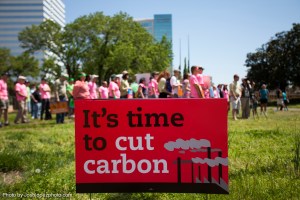
2016 Virginia legislative session opens with stark choices for dealing with climate change

Setting an example for Virginia leaders. But will they follow? Photo courtesy of Glen Besa.

Setting an example for Virginia leaders. But will they follow? Photo courtesy of Glen Besa.

One of the first bills filed in Virginia’s 2016 legislative session—and already passed through committee—would require the McAuliffe Administration to write a report about how awful the EPA’s Clean Power Plan is for Virginia, and then to develop a state implementation plan that won’t comply.

That’s not exactly how HB 2 (Israel O’Quinn, R-Bristol) puts it, but it’s hard to read the language any other way. The bill instructs the Department of Environmental Quality to write a report critiquing the Clean Power Plan’s terrible effects (stranded costs! price increases! coal plant retirements! shoeless children!). It neglects any mention of the Plan’s benefits—like less pollution, better public health, and bill savings from energy efficiency. DEQ is then directed to write a plan that details all the bad stuff (but not the good stuff) and submit that to the General Assembly for approval before it can go to EPA. Does anyone think the General Assembly will approve a plan that makes compliance sound as awful as Republicans want DEQ to describe it?

The irony here is that the bill assumes the Clean Power Plan is the huge game-changer for Virginia that environmentalists had hoped it would be. Sadly, the Clean Power Plan doesn’t demand much of Virginia; if we simply meet new electricity demand with energy efficiency and renewable energy, we would be at or near to full compliance.

But recognizing that Virginia got a pass would be inconvenient for the bill’s drafters over at the American Legislative Exchange Council (ALEC). ALEC has an agenda to promote, and the agenda demands that Republicans be outraged, regardless of the reality on the ground.

We hear outrage was in full display Tuesday as Republicans pushed the bill through Commerce and Labor on a party-line vote. Democrats patiently explained that if Virginia doesn’t submit a plan that complies with the Clean Power Plan, EPA will write one for us. Republicans responded with shoeless children.

SB 482 (Mark Obenshain, R-Harrisonburg, referred to Agriculture, Conservation and Natural Resources) and SB 21 (Ben Chafin, R-Lebanon, also in Agriculture) are Senate companion bills.

The flip side

If the Clean Power Plan doesn’t actually demand much of Virginia, nothing prevents the state from using the federal requirements to its own advantage. HB 351 (Ron Villanueva, R-Virginia Beach, referred to Commerce and Labor) and SB 571 (Donald McEachin, D-Richmond, referred to Agriculture) take this lemon-to-lemonade approach with the Virginia Alternative Energy and Coastal Protection Act. The bill would direct the Governor to join the Regional Greenhouse Gas Initiative (RGGI), the cap-and-trade plan that the northeastern states have used successfully to reduce carbon emissions and raise funds to further the RGGI goals.

The legislation is similar to last year’s Virginia Coastal Protection Act, which was unable to get out of committee due to Republican opposition. But as warming ocean water expands and lifts sea levels along our coast, even Republicans must wonder how they are going to deal with the costs. Right now, the only answer out there belongs to Villanueva and McEachin.

Other legislators, meanwhile, offer small steps in the right direction. HB 739 (Christopher Stolle, R-Virginia Beach, referred to General Laws) would establish the Virginia Flooding Adaptation Office. A Chief Resiliency Officer would oversee its operations, pursue funding opportunities, and recommend initiatives to help with adaptation efforts. (Maybe she will recommend joining RGGI!)

A similar but more limited bill, HB 1048 (Keith Hodges, R-Urbana, also referred to Agriculture) would create a position of Chief Resiliency Officer to coordinate “issues related to resilience and recurrent flooding,” recommend actions to increase resilience, and pursue funding.

HB 903 (also Stolle, referred to Agriculture, Chesapeake and Natural Resources) resolves to designate a Commonwealth Center for Recurrent Flooding Resiliency to study “recurrent flooding and resilience.” HJ 84 (Stolle again, referred to Rules) and SJ 58 (Mamie Locke, D-Hampton, referred to Rules) would continue the ongoing study of “recurrent flooding” and rename it as “coastal flooding.” (Yes, legislators are moving towards calling it “sea level rise” at about the same rate the sea is rising.)

SB 282 (Lynwood Lewis, D-Accomack, referred to Agriculture) would establish the Virginia Shoreline Resiliency Fund as a low-interest loan program to help residents and businesses that are subject to “recurrent flooding.” Funding, for the most part, would require appropriations from the General Assembly.

Unknown's avatar

Virginia wind and solar companies say tax credit extensions cue up a happy new year

Photo by Dennis Schroeder / NREL

Photo by Dennis Schroeder / NREL

Congress included a welcome gift to the wind and solar industries in last week’s package of goodies that made up the year-end spending bill. For the wind industry, the renewal of the expired production tax credit (PTC) with a five-year phase-out finally ends the guessing game that has driven repeated boom-and-bust cycles—and will help Virginia’s first-ever wind farm move forward.

For solar, the extension of the investment tax credit (ITC) beyond the end of next year ensures that one of the fastest-growing industries in the U.S. won’t face a major disruption that would have driven many small companies out of business. That’s critical in Virginia, where the lack of incentives has left the market mostly to small players able to get by on small profit margins. As the economics of solar continuously improve, these small companies see a bright future in the Commonwealth.

I asked several Virginia industry members how they were feeling after Congress’ year-end gift.

“The certainty the tax credit extension gives our business is critical,” answered Jeff Nicholson, Director of Development for Waynesboro-based Sigora Solar. “While there won’t be as much of a crunch to get systems installed next year, we can hire without being concerned that the market for solar will plummet in a year.”

Sigora has been one of Virginia’s most remarkable small business success stories, growing from 11 employees at the beginning of 2015 to 44 today. With the ITC extension, the company now foresees a “long-term, steady stream of business” through the rest of the decade, said Nicholson.

The 30% ITC had been set to expire at the end of 2016 for residential customers, while dropping to 10% for commercial and utility-scale projects. Under the bill passed by Congress and signed by President Obama on December 18, the tax credit will remain at 30% for all systems through 2018, and then taper off gradually until it reaches 10% in 2022. If current price trends continue, the extra few years may be enough to make solar competitive with other fuels without subsidies.

“We know solar is a solid energy production fuel, every bit as viable as coal, oil, nuclear and wind, and it is clear that the more we build, the more cost effective it becomes,” said Paul Risberg, President of Charlottesville-based Altenergy Incorporated. Altenergy grew by 40% in 2015, and Risberg told me he now expects that trend to continue in 2016.

Another Virginia success story is Staunton-based Secure Futures LLC, which has carved out a niche supplying solar energy to tax-exempt entities like universities and local government entities in Virginia, using third-party power purchase agreements. CEO Tony Smith told me, “The ITC extension means that our business can continue to offer at or below grid-parity solar electricity to our commercial scale customers beyond 2016.”

But, he added, “It still remains challenging to attract investment in Virginia due to the disparity in incentives to solar in our state as compared with our neighboring states, especially for behind-the-meter third party owned solar.  We remain hopeful that our industry will continue to build support in Richmond to reduce the barriers to solar investment in Virginia.”

The Virginia solar industry got an extra year-end gift on Monday when Governor Terry MacAuliffe announced plans for the state government to buy 110 megawatts of solar over the next three years, accounting for 8% of its electricity usage. While 75% of that will be utility-scale solar to be built by Virginia Dominion Power, 25% will consist of on-site projects of less than 2 megawatts in size, to be built by third-party developers using power purchase agreements.* The state will follow a competitive procurement process, but in response to a question at the press conference, MacAuliffe said it will not limit participation to Virginia-based companies.

Still, the Virginia industry members were optimistic the announcement would help boost the profile of solar energy in the Commonwealth. The industry trade group, MDV-SEIA, says it participated in the discussions leading to the announcement.

Virginia has a lot of catching-up to do, of course; neighboring states are so far ahead and have so much momentum that, as the Virginia Sierra Club’s Glen Besa observed, “If Dominion sticks to its commitment (of 400 megawatts of solar by 2020), we’ll be further behind on solar than we are now.”

Photo credit NREL

Photo credit NREL

Like the ITC for solar, the 2.3 cents per kilowatt-hour PTC has been a crucial support for the wind industry, making it the second-biggest source of new electric generation in the U.S. for many years now. But until last week, Congress had been reluctant to extend the PTC for more than a year at a time, sometimes retroactively, causing havoc for planners and developers and leading to boom-and-bust cycles deeply damaging to growth.

Now the PTC will be extended through 2016 before tapering off and expiring altogether at the end of 2019. Projects that “commence construction” by the end of a given year will qualify at that year’s level. (“Commence construction” language was also added to the solar ITC.) The predictability that comes with the five-year tapering-off period is expected to finally bring stability to project planning.

And like the solar industry, the wind industry now predicts bright days ahead. Bruce Burcat, Executive Director of the Mid-Atlantic Renewable Energy Coalition, told me, “Sound policies like the PTC have driven innovation which has helped reduce the cost of wind energy down by about 66 percent over the past six years, making it highly price competitive with traditional forms of energy resources. This trend bodes well for the opportunity for wind to take hold in Virginia.”

Burcat is undeterred by Virginia’s lack of success with wind farms to date. “While no wind farms have been developed in Virginia, we believe that with the right signals from the Commonwealth, Virginia could see its first wind farms developed sometime in the next few years,” he said. “Wind farms would bring investment and jobs and other economic development opportunities to Virginia.  Wind farms would also be a very important tool for cleanly and cost-effectively helping Virginia meet the requirements of the EPA’s Clean Power Plan.”

Virginia’s first wind farm is expected to be Apex Clean Energy’s 75-MW Rocky Forge project in Botetourt County, which the company projects to have operational in 2017. Tyson Utt, Apex’s Director of Development for the Mid-Atlantic, told me, “The extension of the PTC will enable the facility to charge less for the energy it produces, saving electricity consumers money.” And, he added, “The project will be built on private land with private investment and will help diversify Virginia’s energy mix while injecting millions into the local economy.”

Apex also has a second wind farm of up to 180 MW under development in Pulaski County, scheduled for completion in 2017 or 2018.

Utt agrees the wind industry won’t need incentives for long to compete with fossil fuels. “The PTC exists to help level the playing field for renewable energy, relative to legacy generation sources that have benefited from permanent subsidies for decades. That said, renewable energy is becoming so economically competitive on its own that the industry now feels comfortable accepting a phase out of the PTC over the next five years, and the tax extenders package that just passed through congress does exactly this. Of course, wind energy offers additional benefits that are not currently reflected in our incentive structure, including the ability to generate electricity without producing carbon dioxide or consuming water. We expect that as our nation moves towards the recognition that there should be a price placed on carbon, wind energy will become even more competitive with conventional generation sources.”

[UPDATE: on January 6, the Associated Press reported that Appalachian Power is seeking to buy up to 150 MW of wind power through direct ownership or long-term power purchase agreements.]

In addition to the tax credit extensions for wind and solar, Congress passed other clean energy incentives that have gotten less attention. Scott Sklar, President of the Arlington-based Stella Group, Ltd. and an adjunct professor at George Washington University, noted that other renewable technologies also qualified for tax credits, and a tax deduction for energy efficiency improvements in commercial buildings was renewed. He also pointed to provisions in the Highway Authorization Act passed into law this month that favor renewable energy. As a result, he told me, “The end-of-year passage by Congress of extensions for the entire portfolio of energy efficiency and renewable energy, coupled with the infrastructure incentives for renewable energy in the highway bill, will more than double private investment into these sectors over the next six years.”

Sklar is bullish on clean energy. “With expanding markets, allowing these technologies to-scale even further, will insure electric grid and fuel parity before 2020, and also insure that renewable energy and energy efficiency will become the dominant energy provider both in the US and the world.”

I should note, though, that not everyone was entirely happy with Congress last week. Though they lauded the tax credit extensions, environmental groups including the Sierra Club opposed the lifting of the oil export ban that Republicans demanded in return. Exporting American crude oil, they fear, will lead to more drilling in the U.S. and higher oil consumption worldwide, further driving climate change. And while wind and solar compete head-to-head with the biggest climate culprit, coal, currently they offer little competition for oil in the transportation sector.

But with a world-wide oil glut that shows no signs of easing, observers including Sklar think lifting the export ban won’t have much effect in the near term. The extension of the renewable energy tax credits, on the other hand, will help push clean energy pricing to a point where wind and solar dominate the market for new electricity generation. According to an analysis by the Council on Foreign Relations, “Extension of the tax credits will do far more to reduce carbon dioxide emissions over the next five years than lifting the export ban will do to increase them.”

So it’s easy to see coal as the biggest loser here, but Big Oil shouldn’t feel too smug. As battery storage becomes more affordable and electric cars gain market share, wind and solar will begin to displace oil, too. The future, my friends, belongs to clean energy.

Here’s to 2016!

________________________

*The astute reader may wonder how the Governor persuaded Dominion to allow it to buy electricity from third-party providers in spite of Dominion’s tireless defense of its monopoly on electricity sales and its reluctance to allow other customers to use PPAs outside the narrow confines of a pilot program. Unlike most of us, the state purchases power from Dominion under a contract, rather than under a tariff overseen by the State Corporation Commission. So allowing the state to use PPAs required negotiating a change to the contract but does not have immediate ramifications for lesser folk. But still: at some point, doesn’t it become obvious that restrictions on PPAs are simply holding the market back?

And even all you astute readers may not have thought to ask: when the state buys solar electricity from Dominion or third parties, who will own the RECs? After all, it is not the guy with the solar system on his roof who can legally claim to be using solar energy, but the guy holding the renewable energy certificates (RECs) associated with that energy. If the state wants to brag about meeting its new goal of 8% of its electricity from solar, it had better hold the RECs to prove it—and not, for example, allow Dominion to sell the RECs to a Pennsylvania utility or to the voluntary participants of its Green Power Program. When I asked Deputy Secretary of Commerce Hayes Framme about this, however, he said the question of who will own the RECs “has yet to be determined.”

Unknown's avatar

Dominion Virginia Power ordered to refund $19.7 million to customers, but gets to keep a billion in future overcharges

"Keep counting, Mr. Farrell. There's a billion more where this came from." Photo courtesy of Wikimedia Commons Valdemar-Melanko-1965 public domain.

“Keep counting, Mr. Farrell. There’s a billion more where this came from.” Photo courtesy of Wikimedia Commons Valdemar-Melanko-1965 public domain.

The State Corporation Commission has ordered Dominion Virginia Power to refund $19.7 million to customers, reflecting excess earnings during 2013 and 2014. But according to the November 23 order, the company will not have to lower its rates going forward, due to its success last winter in getting a bill passed that freezes base rates and eliminates rate reviews until 2022.*

That legislation, SB 1349, was widely criticized (including by me) as a handout to Dominion. How big a handout is now clear: “over a billion dollars,” according to the calculation of Judge James Dimitri, one of the three SCC commissioners.

Writing in a partial dissent, Judge Dimitri called SB 1349 unconstitutional, noting that Article IX, Section 2 of Virginia’s Constitution explicitly assigns rate-setting authority to the SCC. Thus, said Dimitri, the SCC should give no credence to SB 1349, and consequently should order a refund covering 2013 and 2014, and follow normal procedure to lower base rates going forward.

A rate decrease is appropriate, according to Dimitri, because “The record in this case and other biennial review proceedings demonstrate that, when conventional rate standards are applied, there have been, and are projected to continue to be, excessive base rates that are being paid by Dominion customers. “

And again: “The trend of current rates producing revenues over cost and a fair return has been continuing. For 2015, the Commission Staff projects revenues over a fair return of $301 million, and $299 million for 2016. . . The current rate levels, which the Commission has not been authorized to adjust, are designed to produce and have been producing annual excess revenues of hundreds of millions of dollars.”

As a result, concludes Judge Dimitri, “If base rates are fixed at current levels for at least the next seven years, earnings over and above the Company’s cost of service and a fair return have the potential to reach well over a billion dollars, at customer expense.”

The two other judges, Mark Christie and Judith Jagdmann, don’t address the constitutionality issue in their opinion for the majority. Indeed, it appears that none of the parties in the case raised the constitutional question in the proceedings, nor did any of the judges request briefing of the issue later, as sometimes happens.

Taking a cue from Judge Dimitri, however, on December 11 the Virginia Committee for Fair Utility Rates, one of the parties to the rate case, filed a Petition for Rehearing or Reconsideration, objecting to the commission’s order for failing to rule explicitly on the issue. The Committee asked for a hearing on the constitutional issue and asking for an order finding the provisions of SB 1349 unconstitutional.

Three days later, however, the SCC denied the petition in a second order, noting that the constitutional argument had not been raised during the rate case. Dmitri again dissented, saying he would grant reconsideration.

What happens now? Ordinarily any decision issued by the SCC can be appealed to the Virginia Supreme Court; but then, ordinarily you have to raise an issue during a proceeding before you can appeal it. It’s not clear whether the Court will agree to hear an appeal of these two orders if the Virginia Committee for Fair Utility Rates decides to pursue it.

With a billion dollars at stake, this is not an argument that should be ignored merely because it wasn’t raised in time. But there is also a reason the claim wasn’t raised earlier in the case: it’s a rate case looking backwards, not forwards, so the SCC didn’t actually have to address SB 1349.

Legal experts tell me that the Virginia Committee for Fair Utility Rates—or anyone else for that matter—can still challenge the constitutionality of SB 1349 by filing a new and separate case seeking a declaratory judgment from the SCC. A new case, with new arguments, yielding a decision on the merits, would most certainly be appealable to the Court.

__________________________

*The case is PUE-2015-00027. Links to documents on the SCC website work only some of the time. That counts as an improvement.

Unknown's avatar

Getting the policy right could mean massive investments in solar for Virginia


As_solar_firmengebaude.Christoffer.Reimer

There’s more where this came from–but will it come to Virginia? Photo credit Christoffer Reimer/Wikimedia

Virginia is poised to see hundreds of megawatts of new solar built in 2016, an enormous acceleration from today’s 20-or-so. Some of this is the result of recent utility commitments, but the rest represents demand from the private market. And there’s a catch: many of these projects could be tripped up or squelched altogether by unnecessary policy barriers.

The list of projects shows just how broad the appeal of solar has become, and how all parts of the Commonwealth will benefit. On the utility side, Dominion Virginia Power’s solar plans include the 20 MW Remington project, another 56 MW from three projects it plans to buy from developers, and 47 MW worth of power purchase agreements with third-party developers.* Old Dominion Electric Cooperative is building two projects totaling 30 MW to serve its member cooperatives, and Appalachian Power has put out a request for proposals for 10 MW of solar.

Projects not initiated by utilities include Amazon’s 80 MW solar farm in Accomack County, which has now been purchased by Dominion’s parent company, Dominion Resources, along with with the contract for the sale of the power. (Dominion Resources will own the project through its “merchant” arm, so it will not come under the banner of Dominion Virginia Power.)

More recently, the Council of Independent Colleges of Virginia (CICV) issued a request for proposals for up to 38 MW of solar spread among its fourteen members statewide.

Beyond these projects, grid operator PJM Interconnection lists hundreds of MW of Virginia solar in its “queue”—projects mostly still on the drawing board, but reflecting the desire of developers to build and sell solar in Virginia.

The new-found popularity of Virginia solar is not limited to multi-megawatt projects like these. Residential solar is also growing rapidly, in part due to the discount “solarize” programs popping up all across the state. In addition, projects on low-income housing and on schools in Albermarle, Lexington, Arlington and elsewhere have turned civic leaders into proponents.

While customers like the social and environmental benefits of solar, virtue isn’t bankable; the real driving force here is economics. The price of solar panels has declined so much that Dominion Power touted savings on electric bills as the reason residents should support its plans for a Louisa County solar farm.

Yet what’s holding back the market is a list of policies in place because Virginia utilities opposed the growth of solar for so long. At first utilities said they wanted to protect the grid from the unknown effects of intermittent generation. Now, having gotten into the act themselves, they are more concerned with protecting their monopolies from the known effects of competition. The result is years of projects going to other states, and a very damaging level of market uncertainty today.

For example, some of the CICV members won’t be able to proceed unless the State Corporation Commission rejects the utilities’ contention that third party power purchase agreements (PPAs) violate Virginia law outside the narrow confines of a pilot project Dominion negotiated in 2013, or the General Assembly acts to bring clarity to the law. And all of the colleges are constrained by legal limits on the size of the projects they can install.

In addition, Virginia limits the size of net-metered renewable energy projects to 1 megawatt (up from 500 kilowatts last year, but still below the 2 MW limit that the industry sought), and places an overall cap on these projects of 1% of a utility’s overall sales. Residential projects are limited to 20 kilowatts, with systems sized between 10 and 20 kW subject to punitive standby charges. Commercial and residential projects are limited to just the size required to meet a customer’s demand based on the previous year’s electricity usage, unfairly constraining customers who plan to expand or buy electric vehicles.

With so much interest in the Virginia solar market, these barriers only hurt the state in its efforts to attract new businesses and development. Even two years ago, more than 60% of Fortune 100 companies had adopted renewable energy procurement and greenhouse gas reduction goals. Household names like Walmart, Johnson & Johnson, Proctor & Gamble and Goldman Sachs have pledged to source 100% of their electricity from renewable energy. More companies are expected to join them, creating opportunities in states that want to accommodate them.

Yet the only reason Amazon could proceed with its Virginia project was because the developer arranged to sell the power into the grid in Maryland, beyond Dominion’s reach. The fact that Dominion’s parent corporation then bought the project and the PPA for its own investment portfolio underscores the hypocrisy of our utilities in opposing other companies’ right to enter PPAs.

Writing last week, energy consultant and developer Francis Hodsoll argues that Dominion Virginia Power actually needs a thriving private market to help it establish the market price of solar, which it can use to justify its own projects to regulators.

Utility-owned solar and private investments are not an either/or proposition. Virginia is at the bare beginning of the clean energy transition, and there are plenty of opportunities for all—if our leaders will take down the walls.

__________________

*The State Corporation Commission’s rejection of Dominion’s plan to build and own the Remington plant means a cloud still hangs over plans for that project as well as the three projects making up the 56 MW package. But apparently the clever legal minds at Dominion have a plan. The gist of it is that they will use pricing from the 47 MW of PPA solar to demonstrate the company isn’t overspending, which will meet the requirement that the company consider market alternatives. Now all that remains is to get the blessing of the IRS to allow them to use the federal tax credits as effectively as a third-party developer could.

I seem to be the only one to regard that last detail as a hitch. Other than that, though, I’m impressed. Dominion ratepayers can be proud that their money pays the salaries of people so skilled in manipulating energy laws and tax codes. Just imagine what could be achieved if all that talent were put to work improving Dominion’s abysmal record on energy efficiency and renewable energy.


Unknown's avatar

Is a Green Power program worth your money?

Photo credit: Neep at the English Language Wikipedia.

Photo credit: Neep at the English Language Wikipedia, via Wikimedia Commons.

Most people who install renewable energy systems on their property do so at least partly to save money on their electricity bill. Yet more than 30,000 Virginians have shown they will pay more on their electricity bills for a product labeled as green energy, with no hope of ever recovering their investment. These are the participants in Dominion Virginia Power’s voluntary Green Power Program. The size and growth rate of this program don’t mean it’s a good option (it’s not), but it does demonstrate the huge consumer appetite for wind and solar in a state that offers little of it.

In the last couple of years, other companies have created their own renewable energy products to compete with Dominion’s and other utility programs. They typically offer 100% wind power (Arcadia Power and Groundswell) or a mix of wind and other renewables (e.g., 3Degrees, which is Dominion’s broker, but which also sells RECs directly). The companies often partner with environmental groups that help recruit residential customers in return for a donation. Recently the Sierra Club announced it had entered into a partnership with Arcadia.

I’ve been skeptical of the value of voluntary REC products offered to Virginia consumers. I’d rather see people install their own solar; or if they can’t do that, to contribute directly to a solar installation on a local church, school or low-income housing unit, or use their influence as alumni donors to goad their alma maters into installing renewable energy on campus. But with the numbers of green power participants growing, and my own favorite environmental group now promoting one of them, it seems like a good time to revisit the question: is it worth spending your money on a green power program?

Arcadia and other programs share certain elements with Dominion’s Green Power Program: you continue to buy the same conventional “brown” power you always have, but in addition you are billed a premium that goes to buy renewable energy certificates (RECs), as well as pay the broker. The RECs represent renewable energy generated—and used—somewhere else, often not in the same state or even the same region.

In other states, green power programs often sell RECs “bundled” with the underlying power. But in Virginia, only your own utility will sell you power, and for reasons I can’t fathom, our utilities don’t offer renewable energy. So the best you can do is buy RECs.

Buying RECs is supposed to give you a claim to the renewable energy they represent. Obviously, that’s a stretch if you live in Virginia and the RECs you buy come from a wind farm in Indiana, or if you’re buying RECs from solar panels installed on someone else’s roof. Participating in a green power program can require a certain suspension of disbelief.

At best, buying RECs through a green power program supports a market for renewable energy. Ideally, the money would incentivize new projects, but it doesn’t always work that way. A developer can’t count income from RECs when it looks for project financing unless it has a long-term contract with a buyer for the RECs; so for new projects to go forward without such long-term contracts, they have to make financial sense without the RECs. In that case, the REC sales are simply a nice addition to the bottom line.

Arcadia says it hopes to grow to a point where it can contract with a wind developer for the RECs from a new wind farm, but meanwhile it buys RECs from existing projects.

This is not a problem in states that have good Renewable Portfolio Standards (RPS). Those laws create REC markets that support new renewable energy development within their borders (and occasionally from other states). RECs in RPS states command higher prices in long-term contracts.*

As it happens, though, the best wind is often in conservative western or Midwestern states that lack RPS laws or have weak goals. So these green power programs can be seen as a way for good-hearted liberals to send money to red states. Admittedly, that may not be quite what they intended.

Even if they know all this, some people sign up for these programs anyway—either to send a message to their utility that they want cleaner electricity and are willing to pay for it, or for the psychological value of offsetting their fossil fuel consumption. For these people, there are reasons to prefer the Arcadia or Groundswell program to Dominion’s:

  • Arcadia uses 100% wind power. Dominion uses a mix of resources, including 29% biomass. The web site is not clear about what this means; it references landfill gas and agricultural biogas, neither of which are usually considered biomass. Environmentalists have concerns about using biomass (specially grown crops or, more commonly, wood from trees) for a number of reasons that include pollution and sustainability issues.
  • Dominion’s program costs subscribers 1.3 cents/kWh. At least in past years, approximately half of the money collected was spent on overhead and promotion. Arcadia’s program costs subscribers 1.2 cents/kWh. I have been unable to determine how much of that goes for program costs.
  • When you sign up for Arcadia, the company takes over your billing from Dominion. You receive bills directly from Arcadia. That sends a signal to Dominion that its customers want renewable energy, but don’t want to participate in Dominion’s greenwashing.

Of course, these programs only exist because our utilities have been so slow to incorporate wind and solar into Virginia’s energy mix. The solution is to let consumers buy wind and solar directly from producers anywhere in the state—a choice that is forbidden to them now—and ultimately, to create a 21st century energy economy based on sustainable and renewable energy.

The climate crisis makes that an urgent priority for everyone. We won’t achieve it if we merely rely only on volunteers.

______________________________

*An interesting question is what will happen to the voluntary REC market when the Clean Power Plan kicks in. Electricity from new renewable energy projects will acquire a higher value when coal-heavy states have to start buying Emission Rate Credits (ERCs). The EPA stresses that ERCs are not the same as RECs, but most of us would say that if one buyer holds the ERC and another the REC from the same unit of energy, something has gone very wrong.


Unknown's avatar

Nuking clean energy: how nuclear power makes wind and solar harder

Dominion Resources CEO Tom Farrell is famously bullish on nuclear energy as a clean solution in a carbon-constrained economy, but he’s got it wrong. Nuclear is a barrier to a clean-energy future, not a piece of it. That’s only partly because new nuclear is so expensive that there’s little room left in a utility budget to build wind and solar. A more fundamental problem is that when nuclear is part of the energy mix, high levels of wind and solar become harder to achieve.

To understand why, consider the typical demand curve for electricity in the Mid-Atlantic, including Virginia. Demand can be almost twice as high at 5 p.m. as it is at 5 a.m., especially on a hot summer day with air conditioners running.

Average hourly load over a one-week period in January, April and July 2009. Credit B. Posner.

Average hourly load over a one-week period in January, April and July 2009. Credit B. Posner.

The supply of electricity delivered by the grid at any moment has to exactly match the demand: no more and no less. More than any other kind of generating plant, though, the standard nuclear reactor is inflexible in its output. It generates the same amount of electricity day in and day out. This means nuclear can’t be used to supply more than the minimum demand level, known as baseload. In the absence of energy storage, other fuel sources that can be ramped up or down as needed have to fill in above baseload.

Wind and solar have the opposite problem: instead of producing the same amount of electricity 24/7, their output varies with the weather and time of day. If you build a lot of wind turbines and want to use all the electricity they generate (much of it at night), some of it will compete to supply the baseload. Although solar panels produce during daylight when demand is higher, if you build enough solar you will eventually have to cut back on your baseload sources, too.

With enough energy storage, of course, baseload generating sources can be made flexible, and wind and solar made firm. Storage adds to cost and environmental footprint, though, so it is not a panacea. That said, Virginia is lucky enough to have one of the largest pumped storage facilities in the country, located in Bath County. Currently Dominion uses its 1,800 MW share of the facility as a relatively low-cost way to meet some peak demand with baseload sources like coal and nuclear, but it could as easily be used to store electricity from wind and solar, at the same added cost.

Without a lot of storage, it’s much harder to keep wind and solar from competing with nuclear or other baseload sources. You could curtail production of your wind turbines or solar panels, but since these have no fuel cost, you’d be throwing away free energy. Once you’ve built wind farms and solar projects, it makes no sense not to use all the electricity they can produce.

But if nuclear hogs the baseload, by definition there will be times when there is no load left for other sources to meet. Those times will often be at night, when wind turbines produce the most electricity.

The problem of nuclear competing with wind and solar has gotten little or no attention in the U.S., where renewables still make up only a small fraction of most states’ energy mixes. However, at an October 27 workshop about Germany’s experience with large-scale integration of renewable energy into the grid, sponsored by the American Council on Renewable Energy, Patrick Graichen of the German firm Agora Energiewende pointed to this problem in explaining why his organization is not sorry the country is closing nuclear plants at the same time it pursues ambitious renewable energy targets. Nuclear, he said, just makes it harder.

How big a problem is this likely to be in the U.S.? Certainly there is not enough nuclear in the PJM Interconnection grid as a whole to hog all the baseload in the region, and PJM has concluded it can already integrate up to 30% renewable energy without affecting reliability. But the interplay of nuclear and renewables is already shaping utility strategies. Dominion Virginia Power is on a campaign to build out enough generation in Virginia to eliminate its imports of electricity from out of state. And in Virginia, nuclear makes up nearly 40% of Dominion’s generation portfolio.

Now Dominion wants to add a third nuclear reactor at its North Anna site, to bring the number of its reactors in Virginia to five. If the company also succeeds in extending the life of its existing reactors, the combination would leave precious little room for any other energy resource that produces power when demand is low.

That affects coal, which is primarily a baseload resource. It would also impact combined-cycle natural gas plants, which are more flexible than coal or nuclear but still run most efficiently as baseload. But the greatest impact is on our potential for renewables.

This desire to keep high levels of nuclear in its mix explains Dominion’s lack of interest in land-based wind power, which produces mostly at night and therefore competes with nuclear as a baseload source. Dominion’s latest Integrated Resource Plan pretty much dismisses wind, assigning it a low value and a strangely high price tag in an effort to make it look like an unappealing option.

Dominion shows more interest in solar as a daytime source that fills in some of the demand curve above baseload. But given Dominion’s commitment to nuclear, its appetite for Virginia solar is likely to be limited. Already it insists that every bit of solar must be backed up with new natural gas combustion turbines, which are highly flexible but less efficient, more expensive and more polluting than combined-cycle gas, and add both cost and fuel-price risk.

Dominion’s seeming insistence that solar must be paired with gas to turn it into something akin to a baseload source is plainly absurd. It seems to be an effort to increase the cost of solar, part of an attempt to improve the company’s prospects of getting the North Anna 3 nuclear reactor approved in the face of its dismal economics.

Good resource planning would consider all existing and potential sources together, including using the existing pumped storage capacity in the way that makes most sense. We already know that North Anna 3 would be breathtakingly expensive. Evaluating it in the full context of other supply options will show it is even worse than Dominion acknowledges.

Dominion’s campaign to isolate Virginia’s power supply from the larger PJM grid also does a disservice to ratepayers. Keeping generation local benefits grid security when the generation is small-scale and distributed, but not when it’s a huge nuclear reactor sited on a fault line right next to two others. Otherwise, there is nothing wrong with importing power from other states. These are not hostile foreign nations. Pennsylvania is not going to cut us off if we don’t release their political prisoners.

In truth, it seems to be Tom Farrell’s plan to secure Dominion’s profitability for decades to come by walling off Virginia into a corporate fiefdom and controlling the means of production within it, like some retrograde Soviet republic. Utility customers, on the other hand, benefit much more from having our grid interconnected with PJM and the thousands of other power sources that help balance load and ensure reliability. One can only hope that Dominion’s regulators at the State Corporation Commission will see that.

Over the course of the next couple of decades, Virginia, like the rest of the U.S.—and indeed, the rest of the world—has to transition to an electricity supply that is almost entirely emissions-free. Very little planning has gone into making this happen, but several studies have shown it can be done. The Solutions Project offers a broad-brush look at how Virginia can combine onshore wind, offshore wind, solar and small amounts of other sources to reach a 100% clean energy future. Other researchers have done the same for PJM as a whole.

No doubt this will be a long and challenging journey, but the path we start out on should be the one most likely to get us to our goal. Nuclear seems likely to prove a stumbling block along the way, and an expensive one at that. Certainly, we shouldn’t make the problem worse.


Update: A number of commenters from the pro-nuclear camp have argued that nuclear is, or could be, more flexible than I’ve made it out to be. A new article in Utility Dive addresses this issue, concluding it is possible, but not easy, to make nuclear plants more load-following. France and Germany have succeeded to some degree, but U.S. nuclear plants pose greater challenges. “It can be done, but ‘the issue is that nuclear power plants weren’t designed to do that in the United States,’ said Jim Riley, senior technical advisor for nuclear operations at the Nuclear Energy Institute, an industry group that develops policy on issues related to nuclear energy.”

According to the article, some U.S. utilities are looking to tackle the challenge rather than retire their nuclear plants. These are nuclear plant owners that have to bid power into the wholesale market, where a nuclear plant, with its fixed operating costs, can’t compete with low-cost natural gas and renewable energy, especially at night. But of course, if you run a high-cost plant for fewer hours of the day, the average cost per kilowatt-hour increases.

Dominion doesn’t have to bid its nuclear into a wholesale market, so it has no incentive to try to run its plants flexibly. And given the astoundingly high cost of North Anna 3, curtailing its operation, and increasing the cost per kilowatt-hour produced, would be out of the question.

Unknown's avatar

Virginia regulators rain on Dominion’s solar parade; 76 MW in doubt

A tough stance from the SCC means delays for Dominion's solar plans. Photo by Activ Solar via Wikimedia Commons.

A tough stance from the SCC means delays for Dominion’s solar plans. Photo by Activ Solar via Wikimedia Commons.

Last week Virginia’s State Corporation Commission rejected Dominion Virginia Power’s proposed 20-MW solar facility in Remington, Virginia, citing the company’s failure to evaluate third-party market alternatives. Although the solar industry had urged this result, the ruling throws the Remington project into limbo—and with it, three other solar projects Dominion has in the works. Moreover, the language in the order has many advocates concerned the SCC may be setting a higher bar for solar projects than for fossil fuel projects.

The ruling that utilities must consider market alternatives to a self-build project is a win for Virginia’s solar industry, which argued that ratepayers would be better served if Dominion let the industry build and operate the Remington project through a third-party power purchase agreement (PPA). That approach would take advantage of third-party developers’ access to more favorable treatment under the federal tax code. Ratepayers would also benefit from the slimmer profit margins of private sector companies compared to the 10% return-on-investment guaranteed to Virginia utilities.

I made the same argument in this space back in June, and lamented the fact that Dominion’s greed put an otherwise good project in jeopardy. As indeed it has: there is no certainty now that Dominion’s first utility-scale solar facility will get built before the federal investment tax credit (ITC) for commercial and utility solar projects drops to 10% from its current 30% at the end of 2016. Without the higher ITC, the project will become more expensive for ratepayers, and surely make it even more difficult to get approved.

In theory, Dominion can respond to the SCC ruling by converting the Remington project from a self-build to a PPA, allowing developers to bid. Then the utility would recalculate the cost to ratepayers, offer up the savings, and renew its application to the SCC. Given the time crunch, the SCC might allow the current case to be reopened instead of starting from scratch. There might not be time for a perfect competitive bidding process this time around, but arguably it is more important to get the additional 20% savings from the ITC than it is to have a picture-perfect bidding process that causes the project to miss the 2016 tax-credit deadline.

For Dominion, though, going back to the SCC with a better deal for ratepayers would mean admitting its first application wasn’t good enough. And the utility is showing no taste for humble pie. Immediately following the decision, Dominion lobbyist Dan Weekly sent a letter to every member of Virginia’s General Assembly complaining that “we are puzzled by and very much disagree with the findings in this decision.”

If the puzzlement persists, Dominion might file a motion asking the SCC to reconsider its ruling, instead of working on a fix. Perhaps Dominion could persuade the SCC to let the utility proceed with the Remington plant as proposed, given the tight timeline, in exchange for Dominion’s agreement that future solar projects will follow a fully transparent RFP process.

However, there is more at stake here for Dominion than just Remington. This summer the utility put out a Request for Proposals (RFP) for additional solar projects. On October 1, it announced it had selected three projects totaling 56 MW, all of which it expected to be operational by December 2016 in time to earn the 30% tax credit. But instead of using PPAs and buying the power, Dominion planned to buy the projects from the developers straight off, once again giving up the tax advantages of the PPA approach. It’s not at all clear how Dominion will proceed with these projects now.

On a brighter note, Dominion’s press release also stated it is considering buying some solar power through PPAs. Four weeks ago this mention read almost like an afterthought, but these projects now may offer the most promising way forward.

But Dominion faces another problem with its regulator: the SCC hasn’t actually pledged to approve a new-and-better deal if the utility offers one. The Order merely states that “Dominion is free to refile an application that meets all statutory requirements, including the Code’s requirement regarding third-party market alternatives, and that establishes the reasonableness and prudence of any costs proposed for recovery from consumers.”

Note that word “and.” The SCC clearly remains deeply skeptical of solar’s value. Never mind that the plummeting cost of solar has made it the fastest-growing energy source in the country today, that it offers advantages in price stability and carbon reductions that fossil fuels can’t match, and that Virginia legislators and citizens are clamoring for more of it.

I have trouble believing the SCC would actually reject a utility solar PPA that emerged from a transparent bidding process. It wasn’t solar that doomed this application, it was Dominion’s greed and over-reach.

That said, surely there is a whiff of unfairness here. As the SCC concedes, Virginia law pronounces solar “in the public interest.” That’s a seal of approval that has never been accorded natural gas. Yet the SCC hasn’t put gas plant proposals through the same hoops it now insists on for solar.

The SCC will soon take up Dominion’s latest gas plant proposal, a $1.3 billion, 1,600-MW behemoth to go up in Greensville County, Virginia. When that happens, we’ll be watching to see how much “prudence” really matters to the SCC.

As for solar, Dominion has got itself into a pickle, but there should still be time to correct its mistakes and get these projects up and running by the end of 2016. Meanwhile, the General Assembly should hedge its bets by freeing up the private market for solar, clearing away the barriers that hold back solar investments by businesses, local governments and individuals.

The SCC has this much right: competition is good. Competition that helps us transition to a clean energy economy is even better.


NOTE: An earlier version of this article took the SCC to task for overruling a hearing examiner who recommended in a 2013 case that Dominion be required to look at market alternatives to its Brunswick natural gas generating plant. A reader noted that the law specifically requiring the consideration of market alternatives had not taken effect at the time and so was not binding on the SCC. I regret the error.


Unknown's avatar

North Anna 3 would raise rates for Dominion Virginia Power customers by 25%

Some see a nuclear power plant cooling tower. Others see a rat-hole. Hang onto your wallet. Photo credit Wollenkratzer/Wikimedia Commons.

Some see a nuclear power plant cooling tower. Others see a rat-hole. Hang onto your wallet. Photo credit Wollenkratzer/Wikimedia Commons.

Dominion Virginia Power’s latest Integrated Resource Plan (IRP) includes construction of a third nuclear reactor at North Anna, just as previous IRPs have done every year since 2008. What’s new this year is that we finally have a price tag. Scott Norwood, a witness for the Attorney General’s Office of Consumer Counsel, says Dominion’s $19 billion forecast will mean an average rate increase of approximately 25.7% over current Virginia retail residential rates.

The 2015 IRP shows cost estimates for the new nuclear plant have spiraled upwards. Norwood notes that the forecasted capital cost is currently 55% higher than in 2011. This capital cost is not only ten times the cost of new natural gas generation, it is also higher than Dominion’s solar energy option—which happens also to be its least-cost option for complying with EPA’s Clean Power Plan.

Indeed, the NA3 price tag makes it far more expensive even than the other nuclear plants currently under construction in Tennessee, Georgia and South Carolina. All three are behind schedule and over budget, which hardly inspires confidence in the industry’s ability to contain costs anywhere.

In his testimony to the State Corporation Commission, Norwood argues that North Anna 3’s high price tag means it is not reasonable to keep it in the IRP. Section 56-599 of the Virginia Code requires the Commission to make a determination whether the IRP is “reasonable” and in the public interest.

Including nuclear in an IRP doesn’t commit Dominion to building a reactor or the SCC to approving it, so the SCC has not previously chosen to weigh in. Nor have elected leaders yet responded to the rising cost numbers.

Legislators may be tempted to ignore North Anna 3 until Dominion secures an operating license from the Nuclear Regulatory Commission (anticipated in 2017) and applies to the SCC for a Certificate of Public Convenience and Necessity (with a decision likely in 2018).

Yet delaying the conversation is expensive. Dominion is already spending hundreds of millions of dollars annually on North Anna 3 development—and one way or another, Dominion expects customers to bear the cost.

In 2014 the company successfully lobbied for legislation shifting the costs it had incurred through 2013 onto its ratepayers, a move that sopped up Dominion’s overearnings and prevented a rate cut.

But those costs were chicken feed compared to what’s coming. By the end of 2018, Dominion will have spent close to $2 billion dollars on North Anna 3. The company can afford to front the money, in part because of 2015 legislation “freezing” rates until 2020 and allowing the company to keep what could amount to hundreds of millions of dollars more in excess earnings.

NAr costsIf the SCC waits until 2018 to consider the merits of North Anna 3 and then denies Dominion permission to move forward, the company will argue for the right to bill ratepayers for all that money it threw down the rat-hole. The SCC might not prove sympathetic, but General Assembly members maintain a strong record of doing anything Dominion wants.

Still, allowing Dominion to soak customers for $2 billion would be a welcome outcome compared to the alternative. Worse would be for the SCC to approve the plant—or more likely, for legislators to take it out of the hands of the SCC and simply vote to let Dominion proceed. Dominion has begun spinning a tale about North Anna 3 being needed for energy security, resource diversity, and compliance with new environmental rules. All of these are wrong, but they play into narratives that resonate with many lawmakers.

Meanwhile, the vast sums required for a new reactor would siphon money away from much more cost-effective strategies that can deliver carbon pollution reductions far sooner, including investments in solar and energy efficiency. That makes it critical for the SCC to put an end to the North Anna 3 rat-hole this year.

The Commission will hold a hearing on Dominion’s IRP on October 20. The case is PUE-2015-00035.

Unknown's avatar

Dominion to offer community solar, minus the community and the solar

The Emperor's New Clothes. By Vilhelm Pedersen (1820 - 1859) [Public domain], via Wikimedia Commons

The Emperor’s New Clothes. By Vilhelm Pedersen (1820 – 1859) [Public domain], via Wikimedia Commons

In the children’s story The Emperor’s New Clothes, a couple of shysters convince an insecure monarch to fork over gold in exchange for what they assure him are the most beautiful clothes ever made—clothes with the remarkable quality of being invisible to stupid people. Too embarrassed to admit he can’t see the clothes, the emperor allows the fraud to proceed. Public humiliation ensues.

Perhaps the fairy tale inspired Dominion Virginia Power’s new scheme to extract money from customers who want to buy solar power, without actually selling them solar power. The solar hopefuls are to be bilked of extra payments on their utility bills by the promise of having their drab fossil electricity turned into golden sunlight-powered electrons.

As in the children’s story, the customers will be fooled into thinking they have bought something special. Instead, they will have bought invisible clothes.

The program is called “Dominion Community Solar” (or Rider DCS), though it has nothing to do with true community solar.

Publicly, Dominion has described it this way: Dominion will build a 2-megawatt (MW) solar facility and put the electricity it produces onto the grid. Customers can buy it by paying an extra 4 cents per kWh (in $4 blocks) on top of the regular retail rate of about 11 cents.

If this were an accurate description, the program would be a valid offering. In fact, I might have gone for it myself. As someone with a shaded roof, it would be the only way for me to buy solar, given Virginia’s backward policies. And buying solar matters to me because I want to be part of the solution to the climate disruption caused by our burning of fossil fuels.

But it seems to be an article of faith among utility executives that people’s intelligence is inversely related to their desire to do good in the world. If we’re dumb enough to pay extra for solar electricity, they figure, maybe we’re dumb enough to pay extra for what we’re persuaded to think is solar electricity, even if the premium really buys us nothing at all.

This program presents the chance to test their theory. As the filings in the SCC case reveal, Dominion will not actually sell solar energy to participants. (See SCC Case PUE-2015-00005.) It will use their “contributions” to “offset” the costs of its Solar Partnership Program, which will enable it to build an extra 2 MW of solar capacity and put that electricity onto the grid. Then it will sell the renewable energy certificates (RECs) associated with that electricity to someone else—not to the people who are funding the facility.

The result is that although Dominion will bill the do-gooders extra to build a solar facility, it won’t deliver solar energy to them. The altruists will pay 15 cents/kWh for the same drab fossil fuel electricity everyone else buys for 11 cents/kWh.

Imagine Exxon soliciting motorists to pay an extra dollar per gallon for gas so the company can build a biofuel facility to sell renewable fuel to other customers. If you would contribute to such a scheme, please email me, as I have some other great offers for you.

The most remarkable thing about Dominion’s plan is not its cynicism, but the fact that the State Corporation Commission approved it. The SCC should understand that the program will work only to the extent customers are deceived into thinking they are buying solar energy. Indeed, lawyers for the Attorney General’s Office of Consumer Counsel actually pointed this out.[1]

The SCC’s order, dated August 7, 2015, notes that the Consumer Counsel “remains concerned that the DCS Pilot, if approved, may not be marketed clearly by the Company,” and that it “wishes to ensure that the DCS Pilot will not be marketed as a solar energy tariff or as an option for consumers to purchase electric energy output from a renewable energy facility.”

The SCC’s response to this concern was to tell Dominion it has to be really clear that participants are merely “supporting” Dominion’s development of solar energy, and to require it to submit to the SCC staff its marketing and promotional materials prior to publication.

But of course, accurate marketing information wouldn’t sell this program. Imagine the shysters telling the emperor, “See, Your Majesty, we’ll pretend to make clothes for you, and you’ll pretend you’re wearing clothes. Then while you march around naked, we’ll use your gold to fund our business selling real clothes to smart people.” Even a stupid emperor would know enough to keep a tight hold on his purse.

[1] From the Consumer Counsel’s Comments on Hearing Officer’s Report: “Dominion has not described the DCS Pilot program accurately . . .” In reality, “DCS Pilot customers would continue to purchase 100% of their energy requirements under their standard service tariff and would not be allocated any power from a renewable energy facility. DCS participants would be making a voluntary contribution to Dominion, which the company claims would be used to support the future development of solar. But Rider DCS participants would not be purchasing any solar energy output. The Commission should direct the Company to not market the program in a manner that leads potential customers to believe that by participating in the DCS program they would be purchasing renewable energy.”