Unknown's avatar

For Virginia, EPA’s Clean Power Plan more like a powderpuff

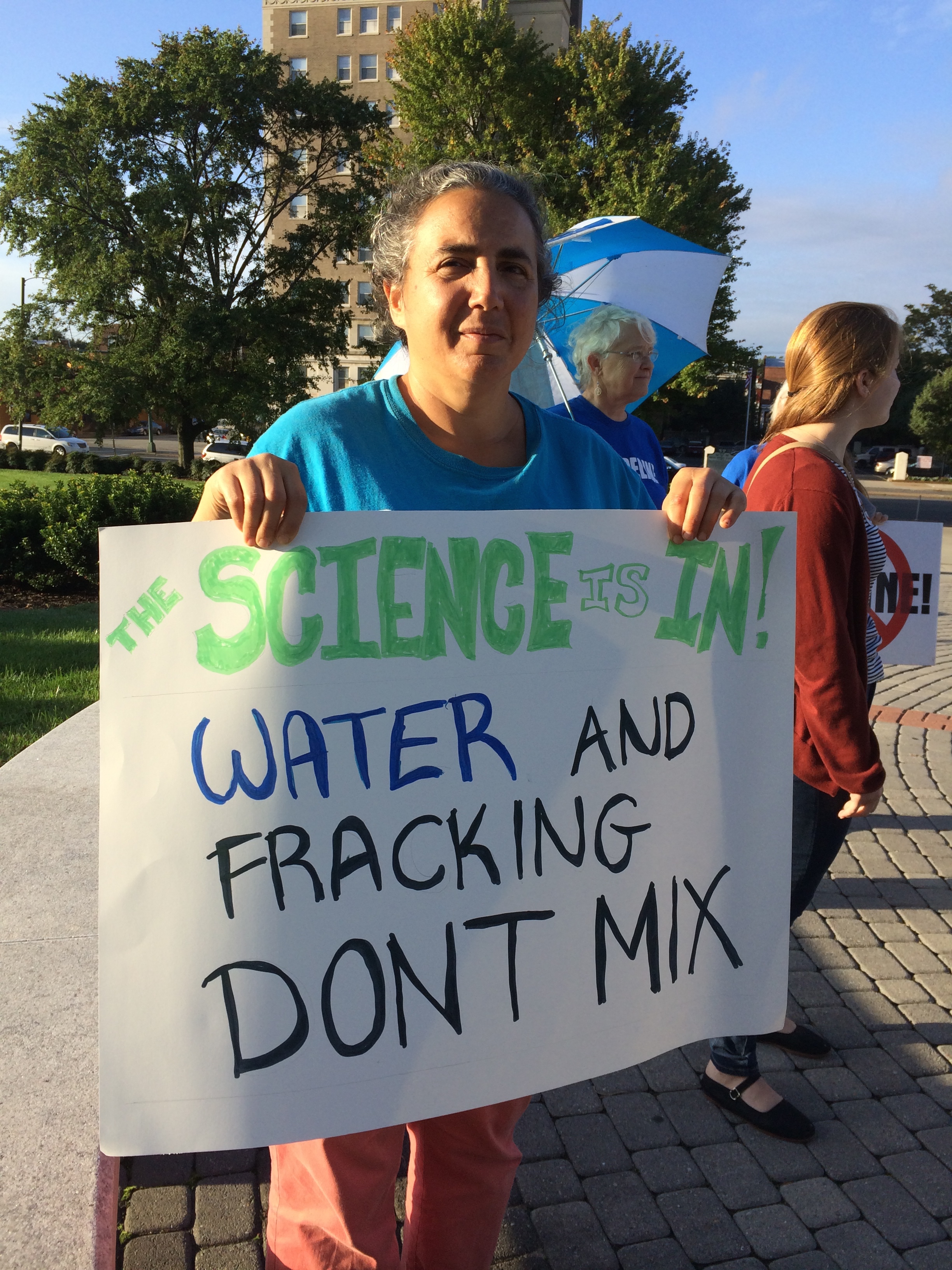
Photo credit: Corrina Beall

Photo credit: Corrina Beall

On August 3 the EPA released the final version of its Clean Power Plan, the Obama Administration’s effort to lower carbon pollution from existing power plants. It’s a big, complex rule—in large measure because it gives states so many options for compliance—but a few things are immediately clear. One, it’s just as well I never got around to reading the fine print of the proposed plan, because the final rule is practically a do-over. Two, this do-over goes so easy on Virginia that the Republican hissy fit about the proposed rule was (and is) a total waste of time. And three, Dominion Virginia Power’s little “rate freeze” gamble, rushed through the General Assembly this year, is set to pay off big for the company.

The proposed rule was never as tough for Virginia to meet as opponents asserted. Their claims of billions of dollars in added costs had little basis in fact—indeed, a recent University of Virginia analysis found numerous errors in the Virginia Tech cost study that many detractors relied on. But the proposed rule had enough of a bite that it would have been a major driver of new policies and investments. By contrast, the final rule is so soft on Virginia that it will likely take a back seat to customer demand and market forces in shaping our energy future.

This is welcome news to some, like Governor Terry McAuliffe, who pushed EPA to go easier on Virginia and is trumpeting the results as a good outcome. It’s a disappointment, though, to those who are worried about climate change and who believe Virginia is well positioned to make much steeper cuts in carbon pollution than the new rule requires.

Look at EPA’s table below and you will see how easy our path is. The Clean Power Plan allows states to choose whether to measure carbon emissions by rate or by mass. Using rate, EPA’s analysis of the business-as-usual case projects Virginia would arrive at an emissions rate of 959 pounds of carbon dioxide (CO2) per megawatt-hour by 2020 without the Clean Power Plan. With the Plan in place, that number will have to drop to 934. That’s a difference of only 3%, an easy target to meet just by adding enough emissions-free wind and solar to the existing fuel mix.
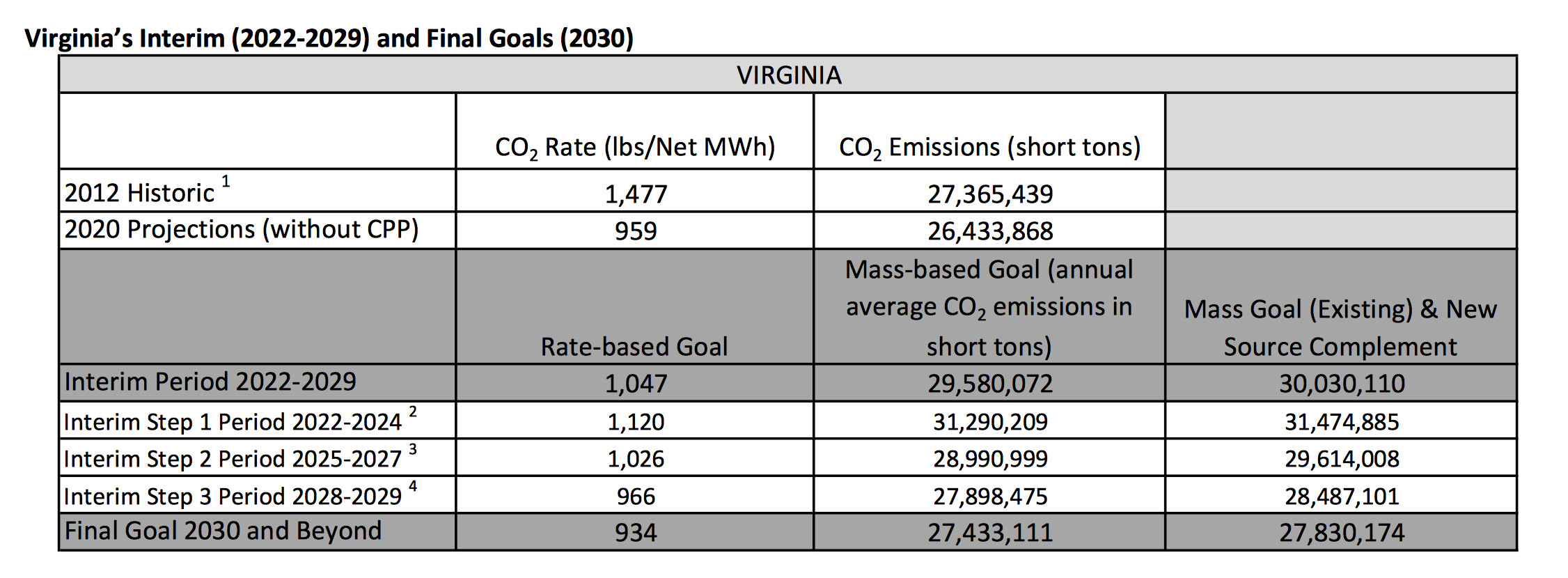
VA goals under CPP

Alternatively, the state can choose to measure CO2 emissions by mass (total short tons of CO2 emitted). Using that approach, EPA says all Virginia has to do is ensure CO2 emissions are no higher in 2030 than they were in 2012. Indeed, the 2030 goal is higher than what EPA expects Virginia to accomplish under business as usual without the plan!

In other words, we can achieve our assigned goals just by using energy a bit more efficiently and meeting any increase in electric demand with renewable energy. Lucky for us, this happens to be exactly what customers are asking for—especially the companies that are driving the growth in demand, including data centers and hi-tech companies. Companies like Apple, Google and Amazon are committed to running on wind and solar.

And given that leaders from both parties in Virginia support energy efficiency and want to see our utilities add wind and solar to their portfolios, compliance with the Clean Power Plan is a no-brainer. Heck, if the utilities aren’t interested in deploying renewables, the private sector will be glad to do it. The legislature could just loosen up the utilities’ monopoly protections, open up the solar and wind sectors to fair competition, and let private renewable companies and big utilities have at it in an open market.

But wait, there’s more: remember all the bellyaching from legislators about how West Virginia and Kentucky had it so much easier than we did under the proposed rule? No longer.* Not only does the final rule make it harder for them than for us, but it also proposes a system for buying and selling clean energy credits known as Emission Rate Credits, opening the possibility of a tidy little profit opportunity. If Virginia ramps up renewable energy production beyond what we need for compliance, as we can easily do, there might be some eager buyers just over the border.

Of course, anyone truly concerned about climate change has to hope our neighbors will proudly surpass their carbon reduction goals and even set tougher ones for themselves. Even if they don’t, we hope Virginia will set aggressive climate goals for itself, foregoing the opportunity to profit from selling credits. But it’s nice to know that if we don’t achieve these heights of virtue, there is money to be made.

For the moment, Virginia Republicans are still bashing the EPA as though the Clean Power Plan were anything but an opportunity. One has to wonder whether they’ve even read the new, final plan. In an op-ed published August 8, Delegates Israel O’Quinn and Scott Taylor claim the Clean Power Plan will have “severe” effects on Virginia’s economy, citing the highly questionable claims of conservative State Corporation Commission staff, made months ago about the proposed plan.

No doubt the delegates wrote their piece before the final rule came out, and didn’t want to consign it to the dustbin just because the rule turned out to be a creampuff. That must also be why Virginia Republican leaders joined the Koch-funded Americans for Prosperity at a rally at the University of Richmond on Monday evening to lambaste the EPA. There, they launched a bill that would require General Assembly approval of any state implementation plan (an approval which, they assure us, will not be forthcoming). Republicans don’t intend to give up their talking points just because it turns out their hysteria was misplaced. Anti-regulatory zealotry is impervious to reality.

They’re not the only ones who don’t want to admit the final rule will be cheap to meet, and could even save customers money. Dominion lobbyists spent the whole of the 2015 legislative session ginning up fears that the Clean Power Plan would cause skyrocketing electricity bills unless legislators passed a law (SB 1349) freezing rates and limiting regulatory review. The lobbyists’ pitch was that the legislation would keep Dominion from passing along compliance costs to ratepayers. The immediate effect, however, was to protect the utility’s excess earnings, avoiding rebates and rate reductions for customers.

The upshot is that for the second year in a row, and for several years to come, the General Assembly will allow Dominion to overcharge consumers. Recall that in 2014, the utility won the ability to charge ratepayers for 70% of the hundreds of millions of dollars it had spent so far on a new nuclear plant that may never get approval (especially now that we’ve seen the price tag). The maneuver soaked up enough of the company’s excess earnings to avoid a refund.

A consultant for the Attorney General’s Office of Consumer Counsel has analyzed the effects of the 2014 and 2015 bills and concluded that last year’s nuclear boondoggle cost ratepayers $188.4 million that would otherwise have been refunded, while the 2015 bill allows Dominion to avoid reducing rates as it would otherwise be required to do. (See SCC Case PUE2015-00027 OAG Smith Testimony, available through the State Corporation Commission website.)

As a result, concludes the analyst, Dominion will rack up excess earnings. “Looking forward, projected revenues for the 2016 rate year will exceed the Company’s cost, including a fair rate of return, by approximately $229.4 million.” But, he adds, “because of Virginia law, the Company’s base rates cannot be adjusted downwards prospectively in the current case.” That’s just 2016. SB 1349 shields Dominion’s earnings from review through the end of the decade and prevents rate adjustments until 2022.

During the fight over SB 1349, a lot of people voiced skepticism that the Clean Power Plan would cause utility bills to rise by very much, if at all. But no one expected Dominion’s tactic to pay off so quickly. With compliance so easily attainable, Dominion’s excuse for SB 1349 has crumbled, but the payoff is just beginning.**


*There is a delicious irony here. Under pressure to produce a rule that will withstand legal attacks from coal states, EPA changed the approach to be more even-handed and thus more defensible—but with the result that it is now much harder for coal states to comply.

**Dominion’s maneuvers may be bad for customers, but they have been very good for shareholders. Dominion Resources just reported second-quarter earnings of $413 million, more than twice as much as the same period last year. SB 1349’s patron, Senator Frank Wagner, did pretty well, too. Since January of this year, Wagner has collected $6,000 in campaign contributions from Dominion and another $23,000 in contributions from several of its top executives—including CEO Tom Farrell, who can easily afford it out of his $17.3 million compensation.
Unknown's avatar

Dominion admits cost of North Anna 3 will top $19 billion

photo by Peter Burke/Wikimedia

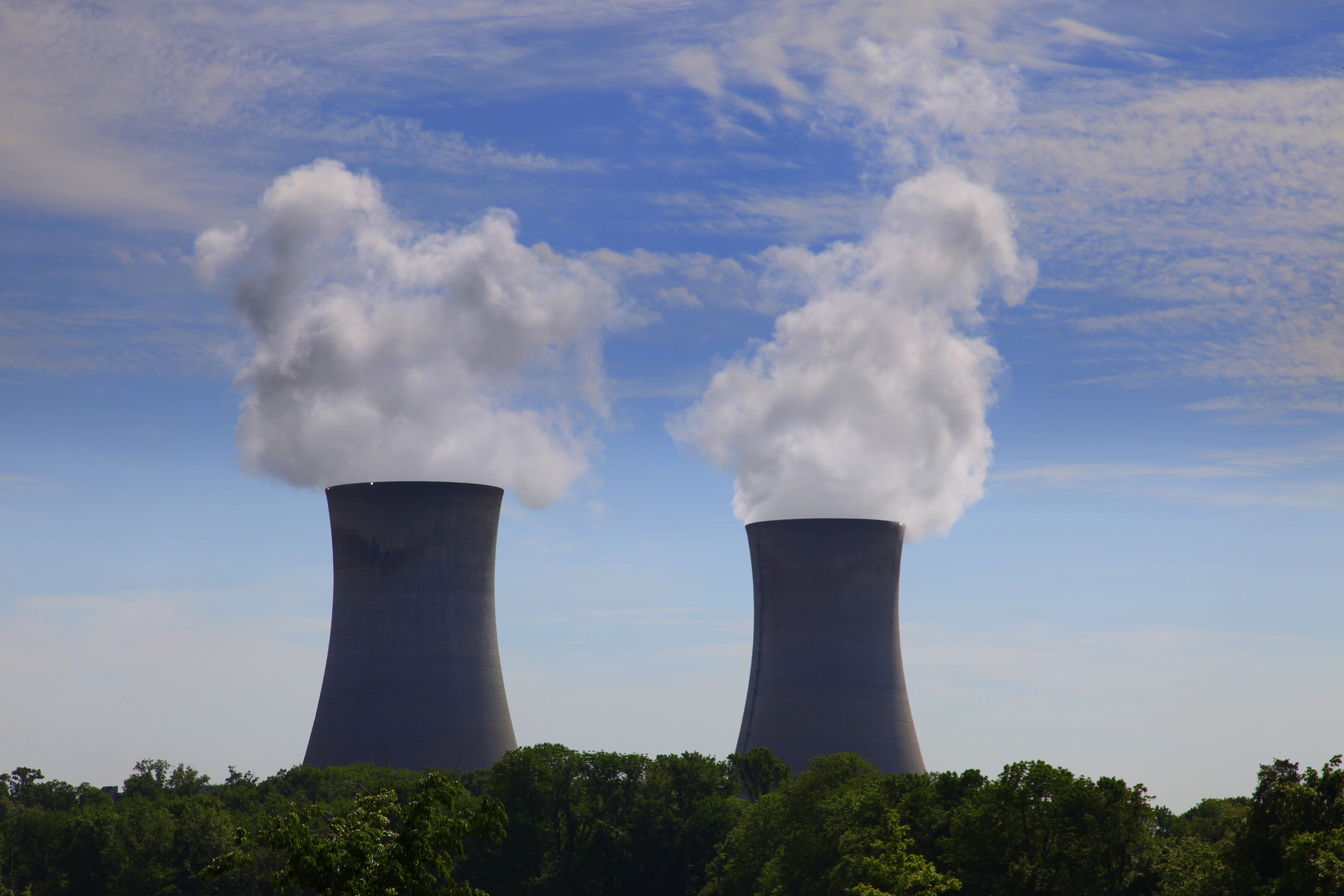
A nuclear plant in Pennsylvania. Photo by Peter Burke/Wikimedia

Dominion Virginia Power is projecting that the capital cost of a third nuclear reactor at its North Anna facility will total over $19 billion, according to filings in its 2015 biennial review before the State Corporation Commission (PUE-2015-00027).

This works out to over $13,000 per installed kilowatt, according to the testimony of Scott Norwood, an energy consultant hired by the Attorney General’s Department of Consumer Counsel to analyze Dominion’s earnings evaluations. He notes that this capital cost is “approximately ten times the capital cost of the Company’s new Brunswick combined cycle unit,” which will burn natural gas.

As a result of this high capital cost, the “total delivered cost of power from NA3 is more than $190 per MWh in 2028.” That translates into 19 cents per kilowatt-hour.

By comparison, in 2014 the average wholesale price of electricity in the PJM region (which includes Virginia) was 5.3 cents per kWh. Dominion currently sells electricity to its customers at retail for between 5.5 and 11 cents/kWh.

In other words, NA3 is ridiculously expensive.

Dominion had kept its cost projections for NA3 secret until this rate case forced the disclosure. Previously, executives had acknowledged only that the cost would be “far north of 10 billion.”

This cost revelation may point to the real reason Dominion pushed so hard for SB 1349, the 2015 legislation that insulates the company from rate reviews until 2022.

As Norwood testifies, “DVP forecasts a dramatic increase in NA3 development costs over the next five years, during which there will be no biennial reviews.”

These costs are dramatic. A table included in Norwood’s testimony shows Dominion expects to have spent $4.7 billion on NA3 development by the end of 2020. By the time the SCC is allowed to review this spending, more than one-quarter of the total cost will have been spent, and Dominion will be looking to ratepayers to cover the bills.

With perfect deadpan, meanwhile, Dominion executives told legislators this year that SB 1349 was necessary to protect ratepayers from higher costs to be imposed by compliance with the Environmental Protection Agency’s Clean Power Plan.

This isn’t the first time legislators have been snookered in the cause of NA3. Recall that in 2014 Dominion succeeded in lobbying for a law that allowed it to shift 70% of already-spent NA3 development costs onto ratepayers, some $323 million. The effect was to soak up the company’s over-earnings so it would not have to rebate millions of dollars to customers.

This year’s snookering was more comprehensive. Given that Dominion has continued to over-earn, those who opposed SB 1349 assumed it was this year’s version of the 2014 maneuver, designed to protect over-earnings this year and for years to come. Now it appears the real purpose of SB 1349 was to allow Dominion to spend freely on NA3 development costs in amounts that it knew would be unacceptable to state regulators, not to mention the public.

That Dominion thought it could do so in secret is especially reprehensible. Lawmakers and the Governor should be outraged by this deception, whether they voted for SB 1349 or not.

The Attorney General’s office is now trying to force Dominion to justify NA3 to regulators before it racks up billions in sunk costs. Norwood recommends that the SCC “initiate a proceeding to address the prudence of DVP’s planned future investments for development of NA3. This proceeding would allow the Company to present its case regarding the need for and cost effectiveness of NA3, including the value of the proposed project from a fuel diversity perspective and as a means to comply with any final version of the Environmental Protection Agency’s proposed Clean Power Plan and other potential future environmental regulations.”

Unknown's avatar

Are small changes eating away at net metering?

A new law expanding opportunities for commercial solar and wind has unexpected consequences for homeowners. Advocates worry it's one more attack on net metering in Virginia.

A new law expanding opportunities for commercial solar and wind has unexpected consequences for homeowners. Advocates worry it’s one more attack on net metering in Virginia.

Many owners of solar homes were surprised this spring to get letters in the mail from their utilities, informing them of pending changes in Virginia’s net metering rules. Virginia’s State Corporation Commission will be writing regulations to implement a law passed this year that was applauded for increasing the commercial net metering cap to 1 megawatt, from 500 kilowatts. (The SCC case is PUE-2015-00057.)

Unbeknownst to anyone not working on the bill, a late addition to the text restricts the capacity of net-metered projects to just what is needed to meet the customer’s “expected annual energy consumption based on the previous twelve months of billing history or an annualized calculation of billing history if twelve months of billing history is not available.” And while the bill is otherwise directed at commercial installations, the added language contains no such limitation—hence the unexpected letters to homeowners.

Although customers with existing systems aren’t affected by the changes, the letters have prompted concern among consumers and renewable energy advocates, especially those who are working on the various “solarize” programs around the state that use bulk purchasing to bring down costs and draw in new customers.

According to many installers, limiting a solar array to the size that just meets a customer’s electricity needs won’t matter to most homeowners, because their roofs generally won’t accommodate more solar panels than that anyway. In addition, over-producing isn’t financially rational because the utility doesn’t have to pay you the full retail value of any extra electricity you produce.

But a problem arises when it comes to new construction, or when solar is added as part of an addition or renovation that will increase electricity demand, making past use an inaccurate predictor of future demand. The same problem would arise if a homeowner decided to buy an electric car and wanted to power it with solar. The law makes no provision for these situations, so the State Corporation Commission will either have to decide how these should be handled, or leave it to the utilities.

Leaving it to the utilities seems like a bad idea to people who have witnessed the tendency of Dominion Virginia Power and Appalachian Power to interpret ambiguity in ways that further constrain the solar market. Environmental groups and MDV-SEIA, the solar industry trade association, are filing comments urging the SCC to include language in the implementing regulations to ensure that customers have the right to install a solar array big enough to cover their needs when past use alone isn’t an adequate measure.

But let’s take a step back to look at the broader policy implications of the legislation. This effort to control the size of net-metered facilities is not just a pain in the neck for potential new customers, but it also runs counter to Virginia’s stated goal of increasing the share of electricity from renewable energy. If customers aren’t going to be paid more than a few cents per kilowatt-hour for their excess electricity anyway, surely it would be in everyone’s interest to let them build surplus solar to their hearts’ content (assuming their infusions of electricity don’t create grid issues, a problem that is best addressed directly). The same holds true whether we are talking about residential or commercial, solar or wind. People who are willing to take on the cost of building clean, renewable energy should be encouraged to do so, period.

In addition to restricting the size of solar installations, the new law makes other changes. Customers now must notify their utility 30 days prior to installation of the solar facility, rather than 30 days prior to interconnection, a change some installers say may benefit customers by alerting them to problems before an installation goes forward. Additionally, the utility must approve the facility before installation; however, language in the existing law provides only a few narrow grounds for withholding approval.

Finally, the new law authorizes utilities to charge customers “all reasonable costs of equipment required for the interconnection to the supplier’s electric distribution system, including costs, if any, to (a) install additional controls, (b) perform or pay for additional tests, and (c) purchase additional liability insurance.” It also states that the reason for this is “to ensure public safety, power quality, and reliability of the supplier’s electric distribution system.” The existing law had required customers to “bear the reasonable cost, if any, as determined by the Commission, to (a) install additional controls, (b) perform or pay for additional tests, (c) purchase additional liability insurance.”

A lot of people have asked how this bill passed without any public discussion of the restrictive language and its effect on homeowners. A fair question, and one I asked, too, because when it was introduced back in January, the legislation merely provided for an increase in the commercial net metering limit. However, a look at the bill history shows that, as often happens, the added language first appeared in a committee substitute distributed to legislators at the same meeting where it was to be voted on.

It wasn’t a nefarious deal; an environmental lobbyist helped negotiate the bill, and the solar industry signed off on the changes, all under pressure to get a deal done that would improve the prospects for solar in the state. But they were also distracted. The first week of February is crunch time at the General Assembly, with dozens of other important bills in play simultaneously, many of them going through rapid-fire changes likely to either help or hurt (mostly hurt) Virginia’s energy future and its environment.

The General Assembly cannot be called a deliberative body. With thousands of bills to deal with in a 45-day session, only a few people know what is going on, and those are usually the paid lobbyists. In this contest, the person with the most paid lobbyists wins. And no one has more paid lobbyists than Dominion Power. So when pro-renewable energy bills get amended, the results favor the utility.

Progress on renewable energy in Virginia tends to run more sideways than forward, and this is no exception. Over the long run, though, the utilities face a losing battle to control and minimize their customers’ access to solar. In the next few years, battery technology will upend the top-down structure of the utility markets, and utilities will plead for access to their customers’ batteries to help meet the need for peak power and grid services.

Until then, we renewable energy advocates, customers and industry members have to keep on educating legislators about what good policy looks like. Wind and solar afford us huge opportunities in decarbonizing the electric grid, reducing pollution, and increasing business opportunities in the nation’s fastest-growing energy sector. If we open up the market instead of constraining it, everyone will benefit.

Unknown's avatar

Apex moves forward with Rocky Forge wind farm as the Clean Power Plan makes Virginia utilities look harder at renewables

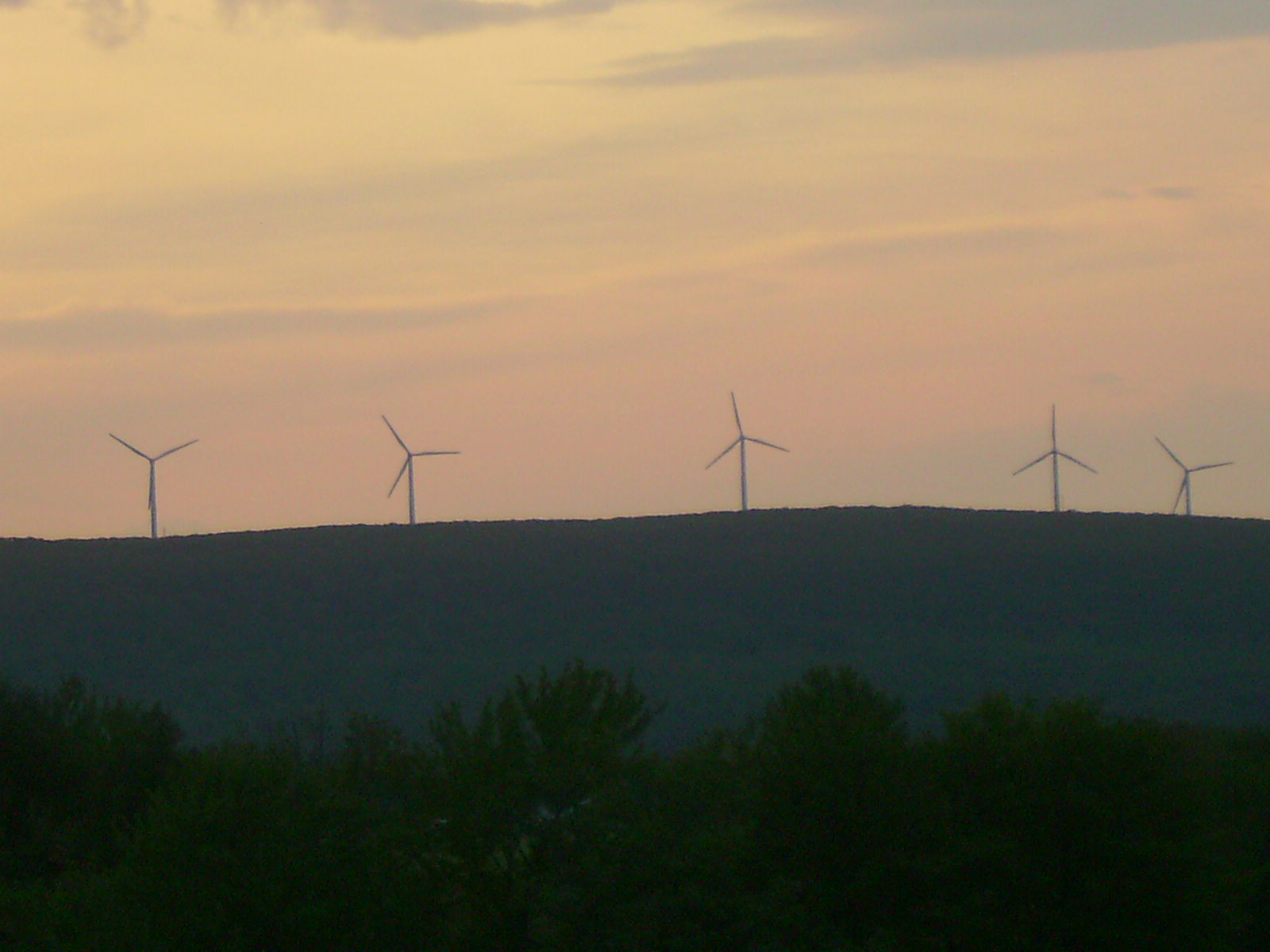
Wind turbines in the Poconos, Pennsylvania. Photo credit Mitchazenia/Wikimedia Commons.

Wind turbines in the Poconos, Pennsylvania. Photo credit Mitchazenia/Wikimedia Commons.

It had begun to look like no one would ever build a wind farm on land in Virginia. Appalachian Power Company (APCo) hasn’t shown interest since the State Corporation Commission bounced its proposal for West Virginia wind farms several years ago. Just this past November, Dominion Resources let it be known the company saw no future in land-based wind. One after the other, wind development companies put their Virginia plans on hold, citing permitting issues, anti-wind local ordinances, and—especially—a challenging policy environment.

But interest in Virginia wind never went away, and now Charlottesville-based Apex Clean Energy is pushing ahead with plans for up to 25 turbines on a tract of private land in Botetourt County, 30 miles north of Roanoke. Although development is still in the early stages, the company expects construction to take place in 2017, with electricity flowing that same year.

Apex has years of experience developing wind farms across the country, but this would be its first venture in its home state. The timing seems good; the EPA Clean Power Plan will make renewable energy more valuable to utilities and state officials, and wind energy costs have grown more competitive every year. And while previous wind farm proposals in Virginia have run into opposition from landowners and others, Botetourt County officials unanimously passed a wind ordinance that will allow the project to move forward, with public backing that included an endorsement from the Roanoke Group of the Sierra Club.

Yet anyone who has followed the fates of previous wind farm proposals has to wonder whether Apex can succeed where others have failed. With that in mind, I talked with Apex’s Tyson Utt, Director of Development for the Mid-Atlantic, to gage just how likely we are to see turbines up and running two years from now.

Utt explained that the project is still in the design phase, so a lot of the pieces still have to fall into place. Studies are ongoing to determine the optimal size, type and number of turbines. The project could be as large as 80 megawatts (MW), enough to power up to 20,000 homes, and would represent an investment of up to $150 million. A transmission line crosses the site, and Apex is working with Dominion to ensure grid access.

Apex has not lined up a buyer for the electricity at this stage. Utt said options would include a power purchase agreement (PPA) or sale of the completed project to a utility such as Dominion or APCo. Other possibilities include striking a deal with a corporation that wants to buy wind energy, as Apex has done with Ikea in Illinois and Texas.

Recent events suggest the utilities could be persuaded to take a close look. APCo’s 2015 Integrated Resource Plan (IRP) lists wind energy as a low-cost option for complying with the Clean Power Plan. And Dominion, in spite of all-but-dismissing wind in its own IRP, is still pushing aggressively for the right to put turbines on land it owns in Tazewell County.

Apex is not alone in thinking this year could be a turning point for wind energy in our region. Just over the border in eastern North Carolina, the Spanish wind company Iberdrola will hold a groundbreaking ceremony this week on a $600 million, 102-turbine wind farm near Elizabeth City. That project has been in the works since 2011 and was once thought dead after utilities including Dominion and Duke Energy turned down opportunities to buy the power. There has been no word yet on who will buy the power from Iberdrola.*

Making the money work

The wind industry has been buffeted by the stop-start history of the federal Production Tax Credit (PTC). With the credit, the industry boomed. With each expiration, it tanked. Today most observers doubt it will be reauthorized. This isn’t fatal in parts of the country where flat land means low development costs. Wind remains the least-cost energy option in many states. But building wind farms in mountainous areas of the east is a more expensive proposition. (Consider the logistics of hauling hundred-foot-long turbine blades up winding mountain roads.)

So almost my first question to Utt was how he thought Rocky Forge could produce power at a competitive price. Utt acknowledged the challenge posed by the loss of the PTC but insisted that even in Virginia, wind power can be competitive so long as there is some mechanism that levels the playing field with fossil fuels. If it’s not the PTC, he said, perhaps it will be Master Limited Partnerships, which currently offer tax advantages for development of oil and gas but not for wind and solar. Sales of Renewable Energy Certificates will also help bridge the money gap.

With Rocky Forge still in the early stages, and no nearby projects of its own to compare it to, Apex doesn’t yet know where the cost per kilowatt-hour will fall. But bottom line, said Utt, “We think we can be competitive with gas plants.”

These days, of course, solar energy dominates the news, with solar prices tumbling at a breathtaking rate. (Just this month we learned that First Solar Inc. has contracted to sell solar electricity to Nevada Power for 3.87 cents per kilowatt-hour, a new low price record for solar.)

Apex develops solar projects, too, said Utt. But wind and solar “are different,” and both will have roles to play under the Clean Power Plan, which he described as “a game-changer.”

“Millions of dollars in local economic benefit”

Clean energy is popular, but local economic benefits often carry more weight with county officials. Utt said the project will provide “millions of dollars in local economic benefit through tax revenues and local spending on goods and services over the 30 year life of the project.” It will also “create up to 100 full-time equivalent construction jobs and 5 to 10 long-term local operations jobs.”

It surely helps that Apex is itself based in Charlottesville, making it a known quantity. Utt said Apex “has a track record of hiring wind turbine technicians from local wind technician programs similar to the program at nearby Dabney Lancaster. At Dabney Lancaster, several local residents have completed the wind technician program,” but they have to seek jobs in other states.  “We would like to see those jobs stay in Virginia.”

For Utt, the jobs question is personal. “I was born and raised in Virginia and wanted to get into wind, and I had to leave the state,” he told me. “I spend most of my time driving to Maryland or North Carolina. We are a Virginia-based company and want to get this industry going here. We have a hundred-some people in Charlottesville, most of them working on projects in other states. We want this to set a precedent for other projects in the state.”

Birds, bats and neighbors

Public acceptance of wind energy can’t be taken for granted in Virginia, but the Rocky Forge site may be as good as it gets here. Much of the area where the turbines will go has been previously cleared, and the land is privately owned. The nearest home is a mile and a half away, and a high-voltage transmission line already crosses the property. No bald eagle nests have been found within a four-mile buffer area, and Utt said the company has had biologists on site every two weeks to study wildlife issues.

Nonetheless, a handful of opponents showed up at the county supervisors’ meeting, with one speaker reportedly comparing Apex building a wind farm to ISIS taking over the Middle East. (A certain level of anti-wind hysteria seems to be endemic to Roanoke. Just a few years ago the Roanoke Tea Party web site warned that renewable energy was part of a United Nations plot to make us all live sustainably, as un-American a concept as could be imagined.)

More seriously, opponents cite concerns about birds and bats. Studies have shown that wind turbines are a relatively minor cause of bird deaths compared to the other ways we humans kill birds (windows, wires, vehicles, pesticides and letting Kitty out the door), but bat mortality is a real concern in the Appalachian Mountains. Utt said he felt the wind industry has learned a great deal about building turbines in bat areas in recent years. Apex will include mitigation measures in its operating plan, such as shutting down the turbines at low wind speeds and during key migration times.

Apex’s proactive approach to wildlife issues, and its early engagement with local residents going back many months, helped it win over local officials and environmental activists. Dan Crawford, the chair of the Roanoke Group of the Sierra Club, invited Apex employees to give a presentation about the project in early May, and the group ended up endorsing the proposal.

The Sierra Club had supported a previous effort to build a wind farm on Poor Mountain, which stalled in 2012 when developer Invenergy gave up on Virginia. The Sierra Club supports appropriately-sited wind farms as part of America’s transition from fossil fuels to clean energy. Crawford says he is hopeful now that the Apex project will move forward.

“Like a dance floor, someone has to be first. Rocky Forge will open the door for future wind power development in Virginia and the Allegheny Mountains of the Southeast.”


*Update: Later on July 13, the buyer was revealed to be Amazon Web Services. Anybody notice a trend?

Unknown's avatar

APCo tries to quell criticism on solar policies, and just makes matters worse

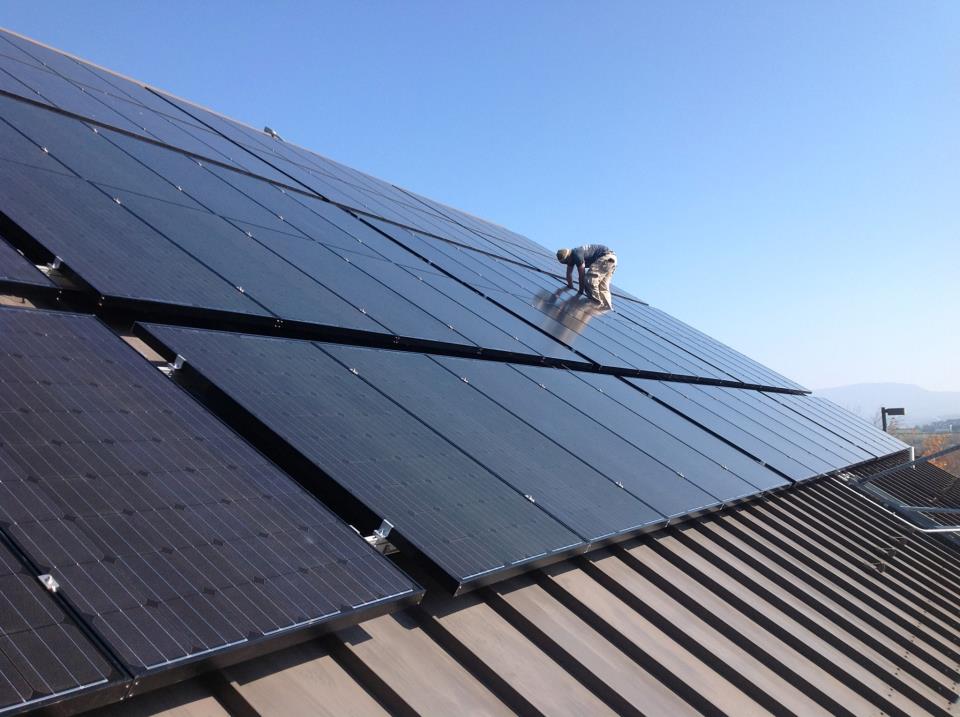
Photo credit Matt Ruscio, Secure Futures LLC

Photo credit Matt Ruscio, Secure Futures LLC

Appalachian Power Company (APCo) has spent the past two years ducking its Virginia customers who want the ability to buy solar power from third-party providers. This spring it finally unveiled what it claims will be the answer to their prayers: a bizarre, convoluted “Experimental Rider R.G.P.,” available only to certain larger customers like colleges and universities.

Under this proposal, a customer can arrange to have solar panels installed and owned by a third party developer but won’t be allowed to use the electricity or take advantage of net metering, as it would if it owned the system itself. The customer will have to continue buying dirty electricity from APCo, while the solar electricity the customer is also paying for is sold onto the grid, and the customer credited for its value according to a complicated and unfriendly formula. Instead of breaking even or saving money on electricity bills by going solar, the customer will pay substantially more.

By contrast, normally a customer who installs solar uses the solar electricity “behind the meter,” reducing the use of dirty electricity from the grid and saving money, especially if it had been paying high demand charges to its utility, as many institutions do.*

The limitations and poor economics of APCo’s proposal has would-be customers and solar advocates crying foul. According to an analysis by Professor Mark “Buzz” Belleville of the Appalachian School of Law in Grundy, VA, the program is so expensive that it’s not likely to get any takers. Worse, he concludes, “The [State Corporation Commission’s] approval of the proposal would actually be counterproductive to solar deployment in Virginia.”

That’s because “APCo will be able to claim that they made a [Power Purchase Agreement] program available, and the fact no one signed up shows that there is simply not a demand for PPAs in SW Virginia. Moreover, the SCC’s approval may strengthen APCo’s argument that PPAs are not legally permissible in APCo territory unless they are entered into pursuant to its SCC-approved program, and it will lay the groundwork for utilities to argue that a customer who has a PPA is not eligible for net metering under Va. Code §56-594.”

Understanding what’s at stake here requires a short history lesson. Back in 2011, a solar developer out of Staunton, Virginia, called Secure Futures LLC installed a solar array on a rooftop at Washington & Lee University. The parties used a popular financing approach known as a third-party power purchase agreement (PPA), which can let a customer go solar with no money down by having the developer keep ownership of the solar panels and sell the electricity they produce to the customer.

Federal tax rules make PPAs especially important for tax-exempt entities like colleges that can’t use the 30% federal tax credit for renewable energy facilities. When a for-profit solar developer owns a facility, however, it can take the tax credit and pass on the savings to the customer.

PPAs appeared to be explicitly authorized under Virginia law, but when Dominion Virginia Power got wind of the arrangement at Washington & Lee it moved quickly to block it, claiming a violation of its monopoly on the sale of electricity within its territory. Dominion’s weak legal position didn’t matter; the mere threat that the utility giant would unleash its army of lawyers was enough to stop the PPA in its tracks. The university completed its solar installation using an alternative, non-PPA approach.

Dominion had won the skirmish, but at a price. The utility took such a drubbing in the court of public opinion that it eventually acceded to legislation in 2013 establishing a limited “pilot program” under which not-for-profit entities and some commercial businesses can use PPAs, at least through the end of 2015. Secure Futures has gone on to develop additional solar projects in Virginia under the legislation, including at the University of Richmond and, under a just-announced deal, at six Albermarle County schools.

APCo, however, didn’t participate in the pilot program, and it has steadfastly resisted efforts to bring it into the fold, even in the face of mounting criticism. As Belleville pointed out in a Roanoke Times op-ed in March of 2014, the failure to extend the PPA law to residents of APCo territory put southwest Virginia at an economic disadvantage, closing it off to business opportunities that are available elsewhere in the state. Yet utility lobbying successfully defeated legislation this year that would have made PPAs explicitly legal statewide.

So southwest Virginia’s state of limbo persists, with many legal experts advising that PPAs are legal there under Virginia law, but most developers and customers unwilling to expose themselves to prolonged and expensive litigation to find out for sure. This state of affairs suits APCo very well. No doubt it calculates that the worst that can happen now is that the SCC rejects its rider and prolongs the state of limbo. Then the utility’s lobbyists will tell legislators it did its best to help customers but was prevented from doing so by that darned SCC.

APCo’s actions are those of a rational monopolist facing the threat of competition; it is easier to keep a competitor out of your market than it is to improve your product. But its efforts to throw roadblocks in the way of solar also reflect the suspicion, shared by many American utilities, that distributed solar generation benefits only the customer who installs it, at the expense of the utility and other customers. They believe this justifies them in making solar more expensive, even if it means preventing projects from being developed altogether.

This is a textbook example of cutting off your nose to spite your face, given the need for a rapid build-out of distributed solar generation to fight climate change and strengthen grid security. These are not considerations that hold much sway with Virginia’s SCC, however, so let’s confine ourselves to the cost argument.

The problem for APCo is that the notion that distributed solar increases costs for other ratepayers is mere conjecture, and neither APCo nor Dominion has offered any hard data to support it. Indeed, the only evidence from Virginia points the other way, according to Secure Futures CEO Tony Smith.

Since his company’s skirmish with Dominion, Smith has worked with a municipal utility, Harrisonburg Electric Commission (HEC), to study the financial impacts to the utility of Secure Futures’ first Virginia PPA project, a 104-kilowatt array installed in 2010 at Eastern Mennonite University in Harrisonburg (outside of Dominion territory).

The case study measured only the energy and capacity-related impacts of the solar array on the utility, ignoring the wide range of other benefits often considered in “value of solar” analyses. Analyzing three years’ worth of data, Smith found that the EMU array provided an average net benefit to the utility of $22.78 per kilowatt per year. The full technical analysis is available here. In an article soon to be published in the May/June issue of Solar Today, Smith writes:

Using a net benefit model developed in consultation with HEC management, we find that in the case of the EMU solar installation, the benefits to HEC outweigh the costs . . . Our net benefit results suggest that within HEC territory, solar installed for a commercial customer with demand exceeding 1,000 kW benefits all municipal utility stakeholders, including non-participants.

Certainly it would be interesting to repeat the analysis with data from more Virginia projects, including ones in APCo’s territory. But first, those projects have to get built. Right now that isn’t happening due to the PPA limbo. If APCo’s Experimental Rider gets approved—well, the projects still won’t get built, because no one will sign up.

Flip a coin: heads APCo wins, tails customers lose.

The SCC case is No. PUE-2015-00040. An evidentiary hearing is scheduled for September 29 at the SCC offices in Richmond, Virginia.

___________________________________

*Residential customers don’t pay demand charges, making this an unfamiliar concept to many people. Demand charges (KW) are fees over and above the cost of energy usage (kWh) that are assessed according to a customer’s peak power requirements, measured as the highest peak demand in a given 30-minute period during the month. For many institutions, demand charges can exceed the cost of energy usage, and using solar electricity to reduce peak demand is often a compelling reason to look at solar in the first place.

Unknown's avatar

Dominion makes a play for utility-scale solar, but Amazon steals the show

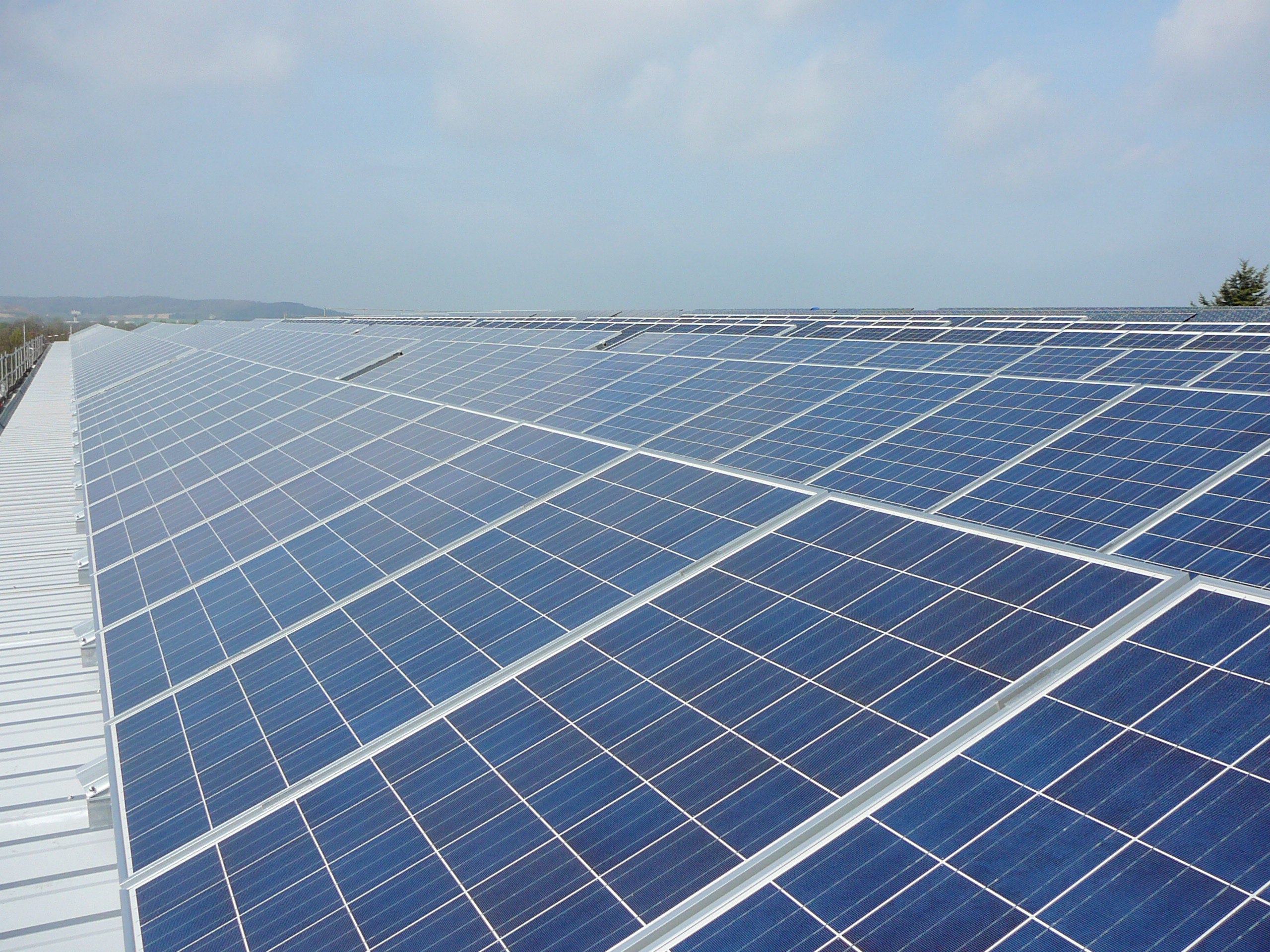
As_solar_firmengebaude.Christoffer.ReimerThis winter Dominion Virginia Power promised Governor Terry McAuliffe it would build 400-500 megawatts (MW) of utility-scale solar power in Virginia by 2020, part of the deal it cut to gain the governor’s support for a bill shielding it from rate reviews through the end of the decade. The company also took a welcome first step by announcing a proposed 20-MW solar farm near Remington, Virginia.

The applause had hardly died down, though, when Amazon Web Services announced it would be building a solar project in Accomack County, Virginia, that will be four times the size of Dominion’s, at a per-megawatt cost that’s 25% less.

Why such a big difference in cost? The way Dominion chose to structure the Remington project, building and owning it directly, makes it cost more than it would if a third party developed the project, as will be he case for the Accomack project. That means Dominion is leaving money on the table—ratepayers’ money.

There is nothing wrong with the Remington project otherwise. The site seems to be good, local leaders are happy, and solar as a technology has now reached the point where it makes sense both economically and as a complement to Dominion’s other generation. But by insisting on building the project itself, and incurring unnecessary costs, Dominion risks having the State Corporation Commission (SCC) reject what would otherwise be a great first step into solar.

And that’s a crying shame, because solar really is a great deal for consumers these days. Utilities now regularly sign contracts to buy solar for between 4.5 and 7.5 cents per kilowatt-hour. Compare that to the 9.3 cents/kWh cost of electricity produced by Dominion’s newest coal plant in Virginia City, and it’s no wonder that solar is the fastest growing energy source in the country.

Utilities get those rates by buying solar energy from solar developers, not by playing developer themselves. From the ratepayer’s point of view, developers have three advantages over utilities: they are experts at what they’re doing, they work on slimmer profit margins, and they get better tax treatment. Dominion loses all three advantages if it builds the Remington solar farm itself.

Dominion has already demonstrated its lack of solar knowhow. In a May 7, 2015 filing with the SCC (case PUE-2011-0017), it admitted its “Solar Partnership Program,” which puts solar on commercial rooftops, is a year behind schedule and will total less than 20 MW of the 30 MW legislators wanted. Previously the company had told stakeholders it would likely hit its $80 million budget limit with only 13-14 MW installed.

As for profit margins, Dominion gets a guaranteed 10% return on its investments. This explains its desire to build solar itself, but it’s hard to justify charging ratepayers a 10% premium when there are cheaper alternatives courtesy of the free market. Unlike Dominion, solar developers have to compete against each other, so they accept much slimmer profit margins.

And then there are the tax implications. A third-party developer can claim the federal 30% tax credit immediately, and can take accelerated depreciation on the cost of the facility over five years. A utility has to take both the tax credit and the depreciation over the expected life of the facility, 20 years or more.

These three factors—knowhow, free-market cost competition, and tax implications—add up to huge savings for consumers when a project is put out to bid by third-party developers.

Just how big the savings could be is clear from a comparison of Dominion’s solar farm with Amazon’s project, to be built by a third-party developer. Dominion says Remington will cost $47 million for 20 MW, or $2.35 million/MW. Amazon’s project is reported to cost $150 million for 80 MW, or $1.875 million/MW. That is a difference of about 25%.

Obviously, then, the better way to finance Remington is for Dominion to put the project out for competitive bid among solar developers. Dominion won’t make as much money for its shareholders, but it will save money for ratepayers. And really, as a member of the American Legislative Exchange Council (ALEC), Dominion ought to jump at the chance to live up to ALEC’s “free markets” mantra.

More to the point, keeping costs down this way will make it possible for the project to get SCC approval, opening the way to many more like it. With hundreds of megawatts still to go, Dominion needs to show it can do solar right.

In fact, Dominion should put out a request for proposals for the full 400 MW it says it plans to build. This could include revisiting its refusal to buy power from another proposed solar farm that went nowhere. That solar facility in Clarke County, proposed by OCI Solar Power six months ago, would have added another 20 MW to the grid. With only a year and a half to go before the 30% federal tax credit drops to 10%, Virginia ratepayers have a right to expect many more solar farms, and soon.

Frustration over Dominion’s slow pace is widespread among solar advocates. Cale Jaffe, Director of the Southern Environmental Law Center’s Virginia office, noted, “Last General Assembly session, Dominion committed to building 400 megawatts of utility-scale solar projects in Virginia by 2020.  The General Assembly then passed, at Dominion’s urging, legislation declaring up to 500 megawatts of new solar projects to be in the public interest. But, unfortunately, Dominion appears to be getting out of the blocks very slowly when it comes to solar power.  I’m concerned that the company is not currently on pace to live up to its pledge.” SELC has intervened in the Remington case on behalf of environmental groups Appalachian Voices and Chesapeake Climate Action Network.

Of course, we also need solar from all sources, not just our utilities. Homeowners, small businesses, nonprofits, and big industrial customers—all should be encouraged to build solar as a matter of the public interest. Solar diversifies our energy base, creates local jobs, strengthens the electricity grid, and will help Virginia meet the EPA’s Clean Power Plan.

Even 500 MW of solar pales compared to the 4,300 MW of new natural gas plants Dominion expects to have built by 2020. When you adjust for capacity factors, in 2020 solar will make up less than five percent of Dominion’s power generation from new projects, and barely a blip on the radar screen of total generation.

While sad, this is hardly news. Virginia famously lags behind neighboring states in developing solar resources. Maryland had 242 MW of solar installed at the end of 2014 and expects to meet its goal of 1,250 MW by the end of 2015. North Carolina has over 1,000 MW and counting. The same source puts Virginia at a grand total of 14 MW.

(In fairness I think our total has to be a little better than that, but when your state’s total looks like some other state’s rounding error, who really stops to crunch the numbers?)

Getting serious about solar means opening our market to competition. Attracting more projects like Amazon’s will require the General Assembly to pass legislation removing all barriers to third-party power purchase agreements. Amazon’s solar farm has the advantage of being located on the Maryland border. It will feed into power lines owned by Delmarva Power, and then into the PJM transmission grid serving the multistate region that includes Virginia. It will not serve Amazon’s data centers in Virginia directly, but will simply offset their power demand. If Amazon or anyone else wanted to put in a similar solar farm elsewhere in Virginia, they would run into restrictions on third-party power purchase agreements and the absurd terms and conditions imposed by our utilities even on large corporate customers.

Tearing down the barriers that prevent the private market from building solar is critical to closing this gap. Dominion made a half-hearted effort to serve big customers, in the form of its cumbersome “RG tariff.” The fact that no one has used it, and Amazon has done an end-run around it, proves how worthless it is. Virginia should put an end to utility red tape, open the market to competition, and let the sunshine in.

The State Corporation Commission will hear arguments on the Remington proposal starting at 10 a.m. on July 16, 2015 at its offices in Richmond. The case is PUE-2015-00006.

Unknown's avatar

Governor McAuliffe considers changes to Virginia fracking regulations, currently among worst in nation

Over the past year, guest blogger John Bloom has been studying Virginia’s regulations governing hydraulic fracturing with horizontal drilling–fracking–and assessing the commonwealth’s readiness to welcome natural gas drilling companies into communities where they have never operated before. With the McAuliffe Administration preparing to address the issue for the first time with new regulations, I asked Bloom to take over the blog this week and tell us how things look. –I.M.

IMG_0634Proposed changes to Virginia’s gas drilling regulations are on their way to Virginia Governor Terry McAuliffe for review. If he approves, the revisions will go out for public comment. Public safety and environmental advocates generally welcome the changes, as far as they go. There’s just one problem: the changes fail to address many of the serious risks posed by fracking.

The dismal state of Virginia’s regulatory regime has become a pressing issue because, if the fossil fuel industry has its way, unconventional shale gas drilling – fracking[1] — will soon be a part of Virginia’s landscape. The gas industry sees opportunities to drill into the Marcellus Shale in western Virginia and the Taylorsville Basin in Tidewater Virginia, where 80,000 acres are under lease already.

Is Virginia ready for this kind of fracking? The fracking industry seems to think so, and Virginia’s Division of Mines, Minerals and Energy (DMME), the agency in charge of regulating gas drilling, seems to think its regulations just need a few tweaks to make fracking safe in Virginia.

Before deciding whether or not a few tweaks is all we need, let’s consider the views of a drilling industry insider. According to Louis Allstadt, Mobil Oil Corporation’s former head of oil and gas drilling in the Western Hemisphere, “making fracking safe is simply not possible, not with the current technology, or with the inadequate regulations being proposed.”[2] He warns that “the industry will tell you that fracking has been around a long time. While that is true, the magnitude of the modern technique is very new.” Fracking now requires 50 to 100 times more chemicals and water than older wells, according to Allstadt. “This requires thousands of trucks coming and going. It is much more a heavy industrial activity.” Further, he warns that methane, which is 86 times more potent as a greenhouse gas than carbon dioxide over a 20-year period, “is leaking from wells at far greater rates than were previously estimated.”

The health and environmental risks of fracking include a litany of short-term and long-term threats to air, water, land, and human and animal health. The risks come from many directions, including the drilling process, the fracking process, the chemicals used, which typically include potent carcinogens and endocrine disruptors, the handling and disposal of large quantities of toxic wastewater, potential earthquakes, the pipelines and compressor stations needed to transport the gas, and disruption of local communities with lights, noise, heavy truck traffic, and the constant prospect of disastrous explosions and other industrial accidents. For an excellent review of recent findings, check out A Compendium of Scientific, Medical, and Media Findings Demonstrating Risks and Harms of Fracking (Unconventional Gas and Oil Extraction), published by Concerned Health Professionals of New York in December 2014.

After carefully studying the risks, Maryland and New York recently declared statewide moratoriums on fracking. Like Allstadt, they found that the risks outweighed the benefits. Other states, such as Pennsylvania, Ohio and West Virginia, have embraced drilling and are learning the hard way that modern fracking – if it’s going to happen at all – requires much more careful regulatory oversight than traditional drilling.

Proposed Revisions to Virginia’s Drilling Regulations Are Grossly Inadequate

Virginia’s regulations start off in an embarrassing place. According to a 2013 survey of shale gas regulations across the country, using two different methodologies, Virginia had the least stringent regulations of all 31 states with actual or potential shale gas production.[3] Given that, and given the rapid pace at which other states are learning from mistakes and tightening regulations, you might expect Virginia to study the potential risks of modern fracking techniques carefully, as Maryland and New York did, before deciding whether to allow them. At the very least, you might expect Virginia to conduct a rigorous review and update of its regulations. Unfortunately, you would be wrong.

Instead of a thorough review, Virginia’s DMME conducted a controlled review intended to update only a few aspects of the regulations. A driving force behind the review seemed to be a request by the drilling industry for Virginia to join an industry-endorsed approach to disclosing fracking fluid ingredients while continuing to protect alleged trade secrets.

DMME convened a review panel that notably lacked anyone from the Virginia Department of Health (VDH) or anyone else with public health expertise, despite the major public health issues involved in fracking. DMME staff led the panel through a handful of issues. The panel came up with exactly what was intended: piecemeal updates when a broader effort was badly needed. When environmental groups proposed a more thorough regulatory review, they were told their proposals were simply beyond the scope of what DMME would consider.

So what are the shortcomings of the proposed revisions? There are many, and the devil is in the details. Here are just a few examples:

  • The regulations would continue to allow drilling wastewater to be disposed of by spreading it on roadways, agricultural and forest land. Other states have correctly concluded that this is simply not a safe way to dispose of fracking waste.
  • The regulations would continue to allow the industry to use open pits to store toxic wastewater, while other states such as Pennsylvania now require closed tanks to avoid leaks, spills, and harm to wildlife.
  • The regulations authorize disposing of wastewater at an “offsite facility,” yet water treatment plants in Virginia cannot effectively process fracking waste. This would result in toxins passing through untreated, damaging Virginia’s waterways. How toxic wastewater will be tracked and disposed of needs to be more clearly spelled out and regulated, as it is in other states.
  • In western Virginia, drilling companies would still be allowed to bury drilling muds and cuttings (drilling waste products) at the well-site instead of hauling them offsite for safe disposal. This practice can result in heavy metals, radioactive materials, and other toxins leaching into the groundwater and contaminating soils. That practice is now forbidden in Tidewater Virginia, reflecting a growing double-standard between protections offered to eastern versus western parts of the state. Is western Virginia somehow less worthy of protection?
  • Virginia’s regulations contain no testing requirements or limits on hazardous air pollution and methane emissions from gas drilling operations, despite the recognition of methane as a potent greenhouse gas. Federal regulations may provide a floor in this area, but Virginia should enact higher standards.
  • Virginia regulations contain only a single setback requirement that wells be at least 200 feet from an occupied building – literally a stone’s throw. Other states have developed much more protective siting requirements taking into account floodplains, public water supply watersheds, fisheries, special lands, schools, hospitals and other important considerations. Virginians should have similar protections spelled out in regulations.

Correcting these deficiencies, and many other suggestions made by the Sierra Club and other environmental groups, were rejected as beyond the scope of DMME’s review.

Now It’s Up to Governor McAuliffe

Three actions are needed at this point, and all of them fall squarely within the authority of Governor McAuliffe. The Governor should:

  1. Direct his Administration to conduct a broad study of the health, environmental, economic and other risks and benefits of unconventional shale fracking in Virginia, so that a considered decision can be made about whether these new forms of fracking should be allowed, and if so, what regulations are needed.
  2. Direct DMME to conduct a thorough regulatory review that takes into account the findings of the Administration’s study and the extensive lessons learned from other states.
  3. Direct that no permits for unconventional shale drilling be approved until the first two steps have been completed.

As long as he takes the steps outlined above, it doesn’t matter much what the Governor does with the weak piecemeal regulatory revisions currently under his review. They could be folded into the broader regulatory review or enacted separately. The important thing is that the Governor isn’t fooled into thinking that these revisions are an adequate response to the threat fracking poses to Virginia’s health, safety and environment.

Taking these three steps should not be difficult for Governor McAuliffe. It would put into practice precisely the position on fracking that he took as a candidate in 2011:

“We should not do any of these techniques here in Virginia until everyone is 100 percent – 100 percent – sure of safety as it relates not only to the watershed but everything that comes off of that, as it relates to uranium, natural gas fracking… Let’s look at all the alternatives. Wind is clean, wind is safe. Solar is clean, solar is safe. So let’s get everything moving forward (while) studying these other things.”[4]

*  *  *  *

John Bloom, a public interest consultant, is chair of public health issues for the Virginia Chapter of the Sierra Club and serves on the Executive Committee of the Sierra Club’s Mount Vernon Group.

_____________________________________________________________________

[1] As used here, “fracking” and “unconventional drilling” refer to newer forms of high volume hydraulic fracturing, or similar forms of well stimulation using liquid nitrogen or other materials, combined with horizontal drilling.

[2] Allstadt was referring to draft regulations in New York, which were much more stringent than Virginia’s. See Brian Neering, Albany Times-Union, April 22, 2014, “Former Mobil Oil exec urges brakes on gas fracking,” available online at http://www.timesunion.com/business/article/Former-Mobil-Oil-exec-urges-brakes-on-gas-fracking-5422292.php.

[3] Nathan Richardson et al, The State of State Shale Gas Regulation, at pages 18, 20 (June 2013), available at http://www.rff.org/rff/documents/RFF-Rpt-StateofStateRegs_Report.pdf.

[4] Terry McAuliffe, in an interview with Jan Paynter, Host, Politics Matters, September 2011. Available online at https://www.youtube.com/watch?v=EFvDrh92xpM.


Unknown's avatar

Virginia schools taking giant steps into solar, and saving money for taxpayers

Visitors tour the solar installation on the roof of Wakefield HS in Arlington. Photo credit Phil Duncan

Visitors tour the solar installation on the roof of Wakefield HS in Arlington. Photo credit Phil Duncan

Amory Fischer was a high school sophomore in Albermarle County in central Virginia four years ago when he got interested in the idea of using solar panels to provide some of the power used by the local schools. He found a lot of people shared his enthusiasm, but economic and policy hurdles stood in the way.

In 2012, a local middle school used federal stimulus money to install solar PV and solar hot water. Unfortunately, schools without grant funding couldn’t afford to follow suit. Although the cost of solar panels had fallen to record low levels, buying and installing them still required a significant upfront capital investment. And as tax-exempt entities, public schools couldn’t take advantage of the 30% federal tax credit available to residents and businesses.

Then, in 2013, the Virginia General Assembly passed a law allowing nonprofits and local governments, among others, to buy solar power using a tax-advantaged financing method known as a third party power purchase agreement (PPA).* PPAs can be structured to require no upfront capital from the customer, just payment for the electricity the solar panels produce. Suddenly, for the first time, the economics favored solar for Virginia schools.

Amory and fellow students collaborated with Lindsay Snoddy, the school division’s Environmental Compliance Manager, and spent the next year educating teachers, staff, parents and the community about the benefits of solar and the opportunities presented by the new law. Partnering with environmental groups 350 Central Virginia and the Piedmont Group of the Sierra Club, they formed the Solar Schools Initiative and circulated a petition that garnered nearly a thousand signatures in support of putting solar on Albermarle schools.

It worked. Once school board members understood that a PPA would let the schools install solar panels at no additional cost premium over regular “brown” power—and indeed, would even save them money—their support was unanimous. The school board issued a Request for Proposals and chose Staunton-based solar developer Secure Futures, LLC to develop the projects.

Students and community members gather at Sutherland Middle School in Albemarle County on May 28 to celebrate the student engagement that led to the signing of a contract to put solar on Sutherland and five other schools.

Students and community members gather at Sutherland Middle School in Albemarle County on May 28 to celebrate the student engagement that led to the signing of a contract to put solar on Sutherland and five other schools.

Six area schools will have solar panels installed by the end of this year: two high schools, a middle school, and three elementary schools. Together, the installations will total 3,000 solar panels for a combined 1 megawatt (1,000 kW) of capacity, producing about 14% of the electricity used by the schools.

Amory Fischer is now a junior at Virginia Tech, where he studies Environmental Policy and Planning. This summer he will be working for Secure Futures and trying to encourage more schools across the Commonwealth to go solar.

He will find a promising market, so far largely untapped. A small number of schools elsewhere in Virginia already boast solar panels, but most of them are small systems designed more for their educational value than to make a significant contribution to the school’s power demand. One significant exception is the Center for Energy Efficient Design, an educationally-focused building in Franklin County that “enables students and community members to explore various energy devices and techniques to make intelligent decisions about energy and housing.” It was completed in 2010 and designed to PassivHaus and LEED Platinum standards. In addition to solar panels, two wind turbines help meet the electric demand, and the building includes other energy and water-saving features like a geothermal system, solar hot water and a green roof. The project reflects an impressive commitment from the Franklin County School Board going back to 2004.

More recently, Arlington County has made a commitment to sustainable design in its schools as well as other county-owned buildings. Its LEED Gold-certified Wakefield High School, completed in 2013, includes a 90-kW solar PV installation. The county’s next school building will be even more ambitious. Discovery Elementary School, under construction on the grounds of Williamsburg Middle School, will include 496 kW of solar to allow the super-efficient building to produce as much electricity as it consumes. Buildings that achieve that feat are referred to as “net zero energy.”

Net zero is also the goal of advocates in Harrisonburg, who are pushing the city to include solar and other green features on a school building that is currently in the design phase. Bishop Dansby, a member of the Harrisonburg-Rockingham Green Network, says residents collected more than 800 signatures in support of a net zero energy school, but the school board has not told them yet whether it will adopt the recommendation. One encouraging sign: the board has hired Charlottesville-based VMDO Architects, the firm behind Arlington’s Discovery school.

Other Virginia localities are decidedly lagging, including ones you’d expect to see in the lead. Affluent, tech-savvy Fairfax County is missing in action on solar schools; advocates point to an insular and uninterested school bureaucracy as the primary barrier. A group of students at Thomas Jefferson High School for Science and Technology hopes to change that with a petition drive aimed at getting the county to act.

_____________________

*Unfortunately, the 2013 PPA law applies only to customers of Dominion Virginia Power as part of a two year “pilot program.” The legality of PPAs elsewhere in Virginia is unclear. However, Secure Futures offers a PPA alternative called a Customer Self-Generation Agreement that offers similar benefits. The company believes is legal in all parts of Virginia.

Unknown's avatar

Sierra Club’s 2015 Legislative Scorecard Reflects Partisan Divide on Climate Change

Photo credit: Corrina Beall

Photo credit: Corrina Beall

The Virginia Chapter of the Sierra Club just published its second annual Virginia General Assembly Climate and Energy Scorecard. The Scorecard grades Virginia’s state elected officials on the votes they took during the 2015 General Assembly Session on legislation that will have a direct impact on Virginia’s energy policy and strategy to mitigate and adapt to climate change.

This was the General Assembly’s first opportunity to weigh in on the Environmental Protection Agency’s Clean Power Plan, the nation’s first effort to deal with carbon pollution. The plan gives new momentum to the transition underway in the electric sector away from dirty coal and towards clean energy like efficiency, wind and solar. The plan won’t be finalized this summer, but a lot of Republicans have already decided they’d rather fight than switch.

So although two-thirds of Virginians support government action to reduce climate pollution, Republican legislators in the Commonwealth mostly toed the party line when it came to voting on climate bills. This brought down their GPAs on the Scorecard.

Another problem—affecting members of both parties—was a tendency to toe the Dominion Virginia Power line. As we have seen, bills Dominion liked got passed, and ones it didn’t like were killed. Virginia Sierra Club Director Glen Besa put it this way: “Too many legislators from both parties defer to Dominion Virginia Power on energy policy matters, and that is why Virginia continues to lag in energy efficiency, and solar and wind investments compared to our neighboring states.”

Yet a number of legislators received perfect scores, and some received extra credit for introducing important bills, even when they did not pass or even make it out of small-but-hostile subcommittees.

Looking at the scorecard, you might wonder about all the clean energy bills we tracked this year, but which don’t show up as scorecard votes. The reason is that most of those good bills were killed in House subcommittees, where votes aren’t recorded. If the House leadership would kindly change that practice and ensure that all bills get recorded votes, we would have a lot more to work with.

Even with these limitations, people who have lobbied in the General Assembly will find the Scorecard a reasonably accurate reflection of members’ positions on energy and climate. Yes, we would have expected better scores for a handful of Republicans who have been real leaders on clean energy; it is unfortunate that their climate votes dragged down their grades.

But that’s what happens when climate change is treated as a political zero-sum game and party members are forced to choose whose side they’re on. Perhaps next year, with the Clean Power Plan finalized, legislators will find themselves able to move past the political posturing and turn their attention to the pressing need for solutions. Certainly, we’d like to see more “A” students.

Thirteen Senators scored a perfect 100%, including Sen. Barker (D-39), Sen. Colgan (D-29), Sen. Dance (D-16), Sen. Ebbin (D-30), Sen. Favola (D-31), Sen. Howell (D-32), Sen. Lewis (D-6), Sen. Lucas (D-18), Sen. Marsden (D-37), Sen. McEachin (D-9), Sen. Miller (D-1), Sen. Petersen (D-34) and Sen. Wexton (D-33).

Twenty-five Delegates scored a perfect 100%, including Del. Bulova (D-37), Del. Carr (D-69), Del. Filler-Corn (D-41), Del. Futrell (D-2), Del. Herring (D-46), Del. Hester (D-89), Del. Hope (D-47), Del. Keam (D-35), Del. Krupicka (D-45), Del. Lopez (D-49), Del. Mason (D-93), Del. McClellan (D-71), Del. McQuinn (D-70), Del. Morrissey (I-74), Del. Murphy (D-34), Del. Plum (D-36), Del. Preston (D-63), Del. Sickles (D-43), Del. Simon (D-53), Del. Spruill (D-77), Del. Sullivan (D-48), Del. Surovell (D-44), Del. Toscano (D-57), Del. Ward (D-92) and Del. Watts (D-39).

To view the Scorecard online, visit the Virginia Sierra Club’s website at vasierraclub.org or on Facebook.

Unknown's avatar

If the power grid goes down, blame the war on solar

More, please. Photo credit Christoffer Reimer/Wikimedia

More, please.
Photo credit Christoffer Reimer/Wikimedia

A large number of electric utilities across the country are famously engaged in a war against customer-owned solar. Using policy barriers, “standby” charges and other tactics, utilities from Arizona to Virginia are doing everything possible to short-circuit a revolution that threatens their control of the electric sector. It won’t work. Trying to keep electric generation out of the hands of the rabble is a stop-gap solution, doomed to fail within a few years when battery storage allows customers with solar arrays (or wind turbines) to defect en masse.

But utilities won’t be the only ones hurt in the process. Stifling distributed generation and forcing grid defection is the worst possible outcome for the economy, the climate, and the security of the electric grid. The more utilities succeed, the more everyone loses.

With all its problems—and they are growing—the modern electric grid remains an efficient way of delivering competitively-priced power to American homes and businesses. Utilities, generators, and grid operators engage in a complicated dance that delivers power economically where it is needed, when it is needed, with no shortfalls and nothing left over, better than 99.9% of the time. If one generating plant suddenly breaks down, others are swiftly brought online. When demand for electricity peaks, grid operators call up “peaker” plants or pay some customers to curtail use. The balance is maintained.

But the sheer size and interdependence of the grid, and its reliance on large, centralized generating plants, makes it vulnerable to massive power disruptions resulting from weather events, electromagnetic pulses, solar storms or physical attack. Aging infrastructure, climate change-driven mega-storms, more intense heatwaves, drought, and potential cyberattacks are growing threats to the reliability of our power supply.

Distributed generation using renewable energy offers the simplest and most efficient way to reduce many of these threats. A power grid that includes thousands of solar and wind installations scattered across a service territory is inherently more secure than one reliant on a handful of huge generating plants and transformer stations. And when the fuel is wind or solar, supply lines can’t be disrupted.

Distributed solar is especially useful when the grid is under stress. Researchers found that just 500 megawatts of widely dispersed solar energy could have prevented the massive blackout of the Northeast in August of 2003.

Add in battery storage, and some small systems can be combined to form microgrids. Microgrids can be “islanded” when the larger grid fails, producing power continuously to ensure that critical needs are met—and decreasing the incentive for hackers and terrorists to target the grid in the first place.

The businesses and residents who are installing solar arrays today aren’t just saving money on energy bills and reducing their carbon footprint. They are buying the building blocks of a more resilient power grid that will serve all of us in the future. Some utilities like NRG and Vermont’s Green Mountain Power recognize the value of distributed solar to the grid and work to encourage customers to stay connected. Others, like Dominion Virginia Power and Appalachian Power in Virginia, NV Energy in Nevada, and the Arizona Public Service Company, are energetically working to impose barriers and punish solar owners with higher costs. If they succeed, the result will be less distributed generation and greater grid vulnerability.

Worse, customers who face these utility barriers and cost penalties will have an incentive to cut themselves off from the grid. Affordable battery storage is beginning to make that an option. Within a few years, disaffected customers could be leaving in droves. Rather than pay a punitive “fair share” of the wires that cross their property, they could opt to pay no share at all.

Then, instead of a stronger grid, we’d have a weaker one. Instead of increasing the security of our power supply, we would increase our vulnerability to attack. In place of a highly efficient, low-cost, interconnected grid, we’d move towards an inefficient, high-cost, Balkanized grid.

This is the worst possible direction for our grid—and it’s the logical conclusion to the war on solar that utilities are waging today. That makes it critical that regulators, customers and state legislatures push back hard in support of customer-owned solar. Protecting the grid is too important to let utilities win this war.