Unknown's avatar

Up for a vote in this election: clean energy, data centers and utility influence

Virginia voters will decide next month who will represent them at the State Capitol in January.

How much do Virginia’s elections matter in an off year? Measured by the turnout in past elections, you’d think the answer is “not much.” The percentage of registered voters who show up at the polls in Virginia typically drops well below 50% when no federal or statewide candidates are on the ballot. 

But measured by how much the outcome of this year’s election could affect the lives of regular people, the battle for control of the Virginia Senate and House of Delegates matters enormously. With a Republican in the governor’s mansion, a Democratic edge in either or both chambers would continue the status quo of divided government and (mostly) consensus-based lawmaking. A Republican takeover of both chambers, on the other hand, would lead to a wave of new legislation imposing the conservative social agenda on abortion, gay rights, transgender issues, education and welfare.

It would also put an end to Virginia’s leadership on climate and clean energy and lead to costly initiatives protecting fossil fuels, at the expense of consumers and the environment.

Some of the divisions between the two parties are well-known, and the consequences of one party edging out the other are clear. For some issues, however, the party positions are not as obvious, and it takes a look under the hood to understand where elections matter. 

Virginia’s clean energy transition is at risk

Let’s start with the obvious: the broad framework of Virginia’s energy transition to clean energy is a signature achievement of Democrats that Republicans have in the crosshairs. 

Three and a half years ago, Virginia made history as the first Southern state to commit to zero-carbon electricity by 2050 with detailed and specific guidance. The next year, the General Assembly followed up with legislation to begin the transition to electric vehicles. 

Clean energy investments soared after passage of the Virginia Clean Economy Act (VCEA). Solar installations in 2020 and 2021 dwarfed previous numbers, and the state solar market is now a $5.1 billion industry employing over 4,700 workers. Private investment dollars have poured into small-scale renewable energy as well, funding solar on schools, churches and government buildings. 

The VCEA’s support for offshore wind gave that industry the certainty it needed to move beyond the pilot project stage. Foundations for the first of 176 turbines of the Coastal Virginia Offshore Wind project are currently on their way to the Portsmouth Marine Terminal. By the end of 2026, the turbines are expected to provide enough electricity to power more than 600,000 homes. 

Communities benefited from Virginia’s entry into the carbon-cutting Regional Greenhouse Gas Initiative (RGGI), as $730 million in new revenue flowed to the Commonwealth for flood mitigation and low-income home weatherization. 

And after passage of the Clean Cars law, sales of electric vehicles in Virginia are set to double by the end of next year, and to double again by 2026.

In 2021, however, the election of Gov. Glenn Youngkin and a narrow Republican majority in the House of Delegates put these gains at risk. Early on, Youngkin declared his intent to repeal the VCEA and the Clean Cars law and pull Virginia out of RGGI. Only a Democratic majority in the Senate stopped legislative rollbacks passed by House Republicans in 2022 and 2023. Loss of that majority would ensure repeal of Clean Cars and the evisceration of VCEA.

As for RGGI, the failure to repeal the law led Youngkin to attempt to pull Virginia out through an administrative rulemaking that will be contested in court. He could sidestep a court battle and do it legally through legislation if his party takes control of the General Assembly. 

“No-brainer” bills killed in small committees

While a clear divide separates the two parties on signature Democratic initiatives like VCEA and RGGI, party membership is the determining factor on other energy and climate bills in less obvious ways. House rules allow a subcommittee consisting of as few as 5 members to vote down a bill by majority vote, keeping it from being heard by the full committee. With Republicans in control of the House, every subcommittee has a Republican majority, and Democratic bills routinely die on 3-2 votes. This can be true even if a bill has already passed the Senate, and even if the Senate vote was bipartisan – or for that matter, unanimous.

The Senate operates very differently. There, a subcommittee can only make recommendations. It takes a vote of the full committee to kill a bill in the Senate. 

You might wonder: if a bill is such a no-brainer that it passes the Senate unanimously or by a wide bipartisan majority, why would it get voted down in the House at all? Wouldn’t the bipartisan endorsement suggest this is actually a good bill that even the party in charge of the House would want to support, or at least have heard in full committee?

Indeed, when a no-brainer bill is killed in a tiny House subcommittee along party lines, it is rarely because the bill’s patron just happened to find the only few people in the General Assembly who don’t like the bill. More typically, it’s because the governor or the caucus itself has taken a position against the bill, but doesn’t want to draw attention to that fact. The subcommittee members tasked with doing the killing let everyone else in the party keep their hands clean. 

This explains the fate of Fairfax Democrat Sen. Chap Petersen’s bill to study the effect of data centers on Virginia’s environment, economy, energy resources and ability to meet carbon-reduction goals. The bill passed unanimously by voice vote in the Senate before dying at the hands of three Republicans in a five-person subcommittee of the House Rules committee. 

The data center study was the very definition of a no-brainer bill. The unbridled growth of data centers has ignited protests in communities across Virginia, and the industry’s voracious appetite for energy is blowing up Virginia’s climate goals, according to Dominion Energy. How can it be that House Republicans don’t even want to study the issue?

The answer lies in the fact that the Youngkin administration testified against the three data center bills that were heard in the Senate. One of Youngkin’s proudest achievements in office was the deal with Amazon to bring another $35 billion worth of data centers to Virginia. He does not want a study that would bring negative realities to light, so the bill had to die. The Republican members of the subcommittee were merely the executioners.

Another no-brainer bill that never made it to a full committee vote is one that gets introduced year after year: a prohibition on using campaign funds for personal purposes. This year’s legislation passed the Senate unanimously before just five Republicans voted to scuttle the bill in a House Privileges and Elections subcommittee.

My guess is you could not find a voter anywhere in Virginia who thinks legislators should be able to take money donated to their election campaigns and spend it on themselves. Justifying it requires legislators to turn themselves into logical pretzels. 

The combination of unlimited campaign giving by donors and unrestricted spending by the recipients makes it easy for powerful corporations like Dominion Energy to buy influence. Dominion has long been the largest corporate donor to legislators of both parties. The company’s influence has cost consumers billions of dollars and kept its fossil fuel plants burning.

Dominion’s influence was clearly at work this year when a House subcommittee killed a bill from Fairfax Senator Scott Surovell that would have made shared solar available to more Virginians, over Dominion’s opposition. The bill passed the Senate with bipartisan support before losing 4-2 on a party-line vote in a House Commerce and Energy subcommittee. 

It is less clear whether Dominion had a hand in the death of a bill that would help localities put solar on schools. The legislation passed the Senate unanimously before being killed in House Appropriations, again on a straight party-line vote. 

Certainly, there have been plenty of Democrats over the years who have voted for Dominion’s interest time and again. Conversely, not all the no-brainer bills killed by House Republicans reflect a hostility to the energy transition; sometimes the problem seems to be a hostility to environmental protections in general. Thus a bill to require customer notification when water tests show contamination from PFAS – known commonly as “forever chemicals” – passed the Senate unanimously and then was killed in a House subcommittee on, yet again, a party-line vote. 

It would be hard to identify a consistent line of reasoning behind all the anti-environment votes across all the various subcommittees, but the pattern is clear enough. It reflects not just the positions of individual legislators, but a firm party line. 

Whether voters care about these votes now is not clear, mainly because the news media rarely look at the role of the environment, climate and energy in elections. Regardless, these issues will be very much at stake at the polls next month. 

This article originally appeared in the Virginia Mercury on October 4, 2023.

Unknown's avatar

Is there a partisan divide on climate? Not among young people

The divide politicians should be paying attention to is not between Democrats and Republicans. It’s between young people and old Republicans.

Photo courtesy of 350.org

Judging from the political rhetoric, you’d be justified in thinking that only Democrats feel the urgency of the climate crisis, while Republicans are united in dismissing it. Polling shows Democrats are better aligned with popular sentiment: the great majority of Americans support more climate action. But Republican leaders assume that even if their position is a losing one  with the general population, at least they represent their party membership. 

It turns out they are ignoring critical details. The divide they should be paying attention to is not between Democrats and Republicans. It’s between young people and old Republicans.

Recent polling from the Pew Research Center found that although 64% of Republicans over 65 oppose the U.S. taking steps to become carbon neutral, 67% of Republicans under 30 support doing so. Given that Millennials and members of Gen Z (those born after 1997) are less likely to identify as Republicans in the first place, you’d think the party leadership would pay close attention to the issues young Republicans care about, in hopes of growing their brand.

Instead, the party’s position on climate is driven by the opinions of the older, mostly white Republicans who dominate the conservative media echo chamber and control power in Congress and state legislatures. In Virginia, as in other states and Congress, lawmakers are older, whiter and more male than the people they represent. They can afford to dismiss climate change, because the worst impacts won’t happen until they have disappeared from the planet. 

But that tendency of older voters to die off is exactly why catering to the curmudgeon bloc is a bad strategy for holding on to power in the long term. Greenhouse gas concentrations continue to increase; the planet keeps warming. The choking smoke from Canadian fires is merely a warning of what lies ahead.  

The nothing-to-see-here narrative on climate change will only appear more fringe with every record wildfire season, every killer heat wave and every freak mega-storm. If Republicans don’t find a way to pivot, they will continue losing younger voters until they find themselves out of power. 

That’s actually the best-case scenario. In the worst-case scenario, Republicans win the presidency and Congress and, having backed themselves into a corner pandering to the curmudgeons, will feel forced to undo recent federal climate legislation including the Inflation Reduction Act. Consequences for the planet and the American economy would be disastrous. The IRA is not just the most impactful climate law the U.S. has ever passed, it has unleashed enormous infusions of capital into red states

And what demographic benefits most from the millions of new jobs being created in green energy and electric vehicles? Why, that would be the young people. 

Some Republicans in Congress and state legislatures do recognize the climate is in crisis. Behind closed doors, they may even concede their party needs to do more. But each lawmaker has a different excuse for failing to act. They fear a primary challenge from someone even farther to the right, or they depend on donations from fossil fuel apologists like the Koch brothers (again, old white men!), or they fear retribution from party leaders if they buck their caucus. In the end, they fall back on obfuscation, deflection, Democrat-blaming and wishful thinking. 

Recent news stories have featured much wringing of hands and pointing of fingers over Gen Z’s tendency towards pessimism and nihilism. Surveys show these young people are more likely to believe it is too late to avert climate change, and more than half feel “humanity is doomed.” Close to 40% say their fears about the future make them reluctant to have children. 

Many young people are channeling their anxiety and anger into action. Election turnout among younger voters has surged, though it’s still woefully behind that of older generations. Young workers are more likely to seek jobs with a positive impact for people and the planet — which makes the green job incentives in the IRA all the more relevant to their lives. 

Indeed, the good news for this generation is that the urgency of the climate crisis has spurred a remarkable acceleration of research and development into climate solutions. For young workers especially, there are more opportunities for meaningful work than at any time in history. The kids are right to worry about hard times ahead, but their generation may be the one to save humanity from this crisis of their elders’ making. 

Success, however, requires that those elders acknowledge the crisis, find the courage to move past partisan politics, and help.

This article was originally published in the Virginia Mercury on June 13, 2023.

Unknown's avatar

The gas stove culture wars come to Virginia

Gas stoves have been in the headlines a lot recently. On the heels of a studyquantifying their contribution to childhood asthma, Consumer Product Safety Commission member Rich Trumka, Jr. issued a tweet suggesting the agency might take them off the market, a comment he later walked back. 

Too late: cue the outrage from the right. “If the maniacs in the White House come for my stove, they can pry it from my cold dead hands,” tweeted Rep. Ronny Jackson, R-Texas. A number of people tweeted back that they were eager to see this happen, but then it turned out no one in the White House actually wants to ban gas stoves, anyway.

What kind of stove you use might seem an odd contender for a culture war issue, but the outrage beast needs constant feeding. The ranting leaves no time for anyone to point out that electricity powers the great majority of U.S. stoves, methane gas isn’t even an option in much of the country, and — eh — we Americans don’t really cook that much, anyway. If we were arguing over microwave ovens, more of us would have a dog in this fight.

But the mere fact that you never gave your stove much thought before does not excuse you from taking sides now. If you are a Democrat, you must drool over induction stoves, even if you aren’t sure what they are or how they work. If you are a Republican, you must support burning fossil fuels in the kitchen and weep for the plight of Michelin-starred chefs whose restaurants you can’t afford to go to (and indeed, many of whom have been won over by induction, the ingrates). 

One of the difficulties the gas industry faces in politicizing stoves is that it wins over the wrong people. An Energy Information Agency map shows the percentage of households that cook with gas is highest in a bunch of blue states like California and New York, and lowest in the deep-red South and the Dakotas. 

The reasons are pragmatic, not political. Gas utilities in rural states like North Dakota are much less likely to have invested in the expensive network of distribution pipelines needed to bring service to far-flung communities. The rural geography problem affects much of the South as well, but weather is a factor, too. Since furnaces, not cookstoves, are the big fuel users, the relatively warm winters of the South make it a less lucrative market than the colder North. Thus, electricity dominates heating as well cooking in southern states. 

If gas companies have chosen not to serve areas where they would make less money, who can blame them? On the other hand, with gas furnaces increasingly unable to compete with more efficient heat pumps, they now risk losing their northern customers to electric alternatives. Either they sit and stare into the abyss of an all-electric future in which they are obsolete, or they have to do what they can to slow their inevitable decline.

And so they set out to convince state legislatures to prevent local governments from barring new gas hookups in their communities, as many left-leaning cities have been doing in the interests of climate and health. Gas stove diehards are the industry’s unwitting (and sometimes witting) poster children.  

On the face of it, the gas industry has been successful: at least 20 statescontrolled by Republican legislatures have enacted gas ban preemption laws. Sadly for the gas utilities, the wins have occurred in those southern and rural states where they don’t have as much business to protect anyway. 

That’s what makes Virginia an important next target. Almost one-third of Virginia households are customers of natural gas utilities, and only a handful of rural Virginia counties have no gas service at all. There is certainly room for growth. Yet a number of urban and suburban localities have adopted climate goals that call on their governments to lower greenhouse gas emissions. The gas industry fears these localities may decide banning new gas hookups could be one step towards the goal. 

The risk seems slight. Virginia is a Dillon Rule state, meaning local governments have only the authority delegated to them by the General Assembly. Given the difficulty Virginia localities have had even getting authority to ban single-use plastic bags (they still can only tax them, not pry them from your cold, dead hands), it seems unlikely they would seek, or get, authority to ban new gas hookups any time soon.

Indeed, when the General Assembly first considered legislation to preempt gas bans last year, the focus was on the City of Richmond and the incompatibility of the city’s 2050 carbon-neutrality pledge with its continued operation of its own gas utility. The city itself didn’t seem to be thinking that far ahead, and climate activists have since complained that Richmond is more intent on upgrading its gas infrastructure than in phasing it out. Still, the gas industry had a target to point to.

The House was willing to adopt the full gas preemption ban, but a Senate committee reworked the legislation to focus on the problem at hand. The law that passed imposed a requirement that any municipality with a gas utility notify its customers and put the utility up for sale before exiting the business. All parties pronounced themselves satisfied, declared victory and went home. 

This year the gas industry has no threat to point to but is nonetheless again trying to get the preemption bill passed. The bill language includes a kind of culture war code term, a declaration that “energy justice” means you have the right to buy gas if you can afford it and the gas company has the right not to supply you if you can’t, or if serving you isn’t profitable for the company. 

The better description for this, surely, is the free market, which is quite distinct from justice. So, is it justice or merely irony that even if it were to pass, many Republicans who voted for the bill still wouldn’t get gas service for their constituents because serving rural areas is not in the interests of the industry? 

As it did last year, the Republican-led House has passed the industry’s bill along party lines. In the Democratic-controlled Senate, though, matters get interesting. This year the gas industry secured a Senate patron, Democrat Joe Morrissey. Though Morrissey is hardly popular in the party, he is still at least one Democratic vote for the bill in a closely divided chamber. 

It seems obvious enough that the preemption ban is on the wrong side of history, at a time when our burning of fossil fuels is already causing climate chaos. It’s also not going to stave off the inevitable for long. Building electrification will continue. Over time, more consumers will choose heat pumps and induction stoves over methane gas, not for political reasons but for health reasons and because the technology is better. 

But if we agree the gas industry will lose out in the end, is it really a big deal if Virginia localities are barred from doing something they don’t seem to have authority to do anyway?

Well, actually, yes. Even if Virginia localities can’t make a blanket prohibition on new gas connections, it’s not hard to imagine that a locality might choose to reject a particular gas connection to a particular construction project or subdivision where the gas line would cross parkland or wetland, or be problematic for some other very specific, very local and very legitimate reason. 

Virginia’s balance of power has always recognized that land-use decisions should be made at the local level. This legislation hands a cudgel to the gas industry and developers to override a legitimate local land use decision.

For that, legislators should have a better reason than taking sides in a culture war.

This article was originally published by the Virginia Mercury on February 7, 2023.

Note: A reader in rural Virginia pointed out that the legislation also protects users of propane, which is a common heating fuel in rural areas that are not served by methane gas utilities. I didn’t address propane because although the bill addresses it, it’s really peripheral to the point of the legislation. The gas industry lives and dies on methane, not propane, and propane is so often used for heating in rural areas that there’s little chance of any rural locality wanting to ban it. So no, that still is not a reason to support the bill.

Unknown's avatar

You call that an energy plan?

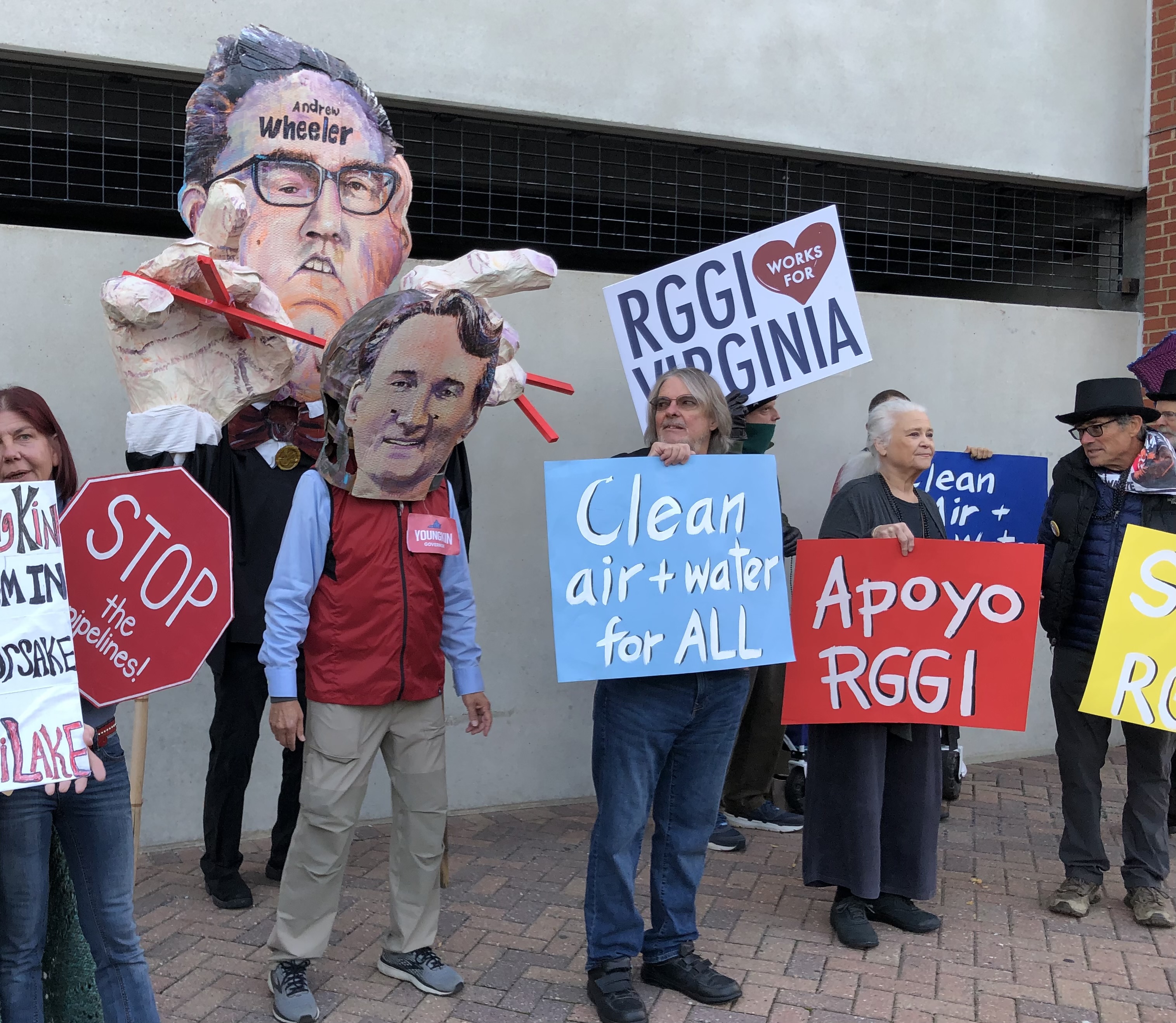
Protesters outside the Virginia Clean Energy Summit on October 21.

Governor Glenn Youngkin issued a press release on October 3 presenting what he says is his energy plan. Accompanying the press release was 26 pages labeled “2022 Virginia Energy Plan,” but that can’t be what he’s referring to. I mean, the Virginia Code is pretty specific about what makes up an energy plan, and this isn’t it.

Under Virginia law, the energy plan must identify steps the state will take over the next 10 years consistent with the Commonwealth Clean Energy Policy’s goal of a net-zero carbon economy by 2045 “in all sectors, including the electric power, transportation, industrial, agricultural, building, and infrastructure sectors.”  Not only does Youngkin’s document not do that, it doesn’t even mention the policy it’s supposed to implement.

It’s also missing critical pieces. The plan is supposed to include a statewide inventory of greenhouse gas emissions, but it’s nowhere to be found. The inventory is the responsibility of the Department of Environmental Quality, which reports previous inventories on its website from 2005, 2010 and 2018. The one specifically required to be completed by October 1, 2022 isn’t there, nor is there any indication it’s in the works and just unfortunately delayed. Did I miss some fine print about how the requirement doesn’t apply if the governor is a Republican?

In fact, there is no discussion about climate change in Youngkin’s energy plan.  The word “climate” appears nowhere. He simply ignores the problem: a modern Nero, fiddling while the planet burns.

Instead, Youngkin’s document mostly attacks the laws Virginia has passed in recent years to implement its decarbonization goals, including the Virginia Clean Economy Act, legislation allowing the state to participate in the Regional Greenhouse Gas Initiative and the Clean Cars law. In their place he offers a bunch of random ideas — some with merit, some without, some spinning off on tangents.

I did not really expect a conservative Republican with presidential aspirations to embrace all the recommendations for the energy plan that I laid out last month, or those from the many environmental, faith and consumer groups that support Virginia’s clean energy transition. Going further and faster down the road to decarbonization is a tall order for politicians beholden to fossil fuel interests, no matter how much it would benefit the public.

Yet Youngkin doesn’t have a lot of ammunition to use against the switch to renewable energy. With soaring coal and natural gas prices, it’s hard to keep pretending that fossil fuels are low-cost. The insistence that we need them for reliability is the only straw left to grasp at.

https://www.virginiamercury.com/blog-va/regulators-approve-dominion-bill-increase-for-rising-fuel-costs-appalachian-power-also-seeking-hike/embed/#?secret=Vd8muOhz01

And indeed, underlying Younkin’s attack on the VCEA is a misunderstanding of how grid operators manage electricity. The critique boils down to “baseload good, intermittent bad.” But baseload is not the point; meeting demand is the point. Demand fluctuates hugely by day and hour. If grid operators had nothing to work with but slow-ramping coal plants or on/off nuclear reactors and no storage, they’d have as much trouble matching demand as if they had nothing but renewable energy and no storage. Pairing low-cost wind and solar with batteries makes them dispatchable — that is, better than baseload.

That’s not to say there aren’t good reasons to invest in higher-cost resources, but “baseload” is a red herring that stinks up Youngkin’s entire argument.

To his credit — and notwithstanding his “baseload” fixation — Youngkin supports Virginia’s move into offshore wind energy even with the high cost of the Coastal Virginia Offshore Wind project and other early U.S. developments. (The plan notes that Virginia’s project will be the largest “in the Free World,” a weirdly retro way to tell us China has leapt far ahead in installing offshore wind.)

The plan also supports removing barriers to customer purchases of solar energy, including shared solar and a greater ability for renewable energy suppliers to compete with utilities for retail sales. This is all phrased as a consumer choice issue rather than an endorsement of greater utility investments in solar; regardless, these would be welcome moves.

It’s also good to see the governor’s endorsement of rate reform. Republicans have been at least as much to blame as Democrats for Dominion Energy’s success in getting laws passed that let it bilk ratepayers. It will be interesting to see if Youngkin actually pursues the reforms he touts.

Less encouraging are Youngkin’s desires to jump into hydrogen (I’m guessing not the green kind, since we hardly have an excess of renewable energy) and, worse, to deploy “the nation’s first” commercial small modular nuclear reactor (SMR) in Southwest Virginia within 10 years.

You know what will happen there, right? Ratepayers will foot the bill, and it will be very expensive.

But unlike offshore wind, SMRs aren’t proven technology; they remain firmly in the research phase. The U.S. Department of Energy is hoping for a demonstration project “this decade.” If successful, the industry believes SMRs will eventually be able to produce electricity at a price that’s only two or three times that of solar and wind energy. Which begs an obvious question: Is there a reason to build SMRs?

Nor has anyone figured out the nagging problem of what to do with the radioactive waste, including the waste piling up at today’s nuclear plants because it’s too dangerous to move and there’s no place to put it. So Youngkin’s plan also “calls for developing spent nuclear fuel recycling technologies that offer the promise of a zero-carbon emission energy system with minimal waste and a closed-loop supply chain.” Great idea! But how about focusing on that first, Governor?

That’s not where Younkin is putting his focus, though. Last week, he proposed spending $10 million on a Virginia Power Innovation Fund, with half of that earmarked for SMR research and development.  The announcement said nothing about waste.

Look, I happen to know some earnest climate advocates who believe SMRs are the silver bullet we’ve been waiting for. I follow the research with an open mind while also noting the astonishing advances in renewable energy technology announced almost daily. But the climate crisis is here and now. We can’t afford to press pause on known carbon-free technologies for 10 years in the hope that something even better will pan out.

Investing in research and development of new technologies is an important role for government, but kicking the climate can down the road isn’t an option. Rather than attacking our energy transition, Youngkin would have done more for Virginia by using his plan to build on it.

This article appeared first in the Virginia Mercury on October 18, 2022.

Unknown's avatar

How a Biden presidency will help Virginia’s energy transition

Photo credit: NREL

Immediately following the 2016 election of Donald Trump, I wrote a column titled “Why Trump won’t stop the clean energy revolution.”

If you were to read it now, you would yawn. What seemed bold back then now feels like forecasting the inevitable. Of course coal has not come back. Of course wind and solar are cheaper now than fossil fuels. Of course people agree a zero-carbon future is achievable. 

Still, few of us could have predicted how far off course Trump would try to take us. Withdrawing from the Paris climate accord was the least of it. The Washington Post tallied more than 125 rollbacks of environmental regulations and policies over the past four years. Trump’s more flamboyant acts of perfidy distracted attention away from his sustained attack, not just on climate science, but on the laws protecting America’s lands, air and water.

Really, we should be grateful Trump staffed his administration with grifters and sycophants who repeatedly bungled the details and opened their decisions to legal challenge. Incompetence is underrated. Skilled managers would have done much more damage. 

Yet the past four years have also pushed us closer to the brink of climate chaos and the collapse of ecosystems. We wasted time we did not have. 

As president, Joe Biden will be able to undo most of the environmental rollbacks with new executive orders and agency actions. Biden has also promised a long list of new initiatives, though many of them would require Democratic control of the Senate. 

Virginia and other states partially filled the four-year void with commitments to decarbonize our electricity supply and build renewable energy. But even for Virginia the path to zero-carbon would be a lot easier with federal action. Public support for climate action is strong even from Republicans, though it’s hard to imagine a really aggressive climate bill getting a floor vote in the Senate while Mitch McConnell is in charge. (In my dreams, Maine Senator Susan Collins announces she is changing her party affiliation to Independent and will caucus with Democrats to get a climate bill passed. I have really great dreams.)

Let’s assume for now, though, that Joe is on his own. What can he do through executive orders and agency actions? A lot, it turns out, so I’ll just focus on a few high-profile moves and how they might affect the energy transition here in Virginia.

Carbon emissions: a new Clean Power Plan? Recall that back in 2016, the EPA finalized regulations under the Clean Air Act designed to reduce carbon emissions from power plants with state-by-state targets. Lawsuits and backpedaling by the Trump EPA prevented the Clean Power Plan from ever taking effect, and the replacement plan was derided for its weakness

Four years later, a Biden EPA could use the same Clean Air Act authority to write new regulations. The thing is, though, the Clean Power Plan put the squeeze on coal-dependent states but would have had virtually no effect on Virginia. And that was before the Virginia Clean Economy Act set us on a path to decarbonization, putting Virginia ahead of any revamped rule that might come out of the EPA now. 

A better scenario for us would be if the threat of new climate action from EPA brought Republican senators to the table for a climate bill that would, say, impose a carbon tax (or fee-and-dividend) in return for stripping EPA of its authority to regulate carbon emissions. 

But I promised to focus on what Biden can do without Congress, so let’s get back to that. 

Coal. Among the protections Trump tried to roll back are EPA regulations like the Mercury and Air Toxics Standard and the Coal Ash Rule, both of which limit pollution caused by coal plants. While both are in litigation (see “bungling,” above), we can expect the EPA under Biden to reverse course and, if anything, tighten these protections. Virginia has already committed to closing most of its coal plants, a decision that will prove even wiser when coal plants have to meet stricter standards.  

Of course, these Trump regulatory rollbacks didn’t do the coal industry any good. Nationally, coal plants have continued to close at an even faster rate than they did during Obama’s second term. The false hopes Trump offered for a coal renaissance forestalled real efforts to help communities in Appalachia transition. 

Here in Virginia, even coalfields legislators understand the need to diversify the economy of Southwest Virginia. Biden’s election is their wake-up call to stop trying to revive a past that was never a golden era for workers anyway, however enriching it was for the coal bosses. 

Fracked gas. Biden made it clear he would not ban fracking other than on federal lands, but we can expect stronger regulations to limit the leakage of methane from wellheads, pipelines and storage infrastructure. That’s a Virginia priority, too. 

Energy efficiency. Federal efficiency requirements for products including appliances and HVAC systems have proven to be low-cost and consumer-friendly. A renewed focus on strong national standards will help reduce per-capita energy consumption and help Virginia meet its carbon reduction goals at less cost to consumers. 

Wind and solar. It would take legislation to extend federal tax credits for renewable energy, but there are other actions the Biden administration can take to support wind and solar. These include increased funding of R&D through the Department of Energy (a program that already has support in Congress), and removing tariffs on imported solar panels. 

The Federal Energy Regulatory Commission can also help wind and solar. FERC has caused its share of climate damage, most memorably for Virginians by approving the Atlantic Coast and Mountain Valley pipelines. FERC’s decisions also control the playing field for the electricity sector, including rules that currently disadvantage wind and solar in the wholesale markets. These rules could just as easily be rewritten. Although FERC is an independent agency, Biden will have an opportunity to appoint climate-friendly FERC commissioners as vacancies occur and terms expire. 

And indeed, FERC is already starting to come around. Chairman Neil Chatterjee recently hosted a technical conference and issued a proposed policy statement on carbon pricing in regional markets, an act that may have led Trump to demote him this month. 

Offshore wind. Within the Department of Interior, the Bureau of Ocean Energy Management (BOEM) issues offshore energy leases and oversees development of offshore projects, including wind farms. More than a year ago offshore wind activity at BOEM ground almost to a halt, setting back one project after another. Congress isn’t happy, and it may direct more funding to BOEM to help re-start the process. 

Biden will also direct BOEM to get out of the way of current projects and begin the process of designating new offshore lease areas for development. Both of these are critical to Virginia’s clean energy plans. (Of course, an investment tax credit for offshore wind would help, too — but there I go again, looking for legislation.)

Transportation. Until Trump came in, the auto industry was gradually improving fuel economy standards in new cars and light trucks. Biden will put that program back in place, and likely impose more stringent tailpipe emission standards. These moves will boost the transition to electric and hybrid vehicles and lead to lower carbon emissions from the transportation sector, another Virginia priority.

Declaring a national climate emergency. It’s a long shot, but Biden could use his executive authority to declare a climate emergency the way Trump declared a national emergency to redirect funds from national defense to his border fence. There are many ways this could help the Virginia transition if Biden were to go this route. 

But of course he won’t. Biden is no Trump. And for that, we should all be grateful. 

This article was originally published in the Virginia Mercury on November 12, 2020.

Unknown's avatar

Bills that passed, bills that failed, and how the General Assembly failed Virginia again on clean energy

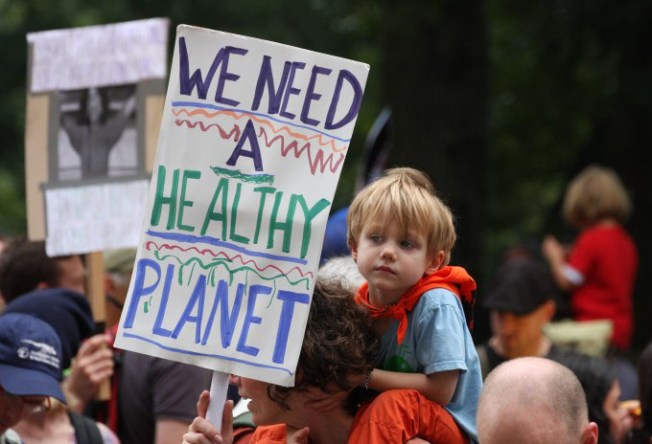
Child on father's shoulders with sign reading "We need a healthy planet"

Photo credit Sierra Club.

When the General Assembly session opened January 9, legislators were presented with dozens of bills designed to save money for consumers, lower energy consumption, provide more solar options, and set us on a pathway to an all-renewables future. Almost none of these measures passed, while bills that benefited utilities kept up their track record of success.

Before I review the individual bills, it’s worth considering for a moment how very different Virginia’s energy future would look if the best of 2019’s bills had passed. In that alternate universe, Virginians could have looked forward to:

  • A freer and more open market for renewable energy at all levels, including unrestricted use of third-party financing for renewable energy, an end to punitive standby charges and arbitrary limits on customer solar, and new opportunities for local governments to install solar cost-effectively.
  • A mandate for utilities to achieve real energy efficiency results, not just to throw their customers’ money at programs.
  • An energy efficiency revolving fund to offer no-interest loans to local governments, public schools and public institutions of higher learning.
  • The right to choose an electricity supplier for renewable energy, instead of being restricted to more expensive and less desirable utility offerings (if available at all).
  • Tax credits for solar on landfills, brownfields and economic opportunity zones.
  • Rebates for low and moderate-income Virginians who install solar.
  • A new revenue source for spending on climate adaptation efforts, energy efficiency programs, and coalfields transition, made possible bythe auctioning of carbon allowances to power plants as part of joining the Regional Greenhouse Gas Initiative; half the lowered carbon emissions would have been achieved through installing wind and solar.
  • Movement towards an eventual phase-out of fossil fuels.
  • Stronger assurance that customers won’t be overcharged for the use of the Atlantic Coast Pipeline or other fracked-gas pipelines owned by utility affiliates.

But in a legislature still ruled by Dominion Energy and Republicans (in that order), what we mostly got instead were bills letting utilities charge their electricity customers for speculative development projects (HB 1840, HB 2738 and SB 1695) and rural broadband infrastructure (HB 2691), and another that would actually prevent the state from pursuing carbon reduction regulations (HB 2611).

A year ago legislators agreed that Dominion and Appalachian Power should propose hundreds of millions of dollars in energy efficiency programs, as a way to sop up some of those companies’ excess earnings instead of the unthinkable alternative of taking the money away from them. This year subcommittees killed bills (HB 2294, HB 1809) that would have insisted those programs be effective. (HB 2294 would have also made last year’s renewable energy goals mandatory.)

The energy efficiency bills that did pass were far more modest: making it harder for the SCC to reject utility-proposed programs (HB 2292 and SB 1662) and establishing a stakeholder group to provide input on programs (HB 2293).

“Energy Freedom,” and other similar legislation aimed at opening up the rooftop solar market, died on party-line votes in committee.

In fact, the party-line vote became a theme whenever bills came up that Dominion opposed. Anyone sitting through the House Commerce and Labor subcommittee hearing, watching one customer solar bill after another be unceremoniously killed, might have wondered if the vote buttons had gotten stuck.

The only significant renewable energy legislation to make it through the committee gauntlet was a long-negotiated Rubin Group bill that gives customers of Virginia’s rural electric cooperatives more opportunities to install solar, at the cost of accepting future new demand charges (HB 2547 and SB 1769). Whether it works in favor of all coop solar customers or not remains an open question. The coops would not provide advocates with any cost modeling and referred us to the solar industry trade association MDV-SEIA, which told us they couldn’t provide it either because of a confidentiality agreement within the Rubin Group.

But the bill does raise the limit on the amount of customer solar that can be built in those parts of the state served by rural electric coops. Customers of Dominion and APCo didn’t get even that much, though one bill—from a Republican—calls for those utilities to provide a total of $50 million in assistance to low-income, elderly and disabled customers for solar and energy efficiency. HB 2789 marks one of the rare bright spots of the 2019 session.

Two other minor renewable energy bills could make incremental progress for a handful of municipalities (HB 2792 and SB 1779) and school systems (HB 2192 and SB 1331).

And that, I’m sorry to say, is pretty much it for energy legislation this year.

Below is a final rundown of the bills that passed, followed by the ones that didn’t. Links in the bill numbers will take you to their summary pages in the Legislative Information Service. The summaries there should not be relied on, because amendments may make a bill quite different by the time it gets passed (or dies). Follow the links on a page to read the legislation or see vote results. Many of the committee hearings were recorded on video.

Bills that passed: renewable energy

HB 2192 (Rush) and SB 1331 (Stanley) is a school modernization initiative that includes language encouraging energy efficient building standards and net zero design. It also encourages schools to consider lease agreements with private developers (apparently there is one particular North Carolina firm that wants this). It does not provide for the more common use of third-party power purchase agreements. It has nice (but not mandatory) language on net zero schools. It allows leases with private developers who will construct and operate buildings and facilities. It permits public schools to contract with utilities for solar energy as part of the school modernization project. An amendment added language requiring that renewable energy facilities must be on school property and cannot be used to serve any other property. PPAs are not mentioned. Ambiguous language in these provisions may cause problems for schools. Both bills passed the House and Senate almost unanimously with Senator Black the only naysayer.

HB 2547 (Hugo) and SB 1769 (Sturtevant) make changes to the net metering program for customers of electric cooperatives. The overall net metering cap is raised from the current 1 percent to a total of 5%, divided into separate buckets by customer type and with an option for coops to choose to go up to 7%. Customers will be permitted to install enough renewable energy to meet up to 125% of previous year’s demand, up from 100% today. Third-party PPAs are generally legal for tax-exempt entities, with a self-certification requirement. However, the coops will begin imposing demand charges on customers with solar, to be phased in over several years, replacing any standby charges. This bill was negotiated between the coops and the solar industry via the “Rubin Group.” An amendment to the bill establishes a stakeholder group for further discussions with Dominion and APCo on net metering, a prospect that will appeal only to eternal optimists and amnesiacs who don’t remember the past five years of time-wasting, fruitless negotiations. SB 1769 passed both the Senate and House unanimously. HB 2547 passed the House unanimously and the Senate 36-4, with Black, Chase, Stuart and Suetterlein voting no this time, with no discernible reason for the change.

HB 2621 (Ingram) and SB 1398 (Stanley) authorize a locality to require the owner or developer of a solar farm, as part of the approval process, to agree to a decommissioning plan. This was a negotiated Rubin Group bill. SB 1398 was incorporated into SB 1091 (Reeves), which was amended to conform to the compromise language of HB 2621.

HB 2741 (Aird) establishes a rebate program for low and moderate-income households that install solar. Amended so it retains the structure of the program but removes funding. As amended it passed both House and Senate.

HB 2792 (Tran) and SB 1779 (Ebbin) establish a 6-year pilot program for municipal net metering for localities that are retail customers of investor-owned utilities. The initial bill negotiated with the utilities was much more limited than most localities wanted; further amendments whittled it down to a point where it won’t help localities with significant projects like landfill solar. However, we are told it will be useful for a few small on-site projects that don’t need PPAs. Even with the utilities on board, 21 House Republicans and one senator (Sutterlein) voted against the House bill, though only 12 House Republicans were hardcore enough to vote against the identical Senate bill when it crossed over. 

HB 2789 (O’Quinn) requires Dominion and APCo to develop pilot programs to offer solar and energy efficiency incentives to low-income, elderly and disabled customers. The energy efficiency money, totaling $25 million, is to come out of the amount the utilities are required to propose in efficiency spending under last year’s SB 966. The renewable energy incentives, also $25 million, cannot come out of that spending; the legislation is silent on how it will be paid for. Passed the House 90-9, with only Republicans as holdouts. Passed the Senate 37-3, with only Black, Stuart and Suetterlein in opposition.

Bills that passed: energy efficiency

HB 2292 (Sullivan) and SB 1662 (Wagner), dubbed the “show your work bill,” requires the SCC to provide justification if it rejects a utility energy efficiency program. As amended, the bills passed almost unanimously.

HB 2293 (Sullivan) establishes a stakeholder process to provide input on the development of utility energy efficiency programs. Passed both houses unanimously.

HB 2332 (Keam) protects customer data collected by utilities while allowing the use of aggregated anonymous data for energy efficiency and demand-side management efforts. A substitute changed the bill to one requiring the SCC to convene a Data Access Stakeholder Group to review customer privacy and data access issues. As amended, the bill passed both Houses unanimously. 

SB 1400 (Petersen) would have removed the exclusion of residential buildings from the Property Assessed Clean Energy (PACE) program, which allows localities to provide low-interest loans for energy efficiency and renewable energy improvements on buildings. After passing the Senate unanimously, the bill was amended in the House to remove the residential PACE authorization (it does expand PACE to include stormwater improvements). As amended, it passed both houses unanimously. It’s probably cheating putting this one in the“passed” category, but I needed the win. 

Bills that passed: energy transition and climate

HB 2611 (Poindexter) would prohibit Virginia from joining or participating in RGGI without support from two-thirds of the members of the House and Senate, making it sort of an anti-Virginia Coastal Protection Act. Passed the House on a 51-48 party-line vote. Passed the Senate on a 20-19 vote. Only one Republican, Jill Vogel, voted against it. The Governor is expected to veto it.

HB 2747 (Kilgore) and SB 1707 (Chafin) create a Southwest Virginia Energy Research and Development Authority “for the purposes of promoting opportunities for energy development in Southwest Virginia, to create jobs and economic activity in Southwest Virginia consistent with the Virginia Energy Plan prepared pursuant to Chapter 2 (§ 67-200 et seq.), and to position Southwest Virginia and the Commonwealth as a leader in energy workforce and energy technology research and development.” Among the powers listed are promotingrenewable energy on brownfield sites, including abandoned mine sites, and supporting energy storage, including pumped storage hydro. Fossil fuel projects are not listed, but are also not excluded. Both bills passed unanimously.

Bills that passed: other utility regulation

HB 1840 (Danny Marshall) allows utilities to develop transmission infrastructure at megasites in anticipation of development, charging today’s customers for the expense of attracting new customers. The legislation was amended to change the language to the nicer-sounding “business park,” but it continues to allow utilities to recover costs for constructing transmission lines and substations to serve these speculative projects. It passed unanimously in the Senate and 82-18 in the House, with mainly the newer Democrats voting no.

HB 2477 (Kilgore) originally would have eliminated one of the few areas of retail choice allowed in Virginia by preventing large customers from using competitive retail suppliers of electricity, including for the purpose of procuring renewable energy, in any utility territory with less than 2% annual load growth. A substitute bill removed most of the bad provisions and confined its operation to APCo, but also left it incomprehensible, so I can’t possibly tell you what it does. As far as I was able to determine, no customers opposed the final bill, which passed the House and Senate unanimously.

HB 2691 (O’Quinn) originally would have established a pilot program for electric utilities to provide broadband services in underserved areas, and raise rates for the rest of us to pay for it. The bill was amended so utilities can only provide the capacity on their lines to private broadband suppliers. The investment is eligible for recovery as an electric grid transformation project under last year’s SB 966, presumably so it is paid for out of utility overearnings instead of a new rate increase.The amended bill passed both houses almost unanimously.   

HB 2738 (Bagby) and SB 1695 (Wagner) authorizes utilities to acquire rights of way for sites that the Virginia Economic Development Partnership Authority decides could be developed to attract new customers, and allows utilities to recover costs from existing customers. A substitute tightened the requirements somewhat, but it remains another giveaway to utilities in the name of speculative development, at the expense of landowners and consumers.The House bill passed 85-13with mostly newer Democrats in opposition, then passed the Senate 37-3, with McPike, Spruill and Suetterlein voting no. The Senate bill passed 34-6; although the bills appear to have been identical, Chase, Newman and Peake also voted no. The House vote on SB 1695 was 84-13.

And now for the also-rans.

Bills that failed: renewable energy

HB 2329 (Keam) and SB 1456 (McClellan and Edwards) is the Solar Freedom bill that would have removed 8 barriers to renewable energy installations by utility customers, including lifting the 1% net metering cap, removing PPA caps, and allowing municipal net metering. HB 2329 was defeated inCommerce and Labor 8-7 on a party-line vote. The Senate companion was killed in Commerce and Labor on a 10-3 party-line vote.

HB 1683 (Ware) gives electric cooperatives greater autonomy, including authority to raise their total system caps for net metering up to 5% of peak load. Amended to remove the net metering language, then withdrawn by patron.

HB 1809 (Gooditis) follows up on last year’s HB 966 by making the renewable energy and energy efficiency provisions mandatory. If utilities don’t meet annual targets, they have to return their retained overearnings to customers. Defeated inCommerce and Labor subcommittee 3 on party-line vote, with only Democrats supporting.

HB 1869 (Hurst), SB 1483 (Deeds) and SB 1714 (Edwards) creates a pilot program allowing schools that generate a surplus of solar or wind energy to have the surplus credited to other schools in the same school district. HB 1869defeated in Commerce and Labor subcommittee 3 on party-line vote. In Senate Commerce and Labor, SB 1714 was incorporated into SB 1483, then defeated unanimously.

HB 1902 (Rasoul) would provide a billion dollars in grant funding for solar projects, paid for by utilities, who are required to contribute this amount of money through voluntary contributions (sic). Killed in Appropriations subcommittee on party-line vote.

HB 1928 (Bulova) and SB 1460 (McClellan) expands utility programs allowing third-party power purchase agreements (PPAs) for renewable energy while continuing to restrict the classes of customers who are allowed to have access to this important financing tool. In committee hearings, utility lobbyists claimed there was no need for the legislation because there is “plenty of room left” under the existing caps. Industry members testified that there is a lot more in the queue than is public, and caps will likely be reached this year. HB 1928 killed in Commerce and Labor subcommittee 3 by a 6-4 vote; Republican Tim Hugo voted with Democrats in support of the bill. SB 1460 killed in Senate Commerce and Labor 10-3, with only Democrats supporting.

HB 2117 (Mullin) and SB 1584 (Sutterlein) fixes the problem that competitive service providers can no longer offer renewable energy to a utility’s customers once the utility has an approved renewable energy tariff of its own. Now that the SCC has approved a renewable energy tariff for APCo, this is a live issue. HB 2117defeated inCommerce and Labor subcommittee 3 on party-line vote. Although the patron of SB 1584, David Sutterlein, is a Republican, his bill died in Senate Commerce and Labor 11-1, with only fellow Republican Ben Chafin voting for it, and Republican Stephen Newman abstaining.

HB 2165 (Davis and Hurst) and HB 2460 (Jones and Kory), and SB 1496 (Saslaw) provide an income tax credit for nonresidential solar energy equipment installed on landfills, brownfields, in economic opportunity zones, and in certain utility cooperatives. This is a Rubin Group bill. HB 2165 and HB 2460 were left in the Committee on General Laws (i.e, they died there). SB 1496 was amended in Finance to change it from a tax credit to a grant-funded program, but with no money. Then it passed the committee and the Senate unanimously.  However, it was then killed unanimously in a House subcommittee of Commerce, Agriculture, Natural Resources & Technology.

HB 2241 (Delaney) establishes a green jobs training tax credit. Failed in House Finance subcommittee on party-line vote.

HB 2500 (Sullivan) establishes a mandatory renewable portfolio standard (RPS) for Virginia, eliminates carbon-producing sources from the list of qualifying sources, kicks things off with an extraordinarily ambitious 20% by 2020 target, and ratchets up the targets to 80% by 2027. Failed inCommerce and Labor subcommittee 3 with only Democrat Mark Keam supporting it.

HB 2641 (Gooditis) makes third-party power purchase agreements for distributed renewable energy resources legal statewide. Killed in Commerce and Labor subcommittee 3 by a 6-3 vote. Delegate Hugo, who had voted for Bulova’s narrower PPA bill, joined the other Republicans in voting against this broader one.

HB 2692 (Sullivan) allows the owner of a multifamily residential building to install a renewable energy facility and sell the output to occupants or use for the building’s common areas. Stricken from docket.

HJ 656 (Delaney) would have the Virginia Resources Authority study the process of transitioning Virginia’s workforce from fossil-fuel jobs to green energy jobs. Failed to report from Rules subcommittee on party-line vote, all Republicans voting against it.

Bills that failed: energy efficiency (some of which had RE components)

HB 2243 (Sullivan) creates an energy efficiency revolving fund to offer no-interest loans to local government, public schools, and public institutions of higher learning. Killed in Appropriations subcommittee on party-line vote.

HB 2294 (Sullivan) establishes mandatory energy efficiency goals for electric and gas utilities. Killed in Commerce and Labor subcommittee 3 on party-line vote.

HB 2295 (Sullivan) creates an energy efficiency fund and board to administer it. Killed in an Appropriations subcommittee on a party-line vote.

SB 1111 (Marsden) requires utilities to provide rate abatements to certain customers who invest at least $10,000 in energy efficiency and, by virtue of their lower consumption, end up being pushed into a tier with higher rates. Stricken at the request of the patron.

HB 2070 (Bell, John) provides a tax deduction for energy saving products, including solar panels and Energy Star products, up to $10,000. Stricken from docket in Finance subcommittee.

Bills that failed: energy transition and climate

HB 1635 (Rasoul, with 9 co-patrons) imposes a moratorium on fossil fuel projects, including export facilities, gas pipelines and related infrastructure, refineries and fossil fuel exploration; requires utilities to use clean energy sources for 80% of electricity sales by 2028, and 100% by 2036; and requires the Department of Mines, Minerals and Energy to develop a (really) comprehensive climate action plan, which residents are given legal standing to enforce by suit. This is being referred to as by the Off Act. Defeated on the floor of the House 86-12.

HB 1686 (Reid, with 14 co-patrons) and SB 1648 (Boysko) bans new or expanded fossil fuel generating plants until Virginia has those 5,500 MW of renewable energy we were promised. This is referred to as the Renewables First Act. HB 1686:Defeated inCommerce and Labor Subcommittee 3. 2 Democrats voted for it, 6 Republicans and 1 Democrat against. SB 1648 PBI’d 12-0 in Commerce and Labor.

HB 2501(Rasoul) directs the Division of Energy at DMME to include a greenhouse gas emissions inventory in the Virginia Energy Plan. Killed in Commerce and Labor subcommittee 3 on party-line vote.

HB 2645 (Rasoul, with 13 co-patrons), nicknamed the REFUND Act, prohibits electric utilities from making nonessential expenditures and requires refunds if the SCC finds they have. It also bars fuel cost recovery for more pipeline capacity than appropriate to ensure a reliable supply of gas. Other reforms in the bill would undo some of the provisions of last year’s SB 966, lower the percentage of excess earnings utilities can retain, and require the SCC to determine rates of return based on cost of service rather than peer group analysis. Democrat Steve Heretick voted with Republicans to kill the bill in Commerce and Labor subcommittee 3.

HB 2735 (Toscano) and SB 1666 (Lewis and Spruill) is this year’s version of the Virginia Coastal Protection Act, which would have Virginia formally join the Regional Greenhouse Gas Initiative (RGGI). It dedicates money raised by auctioning carbon allowances to climate adaptation efforts, energy efficiency programs, and coalfields transition. HB 2735 died in Commerce and Labor subcommittee 3 on party-line vote. SB 1666 met the same fate in Agriculture, Conservation and Natural Resources, with Democrat Rosalyn Dance abstaining.

HJ 724 (Rasoul) is a resolution “Recognizing the need for a Green New Deal in Virginia which promotes a Just Transition to a clean energy economy through lifting working families.” This was referred to Commerce and Labor subcommittee 3, where it was left without a hearing.

Bills that failed: other utility regulation

HB 1718 (Ware) requires an electric utility to demonstrate that any pipeline capacity contracts it enters are the lowest-cost option available, before being given approval to charge customers in a fuel factor case. Delegate Ware testified in committee that the bill was not intended to stop the Atlantic Coast Pipeline, but would simply guide the SCC’s review of a rate request after the pipeline is operational. Dominion’s lobbyist argued the legislation was unnecessary because the SCC already has all the authority it needs, and it shouldn’t be allowed to look back to second-guess the contents of the ACP contract. The bill passed the House 57-40. Do look at the votes; this is the most interesting energy vote of the year, as it neatly separates the Dominion faction from the pro-consumer faction. Unfortunately, the bill was then killed in Senate Commerce & Labor, where the Dominion faction runs the show, so most senators didn’t have the opportunity to demonstrate whose side they’re on.

HB 2503 (Rasoul) requires the State Corporation Commission to conduct a formal hearing before approving any changes to fuel procurement arrangements between affiliates of an electric utility or its parent company that will impact rate payers. This addresses the conflict of interest issue in Dominion Energy’s arrangement to commit its utility subsidiary to purchase capacity in the Atlantic Coast Pipeline.  Stricken from docket.   

HB 2697 (Toscano) and SB 1583 (Sutterlein) supports competition by shortening the time period that a utility’s customer that switches to a competing supplier is barred from returning as a customer of its utility from 5 years to 90 days. HB 2697 died in House Commerce and Labor subcommittee 3 on a party-line vote, with all the Republicans voting against it. SB 1583 died in Senate Commerce and Labor 11-2, with only Republicans Newman and Chafin voting for it. Democrats Saslaw, Dance and Lucas joined the rest of the Republicans in demonstrating their Dominion-friendly bonafides.

SB 1780 (Petersen) requires, among other things, that utilities must refund to customers the costs of anything the SCC deems is a nonessential expenditure, including spending on lobbying, political contributions, and compensation for employees in excess of $5 million. It directs the SCC to disallow recovery of fuel costs if a company pays more for pipeline capacity from an affiliated company than needed to ensure a reliable supply of natural gas. It requires rate reviews of Dominion and APCo in 2019 and makes those biennial instead of triennial, and provides for the SCC to conduct an audit going back to 2015. It tightens provisions governing utilities’ keeping of overearnings and provides for the allowed rate of return to be based on the cost of providing service instead of letting our utilities make what all the other monopolists make (“peer group analysis”).  Killed in Commerce and Labor 12-1, with only Republican Richard Stuart supporting the bill.

Unknown's avatar

So many bills filed, so few remain: almost-halftime status report on climate and energy legislation

Virginia statehouse, where the General Assembly meetsTuesday, January 5 marks “crossover” at the Virginia General Assembly, the date when House bills go over to the Senate, and Senate bills to the House. Any legislation that hasn’t made it through the gantlet to a successful vote in its starting chamber evaporates in a puff of smoke, if it has not already died due to causes natural or unnatural.

I’ve hot-linked the bill numbers to their pages in the Legislative Information Service; follow the links on the page to read the legislation or see vote results. The information below is based on what was available as of yesterday, February 3.

Many of the committee hearings were recorded on video.

Renewable energy bills

Solar Freedom, the bill to remove barriers to customer-owned solar statewide, met implacable resistance from Republicans in control of the Commerce and Labor committees, as did narrower bills focused just on power purchase agreements (PPAs). That meant the only significant renewable energy legislation moving forward is a bill negotiated between the rural electric cooperatives and solar advocates that will ease restrictions on customer solar in coop territory. See HB 2547 (Hugo) and SB 1769 (Sturtevant), below.

Two bills that would have provided financial support for solar have passed their committees, but only after the money part got taken out.

A watered-down municipal renewable energy bill survives, but in a disappointingly limited form. An interesting solar-on-schools bill now looks less interesting.

Legislation enabling localities to impose new decommissioning requirements on large solar farms will likely move forward.

Here is the status of the renewable energy bills I’ve been tracking, with a little color commentary sprinkled in:

 HB 2329 (Keam) and SB 1456 (McClellan and Edwards) is the Solar Freedom bill that would have removed 8 barriers to renewable energy installations by utility customers, including lifting the 1% net metering cap, removing PPA caps, and allowing municipal net metering.  Advocates gave this everything they had, with hundreds of citizens lobbying for the bill and showing up at the subcommittee hearings.But Republicans held firm for their utility friends. HB 2329 was defeated in Commerce and Labor 8-7 on a party-line vote with two Democrats absent and one (Lindsay) present but strangely not voting. The Senate companion was killed in Commerce and Labor on a 10-3 party-line vote. Some of the reforms in Solar Freedom also appear in weakened form in one bill (HB 2547 and SB 1769) that moves forward—but only for the electric cooperatives.   

HB 1683 (Ware) gives electric cooperatives greater autonomy, including authority to raise their total system caps for net metering up to 5% of peak load. Amended to remove the net metering language, then withdrawn by patron.

HB 1809 (Gooditis) follows up on last year’s HB 966 by making the renewable energy and energy efficiency provisions mandatory. If utilities don’t meet annual targets, they have to return their retained overearnings to customers. Defeated in Commerce and Labor subcommittee 3 on party-line vote, with only Democrats supporting.

HB 1869 (Hurst), SB 1483 (Deeds) and SB 1714 (Edwards) creates a pilot program allowing schools that generate a surplus of solar or wind energy to have the surplus credited to other schools in the same school district. HB 1869 defeated in Commerce and Labor subcommittee 3 on party-line vote. In Senate Commerce and Labor, SB 1714 was incorporated into SB 1483, then defeated unanimously.

HB 1902(Rasoul) would provide a billion dollars in grant funding for solar projects, paid for by utilities, who are required to contribute this amount of money through voluntary contributions (sic). Killed in Appropriations subcommittee on party-line vote.

HB 1928 (Bulova) and SB 1460 (McClellan) expands utility programs allowing third-party power purchase agreements (PPAs) for renewable energy while continuing to restrict the classes of customers who are allowed to have access to this important financing tool. In committee hearings, utility lobbyists claimed there was no need for the legislation because there is “plenty of room left” under the existing caps. Industry members testified that there is a lot more in the queue than is public, and caps will likely be reached this year. HB 1928 killed in Commerce and Labor subcommittee 3 by a 6-4 vote; Republican Tim Hugo voted with Democrats in support of the bill. SB 1460 killed in Senate Commerce and Labor 10-3, with only Democrats supporting.

HB 2117 (Mullin) and SB 1584 (Sutterlein) fixes the problem that competitive service providers can no longer offer renewable energy to a utility’s customers once the utility has an approved renewable energy tariff of its own. Now that the SCC has approved a renewable energy tariff for APCo, this is a live issue. HB 2117 defeated in Commerce and Labor subcommittee 3 on party-line vote. Although the patron of SB 1584, David Sutterlein, is a Republican, his bill died in Senate Commerce and Labor 11-1, with only fellow Republican Ben Chafin voting for it, and Republican Stephen Newman abstaining.

STILL ALIVE: HB 2165 (Davis and Hurst) and HB 2460 (Jones and Kory), and SB 1496 (Saslaw) provide an income tax credit for nonresidential solar energy equipment installed on landfills, brownfields, in economic opportunity zones, and in certain utility cooperatives. This is a Rubin Group bill. HB 2165 and HB 2460 remain stuck in the Committee on General Laws (not a good sign). SB 1496 was amended in Finance to change it from a tax credit to a grant-funded program, but with no money. Then it passed the committee unanimously. 

STILL ALIVE:  HB 2192 (Rush) and SB 1331 (Stanley) is a school modernization initiative that includes language encouraging energy efficient building standards and net zero design. It also encourages schools to consider lease agreements with private developers (apparently there is one particular North Carolina firm that wants this). It does not contemplate the more common use of third-party power purchase agreements. HB 2192 was amended in General Laws, where it passed unanimously. It still has nice (but not mandatory) language on net zero schools. It allows leases with private developers who will construct and operate buildings and facilities. It permits public schools to contract with utilities for solar energy as part of the school modernization project. New language requires that renewable energy facilities must be on school property and cannot be used to serve any other property. PPAs are still not mentioned. Ambiguous language in these provisions may cause problems for schools. SB 1331 was amended with what appears to be the same language as its House counterpart. It reported unanimously from Finance.

HB 2241 (Delaney) establishes a green jobs training tax credit. Failed in House Finance subcommittee on party-line vote.

HB 2500 (Sullivan) establishes a mandatory renewable portfolio standard (RPS) for Virginia, eliminates carbon-producing sources from the list of qualifying sources, kicks things off with an extraordinarily ambitious 20% by 2020 target, and ratchets up the targets to 80% by 2027. Failed in Commerce and Labor subcommittee 3 with only Democrat Mark Keam supporting it.

STILL ALIVE:  HB 2547 (Hugo) and SB 1769 (Sturtevant) makes changes to the net metering program for customers of electric cooperatives. The overall net metering cap is raised from the current 1 percent to a total of 5%, divided into separate buckets by customer type and with an option for coops to choose to go up to 7%. Customers will be permitted to install enough renewable energy to meet up to 125% of previous year’s demand, up from 100% today. Third-party PPAs are generally legal, with a self-certification requirement. However, the coops will begin imposing demand charges on customers with solar, to be phased in over several years, replacing any standby charges. This bill was negotiated between the coops and the solar industry via the “Rubin Group.” You have to hand it to the coops, this is huge movement on their part, if not perfect, and it is too bad that Dominion and APCo held fast to their obstructionist position rather than allow their customers more freedom to install solar. An amendment to the bill establishes a stakeholder group for further discussions with Dominion and APCo on net metering, a prospect that will appeal only to eternal optimists and amnesiacs who don’t remember the past five years of time-wasting, fruitless negotiations. Delegate Hugo told me he tried to get Dominion and APCo to sign on to the coop deal but couldn’t persuade them—and I understand from others that he did make a real effort. But he scoffed at my suggestion that maybe Dominion shouldn’t have the final say. HB 2547 reported unanimously from Commerce and Labor. SB 1769 was amended to include the same stakeholder language requiring the mice to continue negotiations with the cat. It has now passed the Senate unanimously.

STILL ALIVE: HB 2621 (Ingram) and SB 1398 (Stanley) authorize a locality to require the owner or developer of a solar farm, as part of the approval process, to agree to a decommissioning plan. This is a Rubin Group bill. An amended version of HB 2621 reported from Counties, Cities and Towns unanimously. SB 1398 was incorporated into SB 1091.

HB 2641 (Gooditis) makes third-party power purchase agreements for distributed renewable energy resources legal statewide. Killed in Commerce and Labor subcommittee 3 by a 6-3 vote. Delegate Hugo, who had voted for Bulova’s narrower PPA bill, joined the other Republicans in voting against this broader one.

HB 2692 (Sullivan) allows the owner of a multifamily residential building to install a renewable energy facility and sell the output to occupants or use for the building’s common areas. Stricken from docket.

STILL ALIVE: HB 2741 (Aird) establishes a rebate program for low and moderate-income households that install solar. Amended so it retains the structure of the program but removes funding; otherwise it was going to be sent to Appropriations to die. As amended it was reported Commerce and Labor unanimously.

STILL ALIVE: HB 2789 (O’Quinn) requires Dominion and APCo to apply for approval of three-year programs to incentivize low-income energy efficiency and solar totaling $25 million each. The efficiency spending comes out of the money utilities are required to spend under last year’s grid mod legislation. The solar spending is new money. Somehow I missed this bill in my earlier round-up. It passed the House 88-11. The nay votes are  all Republicans: Adams, L.R., Byron, Cole, Fariss, Freitas, Gilbert, Landes, Poindexter, Wright, Brewer and LaRock.

STILL ALIVE: HB 2792 (Tran) and SB 1779 (Ebbin) establishes a 6-year pilot program for municipal net metering for localities that are retail customers of investor-owned utilities. The initial bill negotiated with the utilities was predictably much more limited than most localities wanted; further amendments have left it useful for only a few small on-site projects that don’t need PPAs. Fairfax County supervisor Jeff McKay testified in committee it would do nothing to help the county’s projects.Tran presented the amended bill in committee just a day or two after coming under fire from conservative Republicans for a bill that would ease one restriction on late-term abortions. In an obviously orchestrated attempt to demonstrate that conservative middle-aged white men still wield the power in Richmond, Delegate Hugo said he needed time to read the amendment. Committee chairman Terry Kilgore obliged, saying they would come back to it. Kilgore then kept Tran waiting through several hours of other bills, many of which also had new amendments, before letting her bill come back up. (Proving once again that middle school has nothing on the General Assembly.) As amended, HB 2792 reported from Commerce and Labor 19-2, with only Republicans Hugo and Head voting no.

HJ 656 (Delaney) would have the Virginia Resources Authority study the process of transitioning Virginia’s workforce from fossil-fuel jobs to green energy jobs. Failed to report from Rules subcommittee on party-line vote, all Republicans voting against it.

STILL ALIVE: SB 1091 (Reeves) imposes expensive bonding requirements on utility-scale solar farms, taking a more drastic approach than HB 2621 (Ingram) and SB 1398 (Stanley) to resolving the concerns of localities about what happens to solar farms at the end of their useful life. SB 1091 was amended to conform to the compromise language of HB 2621 and has passed the Senate unanimously.

Energy Efficiency (some of which have RE components)

We’re seeing modest progress in efficiency bills this year, mostly of the greasing-the-wheels variety. One of particular interest is Chap Petersen’s bill enabling Property Assessed Clean Energy (PACE) financing programs for residential buildings.

HB 2243 (Sullivan) creates an energy efficiency revolving fund to offer no-interest loans to local government, public schools, and public institutions of higher learning. Killed in Appropriations subcommittee on party-line vote.

STILL ALIVE: HB 2292 (Sullivan) and SB 1662 (Wagner), dubbed the “show your work bill,” requires the SCC to provide justification if it rejects a utility energy efficiency program. HB 2292 reported from Commerce and Labor with a substitute. SB 1662 passed the Senate with only 6 Republicans in opposition.

STILL ALIVE: HB 2293 (Sullivan) establishes a stakeholder process to provide input on the development of utility energy efficiency programs. Reported unanimously from Commerce and Labor with a substitute.

HB 2294 (Sullivan) establishes mandatory energy efficiency goals for electric and gas utilities. Killed in Commerce and Labor subcommittee 3 on party-line vote.

HB 2295 (Sullivan) creates an energy efficiency fund and board to administer it. Killed in an Appropriations subcommittee on a party-line vote.

STILL ALIVE: HB 2332 (Keam) protects customer data collected by utilities while allowing the use of aggregated anonymous data for energy efficiency and demand-side management efforts. Reported unanimously from Commerce and Labor with a substitute.

SB 1111 (Marsden) requires utilities to provide rate abatements to certain customers who invest at least $10,000 in energy efficiency and, by virtue of their lower consumption, end up being pushed into a tier with higher rates. Stricken at the request of the patron.

STILL ALIVE: SB 1400 (Petersen) removes the exclusion of residential buildings from the Property Assessed Clean Energy (PACE) program, which allows localities to provide low-interest loans for energy efficiency and renewable energy improvements on buildings. Passed the Senate unanimously.

HB 2070 (Bell, John) provides a tax deduction for energy saving products, including solar panels and Energy Star products, up to $10,000. Stricken from docket in Finance subcommittee.

Energy transition and climate

Bills designed to push Virginia towards a clean energy future died in the face of unanimous Republican opposition. House Republicans also united to pass a bill prohibiting Virginia from implementing its carbon reduction plan. But in a faint nod to reality, most Republicans and Democrats support legislation to help southwest Virginia develop renewable energy and energy storage (as long as it doesn’t cost anything).

HB 1635 (Rasoul, with 9 co-patrons) imposes a moratorium on fossil fuel projects, including export facilities, gas pipelines and related infrastructure, refineries and fossil fuel exploration; requires utilities to use clean energy sources for 80% of electricity sales by 2028, and 100% by 2036; and requires the Department of Mines, Minerals and Energy to develop a (really) comprehensive climate action plan, which residents are given legal standing to enforce by suit. This is being referred to as the “Off Act.” Defeated on the floor of the House 86-12.

HB 1686 (Reid, with 14 co-patrons) and SB 1648 (Boysko) bans new or expanded fossil fuel generating plants until Virginia has those 5,500 MW of renewable energy we were promised. This is referred to as the “Renewables First Act.” HB 1686: Defeated in Commerce and Labor Subcommittee 3. 2 Democrats voted for it, 6 Republicans and 1 Democrat against. SB 1648 PBI’d 12-0 in Commerce and Labor.

STILL ALIVE: HB 2611 (Poindexter) would prohibit Virginia from joining or participating in RGGI without support from two-thirds of the members of the House and Senate, making it sort of an anti-Virginia Coastal Protection Act. Passed the House on party-line vote.

HB 2501 (Rasoul) directs the Division of Energy at DMME to include a greenhouse gas emissions inventory in the Virginia Energy Plan. Killed in Commerce and Labor subcommittee 3 on party-line vote.

HB 2645 (Rasoul, with 13 co-patrons), nicknamed the REFUND Act, prohibits electric utilities from making nonessential expenditures and requires refunds if the SCC finds they have. It also bars fuel cost recovery for more pipeline capacity than appropriate to ensure a reliable supply of gas. Other reforms in the bill would undo some of the provisions of last year’s SB 966, lower the percentage of excess earnings utilities can retain, and require the SCC to determine rates of return based on cost of service rather than peer group analysis. Democrat Steve Heretick voted with Republicans to kill the bill in Commerce and Labor subcommittee 3.

HB 2735 (Toscano) and SB 1666 (Lewis and Spruill) is this year’s version of the Virginia Coastal Protection Act, which would have Virginia formally join the Regional Greenhouse Gas Initiative (RGGI). It dedicates money raised by auctioning carbon allowances to climate adaptation efforts, energy efficiency programs, and coalfields transition. HB 2735 died in Commerce and Labor subcommittee 3 on party-line vote. SB 1666 met the same fate in Agriculture, Conservation and Natural Resources, with Democrat Rosalyn Dance abstaining.

STILL ALIVE: HB 2747 (Kilgore) and SB 1707 (Chafin) create a Southwest Virginia Energy Research and Development Authority which will, among other things, promote renewable energy on brownfield sites, including abandoned mine sites, and support energy storage, including pumped storage hydro. HB 2747 reported unanimously from Commerce and Labor and was referred to Appropriations, where it passed with a substitute (presumably removing its fiscal impact, though I haven’t looked closely enough to confirm that). SB 1707 reported from Local Government and then from Finance, also with a substitute, presumably the same one.

HJ 724 (Rasoul) is a resolution “Recognizing the need for a Green New Deal in Virginia which promotes a Just Transition to a clean energy economy through lifting working families.” This was referred to Commerce and Labor subcommittee 3, but there is no further information about it in the LIS.

Other utility regulation

 Bills that preserve, protect, and extend the monopoly power of our utilities are doing well. On the other hand, Dominion has so far failed to kill a bill strengthening the standards of review the SCC will use in considering whether to allow rate recovery for pipeline capacity. 

STILL ALIVE: HB 1718 (Ware) requires an electric utility to demonstrate that any pipeline capacity contracts it enters are the lowest-cost option available, before being given approval to charge customers in a fuel factor case. The discussion in the committee was lively. Delegate Ware assured the committee the bill was not intended to stop the Atlantic Coast Pipeline, but would simply guide the SCC’s review of a rate request after the pipeline is operational. Dominion’s lobbyist argued the legislation was unnecessary because the SCC already has all the authority it needs, and it shouldn’t be allowed to look back to second-guess the contents of the ACP contract. The bill passed the committee 11-8, with Democrats Keam, Kory, Bagby, Toscano, Heretick, Mullin and Bourne joining Republicans Ware, Byron, Webert and Wilt in support.  Republicans voting against were Kilgore, Hugo, Marshall, Robert Bell, O’Quinn, Yancey, Ransone, and Head. Democrat Eileen Filler-Corn abstained. [UPDATE 2/5/19: HB 1718 passed the House on a bipartisan vote of 57-40, with Filler-Corn abstaining again. Here is the tally of who voted on which side.]

STILL ALIVE: HB 1840 (Danny Marshall) allows utilities to develop transmission infrastructure at megasites in anticipation of development, charging today’s customers for the expense of attracting new customers. Reported from Commerce and Labor with a substitute. Democrats Bagby, Heretick, Mullin and Bourne joined the Republicans in support.

STILL ALIVE: HB 2477 (Kilgore) would eliminate one of the few areas of retail choice allowed in Virginia by preventing large customers from using competitive retail suppliers of electricity, including for the purpose of procuring renewable energy, in any utility territory with less than 2% annual load growth. A substitute bill in Commerce and Labor removes this language but replaces it with other requirements designed to make it difficult for large customers to leave the embrace of their incumbent monopoly. The substitute passed 15-2, with only Delegates Filler-Corn and Keam opposed.

HB 2503 (Rasoul) requires the State Corporation Commission to conduct a formal hearing before approving any changes to fuel procurement arrangements between affiliates of an electric utility or its parent company that will impact rate payers. This addresses the conflict of interest issue in Dominion Energy’s arrangement to commit its utility subsidiary to purchase capacity in the Atlantic Coast Pipeline.  Stricken from docket.

STILL ALIVE: HB 2691 (O’Quinn) establishes a pilot program for electric utilities to provide broadband services in underserved areas, and raise rates for the rest of us to pay for it, proclaiming this to be in the public interest. A substitute bill has utilities only providing the capacity on their lines to private broadband suppliers, and makes the investment eligible for recovery as an electric grid transformation project (seriously!), but prevents utilities from going into broadband services themselves. The amended bill passed Commerce and Labor unanimously.

HB 2697 (Toscano) and SB 1583 (Sutterlein) supports competition by shortening the time period that a utility’s customer that switches to a competing supplier is barred from returning as a customer of its utility from 5 years to 90 days. HB 2697 died in House Commerce and Labor subcommittee 3 on a party-line vote, with all the Republicans voting against it. SB 1583 died in Senate Commerce and Labor 11-2, with only Republicans Newman and Chafin voting for it. Democrats Saslaw, Dance and Lucas joined the rest of the Republicans in demonstrating their Dominion-friendly bonafides.

STILL ALIVE: HB 2738 (Bagby) and SB 1695 (Wagner) authorizes utilities to acquire rights of way on land that the Virginia Economic Development Partnership Authority decides could attract new customers to the site, and allows utilities to recover costs from existing customers. Because, you know, having utilities seize Virginians’ land for speculative development is already going so well for folks in the path of the pipelines. Who could complain about paying higher rates to help it happen more places?  A substitute tightens the requirements somewhat without changing the basics. HB 2738 reported from Commerce and Labor 19-1 (Kory opposing, Keam abstaining). SB 1695 now has a similar amendment; it passed the Senate 34-6 and has been referred to House Commerce and Labor. The dissenting senators are an interesting mix of Rs and Ds: Chase, McPike, Newman, Peake, Spruill, and Suetterlein.

SB 1780 (Petersen) requires, among other things, that utilities must refund to customers the costs of anything the SCC deems is a nonessential expenditure, including spending on lobbying, political contributions, and compensation for employees in excess of $5 million. It directs the SCC to disallow recovery of fuel costs if a company pays more for pipeline capacity from an affiliated company than needed to ensure a reliable supply of natural gas. It requires rate reviews of Dominion and APCo in 2019 and makes those biennial instead of triennial, and provides for the SCC to conduct an audit going back to 2015. It tightens provisions governing utilities’ keeping of overearnings and provides for the allowed rate of return to be based on the cost of providing service instead of letting our utilities make what all the other monopolists make (“peer group analysis”).  Killed in Commerce and Labor 12-1, with only Republican Richard Stuart supporting the bill.
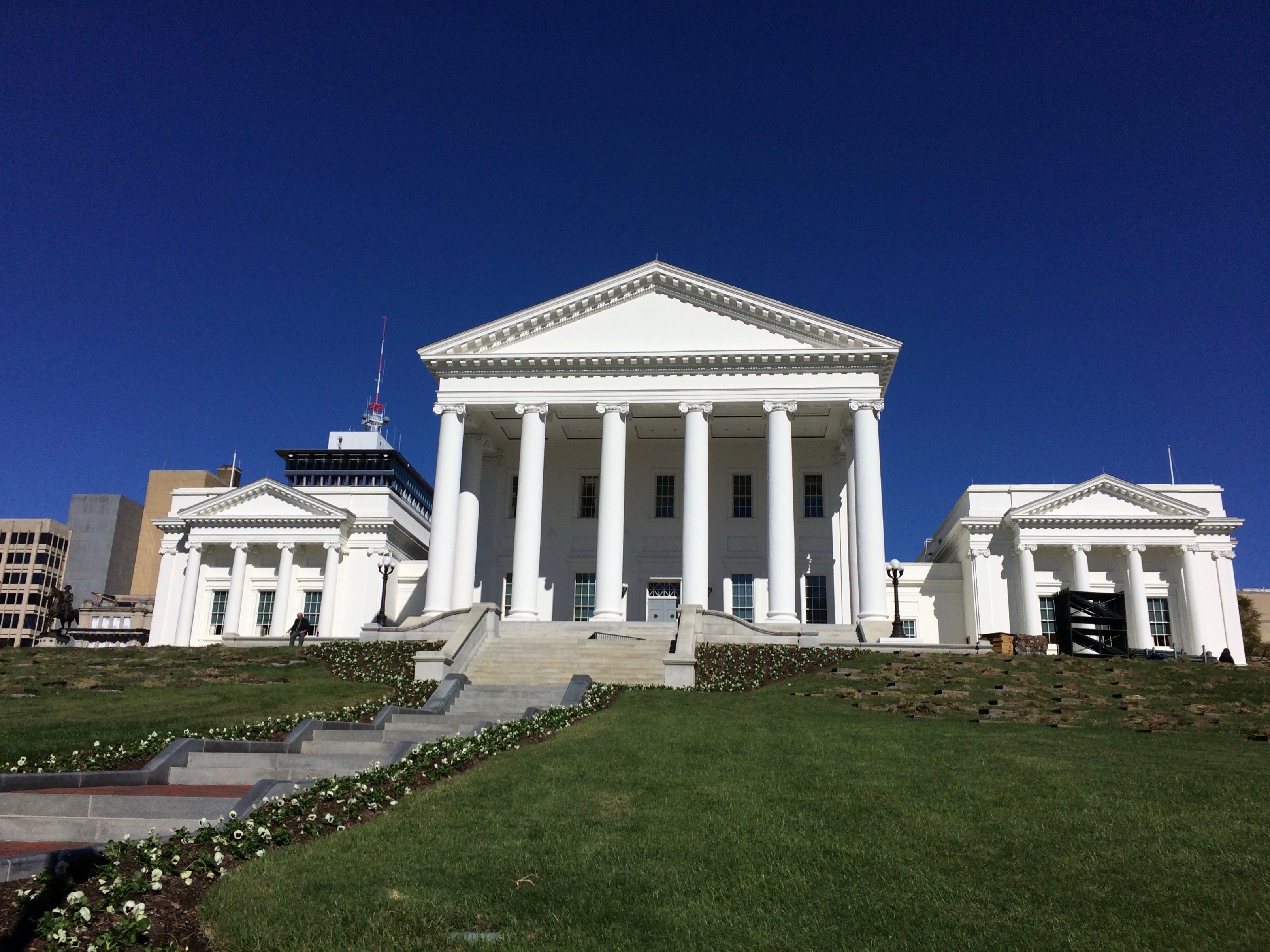
Unknown's avatar

Northam’s energy plan: A blueprint for action or destined for dusty shelf?

Virginia Governor Ralph Northam standing in front of a new solar farm.

Governor Northam speaks at the opening of the Palmer Solar Center on May 23.

[Note: A version of this post originally appeared in Virginia Mercury on July 23. Virginia Mercury is a nonprofit, independent online news organization that launched this summer. Subscribe to its free daily newsletter here.]

Forget “all of the above.” Under Governor Ralph Northam, Virginia’s next Energy Plan will emphasize the features of a clean energy future: solar and wind, energy efficiency, electric vehicles, energy storage, and offshore wind. This marks a welcome departure from previous state energy plans, though whether the end result serves as a blueprint for action or just stuffing for a filing cabinet remains to be seen.

Since 2007, Virginia law has required the Department of Mines, Minerals and Energy (DMME) to write a ten-year Energy Plan in the first year of every new administration. The statute lists vague requirements for the plan, including that it be consistent with the Commonwealth Energy Policy, itself a toothless statute. That means each new governor can pretty much tell DMME what to focus on.

Previous governors’ plans have read more like campaign rhetoric than like meaningful indicators of an administration’s direction. Tim Kaine’s plan supported carbon reductions, but by the next spring Kaine was promoting construction of a coal plant in Wise County that would become one of the last coal plants ever built in America.

Bob McDonnell used his energy plan to announce Virginia as the Energy Capital of the East Coast, perhaps the strongest indication that Energy Plans need not be tethered to reality.

Terry McAuliffe pushed an “all of the above” agenda, heavy on offshore drilling, natural gas, and offshore wind. He later backpedaled on offshore drilling, went all in on gas pipelines, and forgot about offshore wind.

Northam surely feels the pressure to write a pro-clean energy plan, and not merely because economic trends have swung decisively in favor of wind and solar. In his short time in office, Governor Northam has deeply undermined his standing as an environmentalist. Even before his inauguration, his public silence about gas pipeline projects fed rumors of private support. Once in office, he caved early on negotiations with Dominion Energy over this year’s energy legislation; reappointed David Paylor, the controversial director of the Department of Environmental Quality (DEQ), whom he had promised to replace; and passed up a rare opportunity to appoint a progressive to the State Corporation Commission.

One bright spot remains DEQ’s work towards completion of rules to lower carbon emissions from power plants by trading carbon allowances with states to the north of us. But the plan is not yet finalized, and the devil (or Dominion’s fingerprints) may prove to be in the details.

The Energy Plan gives Northam an opportunity to change the subject, and possibly even to change course. DMME’s presentation at its initial public meeting on June 25 addressed only clean energy topics—no coal, no natural gas, no nuclear, no oil. For some topics, the agency has already proposed recommendations for policy changes and scheduled public meetings to discuss them.

In the solar and wind “stakeholder track,” DMME proposes to “increase the residential cap on net metering from 20 kW to 40 kW; increase the overall net metering program from 1% of the utility’s peak load to 3% of peak load; make third-party Power Purchase Agreements (PPAs) available throughout all utility service territories; increase the total PPA installation cap from 50 MW to 100 MW and increase the installation-specific cap from 1 MW to 2 MW.” These recommendations are guaranteed to be popular with solar advocates and industry members, but won’t get past the utility blockade without a fight.

Recommendations for other tracks run the gamut from practical to aspirational. A recommendation to track energy consumption by state agencies through an energy data registry and dashboard is specific and achievable. Less so is the recommendation for Virginia to “reach the voluntary goal of reducing energy consumption by 10 percent by 2020.” Yes, that would be nice, but getting there would require a level of utility cooperation we have never seen in Virginia, and that neither the General Assembly nor any previous governor has had the tenacity to fight for.

The fact that our utilities are so often barriers to positive change underscores a need for the Energy Plan to address one subject missing from DMME’s list: a comprehensive study of grid transformation. Within the next ten years covered by the Energy Plan, our electric grid will need to incorporate vastly more wind and solar generation (much of it consumer-sited), plus electric vehicle charging, battery storage, and new metering technology that gives consumers greater control over their energy use.

Left to their own devices, the utilities will create the energy generation and delivery system most profitable for themselves, not the one most efficient and beneficial for the public. If Governor Northam is serious about a clean energy future, his Energy Plan should kick off a comprehensive study of grid transformation, managed by an independent expert who can help DMME and stakeholders develop a specific, actionable roadmap for the future of Virginia’s energy economy.

Without such a roadmap, we are likely to make progress only in fits and starts and at greater expense than necessary. Utility bills are rising and will keep going up as a result of the legislation Northam supported. Now the Governor needs to make sure Virginians have something to show for it.

Unknown's avatar

What the fate of one solar bill reveals about politics in Virginia


Want an extra solar panel on your roof, just in case? Too bad, chump. Better luck next year. Maybe.

While Dominion’s latest effort to legislate profits into perpetuity got all the press attention this winter, another story went largely ignored. A whole raft of bills that would have opened more opportunities for customer-owned and third-party owned renewable energy died in committee. So did bills supporting energy choice and an energy efficiency mandate.

These bills generally had one thing in common: they were opposed by the same utility that was touting its own clean energy investments as a reason to vote for the Ratepayer Rip-Off.

Most of the rejected bills would have promoted customer investments in solar, a segment of the market that Dominion’s legislation won’t help. These bills included:

  • HB 54 (Sullivan) state tax credit of 35% on renewable energy property
  • SB 313 (Edwards) and SB 311 (Edwards) community solar
  • HB 393 (Keam) remove the 1% cap on net metered projects and provide for an SCC study of the impact of net metering
  • HB 1060 (Tran) remove the 1% cap on net metered projects
  • HB 1253 (Tran) expand net metering by local governments
  • HB 421 (Sullivan) allow owners of multifamily residential buildings to install renewable energy facilities and sell output to occupants
  • HB 930 (Lopez) allow net metering program for multifamily customer-generators
  • HB 978 (Guzman) require utilities to justify standby charges with a value of solar study (withdrawn by the patron, reportedly at the request of utilities)
  • SB 82 (Edwards) expand agricultural net metering program
  • HB 1155 (Simon) affirm legality of third-party power purchase agreements (PPAs) for customer solar.
  • SB 83 (Edwards) expand availability of PPAs statewide
  • HB 1252 (Kilgore) allow PPAs for non-profits in APCo territory (passed the House with support of APCo but withdrawn by the patron before a Senate hearing when the utility decided that it didn’t like the bill it had negotiated with advocates in Southwest Virginia after all)

It’s tempting to focus blame on the utilities for the demise of these bills, but the fate of one additional bill reminds us where accountability properly lies. SB 191 (Favola) would have allowed net metering customers to install enough solar to meet up to 125% of their previous 12 months’ electric demand, up from 100% currently. As under current law, they still could not sell any surplus electricity at retail. This last point is key: it means customers have no financial incentive to install more solar than they will actually use, and if they do, it’s the utilities that come out ahead.

APCo and the Coops said they were opposed to it anyway, and were written out of the bill to save it. But Dominion agreed to the bill, with the addition of an amendment it wanted. The bill passed the Senate, and a lobbyist for Dominion joined a representative of the Sierra Club (yours truly) to speak in its favor in the House Commerce and Labor subcommittee. Lobbyists for APCo and the Coops also spoke in its favor, just to be nice. No one rose in opposition.

But the subcommittee killed it anyway on a party-line vote.* One of the Republican committee members offered an excuse about “sending it” to the Rubin Group—which, however, they did not do. Discussions with observers later suggested that the vote was a petty, partisan act of retribution against the patron for something entirely unrelated to the legislation.

So while the utilities’ desire to protect their monopoly makes them oppose customer solar, and utility campaign donations persuade legislators to vote accordingly, ultimately voters have only the legislators themselves to blame for the barriers holding back solar in Virginia.

Elections have consequences, as the saying goes, and the fact that Republicans managed to retain a majority in the House by the slimmest of margins this past November was enough for them to be able to continue their long practice of killing popular solar initiatives in subcommittee. The election that was decided by drawing a name from a hat also determined that rooftop solar bills would not advance out of subcommittee, even when they are small, relatively inconsequential, and completely unopposed.

Advocates had hoped the close election would influence Republicans to moderate their trigger-happy approach to clean energy bills. No part of Republican ideology says customers should not install their own solar. Indeed, in past years Republicans have sometimes been leading advocates for rooftop solar.

Maybe Republicans will do better next year, especially if grassroots anger continues to strengthen the Democrats, and Republicans feel the heat. Otherwise, solar advocates will be highly motivated to support Democrats in the 2019 election.

Of course there are plenty of Democrats in the pockets of the utilities, too. That makes it especially important that a growing number of legislators have pledged to refuse campaign contributions from public utilities and their parent corporations. Delegate Mark Keam (D-Vienna) is the latest to “break up” with Dominion over its undue influence on the legislative process.

The pledge isn’t a guarantee of how a legislator will vote, but for frustrated clean energy advocates it offers a simple litmus test that proved out well this year, as pledge-takers overwhelmingly voted against Dominion’s bill. Solar advocates who found this past legislative session more frustrating than ever may find some satisfaction in persuading their own legislators to follow Keam’s example (and get some press attention for it, too).


* The six Republicans voting to table (kill) SB 191 were O’Quinn, Byron, Hugo, Marshall, Habeeb, and Ransone. The four Democrats supporting the bill were Ward, Kory, Heretick, and Bourne.

Unknown's avatar

Virginia buys Dominion’s pig in a poke

How Dominion sees the bill.

A pig in a poke is defined as “an object offered in a manner that conceals its true value, especially its lack of value.” The expression is said to go back about five hundred years to English marketplaces. A poke was a sort of sack, but why 16th century people bought pigs in sacks, and why they would have bought a sack without looking inside, is not at all clear. I’m guessing the seller was the local pig monopoly, and the buyers were timid leaders who meekly paid their farthings and hoped for the best. After all, that is how we do it in the marketplace of Virginia’s General Assembly when Dominion Energy Virginia comes peddling legislation.

And indeed, the true value (or lack of value) of this year’s boondoggle bill (HB 1558/SB 966) will probably not be understood for months or even years to come. The General Assembly passed this legislation that will govern billions of dollars of new spending paid for by Virginia customers after just a handful of hearings over a few weeks, and with no study or input from outside experts. If you will excuse the expression, this is a lousy way to make sausage.

Arguably, the only thing worse than this bill is the law it seeks to fix, the infamous “rate freeze” legislation of 2015 that simply let Dominion keep a billion dollars of customer money to line its own pockets. You’d think legislators would have learned something about legislating in haste and repenting at leisure.

But the legislation could have been worse. We know this because it was worse; the bills Dominion originally put forward returned even less money to consumers, gave the utilities even more leeway on spending, and included the infamous “double dip” that the SCC said would let Dominion charge customers twice for the same projects. The bills improved over the next few weeks under pressure from progressive Democrats, conservative Republicans, the SCC, the Attorney General’s office, the Governor, and consumer and environmental groups.

Whether it is good enough now remains a matter of debate. Conservatives for Clean Energy and the League of Conservation Voters support the bill, especially the provisions relating to investments in energy efficiency and renewable energy. The Sierra Club, an early opponent, used what leverage it had to get the worst provisions changed before removing its opposition late in the game (while still not supporting the bill). The AG’s Office of Consumer Counsel and Appalachian Voices never dropped their opposition.

Nevertheless, the poke has been bought, so you should definitely take a look at the pig. The Virginia Poverty Law Center and the Southern Environmental Law Center produced a handy summary of the bill’s final provisions compared to both the original bill and the status quo under the 2015 law (and sometimes also to the pre-2015 law).

The summary describes the categories of new spending authorized by the law, but a lot is left to interpretation—Dominion’s interpretation, mostly. Customers don’t seem to have any say in how their money gets spent. They are just supposed to feel happy with the provisions granting them some initial refunds reflecting a portion of the overearnings from past years, plus the utility’s savings from the federal tax cut. Going forward, though, the likelihood of further refunds or rate cuts seems remote. The whole point of the bill is to allow utilities to spend overearnings and avoid refunds. And as always, rates can continue to go up through “rate adjustment clauses” (RACs) like the ones that tacked new charges onto electricity bills even when base rates were frozen.

Moreover, what VPLC’s summary (understandably) lacks is a comparison to what ought to be in there: full refunds based on a review of past earnings rather than legislative guesstimates; mandatory—and much higher—levels of energy efficiency, wind and solar; proper regulatory oversight of rates and spending; and an independent assessment of grid modernization needs rather than blanket permission for a utility to indulge in projects that benefit itself most.

We’ll have to wait until next year for any new legislation, but it is not too early to start laying the groundwork. Governor Northam should direct his administration to begin working with national experts on a comprehensive grid modernization study. The goal should not be to tinker around the edges of current law and policy, but to draft a new and better approach from the ground up. (For a great discussion of why we need this study and what it should look like, see Tom Hadwin’s blogpost from last week.)

Meanwhile, legislators should promise their constituents that they will never again allow a public utility to write our energy laws and force through massive and complex changes over the course of a few weeks of the legislative session. Next time Dominion offers a pig in a poke, the answer should be no.