Unknown's avatar

So many bills filed, so few remain: almost-halftime status report on climate and energy legislation

Virginia statehouse, where the General Assembly meetsTuesday, January 5 marks “crossover” at the Virginia General Assembly, the date when House bills go over to the Senate, and Senate bills to the House. Any legislation that hasn’t made it through the gantlet to a successful vote in its starting chamber evaporates in a puff of smoke, if it has not already died due to causes natural or unnatural.

I’ve hot-linked the bill numbers to their pages in the Legislative Information Service; follow the links on the page to read the legislation or see vote results. The information below is based on what was available as of yesterday, February 3.

Many of the committee hearings were recorded on video.

Renewable energy bills

Solar Freedom, the bill to remove barriers to customer-owned solar statewide, met implacable resistance from Republicans in control of the Commerce and Labor committees, as did narrower bills focused just on power purchase agreements (PPAs). That meant the only significant renewable energy legislation moving forward is a bill negotiated between the rural electric cooperatives and solar advocates that will ease restrictions on customer solar in coop territory. See HB 2547 (Hugo) and SB 1769 (Sturtevant), below.

Two bills that would have provided financial support for solar have passed their committees, but only after the money part got taken out.

A watered-down municipal renewable energy bill survives, but in a disappointingly limited form. An interesting solar-on-schools bill now looks less interesting.

Legislation enabling localities to impose new decommissioning requirements on large solar farms will likely move forward.

Here is the status of the renewable energy bills I’ve been tracking, with a little color commentary sprinkled in:

 HB 2329 (Keam) and SB 1456 (McClellan and Edwards) is the Solar Freedom bill that would have removed 8 barriers to renewable energy installations by utility customers, including lifting the 1% net metering cap, removing PPA caps, and allowing municipal net metering.  Advocates gave this everything they had, with hundreds of citizens lobbying for the bill and showing up at the subcommittee hearings.But Republicans held firm for their utility friends. HB 2329 was defeated in Commerce and Labor 8-7 on a party-line vote with two Democrats absent and one (Lindsay) present but strangely not voting. The Senate companion was killed in Commerce and Labor on a 10-3 party-line vote. Some of the reforms in Solar Freedom also appear in weakened form in one bill (HB 2547 and SB 1769) that moves forward—but only for the electric cooperatives.   

HB 1683 (Ware) gives electric cooperatives greater autonomy, including authority to raise their total system caps for net metering up to 5% of peak load. Amended to remove the net metering language, then withdrawn by patron.

HB 1809 (Gooditis) follows up on last year’s HB 966 by making the renewable energy and energy efficiency provisions mandatory. If utilities don’t meet annual targets, they have to return their retained overearnings to customers. Defeated in Commerce and Labor subcommittee 3 on party-line vote, with only Democrats supporting.

HB 1869 (Hurst), SB 1483 (Deeds) and SB 1714 (Edwards) creates a pilot program allowing schools that generate a surplus of solar or wind energy to have the surplus credited to other schools in the same school district. HB 1869 defeated in Commerce and Labor subcommittee 3 on party-line vote. In Senate Commerce and Labor, SB 1714 was incorporated into SB 1483, then defeated unanimously.

HB 1902(Rasoul) would provide a billion dollars in grant funding for solar projects, paid for by utilities, who are required to contribute this amount of money through voluntary contributions (sic). Killed in Appropriations subcommittee on party-line vote.

HB 1928 (Bulova) and SB 1460 (McClellan) expands utility programs allowing third-party power purchase agreements (PPAs) for renewable energy while continuing to restrict the classes of customers who are allowed to have access to this important financing tool. In committee hearings, utility lobbyists claimed there was no need for the legislation because there is “plenty of room left” under the existing caps. Industry members testified that there is a lot more in the queue than is public, and caps will likely be reached this year. HB 1928 killed in Commerce and Labor subcommittee 3 by a 6-4 vote; Republican Tim Hugo voted with Democrats in support of the bill. SB 1460 killed in Senate Commerce and Labor 10-3, with only Democrats supporting.

HB 2117 (Mullin) and SB 1584 (Sutterlein) fixes the problem that competitive service providers can no longer offer renewable energy to a utility’s customers once the utility has an approved renewable energy tariff of its own. Now that the SCC has approved a renewable energy tariff for APCo, this is a live issue. HB 2117 defeated in Commerce and Labor subcommittee 3 on party-line vote. Although the patron of SB 1584, David Sutterlein, is a Republican, his bill died in Senate Commerce and Labor 11-1, with only fellow Republican Ben Chafin voting for it, and Republican Stephen Newman abstaining.

STILL ALIVE: HB 2165 (Davis and Hurst) and HB 2460 (Jones and Kory), and SB 1496 (Saslaw) provide an income tax credit for nonresidential solar energy equipment installed on landfills, brownfields, in economic opportunity zones, and in certain utility cooperatives. This is a Rubin Group bill. HB 2165 and HB 2460 remain stuck in the Committee on General Laws (not a good sign). SB 1496 was amended in Finance to change it from a tax credit to a grant-funded program, but with no money. Then it passed the committee unanimously. 

STILL ALIVE:  HB 2192 (Rush) and SB 1331 (Stanley) is a school modernization initiative that includes language encouraging energy efficient building standards and net zero design. It also encourages schools to consider lease agreements with private developers (apparently there is one particular North Carolina firm that wants this). It does not contemplate the more common use of third-party power purchase agreements. HB 2192 was amended in General Laws, where it passed unanimously. It still has nice (but not mandatory) language on net zero schools. It allows leases with private developers who will construct and operate buildings and facilities. It permits public schools to contract with utilities for solar energy as part of the school modernization project. New language requires that renewable energy facilities must be on school property and cannot be used to serve any other property. PPAs are still not mentioned. Ambiguous language in these provisions may cause problems for schools. SB 1331 was amended with what appears to be the same language as its House counterpart. It reported unanimously from Finance.

HB 2241 (Delaney) establishes a green jobs training tax credit. Failed in House Finance subcommittee on party-line vote.

HB 2500 (Sullivan) establishes a mandatory renewable portfolio standard (RPS) for Virginia, eliminates carbon-producing sources from the list of qualifying sources, kicks things off with an extraordinarily ambitious 20% by 2020 target, and ratchets up the targets to 80% by 2027. Failed in Commerce and Labor subcommittee 3 with only Democrat Mark Keam supporting it.

STILL ALIVE:  HB 2547 (Hugo) and SB 1769 (Sturtevant) makes changes to the net metering program for customers of electric cooperatives. The overall net metering cap is raised from the current 1 percent to a total of 5%, divided into separate buckets by customer type and with an option for coops to choose to go up to 7%. Customers will be permitted to install enough renewable energy to meet up to 125% of previous year’s demand, up from 100% today. Third-party PPAs are generally legal, with a self-certification requirement. However, the coops will begin imposing demand charges on customers with solar, to be phased in over several years, replacing any standby charges. This bill was negotiated between the coops and the solar industry via the “Rubin Group.” You have to hand it to the coops, this is huge movement on their part, if not perfect, and it is too bad that Dominion and APCo held fast to their obstructionist position rather than allow their customers more freedom to install solar. An amendment to the bill establishes a stakeholder group for further discussions with Dominion and APCo on net metering, a prospect that will appeal only to eternal optimists and amnesiacs who don’t remember the past five years of time-wasting, fruitless negotiations. Delegate Hugo told me he tried to get Dominion and APCo to sign on to the coop deal but couldn’t persuade them—and I understand from others that he did make a real effort. But he scoffed at my suggestion that maybe Dominion shouldn’t have the final say. HB 2547 reported unanimously from Commerce and Labor. SB 1769 was amended to include the same stakeholder language requiring the mice to continue negotiations with the cat. It has now passed the Senate unanimously.

STILL ALIVE: HB 2621 (Ingram) and SB 1398 (Stanley) authorize a locality to require the owner or developer of a solar farm, as part of the approval process, to agree to a decommissioning plan. This is a Rubin Group bill. An amended version of HB 2621 reported from Counties, Cities and Towns unanimously. SB 1398 was incorporated into SB 1091.

HB 2641 (Gooditis) makes third-party power purchase agreements for distributed renewable energy resources legal statewide. Killed in Commerce and Labor subcommittee 3 by a 6-3 vote. Delegate Hugo, who had voted for Bulova’s narrower PPA bill, joined the other Republicans in voting against this broader one.

HB 2692 (Sullivan) allows the owner of a multifamily residential building to install a renewable energy facility and sell the output to occupants or use for the building’s common areas. Stricken from docket.

STILL ALIVE: HB 2741 (Aird) establishes a rebate program for low and moderate-income households that install solar. Amended so it retains the structure of the program but removes funding; otherwise it was going to be sent to Appropriations to die. As amended it was reported Commerce and Labor unanimously.

STILL ALIVE: HB 2789 (O’Quinn) requires Dominion and APCo to apply for approval of three-year programs to incentivize low-income energy efficiency and solar totaling $25 million each. The efficiency spending comes out of the money utilities are required to spend under last year’s grid mod legislation. The solar spending is new money. Somehow I missed this bill in my earlier round-up. It passed the House 88-11. The nay votes are  all Republicans: Adams, L.R., Byron, Cole, Fariss, Freitas, Gilbert, Landes, Poindexter, Wright, Brewer and LaRock.

STILL ALIVE: HB 2792 (Tran) and SB 1779 (Ebbin) establishes a 6-year pilot program for municipal net metering for localities that are retail customers of investor-owned utilities. The initial bill negotiated with the utilities was predictably much more limited than most localities wanted; further amendments have left it useful for only a few small on-site projects that don’t need PPAs. Fairfax County supervisor Jeff McKay testified in committee it would do nothing to help the county’s projects.Tran presented the amended bill in committee just a day or two after coming under fire from conservative Republicans for a bill that would ease one restriction on late-term abortions. In an obviously orchestrated attempt to demonstrate that conservative middle-aged white men still wield the power in Richmond, Delegate Hugo said he needed time to read the amendment. Committee chairman Terry Kilgore obliged, saying they would come back to it. Kilgore then kept Tran waiting through several hours of other bills, many of which also had new amendments, before letting her bill come back up. (Proving once again that middle school has nothing on the General Assembly.) As amended, HB 2792 reported from Commerce and Labor 19-2, with only Republicans Hugo and Head voting no.

HJ 656 (Delaney) would have the Virginia Resources Authority study the process of transitioning Virginia’s workforce from fossil-fuel jobs to green energy jobs. Failed to report from Rules subcommittee on party-line vote, all Republicans voting against it.

STILL ALIVE: SB 1091 (Reeves) imposes expensive bonding requirements on utility-scale solar farms, taking a more drastic approach than HB 2621 (Ingram) and SB 1398 (Stanley) to resolving the concerns of localities about what happens to solar farms at the end of their useful life. SB 1091 was amended to conform to the compromise language of HB 2621 and has passed the Senate unanimously.

Energy Efficiency (some of which have RE components)

We’re seeing modest progress in efficiency bills this year, mostly of the greasing-the-wheels variety. One of particular interest is Chap Petersen’s bill enabling Property Assessed Clean Energy (PACE) financing programs for residential buildings.

HB 2243 (Sullivan) creates an energy efficiency revolving fund to offer no-interest loans to local government, public schools, and public institutions of higher learning. Killed in Appropriations subcommittee on party-line vote.

STILL ALIVE: HB 2292 (Sullivan) and SB 1662 (Wagner), dubbed the “show your work bill,” requires the SCC to provide justification if it rejects a utility energy efficiency program. HB 2292 reported from Commerce and Labor with a substitute. SB 1662 passed the Senate with only 6 Republicans in opposition.

STILL ALIVE: HB 2293 (Sullivan) establishes a stakeholder process to provide input on the development of utility energy efficiency programs. Reported unanimously from Commerce and Labor with a substitute.

HB 2294 (Sullivan) establishes mandatory energy efficiency goals for electric and gas utilities. Killed in Commerce and Labor subcommittee 3 on party-line vote.

HB 2295 (Sullivan) creates an energy efficiency fund and board to administer it. Killed in an Appropriations subcommittee on a party-line vote.

STILL ALIVE: HB 2332 (Keam) protects customer data collected by utilities while allowing the use of aggregated anonymous data for energy efficiency and demand-side management efforts. Reported unanimously from Commerce and Labor with a substitute.

SB 1111 (Marsden) requires utilities to provide rate abatements to certain customers who invest at least $10,000 in energy efficiency and, by virtue of their lower consumption, end up being pushed into a tier with higher rates. Stricken at the request of the patron.

STILL ALIVE: SB 1400 (Petersen) removes the exclusion of residential buildings from the Property Assessed Clean Energy (PACE) program, which allows localities to provide low-interest loans for energy efficiency and renewable energy improvements on buildings. Passed the Senate unanimously.

HB 2070 (Bell, John) provides a tax deduction for energy saving products, including solar panels and Energy Star products, up to $10,000. Stricken from docket in Finance subcommittee.

Energy transition and climate

Bills designed to push Virginia towards a clean energy future died in the face of unanimous Republican opposition. House Republicans also united to pass a bill prohibiting Virginia from implementing its carbon reduction plan. But in a faint nod to reality, most Republicans and Democrats support legislation to help southwest Virginia develop renewable energy and energy storage (as long as it doesn’t cost anything).

HB 1635 (Rasoul, with 9 co-patrons) imposes a moratorium on fossil fuel projects, including export facilities, gas pipelines and related infrastructure, refineries and fossil fuel exploration; requires utilities to use clean energy sources for 80% of electricity sales by 2028, and 100% by 2036; and requires the Department of Mines, Minerals and Energy to develop a (really) comprehensive climate action plan, which residents are given legal standing to enforce by suit. This is being referred to as the “Off Act.” Defeated on the floor of the House 86-12.

HB 1686 (Reid, with 14 co-patrons) and SB 1648 (Boysko) bans new or expanded fossil fuel generating plants until Virginia has those 5,500 MW of renewable energy we were promised. This is referred to as the “Renewables First Act.” HB 1686: Defeated in Commerce and Labor Subcommittee 3. 2 Democrats voted for it, 6 Republicans and 1 Democrat against. SB 1648 PBI’d 12-0 in Commerce and Labor.

STILL ALIVE: HB 2611 (Poindexter) would prohibit Virginia from joining or participating in RGGI without support from two-thirds of the members of the House and Senate, making it sort of an anti-Virginia Coastal Protection Act. Passed the House on party-line vote.

HB 2501 (Rasoul) directs the Division of Energy at DMME to include a greenhouse gas emissions inventory in the Virginia Energy Plan. Killed in Commerce and Labor subcommittee 3 on party-line vote.

HB 2645 (Rasoul, with 13 co-patrons), nicknamed the REFUND Act, prohibits electric utilities from making nonessential expenditures and requires refunds if the SCC finds they have. It also bars fuel cost recovery for more pipeline capacity than appropriate to ensure a reliable supply of gas. Other reforms in the bill would undo some of the provisions of last year’s SB 966, lower the percentage of excess earnings utilities can retain, and require the SCC to determine rates of return based on cost of service rather than peer group analysis. Democrat Steve Heretick voted with Republicans to kill the bill in Commerce and Labor subcommittee 3.

HB 2735 (Toscano) and SB 1666 (Lewis and Spruill) is this year’s version of the Virginia Coastal Protection Act, which would have Virginia formally join the Regional Greenhouse Gas Initiative (RGGI). It dedicates money raised by auctioning carbon allowances to climate adaptation efforts, energy efficiency programs, and coalfields transition. HB 2735 died in Commerce and Labor subcommittee 3 on party-line vote. SB 1666 met the same fate in Agriculture, Conservation and Natural Resources, with Democrat Rosalyn Dance abstaining.

STILL ALIVE: HB 2747 (Kilgore) and SB 1707 (Chafin) create a Southwest Virginia Energy Research and Development Authority which will, among other things, promote renewable energy on brownfield sites, including abandoned mine sites, and support energy storage, including pumped storage hydro. HB 2747 reported unanimously from Commerce and Labor and was referred to Appropriations, where it passed with a substitute (presumably removing its fiscal impact, though I haven’t looked closely enough to confirm that). SB 1707 reported from Local Government and then from Finance, also with a substitute, presumably the same one.

HJ 724 (Rasoul) is a resolution “Recognizing the need for a Green New Deal in Virginia which promotes a Just Transition to a clean energy economy through lifting working families.” This was referred to Commerce and Labor subcommittee 3, but there is no further information about it in the LIS.

Other utility regulation

 Bills that preserve, protect, and extend the monopoly power of our utilities are doing well. On the other hand, Dominion has so far failed to kill a bill strengthening the standards of review the SCC will use in considering whether to allow rate recovery for pipeline capacity. 

STILL ALIVE: HB 1718 (Ware) requires an electric utility to demonstrate that any pipeline capacity contracts it enters are the lowest-cost option available, before being given approval to charge customers in a fuel factor case. The discussion in the committee was lively. Delegate Ware assured the committee the bill was not intended to stop the Atlantic Coast Pipeline, but would simply guide the SCC’s review of a rate request after the pipeline is operational. Dominion’s lobbyist argued the legislation was unnecessary because the SCC already has all the authority it needs, and it shouldn’t be allowed to look back to second-guess the contents of the ACP contract. The bill passed the committee 11-8, with Democrats Keam, Kory, Bagby, Toscano, Heretick, Mullin and Bourne joining Republicans Ware, Byron, Webert and Wilt in support.  Republicans voting against were Kilgore, Hugo, Marshall, Robert Bell, O’Quinn, Yancey, Ransone, and Head. Democrat Eileen Filler-Corn abstained. [UPDATE 2/5/19: HB 1718 passed the House on a bipartisan vote of 57-40, with Filler-Corn abstaining again. Here is the tally of who voted on which side.]

STILL ALIVE: HB 1840 (Danny Marshall) allows utilities to develop transmission infrastructure at megasites in anticipation of development, charging today’s customers for the expense of attracting new customers. Reported from Commerce and Labor with a substitute. Democrats Bagby, Heretick, Mullin and Bourne joined the Republicans in support.

STILL ALIVE: HB 2477 (Kilgore) would eliminate one of the few areas of retail choice allowed in Virginia by preventing large customers from using competitive retail suppliers of electricity, including for the purpose of procuring renewable energy, in any utility territory with less than 2% annual load growth. A substitute bill in Commerce and Labor removes this language but replaces it with other requirements designed to make it difficult for large customers to leave the embrace of their incumbent monopoly. The substitute passed 15-2, with only Delegates Filler-Corn and Keam opposed.

HB 2503 (Rasoul) requires the State Corporation Commission to conduct a formal hearing before approving any changes to fuel procurement arrangements between affiliates of an electric utility or its parent company that will impact rate payers. This addresses the conflict of interest issue in Dominion Energy’s arrangement to commit its utility subsidiary to purchase capacity in the Atlantic Coast Pipeline.  Stricken from docket.

STILL ALIVE: HB 2691 (O’Quinn) establishes a pilot program for electric utilities to provide broadband services in underserved areas, and raise rates for the rest of us to pay for it, proclaiming this to be in the public interest. A substitute bill has utilities only providing the capacity on their lines to private broadband suppliers, and makes the investment eligible for recovery as an electric grid transformation project (seriously!), but prevents utilities from going into broadband services themselves. The amended bill passed Commerce and Labor unanimously.

HB 2697 (Toscano) and SB 1583 (Sutterlein) supports competition by shortening the time period that a utility’s customer that switches to a competing supplier is barred from returning as a customer of its utility from 5 years to 90 days. HB 2697 died in House Commerce and Labor subcommittee 3 on a party-line vote, with all the Republicans voting against it. SB 1583 died in Senate Commerce and Labor 11-2, with only Republicans Newman and Chafin voting for it. Democrats Saslaw, Dance and Lucas joined the rest of the Republicans in demonstrating their Dominion-friendly bonafides.

STILL ALIVE: HB 2738 (Bagby) and SB 1695 (Wagner) authorizes utilities to acquire rights of way on land that the Virginia Economic Development Partnership Authority decides could attract new customers to the site, and allows utilities to recover costs from existing customers. Because, you know, having utilities seize Virginians’ land for speculative development is already going so well for folks in the path of the pipelines. Who could complain about paying higher rates to help it happen more places?  A substitute tightens the requirements somewhat without changing the basics. HB 2738 reported from Commerce and Labor 19-1 (Kory opposing, Keam abstaining). SB 1695 now has a similar amendment; it passed the Senate 34-6 and has been referred to House Commerce and Labor. The dissenting senators are an interesting mix of Rs and Ds: Chase, McPike, Newman, Peake, Spruill, and Suetterlein.

SB 1780 (Petersen) requires, among other things, that utilities must refund to customers the costs of anything the SCC deems is a nonessential expenditure, including spending on lobbying, political contributions, and compensation for employees in excess of $5 million. It directs the SCC to disallow recovery of fuel costs if a company pays more for pipeline capacity from an affiliated company than needed to ensure a reliable supply of natural gas. It requires rate reviews of Dominion and APCo in 2019 and makes those biennial instead of triennial, and provides for the SCC to conduct an audit going back to 2015. It tightens provisions governing utilities’ keeping of overearnings and provides for the allowed rate of return to be based on the cost of providing service instead of letting our utilities make what all the other monopolists make (“peer group analysis”).  Killed in Commerce and Labor 12-1, with only Republican Richard Stuart supporting the bill.

Unknown's avatar

The remaining energy bills: energy choice, carbon trading, the SCC, and coal. Plus, will Dominion be forced to give up its ill-gotten gains?

This is the last of my three-part review of energy legislation introduced in Virginia’s 2018 session. The first post covered solar bills; the second focused on energy efficiency, storage, and electric vehicles. I’m concluding with bills from the miscellaneous file–some of which, however, will likely be among the most significant energy bills addressed this year.

Energy Choice

Readers will recall the ruckus at the SCC that ensued when third-party electricity provider Direct Energy proposed to offer renewable energy to current Dominion customers. The SCC confirmed last spring that this is allowed under the Virginia Code, but only until Dominion wins approval for its own renewable energy tariff. Dominion immediately filed a tariff, though eight months later, the SCC has yet to rule on it. Irked by the delay, Dominion has gotten two of its best friends to introduce bills forcing the SCC to act faster when Dominion wants something. The bills are SB 285 (Saslaw) and HB 1228 (Hugo).

Meanwhile, Senator Sutterlein has introduced SB 837, allowing customers of Dominion and APCo to purchase electricity generated 100% from renewable energy from any supplier licensed to do business in the state, and eliminating the condition that permits such purchases only if the utility itself does not offer a tariff for 100 percent renewable energy. This would resolve Direct Energy’s conundrum, since the approval of a similar Dominion tariff would not nullify an existing—or future—renewable energy offering from Direct Energy or anyone else. HB 1528 (Mullin) is the companion bill in the House.

Carbon trading

Last May, Governor McAuliffe announced Executive Directive 11, which started the process for drafting regulations that would have Virginia participate in a carbon emissions trading program known as the Regional Greenhouse Gas Initiative (RGGI). Electric utilities would be allotted, or would buy, carbon emission allowances. This makes non-carbon-emitting sources and energy efficiency more attractive to utilities than fossil fuel generation. Draft regulations were released in late December, and a comment period runs until April 9, 2018. Governor Northam has pledged to follow through on the program.

As part of this effort, the Administration’s bills include SB 696 (Lewis) and HB 1273 (Bulova), which provide for the state to join RGGI. The legislation is not necessary for Virginia to trade with RGGI, but there is an advantage to the state in doing so: RGGI member states auction off carbon allowances to polluters, rather than giving them away. That provides a significant source of income to the state that can be used to support clean energy, climate adaptation, or other priorities. Accordingly, HB 1273 spells out how the auction revenues would be spent. Energy efficiency and renewable energy would both get pieces of the pie.

Republican critics have counter-attacked. HB 1270 (Poindexter) would prohibit Virginia from joining RGGI or implementing carbon rules. Delegate Yancey, whose lucky win following a tied election barely returned him to office, is affirming his Tea Party credentials with HB 1082, prohibiting state agencies from adopting any rules more stringent than what is required by federal law. And then there is HB 549 (Freitas), which tries to hobble the General Assembly itself, prohibiting any future laws that would direct state agencies to adopt regulations that “are likely to have a significant economic impact” (defined as anything over $500!) unless they pass the bill twice to prove they really, truly mean it.

None of these bills pose a real threat to the Administration’s carbon initiative; the Governor will veto any that pass. A more serious challenge takes the form of a constitutional amendment, because it would not be subject to the Governor’s veto. Last year, Republicans pushed through a bill approving a constitutional amendment that would allow the General Assembly (read: the Republican majority) to nullify any existing regulations enacted by any Virginia state agency on any topic at any time. Since constitutional amendments have to be passed two years in a row before going to the voters for ratification, the same language (which Senator Vogel has reintroduced via SB 826 and SJ69) has to pass again this year.

Bills aimed at the SCC

Our investor-owned utilities are not the only barrier to cleaner energy in Virginia; often the SCC does us no favors either. Some of the energy efficiency bills discussed in my last post would force the SCC to evaluate utility efficiency programs differently. Two other bills are also worth noting:

HB 33 (Kory) repeals a provision prohibiting the SCC from imposing environmental conditions that go beyond what is in a permit, and expressly permits (though it does not require) the SCC to consider environmental effects, including carbon impacts, when evaluating new generating sources.

HB 975 (Guzman) would prohibit the SCC from approving new fossil fuel generating plants unless at least 20% of the generating capacity approved that year uses renewable energy. Too bad we didn’t have a rule like this a few years ago, when Dominion sought (and got) approval for the last of its giant combined-cycle gas plants. Today, however, this could be moot. No utility has proposed a new fossil fuel plant other than relatively small gas combustion turbines (peaker plants), which could meet the 20% rule when paired with even the modest levels of solar generation Dominion contemplates.

Coal subsidies

You think you killed the zombie, but it pops right back up. HB 665 (Kilgore) and SB 378 (Chafin) would reinstate the expired tax subsidies for the mining companies who despoil Virginia mountains. There is little risk of this corporate welfare becoming law again, because the governor would surely veto the legislation if it passes. The more interesting question is whether it gets through this year’s more closely divided General Assembly.

Undoing the Dominion handouts

The boondoggle Dominion won in 2015—the now infamous SB 1349, which allowed the utility to keep overearnings and avoid SCC rate reviews until into the next decade—has been in the news a lot lately. Under pressure from legislators and the media, Dominion has agreed to revisit the so-called “rate freeze.” That doesn’t mean it wants to give the money back. We hear the company is working on a deal with House and Senate leaders that lets it spend its ill-gotten gains on things it wants to do anyway: some for renewables, some for grid upgrades, anything but refunds.

So far, Dominion’s friends in the Senate have its back. Under the guidance of Frank Wagner, the original SB 1349 patron, and Dick Saslaw, Dominion’s top ally among the Democrats, the Commerce and Labor Committee today killed Chap Petersen’s SB 9, which would have restored the SCC’s ability to review utility spending and order refunds. The House companion bill, HB 96 (Rasoul) has not yet been taken up. Currently, no other bills are on file addressing the overearnings, but both Saslaw and Republican Tommy Norment have promised they have excellent bills in the works.

UPDATE January 23: On the last day to file legislation, Terry Kilgore presented us with the first of the new utility boondoggle bills. HB 1558 calls for a small portion of the overcharges to be rebated to customers, after which overcharging would go back to being the normal course of business. Wagner, Saslaw and Newman filed their own bills, supposedly on January 19, though these evaded posting on the website until today. I hear they are similar but haven’t ha time to read them. Petersen, meanwhile, played a new card, introducing SB 955, which would empower the SCC to review the overearnings and order refunds as appropriate.


Unknown's avatar

A 5-year plan for economic growth: 10% solar and 50,000 new jobs

Source: The Solar Foundation

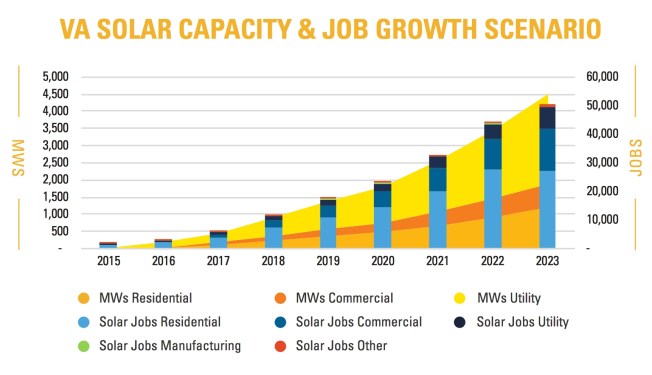
A new analysis from the non-profit Solar Foundation shows Virginia could create 50,400 jobs if it commits to building enough solar energy in the next five years to provide just 10% of our electricity supply.

The analysis takes the form of an “infographic” showing the implications of 10% solar. It would require building 15,000 megawatts of solar, divided among utility-scale solar farms, commercial installations, and the rooftops of houses. At the end of 2016, Virginia had a total of only 241 MW of solar installed, representing one-tenth of 1 percent of total electricity consumption. Getting to 10% by the end of 2023 would mean an annual growth rate of 61 percent. That would be impressive growth, but well below the 87 percent growth rate averaged by California and North Carolina over the past 6 years.

So 10% in five years should be doable. And indeed, viewed against the need to dramatically lower our carbon footprint, it seems like a very small step indeed. The McAuliffe administration wants to significantly cut statewide carbon emissions, and it is hard to see how we can do that without replacing the dirtiest fossil fuels with solar (and wind, and energy efficiency).

The good news is that the market is in our favor. Dominion Energy’s 2017 Integrated Resource Plan (IRP) identified utility-scale solar as the least-cost energy resource available in Virginia today. And participants in local cooperative buying programs for homeowners and businesses, known as “Solarize” programs, report payback times of under 10 years for rooftop solar, after which they will have nearly free electricity for 20 or 30 years.

Recent solar deals involving Amazon, Microsoft, and now Facebook show just how strong the demand is from customers. The very companies that our political leaders want so desperately to attract to Virginia are insisting on renewable electricity.

These deals demonstrate the direction of the market, and they will give an initial boost to solar employment, especially in the rural communities that are the best locations for solar farms. But restricting solar to a handful of new companies just coming into Virginia won’t get us to 15,000 MW and 10% solar. It’s also fundamentally unfair to the rest of us who are stuck with a dirty grid. Why should existing customers get left with polluting sources, while big tech companies get solar?

For us, Dominion’s IRP caps its solar plans at 240 MW per year, an amount it admits is arbitrary. In other words, Amazon got 260 MW, Facebook is getting 130 MW, but all the rest of Dominion’s customers put together will get just 240 MW per year.

As for customers who are determined to take matters into their own hands with rooftop solar, a host of unnecessary restrictions continue to limit growth. Virginia needs to put policies in place to push utilities to do more, to support local governments and schools that want solar, and to remove the barriers that limit private investment.

Solar companies around the state say if we can do that, they will do their part by hiring more Virginians. Here’s what some of them had to say about the 10% solar goal, and how to achieve it:

“We believe, as Virginians, that we can solve our energy challenges. Ours is a Virginia company founded and based in Charlottesville, and we are committed to building Virginia-based energy production facilities that benefit all Virginians. But the fact is that over the past few years our growth has come from business in other states. We have 26 employees in Virginia now, and we could increase that dramatically if Virginia promotes solar through policy changes that incentivize business owners to invest, allows competition, and supports the environmental message.” –Paul Risberg, President of Altenergy, Charlottesville

“The economics have never been better for solar in Virginia than they are right now. Prospect Solar has grown from two employees in 2010 to 16 full time employees today. Roles such as electricians, skilled labor, engineers, project managers, and sales people are integral to the success of each project. We hope Virginia will commit to a rapid, sustained buildout of all sectors of the solar industry, allowing us to continue adding local jobs.” –Andrew Skinner, Project Manager at Prospect Solar, Sterling

“Nationwide, the solar market was a 23 billion dollar industry in 2016. One out of every 50 new jobs in America was created by the solar industry last year. Sigora has been part of that. We have doubled in size in the past year and now employ 80 people in the Commonwealth.” –Karla Loeb, Vice President of Policy and Development for Sigora Solar, Charlottesville

“Local energy, local jobs, local investment. Our workforce is made up of local people—three of us went to Virginia Tech, one went to New River Community College, which has an Alternative Energy Program. An increase in demand of this scale would mean we’d hire more local people.” –Patrick Feucht, Manager of Baseline Solar, Blacksburg

“Residential and commercial rooftop solar has created most of the solar jobs in Virginia to date, and it has to be a part of the push to 10 percent. As we know, rooftop solar creates more jobs than utility solar, and these are good-paying, local jobs for local people. That’s one reason Virginia should lift the outdated 1 percent cap on net-metered solar, and leave the market open to anyone who wants to invest in their own home-grown energy supply.” –Sue Kanz, President of Solar Services, Virginia Beach

“Ten percent solar is a modest goal to shoot for given the strong economics of solar and the demand we are seeing from customers. Virginia has been held back by restrictive policies that have made it a ‘dark state.’ Reforming our policies would lead to a lot more economic development around solar.” –Tony Smith, President of Secure Futures LLC, Staunton


Unknown's avatar

For minorities and the poor, “cheap” energy comes at a high cost

Utilities and other energy companies often resist clean energy mandates and tighter environmental regulation, but they swear it’s not about their lost profits. No, it is their single-minded devotion to the public good that drives them to defend fossil fuel pollution. Only by fouling the air and water can they keep energy costs low, especially—cue the crocodile tears—for minorities and poor people. Guest blogger Kendyl Crawford weighs in with a closer look at the real effect of fossil fuels on the folks polluters say they care about.

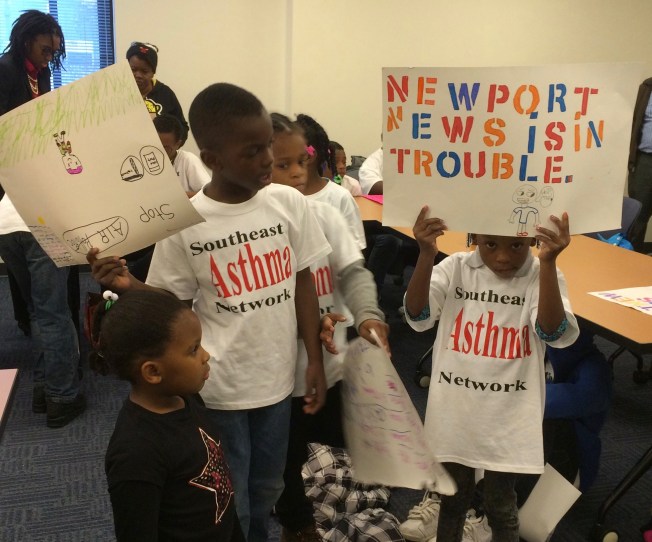
Children from the Southeast Care Coalition make their point about the link between air quality and asthma.

Children from the Southeast Care Coalition make their point about the link between air quality and asthma.

By Kendyl Crawford

There is an old adage that goes, “When White America sneezes, Black America catches pneumonia.” It describes the way problems affecting the economy as a whole are magnified for African-Americans, whose place on the economic ladder is already tenuous. The same can be said for Latinos, recent immigrants, and members of low-income communities. And just as these Americans are the ones hardest hit by economic setbacks, so they are the ones who suffer most from an energy economy based on fossil fuels.

Worse, they are often used as pawns by fossil fuel companies who declare that poor people need cheap energy, without accounting for the true cost of that energy. And that true cost can be very high. Over half a million people in Virginia live within 3 miles of coal-fired power plants. Of this group, 52% are minorities and 34% are members of the low-income community. This doesn’t seem like much of a disparity until you realize that Virginia has a total minority population of 35% and a low-income population of 26%.

The fossil fuel industry has a long history of siting power plants strategically, avoiding upper class, white areas whose residents have the power and influence to be able to cry NIMBY (Not In My Back Yard). Communities with less political and economic power got stuck with the facilities—often along with other unwanted neighbors like highways, heavy industry, and waste dumps. In many cases, the communities were there first and then became the victims of zoning changes that gave the green light to polluting facilities. Residents ended up with higher environmental health burdens and lower home values, often with no compensating economic boost from the presence of the facility. The term for siting highly-polluting facilities in these communities now even has its own acronym: PIMBY, for “Put it In Minorities’ Back Yard.”

The 2014 NAACP Coal Blooded: Putting Profits before People report gave five Virginia power plants an F for their environmental justice performance, a grade based on how much a particular plant impacts both low-income and minority communities. The score takes into account the amount of sulfur dioxide and nitrogen oxides air pollution; total population within a three-mile radius of a facility; median income; and the percentage of minorities that make up the population in the close vicinity.

The NAACP report also gave a failing environmental justice performance score to Virginia’s largest utility, Dominion Resources. Dominion ranked as the 6th worst performing company in the U.S. and a “worst offender” in terms of environmental justice.

It’s not just coal. The Clean Air Task Force report Gasping for Breath highlights the fact that nationwide the oil and gas industry releases 9 million tons of pollution such as methane and benzene annually. Many of these toxic pollutants have been linked to cancer and respiratory disorders as well as increasing smog. Every summer there are 2,000 visits to the emergency room for acute asthma attacks and more than 600 hospital admissions for respiratory diseases that are directly related to the ozone smog that results from oil and gas pollution.

Not surprisingly, asthma takes its greatest toll on minorities. According to the EPA, black children are about four times more likely to die from asthma than white children. They are also twice as likely to be hospitalized for asthma. From 2001 to 2009, the asthma rate for black children increased almost 50%. African Americans, with lower rates of health insurance coverage, have fewer resources to manage these added stressors.

Latino children fare similarly poorly. Higher poverty rates and lower rates of insurance coverage mean Latino children have more severe asthma attacks than non-Hispanic white children and are more likely to end up in emergency rooms.

Of course, it’s not just minorities who suffer the harmful consequences of fossil fuels. Low-income people in general have fewer choices in where to live, have less access to health care, and often have little political power. In Virginia, this includes many residents of coalfields communities, whose families may have worked in coal mines for generations and yet have little to show for it.

Climate change will only increase the burden on minorities and low-income communities. For instance, many African American communities have historically been relegated to the least-valued land in a particular city or county, and this land is often low-lying. A recent article exposed the fact that when public housing is destroyed due to sea level rise, stronger storm surges and more extreme storms, it often doesn’t get rebuilt, forcing folks to relocate permanently.

Atmospheric warming will also lead to more health issues related to air pollution, which tends to increase with higher temperatures. But heat itself will take a toll, too, especially for those in substandard housing or who can’t afford air conditioning.

Most at risk will be those who work outdoors, among them construction workers, landscapers and farmworkers. Again, these are disproportionately minorities. Latinos make up about 48% of farm workers and almost 30% of construction workers in the U.S. As noted in the report Nuestro Futuro: Climate Change and U.S. Latinos, Latinos are already three times more likely to die from heat-related causes on the job than non-Hispanic whites. Climate change is expected to increase temperatures further. Hispanic communities are also generally located in areas of cities that are the hottest due to lack of vegetation and green spaces and the use of heat-trapping building materials.

These health impacts will be compounded by high poverty levels and low rates of health insurance. A Hispanic who is employed has less of a chance of having health insurance than a non-Hispanic person. When conditions like cardiovascular disease or diabetes are not treated and controlled, they can trigger visits to the emergency room after being exposed to extreme heat. Not to mention, language barriers can make it harder to obtain care.

Recent immigrants may also face greater difficulties following severe weather events, which are expected to increase in both frequency and intensity. Depending on their immigration status, disaster assistance may be hard to obtain or even completely unavailable.

So when utilities and fossil fuel companies urge our political leaders to keep energy costs low for the poor folks, we should recognize that what they really want is to keep profits high for themselves. They aren’t doing their customers any favors.

Kendyl Crawford is a Program Conservation Manager with the Virginia Chapter of the Sierra Club.


Unknown's avatar

Sen. Mark Warner’s tolerance of climate disinformation

image-2-2-17-at-5-45-pm

CREDIT: VIRGINIA STUDENT ENVIRONMENTAL ASSOCIATION


Virginia’s senior U.S. Senator Mark Warner cast a vote this week that will come back to haunt him in coming years. It will also haunt our commonwealth and nation in future decades and centuries. Warner voted to confirm President Donald Trump’s nominee, former ExxonMobil CEO Rex Tillerson, to be Secretary of State.

Tillerson, sad to say, may not be the most extreme or unqualified of President Trump’s cabinet nominees. One can hope that Senator Warner will vote against some of the worst of the worst, such as climate-science denier Scott Pruitt to head the Environmental Protection Agency. Pruitt has pledged to unravel bedrock environmental protections like the Clean Air and Clean Water Acts.

But opposing one or two other Trump nominees won’t excuse Senator Warner’s vote to make Rex Tillerson Secretary of State.

Tillerson’s former company has spent millions of dollars over recent decades to promote climate-science denial, to the detriment of many millions of vulnerable people all over the world, including many here in Virginia. ExxonMobil’s climate-denial promotion has been documented in academic studies, and Virginia Attorney General Mark Herring is investigating ExxonMobil’s role in promoting climate-science disinformation.

To his credit, Virginia’s junior U.S. Senator, Tim Kaine, brought out Tillerson’s connection to climate-science denial at Tillerson’s confirmation hearing. Tillerson dodged Kaine’s questions. Following the hearing Kaine tweeted: “It’s shameful Tillerson refused to answer my questions on his company’s role in funding phony climate science.” Kaine voted against confirming Tillerson.

By all accounts Tillerson has personal virtues. He’s an Eagle Scout who long supported and recently headed the Boy Scouts of America. He was once a good juror in a criminal case, as one of his fellow jurors recently explained in The Dallas Morning News. In many respects Tillerson is an upstanding Christian who contributes to mission work to help others.

But his former company’s longtime, immoral promotion of climate-science disinformation will harm exponentially far more people than his personal good deeds have helped.

There’s a term to explain how people like Tillerson can be good Boy Scouts, jurors, and churchgoers while also doing great harm that will cause great suffering to others. It’s called “moral disengagement.” The concept is explained in detail in a recent book by emeritus Stanford psychology professor Albert Bandura, titled Moral Disengagement: How People Do Harm and Live with Themselves. Bandura describes several mechanisms by which corporate polluters try to distance themselves from the harm they cause. They use front groups to do their dirty work with politicians. ExxonMobil and other fossil-fuel companies do that through groups like the notorious American Legislative Exchange Council (ALEC), which promotes science misinformation to state legislators.

And Bandura notes that corporate polluters themselves promote scientific disinformation as a mechanism of moral disengagement. That is precisely what ExxonMobil has been doing for years, as Senator Kaine noted at Tillerson’s confirmation hearing. These lies and half-truths have real consequences for real people, here in Virginia and around the world.

Penn State climate scientist Michael Mann (formerly of UVA) has said that history will judge harshly those who promote climate-science denial. But, Mann added, “history will be too late.”

Senator Warner hasn’t himself promoted climate-science denial, but he just voted to make someone who has our nation’s Secretary of State.

History, and (one can hope) Virginia voters as well, will judge Mark Warner harshly for that.

Seth Heald is chair of the Sierra Club’s Virginia Chapter. He expects to receive a Master of Science degree in Energy Policy and Climate from Johns Hopkins University in May, 2017. His article on climate change and moral disengagement was published in the May-June, 2016 issue of Environment: The Journal of Sustainable Development.

Unknown's avatar

How can we address climate change if we don’t talk about it?

cncartoons029881-549The Daily Press, Virginia’s fourth largest newspaper, recently ran an ambitious series of insightful articles on climate-change adaptation. The series movingly showed the daily reality of the many Virginians living near the coast, on the front lines of climate change.
The Newport News-based paper serves the Hampton Roads region, with particular focus on the Peninsula and Middle Peninsula. The paper’s readership territory is mostly low-lying, much of it adjacent to or near tidal waters, so there are plenty of sea-level rise and storm-flooding stories to cover. But one thing about the eight articles in the series that I’ve reviewed is odd, and also sad. Not one of them mentions “climate change” or “global warming.” To be sure, “sea-level rise” is mentioned often, along with “coastal flooding.” But the articles avoid mentioning the primary cause of those phenomena—global warming, aka climate change.

The Daily Press series’ focus is hyper-local: articles by six different reporters, each focusing on sea-level rise and other climate-change effects in a particular neighborhood or jurisdiction—Newport News, Carmines Island, Hampton; and York, Mathews, James City, Isle of Wight, and Gloucester Counties. Many residents and local officials were interviewed. The articles’ tone at times is elegiac, as people describe the way things were not long ago, and how they’ve changed for the worse as the waters rise. While climate-adaptation terms like “retreat” and “abandonment” aren’t mentioned, an official in Mathews County notes that property owners are beginning to donate their land to a nonprofit, a trend that he says is likely to accelerate. (Landowners can claim tax benefits for donating their property to qualifying nonprofits.)

In one of the saddest comments, an official in Hampton notes that the city’s building code may need to be updated to prevent houses from getting knocked off their foundations by “wave action.” Sadder yet, a Carmines Island resident says “We’re drowning down here. We need some help.”

The Daily Press deserves great praise for this detailed, ongoing coverage of the climate crisis. This is the type of quality, in-depth local reporting that could earn a Pulitzer Prize. It focuses on human faces in nearby places dealing with a problem that is global, abstract, and too often easy for many Americans to ignore. Every Virginia official from Governor Terry McAuliffe on down, including all members of the General Assembly and our representatives in Congress, should read these articles.

But still, why the climate-change silence? Why not at least mention or better yet analyze the real issue—the underlying cause? True, the articles do frequently use the term “sea-level rise,” a phrase that Republican Delegate Chris Stolle of Virginia Beach once called “a left-wing term,” presumably because he recognizes that rising seas are caused by our greenhouse-gas emissions, which heat the planet, and knows that politicians in his party aren’t supposed to admit that. He received well-deserved ridicule for that comment, and at least some in his party are now willing to utter the expression “sea-level rise,” as long as they studiously avoid linking it to climate change. But when six Daily Press reporters write a series about rising seas and more-intense storms while failing to note the larger climate-change causes, something is amiss.

Perhaps the best clue for what is happening can be found in the comment of Garrey Curry, assistant Gloucester County administrator. He told the Daily Press: “Locally when we talk about sea level rise we try not to get bogged down to the whys and hows. We want to understand the trends.” Left unsaid, and apparently unchallenged by Daily Press reporter Frances Hubbard, was how one can understand the trends and implement solutions if one doesn’t talk or think about, much less act on, the “whys and hows.” Curry in effect admitted that he wants to avoid talking about climate change, apparently because he thinks it is too “controversial.” He of course is entitled to his views, but a newspaper ought not to avoid underlying causes to avoid controversy. Indeed a newspaper’s mission should be to enlighten readers about what’s causing the problems it’s reporting on.

At first I thought another clue explaining the Daily Press’s climate silence might be found in a rather appalling 2014 editorial, in which the paper blasted some local officials for taking climate change seriously. The officials’ crime back then? They had “jumped on the global warming bandwagon” which the paper called “trendy” and “a cult-like fad.”

But in the intervening years, as sea levels (and temperatures) continue to rise as predicted, the paper’s editorial staff seems to have had a change of heart (or perhaps a change of personnel). A powerful editorial this month summed up the findings of the paper’s series of articles on the human costs of the region’s flooding. The editors acknowledged (without mentioning the 2014 editorial): “Our global climate is getting warmer and th[e] temperature is rising faster than it has in the past. Glaciers are melting, and sea levels are rising. Human activity is the primary cause, or at least one of the primary causes, for these changes.” The editorial concluded: “We are in the eye of the storm, and our region can either take on a leadership role [in addressing climate change] or serve as a cautionary tale.”

Well said. The Daily Press editorial page’s change-of-heart since 2014 gives one hope. But the editorial also noted that the paper got complaints from some readers of the series who “buy into the counterintuitive argument that climate change is either a gross exaggeration or a complete hoax.” In other words, even though the paper’s articles on flooding studiously avoided mentioning climate change, readers predisposed to deny climate science apparently wanted the paper to be silent about not just climate change but also about the flooding itself.

The moral of this story, it seems to me, is that deniers are gonna deny. So there’s little point in remaining silent about climate change, or using euphemisms to dance around the topic, in order to avoid supposed “controversy” about the science. After all, that controversy derives from disinformation manufactured by the fossil-fuel industry and promoted by the front groups and politicians it controls. So better for a newspaper to just be truthful and candid, rather than try to avoid supposed controversy. And being truthful about sea-level rise—telling the whole truth—includes discussing the causes, not just the symptoms.

Michael Allen, an assistant professor of geography at Old Dominion University, made a similar point in the Virginian-Pilot last summer, gently chastising the Norfolk planning department for issuing a report on “resiliency” and “living with the water” while not mentioning “the elephant in the room,” climate change. Allen noted that the city’s Norfolk Vision 2100 plan “failed to acknowledge, even in passing, the causes of our ongoing problem or provide a scientific context to our challenges.”

Climate silence is hardly limited to one newspaper, one government entity, or one political party. Even environmental activists sometimes avoid mentioning climate change when discussing measures that are, in truth, all about climate change. Governor Terry McAuliffe, who has supported the EPA’s Clean Power Plan effort to address climate change, nevertheless is silent on climate when he’s out promoting unneeded gas pipelines that will increase greenhouse-gas emissions.

Researchers at George Mason and Yale Universities released a study in 2016 on what they called “a climate ‘spiral of silence’ in which even people who care about the issue shy away from discussing it because they so infrequently hear other people talking about it—reinforcing the spiral.” The GMU/Yale report noted that “fewer than half of Americans say they hear global warming discussed in the media (TV, movies, radio, newspapers/news websites, magazines, etc.) ‘at least once a week’ … or even ‘at least once a month.’” Some 30% of Americans say they hear about global warming only “once a year or less,” “never,” or they are “not sure.” A just-issued GMU/Yale report found that only about 15% of Americans understand that almost all climate scientists are convinced that human-caused global warming is happening. That figure is up from 11% in March 2016, but still is very concerning. This is not a time to be silent about climate change.

A major antidote to the spiral of climate silence, of course, is more and better news coverage of the climate crisis. The Daily Press series presents a curious case of talking eloquently about climate change symptoms while carefully avoiding talking about causes. The paper’s follow-up editorial makes up for that omission somewhat, but the causes of climate change need to be explained in news articles, not just in the opinion pages.

In his classic 2007 book on socially organized silence (The Elephant in the Room: Silence and Denial in Everyday Life) the sociologist Eviatar Zerubavel explains that silence is a form of communication that often speaks louder than words. Moreover silence, like denial, “usually involves refusing to acknowledge the presence of things that actually beg for attention.” He adds, “ignoring something is more than simply failing to notice it. It’s often the result of some pressure to actively disregard it. By enabling … collective denial, conspiracies of silence prevent us from confronting, and consequently solving, our problems.” (Emphasis added.) There is considerable pressure in our society to be silent about climate change’s causes, originating primarily from fossil-fuel interests and politicians they control who spread lies and distortions about climate science.

Those of us who understand and care about climate change in this post-truth, alternative-fact age must push back against this pressure, and refuse to be silent or use euphemisms to avoid supposed “controversy.” Otherwise we are letting the disinformers control the boundaries of conversation. That’s just what the climate disinformers and their fossil-fuel backers want, and just what our commonwealth and our country cannot afford to let them do.

And finally it’s worth noting another small form of climate silence related to the Daily Press series. The Virginia Public Access Project (VPAP) issues a daily news summary, compiled from newspapers and other media sources around the state. VPAP is a non-partisan project, widely supported, used, and admired by people from all over the political spectrum (including me).

A couple of years ago I noticed that VPAP’s daily summaries relegate articles on climate change and environmental issues to a section titled “Virginia Other,” placed near the bottom of the report. I brought my observation to VPAP’s attention, noting the growing importance of climate change in Virginia and suggesting the topic deserves better treatment than “Other.” VPAP executive director David Poole politely responded, but declined to put climate and environment articles in their own section. The result is that VPAP’s “Other” section sometimes has nothing but environmental and climate articles. And “Other” is where VPAP listed the Daily Press’s articles on climate adaptation.

I noticed them there because “Other” is often the most important VPAP section—and therefore the one I always read first.

Seth Heald is chair of the Sierra Club’s Virginia Chapter. He expects to receive an M.S. degree in Energy Policy and Climate from Johns Hopkins University in May, 2017.

Unknown's avatar

Why Trump won’t stop the clean energy revolution

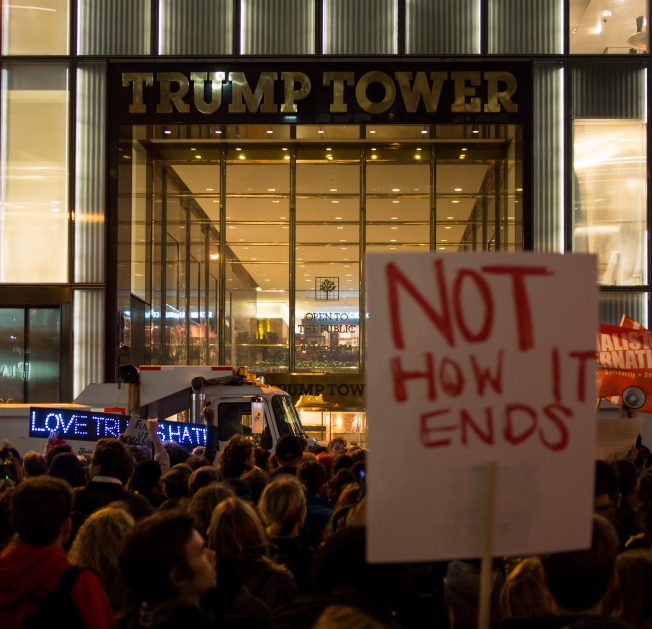
A protest in Manhattan against the presidency of Donald Trump, held the day after the election. Photo credit Rhododendrites - Own work, CC BY-SA 4.0, https://commons.wikimedia.org/w/index.php?curid=53011447

A protest in Manhattan against the presidency of Donald Trump, held the day after the election. Photo credit Rhododendrites – Own work, CC BY-SA 4.0, https://commons.wikimedia.org/w/index.php?curid=53011447

It is not an overstatement to say that Donald Trump’s win over Hillary Clinton horrified everyone who is worried about climate change. Reading the news Wednesday morning was like waking up from a nightmare to discover that there really is a guy coming after you with a meat cleaver.

You might not be done for, though. You could just end up maimed and bloodied before you wrest the cleaver away. So with that comforting thought, let’s talk about what a Trump presidency means for energy policy over the next four years.

I’ve had a lot of time to think about this. As a career pessimist, I’ve been worried about the possibility of a Trump win since last spring. I can fairly say I was panicking before panic became mainstream. But even with the worst-case scenario starting to play out, I’m convinced we will continue making progress on clean energy.

There is no getting around how much harder a Trump presidency makes it for those of us who want the U.S. to meet its obligations under the Paris climate accord. It’s not clear that Trump can actually “cancel” the accord, as he has promised to do. On the other hand, a man who puts fossil fuel lobbyists and climate skeptics in charge of energy policy is hardly likely to ask Congress for a carbon tax.

Nothing good can come of it when the people in charge relish chaos and embrace ignorance. Destroying the EPA will not stop glaciers melting and sea levels rising.

But just as politicians can’t repeal the laws of physics driving global warming, so there are other forces largely beyond their control. Laws and regulations currently in place; state-level initiatives; market competition; technological innovation; and popular attitudes towards clean energy have all driven changes that will withstand a fair amount of monkeying with. It’s worth a quick review of these realities.

Coal is still dead

Donald Trump’s promise to bring back coal jobs is about as solid as his promise to force American companies to bring jobs back from China. Even if he’s sincere, he can’t actually do it.

The economic case for coal no longer exists, and that remains true even if Trump and anti-regulation forces in Congress gut EPA rules protecting air and water. Fracking technology did more than the Obama administration to drive coal use down by making shale gas cheap. A glut of natural gas pushed prices down to unsustainable levels and kept them there so long that utilities chose to close coal plants or convert them to gas rather than wait.

What gas started, renewables are finishing. Today, coal can’t compete on price with wind or solar, either. That leaves coal with no path back to profitability. Not many utilities want to pollute when not polluting is cheaper.

Nor will the export market recover. China doesn’t want our coal, and a president who pursues protectionist trade policies will find it hard to get other countries to take our products.

It’s also hard to find serious political support for coal outside of a handful of coal states. Politicians say they care about out-of-work coal miners, but they care more about attracting industry to their states with cheap energy. That is certainly the case in Virginia, where Governor McAuliffe didn’t even include coal mining or burning anywhere in his energy plan.

If there is a silver lining for coal miners, it’s that without an Obama bogeyman to blame for everything, coal-state Republicans will have to seek real solutions to unemployment in Appalachia.

Solar and wind are still going to beat out conventional fuels

Analysts predict renewable energy, especially solar, will become the dominant source of electricity worldwide in the coming decades. Already wind and solar out-compete coal and gas on price in many places across the U.S. As these technologies mature, prices will continue to fall, driving a virtuous cycle of escalating installations and further price reductions.

While federal policies helped make the clean energy revolution possible, changes in federal policy now won’t stop it. Today the main drivers of wind and solar are declining costs, improvements in technology, corporate sustainability goals, and state-level renewable energy targets.

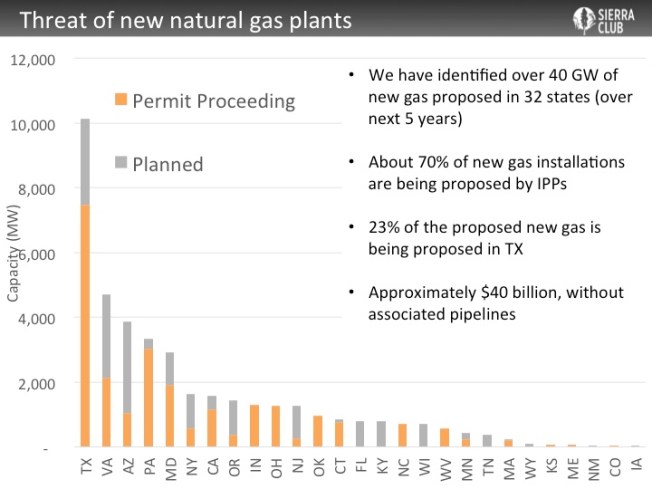
As the revolution unfolds over the next decade, the folly of investing in new fossil fuel and nuclear infrastructure will become increasingly clear. Natural gas itself is cheap right now, but new gas infrastructure built today will become worthless before it can recover its costs and return a profit. Corporations like Dominion Resources and Duke Energy are investing in gas transmission pipelines and gas generating plants only because they think they can profit from them now, and force captive utility customers to bear the cost of paying off the worthless assets later.

Advocates fighting new gas infrastructure have mostly had to work at the state level, since they’ve received little help from the Feds. That much won’t change. The cavalry isn’t coming to save us? Well, we are no worse off than we were before. We just have to do the job ourselves.

Dominion’s gas build-out is still a bad idea

Dominion Power is enthusiastic about natural gas, but we’ve seen this movie before. Environmentalists and their allies tried, and failed, to stop Dominion’s newest coal plant in Wise County from being built. Regulators approved it in spite of Dominion’s cost projections showing a levelized cost of energy of 9.3 cents per kilowatt-hour. That’s about twice the wholesale price of energy today, and well above where wind and solar would be even without subsidies.

Approval to construct the plant came in the fall of 2008. A mere eight years later, that looks like a terrible decision. Dominion Virginia Power shows no further interest in building coal plants. Instead, it has since built two huge natural gas plants and received approval to build a third. Its sister company is building the Atlantic Coast Pipeline to lock ratepayers into even more gas.

Eight years from now, those will look like equally bad decisions.

Renewable energy is popular with everyone

One of the most remarkable pieces of legislation passed during the last few years was the extension of the Investment Tax Credit and the Production Tax Credit, subsidies that have underpinned the rapid spread of solar and wind power. It turns out that Republicans don’t actually hate subsidies; they only hate the ones that benefit other people.

Wind energy is one of the bright spots in the red states of the heartland. Farmers facing volatile markets for agricultural products appreciate the stable income they get from hosting wind turbines among the cornfields, and they aren’t going to give that up.

And everybody, it turns out, loves solar energy. There’s a simple, populist appeal to generating free, clean energy on your own roof. The failure on Tuesday of a utility-sponsored ballot measure in Florida is especially notable: the constitutional amendment would have ended net metering and led to steep declines in solar installations in the Sunshine State. Voters said no. The lesson will resonate across the South: people want solar.

Indeed, public polling for years has shown overwhelming support for wind and solar energy, across the political spectrum. Even people who don’t understand climate change think it’s a good idea to pollute less. And the energy security benefits of having wind and solar farms dotting the landscape are simple and intuitive. So while the fossil fuel industry may use a friendly Trump administration to launch attacks on renewable energy, no populist army will back them.

The Clean Power Plan was important, but not transformative

Congressional Republicans have talked smack about the EPA for years, and the Clean Power Plan raised the needle on the right wing’s outrage meter to new levels. Most EPA rules have a layer of insulation from Congressional meddling as long as Senate Democrats retain the ability to filibuster legislation that would repeal bedrock environmental laws like the Clean Air Act. And laws protecting the air and water have such broad public backing that it is hard to imagine even the Chaos Caucus going there.

The Clean Power Plan could be different. Trump’s choice of a new Supreme Court justice will produce a conservative majority that might well strike down Obama’s most important carbon rule. For a handful of states that rely heavily on electricity from aging coal plants and aren’t compelled to close them under other air pollution rules, this will buy them a few years. (But see “Coal is still dead,” above.)

For most states, though, the Clean Power Plan was never going to be a game-changer. Many states were given targets that are easy to meet, or that they have already met. As I’ve pointed out before, Virginia’s target is so modest that the state could meet it simply by adopting a few efficiency measures and supplying new demand with wind and solar. That’s if the state decided to include newly-built generating sources in its implementation plan, which it doesn’t have to do.

By its terms, the Clean Power Plan applies only to carbon pollution from power plants in existence as of 2012. Newer generating plants are regulated under a different section of the Clean Air Act, under standards that new combined-cycle gas plants can easily meet. That’s a gigantic loophole that Dominion Virginia Power, for one, intends to exploit to the fullest, and it’s the reason the company supported the Clean Power Plan in court.

Regardless of whether it is upheld in the courts, however, the Clean Power Plan has already had a significant effect nationwide by forcing utilities and state regulators to do better planning. It led to a raft of analyses by consulting firms showing how states could comply and actually save money for ratepayers by deploying cost-effective energy efficiency measures. If the Clean Power Plan doesn’t become law, states can ignore those reports, but their residents should be asking why.

For Virginia, nothing has changed at the state level. Or has it?

Virginia has off-year elections at the state level, so Trump’s election has no immediate effect on state law or policy. Most significantly, Terry McAuliffe is still governor of Virginia for another year, he still knows climate change is real, and his Executive Order 57, directing his senior staff to pursue a strategy for CO2 reductions, is still in effect. McAuliffe has disappointed activists who hoped he would become a climate champion, but Trump’s win could light a fire under his feet. He has an opportunity to put sound policies in place, if he chooses to do so.

Offshore drilling in Virginia probably isn’t back on the table

Trump has promised to re-open federal lands for private exploitation, reversing moves by the Obama administration. His website says that includes offshore federal waters. However, the decision by the Bureau of Ocean Energy Management to take Virginia out of consideration for offshore drilling isn’t scheduled to be revisited for five years. Trump’s people could change the process, perhaps, but there’s not much demand for him to do so. With oil prices low, companies aren’t clamoring for more places to drill.

Environmental protection begins at home . . . and the grassroots will just get stronger

I would hate for anyone to mistake this stock-taking for optimism. The mere fact that the clean energy revolution is underway does not mean it will proceed apace. Opportunities abound for Trump to do mischief, and nothing we have heard or seen from him during the campaign suggests he will rule wisely and with restraint.

But advancing environmental protection has always been the job of the people. Left by itself, government succumbs to moneyed interests, and regulators are taken captive by the industries they are supposed to regulate. Americans who want clean air and water and a climate that supports civilization as we know it have to demand it. It will not be given to us.

Sound economics, common sense, and technological innovation are on our side. Most important, though, is the groundswell of public support for clean energy and action on climate. That never depended on the election, and it won’t stop now.

Unknown's avatar

Virginia, meet Paris. Things will never be the same.

By Tristan Nitot - standblog.org, CC BY-SA 3.0, https://commons.wikimedia.org/w/index.php?curid=41689

By Tristan Nitot – standblog.org, CC BY-SA 3.0, https://commons.wikimedia.org/w/index.php?curid=41689

After Republicans in Virginia’s General Assembly shut down the McAuliffe administration’s work on implementing the EPA Clean Power Plan last winter, Governor McAuliffe decided on an end run. He issued Executive Order 57, directing administration officials to recommend ways to reduce carbon pollution from the state’s power plants. The workgroup led by Secretary of Natural Resources Molly Ward is holding meetings this fall to gather information and advice.

This puts Ward in something of a pickle. Meeting the climate challenge requires Virginia to commit to a future with less fossil fuel, while McAuliffe is championing Dominion Power’s plans to radically expand fossil fuel investments in the Commonwealth.

Last week the European Union joined the United States, China, India, Canada, Mexico and dozens of other countries in ratifying the Paris climate accord, putting it over the threshold needed for it to take effect. The goal of the accord is to limit the increase in world temperatures to “well below” 2 degrees Celsius, 3.6 degrees Fahrenheit, a level beyond which climate effects are projected to be catastrophic. Given mounting concerns that 2 degrees isn’t sufficiently protective, the 197 signatory nations also agreed to a stretch goal of 1.5 degrees Celsius.

The U.S. is the world’s second highest emitter of CO2 after China, and our average emissions per person are two-and-a-half times that of the Chinese. No other country has contributed more to the problem. American leadership was key to bringing other countries on board, and it will be key to implementing solutions.

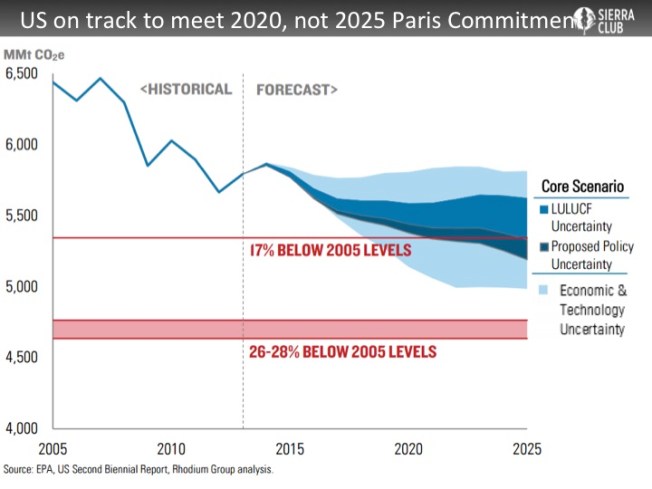
A few niggling details remain, like how we are actually going to do this. The EPA’s Clean Power Plan is a first step, but its scope is narrow. It addresses only carbon emissions from electric generating plants in use as of 2012, not new sources (though states can choose to do that). It doesn’t address emissions outside the electric sector. It also doesn’t address methane emissions from natural gas infrastructure, a climate threat that seriously undercuts the climate benefit of utilities switching from coal to gas. Its goal of reducing electric-sector carbon pollution by 30% by 2030 is nowhere near what’s needed.

To meet its Paris commitment, the U.S. will have to dramatically reduce fossil fuel use in everything from electricity and heating to manufacturing and transportation. The good news is that the technologies to do this exist, and they are getting better and cheaper by the day. The bad news is that even an all-hands-on-deck approach would need time to work, and there are still way too many hands sitting idle in their bunks below deck.

Future federal regulation that goes well beyond the Clean Power Plan is inevitable. Through whatever means—a carbon tax, removal of fossil fuel subsidies, new incentives, or simple mandates—renewable energy has to take over the power sector, with fossil fuels limited to a supporting role before being phased out altogether. Building codes must be dramatically strengthened to minimize energy consumption, and transportation must be electrified so vehicles run on wind and solar, not gasoline or diesel. And all this has to happen starting now.

With the U.S. committed to this path, it makes no sense for any state to pursue a fossil fuel-heavy strategy simply because federal mandates aren’t in place yet. The ratification of the Paris accord means all new fossil fuel investments—drilling machinery, fracking wells, pipelines, generating plants—must be evaluated against the likelihood that they will have to be abandoned well before the end of their useful life.

In Virginia this includes proposed new fracked-gas transmission pipelines; a new natural gas generating station that Dominion Power just received approval to build; as much as 9,000 megawatts more of natural gas generating plants that Dominion wants to build; and at least two new natural gas generating plants proposed by other developers, who would use the new gas pipelines to supply them. Altogether, these projects represent tens of billions of dollars in investments in infrastructure that would have to be shut down and left to decay within a decade or two.

All this could happen without violating the Clean Power Plan, if Virginia takes advantage of a loophole allowing it to exclude new gas plants from its implementation plan. Dominion’s gas plants alone would increase carbon emissions from Virginia by as much as 83%. That won’t get us to Paris.

It seems obvious that these investments would be better channeled into carbon-free renewable energy and reducing energy use through efficiency and building improvements. These are the “no regrets” investments that make sense for human health and economic development reasons anyway. With the Paris accord, the decision has gone from no-regrets to no-brainer.

But Dominion clearly thinks a pipelines-and-gas-plants approach will make more money for its shareholders. Dominion is betting that regulators will allow it to bill customers for the costs of new fossil fuel infrastructure even if it turns out that using it means paying a high carbon tax, or not using it at all. Dominion counts on the prevalence of climate doubt and magical thinking within the Virginia legislature and the staff of the SCC to muffle the wake-up call from Paris.

This is a deeply irresponsible and immoral calculus.

To date, Governor McAuliffe has backed Dominion at every turn. With only a year and a half left in his term, the “jobs governor” wants to lure businesses to Virginia quickly with the promise of cheap natural gas. It’s a strategy that might backfire in the short run, as savvy businesses go to states better preparing for life after Paris. Surely, it will backfire in the long run, when Virginia is left paying off unwanted fossil fuel infrastructure. The Paris accord marks a good point for McAuliffe to change his allegiance.

Indeed, after Paris, nothing will ever be the same. The days of natural gas as a bridge fuel are rapidly ending, and the U.S. has committed itself to breaking from its fossil fuel past. Executive Order 57 offers Virginia an opportunity to map out a carbon-free strategy. Time is short. Allons-y!

Unknown's avatar

The “fuel” that’s helping America fight climate change isn’t natural gas

You’ve heard the good news on climate: after a century or more of continuous rise, U.S. CO2 emissions have finally begun to decline, due largely to changes in the energy sector. According to the Energy Information Agency (EIA), energy-related CO2 emissions in 2015 were 12% below their 2005 levels. The EIA says this is “because of the decreased use of coal and the increased use of natural gas for electricity generation.”

Is the EIA right in making natural gas the hero of the CO2 story? Hardly. Sure, coal-to-gas switching is real. But take a look at this graph showing the contributors to declining carbon emissions. Natural gas displacement of coal accounts for only about a third of the decrease in CO2 emissions.

Courtesy of the Sierra Club Beyond Coal Campaign, using data from the Energy Information Agency.

Courtesy of the Sierra Club Beyond Coal Campaign, using data from the Energy Information Agency.

By far the biggest driver of the declining emissions is energy efficiency. Americans are using less energy overall, even as our population grows and our economy expands

Energy efficiency is sometimes called the “first fuel” because cutting waste is a cheaper and faster way to meet energy demand than building new power plants. Improvements in energy performance cut across all sectors of the economy, from industrial machines to home electronics to innovations like LED bulbs replacing famously wasteful incandescent light bulbs.

Energy efficiency’s stunning success in lowering carbon emissions should get more attention, and not just because it is cheaper than building new natural gas-fired power plants. Efficiency has no downsides. Natural gas has plenty. Indeed, when methane leakage from drilling and infrastructure is factored in, natural gas doesn’t look much like a climate hero at all.

And that’s not the full story. A growing share of the credit for carbon reductions also goes to non-carbon-emitting sources, primarily wind, and solar. Both sources exhibit double-digit growth rates. Wind power in the U.S. has grown from a little over 9,000 megawatts (MW) in 2005 to more than 74,000 MW by the end of 2015. In 2005, the solar market scarcely existed. By early this year, we had 29,000 MW installed.

The solar trend is particularly exciting because we are just starting to see the big numbers that result from solar’s exponential growth. In the first quarter of 2016, more solar came online in the U.S. than all other power sources combined. Analysts like Bloomberg New Energy Finance see solar becoming the world’s dominant energy source over the next 25 years, driving out not just coal but also a lot of gas generation as solar becomes the cheapest way to make energy.

For an inspiring look at how this will happen, check out this presentation by author Tony Seba. As Seba argues, solar isn’t a commodity like fossil fuels; it is a technology like computers and cell phones. When technologies like these take off, they take over. Seba refers to solar technology, battery storage, electric vehicles and self-driving vehicles as “disruptive” technologies that are advancing together to upend our energy and transportation sectors.

Another graph shows us how critical these advancements will be. The U.S. is on track to achieve President Obama’s goal announced last year of lowering carbon emissions 17% below 2005 levels by 2020, but we will need more aggressive measures to meet our Paris Agreement target of 26-28% below 2005 levels by 2025. After 2025, of course, we will have to cut greenhouse emissions even further and faster.

Slide4Given the urgency of the climate crisis, we don’t have the option of waiting around for the solar revolution to bankrupt the oil and gas industry and fossil-bound electric utilities. These companies will not go quietly; already they are maneuvering to lock customers into fossil fuels. Power producers are engaged in a mad rush to build natural gas plants, and wherever possible, to stick utility customers with the costs.

For Virginians who have felt especially under attack from fracked gas projects recently, this final graph shows it’s not your imagination: Virginia is second only to Texas in new gas plant development underway. And this graph captures only a fraction of the new gas that Virginia’s major utility, Dominion Virginia Power, wants to build. In presentations to state officials, it revealed plans for more than 9,000 megawatts of additional gas generating capacity.

Based on Energy Information Agency data. Chart excludes natural gas generating units already under construction as well as those scheduled to come online after 2020.

Based on Energy Information Agency data. Chart excludes natural gas generating units already under construction as well as those scheduled to come online after 2020.

Dominion and other gas-happy utilities are betting that once plants are built and consumers are on the hook, regulators won’t want to see them idled ten years from now just because renewable energy has made them obsolete.

Indeed, Dominion and other utilities, including Duke Energy, Southern Company, and NextEra in the Southeast and DTE Energy in the Midwest, even plan to use electricity customers to make money for the gas pipelines they are building, locking Americans further into gas.

This is madness. The only sound energy plan today is one that looks forward to an era of minimal fossil fuel use. It puts efficiency and renewables front and center, shifting natural gas and other fuels to supporting roles that will shrink over time.

The shift is inevitable. Delaying it means allowing the climate crisis to worsen, while sticking customers with higher bills for decades to come. That may suit some utilities just fine, but the cost is too high for the rest of us.


Unknown's avatar

Dominion executive speaks up on climate change. That turns out to be a bad thing.

Photo courtesy of Chesapeake Climate Action Network

Photo courtesy of Chesapeake Climate Action Network

In guest blogger Seth Heald’s last post here, he discussed the strange fact that top executives at Dominion Power don’t talk about climate disruption, even though it is a major driver of the tectonic shifts underway in the nation’s power sector. Many of us assumed the climate silence at Dominion means its executives want to avoid a subject that can be politically divisive.  Turns out some of them are talking–but not in a good way. Heald brings us the story.

As I’ve written elsewhere, senior Dominion executives and other electric utility officials tend to avoid mentioning climate change in their public discussions. Dominion Virginia Power president Bob Blue avoided that unpleasant topic in his keynote luncheon speech at a recent Virginia resiliency conference, a forum where one has to work to avoid mentioning climate change. That sort of climate silence at the corporate top leaves the public wondering what Dominion executives really think, or whether they think much at all, about climate change.

It may also leave other Dominion executives in doubt about where their company stands. Last month a curious letter to the editor appeared in the Richmond Times-Dispatch headlined “Actually scientists disagree about climate.” At first glance the letter seemed ordinary—reciting misguided climate-science denial arguments for not acting to reduce greenhouse-gas emissions. It complained about “alarmists” who (the letter claimed) refuse to acknowledge benefits of climate change. And it suggested that Americans devote “our limited dollars” to adapting to climate change rather than slowing it by reducing greenhouse-gas emissions.

Letters of this ilk appear with depressing regularity in the Times-Dispatch and many newspapers. They misrepresent the state of climate science, reciting talking points that can be found on any of a number of denialist websites, or heard at conferences sponsored by fossil-fuel funded groups such as the American Legislative Exchange Council (ALEC). That’s sad, but not unusual.

But this climate-science denial letter was different in one key respect—it was written by David Shuford, a vice president and deputy general counsel at Dominion Resources Inc., Virginia’s largest energy company and the commonwealth’s biggest emitter of climate-disrupting carbon dioxide. (Shuford’s letter did not note his Dominion connection).

Now that is noteworthy.

What’s more, the Times-Dispatch published a similar Shuford letter earlier this year in which he complained about climate change “warmists” who are “watermelons” (“green on the outside, red on the inside”).

As Dave Barry would say, I am not making this up—a senior Dominion executive really is making these arguments in the press.

A few years ago Shuford served as “Vice President – Policy and Business Evaluation, Alternative Energy Solutions” at Dominion. According to Dominion’s Citizenship & Sustainability Report, the company’s Alternative Energy group “drives innovation by researching and evaluating renewable and emerging energy technologies to assess their commercial viability and potential for building a more sustainable economy.” Virginia lags neighboring states in deploying clean energy such as solar and wind, in no small part because Dominion has opposed measures of the sort that have helped other states ramp up clean energy.

That makes Shuford’s letters all the more noteworthy.

I phoned Shuford at his Dominion office to be sure he had really written the recent letter. He confirmed he had, but was quick to emphasize that he wrote it on his own, that he did not purport to speak for Dominion, and that no one at Dominion had reviewed the letter before he sent it. The letter, he said, reflects his personal views.

In an odd sense, Shuford’s going public with his views is refreshing—we know where this Dominion executive stands on climate change. His views are ill-informed and dangerous for his industry, our commonwealth, our country, and our world, but at least we know what he thinks. Which Dominion executives disagree with Shuford? Are any of them willing to publicly refute his arguments and accurately inform the public about climate change?

Is Shuford an outlier at Dominion, or do his views perhaps align with what other company executives think? Dominion acknowledges on its website that climate change is a concern, but in the same paragraph notes its plans to use greenhouse-gas emitting coal and natural gas far into the future. The company’s website says it wants a national climate change policy to “be developed legislatively,” yet Dominion also financially supports ALEC, which has worked for years to misinform legislators about climate change and block efforts to reduce greenhouse-gas emissions. Many large corporations have left ALEC for that reason, including Virginia’s other big electric utility, AEP. But Dominion has stuck with ALEC.

What’s most offensive and cruel about Shuford’s recent letter is his suggestion that we focus solely on climate adaptation rather than reducing greenhouse-gas emissions. He seems unaware of the analyses showing that reducing emissions now is highly cost effective compared to the astronomical costs of adaptation without emission reductions. And I doubt that the adapting he’s thinking of includes helping poor people in the third world adapt to sea-level rise, floods, drought, disappearing glaciers, or extreme weather caused in large part by the developed world’s greenhouse-gas emissions. Nor does he seem aware that relying on adaptation alone essentially writes off the entire Hampton Roads region, where many Dominion customers live.

Dominion claims that ethics is one of its four core values. Top executives at an ethical company would feel compelled to respond promptly, forcefully, and publicly to a published letter from a company vice president suggesting that we ought not to reduce greenhouse-gas emissions because people can simply adapt to climate change.

Dominion’s board should require the company to conduct training for executives and board members on climate-change ethics, and for that matter on climate science too.

Seth Heald is chair of the Sierra Club Virginia Chapter. He is a student in the Master of Science in Energy Policy and Climate program at Johns Hopkins University.


For curious readers, reprinted below is Mr. Shuford’s letter, as published in the Times-Dispatch. That is followed by an annotated version that provides Seth Heald’s responses to Mr. Shuford’s points (in italics), with citations to sources with accurate information.

Actually, scientists disagree about climate

Editor, Times-Dispatch:

Can we please stop the nonsense about science-supported climate change believers and science-denying climate change skeptics?

We are constantly told that “the science” is settled, that 97 percent of scientists agree on “the science,” and that the benighted few who disagree must be shunned or even prosecuted. In truth, the debate is far more real — even in the scientific community — than these armchair experts apparently realize.

There has never been 97 percent scientific agreement on the questions that matter with climate change. Simply repeating it doesn’t make it true. No one disagrees with the fact that the climate is changing. And most everyone agrees with the so-called greenhouse theory — that carbon dioxide causes the atmosphere to warm and that man has contributed to its concentration in the atmosphere.

The real debate in and outside the scientific community is over questions that flow from that theory, including the following:

(1) How much of global warming is due to mankind and how much is natural?

(2) Are there forces that counteract the greenhouse effect that aren’t being considered in the climate alarmists’ computer models (which might explain how their computer models have proven so inaccurate)?

(3) Does the absence of warming over the past 15 years disprove the alarmists’ theories about catastrophic global warming and, if not, why not?

(4) Will warming in the next century really be catastrophic, or could it actually be beneficial in ways the alarmists won’t concede?

(5) Given that the celebrated Paris Climate Agreement will have negligible effect on global temperatures even if every country complied, would our limited dollars be better spent on adapting to a warmer climate than on trying to prevent it?

So enough with the trope about the 97 percent versus “deniers.” There simply is no scientific consensus on the questions that will drive public policy on this issue.

David Shuford.

Richmond.

Mr. Shuford’s letter, with annotated response 

Editor, Times-Dispatch: Can we please stop the nonsense about science-supported climate change believers and science-denying climate change skeptics?

We are constantly told that “the science” is settled, that 97 percent of scientists agree on “the science,” and that the benighted few who disagree must be shunned or even prosecuted. In truth, the debate is far more real — even in the scientific community — than these armchair experts apparently realize.

There has never been 97 percent scientific agreement on the questions that matter with climate change. Simply repeating it doesn’t make it true.

See this 2016 paper confirming that there is a high degree of consensus about human-caused climate change among climate-science experts. See also this 2004 paper by (now) Harvard Professor Naomi Oreskes, published in Science, the journal of the American Association for the Advancement of Science. Also well worth reading is Merchants of Doubt, by Oreskes and Erik Conway, which details efforts by corporations to mislead and create confusion about the science concerning cigarette smoking and climate change.

No one disagrees with the fact that the climate is changing.

In fact a large number of people have attempted to argue that climate change is a hoax, and many still do, including a number of the candidates in the recent Republican presidential primary contest, such as Ted Cruz and Donald Trump, to name just a couple. But it is true that some of the fossil-fuel funded groups that formerly argued that there is no global warming have reacted to criticism by changing their argument to “the climate is always changing,” as if that somehow disproves the scientific consensus that human greenhouse-gas emissions are causing dangerous warming. A good example of the changing arguments of fossil-fuel-supported climate misinformers is ALEC—the American Legislative Exchange Council, which Dominion Resources belongs to and supports financially.

And most everyone agrees with the so-called greenhouse theory — that carbon dioxide causes the atmosphere to warm and that man has contributed to its concentration in the atmosphere.

Not true. Those, like Donald Trump, who say global warming is a hoax certainly don’t agree with this. Nor does Ted Cruz, who last year agreed that his climate position is “full out denial.” Some climate change deniers make statements like “carbon dioxide is harmless, you’re breathing it now,” as if that somehow disproved the disturbing warming effects that scientists have found. And of course Senator James Inhofe famously brought a snowball into the senate in winter in an effort to show that global warming is a hoax.

The real debate in and outside the scientific community is over questions that flow from that theory, including the following:

  • How much of global warming is due to mankind and how much is natural?

False. There is no real debate in the peer-reviewed scientific literature over the fact that the unusual, accelerating global warming seen since the 19th Century is attributable to the increase of greenhouse gases, primarily carbon dioxide, in the atmosphere due to burning fossil fuels. An excellent book to read on this is The History of Global Warming, by Spencer Weart (2d ed. Harvard Univ. Press 2008). It’s a scholarly book that is clear and approachable for lay readers. See also the links below to reports by several prestigious scientific bodies.

  • Are there forces that counteract the greenhouse effect that aren’t being considered in the climate alarmists’ computer models (which might explain how their computer models have proven so inaccurate)?

What are these unnamed “forces”? Shuford doesn’t say. What is Shuford’s evidence that climate models have “proven so inaccurate”? In fact climate models have proven to be generally accurate in predicting the warming that has occurred. The fact that they are not perfect is hardly surprising. Moreover, our knowledge of global warming is informed not only by models, but studies of the Earth’s warming and cooling over millions of years, which have shown a direct link between high atmospheric concentrations of carbon dioxide and higher global temperatures.

  • Does the absence of warming over the past 15 years disprove the alarmists’ theories about catastrophic global warming and, if not, why not?

There hasn’t been an absence of global warming in the past 15 years. In fact 2014 and 2015 set new records for average global temperatures. Shuford’s claim, which is promoted by a number of fossil-fuel supported interests is demonstrably false. Scientific American published a good summary of the issue earlier this year.

  • Will warming in the next century really be catastrophic, or could it actually be beneficial in ways the alarmists won’t concede?

This claim is not only absurd, but unethical and cruel in its disregard for the world’s poorest people who are threatened in this century and next by sea-level rise, storm surges, disappearing glaciers, flooding, drought, and mass species extinctions. There may well be a small number of people who will benefit during their lifetimes from warmer temperatures and a changed climate, but that is dwarfed by the number of people who will suffer by losing their property, their livelihoods, their health, and their lives due to climate change. Our species evolved to live in the stable climate we’ve had for thousands of years, and people settled in places suitable for the climate we have. The Hampton Roads area, which is served by Dominion Virginia Power, is particularly susceptible to future inundation, which will affect rich and poor Virginians, with the poor harmed disproportionately and least able to recover quickly from their losses.

  • Given that the celebrated Paris Climate Agreement will have negligible effect on global temperatures even if every country complied,

Shuford’s boss at Dominion, Thomas Farrell, II, has refused to talk publicly about the Paris Climate Agreement, which will dramatically affect his and Shuford’s company. Perhaps this sort of silence at the corporate top leads to Shuford feeling comfortable to mock (and attempt to minimize the effect of) the Paris Agreement in Dominion’s hometown daily newspaper. Virtually every nation in the world worked to negotiate the Paris Agreement. What does Shuford mean by “have neglible effect”? In fact the Paris accord will help a great deal. Yes, the world still needs to do more, but that means we should be calling for faster and sharper greenhouse-gas reductions.

would our limited dollars be better spent on adapting to a warmer climate than on trying to prevent it?

This again is cruel, particularly to the world’s poor, who have done so little to cause global warming, and who are and will be suffering disproportionately from it. It is unlikely that Shuford is calling for our “limited dollars” to go to helping people in Bangladesh adapt to sea level rise, or people in Nepal, Pakistan or Bolivia adapt to a word where glaciers that they depend on for subsistence agriculture have disappeared. The type of adaptation Shuford is perhaps unwittingly calling for would involve mass migrations by tens of millions of poor people around the globe. Shuford also appears to be unaware of or ignores the strong economic arguments for reducing carbon emissions now, rather than later. These are set forth in detail in two recent books The Climate Casino (2013 Yale Univ. Press), by Yale economist William Nordberg, and Why Are We Waiting? (2015 MIT Press) by Nicholas Stern, a professor of economics and government at the London School of Economics. Both are scholarly books rather than page-turners, but they’re sufficiently clear and approachable to be readable by non-specialists. Do any executives or board members at Dominion read books like these, which provide key insights on the future of Dominion’s business? Perhaps if they did they’d be more likely to talk about climate change at work and in their public speeches.

So enough with the trope about the 97 percent versus “deniers.” There simply is no scientific consensus on the questions that will drive public policy on this issue.

Wrong again. Good explanations can be found in this publication from the American Academy for the Advancement of Science, and this one published jointly by the U.S. National Academy of Sciences and the British Royal Society. Also, Inside Climate News recently described a new study published in Science about how fossil-fuel funded climate-science deniers disingenuously shift their arguments and use normal scientific uncertainties to deflect attention from the overwhelming scientific consensus on climate change and argue for no action to reduce greenhouse-gas emissions. That’s what we see in Shuford’s letter. That’s not to say necessarily that Shuford personally is disingenuous. Perhaps he really doesn’t know better (although a man in his position certainly ought to know better), and has just repeated what he saw on a fossil-fuel funded denial group’s website, or heard at an ALEC conference.