Unknown's avatar

Why does Dominion Power support EPA’s Clean Power Plan?

DominionLogoWhen utility giant Dominion Resources Inc. filed a brief in support of the federal Clean Power Plan last week, a lot of people were caught off guard. Hadn’t Dominion CEO Tom Farrell said as recently as January that it would cost consumers billions of dollars? Why, then, is the utility perfectly okay with it now?

Well, first, because the mere threat of the plan has already cost Virginia consumers a cool billion, but it’s all going straight into Dominion’s pockets. What’s not to like? Otherwise, as applied to the Commonwealth, the Clean Power Plan itself is a creampuff that could even save money for ratepayers. Farrell’s claim that it will cost billions, made at a Virginia Chamber of Commerce-sponsored conference, seems to have been a case either of pandering to his conservative audience, or of wishful thinking. (Looking at you, North Anna 3!)

And second, Dominion’s amicus brief indicates its satisfaction with the way it thinks Virginia will implement the Clean Power Plan. Dominion has been lobbying the Department of Environmental Quality to adopt a state implementation plan allowing for unlimited construction of new natural gas plants (and perhaps that new nuclear plant), which happens to be Dominion’s business plan.

If you can get everything you want and still look like a green, progressive company, why wouldn’t you support the Clean Power Plan?

The only risk here is that it makes Virginia Republicans look like idiots. Their number one priority this legislative session was stopping the Clean Power Plan, largely on the grounds of cost. They ignored the hard numbers showing the plan essentially gives Virginia a pass, and instead relied on propaganda from fossil fuel-backed organizations like Americans for Prosperity and, crucially, the word of Dominion Power lobbyists.

Sure, it wasn’t just Republicans; a lot of Virginia Democrats swallowed Dominion’s argument during the 2015 legislative session that the Clean Power Plan would be so expensive for consumers that the General Assembly had to pass a bill—the notorious SB 1349—freezing electricity rates through the end of the decade so they would not skyrocket.

SB 1349 suspended the ability of regulators at the State Corporation Commission to review Dominion’s earnings. One outraged commissioner, Judge Dimitri, calculated that the effect of this “rate freeze” would be to allow Dominion to pocket as much as a billion dollars in excess earnings, money that ratepayers would otherwise have received in refunds or credits.

Nor has SB 1349 even prevented rates from going up, since the State Corporation Commission’s approval of Dominion’s latest mammoth gas plant[1] will tack on 75 cents to the average customer’s monthly bill.

Environmental groups had opposed the gas plant, arguing approval is premature since we don’t know what Virginia’s Clean Power Plan will look like, and that Dominion hadn’t properly considered other options.

It gets worse. Building more of its own gas plants allows Dominion to terminate contracts to buy power from other generators. In theory, this should represent an offsetting savings for consumers. But as Judge Dimitri explained in a concurrence, SB 1349 means Dominion doesn’t have to subtract this savings from the bill it hands those ratepayers.[2]

As Sierra Club Virginia Chapter Director Glen Besa noted, “The State Corporation Commission decision today proves that there really is no electricity rate freeze. The SCC just allowed Dominion to raise our electricity rates and increase carbon pollution for a power plant we don’t need.”

Now, let’s have a look at what is actually in Dominion’s Clean Power Plan brief. In part, it is a defense of EPA’s holistic approach to regulating generation and a rejection of the conservative claim that the agency should not be allowed to regulate “outside the fence line” of individual plants. Adopting the conservative view, argues Dominion, could lead to widespread, expensive coal plant closures.

But mostly, Dominion likes the Clean Power Plan because the company feels well positioned to take advantage of it. The brief makes this argument with classic corporate understatement:

Dominion believes that, if key compliance flexibilities are maintained in the Rule, states adopt reasonable implementation plans, and government permitting and regulatory authorities efficiently process permit applications and perform regulatory oversight required to facilitate the timely development of needed gas pipeline and electric transmission infrastructure, then compliance is feasible for power plants subject to the Rule.

What Dominion means by “reasonable implementation plans” requires no guesswork. Virginia clean energy advocates want a mass-based state implementation plan that includes new sources, so power plant CO2 emissions from Virginia don’t actually increase under the Clean Power Plan. You or I might think that reasonable, given the climate crisis and EPA’s carbon-cutting goals. But that’s not what Dominion means by “reasonable.”

Dominion’s business plan, calling for over 9,000 megawatts of new natural gas generation, would increase CO2 emissions by 60%. To Dominion, a 60% increase in CO2 must therefore be reasonable. Anything that hinders Dominion’s plans is not reasonable. QED.

“Needed gas pipeline . . . infrastructure” is no puzzle either. Dominion wants approval of its massive Atlantic Coast Pipeline. That pipeline, and more, will be needed to feed the gaping maws of all those gas plants. Conversely, Dominion, having gone big into the natural gas transmission business, needs to build gas generating plants to ensure demand for its pipelines.

Dominion is not the only electric utility betting big on natural gas. Southern Company and Duke Energy have also recently spent billions to acquire natural gas transmission and distribution companies. Moody’s is criticizing these moves because of the debt incurred. From a climate perspective, though, the bigger problem is that this commitment to natural gas comes right at the time when scientists and regulators are sounding the alarm about methane leakage.

There is surely some irony that Dominion, while defending the EPA’s plan to address climate change, is doing its level best to increase the greenhouse gas emissions that drive it.

Indeed, anyone reading Dominion’s brief and looking for an indication that Dominion supports the Clean Power Plan because it believes the utility sector needs to respond to the climate crisis would be sadly disappointed.

On the other hand, the brief positively sings the praises of “market-based measures” for producing the lowest possible costs. This is a little hard to take, coming from a monopoly that uses its political and economic clout to keep out competition and reap excessive profits through legislation like SB 1349, and which intends to use its captive ratepayers to hedge the risks of its big move into natural gas transmission.


[1] SCC case PUE-2015-00075 Final Order, March 29, 2016.

[2] Commissioner Dimitri, in a concurring opinion:

“I would find that SB 1349 cannot impact the Commission’s authority in this matter because it violates the plain language of Article IX, Section 2, of the Constitution of Virginia, for the reasons set forth in my separate opinion in Case No. PUE-2015-00027.

“Indeed, the instant case further illustrates how SB 1349 fixes base rates as discussed in that separate opinion. The evidence in this case shows that Dominion plans to allow certain NUG contracts, currently providing power to customers, to expire while base rates are frozen by SB 1349. The capacity costs associated with these contracts, however, are currently included in those base rates. Thus, as explained by Consumer Counsel, this means that “the Company’s base rates will remain inflated” because Dominion (i) will no longer be paying these NUG capacity costs, but (ii) will continue to recover such costs from its customers since base rates are frozen under SB 1349. Based on Dominion’s cost estimates, between now and the end of 2019, it will have recovered over $243 million from its customers for NUG capacity costs that the Company no longer incurs. While other costs and revenues are likely to change up and down during this period and would not be reflected in base rate changes precluded by SB 1349, these NUG costs are known, major cost reductions that will not be passed along to customers.” [Footnotes omitted.]


Unknown's avatar

2016 bills show Virginia might finally get serious (sort of) about energy efficiency

Clive Upton/Wikimedia Commons

Clive Upton/Wikimedia Commons

Energy efficiency: it’s the resource that everyone praises and few pursue. If Dominion Virginia Power approached efficiency programs with the enthusiasm it devotes to building natural gas plants, then—well, it wouldn’t need the new gas plants.

And that’s the crux of the problem. Virginia’s utilities earn more money by building stuff than by not building it, and the excuse to build new stuff comes when demand for electricity increases. If people use less electricity—say, by buying more efficient lighting and appliances—that’s good for consumers, but bad for utility profits.

The Virginia State Corporation Commission hasn’t helped matters; it takes a skeptical view of utility-sponsored energy efficiency programs, rarely approving the kind of programs that would be needed for Virginia to make progress towards its modest goal of lowering electricity use 10% by 2022. Changing the SCC’s attitude through legislation is hard; doing so without the support of the utilities is impossible.

This is where the Governor finds his opportunity for modest progress. Terry McAuliffe has been very, very good to Dominion. He’s supported its fracked-gas pipeline, its budget-busting nuclear ambitions, its new gas plants, and even the rate boondoggle it secured last year that allows it to pick the pockets of Virginia ratepayers to the tune of a billion dollars.

So the least Dominion can do is to support the Governor’s efforts to improve Virginia’s dismal record on energy efficiency, reflected in HB 1053 (referred to House Commerce and Labor) and SB 395 (Senate Commerce and Labor). In a sign the utility may have acquiesced, the bills patrons are Delegate Terry Kilgore, the powerful chairman of the House Commerce and Labor Committee, and Senator Kenny Alexander, a Democrat on Senate Commerce and Labor who has shown no previous interest in reforming energy policy—but who, like Kilgore, ranks utilities among his top donors.

The legislation replaces an ineffective lost-revenue provision in the Code with an incentive-based approach intended to reward investor-owned utilities for success. According to a fact sheet the Administration is sharing with legislators, the utilities will reap bonuses in proportion to the amount of energy saved through implementing cost-effective programs:

  • An additional 1% of the actual costs of the program, if the utility achieves a levelized cost of saved energy (LCSE) for the program at or below six cents per kilowatt-hour;
  • An additional 2% of the actual costs of the program, if the utility achieves a LCSE for the program at or below five cents per kilowatt-hour;
  • An additional 3% of the actual costs of the program, if the utility achieves a LCSE for the program at or below four cents per kilowatt-hour;
  • An additional 4% of the actual costs of the program, if the utility achieves a LCSE for the program at or below three cents per kilowatt-hour.

These two Administration bills have the most momentum behind them, but they are not the only legislation out there looking for ways to make serious energy efficiency gains. The best of the bills is HB 576 (Rip Sullivan, D-Arlington, in Commerce and Labor). It requires the SCC to approve cost-effective efficiency programs and, more significantly, establishes robust new energy efficiency goals that utilities would be required to meet.

Sullivan has clearly spent a lot of time this year thinking about the policy barriers to energy efficiency. He correctly pegs SCC procedure as one of the problems.

HB 575 (in Commerce and Labor) as well as HB 352 (Lee Ware, R-Powhatan, also in Commerce and Labor) take aim at the way the SCC evaluates energy efficiency programs. Sullivan’s bill would make it easier for a program to meet the SCC’s standards. As currently written, Ware’s would actually make it harder; however, we hear this may be a drafting error, so we will be watching for amendments that would make this a bill to support.

Two more good bills from Sullivan also deserve mention. HB 1174 (in Commerce and Labor) requires the SCC to report on Virginia’s progress towards our 10% energy reduction goal. HB 493 (referred to Appropriations) creates an Energy Efficiency Revolving Fund to provide no-interest loans to localities, school divisions, and public institutions of higher education.

Freshman Delegate John Bell (D-Chantilly) has introduced a modest bill of such remarkable common sense that it shouldn’t be needed (but is). HB 808 requires government agencies to use LED light bulbs instead of incandescent bulbs when installing, maintaining or replacing outdoor light fixtures. The bill has been referred to the Committee on General Laws.

It’s also worth noting that two bills I previously included in the roundup of climate-related legislation would also have a significant impact on energy efficiency investments. HB 351 (Ron Villanueva, R-Virginia Beach, referred to Commerce and Labor) and SB 571 (Donald McEachin, D-Richmond, referred to Agriculture) would direct the Governor to join the Regional Greenhouse Gas Initiative (RGGI), the cap-and-trade plan that the northeastern states have used successfully to reduce carbon emissions and raise funds to further the RGGI goals. In Virginia, these funds would include millions of dollars for energy efficiency.

Finally, there’s a bill expanding Virginia’s authorization for Property Assessed Clean Energy (PACE) programs, which allow localities to loan money to property owners for energy efficiency and renewable energy. HB 941 (David Toscano, D-Charlottesville) expands the authorization for PACE programs to include residential and condominium projects.


Unknown's avatar

Dominion Virginia Power ordered to refund $19.7 million to customers, but gets to keep a billion in future overcharges

"Keep counting, Mr. Farrell. There's a billion more where this came from." Photo courtesy of Wikimedia Commons Valdemar-Melanko-1965 public domain.

“Keep counting, Mr. Farrell. There’s a billion more where this came from.” Photo courtesy of Wikimedia Commons Valdemar-Melanko-1965 public domain.

The State Corporation Commission has ordered Dominion Virginia Power to refund $19.7 million to customers, reflecting excess earnings during 2013 and 2014. But according to the November 23 order, the company will not have to lower its rates going forward, due to its success last winter in getting a bill passed that freezes base rates and eliminates rate reviews until 2022.*

That legislation, SB 1349, was widely criticized (including by me) as a handout to Dominion. How big a handout is now clear: “over a billion dollars,” according to the calculation of Judge James Dimitri, one of the three SCC commissioners.

Writing in a partial dissent, Judge Dimitri called SB 1349 unconstitutional, noting that Article IX, Section 2 of Virginia’s Constitution explicitly assigns rate-setting authority to the SCC. Thus, said Dimitri, the SCC should give no credence to SB 1349, and consequently should order a refund covering 2013 and 2014, and follow normal procedure to lower base rates going forward.

A rate decrease is appropriate, according to Dimitri, because “The record in this case and other biennial review proceedings demonstrate that, when conventional rate standards are applied, there have been, and are projected to continue to be, excessive base rates that are being paid by Dominion customers. “

And again: “The trend of current rates producing revenues over cost and a fair return has been continuing. For 2015, the Commission Staff projects revenues over a fair return of $301 million, and $299 million for 2016. . . The current rate levels, which the Commission has not been authorized to adjust, are designed to produce and have been producing annual excess revenues of hundreds of millions of dollars.”

As a result, concludes Judge Dimitri, “If base rates are fixed at current levels for at least the next seven years, earnings over and above the Company’s cost of service and a fair return have the potential to reach well over a billion dollars, at customer expense.”

The two other judges, Mark Christie and Judith Jagdmann, don’t address the constitutionality issue in their opinion for the majority. Indeed, it appears that none of the parties in the case raised the constitutional question in the proceedings, nor did any of the judges request briefing of the issue later, as sometimes happens.

Taking a cue from Judge Dimitri, however, on December 11 the Virginia Committee for Fair Utility Rates, one of the parties to the rate case, filed a Petition for Rehearing or Reconsideration, objecting to the commission’s order for failing to rule explicitly on the issue. The Committee asked for a hearing on the constitutional issue and asking for an order finding the provisions of SB 1349 unconstitutional.

Three days later, however, the SCC denied the petition in a second order, noting that the constitutional argument had not been raised during the rate case. Dmitri again dissented, saying he would grant reconsideration.

What happens now? Ordinarily any decision issued by the SCC can be appealed to the Virginia Supreme Court; but then, ordinarily you have to raise an issue during a proceeding before you can appeal it. It’s not clear whether the Court will agree to hear an appeal of these two orders if the Virginia Committee for Fair Utility Rates decides to pursue it.

With a billion dollars at stake, this is not an argument that should be ignored merely because it wasn’t raised in time. But there is also a reason the claim wasn’t raised earlier in the case: it’s a rate case looking backwards, not forwards, so the SCC didn’t actually have to address SB 1349.

Legal experts tell me that the Virginia Committee for Fair Utility Rates—or anyone else for that matter—can still challenge the constitutionality of SB 1349 by filing a new and separate case seeking a declaratory judgment from the SCC. A new case, with new arguments, yielding a decision on the merits, would most certainly be appealable to the Court.

__________________________

*The case is PUE-2015-00027. Links to documents on the SCC website work only some of the time. That counts as an improvement.

Unknown's avatar

Virginia regulators rain on Dominion’s solar parade; 76 MW in doubt

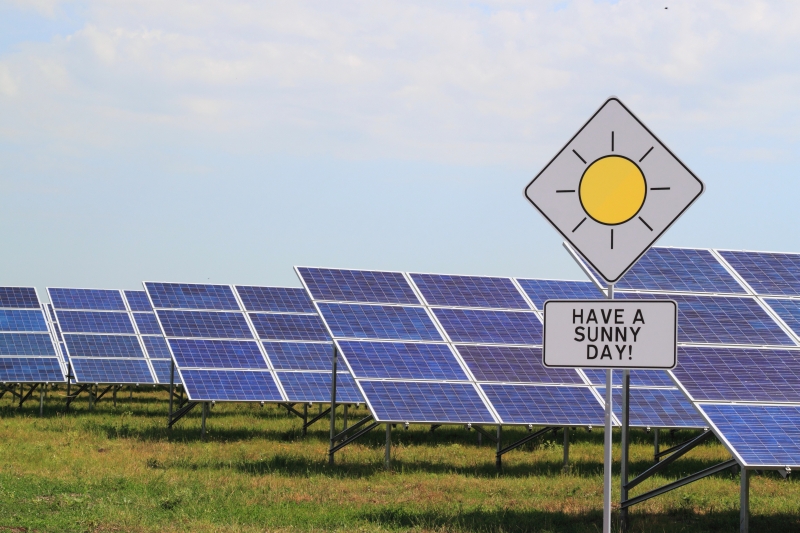
A tough stance from the SCC means delays for Dominion's solar plans. Photo by Activ Solar via Wikimedia Commons.

A tough stance from the SCC means delays for Dominion’s solar plans. Photo by Activ Solar via Wikimedia Commons.

Last week Virginia’s State Corporation Commission rejected Dominion Virginia Power’s proposed 20-MW solar facility in Remington, Virginia, citing the company’s failure to evaluate third-party market alternatives. Although the solar industry had urged this result, the ruling throws the Remington project into limbo—and with it, three other solar projects Dominion has in the works. Moreover, the language in the order has many advocates concerned the SCC may be setting a higher bar for solar projects than for fossil fuel projects.

The ruling that utilities must consider market alternatives to a self-build project is a win for Virginia’s solar industry, which argued that ratepayers would be better served if Dominion let the industry build and operate the Remington project through a third-party power purchase agreement (PPA). That approach would take advantage of third-party developers’ access to more favorable treatment under the federal tax code. Ratepayers would also benefit from the slimmer profit margins of private sector companies compared to the 10% return-on-investment guaranteed to Virginia utilities.

I made the same argument in this space back in June, and lamented the fact that Dominion’s greed put an otherwise good project in jeopardy. As indeed it has: there is no certainty now that Dominion’s first utility-scale solar facility will get built before the federal investment tax credit (ITC) for commercial and utility solar projects drops to 10% from its current 30% at the end of 2016. Without the higher ITC, the project will become more expensive for ratepayers, and surely make it even more difficult to get approved.

In theory, Dominion can respond to the SCC ruling by converting the Remington project from a self-build to a PPA, allowing developers to bid. Then the utility would recalculate the cost to ratepayers, offer up the savings, and renew its application to the SCC. Given the time crunch, the SCC might allow the current case to be reopened instead of starting from scratch. There might not be time for a perfect competitive bidding process this time around, but arguably it is more important to get the additional 20% savings from the ITC than it is to have a picture-perfect bidding process that causes the project to miss the 2016 tax-credit deadline.

For Dominion, though, going back to the SCC with a better deal for ratepayers would mean admitting its first application wasn’t good enough. And the utility is showing no taste for humble pie. Immediately following the decision, Dominion lobbyist Dan Weekly sent a letter to every member of Virginia’s General Assembly complaining that “we are puzzled by and very much disagree with the findings in this decision.”

If the puzzlement persists, Dominion might file a motion asking the SCC to reconsider its ruling, instead of working on a fix. Perhaps Dominion could persuade the SCC to let the utility proceed with the Remington plant as proposed, given the tight timeline, in exchange for Dominion’s agreement that future solar projects will follow a fully transparent RFP process.

However, there is more at stake here for Dominion than just Remington. This summer the utility put out a Request for Proposals (RFP) for additional solar projects. On October 1, it announced it had selected three projects totaling 56 MW, all of which it expected to be operational by December 2016 in time to earn the 30% tax credit. But instead of using PPAs and buying the power, Dominion planned to buy the projects from the developers straight off, once again giving up the tax advantages of the PPA approach. It’s not at all clear how Dominion will proceed with these projects now.

On a brighter note, Dominion’s press release also stated it is considering buying some solar power through PPAs. Four weeks ago this mention read almost like an afterthought, but these projects now may offer the most promising way forward.

But Dominion faces another problem with its regulator: the SCC hasn’t actually pledged to approve a new-and-better deal if the utility offers one. The Order merely states that “Dominion is free to refile an application that meets all statutory requirements, including the Code’s requirement regarding third-party market alternatives, and that establishes the reasonableness and prudence of any costs proposed for recovery from consumers.”

Note that word “and.” The SCC clearly remains deeply skeptical of solar’s value. Never mind that the plummeting cost of solar has made it the fastest-growing energy source in the country today, that it offers advantages in price stability and carbon reductions that fossil fuels can’t match, and that Virginia legislators and citizens are clamoring for more of it.

I have trouble believing the SCC would actually reject a utility solar PPA that emerged from a transparent bidding process. It wasn’t solar that doomed this application, it was Dominion’s greed and over-reach.

That said, surely there is a whiff of unfairness here. As the SCC concedes, Virginia law pronounces solar “in the public interest.” That’s a seal of approval that has never been accorded natural gas. Yet the SCC hasn’t put gas plant proposals through the same hoops it now insists on for solar.

The SCC will soon take up Dominion’s latest gas plant proposal, a $1.3 billion, 1,600-MW behemoth to go up in Greensville County, Virginia. When that happens, we’ll be watching to see how much “prudence” really matters to the SCC.

As for solar, Dominion has got itself into a pickle, but there should still be time to correct its mistakes and get these projects up and running by the end of 2016. Meanwhile, the General Assembly should hedge its bets by freeing up the private market for solar, clearing away the barriers that hold back solar investments by businesses, local governments and individuals.

The SCC has this much right: competition is good. Competition that helps us transition to a clean energy economy is even better.


NOTE: An earlier version of this article took the SCC to task for overruling a hearing examiner who recommended in a 2013 case that Dominion be required to look at market alternatives to its Brunswick natural gas generating plant. A reader noted that the law specifically requiring the consideration of market alternatives had not taken effect at the time and so was not binding on the SCC. I regret the error.


Unknown's avatar

North Anna 3 would raise rates for Dominion Virginia Power customers by 25%

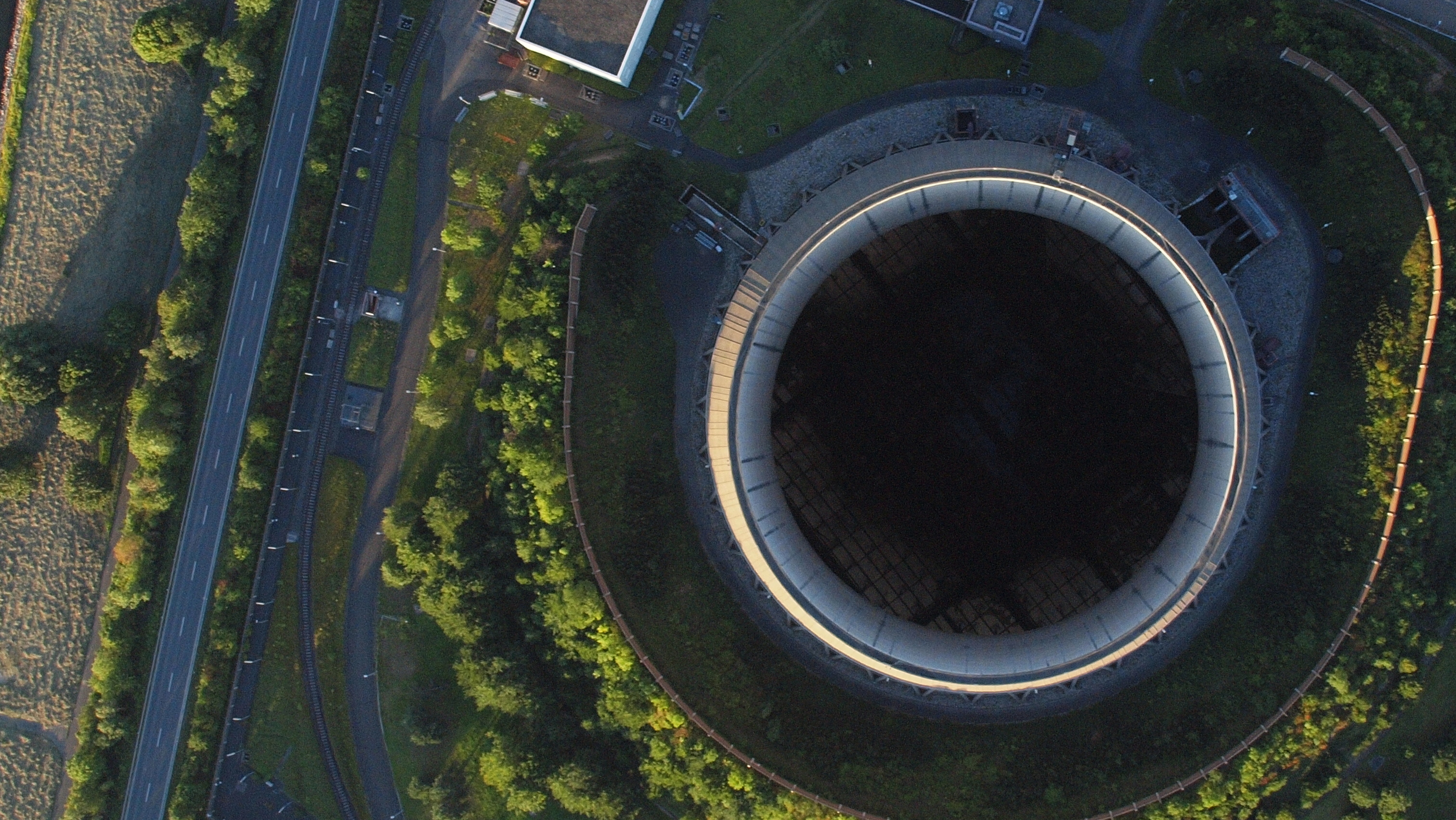
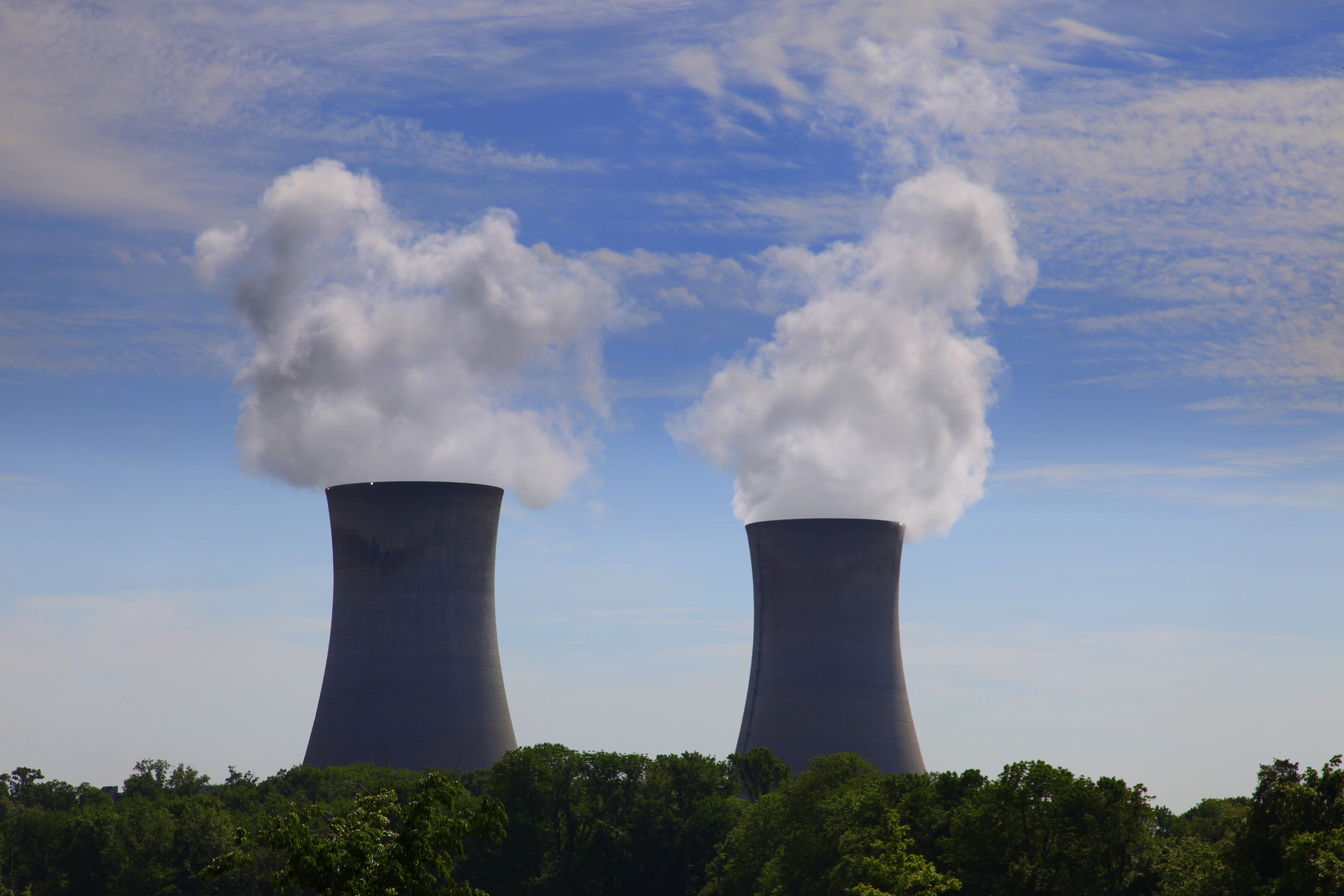
Some see a nuclear power plant cooling tower. Others see a rat-hole. Hang onto your wallet. Photo credit Wollenkratzer/Wikimedia Commons.

Some see a nuclear power plant cooling tower. Others see a rat-hole. Hang onto your wallet. Photo credit Wollenkratzer/Wikimedia Commons.

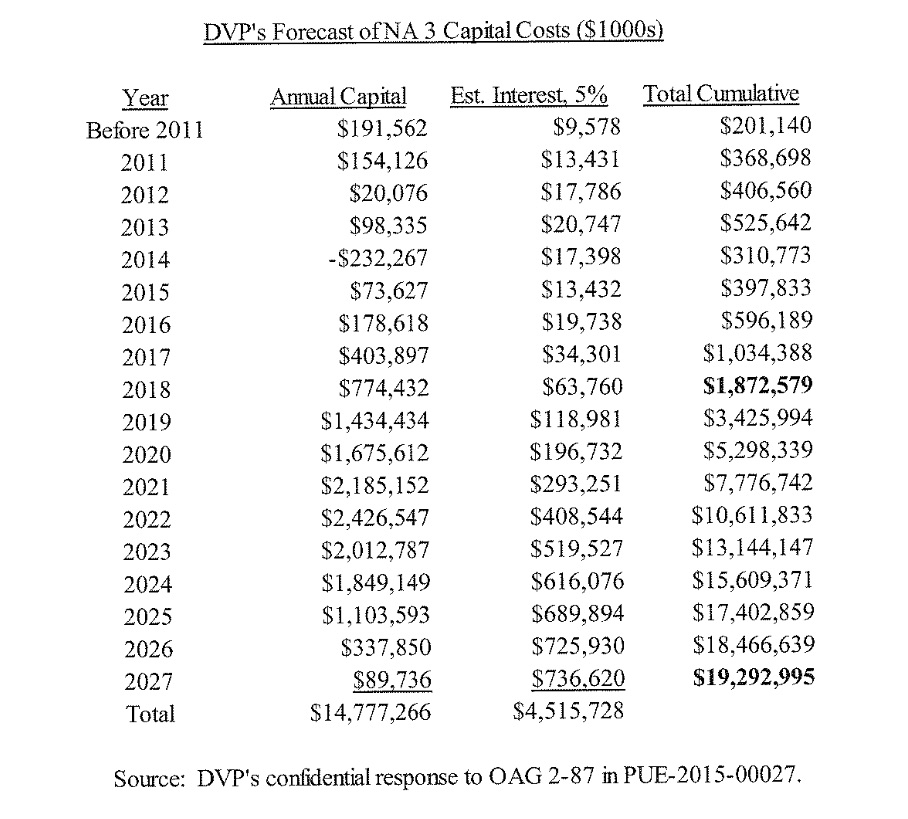
Dominion Virginia Power’s latest Integrated Resource Plan (IRP) includes construction of a third nuclear reactor at North Anna, just as previous IRPs have done every year since 2008. What’s new this year is that we finally have a price tag. Scott Norwood, a witness for the Attorney General’s Office of Consumer Counsel, says Dominion’s $19 billion forecast will mean an average rate increase of approximately 25.7% over current Virginia retail residential rates.

The 2015 IRP shows cost estimates for the new nuclear plant have spiraled upwards. Norwood notes that the forecasted capital cost is currently 55% higher than in 2011. This capital cost is not only ten times the cost of new natural gas generation, it is also higher than Dominion’s solar energy option—which happens also to be its least-cost option for complying with EPA’s Clean Power Plan.

Indeed, the NA3 price tag makes it far more expensive even than the other nuclear plants currently under construction in Tennessee, Georgia and South Carolina. All three are behind schedule and over budget, which hardly inspires confidence in the industry’s ability to contain costs anywhere.

In his testimony to the State Corporation Commission, Norwood argues that North Anna 3’s high price tag means it is not reasonable to keep it in the IRP. Section 56-599 of the Virginia Code requires the Commission to make a determination whether the IRP is “reasonable” and in the public interest.

Including nuclear in an IRP doesn’t commit Dominion to building a reactor or the SCC to approving it, so the SCC has not previously chosen to weigh in. Nor have elected leaders yet responded to the rising cost numbers.

Legislators may be tempted to ignore North Anna 3 until Dominion secures an operating license from the Nuclear Regulatory Commission (anticipated in 2017) and applies to the SCC for a Certificate of Public Convenience and Necessity (with a decision likely in 2018).

Yet delaying the conversation is expensive. Dominion is already spending hundreds of millions of dollars annually on North Anna 3 development—and one way or another, Dominion expects customers to bear the cost.

In 2014 the company successfully lobbied for legislation shifting the costs it had incurred through 2013 onto its ratepayers, a move that sopped up Dominion’s overearnings and prevented a rate cut.

But those costs were chicken feed compared to what’s coming. By the end of 2018, Dominion will have spent close to $2 billion dollars on North Anna 3. The company can afford to front the money, in part because of 2015 legislation “freezing” rates until 2020 and allowing the company to keep what could amount to hundreds of millions of dollars more in excess earnings.

NAr costsIf the SCC waits until 2018 to consider the merits of North Anna 3 and then denies Dominion permission to move forward, the company will argue for the right to bill ratepayers for all that money it threw down the rat-hole. The SCC might not prove sympathetic, but General Assembly members maintain a strong record of doing anything Dominion wants.

Still, allowing Dominion to soak customers for $2 billion would be a welcome outcome compared to the alternative. Worse would be for the SCC to approve the plant—or more likely, for legislators to take it out of the hands of the SCC and simply vote to let Dominion proceed. Dominion has begun spinning a tale about North Anna 3 being needed for energy security, resource diversity, and compliance with new environmental rules. All of these are wrong, but they play into narratives that resonate with many lawmakers.

Meanwhile, the vast sums required for a new reactor would siphon money away from much more cost-effective strategies that can deliver carbon pollution reductions far sooner, including investments in solar and energy efficiency. That makes it critical for the SCC to put an end to the North Anna 3 rat-hole this year.

The Commission will hold a hearing on Dominion’s IRP on October 20. The case is PUE-2015-00035.

Unknown's avatar

Dominion to offer community solar, minus the community and the solar

The Emperor's New Clothes. By Vilhelm Pedersen (1820 - 1859) [Public domain], via Wikimedia Commons

The Emperor’s New Clothes. By Vilhelm Pedersen (1820 – 1859) [Public domain], via Wikimedia Commons

In the children’s story The Emperor’s New Clothes, a couple of shysters convince an insecure monarch to fork over gold in exchange for what they assure him are the most beautiful clothes ever made—clothes with the remarkable quality of being invisible to stupid people. Too embarrassed to admit he can’t see the clothes, the emperor allows the fraud to proceed. Public humiliation ensues.

Perhaps the fairy tale inspired Dominion Virginia Power’s new scheme to extract money from customers who want to buy solar power, without actually selling them solar power. The solar hopefuls are to be bilked of extra payments on their utility bills by the promise of having their drab fossil electricity turned into golden sunlight-powered electrons.

As in the children’s story, the customers will be fooled into thinking they have bought something special. Instead, they will have bought invisible clothes.

The program is called “Dominion Community Solar” (or Rider DCS), though it has nothing to do with true community solar.

Publicly, Dominion has described it this way: Dominion will build a 2-megawatt (MW) solar facility and put the electricity it produces onto the grid. Customers can buy it by paying an extra 4 cents per kWh (in $4 blocks) on top of the regular retail rate of about 11 cents.

If this were an accurate description, the program would be a valid offering. In fact, I might have gone for it myself. As someone with a shaded roof, it would be the only way for me to buy solar, given Virginia’s backward policies. And buying solar matters to me because I want to be part of the solution to the climate disruption caused by our burning of fossil fuels.

But it seems to be an article of faith among utility executives that people’s intelligence is inversely related to their desire to do good in the world. If we’re dumb enough to pay extra for solar electricity, they figure, maybe we’re dumb enough to pay extra for what we’re persuaded to think is solar electricity, even if the premium really buys us nothing at all.

This program presents the chance to test their theory. As the filings in the SCC case reveal, Dominion will not actually sell solar energy to participants. (See SCC Case PUE-2015-00005.) It will use their “contributions” to “offset” the costs of its Solar Partnership Program, which will enable it to build an extra 2 MW of solar capacity and put that electricity onto the grid. Then it will sell the renewable energy certificates (RECs) associated with that electricity to someone else—not to the people who are funding the facility.

The result is that although Dominion will bill the do-gooders extra to build a solar facility, it won’t deliver solar energy to them. The altruists will pay 15 cents/kWh for the same drab fossil fuel electricity everyone else buys for 11 cents/kWh.

Imagine Exxon soliciting motorists to pay an extra dollar per gallon for gas so the company can build a biofuel facility to sell renewable fuel to other customers. If you would contribute to such a scheme, please email me, as I have some other great offers for you.

The most remarkable thing about Dominion’s plan is not its cynicism, but the fact that the State Corporation Commission approved it. The SCC should understand that the program will work only to the extent customers are deceived into thinking they are buying solar energy. Indeed, lawyers for the Attorney General’s Office of Consumer Counsel actually pointed this out.[1]

The SCC’s order, dated August 7, 2015, notes that the Consumer Counsel “remains concerned that the DCS Pilot, if approved, may not be marketed clearly by the Company,” and that it “wishes to ensure that the DCS Pilot will not be marketed as a solar energy tariff or as an option for consumers to purchase electric energy output from a renewable energy facility.”

The SCC’s response to this concern was to tell Dominion it has to be really clear that participants are merely “supporting” Dominion’s development of solar energy, and to require it to submit to the SCC staff its marketing and promotional materials prior to publication.

But of course, accurate marketing information wouldn’t sell this program. Imagine the shysters telling the emperor, “See, Your Majesty, we’ll pretend to make clothes for you, and you’ll pretend you’re wearing clothes. Then while you march around naked, we’ll use your gold to fund our business selling real clothes to smart people.” Even a stupid emperor would know enough to keep a tight hold on his purse.

[1] From the Consumer Counsel’s Comments on Hearing Officer’s Report: “Dominion has not described the DCS Pilot program accurately . . .” In reality, “DCS Pilot customers would continue to purchase 100% of their energy requirements under their standard service tariff and would not be allocated any power from a renewable energy facility. DCS participants would be making a voluntary contribution to Dominion, which the company claims would be used to support the future development of solar. But Rider DCS participants would not be purchasing any solar energy output. The Commission should direct the Company to not market the program in a manner that leads potential customers to believe that by participating in the DCS program they would be purchasing renewable energy.”

Unknown's avatar

Dominion admits cost of North Anna 3 will top $19 billion

photo by Peter Burke/Wikimedia

A nuclear plant in Pennsylvania. Photo by Peter Burke/Wikimedia

Dominion Virginia Power is projecting that the capital cost of a third nuclear reactor at its North Anna facility will total over $19 billion, according to filings in its 2015 biennial review before the State Corporation Commission (PUE-2015-00027).

This works out to over $13,000 per installed kilowatt, according to the testimony of Scott Norwood, an energy consultant hired by the Attorney General’s Department of Consumer Counsel to analyze Dominion’s earnings evaluations. He notes that this capital cost is “approximately ten times the capital cost of the Company’s new Brunswick combined cycle unit,” which will burn natural gas.

As a result of this high capital cost, the “total delivered cost of power from NA3 is more than $190 per MWh in 2028.” That translates into 19 cents per kilowatt-hour.

By comparison, in 2014 the average wholesale price of electricity in the PJM region (which includes Virginia) was 5.3 cents per kWh. Dominion currently sells electricity to its customers at retail for between 5.5 and 11 cents/kWh.

In other words, NA3 is ridiculously expensive.

Dominion had kept its cost projections for NA3 secret until this rate case forced the disclosure. Previously, executives had acknowledged only that the cost would be “far north of 10 billion.”

This cost revelation may point to the real reason Dominion pushed so hard for SB 1349, the 2015 legislation that insulates the company from rate reviews until 2022.

As Norwood testifies, “DVP forecasts a dramatic increase in NA3 development costs over the next five years, during which there will be no biennial reviews.”

These costs are dramatic. A table included in Norwood’s testimony shows Dominion expects to have spent $4.7 billion on NA3 development by the end of 2020. By the time the SCC is allowed to review this spending, more than one-quarter of the total cost will have been spent, and Dominion will be looking to ratepayers to cover the bills.

With perfect deadpan, meanwhile, Dominion executives told legislators this year that SB 1349 was necessary to protect ratepayers from higher costs to be imposed by compliance with the Environmental Protection Agency’s Clean Power Plan.

This isn’t the first time legislators have been snookered in the cause of NA3. Recall that in 2014 Dominion succeeded in lobbying for a law that allowed it to shift 70% of already-spent NA3 development costs onto ratepayers, some $323 million. The effect was to soak up the company’s over-earnings so it would not have to rebate millions of dollars to customers.

This year’s snookering was more comprehensive. Given that Dominion has continued to over-earn, those who opposed SB 1349 assumed it was this year’s version of the 2014 maneuver, designed to protect over-earnings this year and for years to come. Now it appears the real purpose of SB 1349 was to allow Dominion to spend freely on NA3 development costs in amounts that it knew would be unacceptable to state regulators, not to mention the public.

That Dominion thought it could do so in secret is especially reprehensible. Lawmakers and the Governor should be outraged by this deception, whether they voted for SB 1349 or not.

The Attorney General’s office is now trying to force Dominion to justify NA3 to regulators before it racks up billions in sunk costs. Norwood recommends that the SCC “initiate a proceeding to address the prudence of DVP’s planned future investments for development of NA3. This proceeding would allow the Company to present its case regarding the need for and cost effectiveness of NA3, including the value of the proposed project from a fuel diversity perspective and as a means to comply with any final version of the Environmental Protection Agency’s proposed Clean Power Plan and other potential future environmental regulations.”

Unknown's avatar

Are small changes eating away at net metering?

A new law expanding opportunities for commercial solar and wind has unexpected consequences for homeowners. Advocates worry it's one more attack on net metering in Virginia.

A new law expanding opportunities for commercial solar and wind has unexpected consequences for homeowners. Advocates worry it’s one more attack on net metering in Virginia.

Many owners of solar homes were surprised this spring to get letters in the mail from their utilities, informing them of pending changes in Virginia’s net metering rules. Virginia’s State Corporation Commission will be writing regulations to implement a law passed this year that was applauded for increasing the commercial net metering cap to 1 megawatt, from 500 kilowatts. (The SCC case is PUE-2015-00057.)

Unbeknownst to anyone not working on the bill, a late addition to the text restricts the capacity of net-metered projects to just what is needed to meet the customer’s “expected annual energy consumption based on the previous twelve months of billing history or an annualized calculation of billing history if twelve months of billing history is not available.” And while the bill is otherwise directed at commercial installations, the added language contains no such limitation—hence the unexpected letters to homeowners.

Although customers with existing systems aren’t affected by the changes, the letters have prompted concern among consumers and renewable energy advocates, especially those who are working on the various “solarize” programs around the state that use bulk purchasing to bring down costs and draw in new customers.

According to many installers, limiting a solar array to the size that just meets a customer’s electricity needs won’t matter to most homeowners, because their roofs generally won’t accommodate more solar panels than that anyway. In addition, over-producing isn’t financially rational because the utility doesn’t have to pay you the full retail value of any extra electricity you produce.

But a problem arises when it comes to new construction, or when solar is added as part of an addition or renovation that will increase electricity demand, making past use an inaccurate predictor of future demand. The same problem would arise if a homeowner decided to buy an electric car and wanted to power it with solar. The law makes no provision for these situations, so the State Corporation Commission will either have to decide how these should be handled, or leave it to the utilities.

Leaving it to the utilities seems like a bad idea to people who have witnessed the tendency of Dominion Virginia Power and Appalachian Power to interpret ambiguity in ways that further constrain the solar market. Environmental groups and MDV-SEIA, the solar industry trade association, are filing comments urging the SCC to include language in the implementing regulations to ensure that customers have the right to install a solar array big enough to cover their needs when past use alone isn’t an adequate measure.

But let’s take a step back to look at the broader policy implications of the legislation. This effort to control the size of net-metered facilities is not just a pain in the neck for potential new customers, but it also runs counter to Virginia’s stated goal of increasing the share of electricity from renewable energy. If customers aren’t going to be paid more than a few cents per kilowatt-hour for their excess electricity anyway, surely it would be in everyone’s interest to let them build surplus solar to their hearts’ content (assuming their infusions of electricity don’t create grid issues, a problem that is best addressed directly). The same holds true whether we are talking about residential or commercial, solar or wind. People who are willing to take on the cost of building clean, renewable energy should be encouraged to do so, period.

In addition to restricting the size of solar installations, the new law makes other changes. Customers now must notify their utility 30 days prior to installation of the solar facility, rather than 30 days prior to interconnection, a change some installers say may benefit customers by alerting them to problems before an installation goes forward. Additionally, the utility must approve the facility before installation; however, language in the existing law provides only a few narrow grounds for withholding approval.

Finally, the new law authorizes utilities to charge customers “all reasonable costs of equipment required for the interconnection to the supplier’s electric distribution system, including costs, if any, to (a) install additional controls, (b) perform or pay for additional tests, and (c) purchase additional liability insurance.” It also states that the reason for this is “to ensure public safety, power quality, and reliability of the supplier’s electric distribution system.” The existing law had required customers to “bear the reasonable cost, if any, as determined by the Commission, to (a) install additional controls, (b) perform or pay for additional tests, (c) purchase additional liability insurance.”

A lot of people have asked how this bill passed without any public discussion of the restrictive language and its effect on homeowners. A fair question, and one I asked, too, because when it was introduced back in January, the legislation merely provided for an increase in the commercial net metering limit. However, a look at the bill history shows that, as often happens, the added language first appeared in a committee substitute distributed to legislators at the same meeting where it was to be voted on.

It wasn’t a nefarious deal; an environmental lobbyist helped negotiate the bill, and the solar industry signed off on the changes, all under pressure to get a deal done that would improve the prospects for solar in the state. But they were also distracted. The first week of February is crunch time at the General Assembly, with dozens of other important bills in play simultaneously, many of them going through rapid-fire changes likely to either help or hurt (mostly hurt) Virginia’s energy future and its environment.

The General Assembly cannot be called a deliberative body. With thousands of bills to deal with in a 45-day session, only a few people know what is going on, and those are usually the paid lobbyists. In this contest, the person with the most paid lobbyists wins. And no one has more paid lobbyists than Dominion Power. So when pro-renewable energy bills get amended, the results favor the utility.

Progress on renewable energy in Virginia tends to run more sideways than forward, and this is no exception. Over the long run, though, the utilities face a losing battle to control and minimize their customers’ access to solar. In the next few years, battery technology will upend the top-down structure of the utility markets, and utilities will plead for access to their customers’ batteries to help meet the need for peak power and grid services.

Until then, we renewable energy advocates, customers and industry members have to keep on educating legislators about what good policy looks like. Wind and solar afford us huge opportunities in decarbonizing the electric grid, reducing pollution, and increasing business opportunities in the nation’s fastest-growing energy sector. If we open up the market instead of constraining it, everyone will benefit.

Unknown's avatar

APCo tries to quell criticism on solar policies, and just makes matters worse

Photo credit Matt Ruscio, Secure Futures LLC

Photo credit Matt Ruscio, Secure Futures LLC

Appalachian Power Company (APCo) has spent the past two years ducking its Virginia customers who want the ability to buy solar power from third-party providers. This spring it finally unveiled what it claims will be the answer to their prayers: a bizarre, convoluted “Experimental Rider R.G.P.,” available only to certain larger customers like colleges and universities.

Under this proposal, a customer can arrange to have solar panels installed and owned by a third party developer but won’t be allowed to use the electricity or take advantage of net metering, as it would if it owned the system itself. The customer will have to continue buying dirty electricity from APCo, while the solar electricity the customer is also paying for is sold onto the grid, and the customer credited for its value according to a complicated and unfriendly formula. Instead of breaking even or saving money on electricity bills by going solar, the customer will pay substantially more.

By contrast, normally a customer who installs solar uses the solar electricity “behind the meter,” reducing the use of dirty electricity from the grid and saving money, especially if it had been paying high demand charges to its utility, as many institutions do.*

The limitations and poor economics of APCo’s proposal has would-be customers and solar advocates crying foul. According to an analysis by Professor Mark “Buzz” Belleville of the Appalachian School of Law in Grundy, VA, the program is so expensive that it’s not likely to get any takers. Worse, he concludes, “The [State Corporation Commission’s] approval of the proposal would actually be counterproductive to solar deployment in Virginia.”

That’s because “APCo will be able to claim that they made a [Power Purchase Agreement] program available, and the fact no one signed up shows that there is simply not a demand for PPAs in SW Virginia. Moreover, the SCC’s approval may strengthen APCo’s argument that PPAs are not legally permissible in APCo territory unless they are entered into pursuant to its SCC-approved program, and it will lay the groundwork for utilities to argue that a customer who has a PPA is not eligible for net metering under Va. Code §56-594.”

Understanding what’s at stake here requires a short history lesson. Back in 2011, a solar developer out of Staunton, Virginia, called Secure Futures LLC installed a solar array on a rooftop at Washington & Lee University. The parties used a popular financing approach known as a third-party power purchase agreement (PPA), which can let a customer go solar with no money down by having the developer keep ownership of the solar panels and sell the electricity they produce to the customer.

Federal tax rules make PPAs especially important for tax-exempt entities like colleges that can’t use the 30% federal tax credit for renewable energy facilities. When a for-profit solar developer owns a facility, however, it can take the tax credit and pass on the savings to the customer.

PPAs appeared to be explicitly authorized under Virginia law, but when Dominion Virginia Power got wind of the arrangement at Washington & Lee it moved quickly to block it, claiming a violation of its monopoly on the sale of electricity within its territory. Dominion’s weak legal position didn’t matter; the mere threat that the utility giant would unleash its army of lawyers was enough to stop the PPA in its tracks. The university completed its solar installation using an alternative, non-PPA approach.

Dominion had won the skirmish, but at a price. The utility took such a drubbing in the court of public opinion that it eventually acceded to legislation in 2013 establishing a limited “pilot program” under which not-for-profit entities and some commercial businesses can use PPAs, at least through the end of 2015. Secure Futures has gone on to develop additional solar projects in Virginia under the legislation, including at the University of Richmond and, under a just-announced deal, at six Albermarle County schools.

APCo, however, didn’t participate in the pilot program, and it has steadfastly resisted efforts to bring it into the fold, even in the face of mounting criticism. As Belleville pointed out in a Roanoke Times op-ed in March of 2014, the failure to extend the PPA law to residents of APCo territory put southwest Virginia at an economic disadvantage, closing it off to business opportunities that are available elsewhere in the state. Yet utility lobbying successfully defeated legislation this year that would have made PPAs explicitly legal statewide.

So southwest Virginia’s state of limbo persists, with many legal experts advising that PPAs are legal there under Virginia law, but most developers and customers unwilling to expose themselves to prolonged and expensive litigation to find out for sure. This state of affairs suits APCo very well. No doubt it calculates that the worst that can happen now is that the SCC rejects its rider and prolongs the state of limbo. Then the utility’s lobbyists will tell legislators it did its best to help customers but was prevented from doing so by that darned SCC.

APCo’s actions are those of a rational monopolist facing the threat of competition; it is easier to keep a competitor out of your market than it is to improve your product. But its efforts to throw roadblocks in the way of solar also reflect the suspicion, shared by many American utilities, that distributed solar generation benefits only the customer who installs it, at the expense of the utility and other customers. They believe this justifies them in making solar more expensive, even if it means preventing projects from being developed altogether.

This is a textbook example of cutting off your nose to spite your face, given the need for a rapid build-out of distributed solar generation to fight climate change and strengthen grid security. These are not considerations that hold much sway with Virginia’s SCC, however, so let’s confine ourselves to the cost argument.

The problem for APCo is that the notion that distributed solar increases costs for other ratepayers is mere conjecture, and neither APCo nor Dominion has offered any hard data to support it. Indeed, the only evidence from Virginia points the other way, according to Secure Futures CEO Tony Smith.

Since his company’s skirmish with Dominion, Smith has worked with a municipal utility, Harrisonburg Electric Commission (HEC), to study the financial impacts to the utility of Secure Futures’ first Virginia PPA project, a 104-kilowatt array installed in 2010 at Eastern Mennonite University in Harrisonburg (outside of Dominion territory).

The case study measured only the energy and capacity-related impacts of the solar array on the utility, ignoring the wide range of other benefits often considered in “value of solar” analyses. Analyzing three years’ worth of data, Smith found that the EMU array provided an average net benefit to the utility of $22.78 per kilowatt per year. The full technical analysis is available here. In an article soon to be published in the May/June issue of Solar Today, Smith writes:

Using a net benefit model developed in consultation with HEC management, we find that in the case of the EMU solar installation, the benefits to HEC outweigh the costs . . . Our net benefit results suggest that within HEC territory, solar installed for a commercial customer with demand exceeding 1,000 kW benefits all municipal utility stakeholders, including non-participants.

Certainly it would be interesting to repeat the analysis with data from more Virginia projects, including ones in APCo’s territory. But first, those projects have to get built. Right now that isn’t happening due to the PPA limbo. If APCo’s Experimental Rider gets approved—well, the projects still won’t get built, because no one will sign up.

Flip a coin: heads APCo wins, tails customers lose.

The SCC case is No. PUE-2015-00040. An evidentiary hearing is scheduled for September 29 at the SCC offices in Richmond, Virginia.

___________________________________

*Residential customers don’t pay demand charges, making this an unfamiliar concept to many people. Demand charges (KW) are fees over and above the cost of energy usage (kWh) that are assessed according to a customer’s peak power requirements, measured as the highest peak demand in a given 30-minute period during the month. For many institutions, demand charges can exceed the cost of energy usage, and using solar electricity to reduce peak demand is often a compelling reason to look at solar in the first place.

Unknown's avatar

Dominion makes a play for utility-scale solar, but Amazon steals the show

As_solar_firmengebaude.Christoffer.ReimerThis winter Dominion Virginia Power promised Governor Terry McAuliffe it would build 400-500 megawatts (MW) of utility-scale solar power in Virginia by 2020, part of the deal it cut to gain the governor’s support for a bill shielding it from rate reviews through the end of the decade. The company also took a welcome first step by announcing a proposed 20-MW solar farm near Remington, Virginia.

The applause had hardly died down, though, when Amazon Web Services announced it would be building a solar project in Accomack County, Virginia, that will be four times the size of Dominion’s, at a per-megawatt cost that’s 25% less.

Why such a big difference in cost? The way Dominion chose to structure the Remington project, building and owning it directly, makes it cost more than it would if a third party developed the project, as will be he case for the Accomack project. That means Dominion is leaving money on the table—ratepayers’ money.

There is nothing wrong with the Remington project otherwise. The site seems to be good, local leaders are happy, and solar as a technology has now reached the point where it makes sense both economically and as a complement to Dominion’s other generation. But by insisting on building the project itself, and incurring unnecessary costs, Dominion risks having the State Corporation Commission (SCC) reject what would otherwise be a great first step into solar.

And that’s a crying shame, because solar really is a great deal for consumers these days. Utilities now regularly sign contracts to buy solar for between 4.5 and 7.5 cents per kilowatt-hour. Compare that to the 9.3 cents/kWh cost of electricity produced by Dominion’s newest coal plant in Virginia City, and it’s no wonder that solar is the fastest growing energy source in the country.

Utilities get those rates by buying solar energy from solar developers, not by playing developer themselves. From the ratepayer’s point of view, developers have three advantages over utilities: they are experts at what they’re doing, they work on slimmer profit margins, and they get better tax treatment. Dominion loses all three advantages if it builds the Remington solar farm itself.

Dominion has already demonstrated its lack of solar knowhow. In a May 7, 2015 filing with the SCC (case PUE-2011-0017), it admitted its “Solar Partnership Program,” which puts solar on commercial rooftops, is a year behind schedule and will total less than 20 MW of the 30 MW legislators wanted. Previously the company had told stakeholders it would likely hit its $80 million budget limit with only 13-14 MW installed.

As for profit margins, Dominion gets a guaranteed 10% return on its investments. This explains its desire to build solar itself, but it’s hard to justify charging ratepayers a 10% premium when there are cheaper alternatives courtesy of the free market. Unlike Dominion, solar developers have to compete against each other, so they accept much slimmer profit margins.

And then there are the tax implications. A third-party developer can claim the federal 30% tax credit immediately, and can take accelerated depreciation on the cost of the facility over five years. A utility has to take both the tax credit and the depreciation over the expected life of the facility, 20 years or more.

These three factors—knowhow, free-market cost competition, and tax implications—add up to huge savings for consumers when a project is put out to bid by third-party developers.

Just how big the savings could be is clear from a comparison of Dominion’s solar farm with Amazon’s project, to be built by a third-party developer. Dominion says Remington will cost $47 million for 20 MW, or $2.35 million/MW. Amazon’s project is reported to cost $150 million for 80 MW, or $1.875 million/MW. That is a difference of about 25%.

Obviously, then, the better way to finance Remington is for Dominion to put the project out for competitive bid among solar developers. Dominion won’t make as much money for its shareholders, but it will save money for ratepayers. And really, as a member of the American Legislative Exchange Council (ALEC), Dominion ought to jump at the chance to live up to ALEC’s “free markets” mantra.

More to the point, keeping costs down this way will make it possible for the project to get SCC approval, opening the way to many more like it. With hundreds of megawatts still to go, Dominion needs to show it can do solar right.

In fact, Dominion should put out a request for proposals for the full 400 MW it says it plans to build. This could include revisiting its refusal to buy power from another proposed solar farm that went nowhere. That solar facility in Clarke County, proposed by OCI Solar Power six months ago, would have added another 20 MW to the grid. With only a year and a half to go before the 30% federal tax credit drops to 10%, Virginia ratepayers have a right to expect many more solar farms, and soon.

Frustration over Dominion’s slow pace is widespread among solar advocates. Cale Jaffe, Director of the Southern Environmental Law Center’s Virginia office, noted, “Last General Assembly session, Dominion committed to building 400 megawatts of utility-scale solar projects in Virginia by 2020.  The General Assembly then passed, at Dominion’s urging, legislation declaring up to 500 megawatts of new solar projects to be in the public interest. But, unfortunately, Dominion appears to be getting out of the blocks very slowly when it comes to solar power.  I’m concerned that the company is not currently on pace to live up to its pledge.” SELC has intervened in the Remington case on behalf of environmental groups Appalachian Voices and Chesapeake Climate Action Network.

Of course, we also need solar from all sources, not just our utilities. Homeowners, small businesses, nonprofits, and big industrial customers—all should be encouraged to build solar as a matter of the public interest. Solar diversifies our energy base, creates local jobs, strengthens the electricity grid, and will help Virginia meet the EPA’s Clean Power Plan.

Even 500 MW of solar pales compared to the 4,300 MW of new natural gas plants Dominion expects to have built by 2020. When you adjust for capacity factors, in 2020 solar will make up less than five percent of Dominion’s power generation from new projects, and barely a blip on the radar screen of total generation.

While sad, this is hardly news. Virginia famously lags behind neighboring states in developing solar resources. Maryland had 242 MW of solar installed at the end of 2014 and expects to meet its goal of 1,250 MW by the end of 2015. North Carolina has over 1,000 MW and counting. The same source puts Virginia at a grand total of 14 MW.

(In fairness I think our total has to be a little better than that, but when your state’s total looks like some other state’s rounding error, who really stops to crunch the numbers?)

Getting serious about solar means opening our market to competition. Attracting more projects like Amazon’s will require the General Assembly to pass legislation removing all barriers to third-party power purchase agreements. Amazon’s solar farm has the advantage of being located on the Maryland border. It will feed into power lines owned by Delmarva Power, and then into the PJM transmission grid serving the multistate region that includes Virginia. It will not serve Amazon’s data centers in Virginia directly, but will simply offset their power demand. If Amazon or anyone else wanted to put in a similar solar farm elsewhere in Virginia, they would run into restrictions on third-party power purchase agreements and the absurd terms and conditions imposed by our utilities even on large corporate customers.

Tearing down the barriers that prevent the private market from building solar is critical to closing this gap. Dominion made a half-hearted effort to serve big customers, in the form of its cumbersome “RG tariff.” The fact that no one has used it, and Amazon has done an end-run around it, proves how worthless it is. Virginia should put an end to utility red tape, open the market to competition, and let the sunshine in.

The State Corporation Commission will hear arguments on the Remington proposal starting at 10 a.m. on July 16, 2015 at its offices in Richmond. The case is PUE-2015-00006.