Unknown's avatar

Virginia General Assembly session opens. What can we expect?

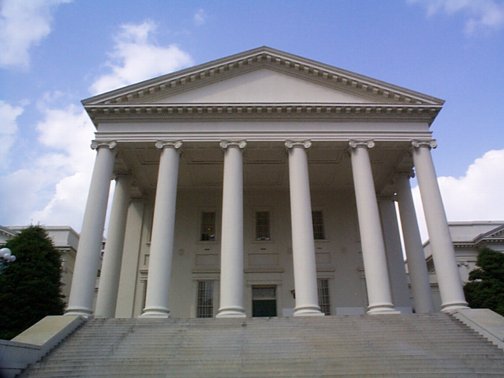
Photo credit: Corrina Beall

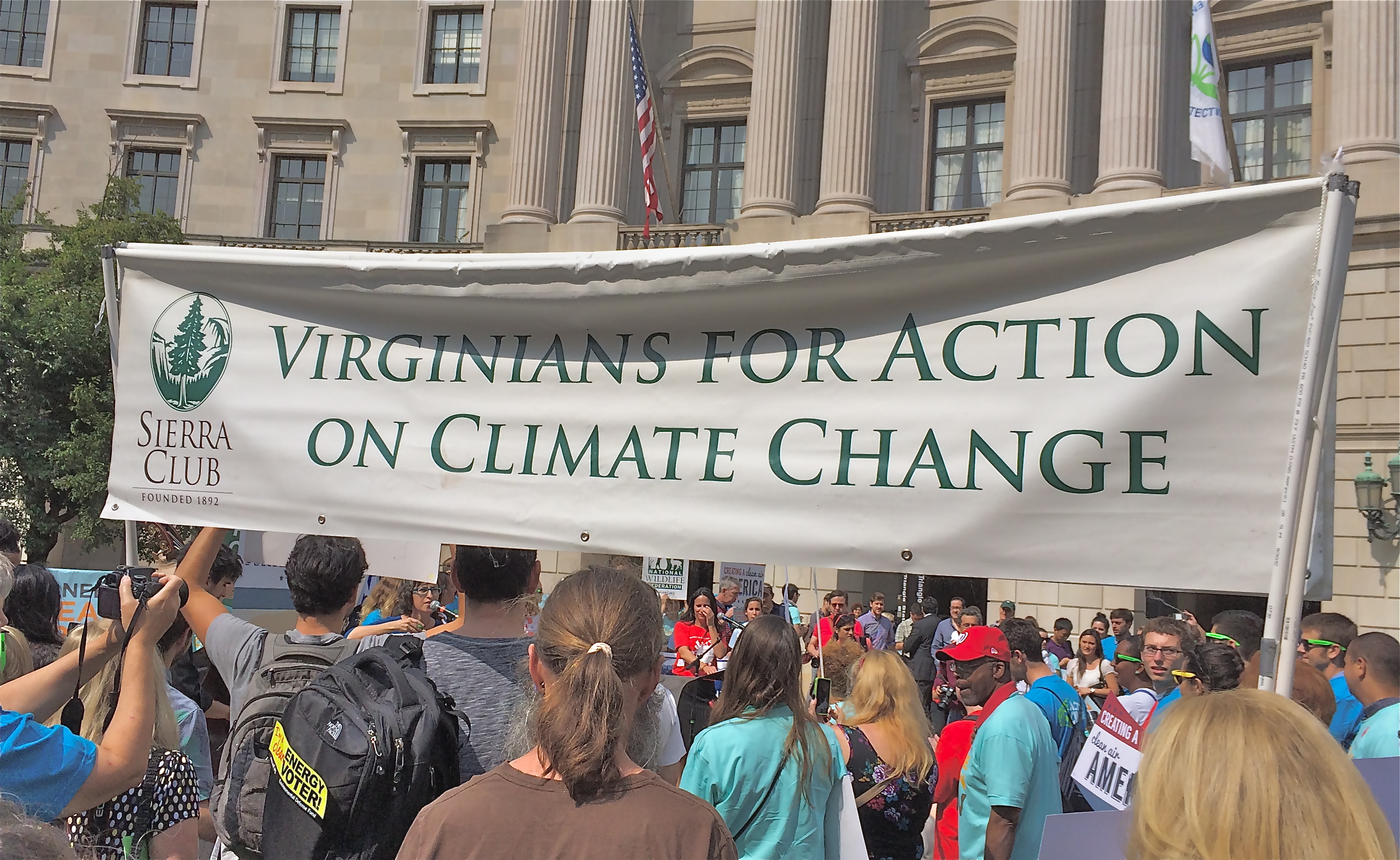
Photo credit: Corrina Beall

The General Assembly failed to act on clean energy bills in 2016, but as the 2017 legislative session gets underway, advocates hope the delay will have only increased pressure for progress this year.

New energy legislation includes the four bills negotiated over the summer by the utilities and the solar industry promoting utility, community-scale, and agricultural renewable energy projects. The “Rubin Group” (named for facilitator Mark Rubin) brought together utilities, the solar industry trade group MDV-SEIA, and a group called Powered by Facts, but largely excluded environmental and consumer interests. Not surprisingly, the resulting bills are heavily weighted towards utility-scale solar, and utility control of solar in general.

But if the chairmen of House and Senate Commerce and Labor thought the Rubin Group’s work would mean no one else would float new renewable energy bills, they were certainly wrong.

Community-scale solar. I’ve previously addressed the Rubin Group’s legislation that enables a utility-administered, community-scale program to sell solar to participants on a voluntary basis. I see Senator Wagner will be carrying the bill in the Senate, now designated SB 1393. I haven’t had time to compare the current bill to the draft previously shared with stakeholders, but I’m cautiously optimistic that it will produce a viable solar option for consumers. Even better would be HB 2112 from Delgate Keam and SB 1208 from Senator Wexton, which authorize a broader set of community solar models. Delegate Krizek’s solar gardens bill, HB 618, also authorizes shared solar.

Utility-scale solar. Another bill from the Rubin Group, SB 1395 (Wagner), would raise from 100 MW to 150 MW the size of wind and solar projects that qualify as “small renewable energy projects” subject to Permit By Rule (PBR) permitting by DEQ, and allowing utilities to use that process for facilities that won’t be rate-based. In contrast, Senator Deeds’ SB 1197 would undo much of the streamlining gained by the PBR process, sending projects to the SCC if they either disturb an area of 100 acres or more or are within five miles of a boundary between political subdivisions.

The third Rubin Group bill, Wagner’s SB 1388, would allow utilities to earn a margin when they obtain solar energy via power purchase agreements with (lower cost) third-party developers rather than building projects themselves.

Senator Marsden’s SB 813 exempts investor-owned utilities from the requirement that they consider alternative options, including third-party market alternatives, when building solar facilities that have been declared in the public interest. This is surely an attempt to smooth the way for utility-owned solar at the SCC. However, if you’re trying to get utilities to keep costs down by using third-party installers, this is the wrong incentive.

Agricultural net metering. The last bill from the Rubin Group, Senator Wagner’s SB 1394, would revoke the recently enacted code provisions that allow agricultural customers to attribute electricity from a renewable energy facility to more than one meter on their property for the purposes of net metering. The proposed legislation would terminate this provision in 2018 (grandfathering existing net metering customers for 20 years) and instead offer farmers a buy-all, sell-all option for their renewable production.

Under the proposed bill, negotiated between the utilities and Powered by Facts, farmers would have to buy all their (dirty) power from their utility at retail, and sell their renewable power to the utility at the utility’s avoided cost—essentially wholesale. This doesn’t sound like a good deal for the farmers, but we’re told it more or less pencils out. On the plus side, the bill would allow farmers to build up to 1.5 megawatts of renewable capacity on up to 25% of their land, or up to 150% of the amount of electricity they use, whichever is less, which is more than they can under today’s rules. (But since federal law allows anyone to sell power they produce from a qualifying facility into the grid at avoided cost, even this part of the bill is of dubious added benefit.)

Regardless, removing the net metering option seems both unnecessary and unwise; many farmers specifically want to run their farms on solar, for marketing reasons or otherwise, and taking away their ability to aggregate meters and use net metering will be viewed as a serious setback.

The first draft of this bill that I had seen contained a provision that projects under the new program would apply against the state’s 1% cap on total net metering output, even though the projects would not be net metered. Fortunately, I don’t see that in the current version. [Update: this provision does appear in the version of the bill reported out of the Senate subcommittee on January 27, presenting a reason sufficient in itself to oppose the legislation.]

An agricultural bill that is more readily supportable is Senator Edwards’ SB 917, which eases the rules for agricultural customer-generators and increases the size of projects that can qualify for meter aggregation under the net metering statute. It also extends the law to include small hydro projects.

PPAs. Two bills attempt to resolve the ongoing dispute over customers’ rights to use third-party power purchase agreements for their on-site renewable facilities. Delegate Toscano’s HB 1800 essentially reiterates what solar advocates believe to be existing law allowing on-site PPAs, but—as a peace offering to utilities—narrows it to exclude residential customers. Senator Edwards’ SB 918 takes a different approach, replacing the Dominion PPA pilot program with a permanent statewide program to be designed by the State Corporation Commission.

Tax credits. Delegate Hugo’s HB 1891 provides a tax credit for residents who install geothermal heat pumps—a nice idea, but it will face tough sledding in a tight budget year. That budget reality could also doom Delegate Sullivan’s HB 1632, offering a broader renewable energy property tax credit (it would include geothermal heat pumps).

In spite of the current budget deficit, Republicans are making a new attempt to reinstate taxpayer subsidies for coal mining companies (Delegate Kilgore’s HB 2198). Delegate Morefield’s HB 1917 takes a better approach, offering a new tax credit for “capital investment in an energy production facility in the coalfield region.” This is worth watching, as it is not limited to coal facilities but applies to any facility that has “the primary purpose of producing energy for sale.”

Climate. Republicans seem inclined to make a renewed attack on the EPA’s Clean Power Plan (Delegate O’Quinn’s HB 1974), even though Trump’s election seems likely to send it to an early grave. This probable fate inspired Senator Petersen’s SB 1095, which says that if and when the Clean Power Plan is really declared dead, then the notorious “rate-freeze” imposed two years ago will end. As readers know, that law (Wagner’s SB 1349 from the 2015 session), will allow Dominion to keep an estimated $1 billion in excess revenues; at the time, Dominion said the law was needed to protect its customers from rate hikes required by compliance with the Clean Power Plan. Unfortunately the condition in Petersen’s bill doesn’t seem likely to kick in for at least a year or two, and possibly more; we’d prefer to see the legislation revoke the freeze immediately, and put the ill-gotten gains to use as a massive stimulus package supporting clean energy jobs.

On the flip side, Delegate Villanueva is gamely making another run at getting Virginia to join the Regional Greenhouse Gas Initiative (HB 2018) as a way to change utility incentives and raise money for climate adaptation and clean energy.

Nuclear. Delegate Kilgore has introduced HB 2291, a bill to make it easier for Dominion Virginia Power to stick ratepayers with the costs of any upgrades it makes to its nuclear power plants. The bill further attacks and undermines the SCC’s authority to determine whether expenses are reasonable, the sort of favor to Dominion that has become a theme in recent years. Kilgore doesn’t even represent any Dominion customers; he’s in APCo territory. I guess that’s why he’s okay with raising rates for Dominion customers.

Energy efficiency. Efficiency bills suffered the same fate as renewable energy bills last year; many were offered, but few were chosen. (Actually, it might have been none. We don’t do much energy efficiency in Virginia.)

Delegate Sullivan is trying again to set energy efficiency goals with HB 1703, or at the very least to have government track our progress towards meeting (or rather, not meeting) the state’s existing goal, with HB 1465. He is also trying again to change how the SCC evaluates energy efficiency programs to make them easier to implement (HB 1636). Senator Dance’s SB 990 also sets an energy consumption reduction goal.

Delegate Krizek’s HJ 575 would authorize a study of infrastructure investments that yield energy savings. Delegate Minchew’s HB 1712 authorizes energy performance-based contracting for public bodies.

Miscellaneous. Delegate Kilgore’s HB 1760 supports a new pumped storage facility in the Coalfields region (news to me). Senator Ebbin’s SB 1258 would add energy storage to the work of the Virginia Solar Development Authority, which seems eminently sensible.

More bills are likely to be filed in the coming days, and I would promise to update you on them if I weren’t marking Trump’s inauguration by leaving the country for a week. Serious advocates should peruse the LIS website and perhaps sign up for the bill tracking service “Lobbyist in a Box.” Also watch for a clean energy lobby day that MDV-SEIA will organize, likely on the yet-to-be-announced day the House Commerce and Labor Subcommittee on Energy meets, usually in early February.

This year’s legislative session lasts a mere 45 days, weekends included. Cynics say the tight schedule limits the damage politicians can do, but in reality it just means lawmakers have to lean heavily on lobbyists and constituents—and as the lobbyists are on hand, and the constituents are at home, the schedule favors the lobbyists. So if you want to make your voice heard, now’s the time.
Unknown's avatar

Virginia hearing examiner says renewable energy PPAs are legal, but will the ruling stick?

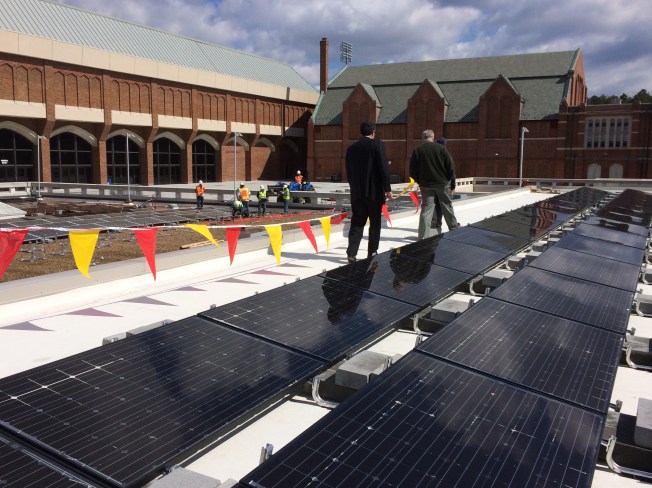
A third-party PPA made it possible to build this solar facility at the University of Richmond. Appalachian Power Company contends that a project like this would be illegal in its territory.

A third-party PPA made it possible to build this solar facility at the University of Richmond. Appalachian Power Company contends that a project like this would be illegal in its territory.

A hearing examiner for the Virginia State Corporation Commission recommended on August 31 that the SCC reject Appalachian Power Company’s proposed alternative to third-party power purchase agreements (PPAs) for renewable energy, concluding the program is not in the public interest. The parties will have three weeks to comment before the recommendation goes to the Commissioners for a final decision. The case is PUE-2015-00040.

The ruling against APCo’s proposed Rider RGP is less important to customers than the reasoning behind it. In addition to finding a myriad of faults with the proposal, the Hearing Examiner concluded it isn’t needed because PPAs are already legal under the Virginia Code. This is an outcome long sought by the solar industry and environmental groups, and one supported by the Attorney General’s Office of Consumer Counsel.

However, the Hearing Examiner’s report is merely a recommendation. Nothing is final until the Commissioners rule, and they could make a decision about Rider RGP without addressing the current legality of PPAs. Moreover, earlier this year, APCo proposed another program that it clearly hopes will nip in the bud any surge of PPA activity that might result from a decision in the present case. (I’ll get to that in a moment.)

The rejection of Rider RGP won’t disappoint any would-be customers. A long line of witnesses testified at the hearing on September 29, 2015 that APCo’s expensive and convoluted program would find no takers. As the Solar Research Institute summarized it, the proposed Rider RGP “would require a customer interested in a solar PPA to first pay for 100% of their service under the standard tariff, pay for 100% of the solar energy generated, pay a $30 program fee, and receive excess payments back through a Renewable Output Credit.” Oh, and they still wouldn’t be using renewable energy. (Note that although solar energy was the focus of the discussion for participants, the decision applies to other forms of renewable energy as well.)

The SCC staff made some suggestions to improve the program, but the hearing examiner, Deborah Ellenberg, concluded it was really beyond saving. Not only that, but the plain language of the Virginia Code makes third-party PPAs legal in the state already. Thus, there is no need for a utility-sponsored alternative.

Ellenberg pointed to two statutory provisions that support the legality of third-party PPAs. First, Virginia Code §56-577 A 5 provides that customers may purchase renewable energy from third-party sellers if their own utility does not offer a tariff for renewable energy. Specifically, customers may:

[P]urchase electric energy provided 100 percent from renewable energy from any supplier of electric energy licensed to sell retail electric energy within the Commonwealth . . . if the incumbent electric utility serving the exclusive service territory does not offer an approved tariff for electric energy provided 100 percent from renewable energy. . . .

Until now, APCo has offered only a green power program that sells RECs, which the SCC says doesn’t count.

The language of §56-577 sounds clear enough, but APCo and Dominion Power have maintained that this section only allows customers to go elsewhere if the other supplier can provide 100% of their electricity from renewable energy, something that can’t be done with a solar facility or a wind turbine.

This flimsy reading of the statute was the basis on which Dominion challenged a PPA at Washington and Lee University back in 2011. The issue was temporarily resolved two years later when Dominion and the solar industry agreed to a pilot program that now allows a limited number of PPAs in Dominion territory, under tight parameters that exclude residential customers. The program never applied in APCo territory, however—a sore point to customers there. APCo has clung to its reading of §56-577, regardless of the growing clamor for renewable energy in southwestern Virginia.

Ellenberg’s report flatly rejects the utility interpretation. If the SCC adopts her reading, any customer in APCo territory would be free to buy renewable energy from third-party suppliers, until APCo offers a qualifying program.

Ellenberg also cited Virginia’s net metering statute. Virginia Code §56-594 authorizes “customer generators” to enter into behind-the-meter PPAs with third parties that own and operate a renewable facility for the customer. Code §56-594 B defines an eligible customer generator for net metering purposes as “a customer that owns and operates, or contracts with other persons to own or operate, or both, an electrical generating facility that . . . uses as its total source of fuel renewable energy . . .” (emphasis added).

Interpreting this provision takes no special legal talent, surely. It would seem to cover residential and commercial facilities installed and owned by third-party developers, including the familiar no-money-down contract offered to residential customers by Solar City. But again, APCo and Dominion Virginia Power claim the Code doesn’t mean what it says. For more than five years they’ve backed up their position with threats of lawsuits, creating the kind of uncertainty that is toxic to development deals.

If the SCC’s final order endorses the hearing examiner’s finding that PPAs are currently legal, the result could be to open up the Virginia solar (and wind) market to large amounts of private investment statewide.

However, Ellenberg’s finding that PPAs are currently legal appears in her discussion but not in her recommendations to the commissioners; her recommendations are limited to the actions she proposes (rejecting or modifying the tariff). The SCC does not have to rule on the question of PPA legality in order to decide this case. Surely, though, it would be strange if it were to duck the opportunity now that the issue has been fully briefed. With solar a hot commodity across the state, the current legal limbo has become a significant economic drag that the SCC ought not to ignore.

As I mentioned, though, APCo still has one card up its sleeve. This spring it proposed a new tariff to offer its customers 100% renewable energy derived from existing wind, solar and hydro projects. The product appears to meet the condition of §56-577. If approved, it would slam shut the door that the Hearing Examiner just opened (or rather, that she said was open all along, if you had dared to go through it into the toxic miasma where gray-suited lawyers lay in wait). APCo’s request for approval of the tariff (PUE-2016-00051) is scheduled to be heard by the SCC on November 15, with comments due by November 8.

Solar advocates take a dim view of APCo’s move. The new tariff won’t build any new facilities; it simply shifts the burden of paying for existing renewable energy projects onto volunteers, at a significant premium. In today’s market, third-party developers can offer electricity generated by new solar projects at competitive prices. So APCo’s tariff looks less like an accommodation to its eco-conscious customers, and more like a maneuver to prevent anyone from building solar on its turf.

It’s high time the SCC put a stop to this anti-competitive behavior and let Virginians build solar projects with their own money. The Commissioners can follow the Hearing Examiner’s advice, or they can take a pragmatic approach and recognize that PPAs are really just a way to finance projects. They don’t turn solar developers into utilities, and APCo should stop wasting everyone’s time and money blocking private investment in a part of the Commonwealth that desperately needs it.

Unknown's avatar

Basic change in utility business and regulation is inevitable: Advanced energy is coming to all utilities, like it or not.

Photo credit: Sierra Club

Photo credit: Sierra Club

Occasionally I ask other people to write for this blog, not merely because I am lazy, but also because energy policy is such a broad topic that I sometimes overlook new developments and perspectives. This week guest blogger Jane Twitmyer takes a step back from the battle over our energy future to point out that the battlefield itself is shifting under our feet—a fact which, if ignored, could cost utility customers dearly.  –I.M.

A favorite utility narrative holds that the federal Clean Power Plan is the reason we must upgrade our electric utility system and reduce emissions from fossil fuels. Without it, we could continue to run our big coal and gas plants and leave unchanged the transmission grid that has served us so well. But the truth is, the EPA as ‘bully’ is a myth. A new report from the North American Electric Reliability Corporation (NERC) concludes “significant changes are occurring” in the way we generate and use electricity regardless of whether or not the Clean Power Plan, still under court challenge, is implemented. One change: NERC has tripled the amount of new renewable energy generation it predicts for next year.

NERC is just catching up with analysts and investment banks, who have been documenting the changes for several years. The Rocky Mountain Institute warns that grid-connected, solar-plus-battery-storage systems “will be economic within the next 10-15 years for many customers in many parts of the country,” undercutting utility sales and turning electricity markets “upside down.”

Investment analysts agree. CitiGroup predicts utilities could suffer a “50%+ decline in their addressable market.” Elon Musk, CEO of Tesla, just made an offer to buy SolarCity because he believes on-site generation will eventually supply a third of our total electricity, and will be accompanied by huge amounts of battery storage like Tesla’s Powerpack.

Musk believes electric cars will increase demand for electricity, but other analysts see energy efficiency lowering demand. Efficient buildings are given a central place in the new energy mix in the NERC report.

Using less energy, or increasing our energy intensity, will reduce demand significantly without creating the economic disaster we have been warned will occur. Minnesota found the state’s efficiency program returned $4 for every $1 invested, helping to create almost $6 billion in new economic output. One of Warren Buffet’s utilities expects to reduce demand enough to close a couple of old coal plants and still not need any new generation until 2028. The utility is financing those retrofits for its customers’ buildings.

E-Lab, a group at the Rocky Mountain Institute that works with all industry stakeholders to chart our electricity systems, also sees changes in grid management systems making delivery of electricity more efficient. Pilot projects using new technology with grid-regulating software and designed with a variety of regulatory changes and financing models are being tested all around the country.

Each kilowatt-hour supplied by a rooftop solar panel, stored in an on-site battery, or saved by an efficient building, means one less kilowatt-hour utilities must generate. This inevitable reduction in central grid demand is why the future isn’t just about switching resources, like burning gas instead of coal, or even building solar and wind farms. The future is about a re-imagined system that allows and encourages you and me and our local mall to make our own electricity on-site, feeding some of what we make into storage and some onto the grid, and allowing us to draw on the grid when we need to.

We have the technology to create the new system, and regardless of any new EPA rules, this is the right time to replace the old technology. In 2010, 70% of our coal plants and all of our nuclear facilities were more than 30 years old. Recently SNL Energy identified 21,357 MW of coal, gas and nuclear generation “at risk” of early closure through 2020, plants that are inefficient and no longer economic to run.

Here in Virginia, our utilities don’t seem to be getting the message. Dominion Virginia Power has chosen to put most of its new investment dollars into large-scale natural gas plants, not renewable energy. Five or six years ago natural gas was believed to be the ‘transition’ fuel that could take us from coal to renewables-based electricity. We now understand that methane, released when extracting and distributing gas, is 86 times more potent as a greenhouse gas than CO2 while it is in the atmosphere. In addition, methane emissions have been both underreported and inaccurately measured, raising concerns that the climate impact of natural gas may be far greater than originally thought. New methane rules are being developed that should give us a better picture of actual emission levels, but it is already clear that if natural gas is a bridge fuel, the bridge must be a short one.

With analysts predicting the transition to renewable energy will happen sooner rather than later, investing heavily in new gas plants carries a significant economic risk as well as a climate risk. Investors like UBS Bank believe too many large plants will be “structural losers,” assets whose use is diminished before they are paid for. Going forward, we will still need to use some measure of natural gas, but natural gas can no longer be labeled the ‘transition’ fuel.

Our utility systems are at a crossroad. One road requires our utilities, our regulators and our legislators to re-imagine our electricity system, rethinking the old monopoly rate regulations that reward centralized fossil fuel generation. This reimagined system will require a grid that is no longer the rigid one-directional distributer of electricity, but rather one that finds value in resources that generate and store electricity where it is used. If we fail to take that road, the alternative path will lead to ‘grid defection’: customers choosing to leave the grid and provide their own electricity by installing solar with batteries and retrofitting their buildings to use less. One thing is certain: a top down, monopolistic, state-regulated system is NOT the future.

As NERC concluded, changes to the energy mix, and to the level of demand, are happening with or without the Clean Power Plan. They are happening because it is time to rebuild our aging energy infrastructure. They are happening because the technology is now available to create an energy system that protects our air and our water as well as our atmosphere. And the changes are happening because a rebuilt system, designed as an interactive network, not a one directional, top-down grid, will actually be a cheaper system. It will be a system that is more reliable and more resilient, as well as more secure from storms and attack. That rebuilt system will serve Virginia’s electricity customers better without risk to our air, our water or our climate.

Jane Twitmyer is a renewable energy consultant and advocate.


Unknown's avatar

Sierra Club scorecard plumbs divisions among Virginia legislators

SC ScorecardBy and large, Virginia Republicans are still locked in a fossil fuel echo chamber, where “all of the above” and “war on coal” guide their votes. Virginia Democrats mostly acknowledge the damage climate change is doing to the commonwealth and around the planet and support a course correction. And regardless of ideology, large majorities from both parties vote for whatever Dominion Power wants.

These are the major takeaways from this year’s legislative session and the 2016 Climate and Energy Scorecard, just released by the Virginia Chapter of the Sierra Club. Constituents and clean energy advocates will want to look at not just the raw grades of individual legislators, but also the discussion provided in the report, to understand the dynamics of our General Assembly.

Twenty-eight Democrats earned perfect scores. All but a handful of Republicans earned failing grades. Sierra Club gave extra credit to legislators who introduced bills that advanced clean energy. This included several Republicans highlighted in the scorecard, but their bad votes on other bills dragged down their overall scores.

This is really a shame, since some Republicans have worked hard to advance clean energy legislation. Leesburg Delegate Randy Minchew comes to mind here for his dogged efforts on behalf of distributed solar energy, something you might not guess from his overall grade of D.

Often, it seems, reform-minded Republicans go along with their party’s more retrograde positions where they are pressured to do so by their party leaders, or where the votes are so lopsided that there is nothing to gain from breaking with the majority.

If party leaders have an outsize influence on voting, so too does Dominion Power. In fact, if you want to know who the true champions of the people are, don’t look at party affiliation. Look for the few legislators who will stand up to the most powerful political force in Richmond.

That assumes you can find votes to examine. In the introduction to the Sierra Club scorecard, Legislative Chair Susan Stillman noted with frustration this year’s paucity of recorded votes available to score:

The challenges of producing a fair and even scorecard are growing, as are the opportunities for Virginia citizens to have a clear and accurate picture of their elected representative’s voting record. Transparency in the General Assembly sunk to a new low this year: 95% of the bills defeated in the House of Delegates were done so on an unrecorded vote or no vote at all. This is not business-as-usual: just over a decade ago, nearly every bill that passed through the House received a recorded vote.

An ongoing problem, both for scorecard referees and for clean energy advocates, is that most bills that would advance the cause of renewable energy and energy efficiency never make it out of committee; in the House, the bills are heard in a tiny subcommittee. Not only do votes go unrecorded, but this approach deprives most of our elected representatives of the opportunity to vote on some of the most important energy policy issues facing Virginia.

And then there was this year, in which even the subcommittee members never got a chance to vote. A dozen or so of the most promising clean energy bills were never heard at all, but were sent to a newly-formed interim study subcommittee, ostensibly for the purpose of giving these bills the benefit of greater deliberation. The effect was to kill them quietly for the year.

As Stillman notes, all these unrecorded votes make it hard to know where the vast majority of legislators stand:

Without a recorded vote, the public is deprived of the full measure of his or her elected official’s voting history. And the problem of unrecorded votes is growing worse. This year’s unprecedented rate of unrecorded votes in the House is up from 76% in 2015—a 25% jump in one year. Virginia legislators are killing more bills than ever without accountability for their actions. This practice is wrong, and it’s dangerous for our democracy.

Stillman gives a shout-out to the founding members of the new, bipartisan Transparency Caucus for its efforts to make all votes public and ensure every bill gets a hearing.

These would be modest reforms, but welcome. If sunlight is the best disinfectant, there’s a big, dirty House (and Senate) in Richmond that need cleaning.

Unknown's avatar

Virginia legislators named to review clean energy bills

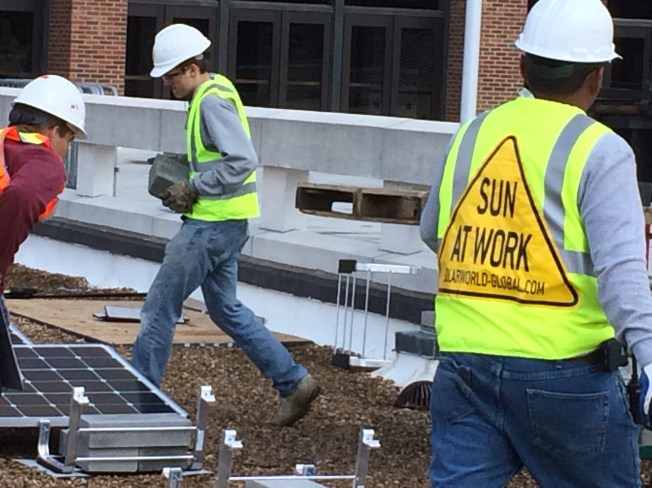
Workers install solar panels at the University of Richmond.

Workers install solar panels at the University of Richmond.

Virginia’s 2016 legislative session began with a host of worthy bills promoting energy efficiency, wind and solar, but ended with almost none of the legislation even having been considered in committee. The Republican chairmen of the Senate and House Commerce and Labor committees instead “carried over” the bulk of the bills, announcing plans for a new subcommittee to study them and make recommendations for 2017.

Members of the subcommittee have now been named. Senator Frank Wagner has tapped Senators Black, Cosgrove, Stuart and Dance to serve. This information is now on the General Assembly website. Delegate Terry Kilgore has named Delegates Ware, Hugo, Ransome, Miller and Keam.

No meeting schedule has been announced, but lobbyists for the utilities and the solar industry trade association, MDV-SEIA, have begun meeting in private to discuss potential compromises. This can’t be called a stakeholder process; the meetings are not open to the public, and they have not invited participation by environmentalists or, with one exception, anyone on the consumer side representing the interests of local government, colleges and universities, churches, eco-friendly businesses or residential customers.

(The exception is a lobbyist for Loudoun County landowner Karen Schaufeld, a newcomer to energy issues who formed a group called Powered by Facts and hired lobbyists to advocate for expanded agricultural net metering and other pro-solar reforms.)

Anything that emerges from these meetings will likely have a significant impact on the subcommittee. Yet, given the importance of this issue to the commonwealth, the subcommittee should ensure it hears from all solar stakeholders. More importantly, committee members should explicitly adopt as their measure of progress a simple test: whether the language of a bill will lead to greater private investment in solar in Virginia. Wagner and Kilgore have said they want to see the growth of solar here, and all of the legislators publicly subscribe to the values of free market competition and consumer choice. But without a guidepost, we are likely to see the utilities bully the solar industry into a “compromise” that shifts the ground a bit but continues to strangle the private market–and leaves us further than ever behind other states.

Who’s who on the committee

All of the legislators named to the study committee are Commerce and Labor committee members, but beyond that, many of these appointments are surprising, as they don’t necessarily reflect demonstrated interest in the subject. It is also disturbing that only one Democrat was named from each side. (Dance is the Senate Democrat, Keam the House Democrat. They are also the only minorities represented.) There is no reason energy efficiency and renewable energy should be partisan issues, but in the past, party affiliation has been the single most powerful predictor of votes on clean energy.

To gage how these legislators approach the issues, I took a look at the Sierra Club’s Climate and Energy Scorecard for 2014 and 2015. Scores for 2016 are not yet available. It is important to note that in the House, most renewable energy legislation has been killed by unrecorded voice votes in the Commerce and Labor subcommittee, preventing the votes from being scored. So the scorecard is only a starting point.

The Senators

Frank Wagner himself earned a D in 2015, with a voting percentage of 60%. This was up from an F in 2014. The Virginia Beach Republican is the only member on this subcommittee to have exhibited a serious interest in energy issues, having shaped many of Virginia’s current policies. Unfortunately, he is closely allied with Dominion Power, voted for tax subsidies for the coal industry, tends to doubt the reality of climate change, and has been sharply critical of the EPA Clean Power Plan. On the plus side, he believes renewable energy should play an important role and was instrumental in launching the state’s bid for offshore wind. He also genuinely welcomes input from the public at meetings he runs.

That makes his committee choices all the more peculiar. Dick Black is better known as a social crusader who lines up with the far right wing of his party, most notably in opposition to abortion, gay rights and gun limits. Most recently, he made headlines by meeting with Syrian president Bashar Assad and urging the U.S. to lift economics sanctions against the Assad regime.

Black is a climate denier of the delusional variety, insisting at an event last August that global temperatures have not risen in 17 years and that no major hurricanes have hit the American mainland in 9 years. (2014 was the hottest year on record until 2015 seized the trophy. Superstorm Sandy, the largest Atlantic hurricane on record, struck in 2012.)

The forum was an “American for Prosperity grassroots event” (sic). The “crowd of about 18 people” included former Senator Ken Cuccinelli, no slouch himself in the climate denial department. Black compared EPA employees to “Bolshevik communists.” He and Cuccinelli used the event to criticize the Clean Power Plan as “part of a government scheme to send billions in taxpayer funds to ‘wind and solar scams’ and ‘billionaire liberals.’”

He received a grade of F from the Sierra Club in both 2014 and 2015. With a voting percentage of just 14% last year, he had the worst record in the Senate on climate and energy bills. In sum, the appointment of Dick Black to this committee can’t be called an effort to seek out thoughtful voices on the issues.

John Cosgrove is a solid conservative on name-brand issues like guns and abortion, though decidedly lacking Black’s flair for headlines. With a 67% score, he received a grade of D from the Sierra Club in 2015, up from an F in 2014. A review of the bills he has introduced in the last two years showed none related to climate or energy, again raising the question of why he was chosen for this particular subcommittee.

Richard Stuart’s voting record of 50% earned him an F in 2015, down from a C in 2014. However, he earned an award from the Sierra Club in 2014 for introducing a bill to regulate fracking; the bill did not pass. Senator Stuart also received “extra credit” on the 2015 scorecard for introducing the bill that established the Virginia Solar Energy Development Authority. In 2016, he also introduced one of the more ambitious renewable energy bills, working with Schaufeld’s Powered by Facts.

Roslyn Dance is the lone Democrat and only woman selected from the Senate. She has consistently voted on the side of clean energy, and was the patron of 2015 legislation raising the size limit on net-metered projects from 500 kW to 1 megawatt. This work earned her an award from the Sierra Club that year.

Dance scored 100% on both the 2014 scorecard (when she was a delegate) and the 2015 scorecard, for a grade of A+ each year. However, she came in for intense criticism in the 2016 session for abstaining on Senator Surovell’s coal ash bill, knowing it would fail in committee without her vote. The bill would have required Dominion Virginia Power to move stored coal ash out of unlined ponds along rivers for disposal in lined facilities away from water sources. Dance’s abstention was widely thought to be a favor to Dominion Power, saving the company from what might have been a nasty fight on the Senate floor.

The Delegates

Terry Kilgore, Chairman of House Commerce and Labor, represents part of rural southwest Virginia, and has close ties to Appalachian Power Company and the coal industry, both of which contribute generously to his campaigns. Bills opposed by utilities have little chance in his committee. In 2015, he earned an F on the energy and climate scorecard, with a 50% score, down from a D (63%) in 2014.

Lee Ware represents a suburban and rural area west of Richmond, stretching from the western side of Chesterfield County. He earned a C (75%) in 2014 and an F (50%) in 2015. In spite of these scores, he has shown an independent, thoughtful approach to energy legislation, and has demonstrated a serious interest in promoting energy efficiency. His bill to change how the State Corporation Commission evaluates utility efficiency programs is one of the pieces of legislation to be considered this summer.

Tim Hugo represents a suburban Northern Virginia district. He earned a D (67%) in 2014, with extra credit for introducing a bill that reclassified solar equipment as “pollution control equipment,” earning it a critical exemption from a local business property tax known as a “machinery and tools” tax. In 2015 his score dropped to an F (56%), in spite of an extra credit bump from introducing the House version of the Solar Development Authority bill.

As Majority Caucus Chair, Hugo’s poor scores reflect the leadership’s pro-coal, anti-regulation platform. He is nonetheless keenly interested in promoting solar energy, at least where he can do so without running into utility opposition. His close ties to Dominion have often meant he led the opposition to pro-solar net metering reforms, keeping them from moving out of the committee.

Margaret Ransone is the only woman named to the House subcommittee. She received an F (57%) in 2015, down from a C (71%) in 2014. She represents counties along the Northern Neck, near Richmond. She is not on the Commerce and Labor energy subcommittee, and has shown no particular interest in the subject. Her website suggests a mix of the ideological (pro-gun, anti-abortion) and the practical (high speed internet for rural areas).

Jackson Miller received an F (44%) in 2015, down from a D (63%) in 2014. His district is close to Hugo’s, covering the City of Manassas and part of Prince William County in the outer suburbs of Northern Virginia. Miller is Majority Whip for the House. He has consistently voted against expanding net metering options.

Mark Keam is the only Democrat on the House subcommittee as well as the only ethnic minority (he is Korean). He received an A+ (100%) in 2015, up from an A (88%) in 2014. He has generally supported expanded opportunities for renewable energy.

Unknown's avatar

Only the good die young: A mid-way review of Virginia climate and energy bills

Photo credit: Corrina Beall

Photo credit: Corrina Beall

Virginia’s 2016 legislative session is only half over, but it’s already clear that the General Assembly is no more capable of dealing with climate change and a rapidly-evolving energy sector than it ever was. Republicans are stuck in denial, Democrats are divided between those who get it and those who don’t, and for most legislators in both parties, the default vote is whatever Dominion Power wants.

Republican attacks on EPA climate regulations sail through both houses, while popular RGGI legislation dies in committee.

Practically the first bills filed this session call for Virginia’s Department of Environmental Quality to submit for legislative approval any plan to comply with the EPA’s Clean Power Plan. Anxious to safeguard Virginia’s heritage of carbon pollution against the twin threats of clean energy and a more stable climate, the Republican leadership rammed through HB 2 and SB 21 on party-line votes. Governor McAuliffe has promised vetoes.

Eager as it was to defeat Obama’s approach to climate disruption, the Party of No supported no solutions of its own, even when proposed by one of its own. Virginia Beach Republican Ron Villanueva couldn’t even get a vote in subcommittee for his Virginia Alternative Energy and Coastal Protection Act, which would have had Virginia join the Regional Greenhouse Gas Initiative (RGGI). It was the only legislation introduced this year that would have lowered greenhouse gas emissions and raised money to deal with climate change. The Democratic-led Senate version also failed to move out of committee, on a party-line vote.

Republicans scoff at climate change, but they are beginning to worry about its effects. Bills have moved forward to work on coastal “resiliency” efforts and to continue studying sea level rise (referred to as “recurrent flooding,” as though it were a phenomenon unto itself and suggesting no particular reason it might get worse). The Senate passed SB 282, creating the Virginia Shoreline Resiliency Fund, and SJ 58, extending the work of the Joint Subcommittee to study recurrent flooding. The House passed HJ 84, a companion to SJ 58, and HB 903, establishing a Commonwealth Center for Recurrent Flooding Resiliency.

Bold energy efficiency measures die. Not-so-bold measures don’t do well either.

Virginia appears set to continue its woeful record on energy efficiency. Between the opposition of electric utilities and their regulators at the State Corporation Commission, bills that would have set the stage for cost-effective reductions in energy use got killed off early or watered down to nothing.

Among the latter were the fairly modest bills pushed by the Governor. They passed only when reduced to a provision for the SCC to evaluate how to measure the subject. Weirdly, even that found opposition from conservative members of the Senate and House.

The only bill to move forward more or less intact was Delegate Sullivan’s HB 1174, which requires state agencies to report on how badly the state is doing in meeting its efficiency goal. So we may not make progress, but at least we’ll have to acknowledge our failures. (Roughly the same group of conservatives didn’t think we should even go that far.)

Renewable energy bills won’t move forward this year, except the one Dominion wants.

As previously reported, the Republican chairmen of the House and Senate Commerce and Labor committees decided not to decide when it came to much-needed renewable energy reforms. Every bill to create new market opportunities for wind and solar was “carried over to 2017,” i.e., referred to a not-yet-existent subcommittee composed of unnamed people tasked with meeting at a not-yet-scheduled time, in order to do “something.”

“We do need to get moving on these solar bills faster than we have been going,” said House C&L Chairman Terry Kilgore, in explaining why his committee was not getting moving on any solar bills.

On the other hand, over in House Finance, Dominion Virginia Power’s bill to lower the taxes it pays for renewable energy property fared better. In exchange for an 80% tax exclusion for its own utility projects, Dominion offered up reductions in the tax savings currently afforded to the smaller projects being developed by independent solar companies. In an amusing sideshow, Republican leaders tried to use their support for this legislation to strong-arm liberal Democrats into supporting a bill extending coal subsidies, on the theory that passing one bill that benefits Dominion warrants passing another bill that benefits Dominion.

Given the lack of progress in opening the wind and solar markets, there is more than a little irony in the fact that legislation moved forward in both the House and Senate requiring utilities to direct customers to an SCC website with information about options for purchasing renewable energy. (Which leads to the question: if visitors to such a site encounter an error message, is it still an error?)

Coal subsidies remain everyone’s favorite waste of money.

Once again, the House and Senate passed bills extending corporate welfare for companies whose business model involves blowing up mountains and poisoning streams. Over the years legislators have spent more than half a billion dollars of taxpayer money on these giveaways, knowing full well it was money down a rat-hole. Community activists have pleaded with lawmakers to put the cash towards diversifying the coalfields economy instead, but there has never been a serious effort to redirect the subsidies to help mine workers instead of corporate executives and the utilities that buy coal.

This year the corporate handout went forward in the face of reports that one of the biggest recipients plans to pay multi-million-dollar bonuses to its executives while laying off miners and looking for ways to dodge its obligations to workers. Add to this the news that the same company owes two coalfields counties $2.4 million in unpaid taxes for last year, and you have to wonder what fairy tales legislators are hearing from lobbyists that makes them put aside common sense.

It’s not just Republicans who voted for these subsidies (though there is no excuse for them, either). Some Democrats did so, too. Governor McAuliffe has said he would veto these bills, which means senators like David Marsden, Jennifer Wexton, John Edwards and Chap Petersen will have a chance to redeem themselves by voting against an override.

Many thanks to Senators Howell, Ebbin, Favola, Locke, McEachin, McPike and Surovell for seeing through the propaganda of the coal lobby and voting no.

Dominion defeats legislation protecting the public from coal ash contamination

Senator Scott Surovell’s SB 537 would have required toxic coal ash to be disposed of in lined landfills rather than left in leaking, unlined pits and simply covered over. The bill failed in committee in spite of support from one Republican (Stanley), after Democratic Senator Roslyn Dance caved to pressure from Dominion and abstained. One might have expected more backbone from a legislator with coal ash contamination in her own district. (Nothing excuses the Republicans who voted against the public health on this, either. Last I heard, Republican babies are as vulnerable to water pollution as Democratic babies.)


Unknown's avatar

Virginia legislators look to tax breaks and barrier-busting to boost renewable energy

Let's get these projects moo-ving. Photo credit NREL

Let’s get these projects moo-ving. Photo credit NREL

The orchestrated mayhem of the Virginia General Assembly session is well underway. Thirteen days are gone and only twenty-one days remain until what’s known as “Crossover,” after which any bill that hasn’t passed its own chamber is effectively dead. This year Crossover falls on February 16. After that, each chamber considers only bills already passed by the other.

By that measure, yours truly is one lazy blogger, because I’m only just getting to the renewable energy bills. On the other hand, bills were still being filed until Friday, and some bills are undergoing revisions before they are heard in committee. These are moving targets; advocates beware.

Removing barriers to investment 

Readers of this blog know that Virginia law is riddled with barriers that restrain the market for wind and solar in Virginia. This year several bills take aim at the policies holding us back.

HB 1286 (Randy Minchew, R-Leesburg, in Commerce and Labor) is barrier-busting legislation developed by the solar industry in consultation with the wind industry and solar advocates. It clarifies that renewable energy companies that sell to retail customers under power purchase agreements (PPAs) are not public utilities and don’t have to meet the statutory requirements for public utilities and suppliers. Customers can use third-party PPAs to purchase renewable energy electricity generated by facilities located on the customer’s property, everywhere in the state. The bill also lifts the one percent cap on net metering programs relative to total utility sales, and authorizes community net metering programs. It also expands the concept of “agricultural net metering” to cover other customers who want to attribute electricity from one facility to multiple meters on the customer’s property.

In addition, the bill amends the Commonwealth’s energy policy by adding the goals of encouraging private sector distributed renewable energy, increasing security of the electricity grid by supporting distributed renewable energy projects, and augmenting the exercise of private property rights by landowners desiring to generate their own energy from renewable energy sources on their lands. None of this language by itself forces action, but the State Corporation Commission takes note of energy policy in its decision-making.

SB 140 (John Edwards, D-Roanoke, in Commerce and Labor) attacks the standby charges that have been so controversial. It increases the size of electrical generating facilities operated by residential or agricultural net energy metering customers that are subject to a monthly standby charge from those with a capacity of 10 kilowatts to those with a capacity of 20 kilowatts. Since residential solar facilities that are net-metered are already limited to 20 kW, this would effectively repeal standby charges for residential net metering.

SB 139 (John Edwards, D-Roanoke, in Commerce and Labor) makes a small change to the existing agricultural net metering option.

SB 148 (John Edwards, D-Roanoke, in Commerce and Labor) replaces the pilot program enacted in 2013 that authorized a limited pilot program for third-party PPAs. generation facilities. The bill requires the State Corporation Commission to establish third-party power purchase agreement programs for each electric utility. The existing pilot program applies only to Dominion Virginia Power and sets the maximum size of a renewable generation facility at one megawatt; the programs authorized by SB 148 apply to all electric utilities and do not set limits on the size of facilities.

Although SB 148 is similar to HB 1286 in attempting to ensure the legality of third-party PPAs, solar advocates prefer HB 1286. Giving the State Corporation Commission authority here should not be necessary and might lead to higher costs and more regulations.

Community energy/solar gardens

It’s darned hard to buy renewable energy in Virginia if you are among the approximately 75% of residents who can’t put solar panels on your own roof or build a wind turbine out on the back forty. That’s an enormous untapped market.

SB 1286, above, contains a provision authorizing community energy programs In addition, HB 1285 (Randy Minchew, R-Leesburg, in Commerce and Labor) is a stand-alone bill that authorizes (but does not require) investor-owned utilities and coops to establish community energy programs.

HB 618 (Paul Krizek, D-Alexandria, referred to Commerce and Labor) would require the State Corporation Commission to adopt rules for “community solar gardens” that would let customers subscribe to a portion of the output of a solar facility located elsewhere in their area. The solar electricity and the renewable energy credits (RECs) would be sold to the local utility, which would then credit the subscribers on their utility bills.

But whereas customers who have solar panels one their own roof get credited at full retail value and own the associated renewable energy credits, HB 618 allows the SCC to devise rules that could result in a much worse deal for solar garden subscribers, including allowing the utility to impose a “reasonable charge” to cover ill-defined costs.

That’s an unfortunate invitation to the utilities to pile on fees. Unless the utilities involved really want to make the program work for their customers, it’s hard to imagine this turning out well. We would not expect to see viable programs in Dominion or APCo territory if this passes. On the other hand, some municipal utilities have been more responsive to the interests of their customers, so it could work for them.

Tax credits and exemptions

An important tax bill to watch this year is HB 1305 (Jackson Miller, R-Manassas, referred to Finance), which changes the state and local tax treatment of solar and wind energy facilities. It exempts utility solar and wind from taxation, but lowers from 20 MW to 1 MW the size of other solar projects that are exempt from local machinery and tools tax (a kind of personal property tax; securing that exemption was a major win for the solar industry in 2014). The bill replaces the hard-won 100% exemption with an 80% exemption. The change is very nice for utilities (Virginia is always very nice to utilities), but it makes the economics worse for third-party owned facilities in the 1 MW to 20 MW range—exactly the ones the state should be trying to attract.

SB 743 (Frank Wagner, R-Virginia Beach, referred to Agriculture, Conservation and Natural Resources) helps solar projects below 5 MW qualify for the above-mentioned tax exemption passed in 2014. The bill makes the Department of Mines, Minerals and Energy the agency that certifies solar projects as “pollution control equipment and facilities,” eligible for exemption from state and local taxation. This exemption from state sales tax and local machinery and tools taxes is one of the few perks Virginia can offer commercial-scale solar developers here, where margins on projects are very thin compared with projects in North Carolina or Maryland with stronger incentives.

Tax credits are also on the agenda this year. Tax credits fell into disfavor in Virginia following an audit that revealed that many tax credits aren’t achieving their objectives (see: tax subsidies for coal mining). Senate Finance Committee members resolved to end them just about the same time the solar industry came asking for one themselves two years ago, with unhappy results for solar. But tax credits are legislative candy, and there’s no telling how long the diet will last. Hopeful persons may as well put out their own plate of chocolates. If the diet is off, then the main problem with this year’s bills, from the point of view of the Republicans who make up the majority of our legislature, is simply that they come from Democrats.

HB 480 (Rip Sullivan, D-Arlington, referred to Finance) establishes a 35% tax credit for renewable energy property, to be claimed over 5 years, with a $5 million program cap. The credit would apply not just to wind and solar but also some biomass, combined heat and power, geothermal and hydro systems.

SB 142 (John Edwards, D-Roanoke, referred to Finance) and HB 1050 (Sam Rasoul, D-Roanoke, referred to Finance) establish a tax credit of up to 30% for solar thermal systems used for water heating or space heating and cooling. Solar PV systems are not included in the bill.

State funding through carbon cap and trade

SB 571 (Donald McEachin, D-Richmond, referred to Agriculture, Conservation and Natuaral Resources) and HB 351 (Villanueva, R-Virginia Beach, referred to Commerce and Labor) would require the Governor to join the Regional Greenhouse Gas Initiative (RGGI), the cap-and-trade program that has successfully ratcheted down carbon emissions in the northeastern states. Funds generated by auction allowances would fund sea level rise adaptation in coastal areas, economic transition efforts for southwest Virginia, energy efficiency for low-income families, and distributed renewable energy programs.

Financing

HB 941 (David Toscano, D-Charlottesville, referred to Counties, Cities and Towns) expands the authorization for Property Assessed Clean Energy (PACE) programs to include residential and condominium projects. This would allow localities to offer low-interest financing to homeowners for both energy efficiency and renewable energy investments.

Utility cost recovery

HB 1220 (David Yancey, R-Newport News, referred to Commerce and Labor) is billed as a technical fix for language added to the Code last year that encourages utilities to invest in solar. The bill clarifies that a utility that purchases a solar facility is allowed cost recovery on the same favorable terms it would get by building the facility itself.

Energy storage

Energy storage is emerging as the hot new energy technology area, about where solar was five years ago. Interest in it has been driven by recent price declines as well as the success of wind and solar and the growing awareness that these carbon-free sources are likely to make up a significant portion of our electricity supply in coming years. So while the use of storage is by no means limited to renewable energy applications, I include it here because it will interest those who follow wind and solar policy.

HB 452 (Patrick Hope, D-Arlington, in Commerce and Labor) and SB 403 (Ebbin, D-Alexandria, in Commerce and Labor) create the Virginia Energy Storage Consortium to promote research, development, commercialization, manufacturing and deployment of energy storage. It’s a great idea.

HB 1137 (David Toscano, D-Charlottesville, in Commerce and Labor) directs the State Corporation Commission to develop a program to enable commercial and industrial customers to sell battery storage services to the grid. If you’ve heard of the concept known as “vehicle-to-grid” (using electric cars to put power back on the grid as well as drawing from it), you’ll understand what this is about. It would allow these and other “energy balancing devices” to provide value to the grid in the form of spinning reserves, frequency regulation, distribution system support, reactive power, demand response, or other electric grid services. It’s an idea whose time has come.

Biomass

Wind and solar have several less popular relatives with more tenuous claims on the renewable energy family name. Virginia’s definition of “renewable” embraces them all, regardless of merit. It treats biomass to a special place of honor, including even the burning of trees that haven’t been harvested sustainably, and regardless of how much pollution gets spewed into the atmosphere.

SB 647 (Barbara Favola, D-Arlington, in Commerce and Labor) and HB 973 (Alfonso Lopez, D-Arlington, in Commerce and Labor) would change that to require that electricity from new biomass plants, to qualify as renewable energy, would have to meet a minimum efficiency level. Burning wood from trees would generally meet that standard only when it produces both electricity and heat (or, through the magic of science, cooling).

Consumer choice

HB 444 (Manoli Loupassi, R-Richmond, in Commerce and Labor) and SB 745 (Frank Wagner, R-Virginia Beach, in Commerce and Labor) would expand the current requirement that utilities inform ratepayers about their options for purchasing renewable energy.

Which might lead you to ask, “what options?” since for most of us here in Virginia they are sadly lacking. But maybe this year’s session will start to change that.

A note about House Commerce and Labor: Bills noted above that have been assigned to the House Committee on Commerce and Labor have all been assigned to its Subcommittee on Energy. This powerful subcommittee typically meets only once or twice before Crossover. I’m told it will meet on the afternoon of Tuesday, February 9, likely continuing well into the evening due to the number of bills assigned.

February 9 is also Clean Energy Lobby Day, when members of the renewable energy and energy efficiency industries descend on Richmond to educate legislators about the need for sound reforms. This year the solar industry trade association MDV-SEIA is organizing the lobby day, which is free to participants. The organization has also created a petition to support third-party financing of solar in Virginia.


UPDATE:

Senator McEachin files bill for mandatory RPS. SB 761 Donald McEachin (D-Richmond) would make Virginia’s pathetic, voluntary RPS into a mandatory RPS that would rank as one of the best in the country. It would require utilities to meet an increasing percentage of electricity sales from solar, onshore wind, offshore wind, and energy efficiency, reaching 25% of base year sales by 2025 (and deleting the current, obnoxious slight-of-hand that leaves nuclear out of the equation, but keeping a base year of 2007). By 2017, half of it would have to come from sources located within Virginia.

Unknown's avatar

Nuking clean energy: how nuclear power makes wind and solar harder

Dominion Resources CEO Tom Farrell is famously bullish on nuclear energy as a clean solution in a carbon-constrained economy, but he’s got it wrong. Nuclear is a barrier to a clean-energy future, not a piece of it. That’s only partly because new nuclear is so expensive that there’s little room left in a utility budget to build wind and solar. A more fundamental problem is that when nuclear is part of the energy mix, high levels of wind and solar become harder to achieve.

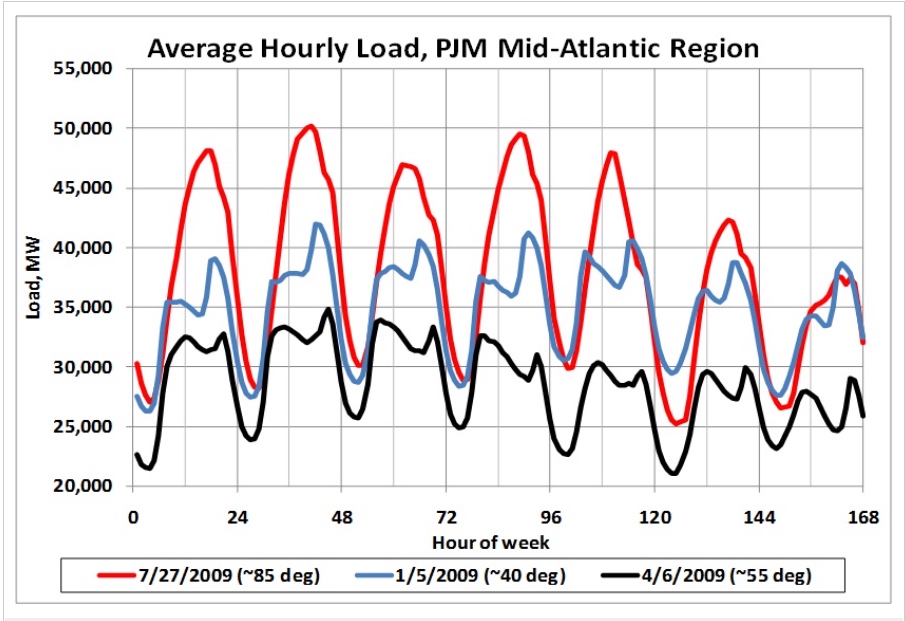
To understand why, consider the typical demand curve for electricity in the Mid-Atlantic, including Virginia. Demand can be almost twice as high at 5 p.m. as it is at 5 a.m., especially on a hot summer day with air conditioners running.

Average hourly load over a one-week period in January, April and July 2009. Credit B. Posner.

Average hourly load over a one-week period in January, April and July 2009. Credit B. Posner.

The supply of electricity delivered by the grid at any moment has to exactly match the demand: no more and no less. More than any other kind of generating plant, though, the standard nuclear reactor is inflexible in its output. It generates the same amount of electricity day in and day out. This means nuclear can’t be used to supply more than the minimum demand level, known as baseload. In the absence of energy storage, other fuel sources that can be ramped up or down as needed have to fill in above baseload.

Wind and solar have the opposite problem: instead of producing the same amount of electricity 24/7, their output varies with the weather and time of day. If you build a lot of wind turbines and want to use all the electricity they generate (much of it at night), some of it will compete to supply the baseload. Although solar panels produce during daylight when demand is higher, if you build enough solar you will eventually have to cut back on your baseload sources, too.

With enough energy storage, of course, baseload generating sources can be made flexible, and wind and solar made firm. Storage adds to cost and environmental footprint, though, so it is not a panacea. That said, Virginia is lucky enough to have one of the largest pumped storage facilities in the country, located in Bath County. Currently Dominion uses its 1,800 MW share of the facility as a relatively low-cost way to meet some peak demand with baseload sources like coal and nuclear, but it could as easily be used to store electricity from wind and solar, at the same added cost.

Without a lot of storage, it’s much harder to keep wind and solar from competing with nuclear or other baseload sources. You could curtail production of your wind turbines or solar panels, but since these have no fuel cost, you’d be throwing away free energy. Once you’ve built wind farms and solar projects, it makes no sense not to use all the electricity they can produce.

But if nuclear hogs the baseload, by definition there will be times when there is no load left for other sources to meet. Those times will often be at night, when wind turbines produce the most electricity.

The problem of nuclear competing with wind and solar has gotten little or no attention in the U.S., where renewables still make up only a small fraction of most states’ energy mixes. However, at an October 27 workshop about Germany’s experience with large-scale integration of renewable energy into the grid, sponsored by the American Council on Renewable Energy, Patrick Graichen of the German firm Agora Energiewende pointed to this problem in explaining why his organization is not sorry the country is closing nuclear plants at the same time it pursues ambitious renewable energy targets. Nuclear, he said, just makes it harder.

How big a problem is this likely to be in the U.S.? Certainly there is not enough nuclear in the PJM Interconnection grid as a whole to hog all the baseload in the region, and PJM has concluded it can already integrate up to 30% renewable energy without affecting reliability. But the interplay of nuclear and renewables is already shaping utility strategies. Dominion Virginia Power is on a campaign to build out enough generation in Virginia to eliminate its imports of electricity from out of state. And in Virginia, nuclear makes up nearly 40% of Dominion’s generation portfolio.

Now Dominion wants to add a third nuclear reactor at its North Anna site, to bring the number of its reactors in Virginia to five. If the company also succeeds in extending the life of its existing reactors, the combination would leave precious little room for any other energy resource that produces power when demand is low.

That affects coal, which is primarily a baseload resource. It would also impact combined-cycle natural gas plants, which are more flexible than coal or nuclear but still run most efficiently as baseload. But the greatest impact is on our potential for renewables.

This desire to keep high levels of nuclear in its mix explains Dominion’s lack of interest in land-based wind power, which produces mostly at night and therefore competes with nuclear as a baseload source. Dominion’s latest Integrated Resource Plan pretty much dismisses wind, assigning it a low value and a strangely high price tag in an effort to make it look like an unappealing option.

Dominion shows more interest in solar as a daytime source that fills in some of the demand curve above baseload. But given Dominion’s commitment to nuclear, its appetite for Virginia solar is likely to be limited. Already it insists that every bit of solar must be backed up with new natural gas combustion turbines, which are highly flexible but less efficient, more expensive and more polluting than combined-cycle gas, and add both cost and fuel-price risk.

Dominion’s seeming insistence that solar must be paired with gas to turn it into something akin to a baseload source is plainly absurd. It seems to be an effort to increase the cost of solar, part of an attempt to improve the company’s prospects of getting the North Anna 3 nuclear reactor approved in the face of its dismal economics.

Good resource planning would consider all existing and potential sources together, including using the existing pumped storage capacity in the way that makes most sense. We already know that North Anna 3 would be breathtakingly expensive. Evaluating it in the full context of other supply options will show it is even worse than Dominion acknowledges.

Dominion’s campaign to isolate Virginia’s power supply from the larger PJM grid also does a disservice to ratepayers. Keeping generation local benefits grid security when the generation is small-scale and distributed, but not when it’s a huge nuclear reactor sited on a fault line right next to two others. Otherwise, there is nothing wrong with importing power from other states. These are not hostile foreign nations. Pennsylvania is not going to cut us off if we don’t release their political prisoners.

In truth, it seems to be Tom Farrell’s plan to secure Dominion’s profitability for decades to come by walling off Virginia into a corporate fiefdom and controlling the means of production within it, like some retrograde Soviet republic. Utility customers, on the other hand, benefit much more from having our grid interconnected with PJM and the thousands of other power sources that help balance load and ensure reliability. One can only hope that Dominion’s regulators at the State Corporation Commission will see that.

Over the course of the next couple of decades, Virginia, like the rest of the U.S.—and indeed, the rest of the world—has to transition to an electricity supply that is almost entirely emissions-free. Very little planning has gone into making this happen, but several studies have shown it can be done. The Solutions Project offers a broad-brush look at how Virginia can combine onshore wind, offshore wind, solar and small amounts of other sources to reach a 100% clean energy future. Other researchers have done the same for PJM as a whole.

No doubt this will be a long and challenging journey, but the path we start out on should be the one most likely to get us to our goal. Nuclear seems likely to prove a stumbling block along the way, and an expensive one at that. Certainly, we shouldn’t make the problem worse.


Update: A number of commenters from the pro-nuclear camp have argued that nuclear is, or could be, more flexible than I’ve made it out to be. A new article in Utility Dive addresses this issue, concluding it is possible, but not easy, to make nuclear plants more load-following. France and Germany have succeeded to some degree, but U.S. nuclear plants pose greater challenges. “It can be done, but ‘the issue is that nuclear power plants weren’t designed to do that in the United States,’ said Jim Riley, senior technical advisor for nuclear operations at the Nuclear Energy Institute, an industry group that develops policy on issues related to nuclear energy.”

According to the article, some U.S. utilities are looking to tackle the challenge rather than retire their nuclear plants. These are nuclear plant owners that have to bid power into the wholesale market, where a nuclear plant, with its fixed operating costs, can’t compete with low-cost natural gas and renewable energy, especially at night. But of course, if you run a high-cost plant for fewer hours of the day, the average cost per kilowatt-hour increases.

Dominion doesn’t have to bid its nuclear into a wholesale market, so it has no incentive to try to run its plants flexibly. And given the astoundingly high cost of North Anna 3, curtailing its operation, and increasing the cost per kilowatt-hour produced, would be out of the question.

Unknown's avatar

Your 2015 Virginia legislative session cheat sheet, part one: Clean energy bills

photo credit: Amadeus

photo credit: Amadeus

I’m starting my review of 2015 energy legislation with a look at bills dealing with renewable energy and energy efficiency. Most of these bills will be heard in the committees on Commerce and Labor, though bills that cost money (tax credits and grants) usually go to Finance.

Bills referred to Senate Commerce and Labor are heard by the full committee, which meets on Monday afternoons. It consists of 14 members: 11 Republicans and 3 Democrats. They form a tough lineup; none of these senators received better than a “C” on the Sierra Club’s Climate and Energy Scorecard.

The House bills are typically assigned to the 13-member Special Subcommittee on Energy (10 Republicans and 3 Democrats, no fixed schedule). Bills that do not meet the approval of Dominion Power can expect a quick death here on an unrecorded voice vote, never to be heard from again. But on the plus side, the meetings are often quite lively, like old-fashioned hangings.

Net metering bills

Net metering is the policy that allows owners of solar (or other renewable) energy systems to be credited for the excess power they feed back into the grid when the systems produce a surplus; the owners use the credits when their systems aren’t supplying power and they need to draw electricity from the grid. Virginia law restricts who can use net metering, and how much. Expanding net metering is a major goal of renewable energy advocates, who argue it offers a free market approach to growth—give customers the freedom to build solar projects, get the utility out of the way, and solar will thrive.

This year’s initiatives include:

  • SB 833 and SB 764 (Edwards—apparently identical bills), HB 1950 (McClellan), and HB 1912 (Lopez) raise the maximum size of a commercial project eligible for net metering, from 500 kilowatts (kW) currently to 2 megawatts (MW). This is a much-needed expansion of the net metering program if Virginia is going to make real headway with solar. We are told Edwards plans to conform his legislation to HB 1622, below.
  • HB 1622 (Sullivan) raises the maximum size of a commercial project to 1 MW, and the maximum size of a residential system from the current 20 kW to a whopping 40 kW. But note that it does nothing to limit the standby charges utilities can charge for residential projects over 10 kW. Given that these charges are so punitive as to kill the projects, raising the cap wouldn’t create new market opportunities unless it is accompanied by a limit on the amount of standby charges that utilities can tack on.
  • HB 1911 (Lopez) amends the language allowing utilities to impose standby charges on residential and agricultural customers with systems over 10 kW to add the requirement that the State Corporation Commission conduct a “value of solar” analysis prior to approving the charges. Most solar advocates would rather see the legislature repeal the standby charge provision altogether, given how the utilities have abused it. Barring that, legislators should set a dollar limit of no more than five or ten bucks a month. But in the absence of any such reforms, it does make sense to at least require the SCC to do this more substantive analysis, ideally building on the framework developed over the summer by the Solar Stakeholder Group.
  • HB 1636 (Minchew) establishes “community net metering” as well as increasing the commercial project cap to 2 MW. This bill is a high priority for the solar industry and the environmental community. It provides the solution for owners with shaded roofs, renters and others who can’t install solar themselves by letting them subscribe to a community generation facility in their own or a neighboring county. Other forms of renewable energy are also allowed, so residents in windy areas could go in on a small wind turbine that wouldn’t make sense for a single household.
  • HB 1729 (Sullivan) creates “solar gardens” consisting of community organizations with 10 or more subscribers. The generation facility can be as large as 2 MW. The bill seems intended to accomplish much the same purpose as Minchew’s bill, although it is limited to solar. However, it allows the utility to impose “a reasonable charge as determined by the [State Corporation Commission] to cover the utility’s costs of delivering to the subscriber’s premises the electricity generated by the community solar garden, integrating the solar generation with the utility’s system, and administering the community solar garden’s contracts and net metering credits.” Boy, we’ve seen that movie before. Given what we’ve seen the SCC do with standby charges, the bill should be amended to put a cap on the amount of that “reasonable charge” so legislators know they aren’t writing a blank check.
  • SB 350 (Edwards) authorizes programs for local governments to use net metering for municipal buildings, using renewable energy projects up to 5 MW. It also allows a form of community net metering targeted to condominiums, apartment buildings, homeowner associations, etc., with a renewable energy facility located on land owned by the association. These customers would be exempt from standby charges.

Third-party power purchase agreements (PPAs)

HB 1925 (Lopez) and SB 1160 (Edwards) replace the current PPA program in Dominion territory with one that applies to both Dominion and APCo territories. It increases the project cap from the current 500 kW to 1 MW, and raises the overall program size to 100 MW from (50 MW). As with the current program, projects under 50 kW aren’t eligible unless the customer is a tax-exempt organization.

Utility-scale solar

HB 2219 (Yost) declares it to be in the public interest for Dominion Virginia Power or Appalachian Power to build up to 500 MW of solar power—a truly welcome objective—and authorizes the utilities to apply to the SCC for a certificate of public convenience and necessity for individual facilities of at least 20 MW in size, regardless of whether the facility is located in the utility’s own service territory.

“In the public interest” are the magic words that push the SCC to approve something it might not otherwise. Both utility giants have shown an interest in building and owning utility-scale solar, even as they have taught the SCC to believe that solar owned by anyone else burdens the grid. The magic words let them escape the corner they backed themselves into. That would be necessary here, given that our SCC wrongly believes the public interest requires the lowest cost energy regardless of the consequences to public health, the environment, national security, and the economy.

The solar industry has two concerns about HB 2219: the effect on ratepayers, since Dominion’s previous solar efforts have cost well above market rates; and the effect on the Virginia solar industry—or rather, the lack of an effect, since Dominion has hired only out-of-state companies. Virginia ratepayers could save money and the state could build more solar if legislation simply required the utilities to buy 500 MW of solar, and let the market decide who builds it. But of course, that’s now how things work in Virginia.

I also think it is unfortunate that the bill allows utilities to build solar plants that are not in the utilities’ own service territories, and that it does not require them to use Virginia contractors. Surely there would be more support for a bill promising projects that support local economies with jobs and tax revenues, and that requires the hiring of local installers. These seem like small enough things to ask.

HB 2237 (Yancey) allows Dominion or APCo to recover the costs of building or buying a solar facility in the state of Virginia of at least 5 MW, plus an enhanced rate of return on equity, through a rate adjustment clause. It also states that construction or purchase of such a facility, and the planning and development activities for solar energy facilities, are in the public interest. (The magic words again.)

This bill doesn’t require anything or make huge changes. It simply treats solar the way the Code currently treats other forms of generation, with the exception that the “in the public interest” language was previously used only to endorse a coal plant (what became the Virginia City Hybrid Energy Plant in Wise County). And note that this bill requires that the facility be in Virginia, and opens up the possibility of our utilities buying the facility rather than constructing it themselves, which could open the door to competition. This seems like a good way to proceed.

Grants and tax credits

HB 1728 (Sullivan) establishes a tax credit for renewable energy. Great idea, but last year the Senate Finance Committee made it clear they would not pass a new tax credit, so I assume this is a non-starter.

Last year’s renewable energy tax credit bill was amended to create a grant program instead. It passed both houses, but without funding and with the requirement that it be passed again this year. It is back this year as HB 1650 (Villanueva). (It has been assigned to House Committee on Agriculture, Chesapeake and Natural Resources and is on the docket for 8:30 a.m. Wednesday, January 21. Odd: it ought to be in Finance.) The grant would equal 35% of the costs of a renewable energy facility, including not just wind and solar, but also things like biomass, waste, landfill gas, and municipal waste incinerators. Facilities paid for by utility ratepayers are not eligible, and the grant total is capped at $10 million per year. Prospects for the program aren’t great given the state’s tight budget situation, but the bill is a high priority for the solar industry.

Another tax-related bill is HB 1297 (Rasoul), which authorizes localities to charge a lower tax on renewable projects than on other kinds of “machinery and tools.” Last year, you may recall, the solar industry was successful in getting passage of a bill that exempted solar equipment entirely from local machinery and tools taxes. Proponents are trying to ensure that Delegate Rasoul’s well-intentioned bill doesn’t reverse last year’s victory on solar.

Bills specific to energy efficiency

HB 1730 (Sullivan) establishes energy efficiency goals for electric and natural gas utilities. The good news: the goals are mandatory. The bad news: the goals are modest to a fault: a total of 2% energy savings by 2030 for electricity and 1% for natural gas.

HB 1345 (Carr) extends the sales tax holiday for Energy Star and WaterSense products to include all Energy Star light bulbs; currently only compact fluorescent light bulbs are eligible.

PACE bills

PACE (Property Assessed Clean Energy) is a way to finance energy efficiency, renewable energy and water conservation upgrades to commercial and non-profit-owned buildings. Local governments sponsor the financing for improvements and collect payments via property tax bills. Since the energy savings more than pay for the increased assessments, PACE programs have been hugely successful in other states.

Last year a bill that would have let localities extend “service districts” to cover clean energy (PACE by another name) failed in the face of opposition from the banking industry. This year’s bills are also not labeled PACE bills, but they achieve the same end. Apparently the parties have worked out the problems, a hopeful sign that a multi-year effort will finally meet with success.

SB 801 (Watkins) and HB 1446 (Danny Marshall) are companion bills that would authorize local governments to work with third parties to offer loans for clean energy and water efficiency improvements, creating “voluntary special assessment liens” against the property getting the improvements. The Department of Mines, Minerals and Energy would develop underwriting guidelines for local loans to finance the work. HB 1665 (Minchew) is similar, and we are told it will be conformed to HB 1446.

Virginia Solar Energy Development Authority

HB 1725 (Bulova) and SB 1099 (Stuart) establish the Virginia Solar Energy Development Authority to “facilitate, coordinate, and support the development of the solar energy industry and solar-powered electric energy facilities in the Commonwealth.” This implements a proposal in the 2014 Virginia Energy Plan and is not expected to be controversial.

Virginia SREC registry

HB 2075 (Toscano) requires the SCC to establish a registry for solar renewable energy certificates (SRECs). It would not suddenly make Virginia SRECs valuable, but it would put the administrative framework in place to support a voluntary SREC market, or even a real one if Virginia were to adopt legislation requiring utilities to buy solar power.

Cross-cutting approaches to clean energy

A few bills would have a more sweeping effect on energy efficiency and renewable energy. HB 2155 (Sickles) is billed as an “Energy Diversity Plan.” It was supposed to be a “grand bargain” between utilities and the clean energy industries, with the McAuliffe administration participating as well, but we understand there are outstanding issues that make the bill’s future uncertain.

The big idea is to put all non-emitting energy sources into one category: primarily wind, solar, hydro and nuclear, but also adding in combined heat and power, demand response and energy efficiency. The bill creates a timeline that requires utilities to ramp up use of new, non-emitting sources gradually, beginning with 0.25% of retail sales in 2016 and ramping up to 35% in 2030.

The bill has the support of clean energy industries, but the idea of treating nuclear as a benign source of power on an even footing with efficiency and renewables concerns the environmental community.

I’ll write more about this bill if it looks like it has legs.

HB 1913 (Lopez) is the only bill of the bunch that directly targets Virginia’s Renewable Portfolio Standard (RPS). Maybe that shouldn’t be a surprise. Our RPS is a poor, sickly thing that most people have left for dead. To his credit, Lopez keeps trying. His bill keeps the RPS voluntary but beefs up the provisions to make the program meaningful, if a utility chooses to participate. Instead of mostly buying renewable energy certificates from things like old, out of state hydro dams, the bill would ensure that actual, real-world renewable projects get built. You know, what an RPS is supposed to do.

In addition, the bill folds into the RPS the state’s existing goal of 10% energy efficiency gains by 2022. Utilities have done very little toward meeting this goal. Putting it into the voluntary RPS might be the prod needed to get more efficiency programs underway.

Or it might cause a utility to drop out. Either way, the result would be better than what we have now, where Virginia pretends to have an RPS, and utilities pretend to care.

Update: Another net metering bill has been filed. SB 1395 (Dance) raises the commercial net metering cap from 500 kW to 2 MW.

Unknown's avatar

Virginia’s SCC staff attacks EPA over the Clean Power Plan

Virginians rally in front of U.S. EPA Headquarters in Washington, DC in support of the Clean Power Plan

Virginians rally in front of U.S. EPA Headquarters in Washington, DC in support of the Clean Power Plan

In recent years paleontologists have come to believe that the dinosaurs did not go extinct; they evolved into today’s chickens and other birds. It turns out, however, that some of them did not evolve. Instead, they took jobs at Virginia’s State Corporation Commission.

Now they’ve put their DNA on full display with comments they filed on the EPA’s Clean Power Plan. The proposed EPA rules, under section 111(d) of the Clean Air Act, would require states to reduce the power plant CO2 emissions driving climate change. The staffers assert primly that they “take no position on the broad policy issues,” but that they feel “compelled” to point out all the ways the plan is “arbitrary, capricious, unsupported, and unlawful.” These mostly boil down to their claims that the plan will force coal plant closures, raise rates significantly and threaten service reliability—claims experts say are badly off-base.

Note that the commissioners themselves didn’t sign onto these comments. They come from the career staff at the Energy Regulatory Division, led by Bill Stevens, the Director, and Bill Chambliss, the General Counsel. This is pretty peculiar. I can’t think of a single other agency of government where the staff would file comments on a federal rulemaking without the oversight of their bosses.

Bill and Bill acknowledge in a footnote that the staff comments represent only their own views and not those of the commissioners. But that distinction has already been lost on at least one lawmaker. Today Speaker of the House William J. Howell released a statement declaring, “The independent, nonpartisan analysis of the State Corporation Commission confirms that President Obama’s environmental policies could devastate Virginia’s economy.”

And really, “devastate”? But that’s the kind of hysteria you hear from opponents of the Clean Power Plan. While the rest of us see healthier air, huge opportunities for job growth in the clean energy sector, and the chance to avoid the worst effects of climate disruption, the Friends of Coal see only devastation. And no wonder: Howell accepted $14,000 from the coal industry just this year alone.

But back to what the Bills over at the SCC think about the Clean Power Plan. How did they arrive at their conclusion that it would raise rates? According to Cale Jaffe, a lawyer with the Southern Environmental Law Center who practices extensively before the SCC, “Staff never did an analysis of an actual plan to comply with the Clean Power Plan, which has a lot of flexibility built into it. Instead, the Staff simply took Dominion Virginia Power’s last Integrated Resource Plan from 2013 and used it as a proxy for a compliance plan. That’s a significant flaw that skews the Staff’s analysis.  The Dominion plan, after all, was released nearly a year before the EPA even announced its rule.”

Compounding the error, says Jaffe, the staff “artificially inflated the cost by assuming that the only compliance strategy would be for Dominion to build a new nuclear reactor: the most expensive resource, which is not a required compliance option.”

We can all agree with the staff that nuclear plants are appallingly expensive. That may be why the EPA doesn’t assume most states will build them as part of their compliance strategy. To the contrary, the expectation is that states will respond with energy efficiency, wind and solar—all resources that are plentiful in Virginia but largely untapped so far.

As Jaffe notes, “an independent analysis of the actual Clean Power Plan itself shows that Virginia can achieve its goals at a fraction of the cost while lowering Virginians’ bills by 8%.”

We have seen time and again that the SCC staff has never been friendly to either renewable energy or energy efficiency, so it’s no surprise that their comments dismiss them as unworkable. Indeed, it is clear from the comments they filed that their real interest is promoting an anti-EPA, pro-coal agenda. Otherwise it would be hard to understand why they would stray so far from their own area of practice to attack the very legality of the Clean Power Plan.

Jaffe lists a number of other ways the SCC staff screwed up, but you get the picture: careful, reasoned analysis wasn’t the point. Still, you’d think that if agency staffers decide to go rogue like this, they would be careful to get the facts right.

———————————

Update: I have heard from some sources that the SCC staff had the blessing of at least one commissioner in putting forth their comments, and that all three commissioners may have known. If so, that’s even worse.