Unknown's avatar

Republicans find new way to stop McAuliffe moving forward on Clean Power Plan

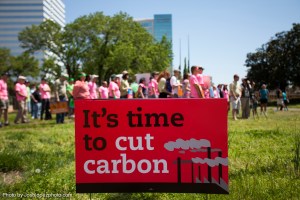
Must not be a Virginia Republican. Photo courtesy of Glen Besa.

Must not be a Virginia Republican. Photo courtesy of Glen Besa.

Virginia Republicans have found a new way to obstruct development of a state plan implementing the federal Clean Power Plan: take away funding for it. A line inserted by House Republicans in the state budget will prevent the Department of Environmental Quality from using any funds “to prepare or submit” a state implementation plan unless the U.S. Supreme Court’s stay of the Clean Power Plan is released.

Governor McAuliffe is fighting back, but the approach he has taken is expected to fail in the face of Republican majorities in the House and Senate. He has responded by offering an amendment to the budget item, removing “prepare or” from the Republicans’ budget amendment. The result would retain the prohibition on submitting a state plan while the Supreme Court’s stay is in effect (a harmless prohibition since EPA won’t accept them for now anyway), but allows DEQ to continue developing the state plan.

McAuliffe’s amendment accords with his support for the Clean Power Plan and his pledge to continue development of an implementation plan even while the EPA rule is in limbo. He has already vetoed Republican-backed bills that would have required DEQ to submit any implementation plan to the General Assembly for approval before sending it to the EPA. These vetoes can only be overridden by a two-thirds majority, and Republicans don’t have the numbers.

But the budget amendment is doomed to fail. A governor’s budget amendment can be defeated by a simple majority vote. House Republicans are expected to vote in lock step to reject the amendment when the General Assembly reconvenes April 20.

Environmental groups had expected the governor to use a line-item veto to strip out the offending language. Doing so would have meant the Republicans couldn’t muster a two-thirds majority to overcome the veto. We’re told McAuliffe changed his approach on the advice of attorneys who felt a line-item veto invited a constitutional challenge. The result, though, is a loss for the Governor.

Worse, it means Virginia will lose time in crafting a plan to diversify and de-carbonize our electricity grid. As a coastal state on the front lines of sea level rise, Virginia has more to lose than almost any other state from our fossil fuel addiction. And for Virginia, compliance with the Clean Power Plan is so easy that it’s hard to listen to Republicans fuss without picturing tempests in teapots.

Obviously, Republican opposition to a plan to cut carbon is neither more nor less than an act of spite aimed at President Obama. But what have they gained with this maneuver? At most it’s a “win” for an old energy model built on obsolete coal plants owned by bankrupt corporations that have laid off thousands of workers and cut the benefits of retired miners while lavishing campaign cash on legislators and paying millions of dollars in executive bonuses. That’s not the kind of win you put on campaign posters.

The Sierra Club and other climate activists plan to call out the House Republican leadership for their budget maneuver with a rally at the Capitol at 10 a.m. on April 20, during the veto session. The event, fittingly, is called “Turn Up the Heat in the House.”

Unknown's avatar

Why does Dominion Power support EPA’s Clean Power Plan?

DominionLogoWhen utility giant Dominion Resources Inc. filed a brief in support of the federal Clean Power Plan last week, a lot of people were caught off guard. Hadn’t Dominion CEO Tom Farrell said as recently as January that it would cost consumers billions of dollars? Why, then, is the utility perfectly okay with it now?

Well, first, because the mere threat of the plan has already cost Virginia consumers a cool billion, but it’s all going straight into Dominion’s pockets. What’s not to like? Otherwise, as applied to the Commonwealth, the Clean Power Plan itself is a creampuff that could even save money for ratepayers. Farrell’s claim that it will cost billions, made at a Virginia Chamber of Commerce-sponsored conference, seems to have been a case either of pandering to his conservative audience, or of wishful thinking. (Looking at you, North Anna 3!)

And second, Dominion’s amicus brief indicates its satisfaction with the way it thinks Virginia will implement the Clean Power Plan. Dominion has been lobbying the Department of Environmental Quality to adopt a state implementation plan allowing for unlimited construction of new natural gas plants (and perhaps that new nuclear plant), which happens to be Dominion’s business plan.

If you can get everything you want and still look like a green, progressive company, why wouldn’t you support the Clean Power Plan?

The only risk here is that it makes Virginia Republicans look like idiots. Their number one priority this legislative session was stopping the Clean Power Plan, largely on the grounds of cost. They ignored the hard numbers showing the plan essentially gives Virginia a pass, and instead relied on propaganda from fossil fuel-backed organizations like Americans for Prosperity and, crucially, the word of Dominion Power lobbyists.

Sure, it wasn’t just Republicans; a lot of Virginia Democrats swallowed Dominion’s argument during the 2015 legislative session that the Clean Power Plan would be so expensive for consumers that the General Assembly had to pass a bill—the notorious SB 1349—freezing electricity rates through the end of the decade so they would not skyrocket.

SB 1349 suspended the ability of regulators at the State Corporation Commission to review Dominion’s earnings. One outraged commissioner, Judge Dimitri, calculated that the effect of this “rate freeze” would be to allow Dominion to pocket as much as a billion dollars in excess earnings, money that ratepayers would otherwise have received in refunds or credits.

Nor has SB 1349 even prevented rates from going up, since the State Corporation Commission’s approval of Dominion’s latest mammoth gas plant[1] will tack on 75 cents to the average customer’s monthly bill.

Environmental groups had opposed the gas plant, arguing approval is premature since we don’t know what Virginia’s Clean Power Plan will look like, and that Dominion hadn’t properly considered other options.

It gets worse. Building more of its own gas plants allows Dominion to terminate contracts to buy power from other generators. In theory, this should represent an offsetting savings for consumers. But as Judge Dimitri explained in a concurrence, SB 1349 means Dominion doesn’t have to subtract this savings from the bill it hands those ratepayers.[2]

As Sierra Club Virginia Chapter Director Glen Besa noted, “The State Corporation Commission decision today proves that there really is no electricity rate freeze. The SCC just allowed Dominion to raise our electricity rates and increase carbon pollution for a power plant we don’t need.”

Now, let’s have a look at what is actually in Dominion’s Clean Power Plan brief. In part, it is a defense of EPA’s holistic approach to regulating generation and a rejection of the conservative claim that the agency should not be allowed to regulate “outside the fence line” of individual plants. Adopting the conservative view, argues Dominion, could lead to widespread, expensive coal plant closures.

But mostly, Dominion likes the Clean Power Plan because the company feels well positioned to take advantage of it. The brief makes this argument with classic corporate understatement:

Dominion believes that, if key compliance flexibilities are maintained in the Rule, states adopt reasonable implementation plans, and government permitting and regulatory authorities efficiently process permit applications and perform regulatory oversight required to facilitate the timely development of needed gas pipeline and electric transmission infrastructure, then compliance is feasible for power plants subject to the Rule.

What Dominion means by “reasonable implementation plans” requires no guesswork. Virginia clean energy advocates want a mass-based state implementation plan that includes new sources, so power plant CO2 emissions from Virginia don’t actually increase under the Clean Power Plan. You or I might think that reasonable, given the climate crisis and EPA’s carbon-cutting goals. But that’s not what Dominion means by “reasonable.”

Dominion’s business plan, calling for over 9,000 megawatts of new natural gas generation, would increase CO2 emissions by 60%. To Dominion, a 60% increase in CO2 must therefore be reasonable. Anything that hinders Dominion’s plans is not reasonable. QED.

“Needed gas pipeline . . . infrastructure” is no puzzle either. Dominion wants approval of its massive Atlantic Coast Pipeline. That pipeline, and more, will be needed to feed the gaping maws of all those gas plants. Conversely, Dominion, having gone big into the natural gas transmission business, needs to build gas generating plants to ensure demand for its pipelines.

Dominion is not the only electric utility betting big on natural gas. Southern Company and Duke Energy have also recently spent billions to acquire natural gas transmission and distribution companies. Moody’s is criticizing these moves because of the debt incurred. From a climate perspective, though, the bigger problem is that this commitment to natural gas comes right at the time when scientists and regulators are sounding the alarm about methane leakage.

There is surely some irony that Dominion, while defending the EPA’s plan to address climate change, is doing its level best to increase the greenhouse gas emissions that drive it.

Indeed, anyone reading Dominion’s brief and looking for an indication that Dominion supports the Clean Power Plan because it believes the utility sector needs to respond to the climate crisis would be sadly disappointed.

On the other hand, the brief positively sings the praises of “market-based measures” for producing the lowest possible costs. This is a little hard to take, coming from a monopoly that uses its political and economic clout to keep out competition and reap excessive profits through legislation like SB 1349, and which intends to use its captive ratepayers to hedge the risks of its big move into natural gas transmission.


[1] SCC case PUE-2015-00075 Final Order, March 29, 2016.

[2] Commissioner Dimitri, in a concurring opinion:

“I would find that SB 1349 cannot impact the Commission’s authority in this matter because it violates the plain language of Article IX, Section 2, of the Constitution of Virginia, for the reasons set forth in my separate opinion in Case No. PUE-2015-00027.

“Indeed, the instant case further illustrates how SB 1349 fixes base rates as discussed in that separate opinion. The evidence in this case shows that Dominion plans to allow certain NUG contracts, currently providing power to customers, to expire while base rates are frozen by SB 1349. The capacity costs associated with these contracts, however, are currently included in those base rates. Thus, as explained by Consumer Counsel, this means that “the Company’s base rates will remain inflated” because Dominion (i) will no longer be paying these NUG capacity costs, but (ii) will continue to recover such costs from its customers since base rates are frozen under SB 1349. Based on Dominion’s cost estimates, between now and the end of 2019, it will have recovered over $243 million from its customers for NUG capacity costs that the Company no longer incurs. While other costs and revenues are likely to change up and down during this period and would not be reflected in base rate changes precluded by SB 1349, these NUG costs are known, major cost reductions that will not be passed along to customers.” [Footnotes omitted.]


Unknown's avatar

McAuliffe rides to Dominion’s rescue on Remington solar plant

photo credit Kanadaurlauber

photo credit Kanadaurlauber

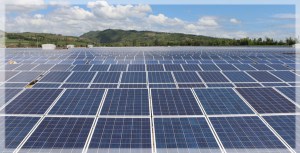
Last October, Virginia’s State Corporation Commission turned down an application from Dominion Virginia Power to build a 20-megawatt solar facility on land it owns near Remington, Virginia. The SCC told Dominion it had failed to meet its statutory obligation to consider third-party market alternatives that could save ratepayers money.

Rather than going back to the drawing board, we learned today that Dominion has found another way to build the project. In what is being billed as a “public-private partnership,” Dominion will sell the power from the project to the state of Virginia, and then will sell the associated renewable energy certificates (RECs) to Microsoft to help it meet its renewable energy goals for its data centers.

Governor McAuliffe announced the deal today at an event in Richmond, touting its ability “to reduce Virginia’s carbon emissions and diversify our energy portfolio.”

The deal seems to offer a great outcome for Dominion and Microsoft. A Dominion spokesperson told me the company will have to file a new application with the SCC for a certificate of public convenience and necessity, which they anticipate doing in May. But with no ratepayer impact now, they don’t expect the SCC would deny it this time around.

In this way, Dominion avoids having to consider less expensive means of acquiring solar energy, such as power purchase agreements or bids from third party developers.

The announcement did not say whether the state would pay a premium for power generated at the Remington site. It is also not clear how the deal relates to Governor McAuliffe’s goal, announced last December 21, of having the state derive 8% of its electricity from solar energy within three years. Legally, if Microsoft buys the RECs from the Remington project, the state cannot claim to be purchasing solar energy. So we hope the Governor has not been misled into thinking the state is buying solar energy with this deal.

As a general matter, though, supporting a large solar project fits well within the Governor’s ambitious jobs agenda, and it may be money well spent if it leads to more projects and greater investment. Certainly it beats handing out tens of millions of dollars annually to an ever-shrinking coal industry, as Virginia still does.

But we should keep this 20 MW project in perspective. North Carolina installed 1,134 MW of solar in 2015 alone. And meanwhile over at the SCC, Dominion is awaiting approval of its latest natural gas plant, the 1,600-MW Greensville Power Station, which will increase Virginia’s CO2 emissions by much more than the Remington project could possibly reduce them.

Which is to say, the further we go, the behinder we get.

Unknown's avatar

McAuliffe’s stark choice on the Clean Power Plan: serve Virginia, or Dominion Power

Photo by Josh Lopez, courtesy of the Sierra Club.

Photo by Josh Lopez, courtesy of the Sierra Club.

After the Supreme Court issued a stay of the EPA’s Clean Power Plan pending its review by the D.C. Circuit, many Republican governors halted compliance efforts in their states, while most Democratic governors opted to continue. Among these was Virginia Governor Terry McAuliffe, who plans to unveil a draft state implementation plan this fall.

Deciding to move forward on President Obama’s signature climate effort was an easy call. Polls show strong support for reducing carbon pollution, and the Governor wants to prove himself a team player who supports his president and his party. McAuliffe often reiterates his conviction that climate change is already producing extreme weather and increasingly severe coastal flooding in Virginia, making government action urgent.

Governor McAuliffe has another choice before him now: he can craft a compliance plan that moves Virginia firmly in the direction of clean energy and lower carbon emissions, or he can adopt one that allows unbridled growth in new power generation from natural gas. The latter could still meet the letter of the law, but it would hugely increase greenhouse gas emissions from Virginia power plants.

McAuliffe has this choice because EPA’s rules come in two parts: the Clean Power Plan addresses existing power plants under one section of the Clean Air Act, while new power plants are addressed under another section of that law. As a result of the statutory structure and EPA’s rules, states can choose to cover both under one set of rules with a total cap on utilities’ CO2 emissions, or they can address new and existing sources separately.

If a state chooses to cover both under a single cap, new generation can be added up to the cap or go beyond if the utility buys emission allowances from another utility. But if a state treats new and existing sources separately, then new sources can grow without limit as long as each new unit meets a unit-specific standard. Of course, building more fossil-fueled power plants of any type will increase carbon emissions, at a time when the U.S. desperately needs to cut back.

The carbon reduction target EPA set for Virginia under the Clean Power Plan is extremely modest. EPA’s numbers show Virginia can meet the target for existing sources simply by not increasing emissions. If the state also includes new power plants under the cap, however, it creates a real incentive to invest in clean energy.

But there’s a problem. Dominion Resources, the Richmond-based parent company of Dominion Virginia Power, is heavily invested in the natural gas sector, primarily transmission and storage. That has led Dominion to lobby for an implementation plan that covers only existing power plants.

Excluding new sources would leave the company free to build as many new natural gas-burning power plants in the state as it wants, locking in years of increased carbon pollution, and further boosting demand for fracked gas and pipeline capacity. Dominion’s plans call for more than 9,500 megawatts of new gas generation in Virginia, equivalent in carbon impact to building eight average-sized coal plants in the state.

McAuliffe can do what Dominion wants, or he can do the right thing for the climate. He can’t do both.

The stakes are high on both sides. McAuliffe has made job creation his number one priority, and he lures new industry to the state with the promise of lower-than-average electricity rates. Dominion says supporting its natural gas plans is the way to deliver on that promise. Whether that is true or not doesn’t count in this calculus; with state law limiting governors to a single term, McAuliffe is focused on the present.

But adopting a plan that allows unlimited increases in greenhouse gas emissions would run contrary to Virginia’s long-term interests. Not only is the state on the front lines of sea level rise, it needs predictable, affordable electricity prices for decades to come. And nothing can provide that better than renewable power and increased energy efficiency.

Neither Dominion nor anyone else can guarantee the price of natural gas over the life of a new power plant. Questions of price and supply bedevil even the best analysts and make forecasting risky. Moreover, the growing awareness of the climate impacts of methane from leaking wells and pipelines is already producing calls for tighter regulation of natural gas. A carbon tax or cap-and-trade legislation would also make all fossil fuels more expensive relative to carbon-free renewables.

While the cost of using natural gas can only go up, the costs of wind, solar and battery storage are expected to continue their astonishing declines. Advances in energy efficiency promise huge savings for states that pursue programs to help customers cut their energy use.

From a bill-payer’s perspective, then, investments in clean energy make more sense than building gas plants, even without taking federal regulations into consideration. Recent analyses show Virginia can cap carbon pollution from new power plants and still save money for electricity customers.

Environmental groups say their number one energy priority this year is to ensure Virginia adopts a Clean Power Plan that includes both existing and new sources, and they are counting on Governor McAuliffe to deliver. Their message is simple: if McAuliffe wants to be on the climate team, Virginia’s compliance plan must reduce CO2 emissions, not let them grow.

Unknown's avatar

Only the good die young: A mid-way review of Virginia climate and energy bills

Photo credit: Corrina Beall

Photo credit: Corrina Beall

Virginia’s 2016 legislative session is only half over, but it’s already clear that the General Assembly is no more capable of dealing with climate change and a rapidly-evolving energy sector than it ever was. Republicans are stuck in denial, Democrats are divided between those who get it and those who don’t, and for most legislators in both parties, the default vote is whatever Dominion Power wants.

Republican attacks on EPA climate regulations sail through both houses, while popular RGGI legislation dies in committee.

Practically the first bills filed this session call for Virginia’s Department of Environmental Quality to submit for legislative approval any plan to comply with the EPA’s Clean Power Plan. Anxious to safeguard Virginia’s heritage of carbon pollution against the twin threats of clean energy and a more stable climate, the Republican leadership rammed through HB 2 and SB 21 on party-line votes. Governor McAuliffe has promised vetoes.

Eager as it was to defeat Obama’s approach to climate disruption, the Party of No supported no solutions of its own, even when proposed by one of its own. Virginia Beach Republican Ron Villanueva couldn’t even get a vote in subcommittee for his Virginia Alternative Energy and Coastal Protection Act, which would have had Virginia join the Regional Greenhouse Gas Initiative (RGGI). It was the only legislation introduced this year that would have lowered greenhouse gas emissions and raised money to deal with climate change. The Democratic-led Senate version also failed to move out of committee, on a party-line vote.

Republicans scoff at climate change, but they are beginning to worry about its effects. Bills have moved forward to work on coastal “resiliency” efforts and to continue studying sea level rise (referred to as “recurrent flooding,” as though it were a phenomenon unto itself and suggesting no particular reason it might get worse). The Senate passed SB 282, creating the Virginia Shoreline Resiliency Fund, and SJ 58, extending the work of the Joint Subcommittee to study recurrent flooding. The House passed HJ 84, a companion to SJ 58, and HB 903, establishing a Commonwealth Center for Recurrent Flooding Resiliency.

Bold energy efficiency measures die. Not-so-bold measures don’t do well either.

Virginia appears set to continue its woeful record on energy efficiency. Between the opposition of electric utilities and their regulators at the State Corporation Commission, bills that would have set the stage for cost-effective reductions in energy use got killed off early or watered down to nothing.

Among the latter were the fairly modest bills pushed by the Governor. They passed only when reduced to a provision for the SCC to evaluate how to measure the subject. Weirdly, even that found opposition from conservative members of the Senate and House.

The only bill to move forward more or less intact was Delegate Sullivan’s HB 1174, which requires state agencies to report on how badly the state is doing in meeting its efficiency goal. So we may not make progress, but at least we’ll have to acknowledge our failures. (Roughly the same group of conservatives didn’t think we should even go that far.)

Renewable energy bills won’t move forward this year, except the one Dominion wants.

As previously reported, the Republican chairmen of the House and Senate Commerce and Labor committees decided not to decide when it came to much-needed renewable energy reforms. Every bill to create new market opportunities for wind and solar was “carried over to 2017,” i.e., referred to a not-yet-existent subcommittee composed of unnamed people tasked with meeting at a not-yet-scheduled time, in order to do “something.”

“We do need to get moving on these solar bills faster than we have been going,” said House C&L Chairman Terry Kilgore, in explaining why his committee was not getting moving on any solar bills.

On the other hand, over in House Finance, Dominion Virginia Power’s bill to lower the taxes it pays for renewable energy property fared better. In exchange for an 80% tax exclusion for its own utility projects, Dominion offered up reductions in the tax savings currently afforded to the smaller projects being developed by independent solar companies. In an amusing sideshow, Republican leaders tried to use their support for this legislation to strong-arm liberal Democrats into supporting a bill extending coal subsidies, on the theory that passing one bill that benefits Dominion warrants passing another bill that benefits Dominion.

Given the lack of progress in opening the wind and solar markets, there is more than a little irony in the fact that legislation moved forward in both the House and Senate requiring utilities to direct customers to an SCC website with information about options for purchasing renewable energy. (Which leads to the question: if visitors to such a site encounter an error message, is it still an error?)

Coal subsidies remain everyone’s favorite waste of money.

Once again, the House and Senate passed bills extending corporate welfare for companies whose business model involves blowing up mountains and poisoning streams. Over the years legislators have spent more than half a billion dollars of taxpayer money on these giveaways, knowing full well it was money down a rat-hole. Community activists have pleaded with lawmakers to put the cash towards diversifying the coalfields economy instead, but there has never been a serious effort to redirect the subsidies to help mine workers instead of corporate executives and the utilities that buy coal.

This year the corporate handout went forward in the face of reports that one of the biggest recipients plans to pay multi-million-dollar bonuses to its executives while laying off miners and looking for ways to dodge its obligations to workers. Add to this the news that the same company owes two coalfields counties $2.4 million in unpaid taxes for last year, and you have to wonder what fairy tales legislators are hearing from lobbyists that makes them put aside common sense.

It’s not just Republicans who voted for these subsidies (though there is no excuse for them, either). Some Democrats did so, too. Governor McAuliffe has said he would veto these bills, which means senators like David Marsden, Jennifer Wexton, John Edwards and Chap Petersen will have a chance to redeem themselves by voting against an override.

Many thanks to Senators Howell, Ebbin, Favola, Locke, McEachin, McPike and Surovell for seeing through the propaganda of the coal lobby and voting no.

Dominion defeats legislation protecting the public from coal ash contamination

Senator Scott Surovell’s SB 537 would have required toxic coal ash to be disposed of in lined landfills rather than left in leaking, unlined pits and simply covered over. The bill failed in committee in spite of support from one Republican (Stanley), after Democratic Senator Roslyn Dance caved to pressure from Dominion and abstained. One might have expected more backbone from a legislator with coal ash contamination in her own district. (Nothing excuses the Republicans who voted against the public health on this, either. Last I heard, Republican babies are as vulnerable to water pollution as Democratic babies.)


Unknown's avatar

Facing utility opposition, Virginia legislators punt on renewable energy bills

Expanding solar financing to include third-party ownership would allow more houses and farms to host solar arrays. Photo credit Dirk Franke via Wikimedia Commons.

Expanding solar financing to include third-party ownership would allow more houses and farms to host solar arrays. Photo credit Dirk Franke via Wikimedia Commons.

Most Virginia legislators say they want more renewable energy. They listen to their constituents, they understand the economic opportunities, they support consumer choice, and they think it’s important to diversify our energy supply, even if they aren’t against fossil fuels. But when it comes to voting, only one voice counts with them, and that’s Dominion’s.

And so Dominion Virginia Power once again succeeded in blocking legislation that would have opened the market for wind and solar to greater private investment through third-party power purchase agreements (PPAs), community solar programs, removal of standby charges and the lifting of size caps. (I described most of these bills in a previous post.)

Rather than capitulate publicly, however, the chairs of the Senate and House Commerce and Labor Committees, Senator Frank Wagner and Delegate Terry Kilgore, determined to “carry over” to next year the bulk of the renewable energy bills, assigning them to a new subcommittee to be named later, and which will consider the bills sometime later in the year.

If you are a pessimist, you will notice this means that none of the bills even got a hearing in committee, and all are effectively dead for the year, with no legislators you can hold accountable. You will also have doubts about the likelihood of this subcommittee delivering results favorable to solar and wind advocates, given that Mssrs. Wagner and Kilgore are not known for standing tall against utility interests.

If you are an optimist, however (and what choice do you have?), you will respond with hope that this subcommittee will browbeat the utilities into accepting at least some legislative reforms in the service of the public good. You will point out that legislators’ unwillingness to simply kill bills at the utilities’ behest is progress in itself, driven by an outpouring of constituent support for renewable energy and backed by new lobbying firepower.

In past years, Dominion never gave more than it got, and routinely killed off legislation. And this year, Dominion’s approach to the most important piece of legislation—Delegate Randy Minchew’s HB 1286—followed the utility’s standard operating procedure. Over many weeks Dominion lobbyists met with members of the industry coalition and persuaded them to strip away parts of the legislation—first one provision, then another, all in the name of “compromise.” Eventually the bill was reduced to a single paragraph recognizing the legality of third-party PPAs, with all sides in agreement.

Then two days before the subcommittee hearing on the bill, Dominion reneged and produced substitute language that eliminated authority for all but a narrow subset of PPAs, while suddenly slapping new standby charges on small commercial customers who install renewable energy systems, a provision entirely separate from the PPA issue.

The standby charges were a known poison pill. In 2012 Dominion convinced the solar industry to accept the idea of standby charges in exchange for raising the size limit on residential solar systems from 10 to 20 kW. The industry assumed the charges would be modest at worst, given the value of distributed solar to the grid. But Dominion then persuaded the State Corporation Commission to approve charges so high as to kill the market for the larger systems. Appalachian Power followed suit.

Dominion would dearly love to institute standby charges on more customers, so this year the company is ransacking renewable energy bills looking for opportunities. I’m told that after Delegate Minchew elected to have HB 1286 carried over rather than accede to the standby charge language, Dominion lobbyists went to Senator Richard Stuart and tried to use another pro-renewables bill as the vehicle for standby charges.*

This obnoxious tactic smacks of desperation, and must be as irritating to legislators as it is to renewable energy advocates. We should not be surprised to see it a point of contention later this year when the subcommittee meets. Standby charges may be bogus, but utilities see them as their best tool to prevent the spread of customer-owned generation that threatens utility profits.


*That bill is SB 779, a latecomer filed at the request of Loudoun County farmer and philanthropist Karen Schaufeld. Her new group, Powered by Facts, initiated several pro-solar bills separate from those of the solar industry. Although Stuart’s bill as written includes sweeping reforms for farmers who want to sell excess renewable energy, we hear it was suffering the same death-by-a-thousand-amendments even before the standby charge issue came up. For now, however, the legislative information website continues to show the bill with its original language. It will likely be heard on Monday if it is heard at all; we expect to see it bounced to the new subcommittee.


Unknown's avatar

Virginia legislators look to tax breaks and barrier-busting to boost renewable energy

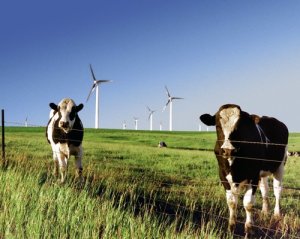
Let's get these projects moo-ving. Photo credit NREL

Let’s get these projects moo-ving. Photo credit NREL

The orchestrated mayhem of the Virginia General Assembly session is well underway. Thirteen days are gone and only twenty-one days remain until what’s known as “Crossover,” after which any bill that hasn’t passed its own chamber is effectively dead. This year Crossover falls on February 16. After that, each chamber considers only bills already passed by the other.

By that measure, yours truly is one lazy blogger, because I’m only just getting to the renewable energy bills. On the other hand, bills were still being filed until Friday, and some bills are undergoing revisions before they are heard in committee. These are moving targets; advocates beware.

Removing barriers to investment 

Readers of this blog know that Virginia law is riddled with barriers that restrain the market for wind and solar in Virginia. This year several bills take aim at the policies holding us back.

HB 1286 (Randy Minchew, R-Leesburg, in Commerce and Labor) is barrier-busting legislation developed by the solar industry in consultation with the wind industry and solar advocates. It clarifies that renewable energy companies that sell to retail customers under power purchase agreements (PPAs) are not public utilities and don’t have to meet the statutory requirements for public utilities and suppliers. Customers can use third-party PPAs to purchase renewable energy electricity generated by facilities located on the customer’s property, everywhere in the state. The bill also lifts the one percent cap on net metering programs relative to total utility sales, and authorizes community net metering programs. It also expands the concept of “agricultural net metering” to cover other customers who want to attribute electricity from one facility to multiple meters on the customer’s property.

In addition, the bill amends the Commonwealth’s energy policy by adding the goals of encouraging private sector distributed renewable energy, increasing security of the electricity grid by supporting distributed renewable energy projects, and augmenting the exercise of private property rights by landowners desiring to generate their own energy from renewable energy sources on their lands. None of this language by itself forces action, but the State Corporation Commission takes note of energy policy in its decision-making.

SB 140 (John Edwards, D-Roanoke, in Commerce and Labor) attacks the standby charges that have been so controversial. It increases the size of electrical generating facilities operated by residential or agricultural net energy metering customers that are subject to a monthly standby charge from those with a capacity of 10 kilowatts to those with a capacity of 20 kilowatts. Since residential solar facilities that are net-metered are already limited to 20 kW, this would effectively repeal standby charges for residential net metering.

SB 139 (John Edwards, D-Roanoke, in Commerce and Labor) makes a small change to the existing agricultural net metering option.

SB 148 (John Edwards, D-Roanoke, in Commerce and Labor) replaces the pilot program enacted in 2013 that authorized a limited pilot program for third-party PPAs. generation facilities. The bill requires the State Corporation Commission to establish third-party power purchase agreement programs for each electric utility. The existing pilot program applies only to Dominion Virginia Power and sets the maximum size of a renewable generation facility at one megawatt; the programs authorized by SB 148 apply to all electric utilities and do not set limits on the size of facilities.

Although SB 148 is similar to HB 1286 in attempting to ensure the legality of third-party PPAs, solar advocates prefer HB 1286. Giving the State Corporation Commission authority here should not be necessary and might lead to higher costs and more regulations.

Community energy/solar gardens

It’s darned hard to buy renewable energy in Virginia if you are among the approximately 75% of residents who can’t put solar panels on your own roof or build a wind turbine out on the back forty. That’s an enormous untapped market.

SB 1286, above, contains a provision authorizing community energy programs In addition, HB 1285 (Randy Minchew, R-Leesburg, in Commerce and Labor) is a stand-alone bill that authorizes (but does not require) investor-owned utilities and coops to establish community energy programs.

HB 618 (Paul Krizek, D-Alexandria, referred to Commerce and Labor) would require the State Corporation Commission to adopt rules for “community solar gardens” that would let customers subscribe to a portion of the output of a solar facility located elsewhere in their area. The solar electricity and the renewable energy credits (RECs) would be sold to the local utility, which would then credit the subscribers on their utility bills.

But whereas customers who have solar panels one their own roof get credited at full retail value and own the associated renewable energy credits, HB 618 allows the SCC to devise rules that could result in a much worse deal for solar garden subscribers, including allowing the utility to impose a “reasonable charge” to cover ill-defined costs.

That’s an unfortunate invitation to the utilities to pile on fees. Unless the utilities involved really want to make the program work for their customers, it’s hard to imagine this turning out well. We would not expect to see viable programs in Dominion or APCo territory if this passes. On the other hand, some municipal utilities have been more responsive to the interests of their customers, so it could work for them.

Tax credits and exemptions

An important tax bill to watch this year is HB 1305 (Jackson Miller, R-Manassas, referred to Finance), which changes the state and local tax treatment of solar and wind energy facilities. It exempts utility solar and wind from taxation, but lowers from 20 MW to 1 MW the size of other solar projects that are exempt from local machinery and tools tax (a kind of personal property tax; securing that exemption was a major win for the solar industry in 2014). The bill replaces the hard-won 100% exemption with an 80% exemption. The change is very nice for utilities (Virginia is always very nice to utilities), but it makes the economics worse for third-party owned facilities in the 1 MW to 20 MW range—exactly the ones the state should be trying to attract.

SB 743 (Frank Wagner, R-Virginia Beach, referred to Agriculture, Conservation and Natural Resources) helps solar projects below 5 MW qualify for the above-mentioned tax exemption passed in 2014. The bill makes the Department of Mines, Minerals and Energy the agency that certifies solar projects as “pollution control equipment and facilities,” eligible for exemption from state and local taxation. This exemption from state sales tax and local machinery and tools taxes is one of the few perks Virginia can offer commercial-scale solar developers here, where margins on projects are very thin compared with projects in North Carolina or Maryland with stronger incentives.

Tax credits are also on the agenda this year. Tax credits fell into disfavor in Virginia following an audit that revealed that many tax credits aren’t achieving their objectives (see: tax subsidies for coal mining). Senate Finance Committee members resolved to end them just about the same time the solar industry came asking for one themselves two years ago, with unhappy results for solar. But tax credits are legislative candy, and there’s no telling how long the diet will last. Hopeful persons may as well put out their own plate of chocolates. If the diet is off, then the main problem with this year’s bills, from the point of view of the Republicans who make up the majority of our legislature, is simply that they come from Democrats.

HB 480 (Rip Sullivan, D-Arlington, referred to Finance) establishes a 35% tax credit for renewable energy property, to be claimed over 5 years, with a $5 million program cap. The credit would apply not just to wind and solar but also some biomass, combined heat and power, geothermal and hydro systems.

SB 142 (John Edwards, D-Roanoke, referred to Finance) and HB 1050 (Sam Rasoul, D-Roanoke, referred to Finance) establish a tax credit of up to 30% for solar thermal systems used for water heating or space heating and cooling. Solar PV systems are not included in the bill.

State funding through carbon cap and trade

SB 571 (Donald McEachin, D-Richmond, referred to Agriculture, Conservation and Natuaral Resources) and HB 351 (Villanueva, R-Virginia Beach, referred to Commerce and Labor) would require the Governor to join the Regional Greenhouse Gas Initiative (RGGI), the cap-and-trade program that has successfully ratcheted down carbon emissions in the northeastern states. Funds generated by auction allowances would fund sea level rise adaptation in coastal areas, economic transition efforts for southwest Virginia, energy efficiency for low-income families, and distributed renewable energy programs.

Financing

HB 941 (David Toscano, D-Charlottesville, referred to Counties, Cities and Towns) expands the authorization for Property Assessed Clean Energy (PACE) programs to include residential and condominium projects. This would allow localities to offer low-interest financing to homeowners for both energy efficiency and renewable energy investments.

Utility cost recovery

HB 1220 (David Yancey, R-Newport News, referred to Commerce and Labor) is billed as a technical fix for language added to the Code last year that encourages utilities to invest in solar. The bill clarifies that a utility that purchases a solar facility is allowed cost recovery on the same favorable terms it would get by building the facility itself.

Energy storage

Energy storage is emerging as the hot new energy technology area, about where solar was five years ago. Interest in it has been driven by recent price declines as well as the success of wind and solar and the growing awareness that these carbon-free sources are likely to make up a significant portion of our electricity supply in coming years. So while the use of storage is by no means limited to renewable energy applications, I include it here because it will interest those who follow wind and solar policy.

HB 452 (Patrick Hope, D-Arlington, in Commerce and Labor) and SB 403 (Ebbin, D-Alexandria, in Commerce and Labor) create the Virginia Energy Storage Consortium to promote research, development, commercialization, manufacturing and deployment of energy storage. It’s a great idea.

HB 1137 (David Toscano, D-Charlottesville, in Commerce and Labor) directs the State Corporation Commission to develop a program to enable commercial and industrial customers to sell battery storage services to the grid. If you’ve heard of the concept known as “vehicle-to-grid” (using electric cars to put power back on the grid as well as drawing from it), you’ll understand what this is about. It would allow these and other “energy balancing devices” to provide value to the grid in the form of spinning reserves, frequency regulation, distribution system support, reactive power, demand response, or other electric grid services. It’s an idea whose time has come.

Biomass

Wind and solar have several less popular relatives with more tenuous claims on the renewable energy family name. Virginia’s definition of “renewable” embraces them all, regardless of merit. It treats biomass to a special place of honor, including even the burning of trees that haven’t been harvested sustainably, and regardless of how much pollution gets spewed into the atmosphere.

SB 647 (Barbara Favola, D-Arlington, in Commerce and Labor) and HB 973 (Alfonso Lopez, D-Arlington, in Commerce and Labor) would change that to require that electricity from new biomass plants, to qualify as renewable energy, would have to meet a minimum efficiency level. Burning wood from trees would generally meet that standard only when it produces both electricity and heat (or, through the magic of science, cooling).

Consumer choice

HB 444 (Manoli Loupassi, R-Richmond, in Commerce and Labor) and SB 745 (Frank Wagner, R-Virginia Beach, in Commerce and Labor) would expand the current requirement that utilities inform ratepayers about their options for purchasing renewable energy.

Which might lead you to ask, “what options?” since for most of us here in Virginia they are sadly lacking. But maybe this year’s session will start to change that.

A note about House Commerce and Labor: Bills noted above that have been assigned to the House Committee on Commerce and Labor have all been assigned to its Subcommittee on Energy. This powerful subcommittee typically meets only once or twice before Crossover. I’m told it will meet on the afternoon of Tuesday, February 9, likely continuing well into the evening due to the number of bills assigned.

February 9 is also Clean Energy Lobby Day, when members of the renewable energy and energy efficiency industries descend on Richmond to educate legislators about the need for sound reforms. This year the solar industry trade association MDV-SEIA is organizing the lobby day, which is free to participants. The organization has also created a petition to support third-party financing of solar in Virginia.


UPDATE:

Senator McEachin files bill for mandatory RPS. SB 761 Donald McEachin (D-Richmond) would make Virginia’s pathetic, voluntary RPS into a mandatory RPS that would rank as one of the best in the country. It would require utilities to meet an increasing percentage of electricity sales from solar, onshore wind, offshore wind, and energy efficiency, reaching 25% of base year sales by 2025 (and deleting the current, obnoxious slight-of-hand that leaves nuclear out of the equation, but keeping a base year of 2007). By 2017, half of it would have to come from sources located within Virginia.

Unknown's avatar

Virginia wind and solar companies say tax credit extensions cue up a happy new year

Photo by Dennis Schroeder / NREL

Photo by Dennis Schroeder / NREL

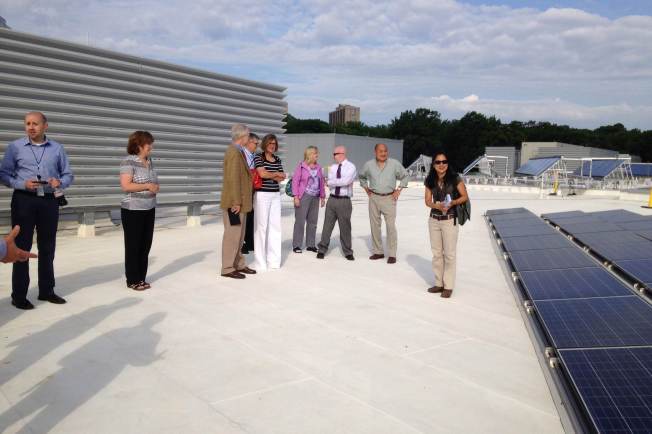
Congress included a welcome gift to the wind and solar industries in last week’s package of goodies that made up the year-end spending bill. For the wind industry, the renewal of the expired production tax credit (PTC) with a five-year phase-out finally ends the guessing game that has driven repeated boom-and-bust cycles—and will help Virginia’s first-ever wind farm move forward.

For solar, the extension of the investment tax credit (ITC) beyond the end of next year ensures that one of the fastest-growing industries in the U.S. won’t face a major disruption that would have driven many small companies out of business. That’s critical in Virginia, where the lack of incentives has left the market mostly to small players able to get by on small profit margins. As the economics of solar continuously improve, these small companies see a bright future in the Commonwealth.

I asked several Virginia industry members how they were feeling after Congress’ year-end gift.

“The certainty the tax credit extension gives our business is critical,” answered Jeff Nicholson, Director of Development for Waynesboro-based Sigora Solar. “While there won’t be as much of a crunch to get systems installed next year, we can hire without being concerned that the market for solar will plummet in a year.”

Sigora has been one of Virginia’s most remarkable small business success stories, growing from 11 employees at the beginning of 2015 to 44 today. With the ITC extension, the company now foresees a “long-term, steady stream of business” through the rest of the decade, said Nicholson.

The 30% ITC had been set to expire at the end of 2016 for residential customers, while dropping to 10% for commercial and utility-scale projects. Under the bill passed by Congress and signed by President Obama on December 18, the tax credit will remain at 30% for all systems through 2018, and then taper off gradually until it reaches 10% in 2022. If current price trends continue, the extra few years may be enough to make solar competitive with other fuels without subsidies.

“We know solar is a solid energy production fuel, every bit as viable as coal, oil, nuclear and wind, and it is clear that the more we build, the more cost effective it becomes,” said Paul Risberg, President of Charlottesville-based Altenergy Incorporated. Altenergy grew by 40% in 2015, and Risberg told me he now expects that trend to continue in 2016.

Another Virginia success story is Staunton-based Secure Futures LLC, which has carved out a niche supplying solar energy to tax-exempt entities like universities and local government entities in Virginia, using third-party power purchase agreements. CEO Tony Smith told me, “The ITC extension means that our business can continue to offer at or below grid-parity solar electricity to our commercial scale customers beyond 2016.”

But, he added, “It still remains challenging to attract investment in Virginia due to the disparity in incentives to solar in our state as compared with our neighboring states, especially for behind-the-meter third party owned solar.  We remain hopeful that our industry will continue to build support in Richmond to reduce the barriers to solar investment in Virginia.”

The Virginia solar industry got an extra year-end gift on Monday when Governor Terry MacAuliffe announced plans for the state government to buy 110 megawatts of solar over the next three years, accounting for 8% of its electricity usage. While 75% of that will be utility-scale solar to be built by Virginia Dominion Power, 25% will consist of on-site projects of less than 2 megawatts in size, to be built by third-party developers using power purchase agreements.* The state will follow a competitive procurement process, but in response to a question at the press conference, MacAuliffe said it will not limit participation to Virginia-based companies.

Still, the Virginia industry members were optimistic the announcement would help boost the profile of solar energy in the Commonwealth. The industry trade group, MDV-SEIA, says it participated in the discussions leading to the announcement.

Virginia has a lot of catching-up to do, of course; neighboring states are so far ahead and have so much momentum that, as the Virginia Sierra Club’s Glen Besa observed, “If Dominion sticks to its commitment (of 400 megawatts of solar by 2020), we’ll be further behind on solar than we are now.”

Photo credit NREL

Photo credit NREL

Like the ITC for solar, the 2.3 cents per kilowatt-hour PTC has been a crucial support for the wind industry, making it the second-biggest source of new electric generation in the U.S. for many years now. But until last week, Congress had been reluctant to extend the PTC for more than a year at a time, sometimes retroactively, causing havoc for planners and developers and leading to boom-and-bust cycles deeply damaging to growth.

Now the PTC will be extended through 2016 before tapering off and expiring altogether at the end of 2019. Projects that “commence construction” by the end of a given year will qualify at that year’s level. (“Commence construction” language was also added to the solar ITC.) The predictability that comes with the five-year tapering-off period is expected to finally bring stability to project planning.

And like the solar industry, the wind industry now predicts bright days ahead. Bruce Burcat, Executive Director of the Mid-Atlantic Renewable Energy Coalition, told me, “Sound policies like the PTC have driven innovation which has helped reduce the cost of wind energy down by about 66 percent over the past six years, making it highly price competitive with traditional forms of energy resources. This trend bodes well for the opportunity for wind to take hold in Virginia.”

Burcat is undeterred by Virginia’s lack of success with wind farms to date. “While no wind farms have been developed in Virginia, we believe that with the right signals from the Commonwealth, Virginia could see its first wind farms developed sometime in the next few years,” he said. “Wind farms would bring investment and jobs and other economic development opportunities to Virginia.  Wind farms would also be a very important tool for cleanly and cost-effectively helping Virginia meet the requirements of the EPA’s Clean Power Plan.”

Virginia’s first wind farm is expected to be Apex Clean Energy’s 75-MW Rocky Forge project in Botetourt County, which the company projects to have operational in 2017. Tyson Utt, Apex’s Director of Development for the Mid-Atlantic, told me, “The extension of the PTC will enable the facility to charge less for the energy it produces, saving electricity consumers money.” And, he added, “The project will be built on private land with private investment and will help diversify Virginia’s energy mix while injecting millions into the local economy.”

Apex also has a second wind farm of up to 180 MW under development in Pulaski County, scheduled for completion in 2017 or 2018.

Utt agrees the wind industry won’t need incentives for long to compete with fossil fuels. “The PTC exists to help level the playing field for renewable energy, relative to legacy generation sources that have benefited from permanent subsidies for decades. That said, renewable energy is becoming so economically competitive on its own that the industry now feels comfortable accepting a phase out of the PTC over the next five years, and the tax extenders package that just passed through congress does exactly this. Of course, wind energy offers additional benefits that are not currently reflected in our incentive structure, including the ability to generate electricity without producing carbon dioxide or consuming water. We expect that as our nation moves towards the recognition that there should be a price placed on carbon, wind energy will become even more competitive with conventional generation sources.”

[UPDATE: on January 6, the Associated Press reported that Appalachian Power is seeking to buy up to 150 MW of wind power through direct ownership or long-term power purchase agreements.]

In addition to the tax credit extensions for wind and solar, Congress passed other clean energy incentives that have gotten less attention. Scott Sklar, President of the Arlington-based Stella Group, Ltd. and an adjunct professor at George Washington University, noted that other renewable technologies also qualified for tax credits, and a tax deduction for energy efficiency improvements in commercial buildings was renewed. He also pointed to provisions in the Highway Authorization Act passed into law this month that favor renewable energy. As a result, he told me, “The end-of-year passage by Congress of extensions for the entire portfolio of energy efficiency and renewable energy, coupled with the infrastructure incentives for renewable energy in the highway bill, will more than double private investment into these sectors over the next six years.”

Sklar is bullish on clean energy. “With expanding markets, allowing these technologies to-scale even further, will insure electric grid and fuel parity before 2020, and also insure that renewable energy and energy efficiency will become the dominant energy provider both in the US and the world.”

I should note, though, that not everyone was entirely happy with Congress last week. Though they lauded the tax credit extensions, environmental groups including the Sierra Club opposed the lifting of the oil export ban that Republicans demanded in return. Exporting American crude oil, they fear, will lead to more drilling in the U.S. and higher oil consumption worldwide, further driving climate change. And while wind and solar compete head-to-head with the biggest climate culprit, coal, currently they offer little competition for oil in the transportation sector.

But with a world-wide oil glut that shows no signs of easing, observers including Sklar think lifting the export ban won’t have much effect in the near term. The extension of the renewable energy tax credits, on the other hand, will help push clean energy pricing to a point where wind and solar dominate the market for new electricity generation. According to an analysis by the Council on Foreign Relations, “Extension of the tax credits will do far more to reduce carbon dioxide emissions over the next five years than lifting the export ban will do to increase them.”

So it’s easy to see coal as the biggest loser here, but Big Oil shouldn’t feel too smug. As battery storage becomes more affordable and electric cars gain market share, wind and solar will begin to displace oil, too. The future, my friends, belongs to clean energy.

Here’s to 2016!

________________________

*The astute reader may wonder how the Governor persuaded Dominion to allow it to buy electricity from third-party providers in spite of Dominion’s tireless defense of its monopoly on electricity sales and its reluctance to allow other customers to use PPAs outside the narrow confines of a pilot program. Unlike most of us, the state purchases power from Dominion under a contract, rather than under a tariff overseen by the State Corporation Commission. So allowing the state to use PPAs required negotiating a change to the contract but does not have immediate ramifications for lesser folk. But still: at some point, doesn’t it become obvious that restrictions on PPAs are simply holding the market back?

And even all you astute readers may not have thought to ask: when the state buys solar electricity from Dominion or third parties, who will own the RECs? After all, it is not the guy with the solar system on his roof who can legally claim to be using solar energy, but the guy holding the renewable energy certificates (RECs) associated with that energy. If the state wants to brag about meeting its new goal of 8% of its electricity from solar, it had better hold the RECs to prove it—and not, for example, allow Dominion to sell the RECs to a Pennsylvania utility or to the voluntary participants of its Green Power Program. When I asked Deputy Secretary of Commerce Hayes Framme about this, however, he said the question of who will own the RECs “has yet to be determined.”

Unknown's avatar

Dominion Virginia Power ordered to refund $19.7 million to customers, but gets to keep a billion in future overcharges

"Keep counting, Mr. Farrell. There's a billion more where this came from." Photo courtesy of Wikimedia Commons Valdemar-Melanko-1965 public domain.

“Keep counting, Mr. Farrell. There’s a billion more where this came from.” Photo courtesy of Wikimedia Commons Valdemar-Melanko-1965 public domain.

The State Corporation Commission has ordered Dominion Virginia Power to refund $19.7 million to customers, reflecting excess earnings during 2013 and 2014. But according to the November 23 order, the company will not have to lower its rates going forward, due to its success last winter in getting a bill passed that freezes base rates and eliminates rate reviews until 2022.*

That legislation, SB 1349, was widely criticized (including by me) as a handout to Dominion. How big a handout is now clear: “over a billion dollars,” according to the calculation of Judge James Dimitri, one of the three SCC commissioners.

Writing in a partial dissent, Judge Dimitri called SB 1349 unconstitutional, noting that Article IX, Section 2 of Virginia’s Constitution explicitly assigns rate-setting authority to the SCC. Thus, said Dimitri, the SCC should give no credence to SB 1349, and consequently should order a refund covering 2013 and 2014, and follow normal procedure to lower base rates going forward.

A rate decrease is appropriate, according to Dimitri, because “The record in this case and other biennial review proceedings demonstrate that, when conventional rate standards are applied, there have been, and are projected to continue to be, excessive base rates that are being paid by Dominion customers. “

And again: “The trend of current rates producing revenues over cost and a fair return has been continuing. For 2015, the Commission Staff projects revenues over a fair return of $301 million, and $299 million for 2016. . . The current rate levels, which the Commission has not been authorized to adjust, are designed to produce and have been producing annual excess revenues of hundreds of millions of dollars.”

As a result, concludes Judge Dimitri, “If base rates are fixed at current levels for at least the next seven years, earnings over and above the Company’s cost of service and a fair return have the potential to reach well over a billion dollars, at customer expense.”

The two other judges, Mark Christie and Judith Jagdmann, don’t address the constitutionality issue in their opinion for the majority. Indeed, it appears that none of the parties in the case raised the constitutional question in the proceedings, nor did any of the judges request briefing of the issue later, as sometimes happens.

Taking a cue from Judge Dimitri, however, on December 11 the Virginia Committee for Fair Utility Rates, one of the parties to the rate case, filed a Petition for Rehearing or Reconsideration, objecting to the commission’s order for failing to rule explicitly on the issue. The Committee asked for a hearing on the constitutional issue and asking for an order finding the provisions of SB 1349 unconstitutional.

Three days later, however, the SCC denied the petition in a second order, noting that the constitutional argument had not been raised during the rate case. Dmitri again dissented, saying he would grant reconsideration.

What happens now? Ordinarily any decision issued by the SCC can be appealed to the Virginia Supreme Court; but then, ordinarily you have to raise an issue during a proceeding before you can appeal it. It’s not clear whether the Court will agree to hear an appeal of these two orders if the Virginia Committee for Fair Utility Rates decides to pursue it.

With a billion dollars at stake, this is not an argument that should be ignored merely because it wasn’t raised in time. But there is also a reason the claim wasn’t raised earlier in the case: it’s a rate case looking backwards, not forwards, so the SCC didn’t actually have to address SB 1349.

Legal experts tell me that the Virginia Committee for Fair Utility Rates—or anyone else for that matter—can still challenge the constitutionality of SB 1349 by filing a new and separate case seeking a declaratory judgment from the SCC. A new case, with new arguments, yielding a decision on the merits, would most certainly be appealable to the Court.

__________________________

*The case is PUE-2015-00027. Links to documents on the SCC website work only some of the time. That counts as an improvement.

Unknown's avatar

Getting the policy right could mean massive investments in solar for Virginia


As_solar_firmengebaude.Christoffer.Reimer

There’s more where this came from–but will it come to Virginia? Photo credit Christoffer Reimer/Wikimedia

Virginia is poised to see hundreds of megawatts of new solar built in 2016, an enormous acceleration from today’s 20-or-so. Some of this is the result of recent utility commitments, but the rest represents demand from the private market. And there’s a catch: many of these projects could be tripped up or squelched altogether by unnecessary policy barriers.

The list of projects shows just how broad the appeal of solar has become, and how all parts of the Commonwealth will benefit. On the utility side, Dominion Virginia Power’s solar plans include the 20 MW Remington project, another 56 MW from three projects it plans to buy from developers, and 47 MW worth of power purchase agreements with third-party developers.* Old Dominion Electric Cooperative is building two projects totaling 30 MW to serve its member cooperatives, and Appalachian Power has put out a request for proposals for 10 MW of solar.

Projects not initiated by utilities include Amazon’s 80 MW solar farm in Accomack County, which has now been purchased by Dominion’s parent company, Dominion Resources, along with with the contract for the sale of the power. (Dominion Resources will own the project through its “merchant” arm, so it will not come under the banner of Dominion Virginia Power.)

More recently, the Council of Independent Colleges of Virginia (CICV) issued a request for proposals for up to 38 MW of solar spread among its fourteen members statewide.

Beyond these projects, grid operator PJM Interconnection lists hundreds of MW of Virginia solar in its “queue”—projects mostly still on the drawing board, but reflecting the desire of developers to build and sell solar in Virginia.

The new-found popularity of Virginia solar is not limited to multi-megawatt projects like these. Residential solar is also growing rapidly, in part due to the discount “solarize” programs popping up all across the state. In addition, projects on low-income housing and on schools in Albermarle, Lexington, Arlington and elsewhere have turned civic leaders into proponents.

While customers like the social and environmental benefits of solar, virtue isn’t bankable; the real driving force here is economics. The price of solar panels has declined so much that Dominion Power touted savings on electric bills as the reason residents should support its plans for a Louisa County solar farm.

Yet what’s holding back the market is a list of policies in place because Virginia utilities opposed the growth of solar for so long. At first utilities said they wanted to protect the grid from the unknown effects of intermittent generation. Now, having gotten into the act themselves, they are more concerned with protecting their monopolies from the known effects of competition. The result is years of projects going to other states, and a very damaging level of market uncertainty today.

For example, some of the CICV members won’t be able to proceed unless the State Corporation Commission rejects the utilities’ contention that third party power purchase agreements (PPAs) violate Virginia law outside the narrow confines of a pilot project Dominion negotiated in 2013, or the General Assembly acts to bring clarity to the law. And all of the colleges are constrained by legal limits on the size of the projects they can install.

In addition, Virginia limits the size of net-metered renewable energy projects to 1 megawatt (up from 500 kilowatts last year, but still below the 2 MW limit that the industry sought), and places an overall cap on these projects of 1% of a utility’s overall sales. Residential projects are limited to 20 kilowatts, with systems sized between 10 and 20 kW subject to punitive standby charges. Commercial and residential projects are limited to just the size required to meet a customer’s demand based on the previous year’s electricity usage, unfairly constraining customers who plan to expand or buy electric vehicles.

With so much interest in the Virginia solar market, these barriers only hurt the state in its efforts to attract new businesses and development. Even two years ago, more than 60% of Fortune 100 companies had adopted renewable energy procurement and greenhouse gas reduction goals. Household names like Walmart, Johnson & Johnson, Proctor & Gamble and Goldman Sachs have pledged to source 100% of their electricity from renewable energy. More companies are expected to join them, creating opportunities in states that want to accommodate them.

Yet the only reason Amazon could proceed with its Virginia project was because the developer arranged to sell the power into the grid in Maryland, beyond Dominion’s reach. The fact that Dominion’s parent corporation then bought the project and the PPA for its own investment portfolio underscores the hypocrisy of our utilities in opposing other companies’ right to enter PPAs.

Writing last week, energy consultant and developer Francis Hodsoll argues that Dominion Virginia Power actually needs a thriving private market to help it establish the market price of solar, which it can use to justify its own projects to regulators.

Utility-owned solar and private investments are not an either/or proposition. Virginia is at the bare beginning of the clean energy transition, and there are plenty of opportunities for all—if our leaders will take down the walls.

__________________

*The State Corporation Commission’s rejection of Dominion’s plan to build and own the Remington plant means a cloud still hangs over plans for that project as well as the three projects making up the 56 MW package. But apparently the clever legal minds at Dominion have a plan. The gist of it is that they will use pricing from the 47 MW of PPA solar to demonstrate the company isn’t overspending, which will meet the requirement that the company consider market alternatives. Now all that remains is to get the blessing of the IRS to allow them to use the federal tax credits as effectively as a third-party developer could.

I seem to be the only one to regard that last detail as a hitch. Other than that, though, I’m impressed. Dominion ratepayers can be proud that their money pays the salaries of people so skilled in manipulating energy laws and tax codes. Just imagine what could be achieved if all that talent were put to work improving Dominion’s abysmal record on energy efficiency and renewable energy.